The sports equipment landscape is experiencing a massive shift, and at the center of this revolution is pickleball. Recognized consistently as the fastest-growing sport in the United States, pickleball is no longer just a backyard pastime; it is a booming industry. According to the Sports & Fitness Industry Association (SFIA), participation has skyrocketed, driving an unprecedented surge in demand for high-quality equipment. At the very core of this demand are the paddles themselves.
For entrepreneurs, Amazon FBA sellers, and retail business owners, this presents a rare, highly lucrative opportunity. In the past, launching a sporting goods company required massive capital investment in R&D and factory infrastructure. Today, advanced OEM (Original Equipment Manufacturer) and ODM (Original Design Manufacturer) partnerships have dramatically lowered the barrier to entry. Starting your own brand of custom pickleball paddles is now a highly viable, streamlined business model.
Whether you are looking to dominate e-commerce platforms or supply local country clubs, this comprehensive guide will walk you through the exact steps to launch and scale successful pickleball paddle brands in 2026.

Why Start a Pickleball Paddle Brand in 2026?
The timing for entering the pickleball market has never been better. The market opportunity is staggering, with over 36.5 million players in the US alone engaging in the sport. Equipment sales are growing exponentially year over year, creating a rising tide that lifts well-positioned new brands.
One of the primary catalysts for this entrepreneurial boom is the accessibility of OEM and ODM manufacturing. By partnering with established manufacturers, brand owners can completely bypass the millions of dollars normally required for factory investment, tooling, and specialized labor. Instead, you can focus your capital on marketing, brand building, and distribution.
This model opens up several highly profitable sales channels:
- Amazon FBA: Capitalize on massive search volume for pickleball gear with prime shipping delivery.
- DTC E-commerce: Build a loyal community and maximize profit margins through your own Shopify storefront.
- Sporting Goods Retail: Secure wholesale contracts with regional and national sporting goods stores.
- Club & Academy Sales: Partner directly with tennis and pickleball facilities to supply their pro shops.
Furthermore, flexible white-label and private label options mean you can brand premium, tour-ready products without absorbing extensive research and development costs. Entrepreneurs entering the space are tapping into a market with incredibly strong repeat purchase potential, as avid players frequently upgrade or replace their paddles multiple times a year.
Step-by-Step Guide to Building Your Pickleball Paddle Brand
Building a brand requires more than just slapping a logo on a generic product. To succeed, you must strategically navigate product development, positioning, and manufacturing.
Step 1 — Define Your Brand Identity & Target Market
Before looking at materials or MOQs, you must decide exactly who you are serving. The pickleball market is no longer a monolith; it has distinct sub-niches. Are you targeting beginners looking for an affordable first paddle? Intermediate players transitioning to competitive play? Touring pros who demand elite performance? Or perhaps you want to serve the growing women’s market with specialized aesthetics, or noise-sensitive communities with a “quiet paddle” niche.
Once your audience is defined, establish your brand positioning. Will you compete on price (budget), prestige (premium), or a unique technological angle (specialty)?
Finally, consider your primary sales channel, as this dictates your margin requirements and packaging needs. Selling via a DTC website allows for elaborate unboxing experiences, while Amazon FBA demands highly optimized, durable, and lightweight packaging. Your positioning in this step will drive every downstream decision you make regarding materials, manufacturing processes, and pricing.
Step 2 — Choose Your Paddle Materials & Specifications
The performance of custom pickleball paddles is dictated by their material composition. As a brand owner, you must select the right combination of face materials, core technologies, and dimensions to match your target audience’s expectations.
Face Materials (Surface Layer):
- Fiberglass: (Weight: 220–245g) The most affordable option, offering excellent “pop.” Ideal for entry-level and beginner-focused brands.
- Carbon Fiber UD (Unidirectional): (Weight: 210–235g) Provides improved stiffness and control, perfect for intermediate players.
- Carbon Fiber 3K: An intermediate-to-premium option featuring a distinctive woven texture and popular aesthetic.
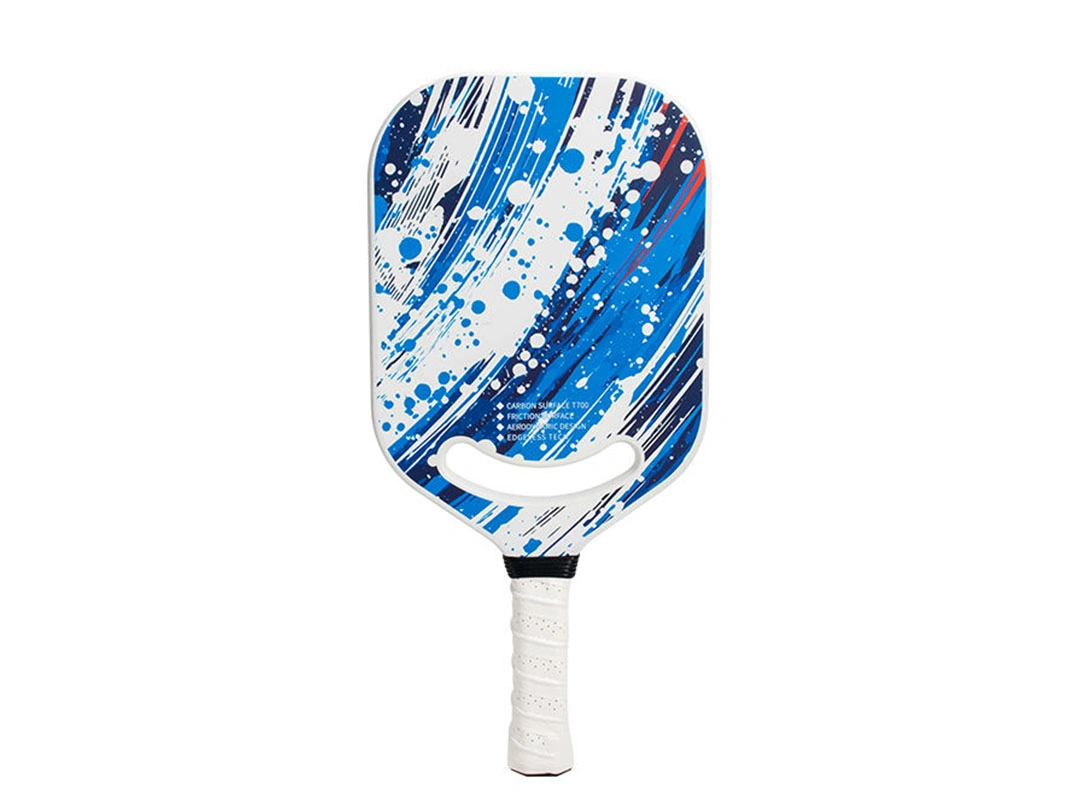
- T700 Carbon Fiber: Pro-level material offering an exceptional high-performance stiffness-to-weight ratio for elite spin and control.
- T800 Carbon Fiber + Titanium Thread: Premium+ flagship performance, combining aerospace-grade carbon with titanium for ultimate responsiveness.
- Kevlar/Aramid Hybrids: A specialty material focused on supreme impact resistance and long-lasting durability.
Core Materials:
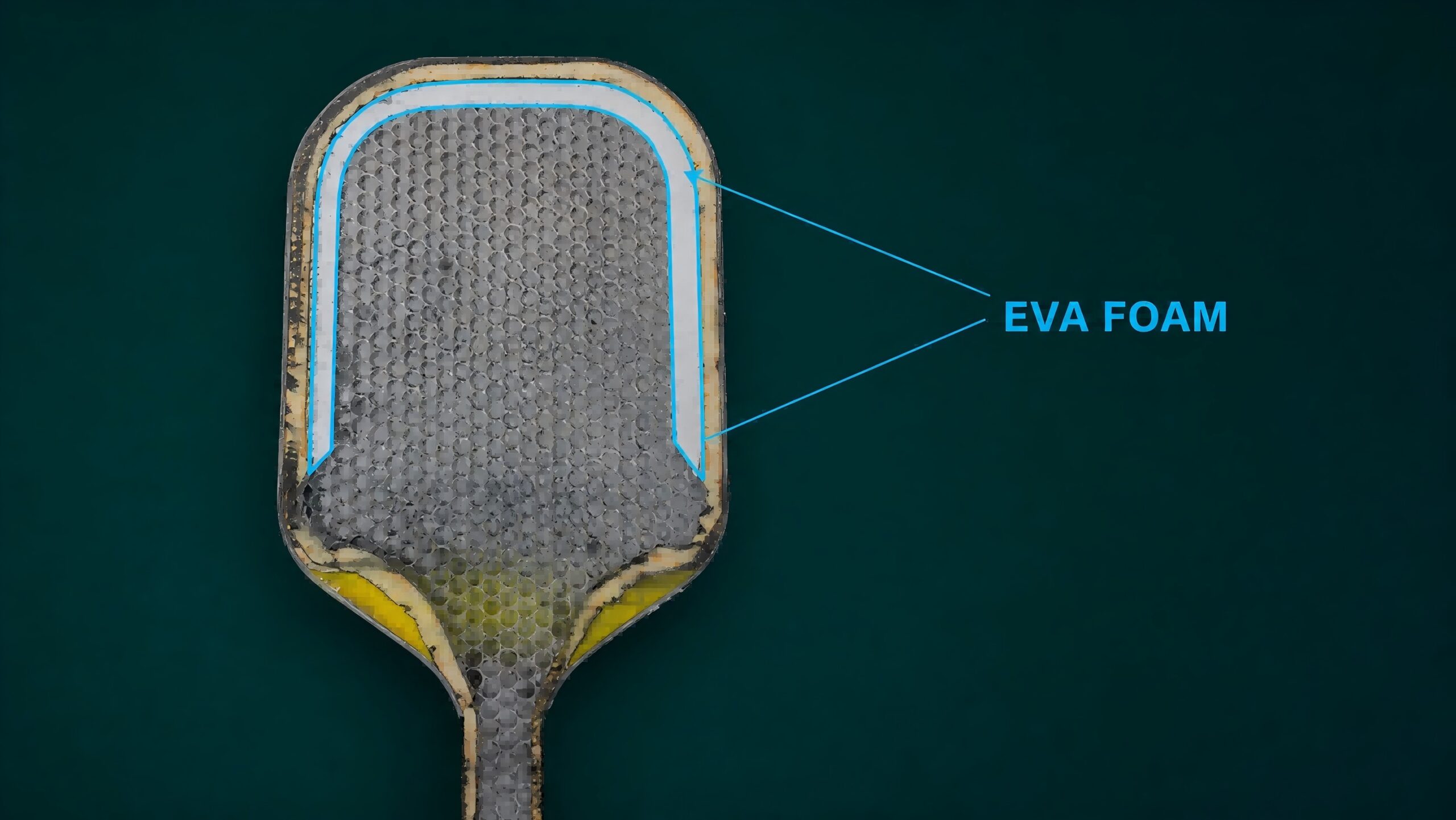
- PP Honeycomb: Standard polypropylene. The industry workhorse, providing a cost-effective, reliable balance of power and control.
- GEN3 Core 2.0: Engineered for enhanced elasticity, offering players better pop and a softer touch at the kitchen line.
- GEN4 EPP Foam Core: Advanced vibration dampening. This is the ideal core for noise-sensitive communities and players with tennis elbow.
- GEN5 “Gatling” Polymeric Mesh Core: The flagship core technology providing maximum feel, structural integrity, and responsiveness.
Surface Treatment Options:
- UV Printing: Allows for full-color, edge-to-edge custom graphics (standard for the cold press series).
- Water Decal / Hydrographic Transfer: Provides a fade-resistant, seamless premium look (ideal for the thermoformed series).
- Laser Engraving: Delivers a precise, upscale, tactile finish.
- Teflon Coating: A specialized surface treatment that dramatically enhances topspin generation.
Dimensions:
- Control Shape: 400 × 195mm (Wider face, larger sweet spot)
- Power Shape: 417 × 188mm (Standard aerodynamic profile)
- Elongated Shapes: Up to 425 × 186mm (Maximum reach and leverage)
Thickness Options:
Choose from 10mm, 13mm, 14mm, 16mm, and 20mm depending on whether your paddle leans toward power (thinner) or control (thicker).
Handle Lengths:
- 130mm: Standard length.
- 139mm: Power grip for added leverage.
- 145mm: Extended length, preferred for two-handed backhands.
- 149mm: Maximum extended length.

For a full range of carbon fiber pickleball paddles, NexaPaddle offers options across every performance tier, allowing you to easily match your material choices to your brand’s pricing strategy.
Step 3 — Select Your Manufacturing Process
Understanding how your paddles are built is crucial for quality control and marketing. There are three primary manufacturing processes:
Cold Press Molding:
This is a highly cost-effective method where the paddle face and core are bonded together under standard pressure and temperature. It is the go-to process for entry-level to mid-level paddles, making it perfect for budget and beginner-focused brands. Cold press molding is highly efficient and suitable for high-volume production runs.
Thermoformed (Hot Press Integrated):
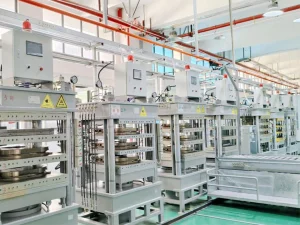
Thermoforming represents a leap in paddle technology. This process utilizes single-piece construction, where the face, core, and edge are fused together in one high-temperature, high-pressure step. This enables sleek edgeless designs and significantly improves durability and power transfer. Thermoforming carries a higher perceived value and is used extensively in premium and intermediate-premium lines. Crucially, it often comes with a lower MOQ (100 pieces), making it ideal for market testing.
Hot Press Forging:
The most advanced process available, hot press forging ensures maximum structural integrity with zero delamination risk. By utilizing immense pressure and heat, this process maximizes both power and long-term durability. It is the absolute best choice for pro-grade or tournament-focused brands looking to offer uncompromising quality.
NexaPaddle currently houses 8+ proprietary molds covering all three of these processes, and their engineering team can advise you based on your target price point and performance requirements. NexaPaddle’s thermoformed pickleball paddles use advanced single-piece construction for brands looking to offer premium performance.
Step 4 — Design Your Custom Graphics & Branding
Your product’s visual language is what will stop the scroll on Amazon or catch the eye in a retail store. Designing your branding involves several distinct customization layers:
- UV Printing: Offers full-color, photographic quality artwork directly on the paddle face (best for cold press).
- Water Decal / Hydrographic Transfer: Provides incredibly crisp, fade-resistant graphics perfectly suited for the intense heat of thermoformed paddles.
- Laser Engraving: Creates a precise, premium finish that is great for minimalist, high-end branding.
- Custom Edge Guards: Choose branded colors and specialized materials to protect the paddle while maintaining brand aesthetics.
- Custom Handle Wraps: Customize the grip texture, thickness, and color, complete with your logo embossed on the finishing tape.
- Custom Packaging: Whether you need a premium retail box, a sleek sleeve, or a protective pouch, packaging matters. Notably, NexaPaddle fully supports Amazon FBA-ready packaging, including pre-applied FNSKU labels, heavy-duty poly bags, and compliant suffocation warning stickers.
This is where your brand identity truly comes to life. Ensure your visual language aligns perfectly with the market positioning you established in Step 1.
Step 5 — Partner with Your OEM Manufacturer (NexaPaddle’s 5-Step Workflow)
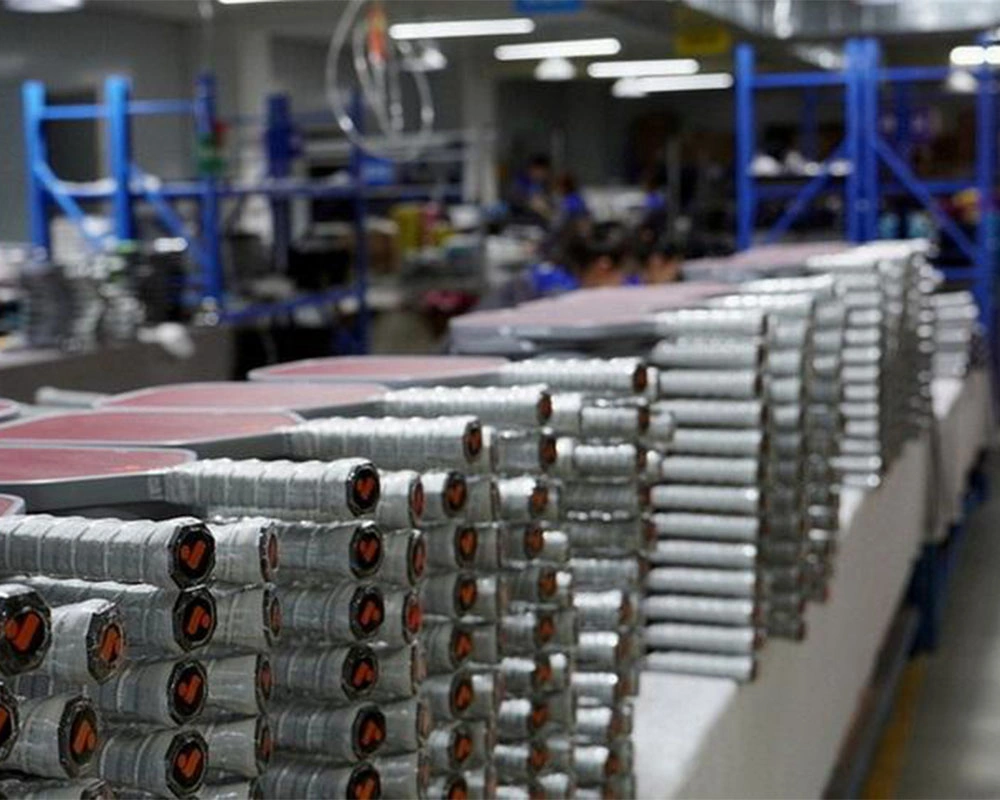
Selecting a reliable manufacturing partner is the most critical decision for new pickleball paddle brands. You need a partner who understands end-to-end production. NexaPaddle utilizes a rigorous 5-step workflow to guarantee consistency and quality:
- Design Department: The process begins with product development, engineering design, and mold development. The team executes small batch trial production, finalizes appearance design, and engineers the packaging.
- Forming Department: This stage handles raw material processing, the precise layering process, and mold cavity cleaning, followed by either hot press or autoclave forming based on your chosen manufacturing method.
- Spray & Polishing Department: Paddles undergo sanding pretreatment before receiving a multi-layer coating system (primer → mid-coat → topcoat → clear coat) to ensure graphic longevity and surface texture.
- Assembly Department: Skilled technicians handle parts verification, precision assembly of the handle and edge guards, label application, and strict in-process quality inspection.
- Quality Department: The final stage involves multi-dimensional testing, including center of gravity verification, weight balance checks, and hardness/deflection testing. Paddles undergo a final packaging inspection before ultimate release authorization.

To learn more about how NexaPaddle handles end-to-end production, visit their custom OEM pickleball paddles page.
Step 6 — USAPA Certification
If you intend for your customers to use your paddles in official, sanctioned tournament play, USAPA (USA Pickleball Association) approval is strictly required.
Navigating this certification can be daunting for new brands, but an experienced OEM makes it seamless. NexaPaddle proactively pre-tests all paddle designs in-house for size compliance, surface roughness (Coefficient of Friction/COF), and core deflection before you even submit them to the governing body.
Achieving USAPA certification dramatically increases your brand’s credibility. It is often a strict prerequisite for getting your products into big-box retail stores and significantly boosts conversion rates on platforms like Amazon. NexaPaddle guides clients through every step of this certification process, saving you time, money, and frustration.
Understanding MOQs & Pricing
Managing cash flow is vital when starting an e-commerce brand. Understanding Minimum Order Quantities (MOQs) helps you plan your initial capital requirements.
| Product Type | MOQ |
|---|---|
| Cold press paddles | 300 pieces |
| Thermoformed paddles | 100 pieces |
| Pickleballs (laser engraving) | 200 pieces |
| Pickleballs (silk screen) | 1,000 pieces |
Pro Tip for New Brands: If you are launching a new brand, it is highly recommended to start with thermoformed paddles at the 100-piece MOQ. This allows you to test market reception, validate your branding, and generate initial cash flow with minimal upfront inventory risk, all while offering a high-performance, premium product.
Building the Right Product Mix for Your Brand
To maximize your Customer Lifetime Value (CLTV) and appeal to a broader demographic, you should strategically build a product matrix. A well-rounded catalog prevents you from losing customers as their skills progress.
Consider structuring your initial brand offerings like this:
- Entry-Level: Fiberglass paddles. These offer the highest volume potential and an accessible price point, making them the undisputed best choice for absolute beginners.
- Mid-Range: Carbon fiber (UD or 3K) paddles. Targeted at intermediate players, this is typically the best-selling tier for most established brands, offering a great balance of performance and margin.
- Premium: Thermoformed or forged T700/T800 paddles. Built for advanced players and pros, these command the highest retail prices and deliver excellent profit margins.
- Specialty:
- Quiet paddles: Utilizing EPP foam core/GEN4 technology for noise-sensitive venues and strict HOA communities.
- Spin-focused paddles: Featuring specialized Teflon coating for aggressive baseliners.
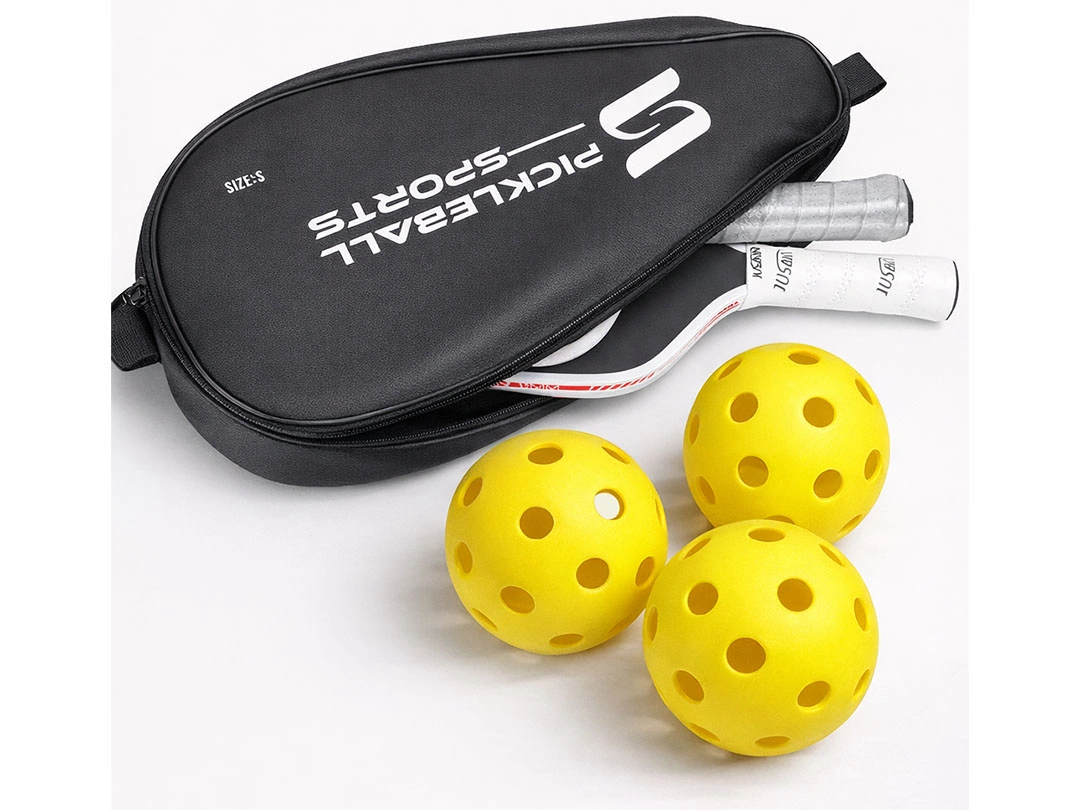
- Accessories for Upselling: Increase your Average Order Value (AOV) by offering custom paddle bags, branded edge guard tape, premium overgrip tape, paddle erasers, and custom pickleballs.

NexaPaddle also offers private label pickleball paddles — ready-made, high-performance designs that you can brand as your own without the time and expense of developing new proprietary tooling.
FAQ — Custom Pickleball Paddle Manufacturing
What is the minimum order quantity (MOQ) for custom pickleball paddles?
MOQ depends entirely on the manufacturing process you choose. Premium thermoformed paddles start at a very accessible 100 pieces, which is ideal for new brands testing the market. Cold press paddles, utilized for higher-volume entry-level models, have an MOQ of 300 pieces. Accessories vary; for example, custom pickleballs require an MOQ of 200 pieces for laser engraving, or 1,000 pieces for silk screen printing.
How long does it take to manufacture a custom pickleball paddle order?
Lead times depend on the complexity of your order and whether custom tooling is required. Typically, you can expect 30–60 days for initial first-time orders, which includes mold tooling, prototyping, and sampling. Once your product is dialed in, repeat orders are much faster, typically ranging from 20–30 days. NexaPaddle provides transparent, precise production timelines during the initial inquiry stage.
Can I get USAPA certification for my custom paddles?
Yes. Securing USAPA certification is highly recommended for brand growth. NexaPaddle pre-tests your custom paddles using strict internal QC for USAPA compliance metrics — including precise size measurements, surface roughness (COF), and core deflection limits — before you submit them for official certification. This dramatically improves first-time approval rates and saves you months of back-and-forth delays.
What’s the difference between cold press and thermoformed pickleball paddles?
Cold press manufacturing bonds the paddle face and core together under standard heat and pressure. It is a highly cost-effective process perfectly suited for entry to mid-level products. Thermoforming, on the other hand, fuses the entire paddle (face, core, and edge) in a single, high-pressure, high-temperature cycle. This creates a single-piece construction that is vastly more durable, delivers more consistent performance, and enables sleek, modern edgeless designs.
Do you offer Amazon FBA preparation services?
Yes. For e-commerce entrepreneurs, NexaPaddle fully supports Amazon FBA-ready packaging protocols. This includes the application of FNSKU barcoding, proper poly-bag packaging, mandatory suffocation warning stickers, and retail-ready drop-tested box design. This turnkey service simplifies your supply chain, allowing you to ship directly from the manufacturing floor to Amazon’s fulfillment centers.
Sources
- NexaPaddle Product Catalog — nexapaddle.com
- USA Pickleball Association — usapickleball.org
- Sports & Fitness Industry Association (SFIA) — 2023 Pickleball Participation Report
Ready to Dominate the Court?
The unprecedented growth of pickleball represents a generational opportunity for retail and e-commerce entrepreneurs. By leveraging advanced OEM/ODM manufacturing, launching a high-performance equipment brand is more accessible, scalable, and profitable than ever before. You don’t need to build a factory; you just need the right manufacturing partner to bring your vision to life.
Ready to launch your brand? Explore custom paddle options or contact NexaPaddle today for a free consultation. From engineering and materials to USAPA certification and turnkey Amazon FBA packaging, NexaPaddle provides the true end-to-end manufacturing solution your brand needs to succeed.