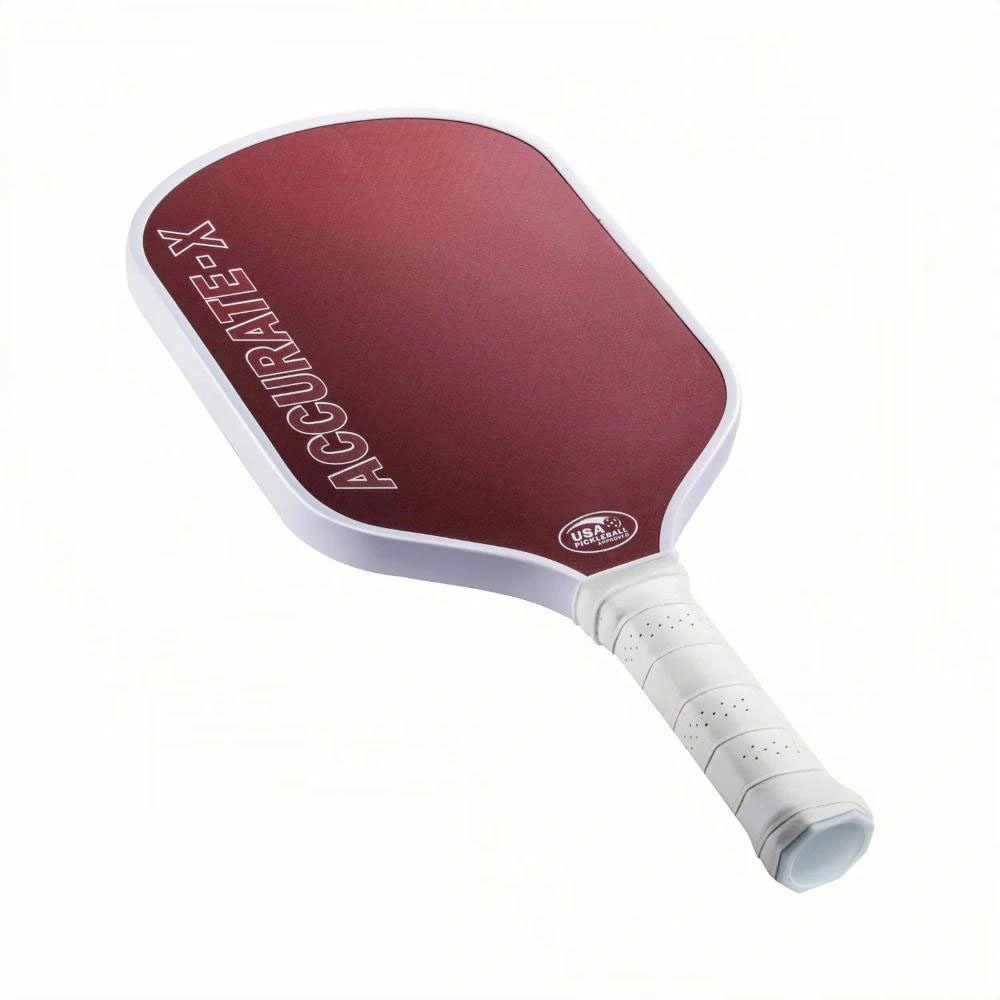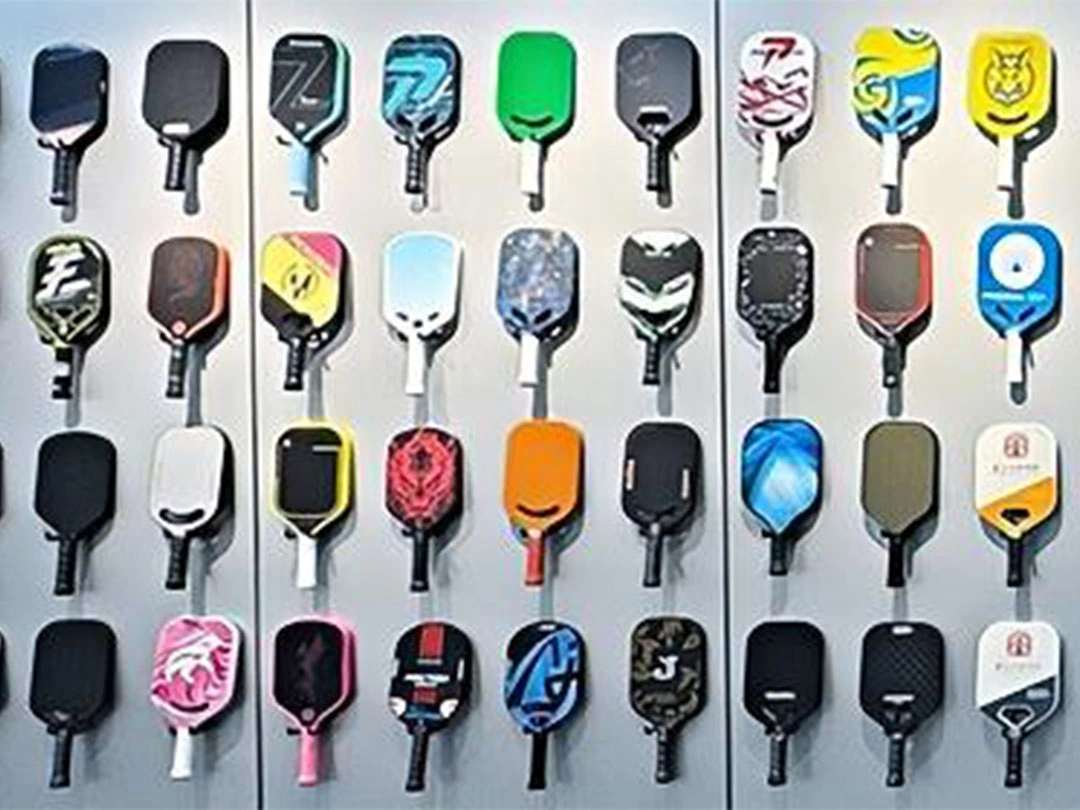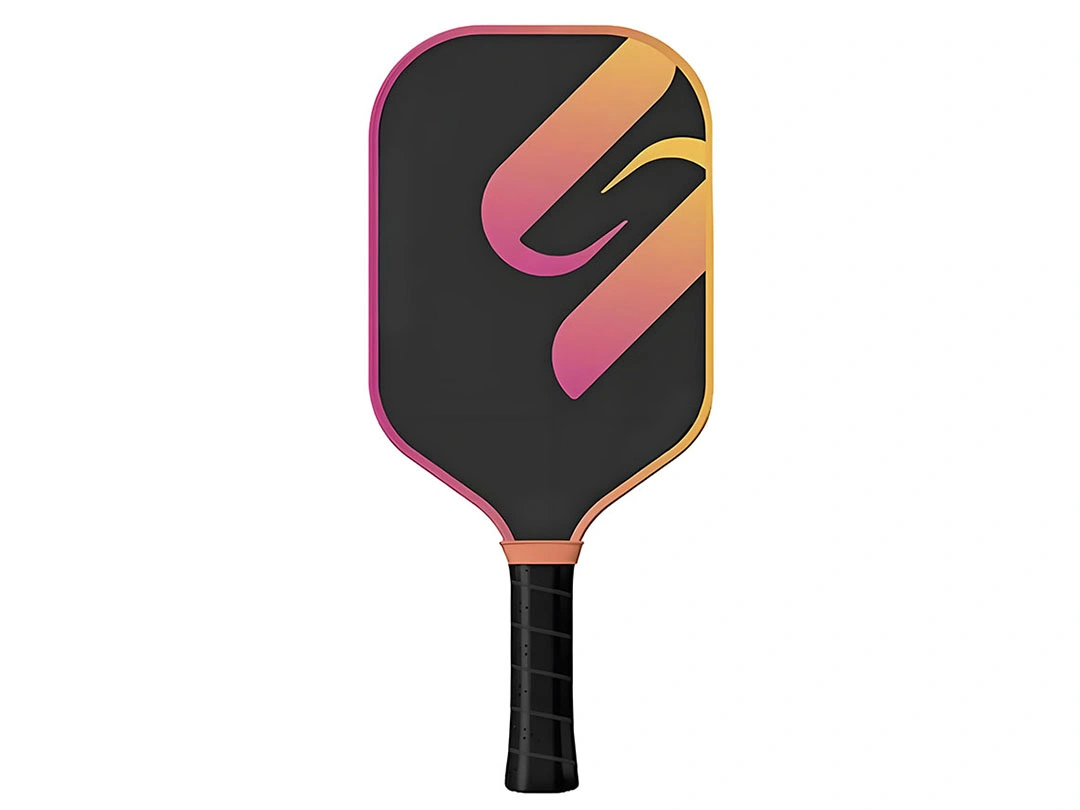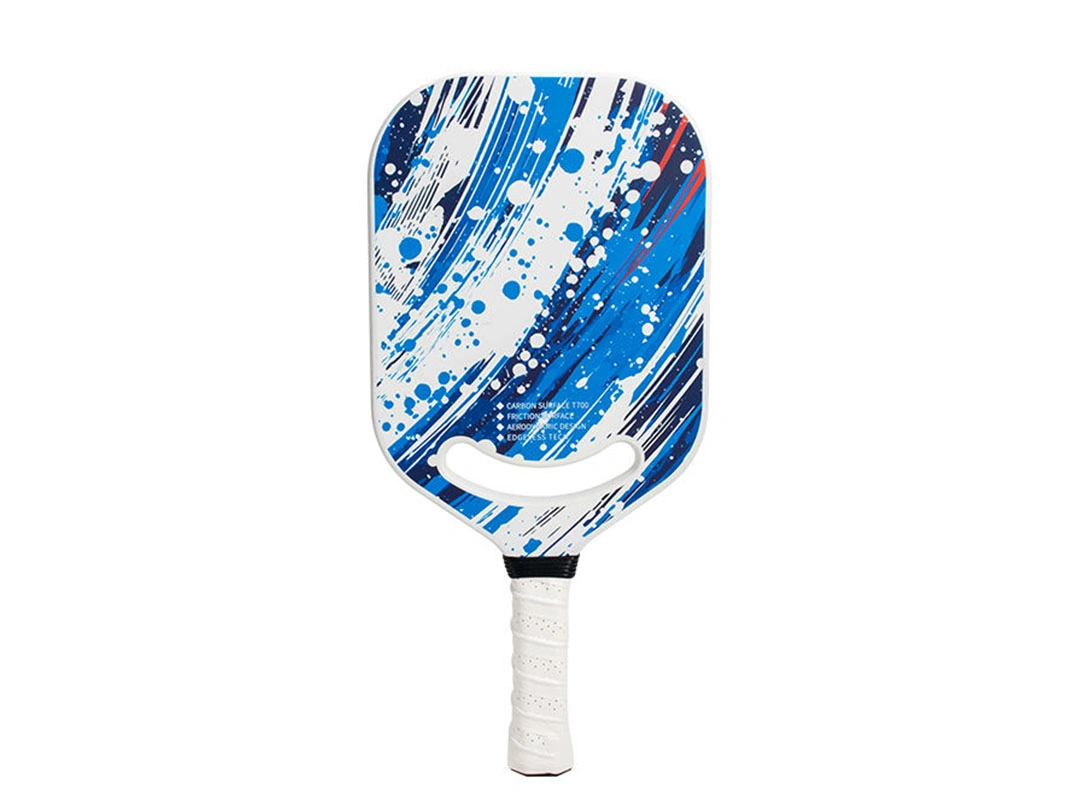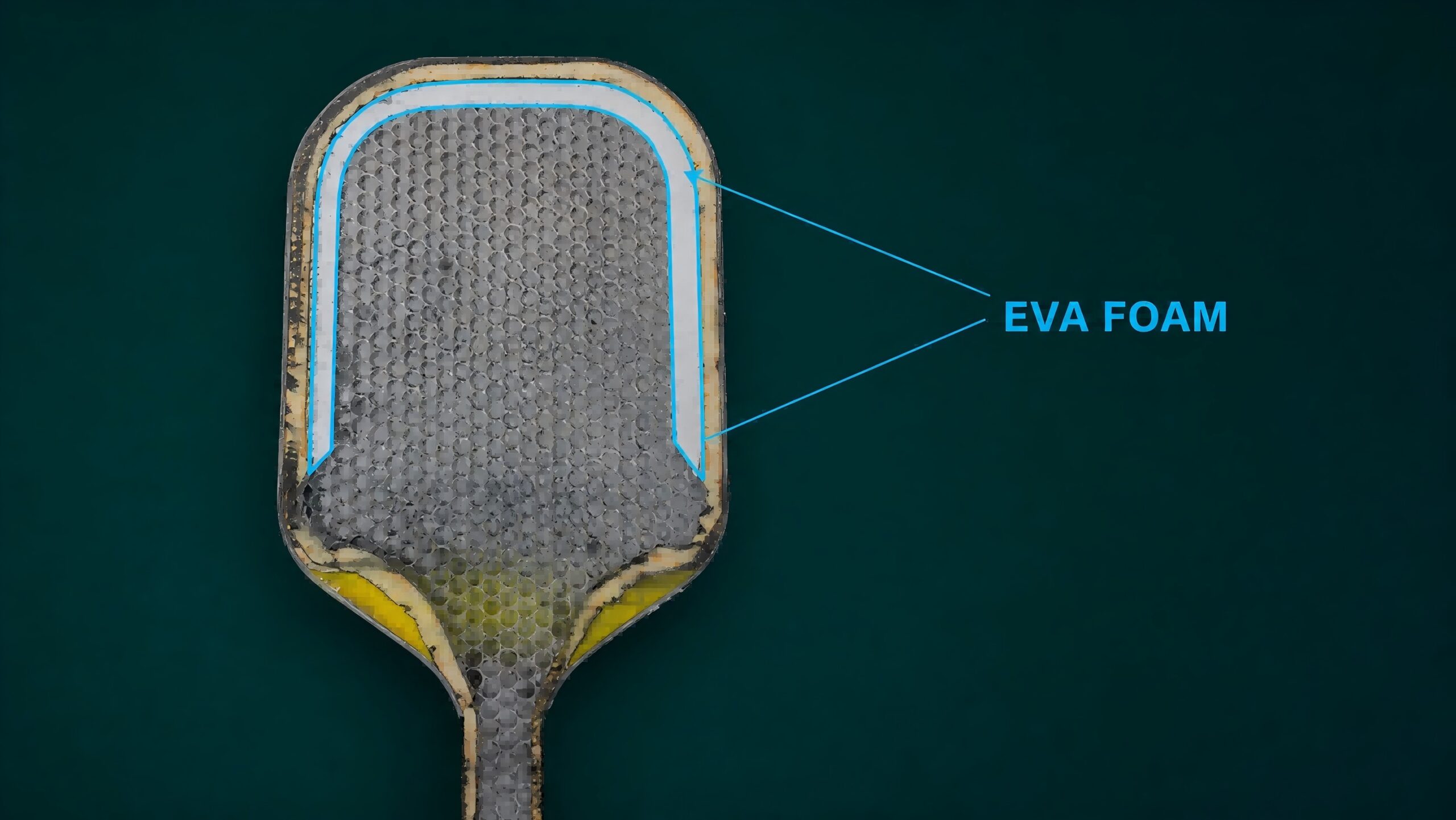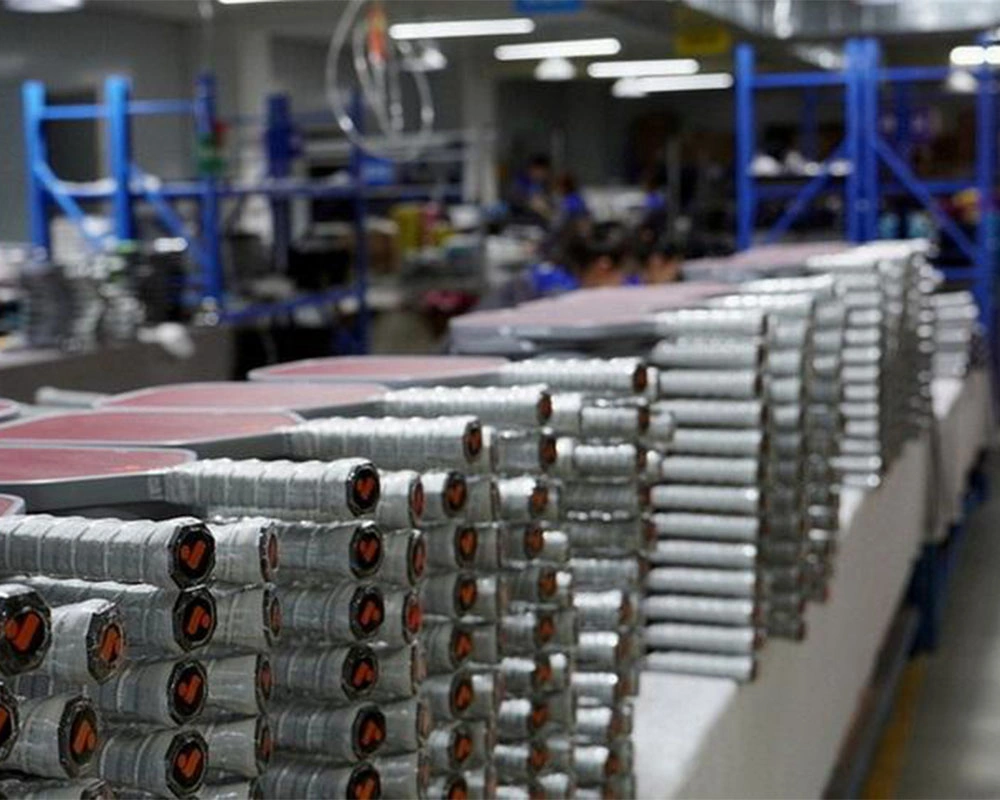
The pickleball market is no longer a niche novelty — it’s a $702.9 million global industry in 2025, on track to reach $1.85 billion by 2032 at a 14.8% CAGR, according to Coherent Market Insights. With 24.3 million active players in the United States alone — a staggering 479% increase since 2020 (SFIA, 2025) — and an estimated 80 to 120 million players worldwide (Global Pickleball Report 2026), the demand for equipment is not slowing down. What is changing is where the money flows.
Private labeling changes the commercial model by giving the buyer more control over product specification, branding, packaging, and retail positioning. Actual gross margin depends on the finished product, landed cost, channel fees, promotions, returns, and retail price, so NexaPaddle does not present a universal reseller-margin range.
This guide explains how a private-label paddle project moves from product brief to retail-ready inventory, including branding methods, specification choices, production workflow, compliance, MOQ planning, and launch considerations. If you are ready to discuss sourcing rather than research the process, see NexaPaddle’s private label paddle program.
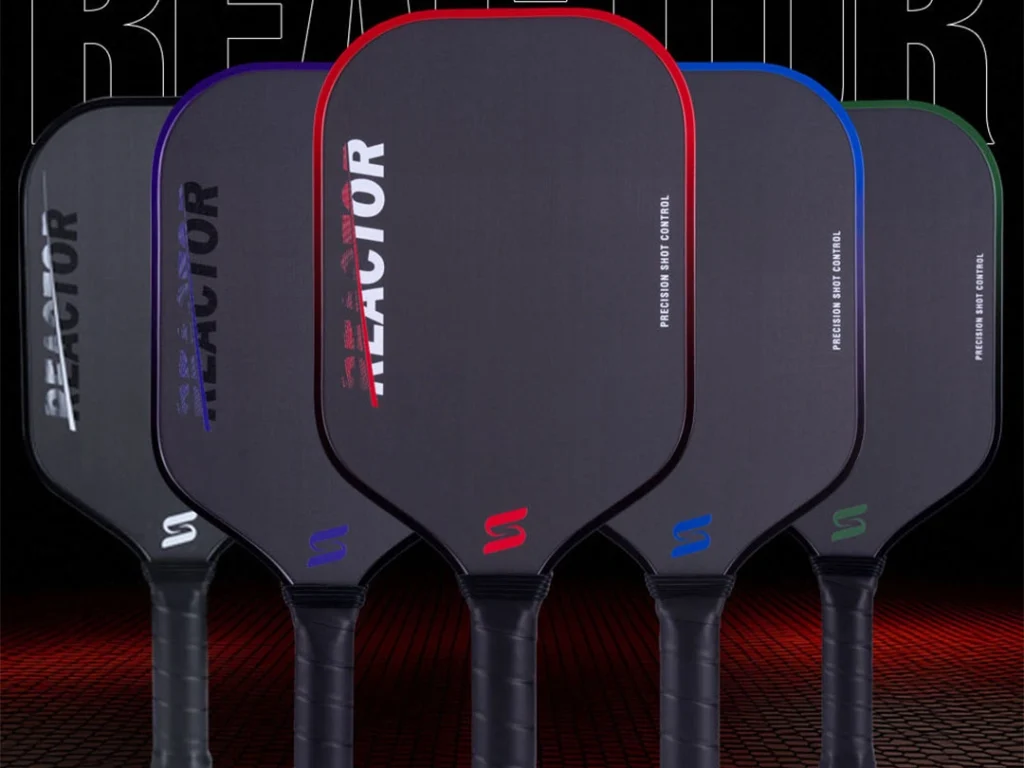
How the Private Label Pickleball Paddle Model Works
How Private Label Changes the Commercial Model
When you resell a Franklin, Selkirk, or Joola paddle, you’re competing on price against every other reseller carrying the same SKU. Your brand equity is zero. Your pricing power is minimal.
Private label can give a brand more control over product specification, branding, packaging, pricing, and customer experience. Profitability is project-specific: landed cost, channel fees, promotions, returns, compliance costs, inventory risk, and retail positioning all affect unit economics. Treat private label as a sourcing and brand-control model rather than a guaranteed-margin formula.
When Private Label Can Be a Fit
Unlike tennis or golf — categories dominated by decades-old conglomerates — pickleball is still young enough that brand loyalty is fluid. New players enter the sport every week with no paddle preference. Existing players upgrade frequently. Corporate buyers, club owners, event organizers, and sporting goods retailers are all actively looking for reliable supply partners who can deliver branded product on time.
For a new entrant, the practical question is whether demand can be validated and a repeatable product specification, inventory plan, compliance path, and sales channel can be supported before committing to scale.
What Buyers Should Define Before Sourcing
Before evaluating a private-label sourcing program, buyers should define four things:
- Customization depth: Can they replicate my brand identity across graphics, materials, and packaging?
- Certification support: Will these paddles pass USAPA compliance for organized play?
- Scalability: Can the factory grow with my order volume?
- Supply chain transparency: Do I get real lead times, real MOQs, and real QC data?
The rest of this article addresses each of these directly, using NexaPaddle’s private label infrastructure as the operational model.
The Four Customization Technologies That Define a Premium Paddle Brand
This is the core decision every private label buyer must get right. Your paddle graphics and finish aren’t just aesthetics — they communicate brand tier, affect perceived value, and in some cases influence actual performance. NexaPaddle offers four distinct customization technologies, each optimized for different paddle types, brand aesthetics, and budget tiers.
1. UV Printing — Full-Color, Photographic Precision
UV printing applies ink directly to the paddle face using ultraviolet-cured inkjet technology. The result is full-color, edge-to-edge graphics with photorealistic detail — gradients, photographs, complex illustrations, and brand colors rendered with zero compromise.
Best application: Cold press paddle series (flat surface geometry). UV printing performs at its best on flat, consistent surfaces where the print head can maintain uniform distance across the face.
Why brands choose it: When your brand identity depends on vibrant color, bold visual impact, or photographic imagery, UV printing is the entry point. It’s also the most cost-accessible method for achieving complex, full-surface graphics at scale.
Production note: UV-cured inks set instantly under UV light, eliminating drying time and enabling fast production cycles. Color consistency across batch runs is high — critical for brand standardization across large inventory orders.
For brands building a cold press product line with strong visual identity, UV printing on Custom & OEM Pickleball Paddles provides the most versatile graphics foundation.
2. Water Decal / Hydrographic Transfer — Seamless 3D Coverage
Hydrographic transfer — colloquially known as water decal printing — is the method that separates competent manufacturers from sophisticated ones. It’s the technology that makes a thermoformed paddle look and feel like it was painted by hand, and it’s the reason premium paddle brands command premium shelf positioning.
How it works: A PVA (polyvinyl alcohol) film printed with the desired pattern is floated on the surface of a water bath. A chemical activator is applied, which re-liquefies the ink on the film. The paddle is then dipped through the floating ink layer at a controlled angle. Surface tension and ink adhesion cause the pattern to conform perfectly to the paddle’s three-dimensional geometry — wrapping around curves, edges, and contours that flat-surface printing cannot reach.
Best application: Thermoformed paddle series. Thermoformed paddles have curved faces, rounded transitions, and an edgeless profile — geometry that defeats UV printing but is perfectly suited to hydrographic transfer.
Key advantages for private label brands:
- Seamless 3D coverage: The ink wraps around every surface contour with zero visible seams, edge buildup, or print breaks. The paddle looks like it emerged from the factory with that pattern embedded in its surface.
- Fade resistance: When sealed with a UV-resistant clear coat (standard in NexaPaddle’s process), hydrographic finishes maintain color integrity across years of high-impact use — sun exposure, sweat, friction included.
- Zero performance interference: The water decal process adds negligible weight and does not alter the paddle’s aerodynamic profile or surface texture. Your paddle performs exactly as engineered.
- Premium tactile finish: The clear coat application produces a smooth, painted-on feel that players and buyers immediately associate with premium product.
Brands positioning thermoformed pickleball paddles in the $120–180 retail tier should strongly consider hydrographic transfer as the default graphics method. The finish quality alone justifies a higher price point in the consumer’s hand.
3. Laser Engraving — Permanent, Tactile, Uncompromising
Laser engraving is the customization technology for brands that want permanence, premium positioning, and a finish that literally cannot be replicated by lower-tier competitors.
How it works: A high-intensity laser beam vaporizes material at the microscopic level, etching the design directly into the paddle surface rather than applying anything onto it. The result is a permanent, tactile impression — your logo, text, or pattern recessed into the face of the paddle itself.
Why “permanent” matters in practice: A printed finish can fade. A decal can eventually lift at edges under extreme conditions. A laser engraving cannot fade, chip, peel, or wash off. The design is the surface — they are physically inseparable. For brands targeting competitive players, club buyers, or any customer who will put serious hours on the court, laser engraving signals durability in a way that print finishes cannot.
Precision capability: Laser systems operate at microscopic resolution, enabling intricate logos with fine line detail, small-format text (including serial numbers and compliance markings), and complex geometric patterns that would bleed or pixelate under UV print at small scale.
Material compatibility: Laser engraving works across carbon fiber, fiberglass, and composite paddle surfaces — the primary face materials for performance-tier paddles. It does not structurally compromise these materials when executed at correct parameters.
USA Pickleball planning: Branding and surface-treatment processes should be evaluated on the finished paddle because material, texture, and process settings can affect measurable surface characteristics. When tournament eligibility matters, confirm the exact finished brand and model through the current official process. See USA Pickleball Compliance Support for project-planning guidance.
Production efficiency: Laser engraving can be appropriate for selected materials and branding programs, but cycle time and cost depend on artwork, material, equipment settings, quantity, and finishing requirements. Confirm the marking process and commercial impact against the exact project rather than assuming a fixed percentage saving.
Brand positioning: The tactile, upscale finish of laser-engraved paddles communicates craftsmanship. It’s the detail that gets noticed in unboxing videos, in-store displays, and on-court comparisons. For brands targeting the premium segment of the carbon fiber pickleball paddles market, laser engraving is the finishing detail that closes sales.
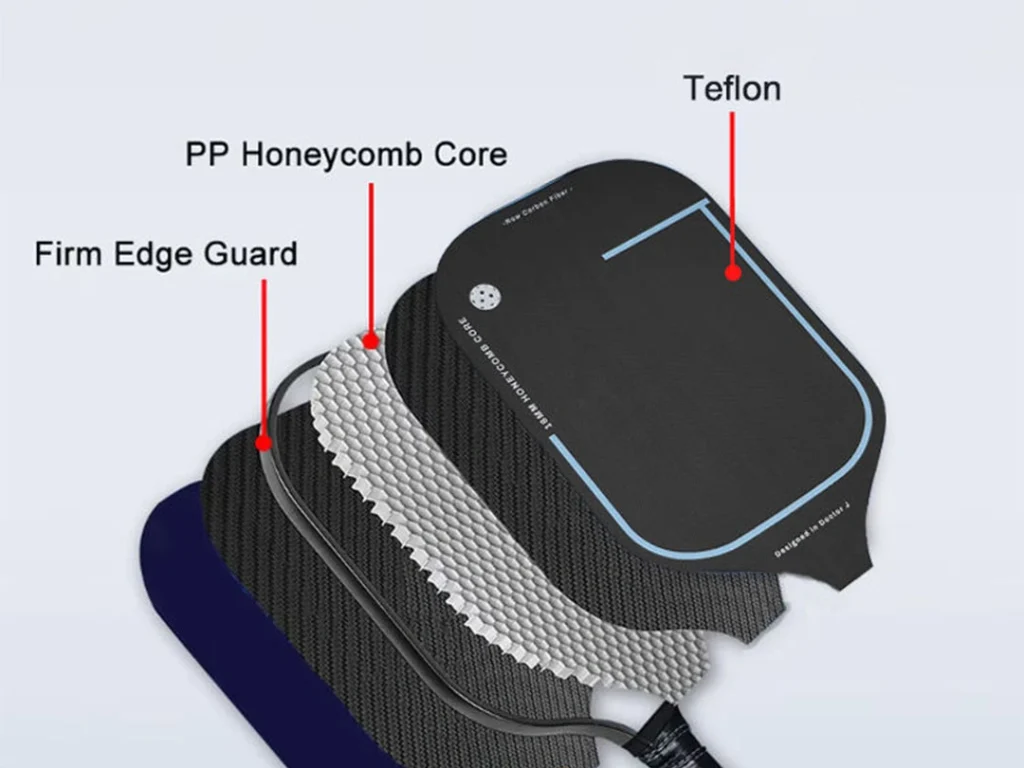
4. Teflon Coating — Performance Customization
Teflon coating occupies a distinct category: it’s a surface treatment rather than a visual customization, but it belongs in any serious discussion of private label differentiation because it addresses performance, not just appearance.
What it does: Applied to the paddle face, Teflon coating increases surface friction coefficient — the property that determines how much spin a player can generate on the ball. Higher friction means more topspin, more slice, more shot variation. For players who prioritize spin game, this is a meaningful performance upgrade.
Secondary benefit: The coating reinforces surface structural integrity, adding a layer of protection against micro-abrasion from repeated ball contact.
Combination strategy: Teflon coating and laser engraving are not mutually exclusive — they’re the two-layer combination that delivers maximum visual and performance customization on a single paddle. The laser engraving handles brand identity; the Teflon coating handles functional differentiation. Together, they produce a product that justifies premium retail pricing on two separate axes.
Customization Technology Comparison
| Method | Best For | Surface Compatibility | Durability | Visual Effect | Cost Tier |
|---|---|---|---|---|---|
| UV Printing | Cold press, flat surfaces | Flat paddle faces | Good | Bold, vibrant, full-color | Standard |
| Water Decal / Hydrographic | Thermoformed, 3D curved | All-over patterns, organic textures | Excellent (with clear coat) | Smooth, seamless, premium | Mid-Premium |
| Laser Engraving | All paddle types | Monochrome, tactile, recessed | Superior (in-surface, permanent) | Upscale, minimalist, tactile | Premium |
| Teflon Coating | Performance paddles | Spin-enhancing functional texture | Excellent | Functional, matte | Premium |
Full Customization Layers: Building Your Complete Paddle Specification
Customization technology is only one dimension of a private label paddle specification. A complete product is defined across six layers, each of which NexaPaddle treats as an independent brand decision:
Face Material
The paddle face determines feel, power transfer, and player segment appeal:
- Fiberglass: Softer feel, greater dwell time, popular for control-oriented players
- Carbon UD / Carbon 3K: Stiff, powerful, widely used in mid-range performance paddles
- T700 Carbon Fiber: High-modulus performance, increasingly standard in competitive-tier paddles
- T800 + Titanium: Top-tier stiffness with reduced weight — premium performance positioning
- Kevlar / Aramid: Impact-resistant hybrid, niche but growing in durability-focused categories
Core Material
The core defines the paddle’s power-to-control ratio and acoustic profile:
- PP Honeycomb: Industry-standard, reliable, quiet
- GEN3 / GEN4 / GEN5: Next-generation honeycomb geometries optimized for spin and power
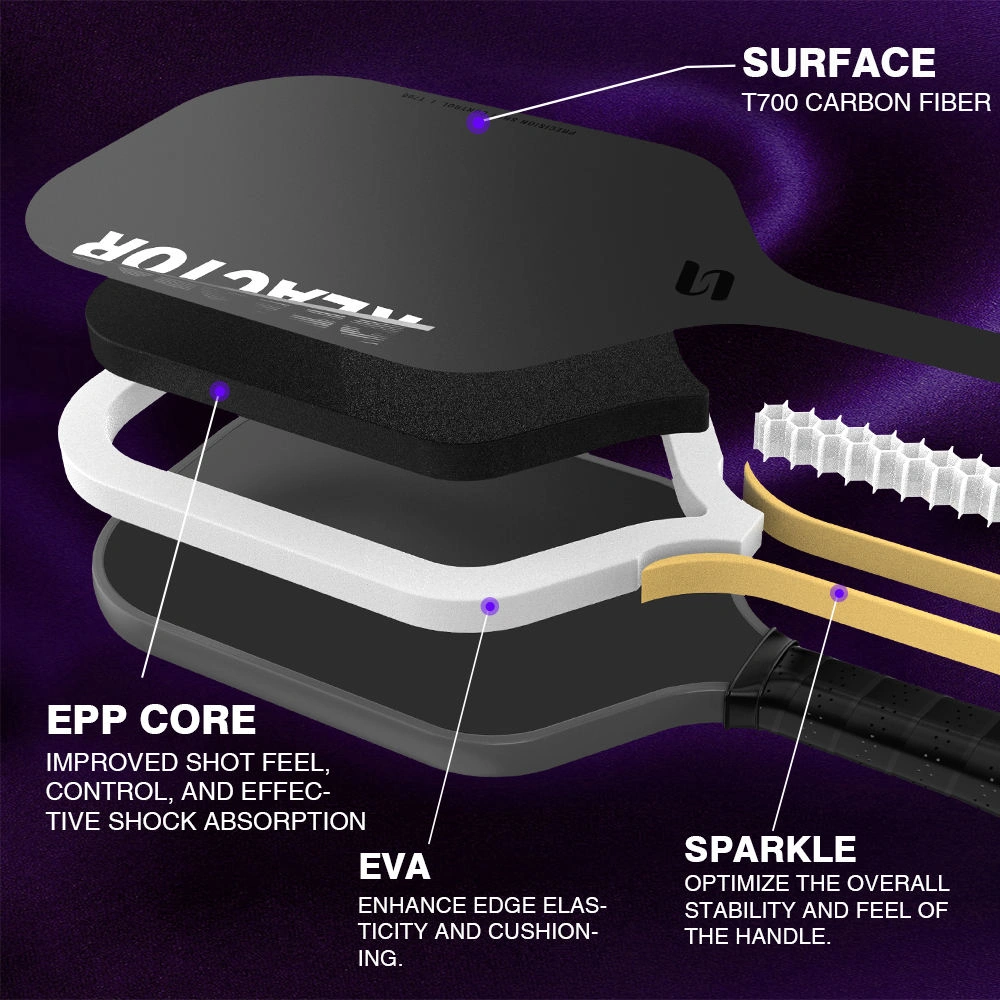
- EPP Foam: Softer response, preferred in beginner and recreational segments
Graphics and Surface Finish
All four technologies described above, applied according to paddle geometry and brand positioning.
Edge Guards
Branded color matching, custom logo molding, or contrasting accent colors — a detail that matters more than brands expect in retail presentation.
Handle Wraps
Texture selection, thickness, color, and logo embossing. The handle is where every player’s hand lives — it’s a tactile brand experience, not an afterthought.
Packaging
- Retail boxes with full-color printing
- Sleeve packaging for premium or boutique positioning
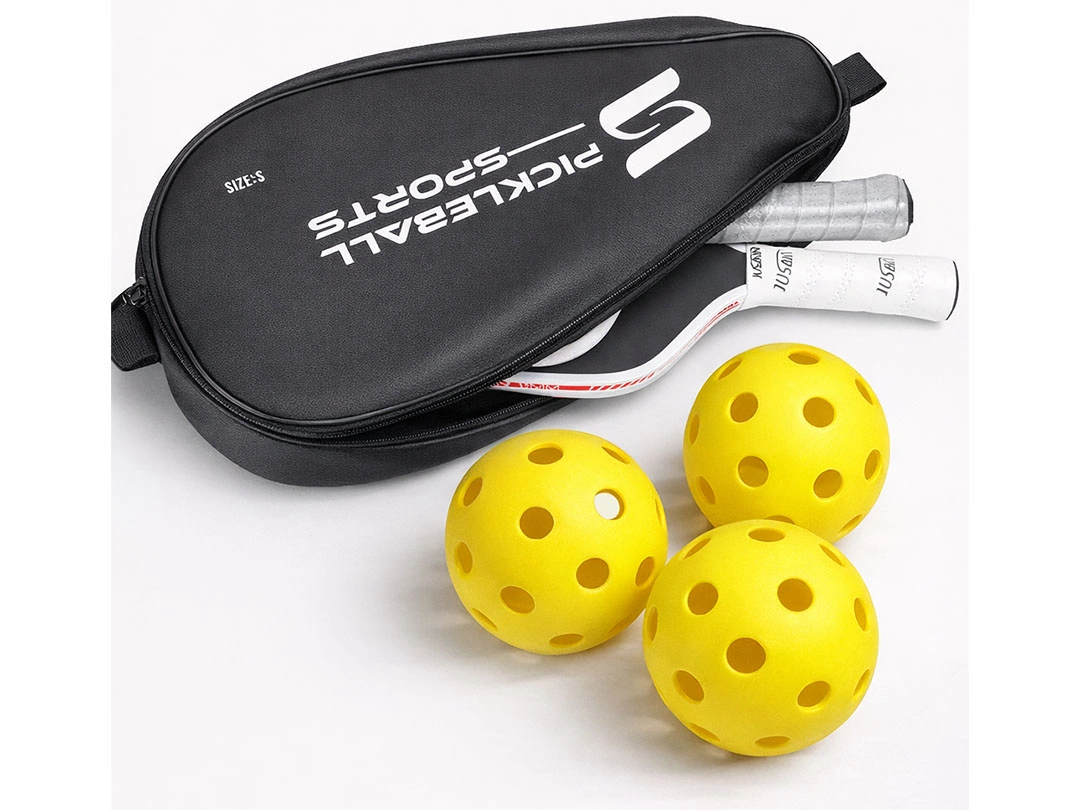
- Carry pouches (plain or branded)
- Amazon FBA-ready configuration: FNSKU labels, poly bags, suffocation warnings — drop-ship compliant from day one
NexaPaddle’s Private Label Workflow: From Design Brief to Delivered Inventory
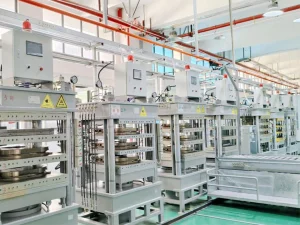
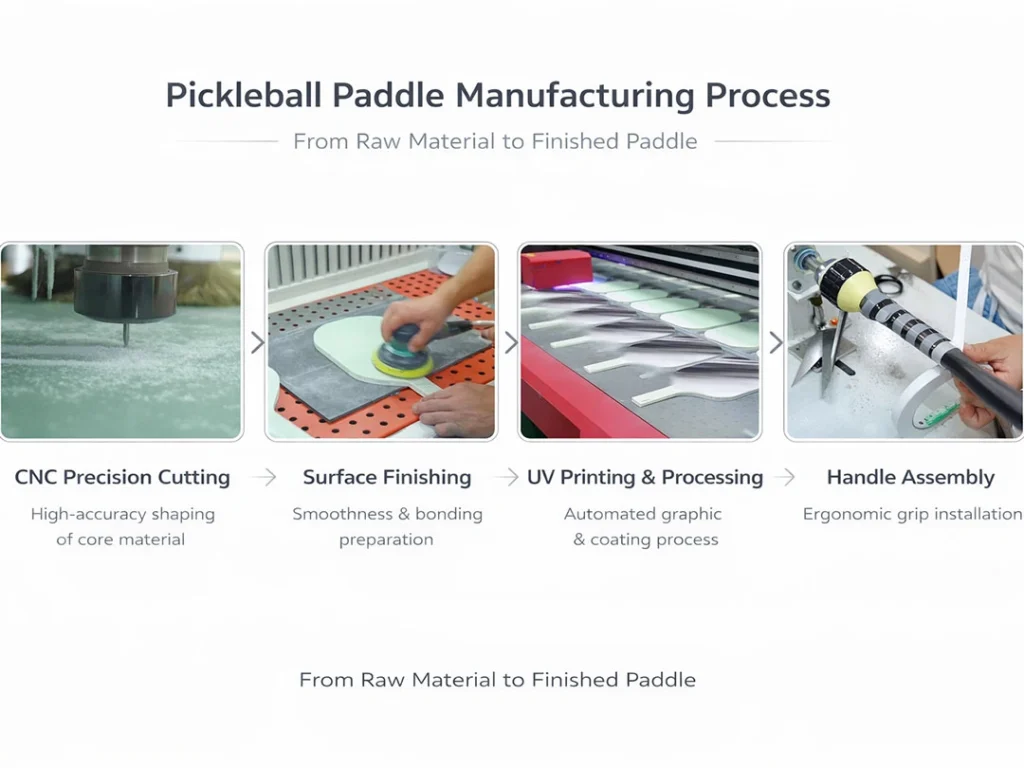
Understanding the manufacturing workflow is critical for planning launch timelines and managing supplier relationships. NexaPaddle operates a five-department production flow:
Step 1 — Design Department
Product development begins here: engineering design, mold development, small-batch trial production, and full appearance and packaging design. This is where your design brief becomes a technical specification — tolerances, material stack, graphics files, and mold drawings.
Step 2 — Forming Department
Raw material processing, fiber layering, mold cavity preparation, and hot press or autoclave forming. Thermoformed paddles go through autoclave cycles that produce the consistent, curved geometry required for hydrographic transfer and the structural integrity required for thermoformed pickleball paddles at performance price points.
Step 3 — Spray and Polishing Department
Sanding pretreatment followed by multi-layer coating: primer coat, mid-coat, topcoat, and UV-resistant clear coat. This four-layer process is what produces the premium surface quality that differentiates NexaPaddle’s output from lower-tier manufacturers.
Step 4 — Assembly Department
Parts verification, precision assembly, label and grip application, and in-process quality control. Assembly-stage inspection can verify the agreed assembly, branding, and workmanship criteria before the batch proceeds to final QC.
Step 5 — Quality Department
Multi-dimensional testing protocol covering:
- Center of gravity: Measured against specification tolerance
- Weight: Verified within branded weight class
- Hardness and deflection: Tested against USAPA compliance parameters
Packaging inspection and release authorization complete the flow. No pallet ships without QC sign-off.
Order Parameters, MOQs, and Lead Times
| Parameter | Thermoformed Series | Cold Press Series |
|---|---|---|
| MOQ | 100 pieces | 300 pieces |
| First Order Lead Time | 30–60 days | 30–60 days |
| Repeat Order Lead Time | 20–30 days | 20–30 days |
| USAPA Certification Support | Yes | Yes |
| Amazon FBA-Ready Packaging | Yes | Yes |
| Wholesale Price Range | $32–45 per unit | Varies by spec |
| Retail Price Range | $120–180 | Varies by spec |
Export Markets Served
NexaPaddle ships to: United States, Canada, Japan, Australia, United Kingdom, Germany, Spain, and France — covering the primary growth markets for pickleball equipment globally.
USAPA Compliance: The Non-Negotiable Certification Layer
For private label brands selling into tournament-adjacent markets, club supply channels, or Amazon categories where buyers filter by USAPA approval, certification is not optional — it’s a product requirement.
NexaPaddle provides pre-testing support calibrated to USAPA’s three primary compliance parameters:
- Paddle size: Maximum 24 inches combined length and width; maximum 17 inches in length
- Coefficient of Friction (COF): Surface roughness limits that restrict unfair spin generation
- Deflection: Paddle stiffness must fall within specified ranges
Certification planning can include internal pre-submission checks and document preparation before the exact finished model is submitted. These steps can reduce avoidable specification issues, but they do not guarantee first-pass approval or eliminate launch risk.
Browse USA Pickleball Compliance Support for model-specific submission planning and verification guidance before finalizing your specification.
Who Is NexaPaddle’s Private Label Program Built For?
NexaPaddle’s private-label program is designed for B2B buyers that want to start from an existing production platform and customize branding, packaging, and selected specifications. Available tooling, sample scope, MOQ, and production timing are confirmed against the exact project before order approval.
Amazon FBA Sellers: FBA-ready packaging (FNSKU labels, poly bags, suffocation warnings), reliable lead times, and consistent quality control are the three variables that determine FBA profitability. NexaPaddle addresses all three structurally.
Brand Owners Entering Pickleball: If you already operate a sports brand and are adding pickleball to your category, private label is faster and higher-margin than distribution agreements with existing paddle brands. Your brand, your product, your margin.
Wholesalers and Distributors: Volume pricing, consistent specification across large batch runs, and export-ready documentation for multi-market distribution.
Entrepreneurs Building from Scratch: Low relative MOQs (100 units thermoformed) allow test launches before committing to full inventory depth. The margin structure supports profitable unit economics from first order.
The full private label program overview is available at Private Label Paddles.
Frequently Asked Questions
u003cstrongu003eWhat’s the difference between water decal and UV printing — which should I choose?u003c/strongu003e
The choice depends on your paddle type and the visual effect you want. UV printing works best on flat-surface cold press paddles where it delivers vibrant, full-color photorealistic graphics. Water decal (hydrographic transfer) is engineered for thermoformed paddles with curved, three-dimensional surfaces — it wraps seamlessly around every contour without seams or edge buildup, producing a premium painted-on finish. If your paddle is thermoformed, water decal is almost always the right choice. If your paddle is cold press and you want bold, complex color graphics, UV printing is the efficient and cost-effective method.
u003cstrongu003eCan laser engraving work on all paddle materials?u003c/strongu003e
Laser engraving is compatible with carbon fiber, fiberglass, and composite paddle face materials — which covers the majority of performance-tier paddles in production today. It is not typically applied to paddles with very thin or fragile decorative laminates where laser depth control is critical. NexaPaddle’s laser parameters are calibrated specifically to each face material type to ensure the engraving achieves full visual and tactile depth without compromising structural integrity or USAPA surface compliance.
u003cstrongu003eWhat’s the MOQ for private label orders?u003c/strongu003e
NexaPaddle’s minimum order quantities are 100 pieces for the thermoformed series and 300 pieces for the cold press series. These thresholds are designed to allow brand builders to run a genuine test launch — enough inventory to evaluate market response — without overcommitting capital before validation. Repeat orders benefit from shorter lead times of 20–30 days once your specification is locked.
u003cstrongu003eHow long does the private label process take from design to delivery?u003c/strongu003e
For first-time orders, the full cycle — from design brief through forming, finishing, QC, and export logistics — runs 30–60 days. This accounts for mold development (if needed), sample approval, production, and quality sign-off. Repeat orders with an established specification typically ship in 20–30 days. For launch planning purposes, first-order buyers should plan for 60 days from brief submission to received inventory, with buffer for import transit time in market.
u003cstrongu003eCan I combine multiple customization methods on one paddle?u003c/strongu003e
Yes, and for premium-tier positioning, combination approaches are common and recommended. The most effective combination is laser engraving plus Teflon coating — the laser handles brand identity with permanent tactile precision, while Teflon coating delivers measurable performance differentiation through enhanced spin generation. Water decal and laser engraving can also be combined on thermoformed paddles, applying the full-surface pattern via hydrographic transfer and then laser-engraving the brand mark directly over it for a layered, high-craft finish. NexaPaddle’s design team will advise on combinations that are technically compatible and commercially effective for your target price point.
Sources
- NexaPaddle Product Catalog — nexapaddle.com
- Sports & Fitness Industry Association (SFIA) — 2025 Participation Report
- Coherent Market Insights — Global Pickleball Equipment Market Report 2025
- Global Pickleball Report 2026 — Pickleball.com
- USA Pickleball Association — usapickleball.org
How to Evaluate a Private Label Paddle Project
For a private-label launch, validate buyer demand, landed cost, target retail price, MOQ, packaging, and lead time against your own channel before committing inventory. NexaPaddle can support water-decal, laser-engraved, and other branding routes where appropriate; final tooling, MOQ, and production timing are confirmed against the exact project.
A sound private-label decision starts with demand validation, a defined product brief, realistic landed-cost assumptions, and a clear launch channel.
If your project is ready to move from research to sourcing, review NexaPaddle’s private label paddle program for platform options, sample planning, MOQ discussion, and project-specific production details.
Use this guide to define the brief first; use the commercial program page when you are ready to discuss a sourcing project.