Search “graphite pickleball paddles” today and you’ll find a lot of content that hasn’t caught up with the market. The term still pulls significant search volume — but the buyers typing it are increasingly asking a different question than they were five years ago. They’re not just looking for a graphite paddle to buy. They want to know whether graphite still matters — as a product category, as a sourcing decision, as a business bet.
That’s the right question to ask in 2026. Graphite was the premium material of choice from roughly 2015 through 2020. Today, it occupies a different position in the product hierarchy — one that’s commercially viable but strategically distinct from where the growth is happening. If you’re building or scaling a pickleball paddle line, understanding exactly where graphite sits — and where carbon fiber has taken over — is the difference between a well-structured product ladder and a portfolio that’s chasing a market that moved on.
This article cuts through the terminology confusion, maps the material evolution with market data, and gives B2B buyers a clear framework for how to think about both graphite and composite pickleball paddles in the context of a 2026 product strategy.
What Are Graphite Pickleball Paddles, Really?
The word “graphite” gets applied loosely in the paddle industry, and that looseness has created genuine confusion for buyers at every level of the supply chain.
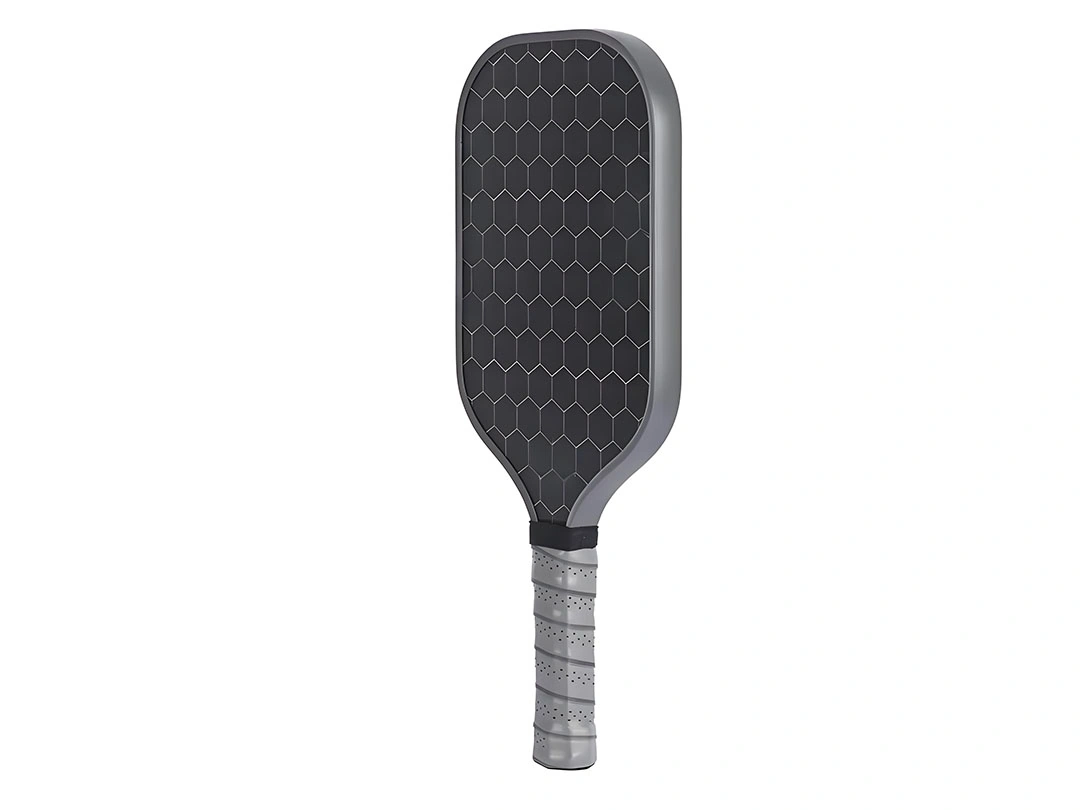
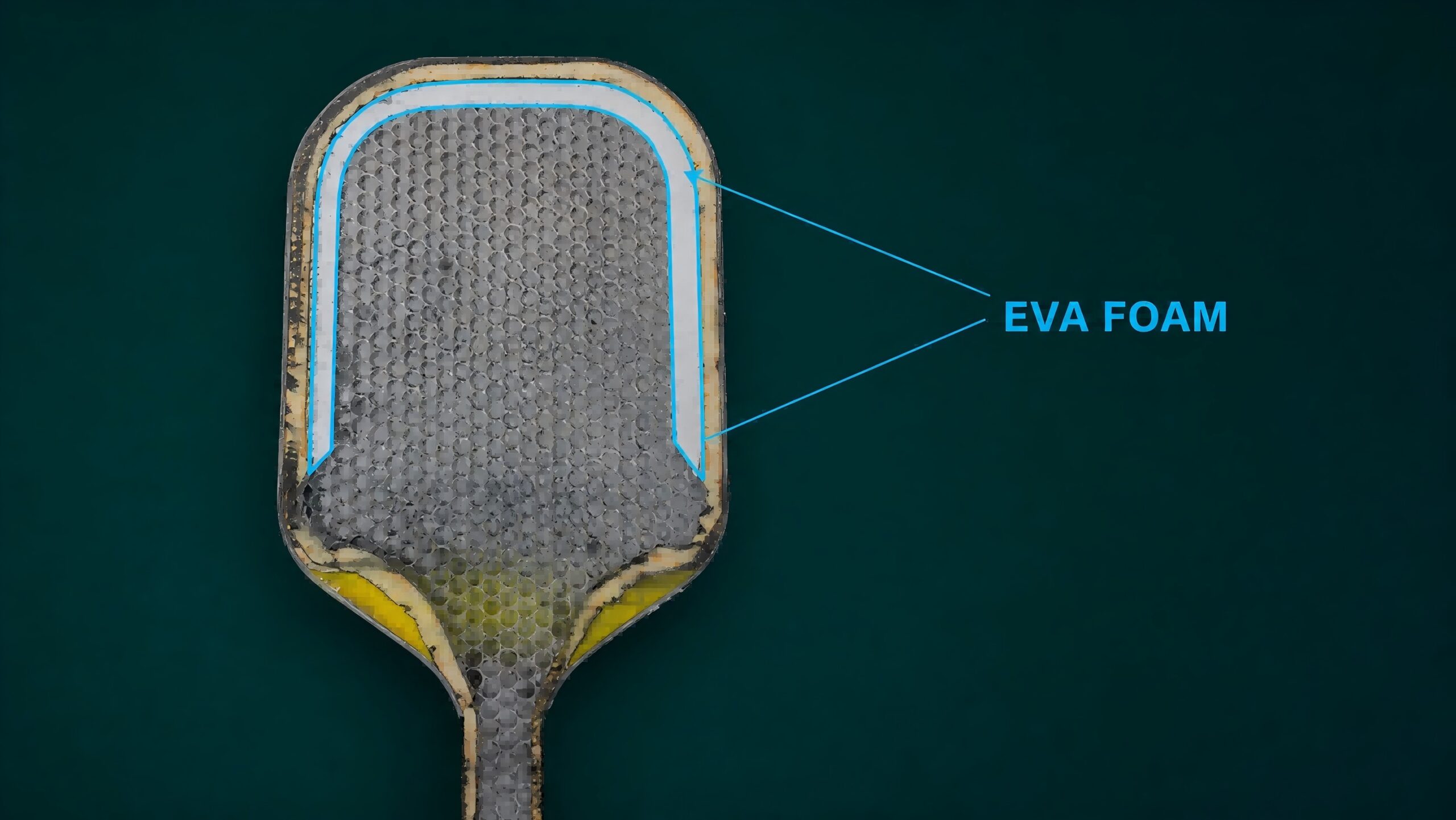
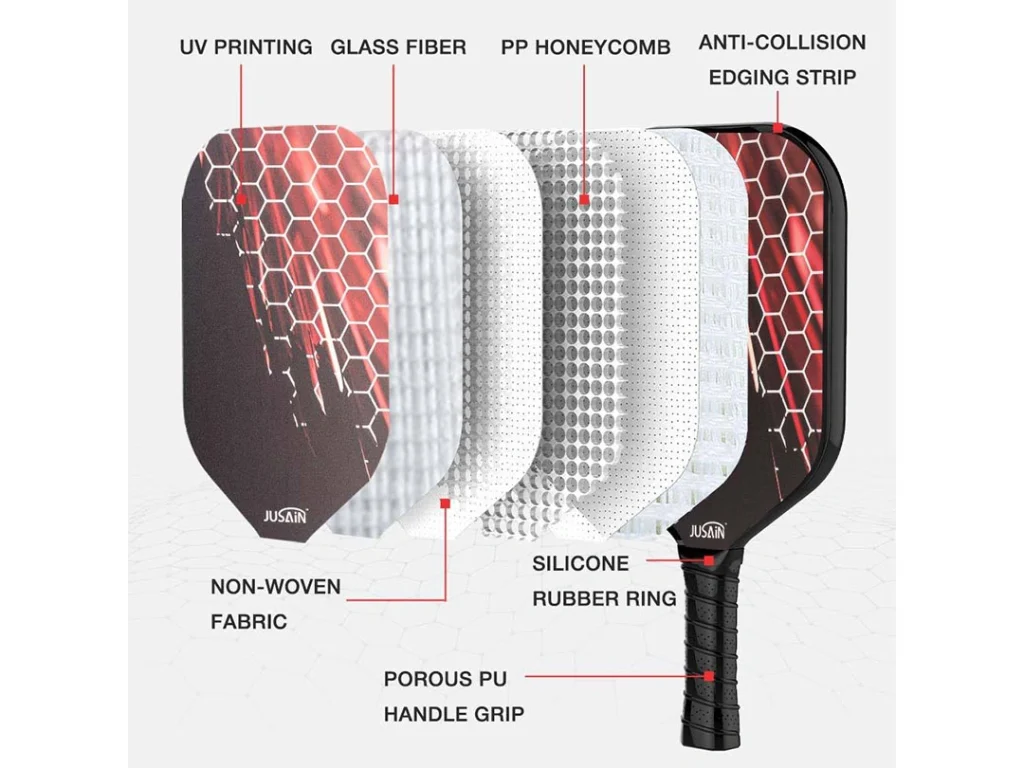
At the material science level, graphite in paddle construction refers to a thin crystalline carbon layer — typically a graphite coating or film — applied over a paddle face that is predominantly fiberglass. Graphite is a layered crystalline form of carbon with useful surface hardness and a naturally lubricous feel, but it lacks the tensile architecture of woven carbon fiber. In paddle applications, it primarily contributes surface stiffness to what is otherwise a fiberglass construction.
This is not the same as woven carbon fiber sheets, where continuous carbon filaments are bound with resin to form a structural face material. The distinction matters enormously for performance and for how you position a SKU.
A Brief History: Graphite’s Rise and Repositioning
From 2015 to roughly 2020, graphite-face paddles were the upgrade path. A recreational player starting with a basic aluminum or wood paddle would graduate to a “graphite paddle” as their first real investment in the sport — and that positioning was legitimate at the time. Carbon fiber paddles existed but were priced for professionals and serious amateurs, typically $180–$220+.
The retail channel reinforced this by marketing “graphite” as shorthand for premium, even when the construction was primarily fiberglass with a nominal graphite treatment. Some brands — particularly in the mass-market and entry-level segments — used the term broadly to cover anything that wasn’t straight fiberglass, a practice that persists today.
The result: if you search “graphite pickleball paddle” in 2026, you’ll find products ranging from $30 no-name paddles to mid-range paddles from established brands — but you won’t find elite-tier performance paddles. That tier has moved to carbon fiber.
Graphite vs. Composite vs. Carbon Fiber: Clearing the Terminology Confusion
These three terms appear constantly in product listings, buyer conversations, and sourcing briefs — and they’re not interchangeable. Here’s the hierarchy as it actually exists in 2026:
Material Terminology Table
| Term | Face Construction | Core | Era / Market Position | Price Tier (Retail) |
|---|---|---|---|---|
| Composite | Fiberglass face + polymer core | PP Honeycomb | Legacy mid-range term (2010s) | $40–$100 |
| Graphite | Thin carbon coating over fiberglass substrate | PP Honeycomb or Nomex | Entry-to-mid, recreational | $50–$130 |
| Carbon Fiber (Cold Press) | Woven UD or 3K carbon fiber sheets, cold-press bonded | PP Honeycomb | Current mid-tier, strong value | $60–$150 |
| Carbon Fiber (Thermoformed T700) | T700-grade woven carbon, hot-press molded | PP Honeycomb or advanced core | Current premium-to-performance | $100–$180 |
| Carbon Fiber (T800 / Forged) | T800 carbon + specialized textures/cores | Polymeric mesh or high-density foam | Flagship performance | $160–$250+ |
The term “composite pickleball paddles” has evolved too. Strictly speaking, composite refers to any multi-material construction — which technically includes most paddles on the market today. In common retail usage, though, it’s often used to describe fiberglass-face paddles with polymer cores, typically in the $50–$100 bracket. You’ll see composite pickleball paddles positioned as the accessible step up from beginner wooden models.
Performance Comparison Table
| Attribute | Graphite | Composite (Fiberglass) | Carbon Fiber T700 |
|---|---|---|---|
| Weight | 220–250g | 225–255g | 210–240g |
| Power Transfer | Moderate | Moderate-High | High |
| Spin Potential | Low-Moderate | Moderate | High (~30% more than fiberglass) |
| Touch / Feel | Firm, moderate feedback | Softer, forgiving | Crisp, responsive |
| Durability | Good | Good | Excellent |
| Price Tier | Entry-mid | Entry-mid | Mid-premium |
| Ideal Player Profile | Beginners, recreational | Beginners, intermediate | Intermediate to advanced |
The Market Has Spoken: Carbon Fiber’s Takeover
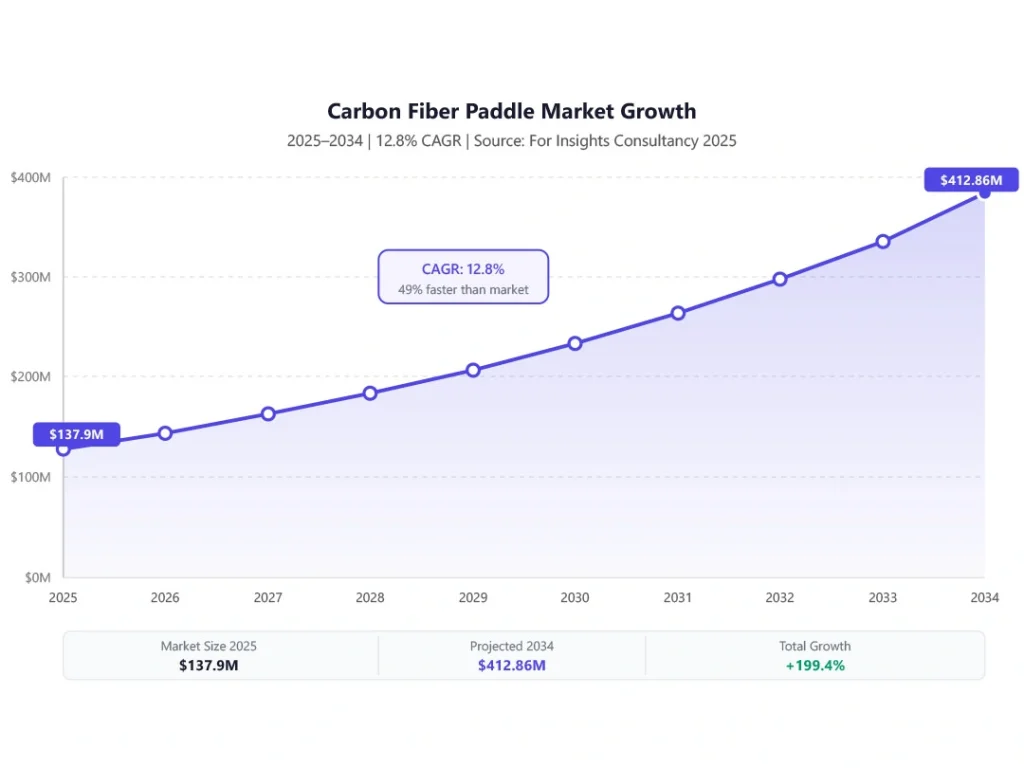
The data isn’t ambiguous. The carbon fiber paddle segment was valued at $137.9 million in 2025, growing at a 12.8% CAGR with a projected endpoint of $412.86 million by 2034, according to For Insights Consultancy’s 2025 market report. The broader pickleball paddle market is growing at 8.6% CAGR from 2026 to 2032 (QY Research). Carbon fiber is growing 49% faster than the overall market.
That gap isn’t closing — it’s widening.
The T700 Price Compression Effect
The story of how carbon fiber became a mid-market material is a textbook case of technology trickle-down. In 2021–2022, T700-grade carbon fiber paddles were a premium proposition at $180–$250. The materials cost was real; the manufacturing complexity was real; and the consumer familiarity wasn’t there yet.
By 2025–2026, that calculus changed on every front:
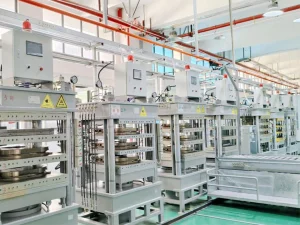
- Manufacturing scale: Higher volumes from Chinese paddle manufacturers brought cold-press T700 production costs down substantially
- Consumer literacy: Three years of pickleball’s viral growth created a buyer base that knows what T700 means and expects it
- Brand-level commitments: Major brands staked their positioning on carbon, accelerating category normalization
The signal event was Selkirk’s February 2026 SLK Geo launch — a T700 carbon fiber paddle at $100 retail. When Selkirk, one of the most credible names in pickleball equipment, puts T700 at three digits, it resets consumer expectations across the entire category.
Brand Moves That Define the New Landscape
The brand movements aren’t subtle. They’re strategic commitments:
- JOOLA: Rolled CFS (Carbon Friction Surface) technology across all performance lines — the rough-textured carbon face designed to maximize spin has become a category differentiator
- CRBN: Built an entire brand identity around 100% T700 Toray carbon fiber; doesn’t offer anything else
- Selkirk: The new SLK lineup (Geo, Dauntless, Valkyrie) went entirely carbon fiber across sub-$200 price points, with graphite effectively phased out of their performance offering
- Franklin: The FS Tour uses carbon fiber as its face material of choice for the performance segment
Notice what’s missing from those brand moves: graphite. None of these brands are investing in graphite innovation. They’re investing in carbon grades, surface textures, core technologies, and thermoforming processes.
As a result, graphite has settled into the $50–$120 entry and recreational bracket — a tier with legitimate commercial volume, but not the performance tier. That segmentation is important to understand — because it’s not an accident. It reflects where the material’s performance ceiling sits.
What This Means for B2B Buyers in 2026
Here’s the framing that matters for brand owners, Amazon FBA sellers, and wholesalers building or updating their 2026 product lines:
Graphite is not dead. It’s repositioned.
That’s a strategic asset if you use it correctly. It’s a liability if you’re still treating it as your premium offer.
The Commercial Case for Graphite in 2026
Graphite paddles fulfill a specific commercial function that’s genuinely valuable:
- Top-of-funnel acquisition SKU: A graphite or composite paddle at $55–$85 is the right entry point for a new player who doesn’t know the difference yet. You acquire the customer at a low price point.
- Recreational and institutional volume: Park & rec programs, resort rentals, beginner clinics, corporate team-building events — these channels buy in bulk and don’t need T700 performance. Composite pickleball paddles dominate this segment.
- The upgrade path: A player who buys a graphite paddle from your brand and has a positive experience is far more likely to upgrade to your T700 or thermoformed SKU within 12–18 months. That lifetime value calculation matters for brand builders.
SKU Architecture Recommendation for 2026
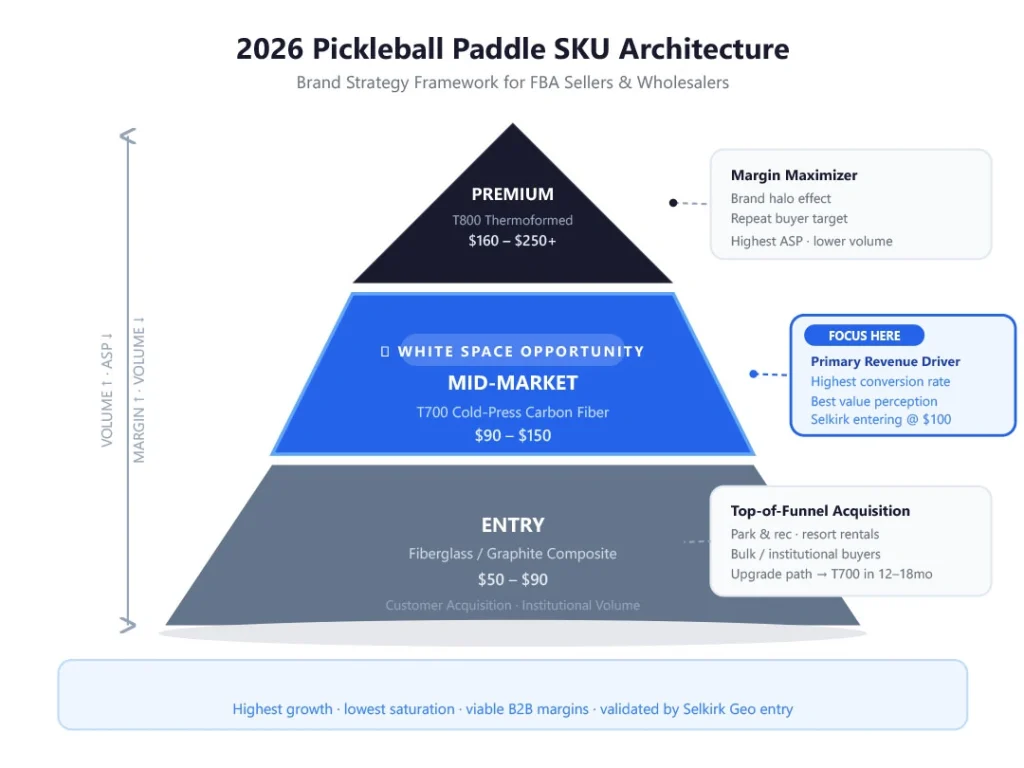
The brands that win in 2026 are operating with a three-tier product ladder. Here’s the framework:
| Tier | Material | Price Range (Retail) | Strategic Role |
|---|---|---|---|
| Entry | Fiberglass or graphite composite | $50–$90 | Customer acquisition, bulk/institutional, top-of-funnel |
| Mid | T700 cold-press carbon fiber | $90–$150 | Primary revenue driver, highest conversion, best value perception |
| Premium | T800 thermoformed carbon fiber | $160–$250+ | Margin maximizer, brand halo, repeat buyer target |
The White Space: Mid-Market T700
If there’s one segment worth calling out explicitly, it’s the $80–$130 T700 carbon fiber bracket. This is the highest-growth, lowest-saturation zone in the market right now:
- Selkirk is entering it ($100 Geo), which validates the demand
- Most established brands are still concentrated at $150+
- Consumer willingness-to-pay for T700 at sub-$130 is high and growing
- Margin profiles at volume remain viable for B2B
For FBA sellers and brand owners who aren’t sourcing T700 cold-press product yet, this is where your attention should be in 2026. Not graphite. Not thermoformed flagship. Mid-market T700.
NexaPaddle’s Material Ladder: From Composite to T700 Performance
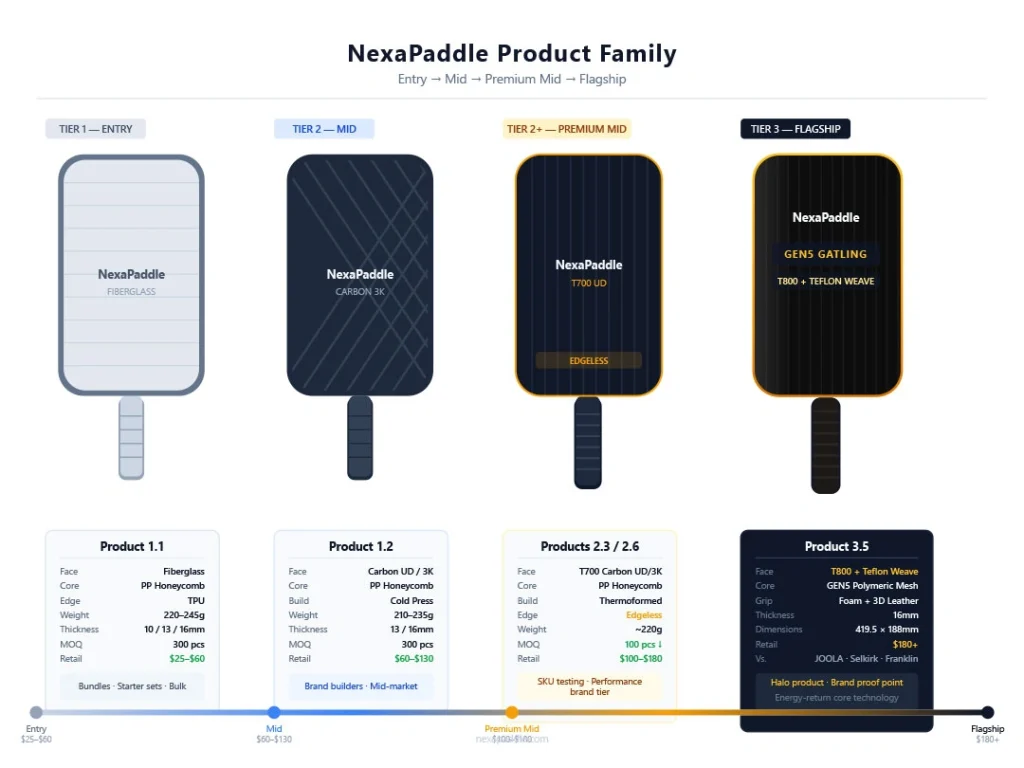
NexaPaddle’s product catalog maps directly to the tier structure outlined above. Here’s how the lineup runs from entry to flagship:
Tier 1 — Entry: Cold Press Fiberglass (Product 1.1)
The foundation SKU for composite pickleball paddles at volume:
- Face: Fiberglass | Core: PP Honeycomb | Edge: TPU
- Thickness: 10mm / 13mm / 16mm | Weight: 220–245g
- Dimensions: 400×195mm (Control) or 417×188mm (Power)
- Retail range: $25–$60 | MOQ: 300 pcs
This is the institutional bulk SKU — appropriate for branded bundles, starter sets, and entry-level retail listings. It’s not competing with T700 paddles; it’s capturing a different buyer. The TPU edge guard adds durability that matters in high-frequency-use environments.
Tier 2 — Mid: Cold Press Carbon Fiber (Product 1.2)
The commercial sweet spot for brand builders targeting the growing mid-market:
- Face: Carbon Fiber (UD or 3K weave) | Core: PP Honeycomb
- Thickness: 13mm / 16mm | Weight: 210–235g
- Dimensions: 400×195mm or 417×188mm (same tooling as 1.1)
- Retail range: $60–$130 | MOQ: 300 pcs
This is the product for brands entering the T700/carbon fiber category without flagship production minimums. The UD (unidirectional) option emphasizes power and ball speed; the 3K weave provides a more traditional carbon aesthetic that consumers recognize. At $60–$130 retail on a standard cold-press construction, this is where the mid-market volume lives.
→ See NexaPaddle’s Carbon Fiber Pickleball Paddles for full cold-press specifications and customization options.
Tier 2+ — Premium Mid: Thermoformed T700 (Products 2.3 / 2.6)
The thermoformed tier is where construction methodology separates products meaningfully:
Thermoformed T700 Power (Product 2.3 / Mold #3)
- Face: Carbon Fiber UD/3K or T700 | Core: PP Honeycomb
- Construction: Edgeless, thermoformed
- Dimensions: 417×188mm | Thickness: 13mm / 16mm | Weight: ~220g
- Retail range: $100–$180 | MOQ: 100 pcs
Hot Press Forged T700 (Product 2.6 / Mold #7)
- Face: T700 Carbon Fiber (UD/3K) | Hot press forging process
- Dimensions: 420×185mm | Handle: 145mm extended
- Weight: 220–235g
- Retail range: $120–$180 | MOQ: 100 pcs
The move to thermoforming (hot-press) produces a denser, more uniform bond between face and core — the same principle that separates high-performance tennis rackets from recreational ones. The edgeless construction on Mold #3 is a product differentiator that’s visible to consumers who’ve done their homework. Note the lower MOQ (100 pcs vs. 300 pcs for cold press) — a significant advantage for brand builders testing new SKUs.
→ Full specs and customization options at NexaPaddle’s Thermoformed Pickleball Paddles page.
Tier 3 — Flagship: GEN5 Gatling T800 (Product 3.5)
The halo product in the NexaPaddle lineup — built around T800 carbon and next-generation core technology:
- Face: T800 Carbon Fiber + Teflon-weave surface texture
- Core: GEN5 Polymeric Energy-Return Mesh (proprietary)
- Grip: Foam grip + 3D leather overwrap
- Dimensions: 419.5×188mm | Thickness: 16mm
T800 carbon fiber has a higher tensile modulus than T700 — more stiffness per weight unit, which translates to more precise energy return at contact. The Teflon-weave surface texture is designed to maximize ball grip on topspin shots without creating a rough surface that would violate USAPA surface roughness guidelines. The GEN5 polymeric mesh core is a meaningful step beyond standard PP honeycomb — energy return rather than energy absorption.
This is the SKU you position against JOOLA, Selkirk Prime, and Franklin’s flagship lines. It’s a brand-halo product and a proof point for your product development capabilities, not a volume driver.
FAQ
Are graphite pickleball paddles good for beginners?
Yes — with the right expectations set. A graphite pickleball paddle in the $50–$90 range offers a firm face with reasonable control, which is appropriate for players learning court positioning and shot mechanics. They’re better than wood or aluminum, and the price point keeps initial investment low. What they don’t offer is the spin potential and power transfer of T700 carbon fiber — but most beginners aren’t ready to use that performance anyway. As a first paddle or an entry-level SKU for a brand, graphite serves a real purpose.
What is the difference between graphite and composite pickleball paddles?
The terms are related but distinct. Composite pickleball paddles typically refer to fiberglass-face paddles with a polymer honeycomb core — the construction is straightforward and optimized for affordability and durability. Graphite paddles add a thin crystalline carbon coating or layer to a largely fiberglass construction, contributing added stiffness and a harder surface feel. In practice, both fall in the entry-to-mid price tier ($40–$130), and both are a step down from true woven carbon fiber in terms of spin potential and performance ceiling. Retailers sometimes use these terms interchangeably, which adds to the confusion, but from a sourcing and specification standpoint they represent distinct constructions.
Is carbon fiber better than graphite for pickleball?
For performance play, yes — unambiguously. Woven carbon fiber (particularly T700-grade) delivers meaningfully higher spin generation (~30% more than fiberglass/graphite), better power transfer, and a more consistent face stiffness due to the structural integrity of the woven filament sheets. At competitive play levels from 3.5+ on up, the performance gap is real and measurable. The price gap has narrowed substantially in 2025–2026 — T700 paddles now start around $80–$100 at retail — which removes the historical justification for choosing graphite over carbon fiber for performance-oriented buyers. For recreational play and bulk institutional use, graphite and composite paddles still make economic sense.
What is T700 carbon fiber and why does it matter?
T700 is a specific grade designation from Toray Industries — the Japanese materials manufacturer that dominates the high-performance carbon fiber supply chain. The “T” series denotes tensile strength: T700 delivers approximately 4,900 MPa tensile strength, making it substantially stronger and stiffer than standard carbon fiber variants used in entry-level applications. In paddle terms, T700 means a face that can be thinner while maintaining stiffness, which allows manufacturers to optimize weight distribution and power transfer simultaneously. T700 became the de facto standard for performance pickleball paddles from 2022 onward. When a brand like CRBN says “100% Toray T700,” that’s a specific, verifiable material claim — not marketing language.
Can I still sell graphite paddles profitably in 2026?
Absolutely — if you position them correctly. The entry-level recreational segment is not small: beginner players, institutional buyers (gyms, parks, resorts), and bulk gifting channels all represent real volume for composite and graphite paddles. The key is not trying to compete on performance against T700 carbon fiber products, and not pricing graphite SKUs above ~$90 where consumer expectations shift. The most effective strategy is using a graphite or composite SKU as a customer acquisition vehicle — a $60–$75 branded paddle that performs appropriately for its price point and creates a buyer relationship you can upgrade. Where brands get into trouble is when graphite is their only SKU, or when it’s priced and marketed as a performance product. Within the right tier, graphite remains viable and commercially healthy.
Conclusion: Graphite Served Its Era — Now Use It Strategically
Graphite did exactly what it was supposed to do for the pickleball market: it gave the sport a “premium” accessible entry point during its explosive growth phase. It introduced millions of players to performance paddles at a price they could justify. That’s a legitimate contribution to the sport’s development.
In 2026, graphite’s commercial role has clarified. It’s not the premium tier anymore — carbon fiber is, at prices that would have seemed impossible five years ago. The carbon fiber paddle segment at $137.9 million in 2025, compounding at 12.8% annually, is not a blip. It’s a structural market shift driven by material cost compression, manufacturing innovation, and brand-level commitments from every major player in the industry.
For B2B buyers building product lines, the strategic question isn’t graphite or carbon fiber. It’s how to use both in a coherent product architecture:
- Graphite and composite at entry tier to acquire customers and serve institutional volume
- T700 cold-press at mid tier to capture the highest-growth demand segment
- T700/T800 thermoformed at premium tier to maximize margin and brand positioning
That’s the 2026 playbook. The brands executing it are building durable positions. The brands ignoring the material evolution are watching their ASPs compress with no path out.
Ready to build your 2026 product line across the full material spectrum? NexaPaddle manufactures across every tier — from cold-press fiberglass and composite pickleball paddles at 300-piece MOQs to thermoformed T700/T800 flagship paddles at 100-piece MOQs. Full OEM/ODM customization available.
Contact NexaPaddle to discuss your 2026 sourcing strategy.
Footnotes
T700 carbon fiber spin performance comparison based on surface texture and stiffness characteristics relative to standard fiberglass constructions; referenced in NexaPaddle product development specifications and widely reported across independent paddle review publications.
For Insights Consultancy, Carbon Pickleball Paddle Market Size, Trends Analysis Research Report, October 2025. Market value: USD $137.9M (2025), projected USD $412.86M (2034), CAGR 12.8%.
QY Research, Global Pickleball Paddle Market Report, 2026 edition. Overall market CAGR: 8.6% (2026–2032).
Selkirk Sport press release, “Selkirk Releases All-New SLK Lineup,” February 17, 2026; confirmed coverage via The Dink Pickleball, February 24, 2026.