Competing with Top Brands: How to Manufacture High-End Paddles

Table of Contents

The Premium Paddle Market: Cracking the Code of Industry Giants

The premium pickleball market is experiencing explosive growth. Valued in the hundreds of millions, the industry is on track to reach a staggering $327 million by 2030, driven by an aggressive 8.6% compound annual growth rate (CAGR). As the sport transitions from casual backyard games to highly competitive, professional-tier tournaments, player expectations have shifted dramatically.

Today, the top pickleball paddle brands—household names like Selkirk, JOOLA, and CRBN—are routinely commanding prices between $200 and $280 per paddle. Consumers willingly pay these premium prices under the assumption that these industry titans possess exclusive, highly guarded technological secrets that justify the cost.

However, for B2B brand owners, Amazon FBA sellers, and ambitious entrepreneurs looking to enter this lucrative space, there is a hidden truth that disrupts this narrative: the technology behind these flagship paddles is not proprietary magic. The high-performance materials, the advanced core structures, and the aerospace-grade manufacturing techniques are entirely accessible through the right OEM partner.

Understanding exactly what makes the best pickleball paddles function at a premium level is the first step to manufacturing your own. You do not need to spend millions on R&D to launch a paddle that rivals a JOOLA Perseus or a Selkirk Vanguard. By deconstructing the materials, analyzing the core technologies, and partnering with a specialized manufacturer, you can deliver the exact same high-end specifications to your target audience at a fraction of the retail cost — all while maintaining incredibly healthy profit margins.

What Defines a “Top Brand” Paddle? (Deconstructing the Premium)

To successfully compete with legacy brands, you must first understand the structural anatomy of a premium paddle. The modern high-end paddle is a marvel of composite engineering, relying on five critical pillars of construction and compliance.

Face Materials: The Friction Frontier

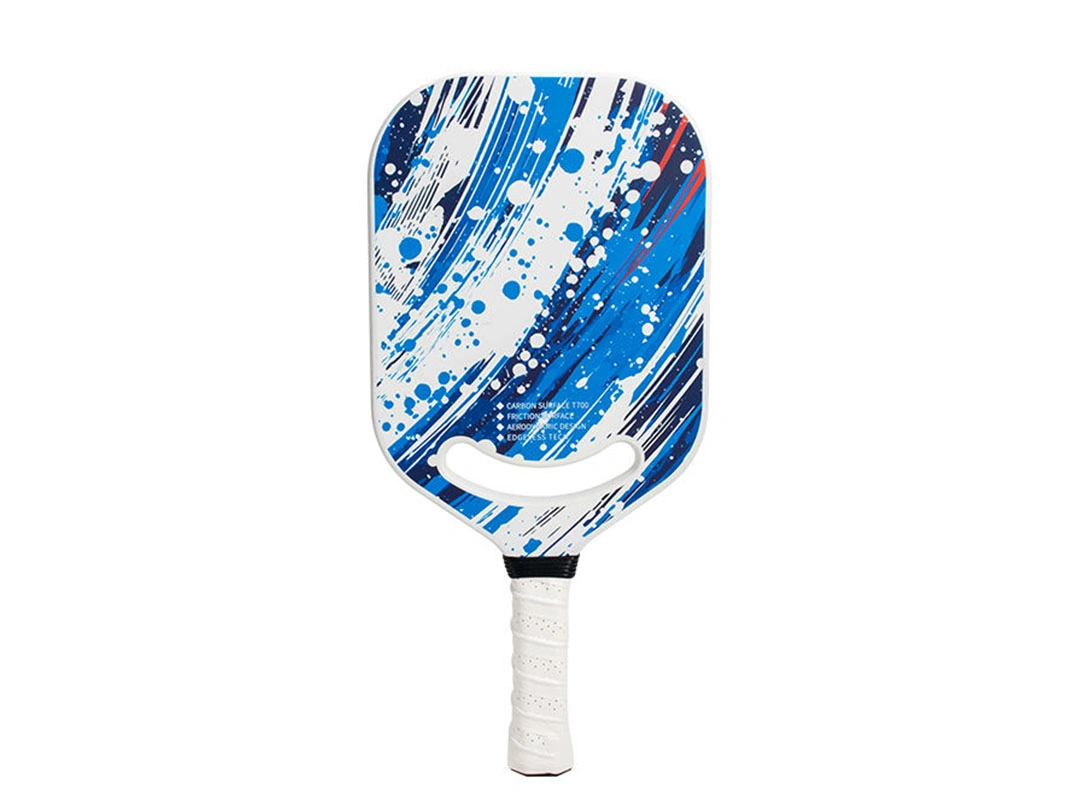
The surface of a paddle dictates spin generation, dwell time, and overall control. In the current market, Toray T700 carbon fiber has become the absolute baseline for competition-grade paddles. Seen on flagship models like the Selkirk Vanguard, the JOOLA Perseus, and the Vatic Pro V-SOL, T700 offers a perfect balance of stiffness and texture. For brands looking to source these materials, exploring specialized carbon fiber pickleball paddles is the ideal starting point.

But the industry is already moving beyond the baseline. The next frontier involves T800 carbon woven with Titanium thread — an aerospace-inspired composite that delivers maximum spin and power without sacrificing gritty surface texture for top-spin drives.

Furthermore, we are seeing the rise of Kevlar and Aramid hybrids. Paddles like the Six Zero Ruby utilize these fibers to create a distinctively “plush feel” that is physically impossible to achieve with raw carbon alone. Regardless of the material, authentic raw composite surfaces naturally generate upwards of 2,300+ RPM of spin out of the box. In contrast, cheaper paddles rely on spray-on grit — a cost-cutting measure that degrades aggressively within months of standard play, ruining the paddle’s performance profile.

Core Technology: The Engine of the Paddle

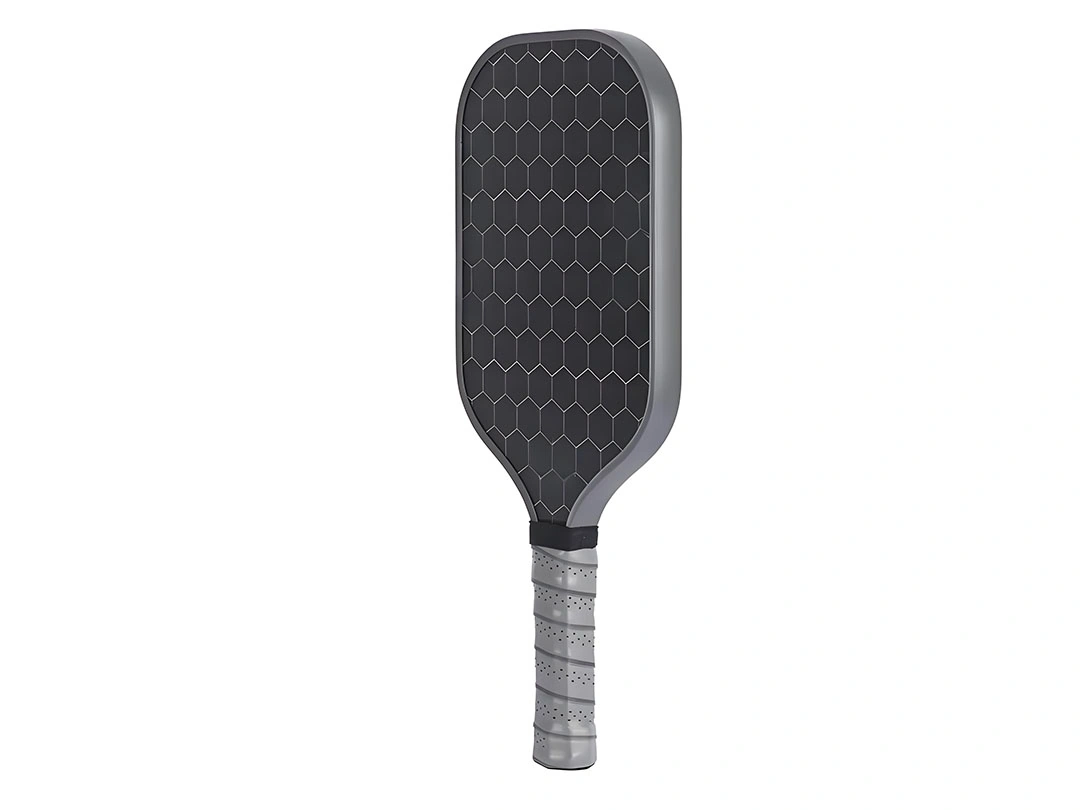
If the face is the steering wheel, the core is the engine. The core structure determines energy return, sweet spot size, and acoustic profile. Gen 3 Thermoformed Honeycomb cores are still highly dominant in the premium segment, offering reliable consistency and excellent structural integrity.

However, the vanguard of paddle engineering has introduced Gen 4 Foam Cores, utilizing Expanded Polypropylene (EPP) or Multi-Purpose Polypropylene (MPP). Seen in the Selkirk BoomCore and the CRBN TruFoam, solid foam is actively replacing traditional honeycomb in ultra-premium models. Foam completely eliminates the dreaded “core crush” issue that plagued early thermoformed models and significantly reduces tennis elbow. To build paddles with this architecture, partnering with a dedicated foam core pickleball paddles manufacturer is essential.

Beyond foam, the industry is pioneering GEN5 “Gatling” Polymeric Mesh cores — NexaPaddle’s flagship technology — designed to provide the absolute maximum energy return permissible under current regulatory guidelines.

Manufacturing Process: Heat, Pressure, and Unibody Design

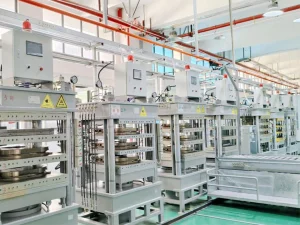
The method used to bind core and face is just as important as the materials themselves. Thermoforming has captured a massive 43% of the premium market since 2024. This process applies heat and pressure to mold the paddle into a single, cohesive unit.

The result is unibody construction. Unlike cheaper cold-pressed paddles where the face is merely glued to the core, thermoformed pickleball paddles feature continuous carbon fiber running through the handle. This structural continuity expands the usable sweet spot by 15–20% compared to traditional hot-pressed models.

For absolute peak durability, hot press forging takes this a step further — utilizing extreme atmospheric pressure and precision-machined steel molds to achieve zero delamination risk for pro-grade durability.

Performance Metrics: Beyond the Marketing Buzzwords

Top brands don’t just sell aesthetics; they sell measurable physics. When designing a high-end paddle, objective data matters more than subjective claims like “ultimate control” or “massive power.”

MetricDefinitionPremium BenchmarkWhy It Matters
Twist WeightResistance to twisting on off-center hits6.5+Higher twist weight dramatically increases functional sweet spot and reduces wrist torque
Swing WeightHow heavy the paddle feels in motion110–120Balances hand speed at the kitchen line with plow-through power on drives
Dwell TimeMilliseconds ball stays on the faceVariable by coreLonger dwell (from Kevlar/Foam) allows more spin manipulation
PBCoRCoefficient of Restitution (trampoline effect)< 0.44 (USAPA limit)Ensures maximum power without failing tournament exit-velocity testing

These are engineering targets, not marketing buzzwords. A premium OEM partner will design your paddle to hit these metrics precisely.

USAPA Certification: The Ultimate Gatekeeper

None of the above technology matters if your paddle cannot be used in tournament play. USAPA certification is the mandatory passport for any serious brand. In 2024 alone, there were 1,713 new submissions, with only 1,225 approved — including 476 entirely new manufacturers entering the space.

Certification costs between $500 and $1,200 per design and takes a standard 4 to 6 weeks. Furthermore, the 2024–2025 season saw a sweeping decertification wave due to strict enforcement of the new PBCoR standard. Brands can no longer afford to guess on specifications; they need fundamentally compliant designs from day one to avoid costly recalls and brand damage.

With those compliance benchmarks in mind, the next step is seeing how the leading brands actually measure up against those specifications — and what that reveals about your own manufacturing opportunity.

How Top Brands Build Their Paddles: A Side-by-Side Comparison

To truly demystify the premium market, we must place flagship models from the top brands side-by-side with what a world-class OEM can produce. The following table strips away proprietary marketing terminology to reveal the foundational material science underneath.

FeatureSelkirk VanguardJOOLA Perseus Pro IVCRBN TruFoam GenesisNexaPaddle OEM Equivalent
FaceT700 Carbon + AMPPCarbon Friction SurfaceRaw Carbon FiberT700/T800 Carbon Fiber (UD/3K)
CorePureFoam BoomCorePropulsion HoneycombTruFoam SolidPP Honeycomb / GEN4 EPP Foam / GEN5 Gatling
ProcessThermoformedCarbon-ForgedThermoformedThermoformed / Hot Press Forged
EdgeFoam-injectedHyperfoam wallsEdgelessEdgeless option available
Retail Price$200–$280$249–$280$238–$280You set the price
Available OEM?❌ No❌ No❌ No✅ Full OEM/ODM

When you analyze this comparison, a striking reality emerges. Every brand utilizes bespoke naming conventions to make their technology sound exclusive. JOOLA calls their textured face a “Carbon Friction Surface.” CRBN calls it “Raw Carbon Fiber.” In the manufacturing world, both are using variations of high-quality T700 Toray carbon fiber to achieve their 2,000+ RPM spin rates.

The same principle applies to core structures. Selkirk’s heavily marketed “BoomCore” is, fundamentally, an advanced foam core. CRBN’s “TruFoam” is a solid foam core. NexaPaddle’s GEN4 EPP is an aerospace-grade foam core. The material science across these flagship models is functionally equivalent. The resins, polymers, and carbon weaves are sourced from the same advanced composite supply chains.

“Selkirk’s BoomCore is a foam core. NexaPaddle’s GEN4 EPP is a foam core. The material science is equivalent — the difference is the brand on the paddle.”

The primary difference between a $250 flagship paddle and a highly customized OEM paddle is not the physics of the product — it is the logo printed on the face and the millions of dollars spent on professional player sponsorships. As a brand owner, this table is your blueprint.

The OEM Advantage: Why You Don’t Need to Be Selkirk

The democratization of high-end paddle manufacturing has already proven itself in the consumer market. Look no further than Vatic Pro, which successfully disrupted the space by offering genuine T700 thermoformed paddles at $80–$130, directly competing with Selkirk models priced at $250.

Vatic Pro proved that the technology is no longer hoarded by a select few. Because manufacturing processes have been democratized, the true differentiator for modern paddle companies is now brand story, targeted distribution, and a reliable factory partner.

This is where a custom OEM pickleball paddle manufacturing partnership becomes your most decisive competitive advantage. NexaPaddle’s manufacturing capabilities are designed specifically to bridge the gap between your brand vision and world-class product execution.

Our factory infrastructure includes 8+ proprietary molds, covering the full spectrum from standard cold press to advanced thermoformed and ultra-durable hot press forging. We maintain a full, unrestricted material range — fiberglass → T700 → T800+Titanium → Kevlar/Aramid — allowing your brand to scale across every price tier.

Core options evolve with your product line as well. You can launch standard PP Honeycomb models for recreational players and simultaneously develop GEN3 2.0, GEN4 EPP Foam, or GEN5 Gatling Mesh models for your “Pro” tier.

The most significant advantage for emerging brands is capital efficiency. The industry standard MOQ for high-end thermoformed paddles historically sat at 200–500 units per design. NexaPaddle has optimized production lines to offer an MOQ as low as 100 pieces for thermoformed models — allowing brand owners to test the market, iterate on designs, and manage cash flow without tying up massive capital in unproven inventory.

Pre-USAPA testing removes compliance anxiety entirely. Before you submit to USA Pickleball, we test in-house for deflection, total weight balance, surface roughness, and Coefficient of Friction (COF). Our pre-testing protocol dramatically reduces certification failure risk, so your launch timeline stays on schedule.

NexaPaddle’s Manufacturing Edge: The 5-Step Formula

Creating the best pickleball paddles requires more than raw materials — it requires a flawless, repeatable manufacturing protocol. NexaPaddle has refined production into a strict, quality-controlled 5-step process.

Step 1: Design and Engineering

Before a single sheet of carbon is cut, your paddle undergoes rigorous digital scrutiny. Our engineering team uses advanced simulation software to map weight distribution, predict sweet spot sizing, and analyze structural integrity. We then finalize the mold design and initiate pilot production — creating physical prototypes to ensure the digital theory translates perfectly into a high-performance product.

Step 2: Forming and Layup

This is where the paddle takes physical shape. Precise raw material processing cuts carbon fiber and core materials to exact tolerances. The materials are carefully layered (the layup process) before being subjected to either our thermoforming ovens or our extreme-pressure hot press machines. This bonding phase is critical for unibody strength and delamination prevention.

Step 3: Spray Polishing and Coating

The aesthetic and functional finish is applied here. The formed paddle undergoes meticulous sandblasting to prepare the surface. We then apply a precision three-stage coating: a bonding primer, a resilient mid-coat, and an ultra-durable top-coat — ensuring graphics remain vibrant and surface texture stays consistent after thousands of hits.

Step 4: Assembly and Integration

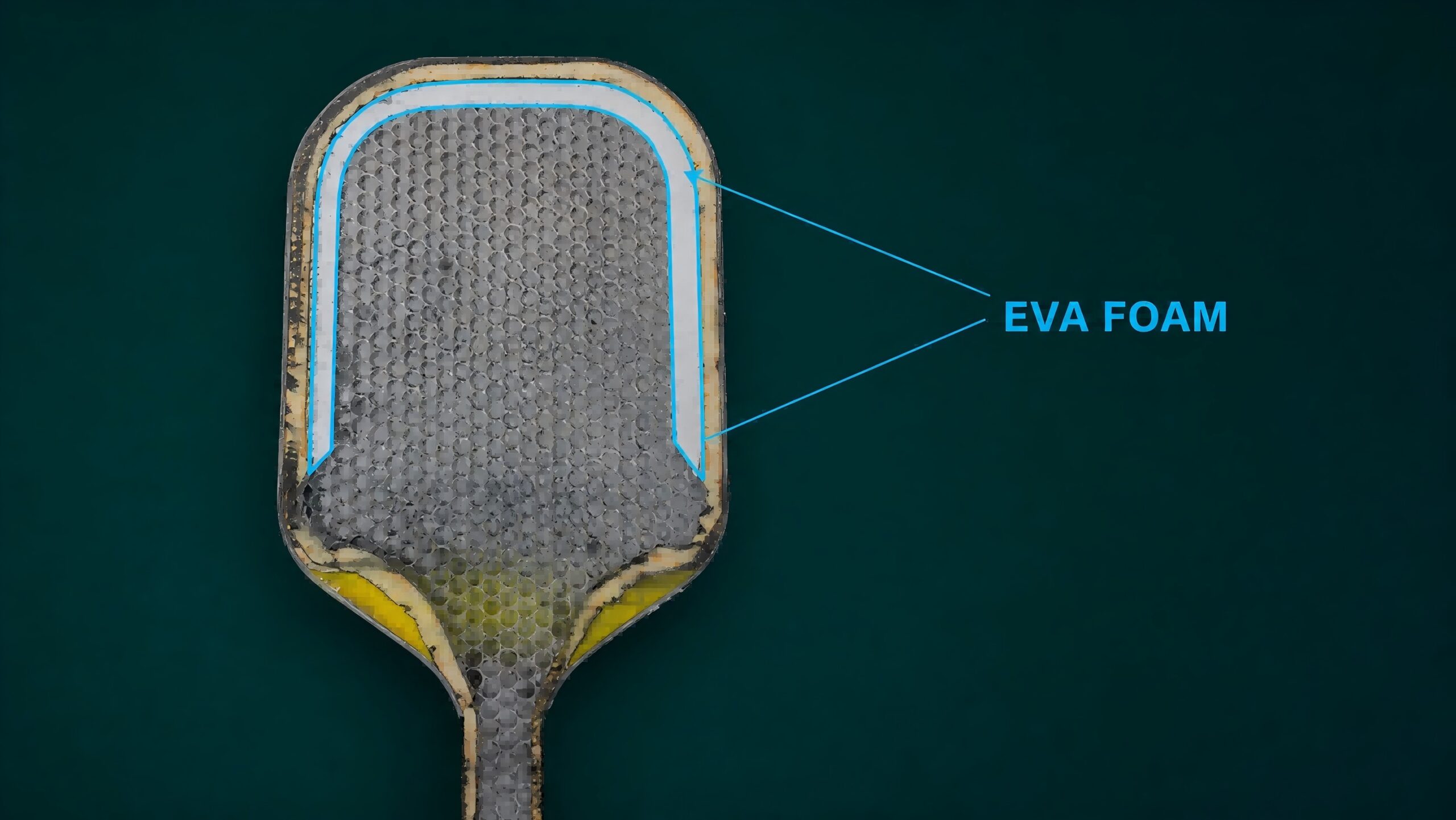
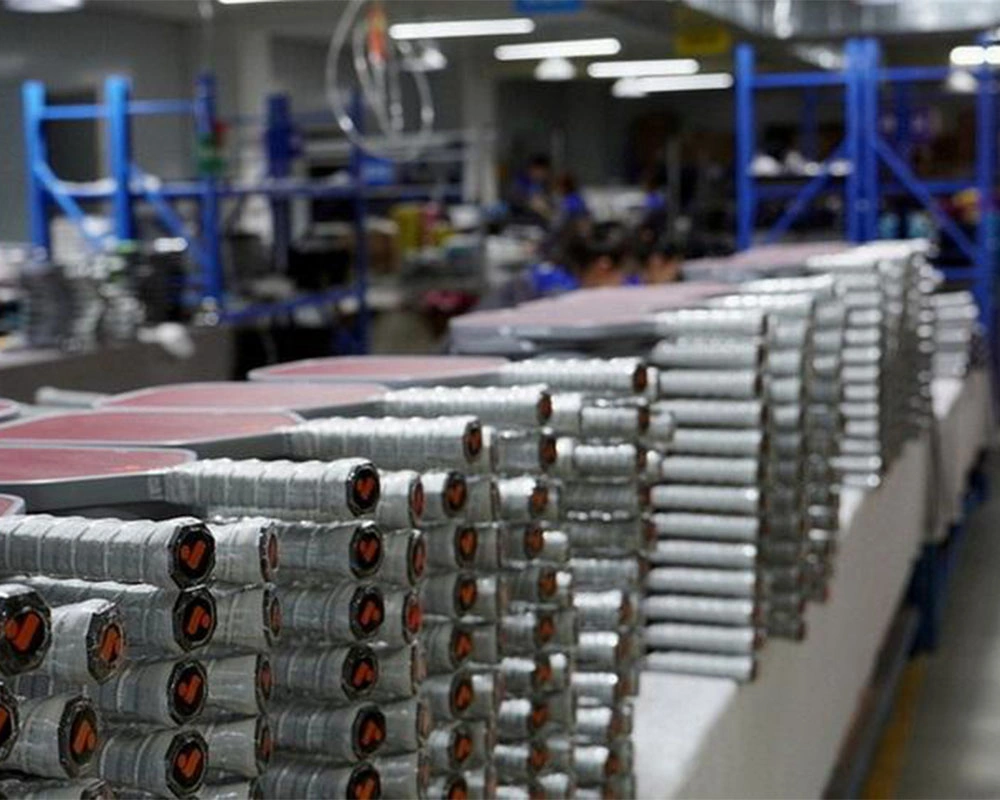
The raw paddle board is transformed into a finished sporting good. This stage involves component integration including edge guard application, perimeter foam injection for weight balancing, and premium grip wrapping. Printing, labeling, and branding are applied with high-resolution UV curing. In-process QC inspectors monitor every workstation throughout.

Step 5: Quality Control and Verification

Every production batch undergoes strict statistical sampling. We perform comprehensive dimensional testing to verify the exact balance point, total weight, and surface hardness. Products then undergo packaging verification to ensure your branded boxes, inserts, and protective covers are assembled and retail-ready.

Your brand benefits from 10+ years of dedicated composite manufacturing experience, a track record serving 300+ brands globally, and the credibility of a fully USAPA certified manufacturer.

Building Your Brand at the $150+ Price Point

Entering the high-end pickleball paddles market requires a clear understanding of unit economics and tiering strategy. To successfully sell a paddle for $150 or more, your manufacturing cost must align with both the required technology and your desired profit margins.

TierFace MaterialCoreProcessEst. OEM CostTarget Retail
Entry ($80–$120)Fiberglass / T700PP HoneycombCold Press~$18–$25$79–$119
Mid ($120–$180)T700 Carbon FiberGEN3 HoneycombThermoformed~$28–$38$129–$169
Premium ($180–$250)T700/T800 CarbonGEN4 EPP FoamThermoformed~$38–$52$179–$249
Pro ($250+)T800+Titanium / KevlarGEN5 GatlingHot Press Forged~$55–$75$249–$319

Let’s look at a practical financial breakdown for a Premium Tier entry. A thermoformed T800 carbon paddle with EPP foam core might carry a manufacturing cost around $42. Factor in custom retail packaging and international sea freight on a lean startup order of 100 units, and your total landed cost sits comfortably at approximately $45–$48 per paddle.

Priced at $130–$140 retail — vastly undercutting the $250 legacy brands while offering identical or superior performance — you are generating a 60–65% gross margin. This margin profile provides ample room for aggressive digital marketing, influencer sponsorships, and wholesale distribution discounts.

From a timeline perspective, launching is faster than most anticipate. A standard project spans 60 to 90 days from concept to delivery. Because NexaPaddle’s pre-testing capability virtually eliminates USAPA certification failure risk, you can confidently run pre-orders and marketing campaigns while inventory is in transit.

Frequently Asked Questions

Can an OEM paddle really match the quality of top brands like Selkirk or JOOLA?

Absolutely. The fundamental reality of the sporting goods industry is that the vast majority of “top brands” do not own their own factories — they partner with specialized OEM manufacturers. By working with a premium factory like NexaPaddle, you have access to the exact same Toray T700/T800 carbon fiber, the same EPP foam cores, and the same thermoforming processes used by the giants. Brands like Vatic Pro have already proven that OEM-sourced paddles can match and exceed the performance of $250 flagship models at half the retail price.

What is the minimum order quantity for high-end thermoformed paddles?

Just 100 pieces. Historically, factories required 300–500 units to justify thermoforming mold setup costs. Understanding the needs of modern e-commerce and FBA sellers, NexaPaddle has optimized our production lines to offer this MOQ for fully custom, high-end thermoformed paddles — allowing you to launch leaner, test the market, and scale based on real consumer demand.

How do I ensure my OEM paddle passes USAPA certification?

Yes — NexaPaddle’s integrated pre-testing protocol handles the compliance work before your paddle ever reaches official submission. We test for Coefficient of Restitution (PBCoR), surface roughness with precision profilometers, and all dimensional limits. By the time your paddle goes to USA Pickleball, approval is as close to a formality as the industry allows.

What’s the difference between thermoformed and cold press paddles?

They are two fundamentally different bonding methods. Cold press paddles rely on adhesives to bond the face sheet to the core. They are cheaper to produce — ideal for the Entry tier ($80–$120) — but prone to dead spots and edge delamination over time. Thermoformed paddles are baked in high-pressure ovens, fusing the face, core, and carbon-wrapped edges into a single unibody structure. This dramatically increases durability, expands the sweet spot, and is the mandatory standard for Mid to Premium tier paddles at $130 and above.

How long does it take to go from concept to finished product?

The process takes 60 to 90 days. The first 15–20 days cover engineering, 3D modeling, and physical prototype creation. Once you approve the prototype, bulk production takes roughly 30–40 days. The remainder is allocated for quality control, custom retail packaging assembly, and freight logistics to your final destination.

Conclusion: The Court Is Wide Open

The paradigm of the pickleball industry has permanently shifted. The massive gap that once existed between legacy top brands and independent challenger brands has been effectively erased by the democratization of advanced composite manufacturing. You no longer need a multimillion-dollar R&D budget to produce a paddle with unibody thermoforming, T800 carbon fiber, and vibration-dampening foam cores.

The technology is accessible. The margins are lucrative. The market is actively searching for high-performance alternatives to overpriced flagship models. The only missing variable is your brand vision.

If you’re ready to build a paddle brand that competes at the highest level, contact NexaPaddle today to start your manufacturing consultation. The court is wide open — your brand just needs to step onto it.

References

  • USA Pickleball Annual Growth Report (2025–2026): usapickleball.org
  • QY Research Pickleball Market Report (Feb 2026)
  • Pickleball News Asia Quiet Paddle Market Report (July 2025)
  • NEX Pickleball OEM Buyer’s Guide (March 2026)
  • Brand websites: joola.com, selkirk.com, crbncreations.com

Amazon FBA Pickleball Paddles: How to Source, Brand, and Stand Out

The market for pickleball paddles on Amazon is one of the most explosive opportunities in sporting goods e-commerce right now. With over 36.5 million players in the United States and participation growing at a double-digit rate year over year, the search volume for terms like amazon pickleball paddles and pickleball paddles amazon has surged to levels that most FBA

Read More »

Best Pickleball Paddles for Beginners: What Retailers Should Stock

The global pickleball equipment market is projected to reach $480.6 million by 2025, with paddles commanding nearly half of that revenue at roughly $239 million.[^2] For retailers, distributors, and brand owners, the most critical data point within those projections is this: the low-price, beginner tier constitutes a massive 43% of the total equipment market, representing

Read More »

The Best Pickleball Paddle for Intermediate Players (2026 Guide)

Your beginner paddle is holding you back. If your dinks are floating, your drives lack bite, and your resets feel unpredictable, the problem isn’t your technique—it’s your equipment. Finding the best pickleball paddle for intermediate players means finding the specific technology that sharpens your strengths and covers your weak spots. The jump from a 2.5 beginner to

Read More »

Best Pickleball Paddle for Tennis Elbow: Engineering for Comfort

Introduction: A $700 Million Market With an Arm Problem The pickleball industry crossed $702.9 million in 2025, powered by 36.5 million active players in the United States alone. If that number sounds impressive, the demographic breakdown behind it is more important to your business: the fastest-growing cohort is adults aged 40–65, many of them former

Read More »

Black Friday Sourcing: Preparing Your Pickleball Inventory Early

Here is the most important thing a B2B buyer needs to know about Black Friday 2026: your sourcing clock starts in April — not September. If you’re planning to capitalize on pickleball paddle Black Friday demand, waiting until late summer guarantees stockouts, premium freight costs, and missed revenue windows that won’t come back. The scale of what’s

Read More »

Cold Press vs. Hot Press Forging: Pickleball Manufacturing Explained

The single most consequential decision when sourcing custom OEM pickleball paddles is choosing the correct manufacturing process. For B2B buyers—whether you are an established brand owner, a volume wholesaler, or a scaling Amazon FBA seller—the underlying production method dictates your unit economics, product durability, target retail price point, and ultimately, your brand reputation. Sourcing blindly without understanding

Read More »