Minimum order quantity is one of the first questions every new paddle brand asks.
Can I start with 100 pieces?
Is 300 pieces better for private label?
Why do factories often recommend 500 pieces for serious wholesale orders?
The short answer: MOQ is not just a number. It decides your unit cost, customization depth, production priority, packaging options, quality control workflow, and launch risk.
For planning purposes, this guide compares 100-, 300-, and 500-piece order scenarios. These are examples, not universal factory MOQs: the final minimum depends on construction, customization, tooling, packaging, and the approved project specification.
This guide explains how to choose the right MOQ before you place your first custom pickleball paddle order.
Why MOQ Matters in Pickleball Paddle Manufacturing
MOQ exists because paddle production is not simply “print a logo and ship.”
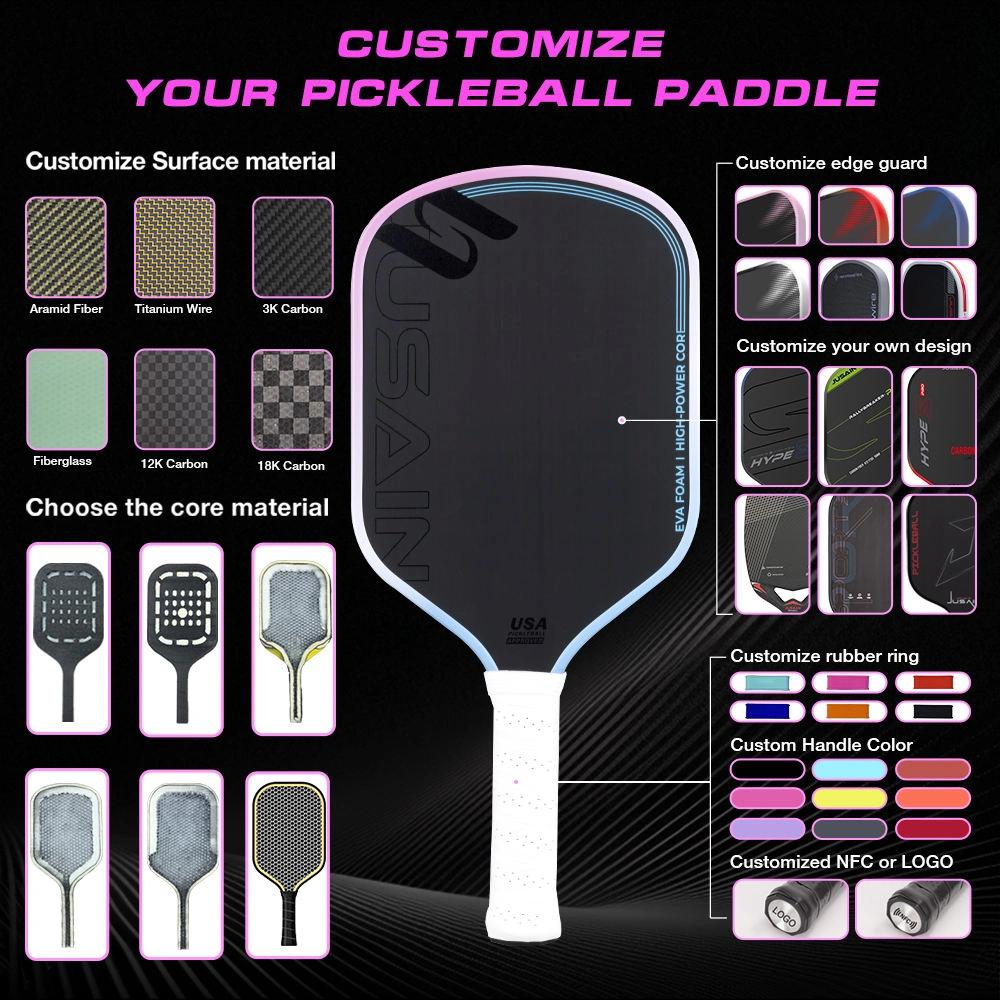
A custom paddle order may involve:
- face material selection
- core thickness and construction
- mold or shape selection
- weight range control
- grip size and handle length
- edge guard color
- surface finish
- UV printing or graphic transfer
- packaging design
- barcode or FNSKU labeling
- carton packing
- quality control records
- pre-shipment inspection
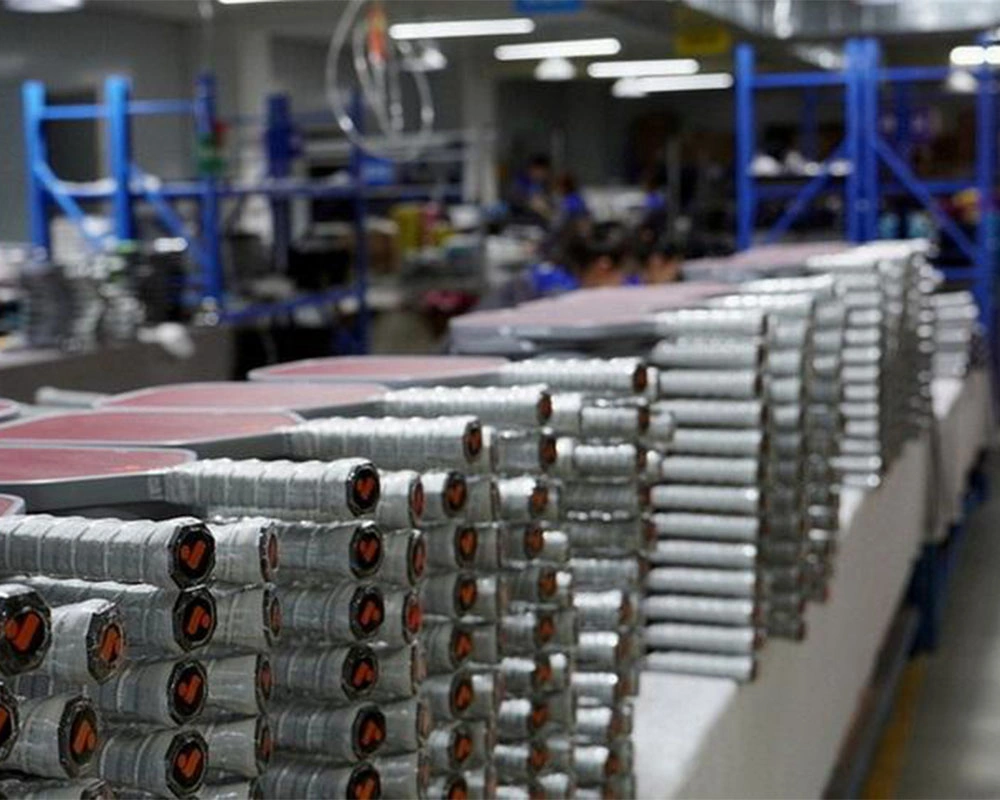
Even when you use an existing mold, the factory still needs to prepare materials, set up printing, schedule production, inspect samples, and package the order as one consistent batch.
This is why MOQ should be viewed as a production planning decision, not only a purchasing limit.
Quick MOQ Comparison: 100 vs 300 vs 500 Pieces
| MOQ Level | Best For | Main Advantage | Main Limitation |
|---|---|---|---|
| 100 pieces | New brand test order, sample launch, influencer trial | Lower cash risk | Higher unit cost, fewer customization options |
| 300 pieces | Private label launch, Amazon FBA test, retailer trial | Better cost balance and stronger branding | Requires clearer SKU planning |
| 500 pieces | Wholesale launch, distributor order, serious brand rollout | Better unit economics and production efficiency | Higher inventory commitment |
Use these quantities as planning scenarios, not fixed thresholds.
100 pieces illustrates a low-inventory test order.
300 pieces illustrates a larger private-label launch.
500 pieces illustrates a scale-oriented wholesale order. Your actual MOQ may be lower or higher depending on the approved specification.
Scenario 1: 100 Pieces – Low-Inventory Market Test
A 100-piece MOQ is useful when the buyer is still validating the product.
This quantity is suitable for:
- a new Amazon seller testing a first paddle SKU
- a Shopify brand testing graphics and positioning
- a coach or club testing a branded paddle
- an influencer or small community brand
- a retailer testing local demand
- a brand comparing two paddle constructions before scaling
At 100 pieces, the main benefit is lower inventory risk. You can test the market without committing to a large shipment.
However, buyers should understand the trade-off. A 100-piece order normally has a higher unit cost because factory setup time, printing preparation, QC work, and packaging handling are spread across fewer paddles.
What You Can Usually Customize at 100 Pieces
For many private label paddle programs, 100 pieces may allow:
- logo placement
- custom surface graphics
- basic color selection
- grip color selection
- standard edge guard choice
- existing mold selection
- simple packaging options
This is enough for a first launch, but it is usually not the best quantity for deep custom engineering.
If you want a proprietary shape, unique core formula, special foam structure, or full packaging system, 100 pieces may be too small to support the development cost efficiently.
When 100 Pieces Makes Sense
Choose 100 pieces when your main goal is learning.
You want to answer:
- Do customers like this design?
- Which price point converts?
- Does the paddle feel right for the target player?
- Can the packaging survive shipping?
- Which sales channel responds best?
- Should we scale this SKU or change direction?
For first-time buyers, the 100-piece order should be treated as a controlled market test, not the final business model.
Scenario 2: 300 Pieces – Private-Label Launch Model
For many paddle brands, 300 pieces is the first serious OEM quantity.
It gives you more room to build a real product line without overcommitting too early. The unit cost is usually better than 100 pieces, and factories can plan materials, printing, packaging, and inspection more efficiently.
A 300-piece order is suitable for:
- private label brands
- Amazon FBA sellers
- small wholesale launches
- sporting goods retailers
- regional distributors
- club or academy supply programs
- brands testing one hero SKU
At this stage, you should already know your target customer. Are you selling to beginners, intermediate players, advanced players, schools, clubs, or retail buyers? The answer affects your paddle construction and price point.
Why 300 Pieces Is Often the Sweet Spot
A 300-piece MOQ gives better balance between cost and flexibility.
It is large enough to justify stronger branding, but not so large that a new brand is trapped with excessive inventory.
At 300 pieces, buyers can usually make better decisions around:
- retail packaging
- product insert cards
- UPC or barcode planning
- Amazon FBA preparation
- carton labeling
- grip and edge guard combinations
- multiple colorways in limited variations
- more consistent batch QC
For a new brand, this is often the quantity where the paddle begins to feel like a real retail product rather than a small custom run.
A Practical 300-Piece Launch Strategy
One common strategy is to focus all 300 pieces on one strong SKU instead of splitting the order into too many variations.
For example:
- 300 pcs T700 raw carbon control paddle
- one shape
- one thickness
- two graphic colorways
- one retail box
- one clear target price point
This keeps production simpler and helps your brand collect cleaner sales data.
If you split 300 pieces across too many models, each variation may become too small to test properly. Your inventory becomes complicated, and your marketing message becomes weaker.
Scenario 3: 500 Pieces – Wholesale Scaling Model
A 500-piece MOQ is usually better for brands that already have channel confidence.
This may include:
- distributors with existing buyers
- Amazon sellers with sales data
- retailers placing seasonal inventory orders
- clubs or organizations buying in volume
- brands launching a complete product line
- repeat buyers scaling a proven SKU
At 500 pieces, the main advantage is better unit economics. Setup costs, material purchasing, printing preparation, and QC workflow are spread across more units.
This does not mean 500 pieces is automatically cheaper in total cash terms. It means the cost per paddle is usually more efficient.
Why 500 Pieces Helps Unit Cost
In paddle manufacturing, cost is affected by both material and process.
A larger order can improve efficiency in:
- carbon fiber or fiberglass material purchasing
- honeycomb core preparation
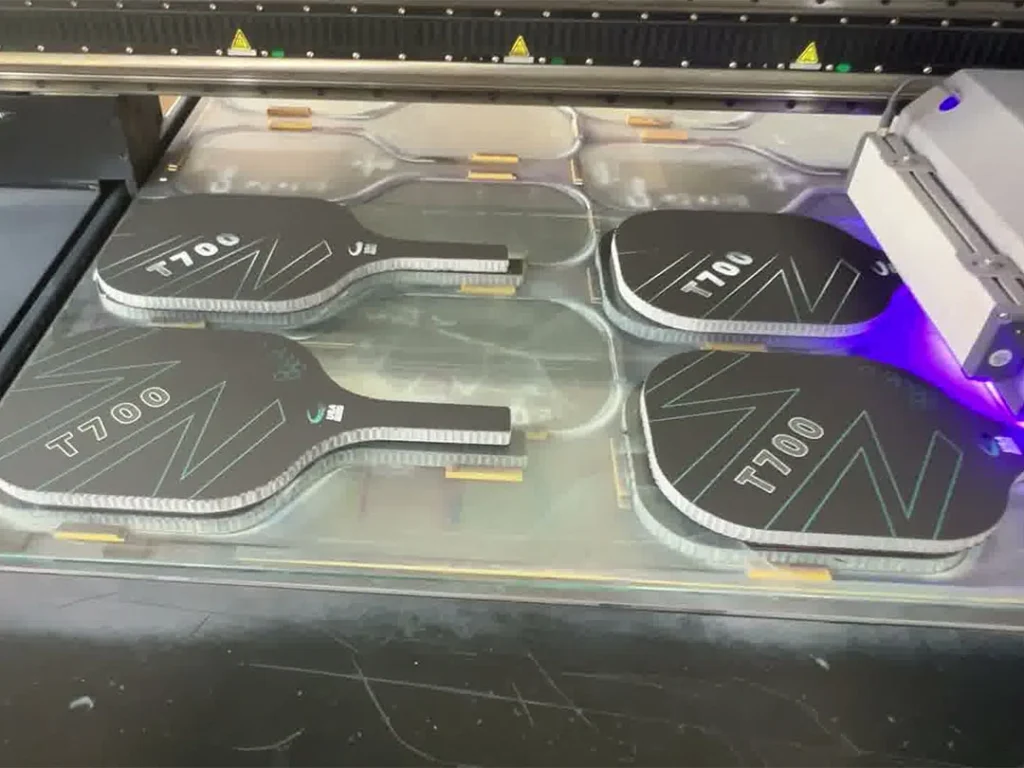
- printing setup
- pressing and curing schedule
- grip installation
- packaging production
- carton packing
- inspection workflow
- freight planning
For wholesale buyers, this matters because margin is often won or lost before the product leaves the factory.
If your retail price is fixed, lowering your landed cost gives you more room for advertising, distributor margin, platform fees, warranty replacement, and inventory markdowns.
When 500 Pieces Is the Right Choice
Choose 500 pieces when you already have one of the following:
- confirmed preorder demand
- existing retail accounts
- proven Amazon sales data
- a distributor purchase plan
- a seasonal promotion
- a club or academy buyer network
- repeat order history
If you do not have a clear sales channel, 500 pieces may create inventory pressure. But if demand is already visible, 500 pieces can make the project more commercially stable.
MOQ and Paddle Construction: Why Material Choice Changes the Decision
MOQ should not be separated from paddle construction.
A budget fiberglass paddle, a T700 carbon fiber paddle, and a thermoformed foam-edge paddle do not have the same cost structure.
Fiberglass or Composite Paddles
Fiberglass paddles are often suitable for:
- beginner sets
- schools
- clubs
- promotional orders
- entry-level retail
- 2-pack or 4-pack bundles
These products may work well at higher quantities because buyers are often competing on value and bundle pricing.
T700 Carbon Fiber Paddles
T700 raw carbon paddles are popular for private label brands because they balance performance, cost, and market demand.
They are suitable for:
- intermediate players
- control-focused products
- Amazon FBA brands
- retail paddle lines
- performance entry SKUs
For many brands, a 300-piece T700 launch is a strong starting point.
Thermoformed and Foam Core Paddles
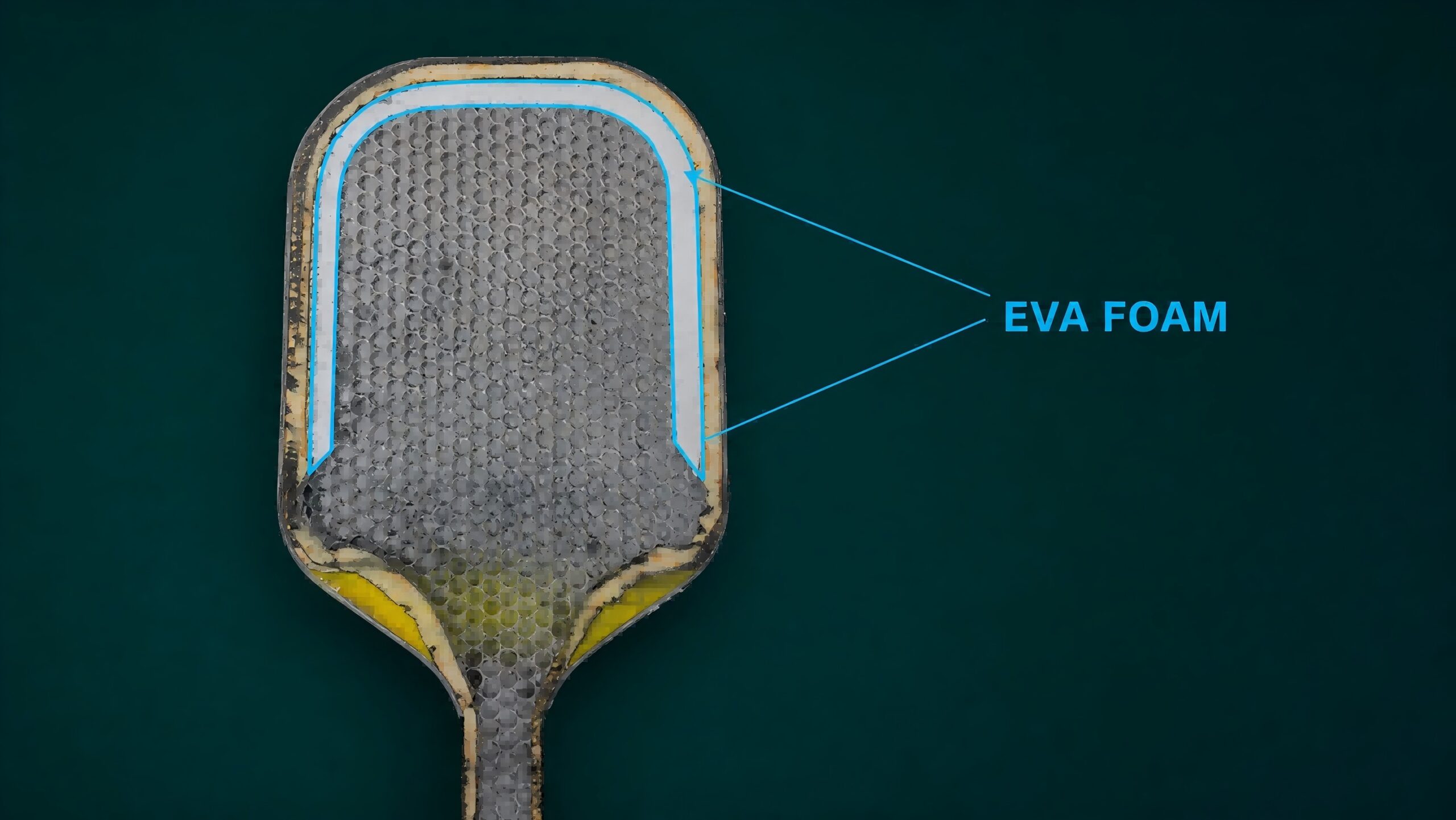
Thermoformed paddles, foam-edge paddles, and advanced core constructions require more careful production control.
They are suitable for:
- premium brands
- performance-focused SKUs
- advanced players
- higher retail price points
- serious private label programs
Because the process is more complex, buyers should avoid treating these paddles as simple logo products. Sampling, testing, and batch consistency matter more.
MOQ and Compliance: What Brands Should Know
If your paddle will be marketed for tournament play, compliance planning must start before mass production.
USA Pickleball states that equipment used in sanctioned tournament play must be listed as approved equipment. The official equipment database gives buyers and players a way to check approved paddles and balls.
The USA Pickleball Equipment Standards Manual also explains that paddle approval is tied to specifications such as size, surface characteristics, coefficient of friction, reflection/gloss, and PBCoR testing.
For brands, the practical lesson is simple: do not finalize a mass order before the compliance path is clear.
A paddle that changes material, core, surface, or other significant design elements may need its own model designation and review path. A “similar” paddle is not always the same paddle from a compliance point of view.
Compliance Questions to Ask Before Ordering
Before confirming MOQ, ask your factory:
- Is this model intended for recreational use or tournament approval?
- Has this construction been tested before?
- What surface roughness control process is used?
- Will the approved sample match mass production?
- Will any post-sample changes affect compliance?
- Can the factory maintain batch consistency?
- Who manages submission, documentation, and follow-up?
This is especially important for brands using “USAPA approved” or “USA Pickleball approved” language. Do not use approval wording until the product has completed the relevant process and appears in the official approved equipment database.
MOQ and Packaging: Do Not Leave This Until the End
Many buyers focus only on the paddle, then discover too late that packaging changes cost, lead time, and MOQ.
Packaging decisions may include:
- polybag only
- paddle cover
- hang tag
- retail box
- instruction card
- warranty card
- barcode label
- FNSKU label
- carton mark
- bundle packaging
For Amazon FBA, packaging is not just branding. It affects receiving, labeling, storage, and customer experience.
At 100 pieces, simple packaging is usually enough.
At 300 pieces, retail-ready packaging becomes more practical.
At 500 pieces, custom packaging and carton-level planning become much more important.
Should You Start With One SKU or Multiple SKUs?
Most new brands should start with fewer SKUs.
A common mistake is trying to launch too many paddle models at once:
- one power paddle
- one control paddle
- one beginner paddle
- one pro paddle
- three colors
- two thicknesses
- multiple grip sizes
This looks complete on paper, but it can weaken your launch. Each SKU receives too little inventory, too little marketing focus, and too little sales data.
For a first OEM order, a better strategy is:
100 Pieces
Test one model and one market angle.
300 Pieces
Launch one hero SKU with limited color variation.
500 Pieces
Scale one proven SKU or build a focused two-SKU line.
A simple paddle line is easier to market, easier to reorder, and easier to improve.
How to Choose the Right MOQ
Use this decision framework:
Choose 100 Pieces If:
- you are testing a new idea
- you have no sales data yet
- you want to compare samples in the market
- you are launching through a small audience
- you want to limit cash exposure
Choose 300 Pieces If:
- you are ready for a private label launch
- you have a clear target player
- you need better unit cost
- you want retail-ready packaging
- you are preparing for Amazon or small wholesale
Choose 500 Pieces If:
- you have confirmed demand
- you are selling wholesale
- you need stronger margin
- you have repeat order potential
- you are scaling a proven SKU
The Best MOQ Is Not Always the Lowest MOQ
Many buyers ask for the lowest possible MOQ. That is understandable, but it is not always the best business decision.
The lowest MOQ protects cash.
The right MOQ protects the launch.
If the order is too small, your unit cost may be high, your packaging options may be limited, and your brand may not have enough inventory to test properly.
If the order is too large, you may tie up cash in the wrong design.
The right MOQ sits between confidence and caution.
Example Order-Size Scenarios by Buyer Type
| Buyer Type | Example Quantity | Reason |
|---|---|---|
| New brand with no sales data | 100 pcs | Low-risk market test |
| Amazon FBA first launch | 300 pcs | Enough inventory for listing and early reviews |
| Retailer trial order | 300 pcs | Better packaging and cost balance |
| Club or academy program | 100-300 pcs | Depends on membership size |
| Regional distributor | 500 pcs | Better wholesale economics |
| Established paddle brand | 500+ pcs | Scaling and repeat-order efficiency |
Final Recommendation
If you are still testing the market, model a smaller order first and confirm what the selected construction can support.
If you already know your target buyer and need retail-ready branding, compare a mid-size launch against your cash flow and channel plan.
If you have confirmed wholesale demand, compare a larger production run against margin, storage and reorder timing.
The best MOQ is not the smallest number your factory allows. It is the quantity that matches your sales channel, customization needs, compliance plan, packaging requirements, and cash flow.
A good OEM partner should help you choose the right order size before production, not simply push you into a larger batch.
FAQ
What is the normal MOQ for custom pickleball paddles?
There is no single normal MOQ for custom pickleball paddles. This guide uses 100, 300, and 500 pieces as planning examples; the actual minimum depends on material, construction, artwork, tooling, packaging, and the production route.
Is 100 pieces enough to start a pickleball paddle brand?
It can be enough for a controlled market test when the selected construction and customization support that quantity. Confirm the actual MOQ and sample plan against your specification before treating 100 pieces as available.
Why does the unit cost drop at higher MOQ?
Higher MOQ spreads setup, material preparation, printing, QC, and packaging work across more paddles. This usually improves production efficiency and lowers the cost per unit.
Should I order 300 or 500 pickleball paddles?
Choose 300 pieces if you are launching or testing a private label SKU. Choose 500 pieces if you already have confirmed demand, wholesale buyers, or repeat-order potential.
Can custom pickleball paddles be USA Pickleball approved?
Yes, custom paddles can follow a compliance path, but approval depends on the specific model, construction, surface, and testing result. Brands should confirm the approval process before mass production and should not use approval wording before the paddle is officially listed.
Ready to Compare MOQ and Pricing?
NexaPaddle can compare order-size scenarios against your construction, customization, packaging, compliance needs and sales channel. Final MOQ and pricing are confirmed against the approved specification.
For a custom specification, use the OEM paddle development hub. For stocked or bulk purchasing, compare options in the wholesale pickleball paddles sourcing hub.