Pickleball is no longer a niche sport. It’s a cultural moment — and women are driving a significant portion of its explosive growth. As of 2025, there are an estimated 36.5 million pickleball players in the US alone, with 24.3 million classified as active participants. Globally, that number stretches to 80–120 million players across 70+ countries.
What’s especially compelling for brand owners, retailers, and Amazon FBA sellers: women now represent approximately 40% of all pickleball players, and they are the fastest-growing demographic in the 25–45 age cohort. This isn’t a fringe audience. This is the next frontier in paddle commerce.
Yet walk through the paddle aisle — on Amazon, at retail, or in a club pro shop — and you’ll notice a striking gap: the overwhelming majority of paddles are designed as generic unisex products. A few slap a pink coat of paint on a standard shape and call it “women’s.” That’s not a product strategy. That’s a missed opportunity.
The brands that will win this demographic aren’t the ones that just recolor an existing paddle. They’re the ones that build women-specific lines from the ground up — optimized for weight, grip size, control shape, and the bold, expressive aesthetics that female players actually want to carry onto the court and post on Instagram.
This guide explains exactly why that opportunity exists, what it looks like in practice, and how to capture it through a purpose-built OEM product strategy.
Why Women’s Pickleball Paddles Are an Underserved Niche
The pickleball equipment market was valued at $702.9 million in 2025 and is projected to reach $1.85 billion by 2032, growing at a 14.8% CAGR. That’s a doubling-plus of revenue in seven years, fueled by new player acquisition, trade-up purchasing, and multi-paddle ownership.
On Amazon alone — arguably the most important single distribution channel for emerging paddle brands — paddle revenue hit $43.5 million in 2025, a 55% year-over-year increase, representing some 687,000 units sold. Amazon is no longer just a discount channel; it’s where serious players and style-conscious beginners alike are shopping.
Despite this growth, women remain underserved at the product level for three structural reasons:
1. Most paddle lines were designed by men, for men. The standard unisex paddle weighs 230–250g and features an elongated “power” shape optimized for reach and drive. These specs work against the average female player’s physiology — lighter body weight, smaller hand circumference, and muscle mass distribution that benefits more from quick wrist action than raw power generation.
2. Aesthetic design is treated as an afterthought. Studies consistently show that female consumers place higher weight on visual appeal in sports equipment purchases compared to male consumers. Yet most paddle manufacturers offer 3–4 colorways max, with no genuine seasonal variation, no floral or geometric pattern options, and no lifestyle-driven branding.
3. The “shrink it and pink it” trap. A significant number of paddles currently marketed to women are simply standard models in rose gold or lavender — with no engineering changes underneath. Female players have become savvy enough to notice, and reviews on Amazon frequently call this out. There’s a gap between what’s available and what the market actually wants.
This gap is your entry point.
What Women Actually Want in a Pickleball Paddle
Understanding purchase drivers is the foundation of any product strategy. For female pickleball players, the research and market signals point to four core priorities:
1. Lightweight Construction (210–220g Sweet Spot)
The 210–220g weight range represents the sweet spot for most women players. Lighter paddles reduce arm fatigue during extended play sessions, enable faster hand speed at the kitchen line — where most points are won in recreational play — and allow for quicker reaction volleys without sacrificing control.
This matters especially for the 25–45 age bracket, where players are often balancing court time with work and family demands. A lighter paddle means they can play longer without discomfort, which directly drives repeat purchase and brand loyalty.
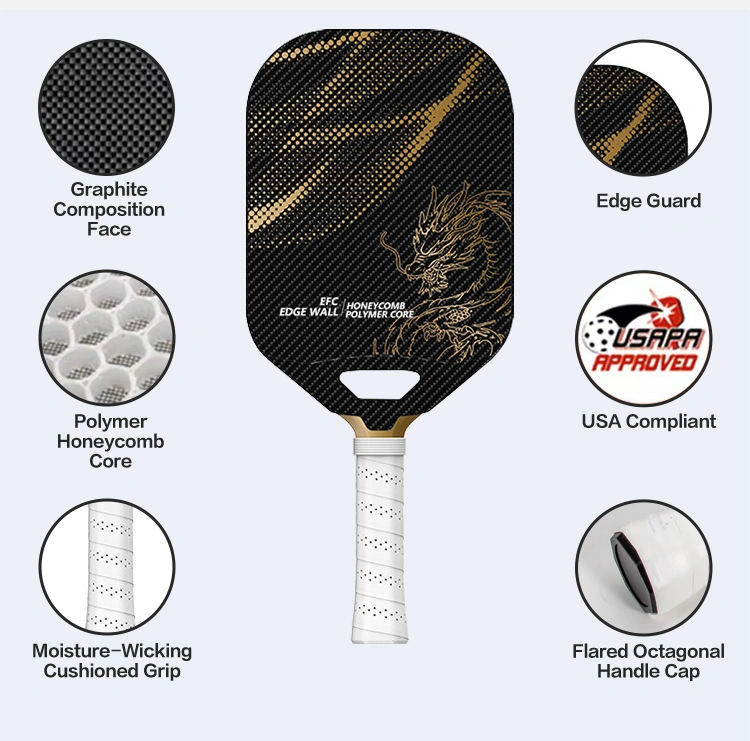
Carbon fiber construction is what makes this weight target achievable without sacrificing performance. A carbon fiber UD (unidirectional) face provides exceptional stiffness-to-weight ratio, delivering the pop and spin generation players want at under 220g — something fiberglass simply cannot match at this weight class.
2. Expressive, High-Quality Aesthetics
This is not superficial. Aesthetics are a primary purchase driver for women in this market.
Search volume data tells the story: “pink pickleball paddle” and “cute pickleball paddles” are growing search terms with strong commercial intent on both Google and Amazon. These aren’t impulse searches — they’re category-defining keywords that signal an audience actively looking for products that match their personal style.
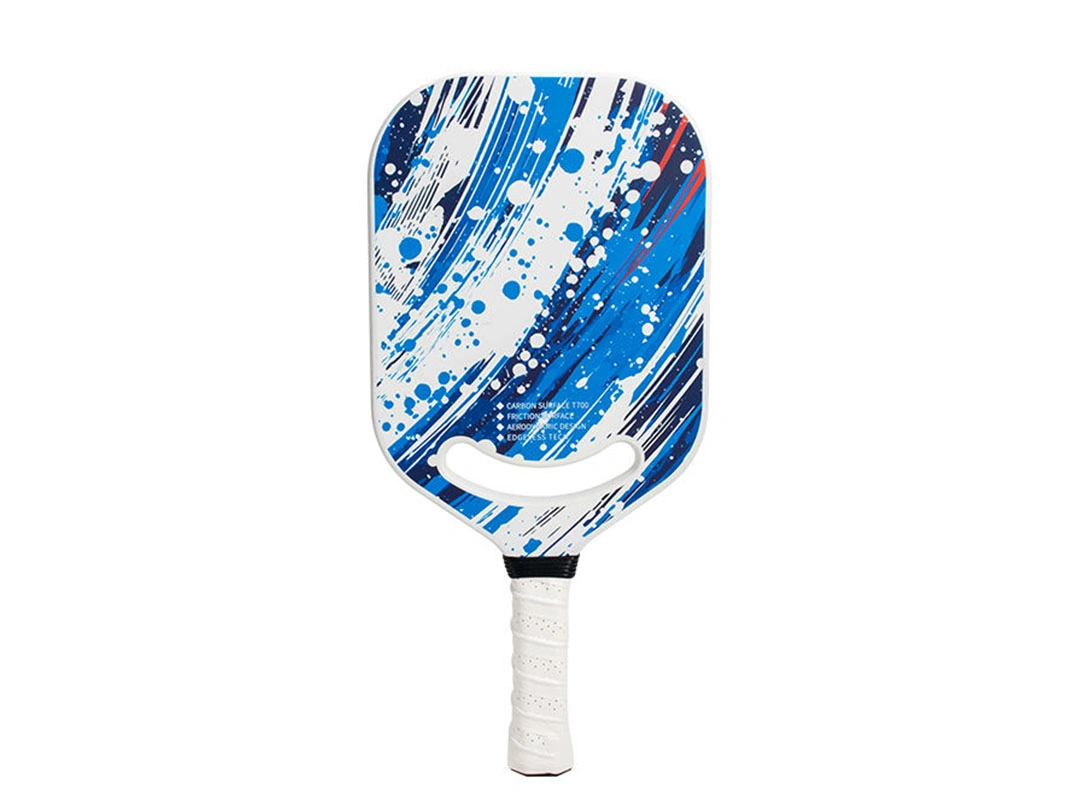
Female players document their court time on Instagram and TikTok. A paddle that photographs beautifully is a paddle that generates organic word-of-mouth. Brands that invest in photorealistic UV-printed designs — florals, geometric patterns, watercolor washes, bold color gradients — are building products that market themselves.
3. Control-Optimized Shape
A wider-face control shape (400×195mm) offers a larger sweet spot, which is especially valuable for developing players who haven’t yet grooved consistent swing paths. This is the dominant demographic among female recreational players — newer to the sport, focused on consistency over raw power, and more likely to appreciate a forgiving paddle face.
The 400×195mm shape also plays well with the kitchen-line-focused strategy many women naturally gravitate toward: soft game, dinking, and well-placed drops rather than aggressive baseline drives.
4. Comfortable Grip Sizing
A standard 130mm handle accommodates smaller grip circumferences better than the 145mm+ elongated handles common in power-focused paddles. Proper grip fit reduces the risk of arm strain and allows for better wrist mechanics — both important for the recreational-to-intermediate player persona that represents the core female pickleball audience.
The Business Case for Launching a Women’s Paddle Line
Beyond the demographic data, there are four specific commercial signals that make this the right moment to launch a women-exclusive product line.
High Purchase Intent + Aesthetic Premium
Aesthetic-driven products command higher margins. A well-designed pink or floral paddle listed at $79–$119 on Amazon typically outperforms generic $49 alternatives on conversion rate, not just on style. Female buyers are willing to pay a meaningful premium for a product that feels made for them — both in weight and in visual identity.
Brands that have launched genuine women’s lines (not just recolors) have seen strong organic review velocity, which accelerates BSR rankings. Early movers in underserved sub-niches consistently win keyword real estate before category saturation sets in.
Social Media Shareability
A women’s pickleball paddle line has inherent UGC (user-generated content) potential that a standard unisex paddle simply doesn’t. When a player loves how her paddle looks, she shares it. That’s organic reach with zero acquisition cost. It also creates community identity — when multiple friends show up to a social court session with matching or complementary paddle aesthetics, brand affinity compounds.
Amazon Search Tailwind
“Best pickleball paddles for women,” “pink pickleball paddle,” and “cute pickleball paddles” represent high-intent, growing, and relatively undercompeted keyword clusters compared to the brutally contested “best pickleball paddle” head term. Positioning a women’s-specific SKU directly against these longtail queries is a straightforward path to early ranking traction on Amazon.
Seasonal & Limited Edition Revenue Cycles
A well-positioned women’s paddle brand can drive sales cycles that standard paddle brands can’t: Valentine’s Day gift sets, Mother’s Day bundles, summer “resort” colorways, fall/winter limited editions. Each new colorway is a new listing, a new launch event, and a new hook for email and social campaigns. This is a repeating revenue mechanism, not a one-time SKU.
Recommended Spec Sheet for a Women’s Paddle Line
Here’s how to build the right product from the ground up. NexaPaddle offers two configurations that are ideally suited for a women’s-specific line.
Option A: Cold Press Carbon Fiber (High Volume, Lower MOQ Risk)
This is the recommended entry point for most brand owners launching a women’s line for the first time.
| Spec | Detail |
|---|---|
| Construction | Cold Press Carbon Fiber |
| Face Material | Carbon Fiber UD or 3K Weave |
| Core | PP Honeycomb |
| Weight | 210–235g (210–220g optimized) |
| Shape/Dimensions | 400×195mm (Control Shape) |
| Thickness | 13mm or 16mm (16mm recommended for control) |
| Handle Length | 130mm |
| Graphics | UV Printing (full-color, edge-to-edge) |
| MOQ | 300 pcs |
The 400×195mm control shape delivers a wider sweet spot that forgives off-center hits — ideal for recreational and intermediate players. At 16mm thickness, the PP honeycomb core provides that soft, dwell-time-enhanced feel that converts new players into repeat buyers (“it just feels right to dink with”).
UV printing is the critical differentiator here (more on this in the next section).
Option B: Thermoformed Lightweight (Premium Tier, Lower MOQ)
For brands targeting the $99–$129+ price segment, or testing a premium women’s sub-line alongside a mid-tier entry:
| Spec | Detail |
|---|---|
| Construction | Thermoformed Mold #2 |
| Face Material | Carbon UD / 3K Weave |
| Core | PP Honeycomb |
| Shape/Dimensions | 400×195mm |
| Thickness | 14mm / 16mm |
| Weight | Tunable to 210–220g range |
| Handle Length | 130mm |
| Graphics | Water Decal (seamless 3D wrap) |
| MOQ | 100 pcs |
The thermoformed process creates a seamless bond between face and edge guard, resulting in a premium feel and appearance that photographs differently than cold press — more like a molded sports product than a manufactured paddle. The 100-piece MOQ makes this accessible for test launches and limited editions.
Both options are available through NexaPaddle’s custom pickleball paddles program, with full design support from first concept to production-ready files.
UV Printing: The Secret Weapon for Women’s Paddle Branding
If you’re building a women’s paddle line, UV printing is not optional. It’s the manufacturing capability that enables the aesthetic strategy that wins this demographic.
Here’s what UV printing actually delivers, in practical terms:
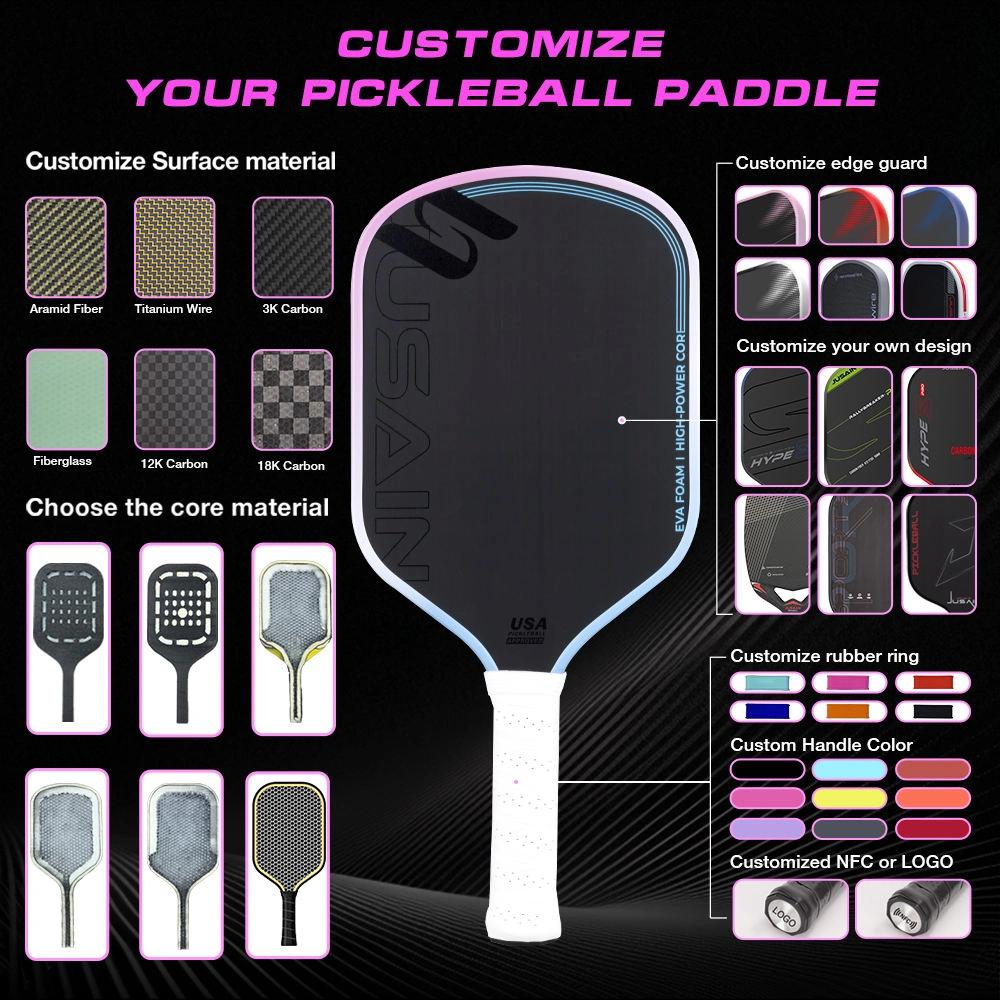
Full-color, edge-to-edge, photorealistic graphics. Not a sticker. Not a screen-printed logo. A continuous graphic that wraps the entire paddle face, edge to edge, without color banding or registration gaps. Florals, gradients, watercolor effects, photography-style patterns — all rendered at print-quality resolution.
UV-cured inks that don’t chip, fade, or peel. The ink is cured instantly by UV light, bonding directly to the surface. Paddles go through hundreds of high-impact strikes during play — a UV-printed design holds up where other printing methods degrade. This is directly relevant to Amazon reviews: “the design is still perfect after 6 months” is a five-star review driver.
Zero per-design tooling fees. This is the game-changer for brand strategy. Traditional printing methods (screen printing, pad printing) require physical tooling per design — plates, screens, or dies that cost money to produce. UV printing has no such cost. You can test 5 colorways for the same MOQ as 1. You can launch a Valentine’s Day limited edition without committing to a full production run. Unlimited design iterations at no additional cost unlock a product strategy that simply wasn’t available 5 years ago.
Seasonal and A/B testing capability. Want to run spring florals against bold geometric patterns to see which converts better on Amazon? UV printing makes that a standard product planning exercise, not a capital-intensive gamble. This is how sophisticated FBA sellers build moats: test fast, scale winners, retire losers, repeat.
NexaPaddle’s custom OEM paddle services include full-service design support — from initial colorway concepts through production-ready file preparation — with no hidden tooling fees at any stage.
How to Launch Your Women’s Paddle Line with NexaPaddle
Launching a private label women’s paddle line through NexaPaddle follows a clear, low-friction process:
Step 1: Define Your Target Customer and Price Tier
Are you targeting the beginner recreational player (entry $49–$79), the style-conscious enthusiast ($79–$119), or the premium lifestyle brand ($119+)? Each tier implies different specs, MOQs, and margin structures. If you’re entering the beginner market, NexaPaddle’s beginner pickleball paddles catalog is a strong starting point before moving into full custom.
Step 2: Select Your Base Spec
Choose between the Cold Press Carbon Fiber (Option A, 300-piece MOQ) or the Thermoformed Lightweight (Option B, 100-piece MOQ) based on your target price point and launch volume. Both options can be configured to the 210–220g target weight and 130mm handle.
Step 3: Design Your Aesthetic
Submit your brand colors, mood board, or design brief. NexaPaddle’s team will render production-ready UV print files for review and approval. Revisions are included. Most brands lock their first design within 2–3 rounds.
Step 4: Sample Approval
Physical samples are produced and shipped for final approval before full production runs. This is the stage where weight, feel, and visual accuracy are confirmed against spec.
Step 5: Production and Fulfillment
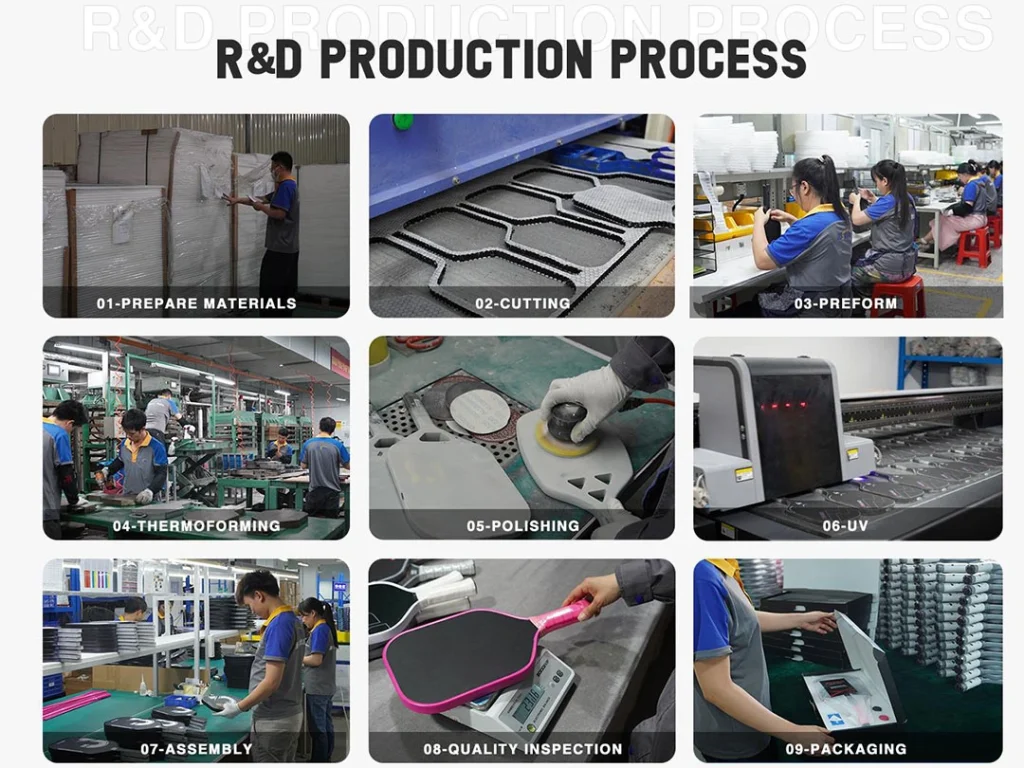
Full production runs typically complete in 4–6 weeks from sample approval. NexaPaddle ships direct to your Amazon FBA warehouse, 3PL, or branded fulfillment address.
For brands that want to build a private label paddle line with a full range — including multiple colorways, a gift set SKU, and a carry bag — NexaPaddle can coordinate full catalog buildouts with phased production schedules.
If you’re interested in the premium tier and want to explore carbon fiber pickleball paddles with advanced face material options, NexaPaddle’s technical team can walk through the full material selection matrix.
The Competitive Window Is Open — But Won’t Stay Open
This is a timing argument worth taking seriously. The women’s pickleball paddle market is growing fast, but it is not yet saturated. The dominant players are still largely competing on the generic “best pickleball paddle” head terms. Aesthetic-specific sub-niches — pink paddles, floral paddles, cute women’s paddles — are undercompeted relative to their search volume.
First movers who build a recognizable brand in these niches will accumulate reviews, DSP data, and repeat customers that late entrants will have to buy their way past. The window for organic keyword ranking at low ACoS is narrower every quarter.
The brands that capture this market won’t be the ones that got the best paddle specs. They’ll be the ones that understood what female players were actually buying — and built the product, the brand, and the supply chain to deliver it before everyone else figured it out.
Frequently Asked Questions
What weight should a women’s pickleball paddle be?
The optimal weight range for most women players is 210–220g. This range reduces arm fatigue, improves hand speed at the kitchen line, and suits the physiology of most recreational and intermediate female players. Paddles above 230g can accelerate elbow and shoulder strain over extended play sessions. NexaPaddle’s cold press and thermoformed options can both be configured to this weight range with carbon fiber face materials.
Is there really a commercial difference between a “women’s” paddle and a standard paddle?
Yes — when done correctly. Genuine women’s-specific paddle engineering involves three changes from the unisex standard: (1) lighter overall weight (210–220g vs. 230–250g), (2) a control-oriented wider face shape with a larger sweet spot, and (3) a shorter handle (130mm) that accommodates smaller grip circumference. Simply painting a standard paddle pink does not constitute a women’s paddle — and Amazon reviewers will say so.
What is the MOQ for a custom women’s paddle line through NexaPaddle?
MOQ starts at 100 pieces for the thermoformed lightweight option (Mold #2) and 300 pieces for the cold press carbon fiber line. Both options support full-color UV printing or water decal graphics with no per-design tooling fees, making low-MOQ test launches commercially viable.
How long does it take to go from design to Amazon FBA delivery?
Typical timeline from design approval to delivered inventory is 8–12 weeks: 1–2 weeks for design finalization, 1–2 weeks for sample production and approval, 4–6 weeks for full production, and 1–2 weeks for shipping to your FBA warehouse. Expedited options are available for seasonal launches.
Why is UV printing better than standard printing for women’s paddle designs?
UV printing enables full-color, edge-to-edge photorealistic graphics with no per-design tooling fees, and UV-cured inks that won’t chip, fade, or peel under regular play. This allows brands to create seasonal colorways, test multiple designs at the same MOQ, and produce the bold florals, pastels, and geometric patterns that drive purchase intent and social sharing among female players. It’s simply not possible to achieve this level of design flexibility or visual quality with screen printing or pad printing at OEM production scales.
Sources
Association of Pickleball Players (APP). 2025 U.S. Pickleball Player Population Report. 2025.
Sports & Fitness Industry Association (SFIA). 2026 Pickleball Participation Report. 2026.
Global Pickleball Report. Global Pickleball Player Population and Growth Trends. 2026.
Coherent Market Insights. Pickleball Equipment Market to Hit $1,848.1 Million by 2032, at a CAGR of 14.8%. GlobeNewswire, June 24, 2025.
Weaver, Alex E. “Amazon Pickleball Paddle Sales Up 55% in 2025, Surge to $44 Million.” The Dink Pickleball, January 16, 2026.
“Women’s‑Specific Pickleball Paddles: Marketing Gimmick or Real Advantage?” 4PP Pickleball, July 30, 2025.
“Best Pickleball Paddles for Women: Beyond the Pink Tax.” The Pickleball Gang, February 17, 2026.