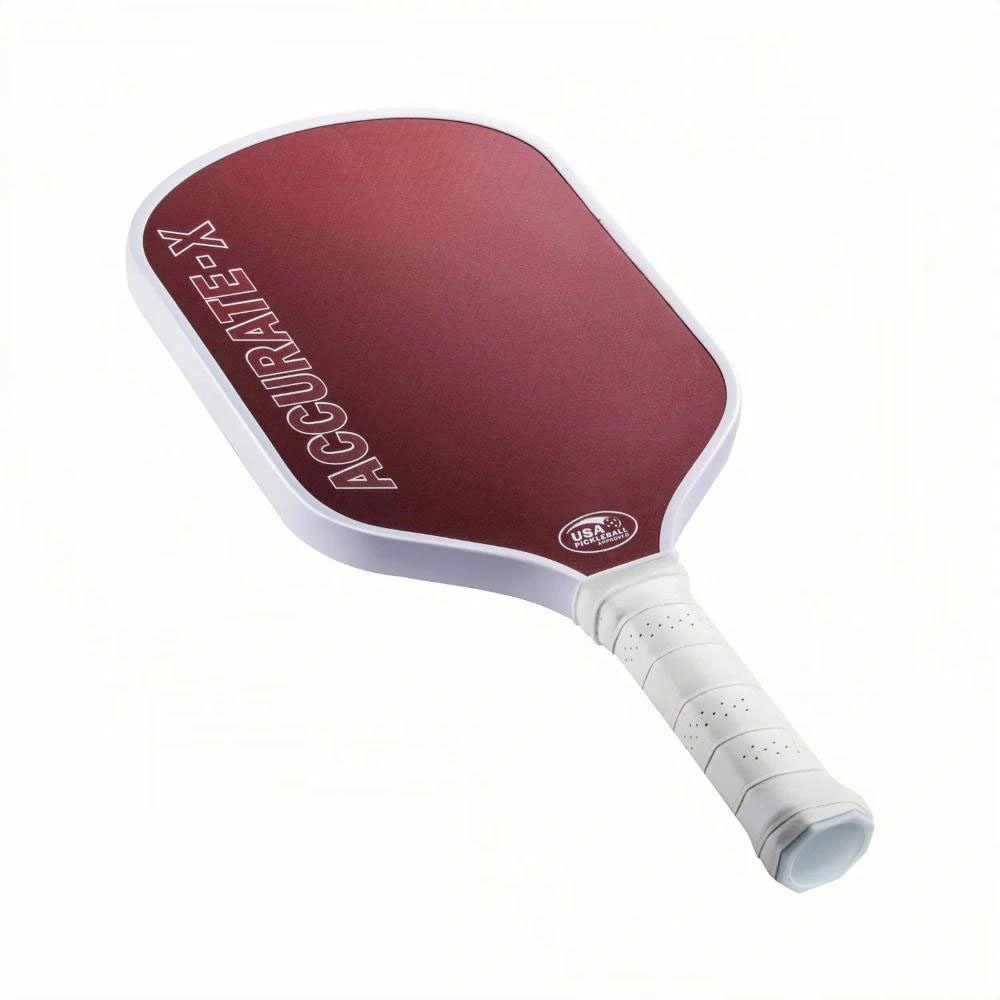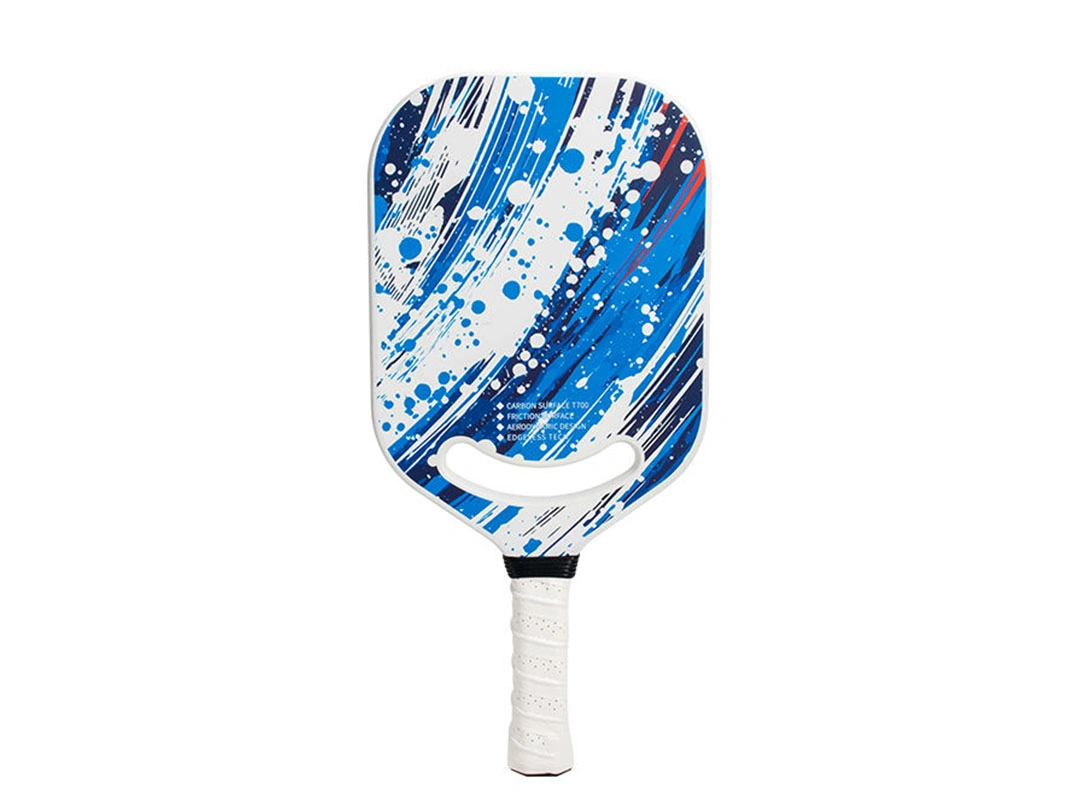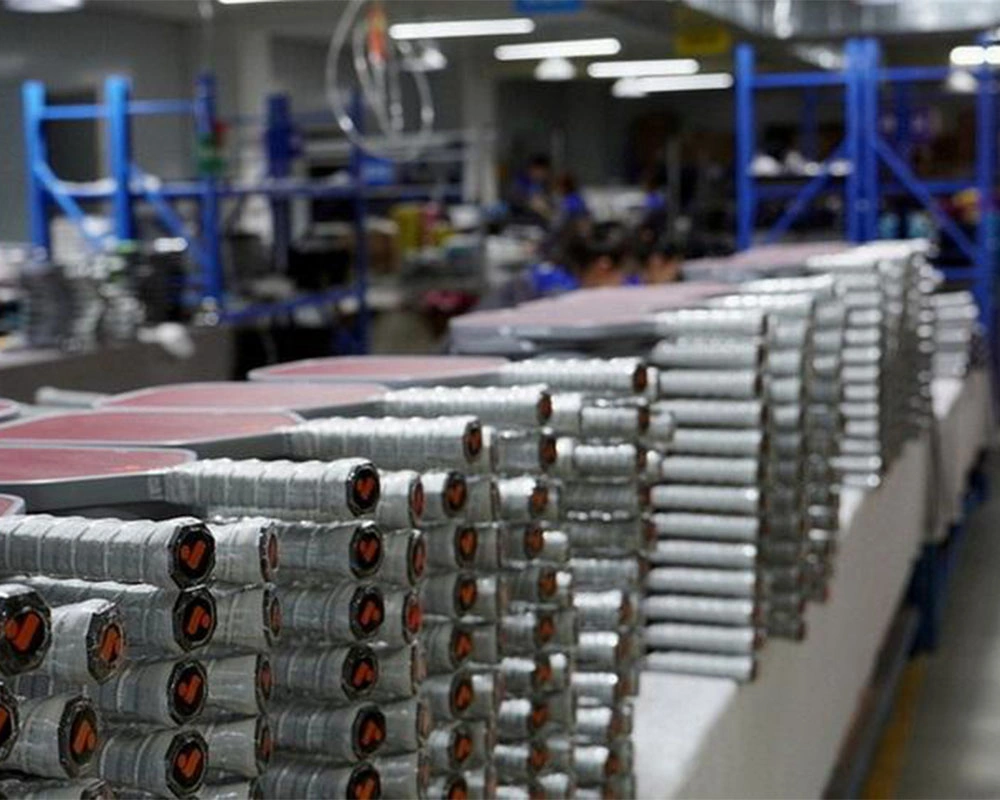
Thermoformed construction should solve a product-line problem—not create a marketing label.
For a brand, the decision is not simply whether thermoformed pickleball paddles are “better” than cold-press paddles. The real question is whether the construction supports the SKU’s target player, performance promise, retail position, quality-control plan, and compliance pathway.
Thermoforming is often a strong fit for a hero or premium performance model. It is usually a weaker fit for a price-led starter set, a high-volume school program, or a launch in which the brand has not budgeted for structured sampling and validation.
The short version is this:
Choose thermoformed construction when the brand can define what the structure must achieve and verify that result in samples and production. Do not choose it merely because the word “thermoformed” appears on competing product pages.
The Short Answer
| Brand situation | Recommended direction | Why |
|---|---|---|
| A hero SKU for intermediate or advanced players | Strong thermoformed candidate | The construction can support a more performance-led perimeter, balance, and feel specification |
| A premium flagship with a clear technical story | Strong thermoformed or specialty-core candidate | The added process complexity can support differentiated engineering and premium positioning |
| An entry-level, club, school, or bundle SKU | Usually start with cold press | Price, simplicity, and repeatable volume normally matter more than an advanced construction label |
| A first launch with limited testing capacity | Use an existing validated platform or reconsider | A complex custom build creates more variables to approve and control |
| A tournament-focused model | Possible, but compliance planning is mandatory | Construction type does not equal approval; the finished model must be tested and production must remain consistent |
| A brand comparing nearly identical low quotes for cold press and thermoformed | Investigate before ordering | A true change in structure, tooling, process control, and QC should be visible in the build sheet and quote |
First, Define What “Thermoformed” Means in Your Quote
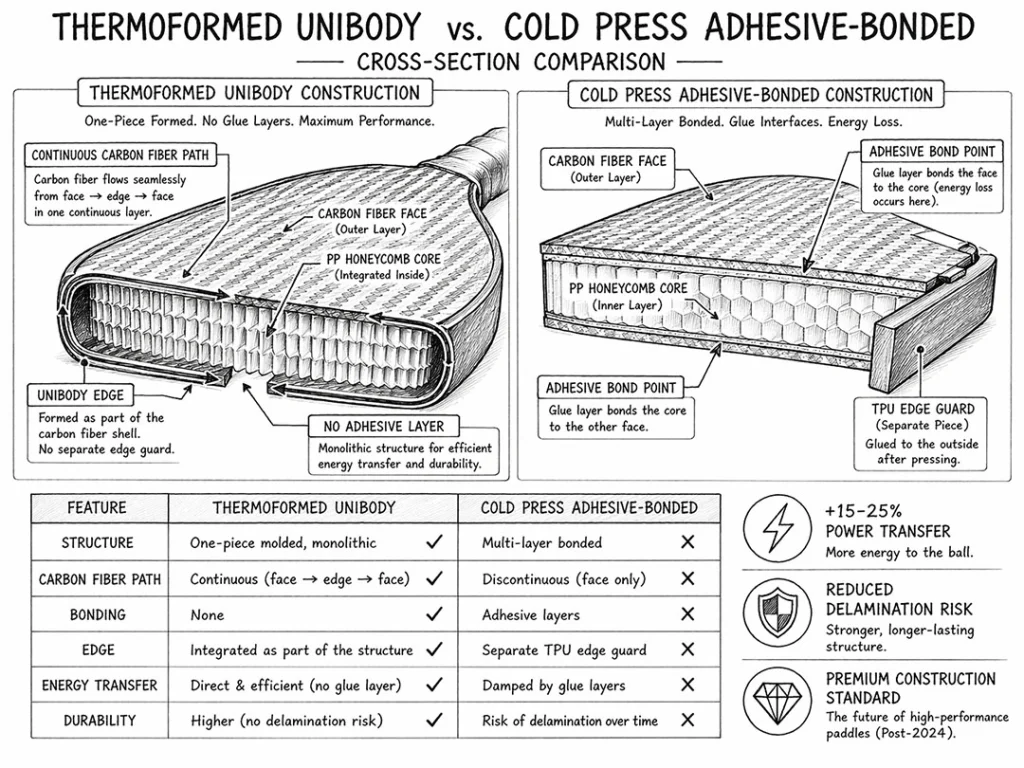
In pickleball sourcing, “thermoformed” is a market term for a family of heat-and-pressure molding methods. It is not a complete product specification.
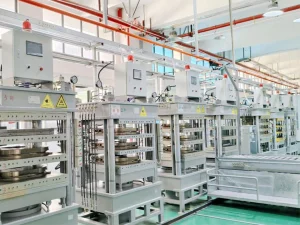
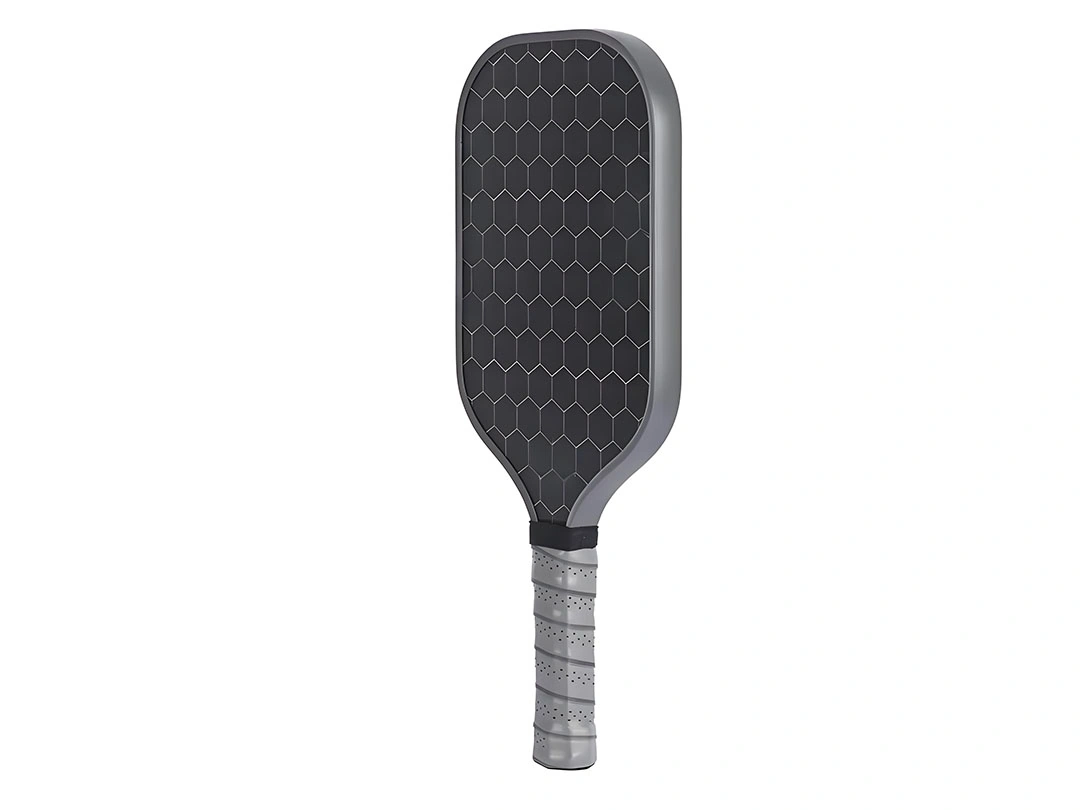
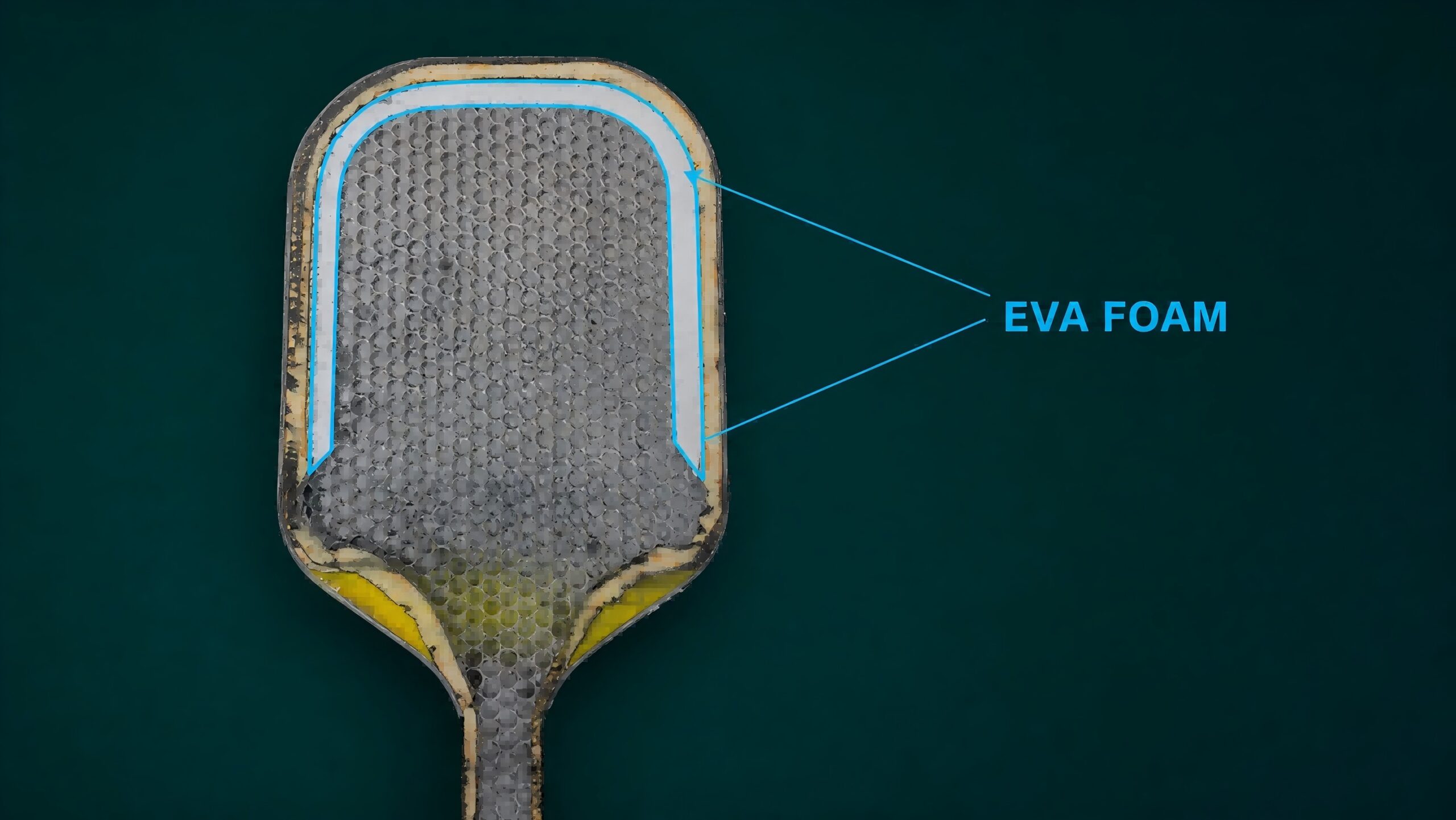
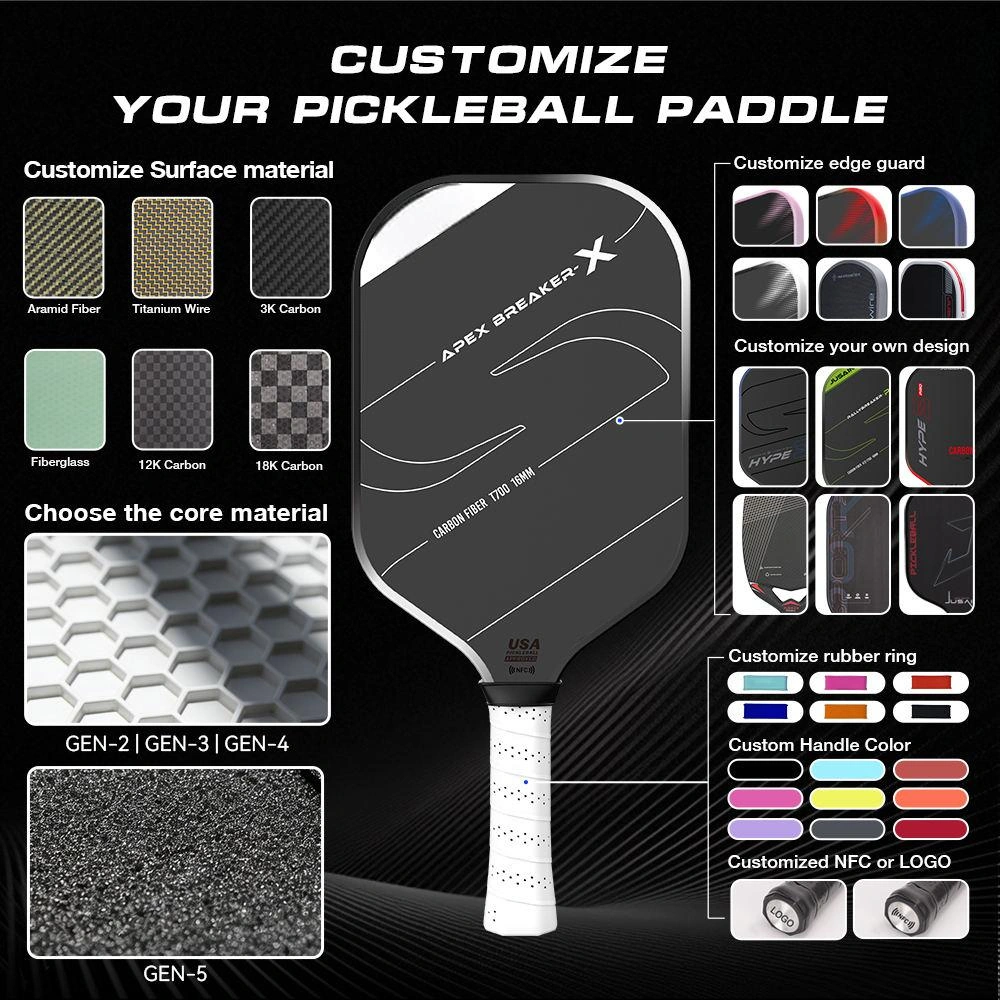
A typical construction may combine face sheets, a PP honeycomb core, resin, a carbon-fiber perimeter wrap, edge foam, and a molded handle structure. Another supplier may use a different layup, foam system, curing cycle, edge treatment, or handle connection while using the same label.
Published patent literature illustrates this variation. One paddle design describes carbon fiber wrapping around a honeycomb core in a mold, while another describes a reinforced edge with foam and resin-bonded composite structures. The second also notes that trapped air and manufacturing tolerances can contribute to delamination, disbonding, or core damage in sealed structures. These are examples of possible designs—not a universal definition of every thermoformed paddle—but they show why buyers must inspect the construction rather than trust the category name alone. Sources: US patent application on an edgeless thermoformed paddle and international patent application on a reinforced paddle edge.
Before comparing quotes, ask each supplier to state:
- Face material and layup, not just “carbon fiber.”
- Core material, cell size, thickness, and density specification where relevant.
- Whether the carbon structure wraps the full perimeter and continues through the handle.
- Edge-foam material, location, and intended function.
- Resin or bonding system and controlled heat, pressure, and curing steps.
- Mold ownership, mold revision, and which dimensions the mold fixes.
- Target weight, balance point, swing weight, and tolerance window.
- Surface-finishing method and batch-control plan.
- Destructive-audit, durability, and compliance-screening procedures.
If the supplier cannot explain those items, “thermoformed” is a sales description, not an engineering specification.
Choose Thermoformed Construction When These Five Conditions Are True
1. The SKU Has a Clear Job in the Product Line
Thermoformed construction works best when the model has a defined commercial role.
For many brands, that role is the hero SKU: the model that carries the main performance story and sits above an entry-level fiberglass or cold-press carbon paddle. For a more mature brand, it may be a flagship above an established hero model.
A practical three-level architecture could be:
| Product-line role | Typical construction direction | Primary commercial job |
|---|---|---|
| Entry | Cold-press fiberglass or carbon over PP honeycomb | Reach new players, bundles, clubs, and price-sensitive retail |
| Hero | Thermoformed PP honeycomb with a controlled perimeter structure | Deliver the brand’s main performance promise |
| Flagship | Thermoformed specialty-core, full-foam, or hybrid platform | Create a distinct premium experience and halo effect |
This is not a rule that every brand needs three paddles. It is a way to prevent two different SKUs from competing for the same customer with only a material label separating them.
If you are still defining the overall range, start with a custom OEM pickleball paddle development plan before choosing the construction.
2. The Target Player Can Notice the Intended Difference
Construction is valuable only when it creates an experience the target player can recognize.
A thermoformed perimeter can be engineered to change stiffness distribution, off-center stability, rebound behavior, weight distribution, and impact feedback. But it does not automatically guarantee more power, a larger sweet spot, better control, or longer life. Shape, thickness, core, face layup, resin content, foam placement, and finished weight all interact.
That means the brief should name a testable player promise, such as:
- More stable response on off-center contact without making the paddle too head-heavy.
- A crisper drive response while preserving acceptable control at the kitchen.
- A long-handle platform for two-handed backhands within a defined swing-weight window.
- A premium carbon-face model with repeatable surface texture and balance.
- A foam-enhanced structure intended to tune vibration and impact feel.
Avoid briefs such as “make it powerful,” “copy the market leader,” or “use the best carbon.” They do not tell the factory what to build or the sample team what to approve.
For a mainstream performance model, a T700 carbon fiber paddle platform is often a practical starting point—but T700 is only one input. The complete construction still needs validation.
3. The Price Tier Can Carry the Added Process and QC
The cost difference is not only material cost. Thermoformed programs can add:
- Mold and setup requirements.
- More complex layup and perimeter operations.
- Controlled heating, pressure, curing, and cooling steps.
- Higher risk of scrap or rework while a specification is being tuned.
- Additional destructive audits and durability testing.
- Tighter control of foam placement, resin flow, weight, balance, and surface finish.
That investment makes sense when the target retail price, channel margin, and brand position can support it. It makes less sense when the entire selling proposition is “the lowest-priced set of two paddles.”
When comparing quotes, separate six cost blocks: core and structure, face material, construction type, labor and process complexity, QC and testing, and packaging or accessories. If one thermoformed quote is unusually low, ask which block changed. Do not assume the factories are quoting the same build.
4. The Brand Is Ready to Lock the Specification
Thermoformed construction rewards disciplined product development. It also makes vague approvals expensive.
Before mass production, lock a golden sample and a written specification that covers:
- Shape, overall dimensions, handle length, and thickness.
- Face layup, core, perimeter wrap, edge foam, and handle construction.
- Finished weight range and balance target.
- Swing-weight target if it is part of the product promise.
- Surface finish, graphics, gloss, and color standard.
- Sound or impact-feel reference where practical.
- Bond-integrity and durability test method.
- Packaging configuration and shipment protection.
- Change-control rule: no substitution of core, face, resin, foam, or finishing process without written approval.
The last point matters. USA Pickleball states that paddles with different core material, surface material, or other significant differences require a unique model name or number, and its ongoing compliance rules require production units to remain identical to the certified paddle. See the USA Pickleball Equipment Standards Manual.
5. Compliance Is Part of Development, Not a Final Checkbox
Thermoformed construction is neither automatically legal nor automatically illegal for tournament play. Approval applies to the finished model.
The current USA Pickleball standards address factors including size, surface roughness and friction, reflection, and Paddle/Ball Coefficient of Restitution (PBCoR). The Equipment Standards Manual lists a PBCoR limit of 0.43 effective November 1, 2025 and also requires compliance over the paddle’s useful life. The organization’s submission FAQ says manufacturers must maintain production units to the same specification as the approved samples and describes ongoing market-sample checks. Read the official equipment submission FAQ.
For a brand, the practical sequence is:
- Define the target market and whether sanctioned-play approval is commercially necessary.
- Screen prototype performance and surface characteristics before official submission.
- Freeze materials, construction, graphics, and model designation.
- Submit production-ready samples through the official process.
- Verify the model appears as “Pass” on the USA Pickleball Approved Paddle List before marketing it as approved.
- Audit production so retail units remain consistent with the approved build.
Factory pre-testing reduces uncertainty; it does not itself grant approval.
When Cold Press Is the Smarter Choice
Choosing cold press is not choosing inferior quality. It is choosing a different cost and product architecture.
Cold-press PP honeycomb construction is often the better option when:
- The SKU is designed for beginners, schools, clubs, promotional programs, or bundles.
- Price accessibility and order scale matter more than a premium technology story.
- The product promise is comfort, ease of use, or basic durability—not maximum performance tuning.
- The brand wants to validate shape, graphics, packaging, and channel demand before funding a more complex model.
- The buyer needs a simple, repeatable platform with fewer custom structural variables.
A well-specified cold-press paddle can be the correct entry model in a healthy product line. The mistake is not using cold press. The mistake is placing a basic construction at a premium price while making performance claims the finished product cannot support.
Thermoformed vs. Full-Foam: Do Not Treat Them as Synonyms
Thermoformed describes a manufacturing direction. Full-foam describes a core architecture. A full-foam or hybrid foam paddle may also use heat-and-pressure molding, but it is not simply “more thermoformed.”
Brands should treat these as separate decisions:
- Thermoformed PP honeycomb: familiar honeycomb response with a molded perimeter and optional foam-edge tuning.
- Foam-enhanced honeycomb: PP honeycomb plus strategically placed foam or elastic structures.
- Full-foam or hybrid core: a different core system with its own density, rebound, damping, aging, and compliance questions.
Move to a foam-core pickleball paddle program only when the target feel and market position justify a separate development cycle. Do not make the move merely to claim a newer “generation.”
A Sampling and QC Plan for Thermoformed Paddles
Approve the construction in stages rather than relying on one attractive sample.
Stage 1: Engineering Samples
Use samples to narrow the structure. Compare only one or two controlled variables at a time—for example, 14 mm versus 16 mm on the same shape and face, or one edge-foam setup against another.
Record:
- Static weight and weight distribution.
- Balance point and swing weight.
- Dimensions and thickness.
- Surface finish and texture consistency.
- Impact feel at the center and perimeter.
- Handle torque and connection stability.
- Visible edge, face, or bond defects.
Stage 2: Pilot Run
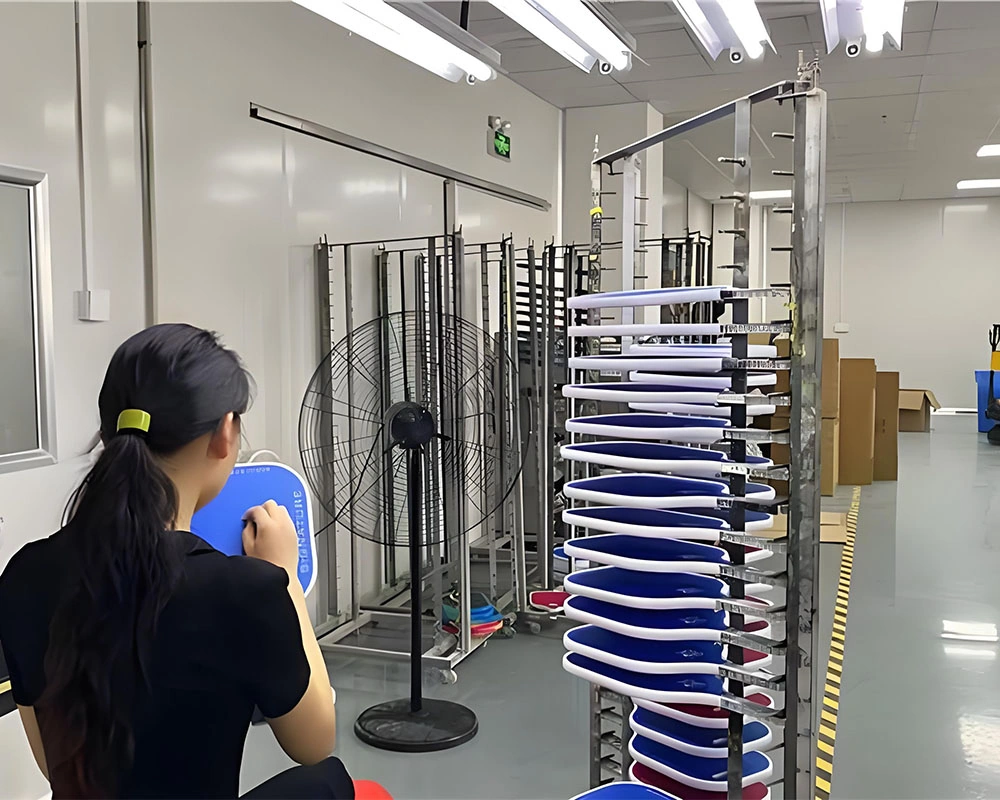
A pilot run tests repeatability, not just performance. Pull units from different parts of the run and compare weight, balance, surface, sound, graphics, edge finish, and play response.
Include destructive cross-section audits on a defined sample quantity. Confirm that the actual perimeter, foam, resin, core, and handle structure match the approved build sheet.
Stage 3: Durability and Environmental Checks
Agree on test methods and acceptance criteria before the purchase order. Depending on the product, the plan may include repeated-impact testing, elevated-temperature storage, thermal cycling, humidity exposure, handle-torque checks, surface-wear checks, and post-conditioning bond inspection.
No single tap test or photo proves long-term durability. Combine non-destructive checks with destructive audits and tracked field samples.
Stage 4: Mass-Production Control
The factory should retain approved references and record lot-level materials. Your QC plan should define:
- Incoming material identification.
- In-process temperature, pressure, and cure controls appropriate to the build.
- Weight, balance, and swing-weight sampling frequency.
- Surface, gloss, and appearance checks.
- Bond, edge, and handle acceptance criteria.
- Lot traceability and change control.
- Claim-handling evidence requirements after shipment.
The Buyer Checklist: Questions to Send Before Requesting a Quote
Use these questions to make competing quotes comparable:
- What does “thermoformed” mean in this specific construction?
- Which layers wrap the perimeter and continue into the handle?
- What core, cell specification, face layup, resin system, and edge foam are included?
- Is this an existing validated mold or a new custom mold?
- Which dimensions and tolerances are fixed by the mold?
- What are the target weight, balance, and swing-weight windows?
- Which durability and destructive-audit tests are standard, and which are optional?
- How will surface finish and graphics be controlled across production?
- What prototype, pilot, and mass-production quantities apply to this exact build?
- What changes would require a new sample approval or compliance submission?
- Can the supplier provide lot traceability for core, face, resin, and foam materials?
- How are verified manufacturing defects handled after shipment?
The quality of the answers matters more than how often the supplier uses the word “advanced.”
Frequently Asked Questions
Are thermoformed pickleball paddles always more powerful?
No. Thermoforming can support structures that feel stiffer, more stable, or more responsive, but finished power depends on the complete system: core, thickness, face layup, resin, foam placement, shape, weight distribution, and break-in behavior. Compare instrumented data and blind play tests on production-representative samples.
Do thermoformed paddles eliminate delamination?
No construction should be marketed as immune to failure. A well-controlled molded perimeter can improve structural integration, but poor bonding, trapped air, resin variation, heat exposure, or inconsistent processing can still contribute to disbonding, core damage, or other defects. Ask for the factory’s prevention controls and validation data rather than an absolute guarantee.
Is a thermoformed paddle automatically USA Pickleball approved?
No. Approval applies to a specific finished brand and model after testing. Construction type alone does not grant approval. Confirm the exact model is listed as “Pass” in the official database before making an approval claim.
Can a new brand launch with a thermoformed paddle?
Yes, especially through an existing validated mold and construction platform. The brand should still budget for multiple samples, a pilot run, performance and durability checks, production QC, and—when tournament positioning requires it—official equipment submission. A custom structure is possible, but it increases the number of variables the brand must control.
Should a brand choose thermoformed PP honeycomb or full foam?
Choose based on the intended player experience and SKU role. Thermoformed PP honeycomb is often a practical hero-platform direction. Full-foam or hybrid systems may suit a differentiated flagship, but they require separate decisions about density, rebound, damping, aging, weight, and compliance. Sample them as different architectures, not as minor upgrades.
Final Decision: Choose the Outcome, Then Choose the Process
Thermoformed pickleball paddles make sense when a brand needs a defensible performance SKU, can support the added development work, and is prepared to control the production build that creates the result.
They do not make sense when the construction label is doing all the marketing work.
Start with five questions:
- Who is the target player?
- What should the player notice?
- What role does the SKU play in the range?
- Can the retail economics support the process and QC?
- Can the approved construction be repeated in every production batch?
If those answers are clear, thermoformed construction may be the right platform. If they are not, refining the product brief—or launching a simpler cold-press model first—will usually save more time and money than choosing advanced construction too early.
NexaPaddle develops custom thermoformed pickleball paddle programs for brands that need support with platform selection, sampling, mold planning, material control, compliance preparation, and production QC. Send your target player, price tier, shape, thickness, and launch channel to begin with a specification—not just a quote.
Sources and Verification Notes
- USA Picklehttps://equipment.usapickleball.orgball Equipment Standards Manual: official paddle requirements, PBCoR limit, model designation, and ongoing production-consistency obligations.
- USA Pickleball Equipment Submission FAQ: submission samples, production-ready graphics, testing timeline, prototype screening, certification by similarity, and market-compliance guidance.
- USA Pickleball Approved Paddle List: live database for verifying the status of a specific brand and model.
- US20250108275A1, Edgeless Paddle: one published thermoformed carbon-wrap construction example; cited to illustrate design variation, not to define all thermoformed paddles.
- WO2024076417A1, Pickleball Paddle with Reinforced Edge: one published reinforced-edge and foam construction example that discusses potential trapped-air and bonding failure modes; cited as technical literature, not as proof that every design behaves the same way.
- NexaPaddle manufacturing and product-architecture reference, April 2026: internal source for product-tier, cost-block, sampling, and factory-QC framing. Commercial terms, MOQ, lead time, and exact specifications should be reconfirmed for each quotation before publication or sale.