Quick Answer
For a new private label pickleball paddle brand, the real budget is not just the factory unit price. A workable first-launch cost model should include samples, product development, paddle production, custom graphics, packaging, quality control, compliance planning, freight, import costs, platform fees, warranty allowance, and marketing inventory.
As a planning range, many new brands should expect a first private label paddle project to start from a few thousand dollars for a simple starter batch and move into five figures when they add premium carbon materials, thermoformed construction, retail packaging, testing, and larger inventory. The exact number depends on construction, MOQ, customization depth, shipping method, destination country, and the sales channel.
This guide breaks the cost down from a manufacturer perspective so you can compare quotes correctly and avoid building your brand on a price that only looks cheap on the first invoice.
Why New Brands Misread Private Label Paddle Costs
Most first-time buyers ask one question first:
How much is one custom pickleball paddle?
It is a natural question, but it is not the best budget question.
A private label pickleball paddle is not just a blank paddle with your logo. It is a full product system: paddle structure, surface material, core thickness, artwork, grip, edge guard, packaging, carton design, inspection standard, shipping plan, and compliance strategy. A low unit price can become expensive if it creates returns, poor reviews, failed approval, damaged packaging, or inconsistent inventory.
The better question is:
What is the total landed and launch-ready cost per sellable paddle?
That number is what affects your retail price, gross margin, cash flow, and reorder risk.
The Complete Cost Stack
Here is the full private label cost structure a new brand should budget before placing the first order.
| Cost Layer | What It Includes | Typical Impact | What New Brands Often Miss |
|---|---|---|---|
| Product strategy | Target player level, retail price, channel, SKU ladder | High | Choosing a premium build before proving demand |
| Samples | Existing mold samples, custom artwork samples, freight | Medium | Paying for too many unrelated samples |
| Tooling or setup | Custom shape, print setup, artwork adjustment, color matching | Medium | Assuming all customization is free |
| Materials | Face material, core, grip, edge guard, adhesive system | Very high | Comparing “carbon” quotes without checking grade and structure |
| Construction | Cold press, hot press, thermoformed, edgeless, foam core | Very high | Treating all paddles as equal because the shape looks similar |
| Branding | Logo, surface artwork, handle branding, hang tag | Low to medium | Ignoring color proofing and revision time |
| Packaging | Bubble bag, sleeve, retail box, paddle cover, master carton | Medium | Forgetting packaging changes carton size and freight cost |
| QC and testing | Weight, balance, surface, visual, packaging, sample checks | Medium | Cutting inspection and paying later through returns |
| Compliance planning | USAP/USAPA-oriented design checks, submission preparation | Medium to high | Marketing “approved” before approval is actually listed |
| Freight and import | Sea/air freight, duties, broker, local delivery | High | Comparing EXW/FOB price against a landed price |
| Sales channel costs | Amazon FBA, marketplace commission, storage, fulfillment | High | Pricing only from factory cost, not final margin |
| Warranty allowance | Replacements, refunds, customer service | Medium | Building zero defect allowance into the margin |
| Marketing assets | Photos, listings, ads, influencer samples | Medium | Treating launch marketing as optional inventory |
Typical Planning Ranges for a First Paddle Order
The numbers below are not a formal quotation. They are practical budgeting ranges for a new private label brand comparing supplier proposals. Current material prices, order quantity, exchange rate, packaging style, freight method, and destination country can move the final number.
| Cost Item | Lean Starter Paddle | Carbon / Hero Paddle | Premium Performance Paddle |
|---|---|---|---|
| Sample paddles | Usually low to medium; budget for 2-4 samples | Medium; artwork and surface feel may need revision | Medium to high; multiple structure checks may be needed |
| Factory unit cost | Lower; often built around fiberglass or basic carbon | Medium; carbon, T700/raw carbon, or thermoformed structure raises cost | Highest; Kevlar, T800, foam core, edgeless, or flagship cores raise cost |
| Custom artwork setup | Low if using existing mold and simple print | Low to medium | Medium if color matching, edge treatment, or premium finish is complex |
| Packaging | Simple sleeve, bubble bag, or basic box | Retail box, paddle cover, barcode, carton mark | Premium box, stronger protection, launch kit, or retail display |
| QC and pre-shipment inspection | Basic but should not be skipped | More important because reviews drive positioning | Critical because premium buyers expect consistency |
| Compliance planning | Basic dimension and surface awareness | USAPA/USA Pickleball-oriented pre-checks recommended | Pre-checks and strict model control strongly recommended |
| Freight per unit | Lower by sea, higher by air | Packaging size starts to matter more | Air freight can become expensive because premium packaging is bulkier |
| Best use case | Market test, club bundle, beginner retail | Main Amazon/retail/private label launch | Premium brand, influencer line, pro-level collection |
A simple way to model your first launch is:
Launch-ready cost per paddle = factory unit cost + packaging + inspection allowance + freight + duty/broker/local delivery + marketplace or fulfillment fees + warranty allowance + marketing/sample allocation.
For a healthy private label business, calculate margin from this launch-ready number, not from the factory unit price alone.
1. Sample and Development Costs
Before mass production, a new brand normally needs at least one round of samples. The sample stage is where you check grip feel, swing weight, surface texture, shape, thickness, print quality, packaging concept, and player feedback.
For a simple private label project using an existing mold, the sample cost is usually much lower than a full custom structure. For a more advanced project, you may need multiple samples:
- one structure sample to test play feel;
- one artwork sample to check logo, color, and surface finish;
- one packaging sample to confirm retail presentation;
- one pre-production sample before bulk production.
Planning range:
| Sample Type | Budget Role |
|---|---|
| Existing model sample | Fastest way to evaluate material and construction |
| Custom artwork sample | Confirms logo placement, color, and finish |
| Packaging sample | Helps avoid carton, barcode, and retail display problems |
| Pre-production sample | Final approval before bulk production |
New brands should not skip samples to save a few hundred dollars. A sample mistake is cheap. A 500-piece production mistake is not.
2. Paddle Construction Costs
The biggest production cost driver is the paddle structure. Two paddles can both be called “carbon fiber pickleball paddles” while having very different cost bases.
Entry Line: Cold Press Fiberglass or Basic Carbon
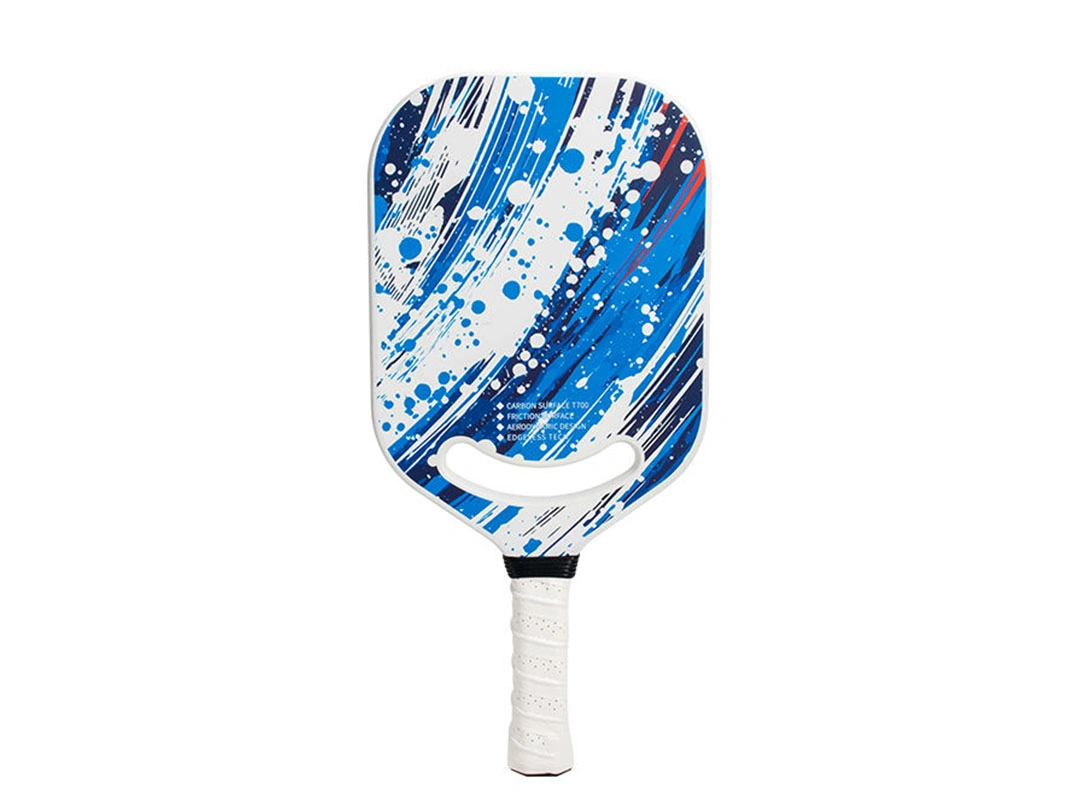
This is often the safest first SKU for schools, clubs, beginner bundles, promo channels, and budget retail. A typical entry private label paddle may use a PP honeycomb core, fiberglass or basic carbon face, UV printing, standard edge guard, and simple packaging.
Best for:
- starter paddle brands;
- club and school supply;
- price-sensitive retail;
- bundle sets;
- first market test orders.
Related product: OEM Fiberglass Pickleball Paddle Factory
Main Line: Carbon Fiber or Thermoformed Paddle
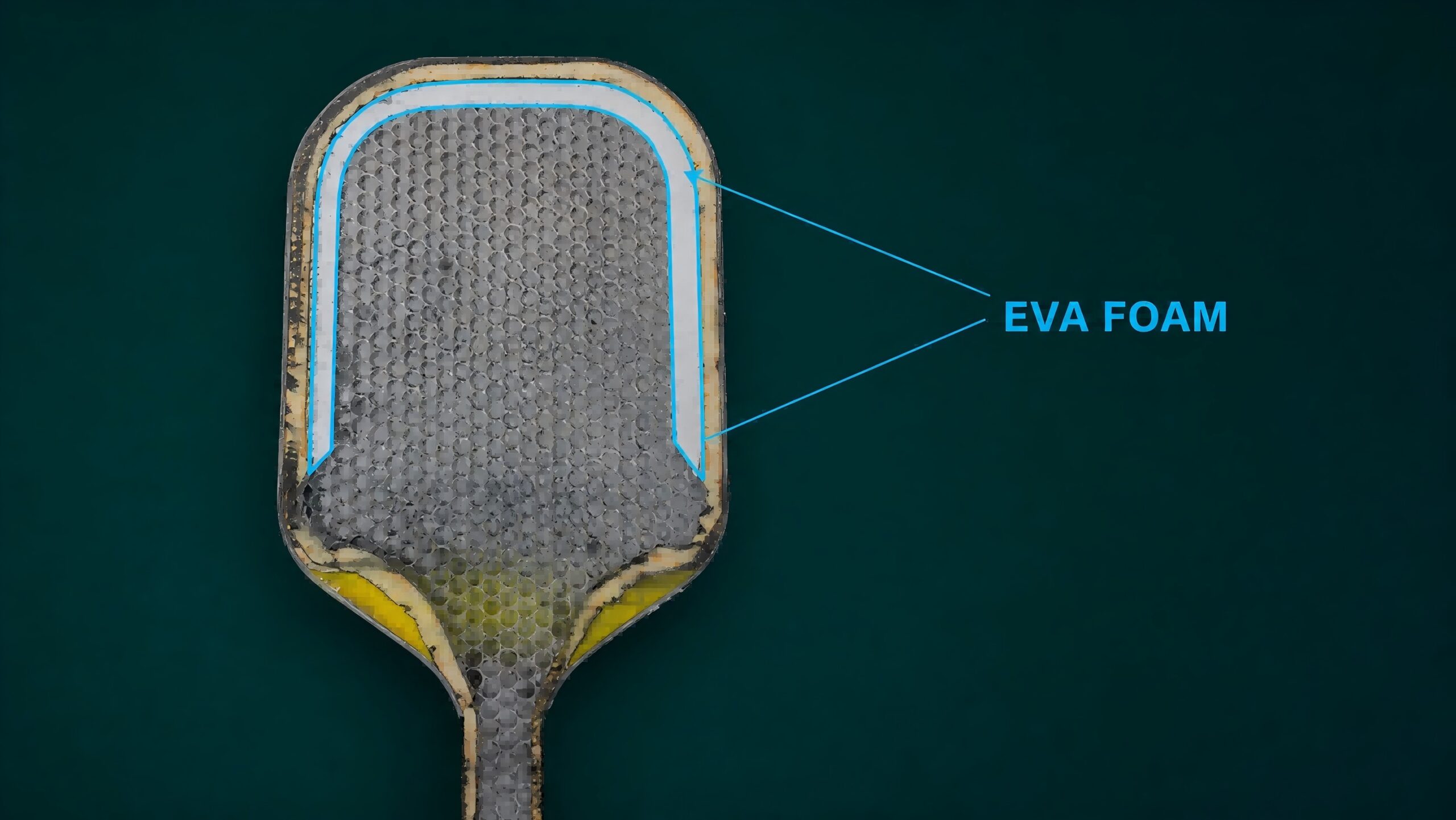
This is usually the hero SKU for a serious paddle brand. It may use carbon fiber, raw carbon, T700 carbon, PP honeycomb, foam edge reinforcement, thermoformed construction, or a more advanced grip and surface system.
Best for:
- intermediate players;
- Amazon private label brands;
- specialty retailers;
- brands that need a real performance story.
Related products: OEM Carbon Fiber Pickleball Paddle Factory and Lightweight Thermoformed Paddle Manufacturer
Premium Line: Kevlar, T800, Foam Core, or Flagship Builds
Premium paddles cost more because the material and process risk are higher. Hybrid Kevlar, T800 carbon, advanced foam cores, edgeless construction, special surface treatments, and more precise QC all raise cost. These paddles are better for brands that already know their target player and retail price.
Best for:
- premium paddle launches;
- pro or advanced player lines;
- influencer or ambassador products;
- brands that need differentiation beyond graphics.
Related products: Custom Kevlar Carbon Pickleball Paddle OEM and Foam Core Pickleball Paddles B2B Factory
3. Material Cost: What Actually Changes the Quote
The material list behind the quote matters more than the marketing name on the quote.
| Material Choice | Cost Effect | Brand Impact |
|---|---|---|
| Fiberglass face | Lower cost | Good for beginner, pop, and value paddles |
| Graphite or basic carbon | Medium | Lightweight control positioning |
| T700/raw carbon | Higher | Stronger performance story for spin and control |
| Kevlar/aramid hybrid | Higher | Premium durability and differentiated feel |
| T800/titanium-style flagship material | Highest | Best used when retail price supports it |
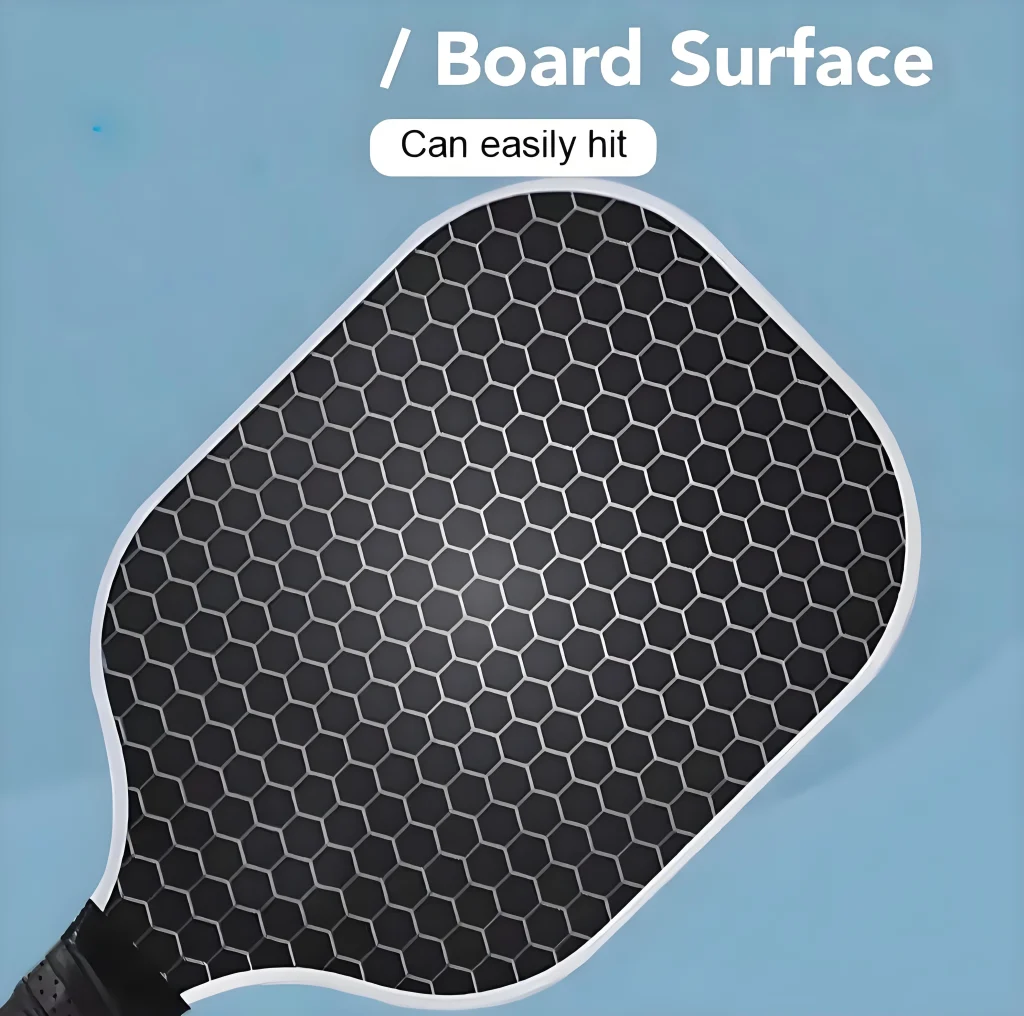
| PP honeycomb core | Standard | Reliable entry to performance baseline |
| Foam edge or thermoformed structure | Higher | Better power, stability, and premium positioning |
| Full foam or advanced core | Highest | Strong story, but needs stricter testing and positioning |
If two factories quote very different prices for “carbon fiber paddles,” ask what carbon, what core, what construction, what surface finish, what thickness, and what QC standard they are quoting. Without that detail, the cheaper quote may simply be a different product.
4. MOQ and Unit Cost
MOQ affects cost because many setup costs are fixed. Artwork preparation, print setup, material purchase, production scheduling, sample approval, carton design, and QC time do not disappear just because the order is small.
For new brands, the question is not always “What is the lowest MOQ?” It is:
What MOQ gives me enough inventory to test the market without forcing my unit cost too high?
A practical first order often uses a narrow SKU strategy:
- one starter SKU for price-sensitive buyers;
- one main hero SKU for the brand story;
- one premium SKU only if the audience and price point are already clear.
Launching with five designs, three shapes, four thicknesses, and multiple packaging styles may look exciting, but it usually makes the first order harder to manage and harder to reorder.
5. Artwork, Branding, and Packaging Costs
Private label cost rises when the brand experience becomes more complete.
Common branding and packaging items include:
- paddle surface artwork;
- logo placement;
- handle branding;
- edge guard color;
- grip color;
- hang tag;
- barcode or SKU label;
- retail box;
- paddle cover;
- Amazon FBA carton and label requirements.
For new brands, packaging should match the sales channel. A club or wholesale buyer may not need a luxury retail box. An Amazon or boutique retail paddle usually needs stronger packaging, cleaner barcode handling, better photography, and more consistent box protection.
Do not only ask for “custom packaging.” Ask what is included:
- individual box or sleeve;
- paddle cover;
- master carton strength;
- carton mark;
- barcode label;
- FBA label support;
- palletizing if needed;
- replacement packaging cost for reorders.
6. QC, Testing, and Compliance Planning
Quality control is not a decorative line item. It protects the brand’s reviews, reorder rate, and retailer trust.
For paddles, useful QC points include:
- weight range;
- thickness;
- balance point;
- edge guard bonding;
- handle alignment;
- surface finish;
- print defects;
- packaging damage;
- random play-feel checks;
- pre-shipment inspection photos or reports.
Compliance is especially important if the paddle will be marketed for tournament-style play. USA Pickleball’s Equipment Standards Manual explains that approved equipment must be tested and listed before it can be represented as approved for sanctioned play. The manual also includes paddle requirements for size, surface roughness, coefficient of friction, reflection, PBCoR, model designation, and ongoing compliance.
For new brands, this means:
- do not print or advertise “USA Pickleball Approved” before the model is actually approved and listed;
- treat surface texture and power limits as design constraints from the beginning;
- budget for pre-checks, sample revisions, and possible re-testing;
- keep each material or construction variation clearly named and controlled.
NexaPaddle can help brands prepare USAPA/USA Pickleball-oriented development paths, but the final approval status should always be checked against the official approved equipment database.
Core link: USAPA Approved Paddles
7. Freight, Duties, and Landed Cost
The factory unit price is not your landed cost.
A realistic landed cost may include:
- product cost;
- packaging cost;
- inland transport to port or airport;
- export documents;
- international freight;
- insurance;
- import duty and tariff items;
- customs broker;
- port or warehouse fees;
- domestic delivery;
- Amazon FBA or 3PL inbound handling.
Sea freight normally gives a lower cost per unit but requires more planning time. Air freight is faster but can erase margin quickly, especially for boxed paddles with bulky packaging. For a launch, many brands use air freight for samples and urgent small batches, then sea freight for planned inventory.
Because customs duty and tariff treatment depend on product classification, origin, destination, and current trade rules, new brands should confirm the final import cost with a licensed customs broker before setting retail pricing.
8. Marketplace, Fulfillment, and After-Sales Costs
If you sell through Amazon, Shopify, retail stores, distributors, or clubs, the cost model changes.
For Amazon sellers, the factory cost is only the beginning. You may also need to budget for:
- referral fees;
- FBA fulfillment fees;
- storage fees;
- inbound placement or prep fees;
- returns;
- advertising;
- product photography;
- listing copy;
- coupons or launch discounts.
In 2026, Amazon FBA-related costs remain a moving target. For example, reporting in April 2026 noted a temporary 3.5% fuel and logistics-related surcharge for certain FBA services in the U.S. and Canada. The point for paddle brands is simple: fulfillment assumptions should be checked close to launch, not copied from last year’s spreadsheet.
For retail or wholesale channels, the cost structure may include:
- distributor margin;
- retailer margin;
- display packaging;
- sales samples;
- damaged carton allowance;
- payment terms;
- replacement units.
9. Example First-Launch Budget Models
The following examples are planning models, not formal quotes. They are designed to help new brands think clearly before asking a factory for pricing.
Model A: Lean Starter Launch
Best for a new seller testing demand with a simple paddle.
| Item | Budget Logic |
|---|---|
| Product | Existing mold, fiberglass or basic carbon, PP honeycomb |
| Customization | Logo and surface artwork, standard grip and edge guard |
| Packaging | Simple sleeve, bubble bag, or basic box |
| MOQ Strategy | Keep SKUs limited; test one or two designs |
| Risk | Lower differentiation, but easier to validate demand |
This model is suitable when the brand needs a fast entry product and does not yet know which player segment will reorder.
Model B: Serious Hero SKU Launch
Best for a brand that wants a clear performance story.
| Item | Budget Logic |
|---|---|
| Product | Carbon or T700/raw carbon, 14mm or 16mm, improved surface |
| Construction | Cold press premium or thermoformed depending on positioning |
| Customization | Branded artwork, grip choice, retail packaging |
| MOQ Strategy | One hero paddle plus possibly one lower-cost starter SKU |
| Risk | Higher unit cost, but stronger brand positioning |
This is often the most balanced route for a private label paddle brand because it gives the brand something meaningful to sell beyond price.
Model C: Premium Performance Launch
Best for brands with an existing audience, coach network, or premium retail channel.
| Item | Budget Logic |
|---|---|
| Product | Kevlar, T800, foam core, Gen 3/Gen 4 style concept, or advanced thermoformed build |
| Construction | More process control and stricter QC |
| Customization | Better packaging, photography, launch samples |
| MOQ Strategy | Avoid too many variants; protect cash flow |
| Risk | Needs strong retail price, testing plan, and after-sales allowance |
This model can build brand authority, but it should not be chosen only because “premium” sounds more profitable. Premium paddles need premium positioning, better testing, and more disciplined inventory planning.
10. Hidden Costs That Damage New Brands
The cheapest quote is not always the cheapest business decision. Watch for these hidden costs:
- No clear material description.
If the quote only says “carbon paddle,” you cannot compare it properly. - Packaging not included.
The paddle price may exclude box, cover, barcode, carton mark, or FBA prep. - Surface not designed around compliance.
A high-spin surface that feels exciting in samples may create approval risk if the brand wants tournament positioning. - No weight tolerance.
If the paddle weight varies too much, customer reviews may mention inconsistency. - Too many first-order SKUs.
More designs increase complexity before the brand has sales data. - Freight ignored.
A low EXW or FOB quote can become expensive after air freight, duties, broker fees, and domestic delivery. - No warranty allowance.
Every physical product brand needs a small reserve for replacements, refunds, and customer support. - Reorder specs not locked.
If materials, surface finish, grip, or balance are not documented, the second batch may not match the first.
11. Questions to Ask Before You Approve a Quote
Use this checklist when comparing private label pickleball paddle manufacturers:
- Which core, face material, thickness, and construction method are included in this quote?
- Is this an existing mold or a custom mold?
- What artwork and color proofing are included?
- What packaging is included: sleeve, box, cover, carton, barcode, or FBA labels?
- What is the MOQ for this exact price?
- How does the price change at higher quantities?
- What QC checks are performed before shipment?
- What weight tolerance and balance range can you control?
- Can you support USAPA/USA Pickleball-oriented pre-checks before submission?
- What shipping term is quoted: EXW, FOB, CIF, DDP, or another term?
- What costs are excluded?
- How are defects, replacements, and reorder consistency handled?
If a supplier cannot answer these questions clearly, the price is not yet complete.
12. How NexaPaddle Helps New Brands Build a Cost-Smart Launch
NexaPaddle works with brand owners, wholesalers, retailers, Amazon sellers, clubs, and sports equipment buyers who need private label pickleball paddles without guessing their way through materials and production.
For new brands, we can help you:
- choose a starter, hero, or premium paddle structure;
- compare fiberglass, carbon, T700, Kevlar, T800, PP honeycomb, and foam core options;
- design custom artwork and private label packaging;
- prepare a practical MOQ and reorder plan;
- align the paddle specification with USAPA/USA Pickleball-oriented requirements;
- plan packaging, carton, and shipping details early;
- build a cost model that supports your target retail price.
If you already know your target player, retail price, and sales channel, our team can recommend a paddle structure that fits the business model instead of simply pushing the most expensive option.
Start here: Private Label Paddles or Contact NexaPaddle
Final Takeaway
The real cost of private label pickleball paddles is not one number. It is a stack.
Factory unit price matters, but it is only one part of the launch equation. Materials, construction, packaging, QC, approval planning, freight, duties, marketplace fees, warranty allowance, and marketing all shape the final cost per sellable paddle.
For a new brand, the smartest launch is usually not the cheapest paddle or the most advanced paddle. It is the paddle line that matches your buyer, your channel, your target margin, and your ability to reorder consistently.
Build the cost model first. Then build the paddle.