Why Bulk Buying Custom Pickleball Paddles Saves Retailers Money

Table of Contents

Introduction: The Margin Problem Most Retailers Don’t Talk About

Pickleball equipment is one of the fastest-growing retail categories in North America. The US pickleball paddle market alone is valued at $324–325 million in 2025 (QY Research, February 2026), with an 8.6% CAGR projecting to $574 million by 2032. The broader pickleball equipment market — paddles, balls, nets, accessories — reaches $702.9 million (Coherent Market Insights). Behind these numbers: 24.3 million active US players as of the SFIA 2026 Topline Report (March 2026), representing 171.8% growth in just three years. Major sporting goods chains expanded their pickleball floor space by 40–60% in the past year (FORWRD HQ, February 2026), and a $3 billion facility construction boom is underway across the United States (The Dink, March 2026).

The reason isn’t demand. Demand is exceptional. The reason is procurement strategy.

Most sporting goods retailers and online sellers source pickleball paddles the same way they source everything else: through domestic distributors or wholesale platforms. It’s familiar. It’s convenient. And it quietly destroys margin at scale.

The alternative — buying custom paddles direct from OEM manufacturers in bulk — isn’t a secret known only to large brands. It’s a procurement model that’s accessible to retailers at almost any scale, and it fundamentally changes the economics of selling pickleball equipment.

This guide breaks down exactly how bulk buying works, what the real cost differences look like across paddle tiers, and how to evaluate manufacturing partners who can support a private-label or custom-brand strategy.

Part 1: The Market Opportunity — Why Pickleball Retail Is Worth Optimizing

Participation Growth Creates Durable Demand

Pickleball’s growth trajectory has moved well beyond trend status. The SFIA 2026 Topline Participation Report confirms 24.3 million active US players — up 171.8% in three years, making pickleball the fastest-growing sport in America for an unprecedented third consecutive year. The broader APP estimate of 36.5 million captures casual participants who play only occasionally. Either way, the directional signal is the same: this market is structurally expanding. Courts are being built faster than most municipalities can fund them — with a $3 billion facility construction boom currently underway (The Dink, March 2026). Critically, 52% of US pickleball players are now under 35 years old, a demographic shift that extends the sport’s commercial runway by decades. Major retailers responded by expanding pickleball floor space 40–60% in the past year (FORWRD HQ, February 2026). Offline retail still accounts for 65%+ of paddle sales (QY Research), and the USAPA-certified paddle count has tripled in two years — from 1,331 approved models in May 2022 to 3,700+ in October 2024 — reflecting explosive brand entry into the category.

For equipment retailers, this means a buyer base that is: growing year-over-year, skewing toward higher-income demographics with discretionary spending capacity, and increasingly brand-educated as the sport matures.

The Equipment Upgrade Cycle

Pickleball isn’t a one-paddle sport for engaged players. Beginners typically enter with low-cost composite paddles and upgrade within 6–12 months of regular play. Intermediate players often maintain separate paddles optimized for singles versus doubles play, or for different court conditions. Serious participants frequently own multiple paddles and replace their primary paddle every 12–18 months as materials and manufacturing technology evolve.

This upgrade cycle creates a continuous demand signal — not just first-purchase volume. Retailers who build brand loyalty through quality private-label products capture repeat purchase revenue that branded-resale models don’t generate.

Margin Compression in the Branded Resale Model

Reselling established paddle brands — Selkirk, Joola, Paddletek, Franklin — is a volume play with limited margin. Authorized dealer agreements typically cap retail margin at 30–45%. MAP (Minimum Advertised Price) policies restrict competitive differentiation on price. Customer loyalty belongs to the brand, not the retailer.

Private-label custom paddles break all three constraints simultaneously.

Part 2: How Bulk Buying Changes the Unit Economics

The True Cost of Distributor-Sourced Paddles

When a retailer purchases through a domestic distributor, the paddle has typically passed through at least two intermediary layers before reaching the purchase order:

  1. OEM manufacturer (China, Taiwan, or domestic) produces paddle at true manufacturing cost
  2. Importer/brand owner marks up 80–150% for brand investment, logistics, and margin
  3. Distributor adds 20–40% for warehousing and logistics
  4. Retailer receives product at wholesale cost that already includes all upstream markups

A thermoformed carbon fiber paddle that costs $28–$38 to manufacture might reach a retailer at $55–$75 — before the retailer adds their own margin. The retailer’s actual cost-to-consumer ratio leaves them selling a $120 paddle they bought for $65, capturing $55 in gross margin but competing directly with the brand’s own DTC channel at $120.

What Factory-Direct Procurement Looks Like

Factory-direct OEM procurement removes intermediary layers from the equation. The retailer negotiates directly with the manufacturer, specifying:

  • Paddle construction type (cold press vs. thermoformed)
  • Core material (polymer honeycomb variants, thickness)
  • Face material (fiberglass, carbon fiber grade, kevlar)
  • Handle length and grip circumference
  • Custom graphics, branding, colorways
  • Packaging specifications

The same thermoformed carbon fiber paddle is available at $32–$45 per unit at factory-direct pricing for a 300-unit order — the identical specification, built to the retailer’s brand standards, at a fundamentally different cost basis.

The Factory-Direct vs. Distributor Comparison Table

FactorDistributor ModelFactory-Direct OEM
Unit cost (thermoformed CF)$55–$75$32–$45
Unit cost (cold press fiberglass)$18–$28$10–$16
BrandingManufacturer’s brandYour brand
MOQOften 1 unit100–300 units minimum
Lead time3–7 days (domestic stock)5–8 weeks (production + transit to port)
Margin controlLimited (MAP policies)Full control
Customer loyaltyBrand’s customerYour customer
SKU differentiationLimited to existing catalogFully customizable

The tradeoff is clear: distributor sourcing offers convenience and low commitment; factory-direct sourcing offers margin, brand ownership, and long-term competitive positioning.

Part 3: Paddle Construction Tiers and Their Retail Economics

Understanding paddle construction tiers is essential to building a multi-SKU retail strategy. Different construction methods have different cost structures, target different customer segments, and carry different margin profiles.

Tier 1: Cold Press Fiberglass Paddles

Construction: Polymer core bonded with fiberglass face sheets under cold press lamination
Manufacturing cost range: $8–$14 per unit (300+ piece order)
Suggested retail range: $39–$79
Target segment: Beginners, recreational players, budget-conscious buyers, gifting

Cold press fiberglass paddles are the entry point for most retail assortments. The manufacturing process is straightforward, materials are stable in pricing, and the visual customization options are extensive through UV printing — making these ideal beginner and starter pickleball paddles for retail assortments.

Retail margin opportunity: At $12 factory cost and $59 retail, gross margin per unit is $47 — a 79% margin — before fulfillment costs. Even after Amazon FBA fees or retail overhead allocation, this tier consistently delivers 50–65% gross margin for retailers who source correctly.

Volume pricing behavior: Cold press paddles show the steepest per-unit cost reduction at volume. The difference between 100-unit and 500-unit pricing is often $3–$5 per paddle — meaningful on a 500-unit run.

Tier 2: Cold Press Carbon Fiber Paddles

Construction: Polymer core with carbon fiber face sheets (T700 or T800 grade) under cold press lamination
Manufacturing cost range: $14–$22 per unit (300+ piece order)
Suggested retail range: $79–$149
Target segment: Intermediate players, club players, performance-conscious recreational players

Carbon fiber face construction delivers improved feel, better spin generation, and perceived premium quality compared to fiberglass. The T700 carbon specification — common in this tier — provides adequate stiffness and a surface texture that players associate with tournament-level equipment.

Retail margin opportunity: At $18 factory cost and $99 retail, gross margin is $81 per unit (82% gross margin). This tier often performs best in DTC and Amazon environments where product photography and specification copy can communicate the carbon fiber advantage.

Tier 3: Thermoformed Carbon Fiber Paddles

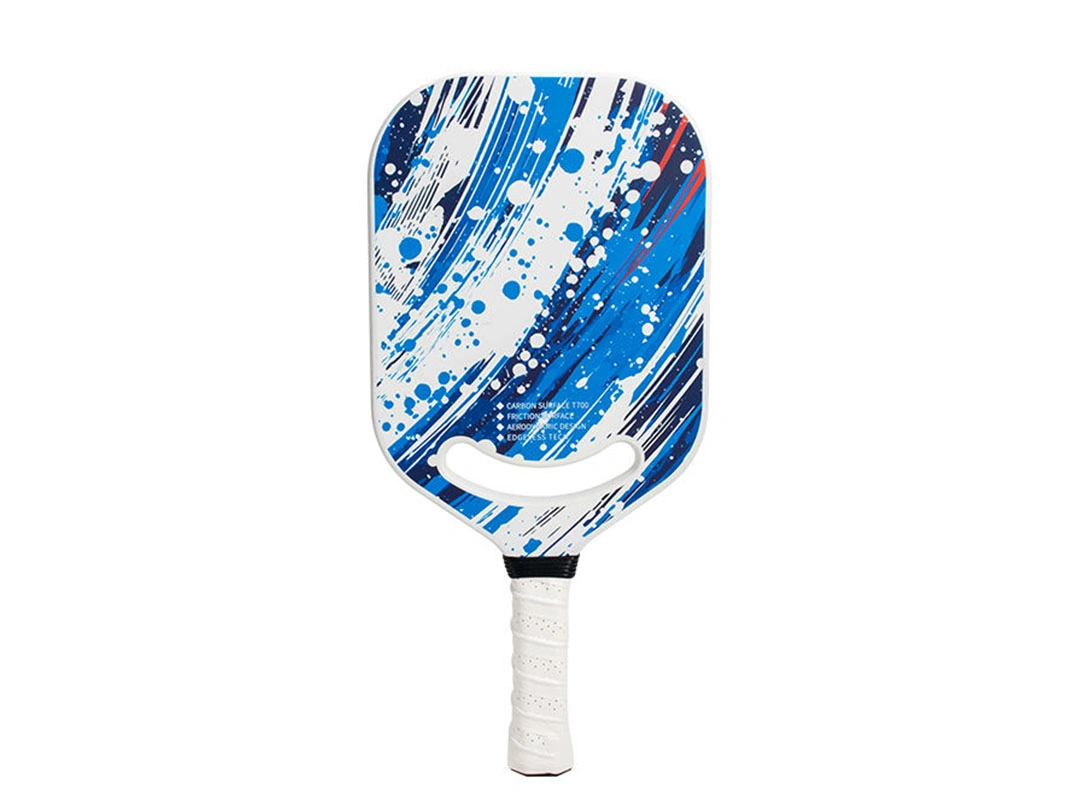
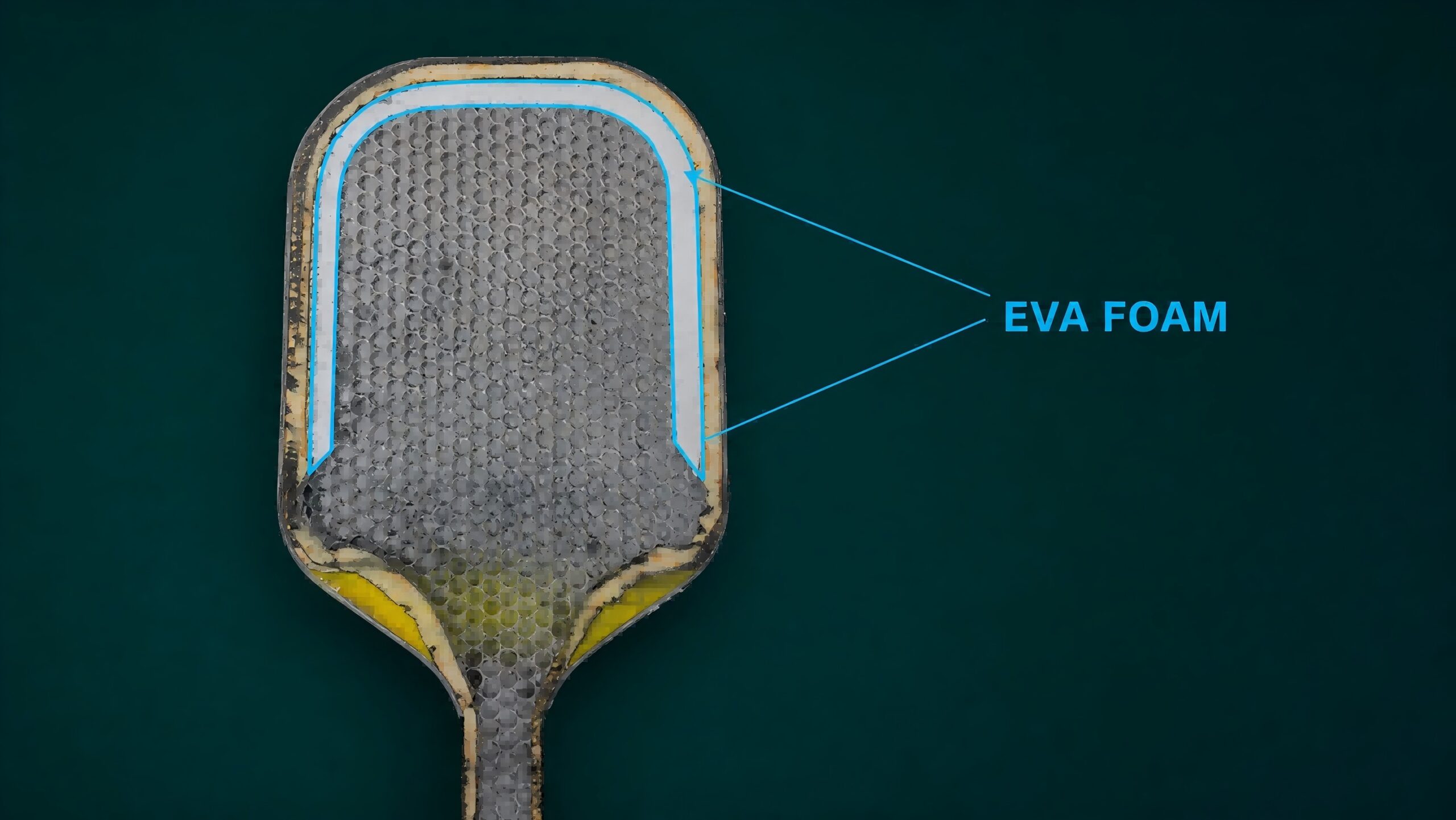
Construction: Foam-injected edge wall bonded with T700/T800 carbon fiber faces under thermoforming heat and pressure process
Manufacturing cost range: $28–$45 per unit (100+ piece order)
Suggested retail range: $129–$229
Target segment: Advanced players, club competitors, performance-focused buyers, gifting for serious players

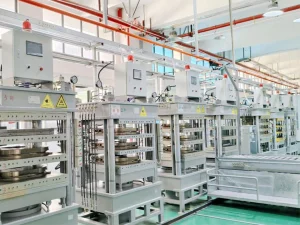
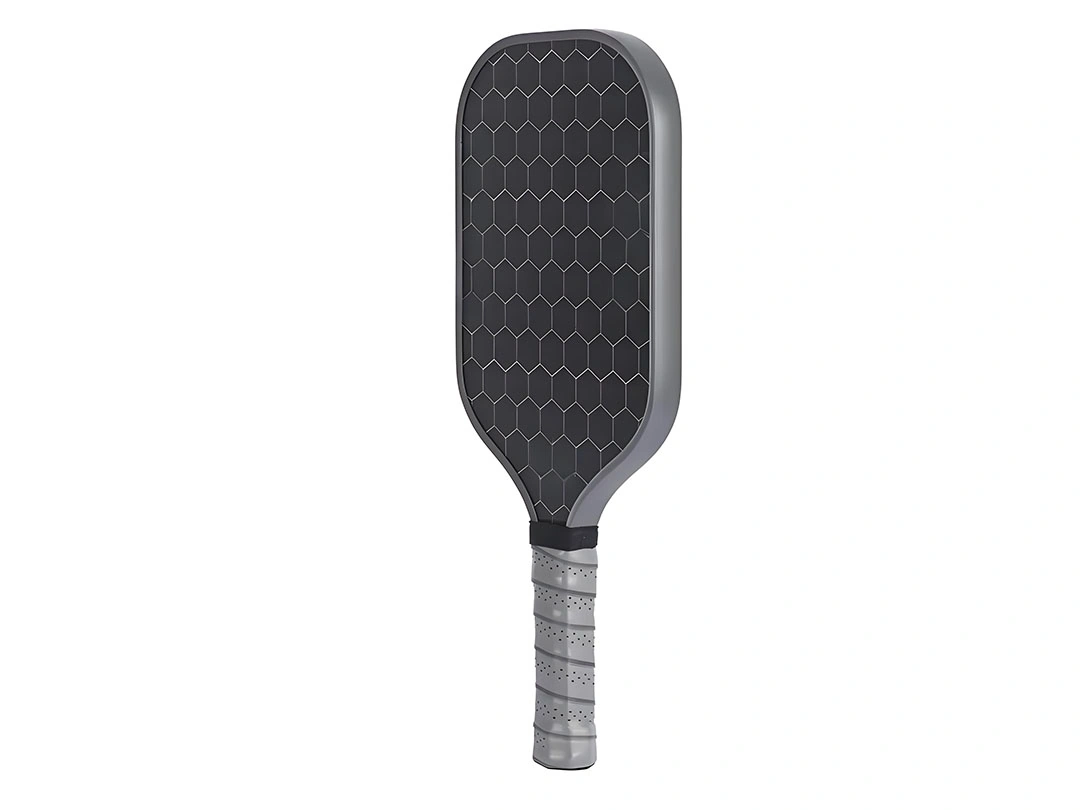
Thermoforming is the manufacturing process behind most premium paddles on the market — Joola’s Hyperion series, Selkirk’s Vanguard line, and others in the $150+ retail category. The process fuses edge wall, core, and face into a single structural unit, eliminating the delamination risk present in cold press constructions and producing a livelier, more consistent feel across the paddle face. Explore NexaPaddle’s thermoformed pickleball paddles to see the full range of construction options available at wholesale MOQs.

USAPA certification availability: Thermoformed paddles can be engineered to meet USAPA approval requirements, enabling use in sanctioned tournament play. This certification status is a meaningful retail differentiator — it allows positioning as “tournament-approved” without compromising margin.

Retail margin opportunity: At $35 factory cost and $169 retail, gross margin is $134 per unit (79% gross margin). The higher retail price point means absolute dollar margin per unit is significantly greater than lower tiers, even when margin percentage is similar.

MOQ advantage: Thermoformed paddles from quality OEM manufacturers now start at 100-piece minimum orders — lower than cold press for comparable quality tiers. This makes premium market entry accessible without committing to 500-unit inventory positions.

Multi-Tier Assortment Strategy

Retailers maximizing the bulk-buying opportunity typically structure three-tier assortments:

  • Entry paddle ($49–$79): Cold press fiberglass, high-volume reorder, introductory brand touchpoint
  • Core paddle ($99–$129): Cold press or thermoformed carbon fiber, primary revenue driver
  • Premium paddle ($149–$229): Thermoformed carbon fiber, USAPA certified, margin maximizer

This structure captures customers at entry, grows them through the paddle upgrade cycle, and retains them within the same brand ecosystem rather than losing them to competitor brands.

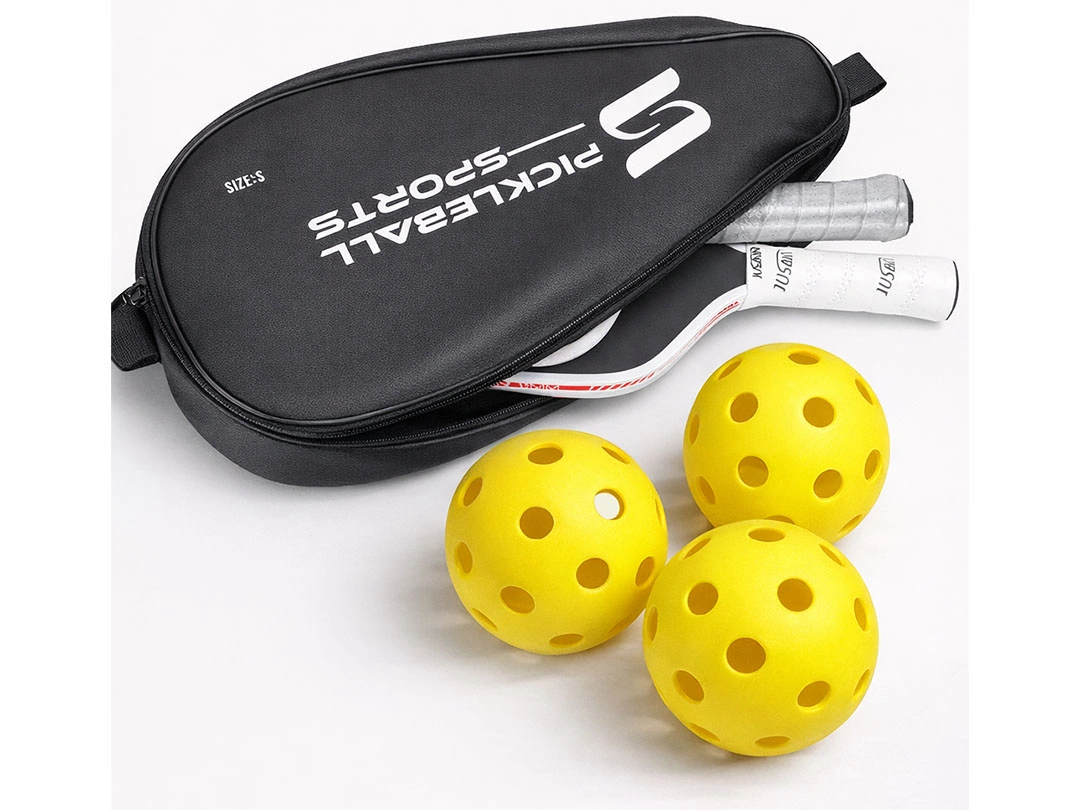
Bundling strategies — packaging paddles with balls, bags, and accessories as pickleball sets and bundles — further amplify this retention effect while boosting average order value by 30–60%.

Part 4: The Customization Leverage Point

Custom branding isn’t just aesthetics — it’s the mechanism that converts one-time buyers into brand loyalists and transforms commodity procurement into proprietary retail assets.

What Full Customization Actually Includes

A complete custom paddle specification covers:

Visual branding:

  • Full-face UV printing with custom graphics, colorways, and logos
  • Edge guard color and branding options
  • Grip tape color and texture selection
  • Custom grip end cap with logo molding

Specification customization:

  • Handle length (short 4.5″, standard 5″, extended 5.5″)
  • Grip circumference (4″, 4¼”, 4½”)
  • Paddle weight tuning (lightweight 7.2–7.6 oz, midweight 7.6–8.2 oz, heavyweight 8.2–8.8 oz)
  • Core thickness (13mm, 14mm, 16mm)

Packaging:

  • Custom printed retail box with brand story, specs, QR code
  • Hang tag design and materials
  • Bundle components (ball, bag, replacement grip)

Documentation:

  • Custom warranty card with brand contact information
  • Care instruction insert
  • Brand catalog insert for upsell

All of these elements are configurable within standard OEM manufacturing processes. Retailers aren’t commissioning custom manufacturing tooling for most specifications — they’re selecting within existing production capabilities and applying brand identity to the result.

For retailers exploring the full spectrum of customization options, NexaPaddle’s custom pickleball paddles program covers every specification layer — from face material and core selection to UV printing, packaging, and USAPA certification support.

The Brand Equity Compounding Effect

A retailer who builds a private-label paddle brand is building an asset that appreciates. Each satisfied customer who searches for their paddle brand again — rather than searching for “pickleball paddles” generically — is evidence of brand equity accumulating.

This matters structurally: branded private-label products command better Amazon search position over time as review velocity builds on a single ASIN. They generate word-of-mouth referrals tied to a specific brand name. They create the foundation for brand extensions (bags, apparel, accessories) that leverage the same customer relationship.

Retailers who continue buying distributor-stocked branded paddles build none of this. Every sale is a transaction; none of them compound.

Part 5: Choosing the Right OEM Manufacturing Partner

Not all OEM paddle manufacturers are equivalent. The quality range is wide, and procurement decisions made without adequate due diligence create downstream problems in product quality, certification, fulfillment, and customer satisfaction.

Key Evaluation Criteria

USAPA Certification Capability

If any paddle in the assortment will be positioned for competitive play, the manufacturer must have demonstrated capability to produce USAPA-approved designs. This requires understanding the approval parameters — surface roughness (Coefficient of Friction ≤ 30), maximum dimensions (17″ length + width combined, 24″ maximum combined length and width), and material composition requirements.

Manufacturers with prior USAPA certification experience can pre-test designs before formal submission, dramatically reducing the cost and timeline risk of the certification process.

Quality Control Infrastructure

Request documentation of quality control processes: incoming material inspection protocols, in-process inspection checkpoints, and final product testing. Reputable OEM manufacturers publish defect rate data and offer pre-shipment inspection access (either proprietary or through third-party services like SGS or Bureau Veritas).

Sample Evaluation Process

No bulk order should be placed without evaluating production samples — not prototypes, but samples pulled from actual production runs. Assess core consistency, face-to-edge bonding, grip feel, weight variance across multiple units, and finish quality against specification.

Production Capacity and Lead Times

Match manufacturer production capacity to your volume requirements. A manufacturer whose full capacity is 500 paddles per month cannot reliably service a 1,000-unit order in 30 days. Understand stated lead times, and request references from other retail customers who have placed similar orders.

NexaPaddle exemplifies the factory-direct model at scale. As a USAPA-certified Chinese manufacturer with 10+ years of experience and 300+ brands served globally, NexaPaddle operates as a direct factory — not a trading company — offering full custom OEM pickleball paddles capability. Cold press paddle MOQs start at 300 pieces; thermoformed MOQs start at just 100 pieces. Volume pricing breaks at 100, 200, 300, 500, and 1,000 units, with per-unit cost dropping meaningfully at the 300 and 1,000 thresholds. First order lead times run 30–60 days; repeat orders ship in 20–30 days. NexaPaddle exports to the USA, Canada, Japan, Australia, UK, Germany, Spain, France, India, and Korea — covering every major growth market for pickleball equipment.

Communication and Responsiveness

B2B manufacturing partnerships require sustained communication across language and time zone differences. Evaluate not just the quality of initial sales communication but the responsiveness and technical depth of answers to specification questions. A manufacturer who responds slowly or vaguely to pre-order technical questions will not perform better during production.

Red Flags in OEM Manufacturer Evaluation

  • No sample program or sample fees that exceed $200 per paddle — legitimate manufacturers offer sample programs at cost
  • Unable to provide USAPA certification documentation for existing approved designs
  • Vague or inconsistent answers on core material specifications (honeycomb cell size, core thickness tolerance)
  • No third-party quality inspection access
  • Lead time commitments without production capacity documentation
  • Pricing that seems implausibly low — thermoformed carbon fiber paddles cannot be produced at quality below $25/unit; quotes below this suggest material substitution

Part 6: Logistics, Inventory, and Cash Flow Considerations

Import Logistics Basics

Factory-direct procurement from Chinese OEM manufacturers involves import logistics that domestic distributor purchasing does not. Retailers new to direct importing should understand the basic framework:

Incoterms: Most OEM manufacturers quote FOB (Free On Board) pricing — the manufacturer’s cost to load product onto a vessel at the origin port. Retailers are responsible for freight, insurance, customs clearance, and domestic delivery.

Freight options:

  • Sea freight (LCL or FCL): 3–4 weeks transit from China to US West Coast ports. LCL (Less than Container Load) is appropriate for orders under ~15 CBM; FCL (Full Container Load) is typically more cost-effective above that threshold.
  • Air freight: 7–12 days transit, significantly higher cost per kg. Appropriate for urgent initial orders or fast-turn seasonal product.

Import duties: Pickleball paddles (HTS 9506.99) are subject to Section 301 tariffs on goods of Chinese origin. Current tariff rates should be confirmed with a licensed customs broker as rates have been subject to ongoing policy changes.

Customs broker: First-time importers should work with a licensed customs broker for the initial shipment. Typical broker fees run $200–$400 per shipment entry; the compliance risk mitigation is worth the cost.

Inventory Planning for Bulk Orders

Bulk procurement requires inventory planning discipline that distributor sourcing does not. Key considerations:

Demand forecasting: How many units per SKU will move in 90 days? 180 days? Bulk pricing incentivizes larger orders, but dead inventory carrying cost erodes the procurement savings.

Safety stock: What is the reorder lead time, and how much inventory buffer is needed to avoid stockouts during peak season? A 45-day factory lead time plus 25-day sea transit means 70 days of exposure from reorder trigger to receipt.

SKU rationalization: Every additional SKU (colorway, specification variant) requires its own inventory position. Start with a tightly rationalized assortment and expand based on sell-through data.

Working Capital Requirements

Bulk OEM procurement typically requires 30% deposit at order placement and 70% balance payment before shipment — a full-payment-before-receipt structure compared to the net-30 or net-60 terms available from domestic distributors.

For a 500-unit order of thermoformed paddles at $38/unit, the total procurement cost is $19,000 — all of which must be committed before the product ships. Retailers must plan for this working capital requirement and factor it into ROI calculations.

The return profile, however, is strong: that same 500-unit order sold at $169 retail generates $84,500 in revenue — a $65,500 gross margin on a $19,000 investment, before operating costs.

Part 7: Building the Business Case Internally

For buyers at larger retail organizations who need to present bulk OEM procurement as a strategy to leadership, the financial case typically centers on three metrics:

Gross Margin Improvement

Calculate the margin difference between current distributor-sourced SKUs and equivalent factory-direct alternatives. Use realistic factory-direct pricing (request quotes before building the model) and conservative retail price assumptions.

Example model:

  • Current: 200 units of Brand X thermoformed paddle, bought at $68, retailed at $129 = $61 margin/unit = 47% gross margin
  • Alternative: 200 units of private-label thermoformed paddle, manufactured at $38, retailed at $139 = $101 margin/unit = 73% gross margin
  • Margin improvement: +$8,000 on equivalent volume, +26 margin points

Brand Equity Value

Quantify the customer retention value of brand-loyal paddle buyers versus brand-neutral commodity buyers. If a customer who buys a named private-label paddle is 40% more likely to return for accessories and replacement equipment, that lifetime value difference justifies brand investment.

Inventory Risk Management

Acknowledge and address the inventory risk of bulk procurement. Present the safety stock model, the reorder cadence, and the demand forecasting assumptions. Leadership concerns about bulk inventory risk are valid — address them proactively rather than dismissing them.

Frequently Asked Questions

What is the minimum order quantity for wholesale pickleball paddles?

MOQs vary by construction type. Cold press fiberglass and carbon fiber paddles typically start at 300 pieces — the sweet spot for first orders that balances unit economics with manageable inventory risk. Thermoformed paddles start at just 100 pieces, making premium market entry accessible to brands with smaller initial capital. Volume pricing improves at step points of 200, 300, 500, and 1,000 units.

How much can retailers save by sourcing factory-direct instead of through distributors?

Factory-direct purchasing typically reduces procurement cost by 20–50% compared to domestic distributor pricing. Each intermediary layer in the traditional supply chain adds 20–40% in markup. A thermoformed carbon fiber paddle available at $55–$75 through a distributor costs $32–$45 when sourced directly from the OEM factory — the identical specification at a fundamentally different cost basis. On a 500-unit order, that difference represents $11,500–$15,000 in recovered margin.

How long does it take to receive a bulk order of custom pickleball paddles?

First orders — including design finalization, sample approval, production, and quality control — typically require 30–60 days. Once your specification is locked and approved, repeat orders ship in 20–30 days. Sea freight from China to US West Coast ports adds approximately 3–4 weeks. For time-sensitive launches, air freight reduces transit to 7–12 days at approximately $8–$15 per paddle.

Can I get my own branding on affordable pickleball paddles without high tooling costs?

Yes. UV printing — the standard finishing method for cold press paddles — applies full-color, edge-to-edge custom graphics directly to the paddle face with zero per-design tooling fees. This allows unlimited design iterations, A/B testing across colorways, and seasonal refreshes without capital investment in new molds. Water decal and laser engraving options are also available for thermoformed and premium paddle lines.

Does NexaPaddle support USAPA certification for custom paddles?

Yes. NexaPaddle conducts in-house pre-testing against USAPA compliance parameters — including size dimensions, surface roughness (Coefficient of Friction), and core deflection — before official submission. The USAPA certification process costs $500–$1,200 per paddle design and takes 4–6 weeks. Pre-testing dramatically reduces first-submission failure risk and protects your launch timeline.

Conclusion: Start Sourcing Smarter

The pickleball equipment market is large, growing, and structurally favorable for retailers who approach procurement strategically. The margin available in this category — when captured through direct OEM sourcing rather than distributor dependency — is exceptional by sporting goods standards.

Bulk buying custom pickleball paddles isn’t a strategy reserved for large brands with dedicated sourcing teams and seven-figure procurement budgets. It’s available to specialty retailers, regional chains, Amazon sellers, and DTC brands at order sizes starting at 100 units.

The decision to source factory-direct is a decision to own your margin, own your brand, and own your customer relationship. The alternative — continuing to resell other brands at capped margins — is a viable short-term tactic but a structurally limiting long-term strategy in a market that is rapidly professionalizing.

The time to establish your private-label position is before the category reaches full maturity and brand differentiation becomes exponentially more expensive.


References

  1. QY Research Inc. — Pickleball Paddles Market Report, February 2026
  2. Coherent Market Insights — Pickleball Equipment Market Report 2025–2032
  3. SFIA — 2026 Topline Participation Report, March 2026
  4. Association of Pickleball Professionals (APP) — Player Statistics
  5. FORWRD HQ — “Major Retailers Expand Pickleball Equipment Footprint,” February 2026
  6. The Dink — Pickleball Facility Construction Report, March 2026
  7. USA Pickleball — Equipment Standards Manual

Ready to Calculate Your Margin Opportunity?

NexaPaddle works with retailers, Amazon sellers, and DTC brands to develop custom paddle programs from first specification through final shipment.

What we offer:

  • Cold press fiberglass paddles from $8–$14/unit (300 MOQ)
  • Cold press carbon fiber paddles from $14–$22/unit (300 MOQ)
  • Thermoformed carbon fiber paddles from $28–$45/unit (100 MOQ)
  • Full custom branding: graphics, packaging, grip, end cap
  • USAPA certification support for competitive-grade products
  • First order lead time: 30–60 days | Repeat orders: 20–30 days

Explore Custom Paddle Options → | Request a Quote →


NexaPaddle is a USAPA-certified OEM manufacturer specializing in custom pickleball paddles for retail brands, Amazon sellers, and wholesale buyers. Direct factory. No middlemen.

Amazon FBA Pickleball Paddles: How to Source, Brand, and Stand Out

The market for pickleball paddles on Amazon is one of the most explosive opportunities in sporting goods e-commerce right now. With over 36.5 million players in the United States and participation growing at a double-digit rate year over year, the search volume for terms like amazon pickleball paddles and pickleball paddles amazon has surged to levels that most FBA

Read More »

Best Pickleball Paddles for Beginners: What Retailers Should Stock

The global pickleball equipment market is projected to reach $480.6 million by 2025, with paddles commanding nearly half of that revenue at roughly $239 million.[^2] For retailers, distributors, and brand owners, the most critical data point within those projections is this: the low-price, beginner tier constitutes a massive 43% of the total equipment market, representing

Read More »

The Best Pickleball Paddle for Intermediate Players (2026 Guide)

Your beginner paddle is holding you back. If your dinks are floating, your drives lack bite, and your resets feel unpredictable, the problem isn’t your technique—it’s your equipment. Finding the best pickleball paddle for intermediate players means finding the specific technology that sharpens your strengths and covers your weak spots. The jump from a 2.5 beginner to

Read More »

Best Pickleball Paddle for Tennis Elbow: Engineering for Comfort

Introduction: A $700 Million Market With an Arm Problem The pickleball industry crossed $702.9 million in 2025, powered by 36.5 million active players in the United States alone. If that number sounds impressive, the demographic breakdown behind it is more important to your business: the fastest-growing cohort is adults aged 40–65, many of them former

Read More »

Black Friday Sourcing: Preparing Your Pickleball Inventory Early

Here is the most important thing a B2B buyer needs to know about Black Friday 2026: your sourcing clock starts in April — not September. If you’re planning to capitalize on pickleball paddle Black Friday demand, waiting until late summer guarantees stockouts, premium freight costs, and missed revenue windows that won’t come back. The scale of what’s

Read More »

Cold Press vs. Hot Press Forging: Pickleball Manufacturing Explained

The single most consequential decision when sourcing custom OEM pickleball paddles is choosing the correct manufacturing process. For B2B buyers—whether you are an established brand owner, a volume wholesaler, or a scaling Amazon FBA seller—the underlying production method dictates your unit economics, product durability, target retail price point, and ultimately, your brand reputation. Sourcing blindly without understanding

Read More »