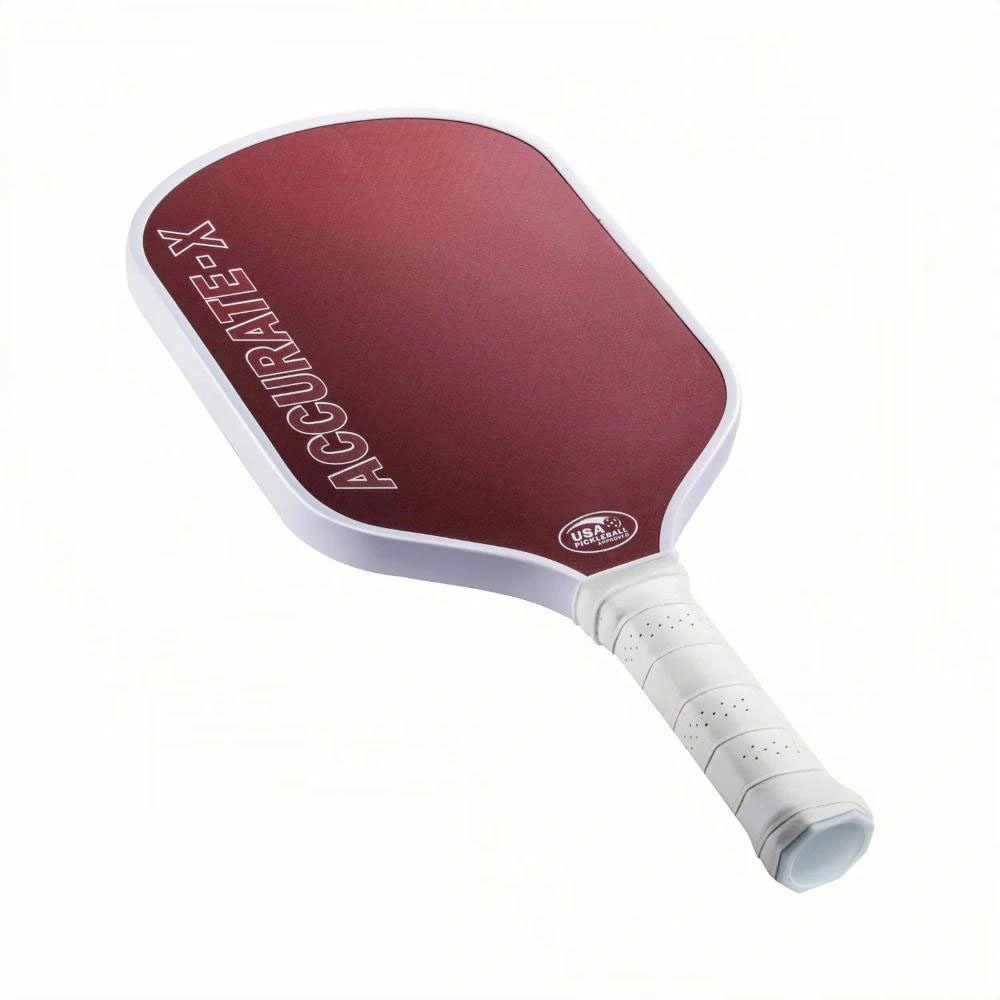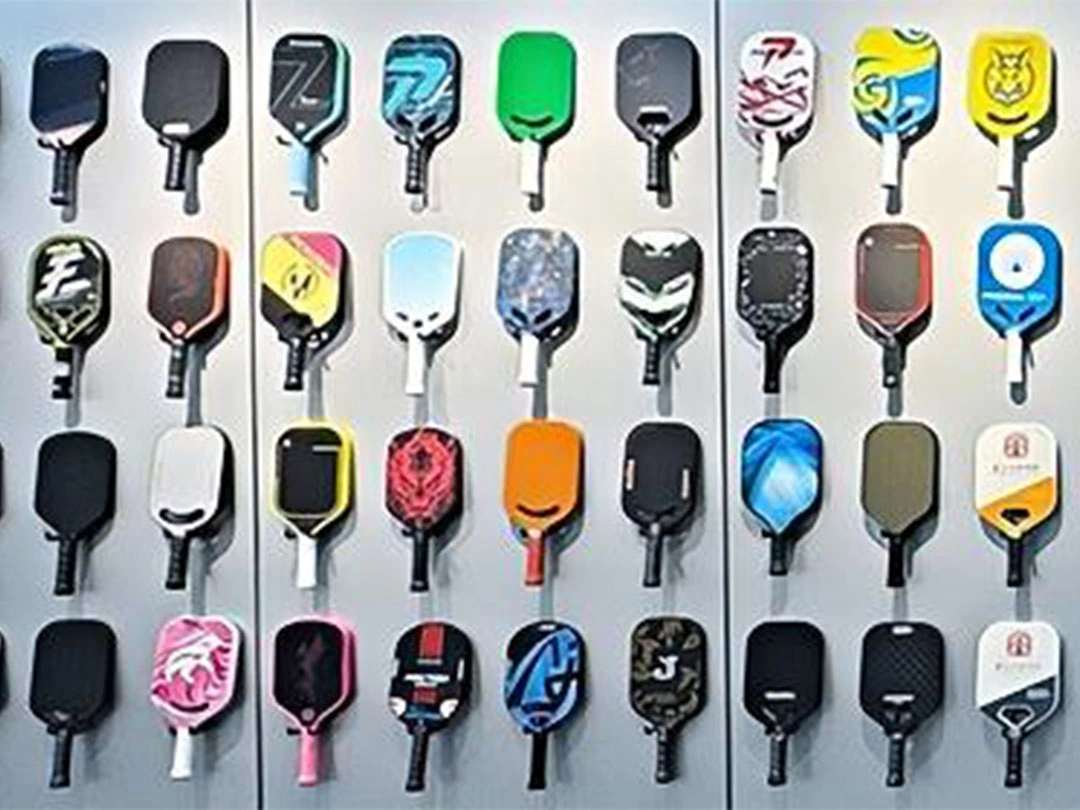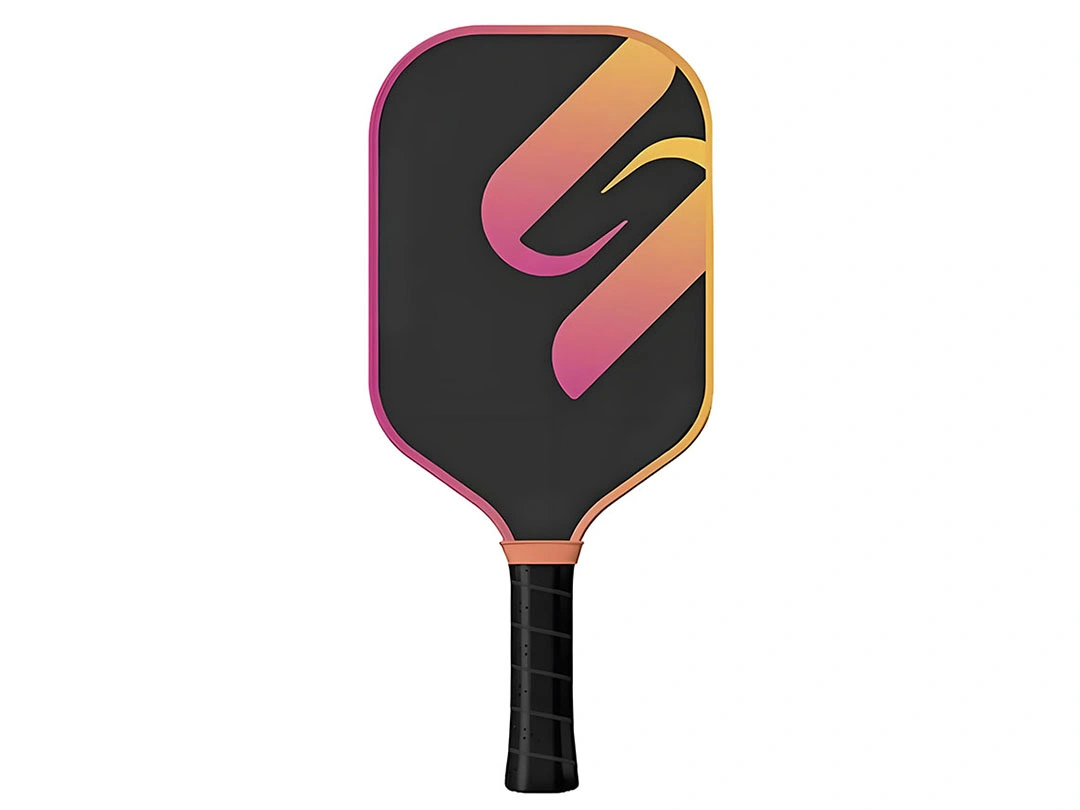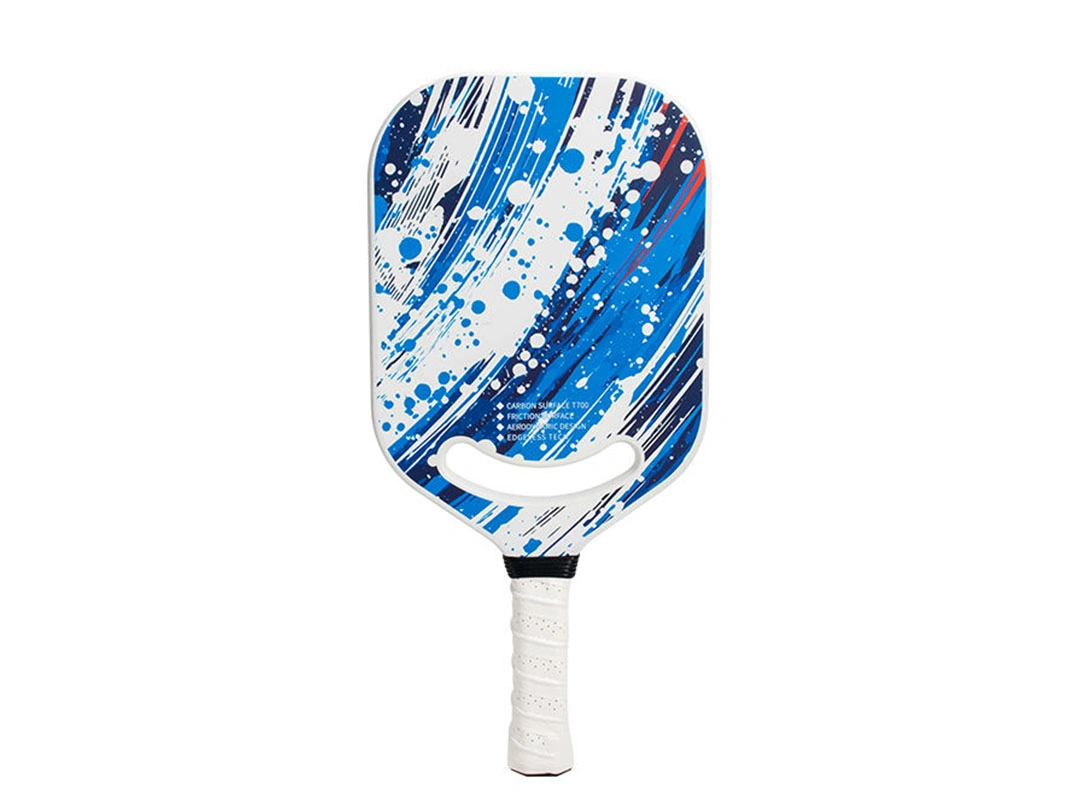
The pickleball equipment market hit $702.9 million in 2025 — and the segment driving the next growth wave is not power. It is comfort. With 36.5 million US players and a rapidly maturing demographic that skews heavily toward former tennis players managing aging joints, arm-care-conscious equipment has moved from niche to necessity.
The technology answering that demand is Gen 4 EPP foam core — the first paddle construction engineered from the inside out for shock absorption, vibration dampening, and long-session arm protection. Since Selkirk, JOOLA, and CRBN popularized foam-integrated constructions in 2023–2024, the premium end of the pickleball paddle market has split into two parallel premium segments: Gen 3 for explosive power players, and Gen 4 for players who want to play longer without paying for it in joint pain the next morning.
For B2B brand owners, Amazon FBA sellers, and wholesalers, Gen 4 represents the clearest margin opportunity in the current market cycle. At $169–$249 retail against $42–$60 OEM cost, the economics are compelling. The story you sell — “engineered for arm care, built to the same T700 carbon standard as your $250 Selkirk” — is one that resonates immediately with your target buyer.
This guide breaks down the engineering, the commercial case, and the sourcing path for foam core pickleball paddles in the Gen 4 category.
Commercial Implication: Arm care is not a feature — it is a product category. Brands that launch a Gen 4 EPP foam paddle are not just adding an SKU. They are entering the fastest-growing sub-segment of the premium paddle market, with a story that converts 40+ players, tennis crossovers, and injury-wary competitive players in one product.
What Is Gen 4 Foam Core Technology?
To understand Gen 4, you have to understand what it replaced and why.
The Gen 3 pickleball paddles that defined the premium paddle market from 2022–2024 are built on engineered PP honeycomb cores, thermoformed into a unibody structure with a T700 carbon fiber face. They deliver excellent power, a large sweet spot, and crisp ball feel. What they do not deliver is vibration dampening — by design. The crisp, direct feel that power players love is the other side of the same coin as high-frequency vibration transmitted directly to the wrist, elbow, and shoulder.
Gen 4 changes the core itself.
EPP Foam: The Core Replacement
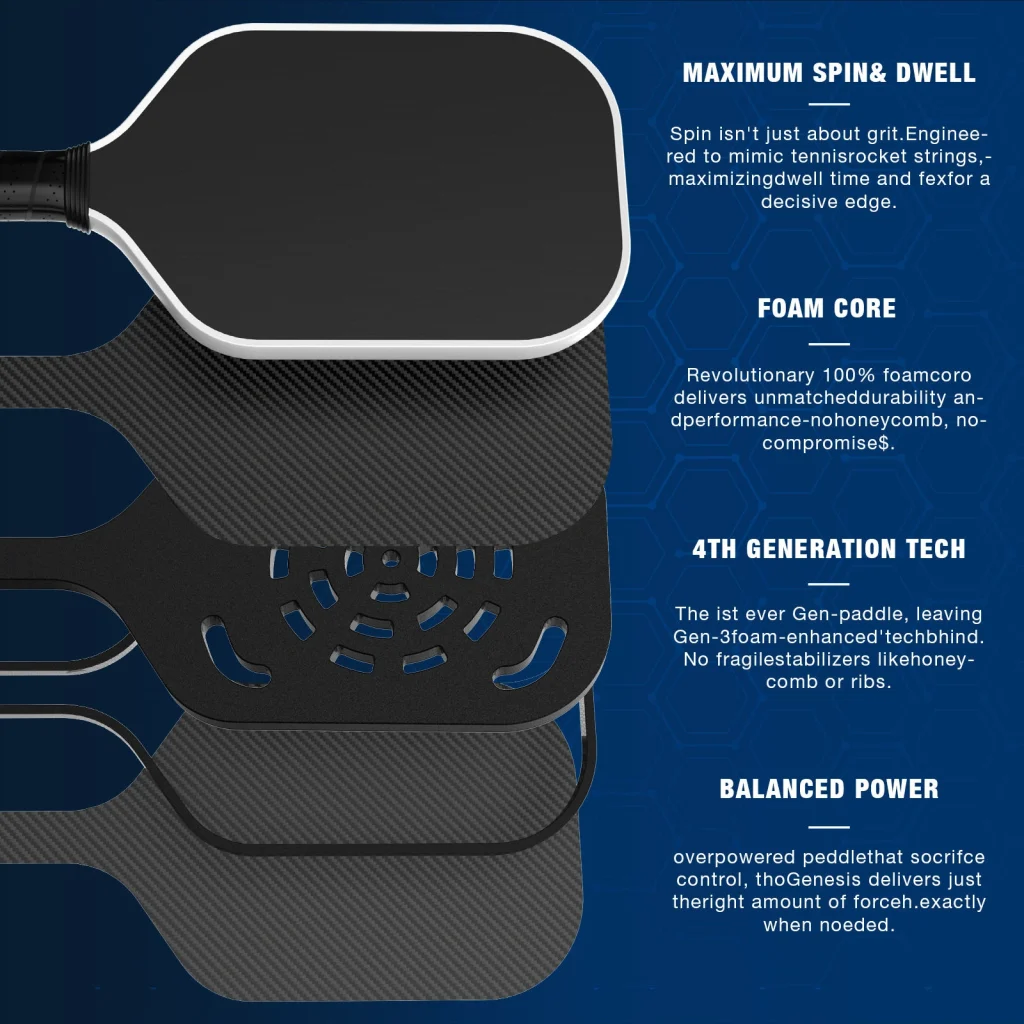
EPP (Expanded Polypropylene) foam replaces the traditional PP honeycomb structure entirely. Instead of a lattice of hollow cells, the paddle core is a dense, engineered foam matrix — compressed into the paddle mold under high temperature and pressure, combined with fiberglass fabric and resin to achieve the structural rigidity required for competitive-grade equipment.
The physics are straightforward: foam absorbs impact energy. It deforms slightly on ball contact, dissipates vibrational energy across the foam matrix, and returns to shape. Where a PP honeycomb transmits vibration through rigid cell walls directly to the handle — and then to your hand — EPP foam interrupts that transmission chain.
Two Technology Paths Inside Gen 4
The industry has converged on two distinct Gen 4 implementations, and B2B buyers need to understand both:
Path 1: EPP Foam Core (Full Core Replacement)
The complete replacement of the PP honeycomb with an EPP foam matrix. Used by CRBN (TruFoam technology) and referenced in NexaPaddle’s GEN4 foam core series. This path maximizes vibration dampening because the entire core is composed of shock-absorbing material. Within this path, there are two further variants:
- Filled EPP Foam: High-density foam fill (compressed at 8x–10x expansion ratio) enhances structural stiffness and energy return. The filled variant performs closest to Gen 3 in power profile while still providing superior vibration dampening. Best for offensive players who want arm protection without sacrificing pace.
- Non-Filled EPP Foam: Quality-controlled EPP foam in a less compressed, more open-cell structure — providing maximum cushion and vibration absorption at the cost of some rebound. Where the filled variant packs the core tightly for enhanced stiffness and energy return, the non-filled variant preserves the foam’s open architecture to maximize shock dissipation across the full face. The resulting “absorb-then-release” feel gives a distinctly soft, controlled dwell on the ball — ideal for control-focused players or anyone managing a tennis elbow diagnosis.
Path 2: 4S Construction (EVA Foam Inserts)
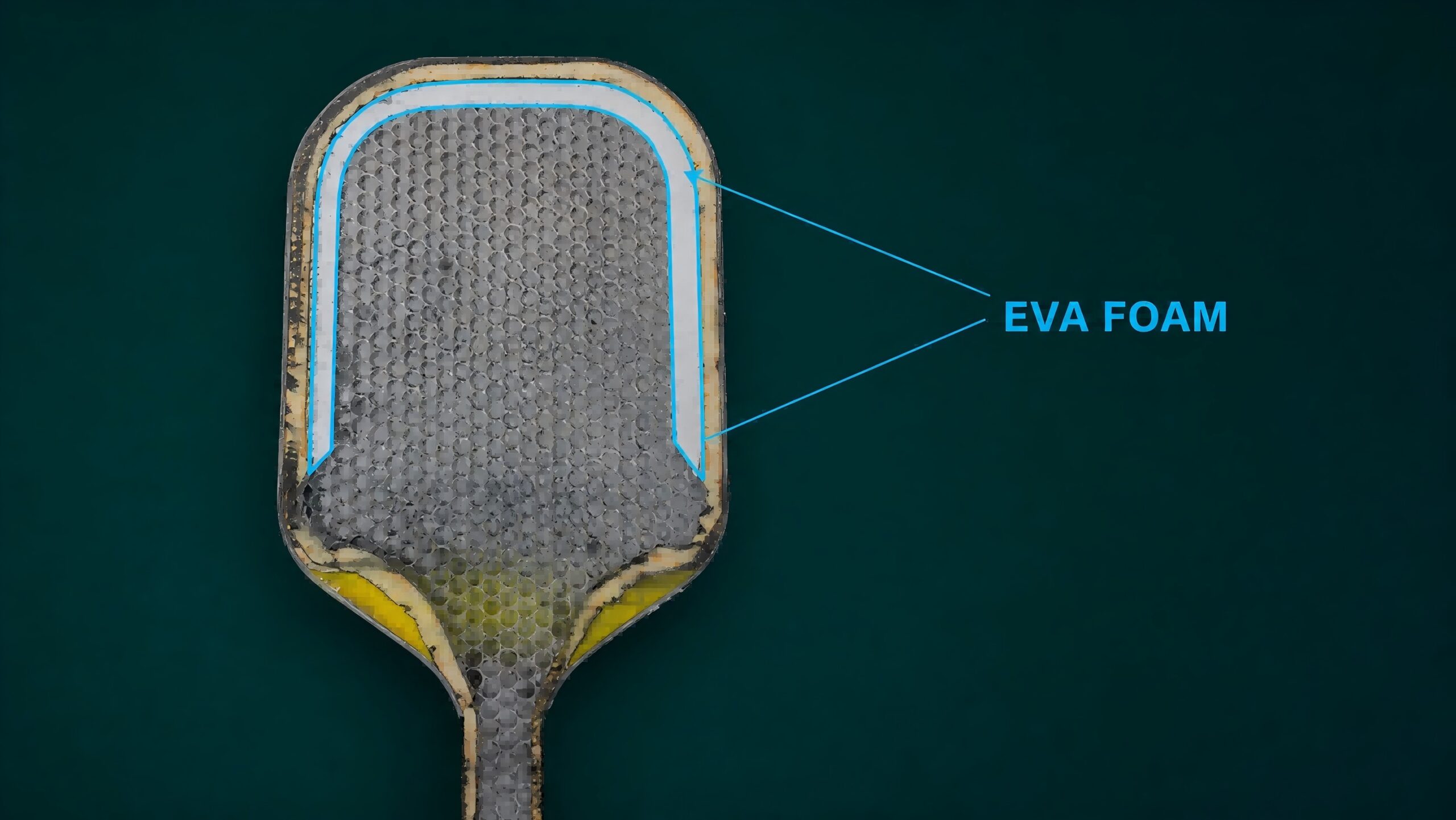
Pioneered by JOOLA (Perseus Pro IV and related models), the 4S construction inserts dual EVA foam layers into the throat area of the paddle — rather than replacing the entire core. The honeycomb core remains intact; the foam is engineered into specific high-vibration transmission zones. The result is a hybrid feel: Gen 3’s crisp power profile in the body of the paddle, with targeted dampening at the throat where vibration most commonly enters the handle.
Selkirk’s PureFoam BoomCore represents a third variation — a proprietary foam formulation integrated into a thermoformed unibody structure, optimized for what Selkirk calls “BoomCore feel” (explosive power combined with meaningfully reduced vibration vs. standard honeycomb).
| Gen 4 Variant | Core Structure | Feel Profile | Best Player |
|---|---|---|---|
| EPP Foam Core – Filled | Full foam core, high density | Power + vibration dampening | Offensive + arm-conscious |
| EPP Foam Core – Non-Filled | Full foam core, softer density | Soft dwell, control-first | Control players, joint-sensitive |
| 4S (EVA Throat Insert) | Honeycomb + EVA inserts at throat | Hybrid crisp/dampened | Power players wanting some protection |
| PureFoam BoomCore | Proprietary foam thermoformed | Explosive with reduced vibration | All-court premium players |
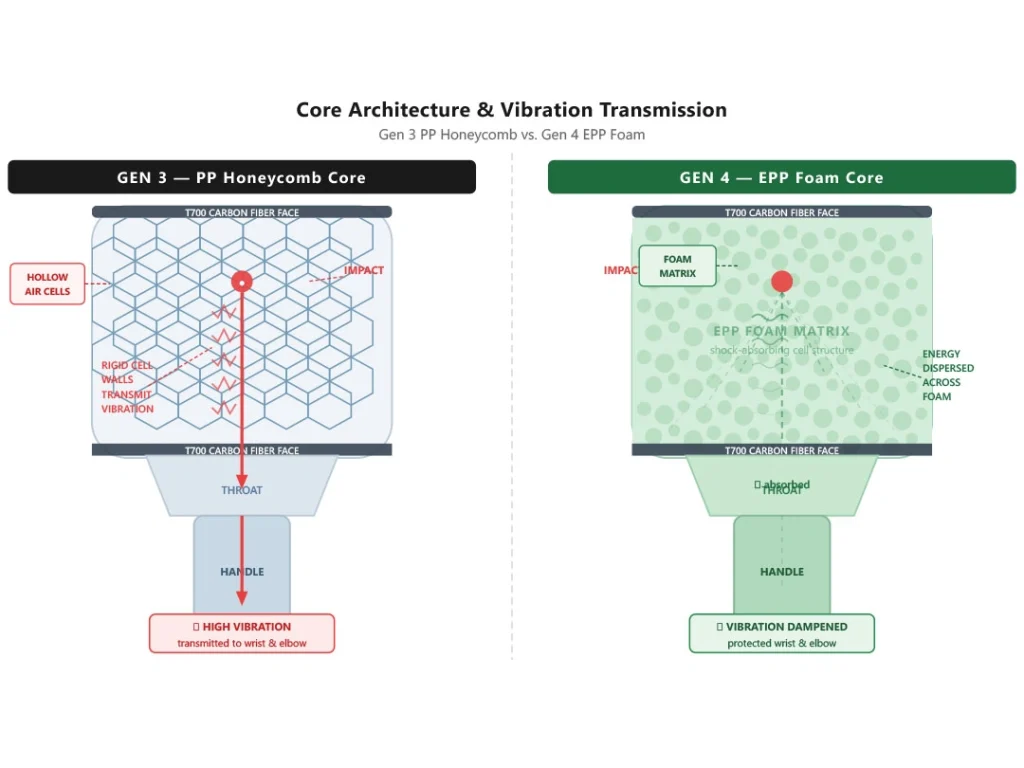
Commercial Implication: Stock both EPP foam variants — filled and non-filled — and you cover two addressable sub-segments: the power player managing early arm soreness, and the control player or recovering-injury player who prioritizes comfort above all else. Two SKUs, one sourcing relationship, doubled addressable audience.
The Science of Shock Absorption in Pickleball
Why Vibration Is a Real Commercial Problem
Tennis elbow (lateral epicondylitis), wrist tendinitis, and shoulder impingement are not fringe concerns in pickleball. The sport’s rapid growth has been partially offset by a correspondingly rapid growth in repetitive stress injuries — particularly among the 40+ demographic that has transitioned from tennis and padel, and who play multiple sessions per week.
The mechanics: every ball impact generates a vibration wave through the paddle face and into the handle. Carbon fiber, the dominant face material in premium paddles, transmits these waves with high fidelity — vibrations in the 200–500 Hz frequency range travel directly from the ball contact point to the player’s hand. At 8–10 shots per rally, across 2–3 hours of competitive play, the cumulative micro-trauma to tendons and joints is significant.
Gen 3 perimeter foam — the edge cushioning added to thermoformed paddles — addressed this partially. It absorbed vibration at the edges. Gen 4 makes vibration dampening structural and central: the core itself is the shock absorber.
How EPP Foam Dampens Vibration
EPP foam’s dampening mechanism works through viscoelastic energy dissipation. On ball contact, the foam matrix undergoes micro-compression — the closed-cell foam structure deforms slightly, converting kinetic energy (vibration) into heat through internal friction between polymer cells. The deformation is reversible and instantaneous at the speeds involved in pickleball, so there is no performance penalty in paddle response time.
The key manufacturing variable is foam density. High-density EPP (8x–10x expansion ratio) provides damping while maintaining sufficient rigidity for competitive energy return. Foam expanded at 15x–17x delivers maximum damping but sacrifices structural stiffness — the paddle feels “dead” to power-focused players and can show inconsistent performance under competitive stress. This is why the filled vs. non-filled variant distinction matters: it is not just a feel preference, it is an engineering choice with implications for your customer return rate and review profile.
Gen 3 vs. Gen 4: The Vibration Architecture Shift
| Parameter | Gen 3 Thermoformed Honeycomb | Gen 4 EPP Foam Core |
|---|---|---|
| Vibration dampening location | Perimeter foam only (edges) | Entire core — built-in, structural |
| 200–500 Hz transmission to handle | High — rigid honeycomb cell walls | Significantly reduced — foam matrix interrupts wave |
| Core crush risk | Present under high-frequency competitive use | Eliminated — foam does not “crush” under repeated impact |
| Ball dwell time | Shorter — crisp, responsive | Longer — soft, controlled |
| Sweet spot feel | Uniform, crisp across face | Large, consistent — forgives off-center hits |
| Best player profile | Power / offensive baseline | Control / arm-care / comfort-first |
The 16mm Thickness Advantage
Core thickness is a critical — and often overlooked — variable in the shock absorption equation. A 16mm core provides measurably greater vibration dampening than the 13–14mm cores common in power-oriented paddles, simply by providing more foam mass to absorb vibration energy before it reaches the handle. For brands positioning in the arm-care segment, 16mm thickness with EPP foam core is the optimal specification — maximizing both the vibration-dampening material volume and the ball dwell time that control players demand.
Commercial Implication: The 16mm EPP foam configuration is your defensible technical specification for arm-care marketing. It gives you a concrete, physics-backed claim — not marketing language — that your product listings, Amazon A+ content, and influencer briefings can lead with.
NexaPaddle’s GEN4 Foam Core Series: Full Specifications
NexaPaddle’s GEN4 Foam Core Series is purpose-built for brands targeting the arm-care and comfort-first premium segment. The series offers two variants — Filled EPP Foam and Non-Filled EPP Foam — sharing a common T700 Carbon Fiber face and dimensional platform, differentiated by core density and the resulting feel profile.
| Specification | Filled EPP Foam | Non-Filled EPP Foam |
|---|---|---|
| Core Type | EPP Foam (Filled) | EPP Foam (Non-Filled) |
| Best For | Power/Offensive Players | Control Players / Joint-Sensitive |
| Face Material | T700 Carbon Fiber | T700 Carbon Fiber |
| Dimensions | 417 × 188mm | 417 × 188mm |
| Handle Length | 139mm | 139mm |
| Graphics | UV Printing | UV Printing |
| Key Feel | Foam fill enhances rebound for explosive power | “Absorb-then-release” feel for soft touch |
| Vibration Dampening | Superior vibration absorption | Exceptional shock absorption |
| Sweet Spot | Large, stable | Large, consistent placement |
| USAPA PBCoR | Within ≤0.43 compliance envelope | Within ≤0.43 compliance envelope |
GEN4 Foam Core vs. Competitive Flagship Models
| Brand | Model | Core Tech | Notable Feature |
|---|---|---|---|
| NexaPaddle | GEN4 Foam Core (Filled) | EPP Foam (Filled) | Explosive power + vibration dampening, OEM-accessible |
| NexaPaddle | GEN4 Foam Core (Non-Filled) | EPP Foam (Non-Filled) | Max shock absorption, arm-care-first |
| CRBN | TruFoam Genesis | TruFoam (EPP-based) | Full foam core replacement, thermoformed unibody |
| Selkirk | Vanguard Power Air | PureFoam BoomCore | Proprietary foam + thermoformed, $249 retail |
| JOOLA | Perseus Pro IV | 4S (EVA throat inserts) | Honeycomb + EVA hybrid, targeted throat dampening |
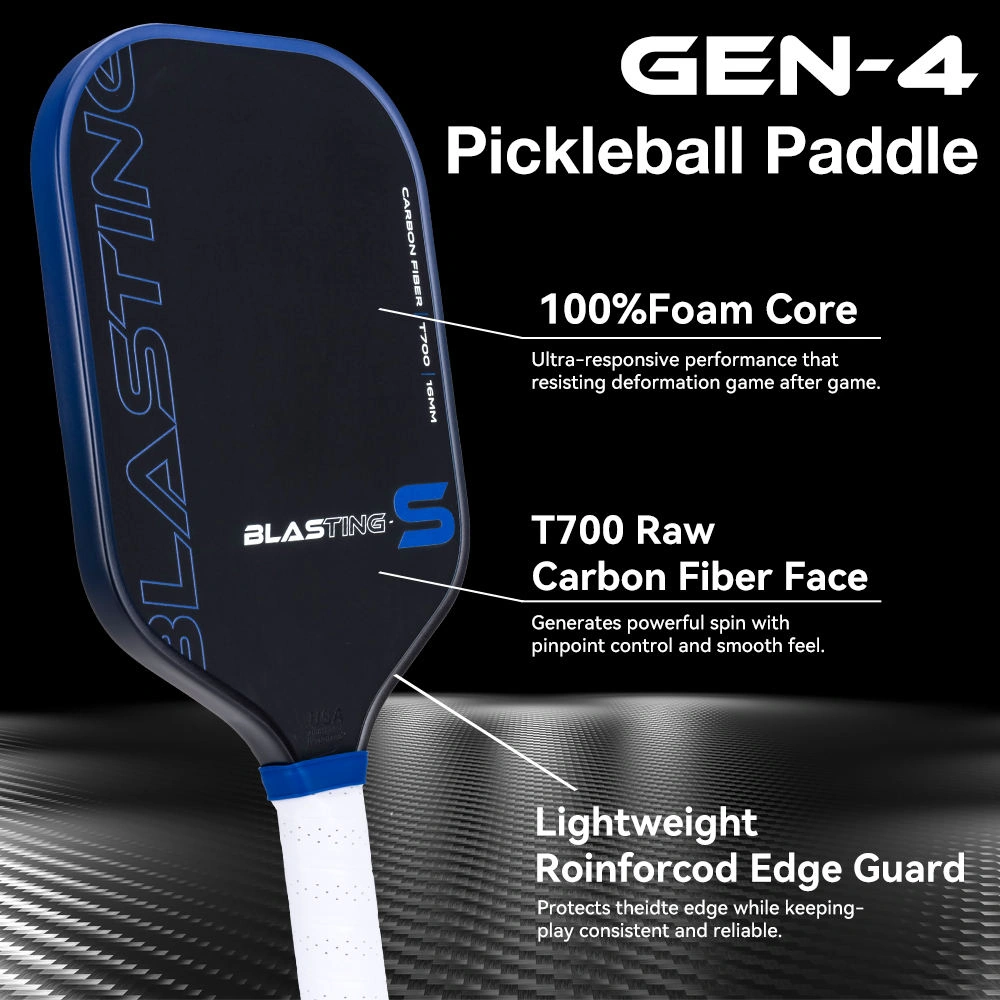
Commercial Implication: NexaPaddle’s GEN4 Foam Core Series delivers the same material specification — T700 carbon face, EPP foam core, thermoformed construction — as category-defining models like the Selkirk Vanguard and CRBN TruFoam Genesis, at a sourcing cost that supports 58–68% gross margin at $169–$249 retail. Your brand does not need Selkirk’s marketing budget to compete. It needs the right core.
Gen 4 EPP Foam vs. Other Core Technologies
The full generational landscape, from a B2B sourcing perspective:
| Feature / Metric | Gen 2 Standard PP | Gen 3 Thermoformed | Gen 4 EPP Foam | Gen 5 Gatling Mesh |
|---|---|---|---|---|
| Manufacturing Process | Cold Press | Thermoformed Unibody | Thermoformed + Foam Core Injection | Complex Polymeric Matrix Molding |
| Target Player | Beginner–Intermediate | Advanced / Power | Advanced (Arm Care / Control) | Elite Pro (Max Legal Energy) |
| Vibration Dampening | Low — rigid cell walls | Moderate — edge foam only | High — built-in full-core absorption | Low — max energy return priority |
| Core Crush Risk | Moderate | Present under competitive use | Eliminated — foam doesn’t crush | Variable |
| OEM Cost / Unit | $15–$25 | $32–$42 | $42–$60 | $65+ |
| Retail Price Range | $40–$90 | $129–$169 | $169–$249 | $250+ |
| Key Advantage | Volume / entry margin | Best power-to-margin ratio | Arm care + comfort + compliance safety | Maximum legal power output |
| Best Brand Strategy | Entry / private label volume | Power-focused DTC / FBA brands | Arm-care / comfort premium segment | Ultra-premium flagship lines |
The Compliance Position
Gen 4 EPP foam cores sit comfortably within the USAPA PBCoR ≤0.43 envelope — a critical commercial advantage over Gen 5 Gatling mesh designs that push right against the compliance ceiling. The foam core’s energy absorption mechanism naturally reduces the paddle’s coefficient of restitution, which means Gen 4 paddles have significant headroom below the limit. For brand owners, this translates to a lower risk of compliance failure — and none of the JOOLA-style decertification scenario risk that has made some buyers cautious about Gen 5.
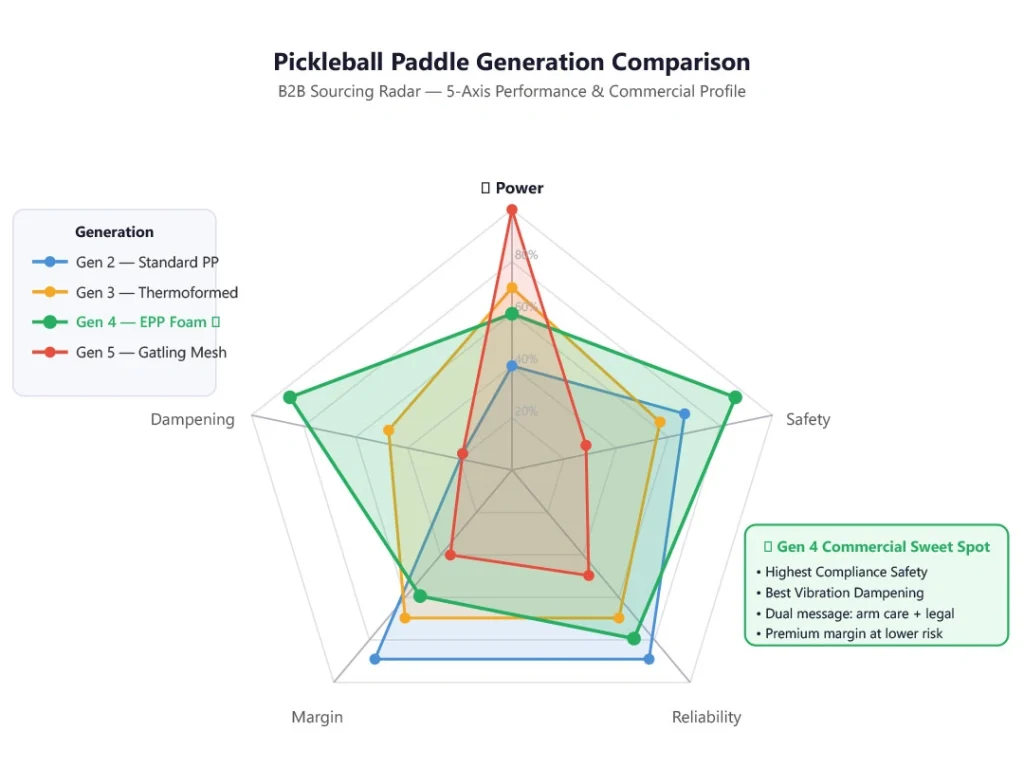
Commercial Implication: Gen 4 EPP foam is the only premium-tier construction that improves compliance safety while simultaneously improving player experience. Brands that emphasize USAPA-compliant arm-care technology in their positioning are selling into two anxieties at once: joint health and tournament legality. That dual message converts at premium price points.
Why Brands Should Source Gen 4 Foam Core Paddles
The Arm-Care Market Is Growing — Fast
The pickleball player base is aging up. The fastest-growing player cohort in the United States is 40–65 years old — a demographic that has significant disposable income, brand loyalty once earned, and an acute awareness of injury prevention. Many are former tennis players who already have tennis elbow or wrist histories and are evaluating pickleball equipment with a skeptical, informed eye.
This demographic does not buy the cheapest paddle. They buy the paddle with the most credible technical story for joint protection. Gen 4 EPP foam is that story.
Noise-Ordinance Compliance Is Becoming a Real Barrier
A growing number of residential communities, HOA-governed courts, and urban park authorities are implementing noise restrictions on pickleball play — a response to complaints from neighboring properties about the high-frequency “popping” sound of carbon fiber on plastic ball. EPP foam core paddles produce a meaningfully quieter impact sound than PP honeycomb paddles, because the foam absorbs the acoustic energy that honeycomb transmits. For brands distributing in noise-sensitive markets — dense urban areas, resort communities, retirement developments — this is a genuine product differentiator, not a soft benefit.
Lower Return Rates Mean Better Realized Margin
Return rates are the silent killer of FBA economics. The most common complaints driving paddle returns are: “vibration is too harsh,” “my arm hurts after playing,” and “feels stiff/uncomfortable.” These are exactly the pain points that Gen 4 EPP foam eliminates. Brands reporting reduced return rates after switching from Gen 3 to Gen 4 offerings describe the difference as structural — the product resolves the complaint category before the complaint is generated.
At 15–20% Amazon return rates for high-vibration paddles vs. estimated 8–12% for well-reviewed foam-core paddles, the effective margin improvement on Gen 4 is meaningful beyond the OEM cost differential.
The Good-Better-Best Architecture
Gen 4 does not replace Gen 3 in a well-constructed product line — it complements it:
| Tier | Core Tech | Face | Target Player | Retail Target | OEM Cost |
|---|---|---|---|---|---|
| Better (Power) | Gen 3 Thermoformed | T700 Carbon | Aggressive baseliner, offensive player | $129–$169 | $32–$42 |
| Best (Arm Care) | Gen 4 EPP Foam | T700 Carbon | Control player, 40+ demographic, injury history | $169–$249 | $42–$60 |
| Flagship | Gen 5 Gatling Mesh | T800 Carbon | Elite tournament player, max-power seeker | $249–$319 | $65+ |
Brands with only a Gen 3 offering are leaving the arm-care segment — and its premium price point — on the table. Gen 4 is the “Best” tier anchor in any three-SKU strategy that maximizes catalog revenue per customer.
Margin Profile Remains Strong
The economics of Gen 4 sourcing at current market rates:
| Cost / Revenue Metric | GEN4 Filled EPP | GEN4 Non-Filled EPP |
|---|---|---|
| OEM Landed Cost (FOB) | $45–$55/unit | $42–$52/unit |
| Target Retail Price | $199–$249 | $169–$219 |
| Estimated Gross Margin | 58–68% | 58–68% |
OEM cost estimates are FOB and vary based on volume, customization level, and raw material conditions.
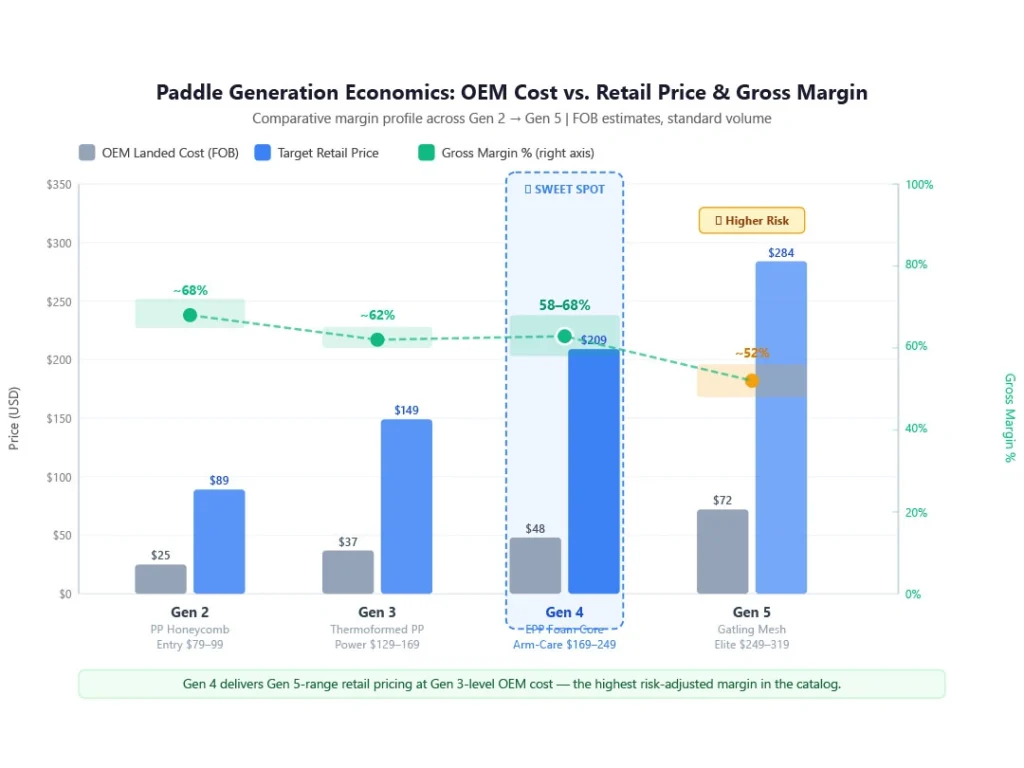
Commercial Implication: Build your 2025–2026 catalog with Gen 3 as your power anchor and Gen 4 EPP foam as your comfort/arm-care premium tier. The two products address different buyer motivations, reduce cannibalization, and let you capture the full $129–$249 premium segment with a two-SKU strategy rather than a single mid-point compromise.
Sourcing Gen 4 Foam Core Paddles from NexaPaddle
Customization Options
A Gen 4 foam core paddle sourced through NexaPaddle is fully customizable to your brand identity:
- Surface Graphics: Full-color UV printing for vibrant lifestyle branding, or laser engraving for a premium minimalist aesthetic
- Edge Guards: Color-matched to your brand palette — or edgeless construction for maximum face real estate
- Grip: Premium PU leather grip with embossed brand logo; custom grip circumference available
- Retail Packaging: Custom retail boxes, branded neoprene paddle covers, or DTC-optimized mailer packaging
Explore all options on the custom pickleball paddles configuration page.
MOQ, Timelines, and Compliance Support
| Metric | Details |
|---|---|
| MOQ | 100 pieces per variant |
| Lead Time | 60–90 days (concept to delivery) |
| Prototype Turnaround | 10–14 days after spec confirmation |
| USAPA Compliance | Full PBCoR pre-testing and certification documentation support |
| Available Variants | Filled EPP Foam, Non-Filled EPP Foam |
| Core Thickness | 16mm (standard for maximum shock absorption) |
A 100-piece MOQ allows brand owners to market-test both foam variants simultaneously — seeding filled EPP to power-player influencers and non-filled EPP to the joint-health and recreational community — and scale the winning variant on the second production run.
Pairing with Thermoformed Gen 3
For brands building a complete premium catalog, NexaPaddle offers both thermoformed pickleball paddles (Gen 3) and Gen 4 EPP foam core variants from a single sourcing relationship. This matters for consistency: matching dimensions (417 × 188mm), matching T700 carbon faces, and matching handle specifications across both tiers mean your product line tells a coherent story — same premium materials, differentiated core technology, different player profiles addressed.
For a comprehensive look at the full carbon fiber pickleball paddles technology stack — from T700 to T800 with Titanium Thread — NexaPaddle’s carbon fiber guide covers face material selection at every tier.
Commercial Implication: Sourcing both Gen 3 and Gen 4 from a single factory gives you consistent quality control, unified spec sheets for retail buyers, and simplified reorder logistics. It also positions your brand as a full-spectrum premium player rather than a single-SKU opportunist.
Frequently Asked Questions
What is the difference between Gen 3 and Gen 4 pickleball paddles?
Gen 3 paddles use an engineered PP honeycomb core, thermoformed into a unibody carbon fiber structure. They deliver crisp, high-power ball feel with excellent energy return — ideal for offensive and power players. Gen 4 replaces the honeycomb with an EPP foam core, which converts vibration energy into heat through micro-compression rather than transmitting it to the player’s hand. The result is a paddle with meaningfully reduced vibration transmission, a softer dwell feel, and significantly better arm-fatigue performance over extended play sessions. Gen 3 = crisp power. Gen 4 = comfort-first with controlled power.
Are Gen 4 foam core paddles USAPA approved?
Yes — when manufactured and pre-tested correctly. EPP foam core construction actually provides compliance headroom compared to Gen 5 Gatling mesh designs, because the foam’s energy-absorbing properties reduce the paddle’s PBCoR (Coefficient of Restitution) rather than maximizing it. NexaPaddle’s GEN4 Foam Core Series is engineered to sit comfortably within USAPA’s ≤0.43 PBCoR standard and includes full certification documentation support. Pre-testing at the factory level is mandatory before any tournament-focused product launch — NexaPaddle provides this as a standard service.
What is EPP foam and why is it used in pickleball paddles?
EPP (Expanded Polypropylene) is a closed-cell polymer foam produced by expanding polypropylene resin under controlled heat and pressure conditions. It is the same material class used in automotive bumper cores, protective sports helmets, and packaging for fragile electronics — specifically selected for its unique combination of energy absorption, structural resilience, and low weight. In pickleball paddles, EPP foam replaces the traditional PP honeycomb core, using its viscoelastic properties to absorb and dissipate the high-frequency vibrations (200–500 Hz) generated by ball impact rather than transmitting them directly to the handle. The material is also highly resistant to “core crush” — the progressive structural degradation that affects honeycomb cores under repeated high-frequency competitive use — because foam does not have hollow cell walls to buckle and collapse.
Should I choose filled or non-filled EPP foam core for my product line?
The choice depends on your target customer segment. Filled EPP foam (high-density, 8x–10x expansion) is for players who want the arm-protection benefits of foam core without sacrificing offensive power. It enhances rebound and produces feel closest to Gen 3 thermoformed, with superior vibration dampening. Non-filled EPP foam uses the same quality-controlled EPP material in a less compressed, more open-cell structure — not a cheaper foam, but a structural choice that preserves the foam’s natural open architecture to maximize cushion and shock dissipation across the full face. This is for players who prioritize control, touch, and maximum joint protection over power. The “absorb-then-release” feel is distinctive and immediately recognizable to experienced players managing arm or shoulder conditions. For brands building a two-SKU foam core line: launch filled EPP to your existing power-player base, and non-filled EPP as a dedicated arm-care SKU positioned as your highest-care-tier offering.
How do Gen 4 paddles help with tennis elbow and arm fatigue?
Tennis elbow (lateral epicondylitis) develops from repetitive micro-trauma to the tendons attaching forearm muscles to the lateral epicondyle — primarily driven by the cumulative vibration and torque forces transmitted through the racket or paddle handle on each shot. Carbon fiber paddles with PP honeycomb cores transmit high-frequency vibrations in the 200–500 Hz range directly through the handle — the frequency range most associated with soft tissue stress at the elbow. EPP foam core construction interrupts this transmission by converting a significant portion of that vibrational energy into heat through the foam matrix’s micro-compression mechanism. Players with documented tennis elbow often report a meaningful reduction in post-session soreness when switching from Gen 3 honeycomb to Gen 4 foam core paddles, particularly with non-filled EPP foam at 16mm core thickness — the maximum practical dampening configuration. Note: Gen 4 foam core reduces the vibration load. It does not eliminate it. Players with acute lateral epicondylitis should also evaluate grip size, playing technique, and session volume as contributing factors.
References & Sources
Coherent Market Insights. (2025). Pickleball Equipment Market Size, Share & Trends Analysis Report. Market valued at approximately $702.9 million in 2025.
Sports & Fitness Industry Association (SFIA). (2024). Pickleball Participation Report. 36.5 million+ US players; demographic data on 40+ age cohort growth. Available at:
USA Pickleball Association (USAPA). (2025). Equipment Standards & Approved Paddle List — PBCoR Compliance Standards (≤0.43, updated November 2025). Available at:
Joysent Sport. (2024). The Evolution of Pickleball Paddle Technology: Gen 1 Through Gen 5. Technical overview of foam core adoption and 4S construction. Available at: joysentsport.com
iAcesport. (2024). Pickleball Paddle Core Comparison: PP Honeycomb vs. EPP Foam — Vibration Frequency Analysis. Technical comparison of 200–500 Hz vibration transmission across core types.
NexaPaddle Product Data. (2025). GEN4 Foam Core Series — Technical Specification Sheet. Internal product documentation for Filled and Non-Filled EPP Foam variants.
USA Pickleball Association (USAPA). (2024). Equipment Certification Annual Report. 1,713 submissions processed; 1,225 approved. Compliance enforcement context for foam core vs. high-restitution designs. Available at: usapickleball.org