Introduction: A $700 Million Market With an Arm Problem
The pickleball industry crossed $702.9 million in 2025, powered by 36.5 million active players in the United States alone. If that number sounds impressive, the demographic breakdown behind it is more important to your business: the fastest-growing cohort is adults aged 40–65, many of them former tennis players who migrated to pickleball because it’s easier on the knees, the lungs, and — in theory — the arm.
In theory.
The reality is that lateral epicondylitis, commonly called tennis elbow, has become the number one repetitive stress injury in competitive pickleball. And unlike knee pain or general fatigue, tennis elbow doesn’t sideline players gradually — it arrives sharply, persists stubbornly, and drives frustrated players to return their gear at rates of 15–20% when a paddle is part of the problem.
For health and wellness brands, recovery-focused sports companies, and Amazon FBA sellers looking for a differentiated entry point into pickleball, this problem is your opportunity. The market is crowded at the power-first, aggressive-play end. The arm-care positioning is structurally underserved, medically credible, and aligns perfectly with the values of the 40+ consumer who already trusts your brand.
This article explains the engineering behind paddles that verifiably reduce injury risk, presents the sourcing options available through NexaPaddle’s Gen 4 lineup, and makes the commercial case for why your brand should be in this space before the window closes.
1. Why Tennis Elbow Is a Growing Problem in Pickleball
Tennis elbow is not a soft complaint. Lateral epicondylitis is a well-documented overuse pathology caused by repetitive micro-trauma to the extensor carpi radialis brevis (ECRB) tendon — the connective tissue that anchors forearm muscles to the lateral epicondyle of the humerus. In racket sports, the mechanism is straightforward: each impact transmits a vibration wave from the striking surface through the handle into the hand, wrist, and forearm. Enough repetitions, enough vibration amplitude, and tissue inflammation follows.
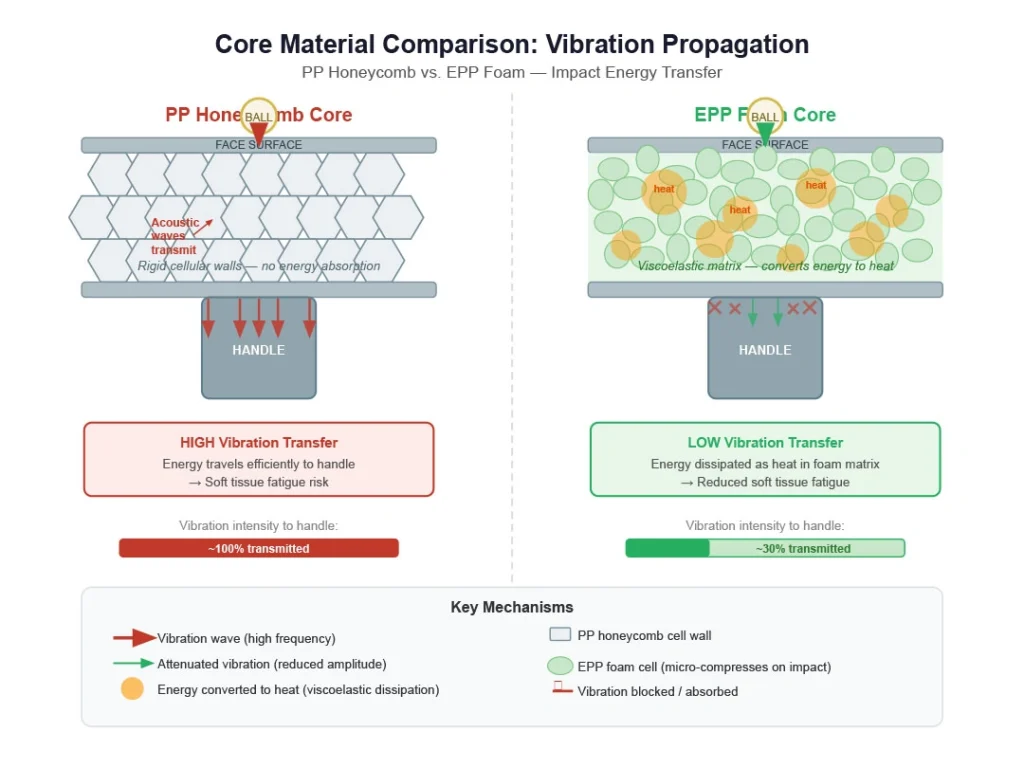
In pickleball, the vibration problem is specifically tied to the dominant paddle construction: carbon fiber faces over polypropylene (PP) honeycomb cores. PP honeycomb is stiff, light, and inexpensive to manufacture — qualities that drove its adoption across the industry. But stiffness is also the enemy of vibration dampening. Research from iAcesport’s vibration analysis work indicates that PP honeycomb core paddles transmit peak vibrations in the 200–500 Hz frequency band directly into the handle. This is precisely the range that excites the forearm muscle-tendon complex.
Now consider the playing context. A competitive rally in pickleball averages 8–10 shots. A 2–3 hour session might include 400–600 individual ball contacts. The cumulative micro-trauma load across that volume — particularly for players whose grip tension compensates for off-center hits — is substantial. A peer-reviewed nationwide study of 1,758 pickleball players published in Sports Medicine – Open (August 2025) quantifies the scale: 18.4% of all pickleball injuries involve the elbow, with an overall annual injury prevalence of 68.5% across the surveyed population. Overuse and chronic conditions accounted for 35.3% of the most serious injuries, and the average injured player was approximately 62.7 years old.
This is not a fringe demographic concern. The 40–65 age bracket represents the largest and most loyal buyer segment in the sport. These players spend more per session, buy premium gear, and return to purchase replacement equipment. They are also statistically more likely to have pre-existing joint sensitivity from decades of tennis, golf, or other racket sports. A paddle that aggravates that sensitivity doesn’t just generate a return — it generates a negative review, a social media post, and a lost customer for life.
The brands that recognize this are positioning arm care as their core value proposition rather than an afterthought buried in marketing copy. The engineering to support that positioning exists today.
2. The Engineering Solution: What Makes a Paddle Arm-Friendly
Three structural variables determine how much vibration a paddle transmits to the player’s arm: core material, frame weight, and construction method. Optimizing all three simultaneously is what separates a verifiably arm-friendly paddle from one that simply markets itself as such.
A. Foam Core Technology (Gen 4 EPP)
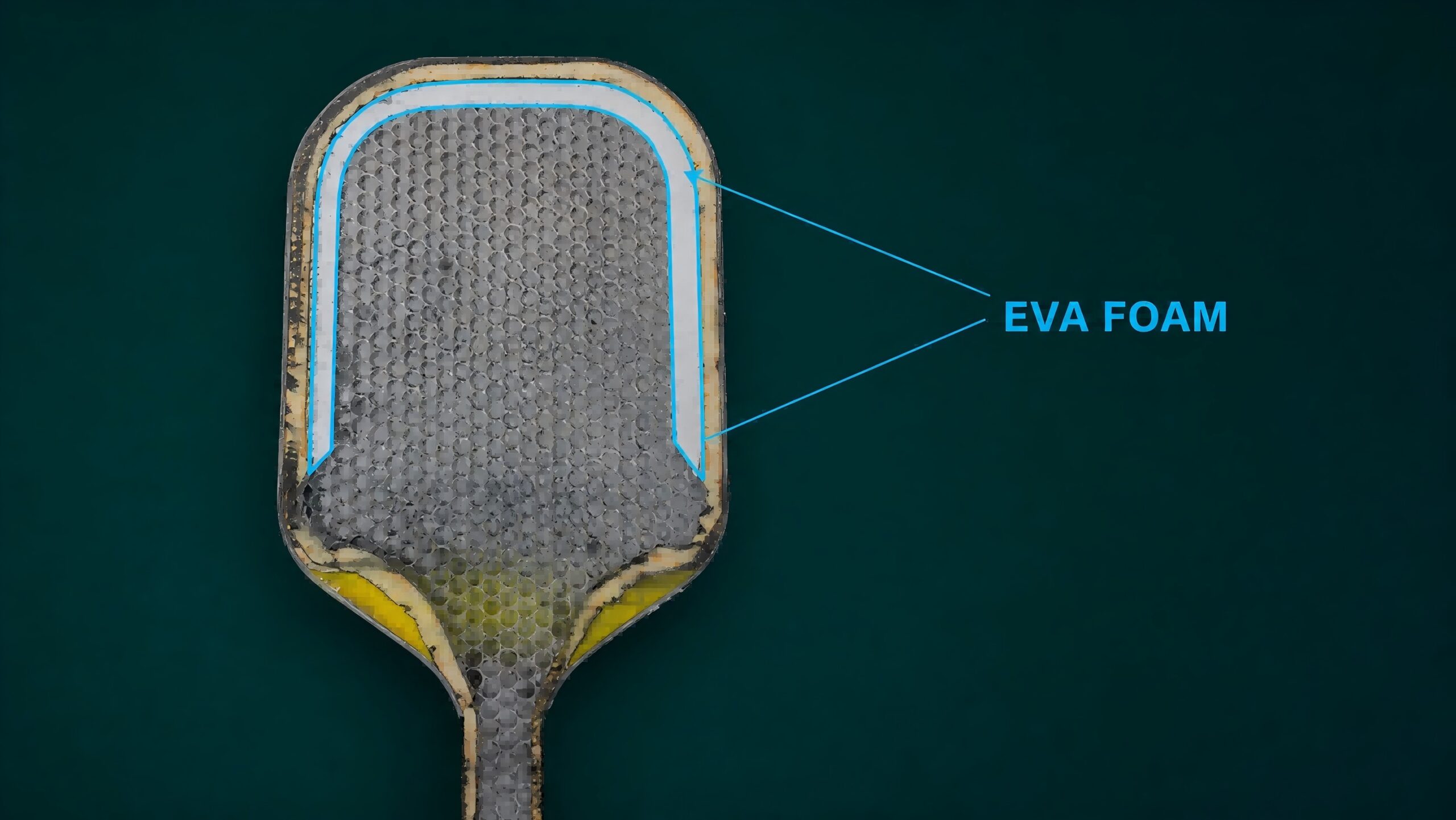
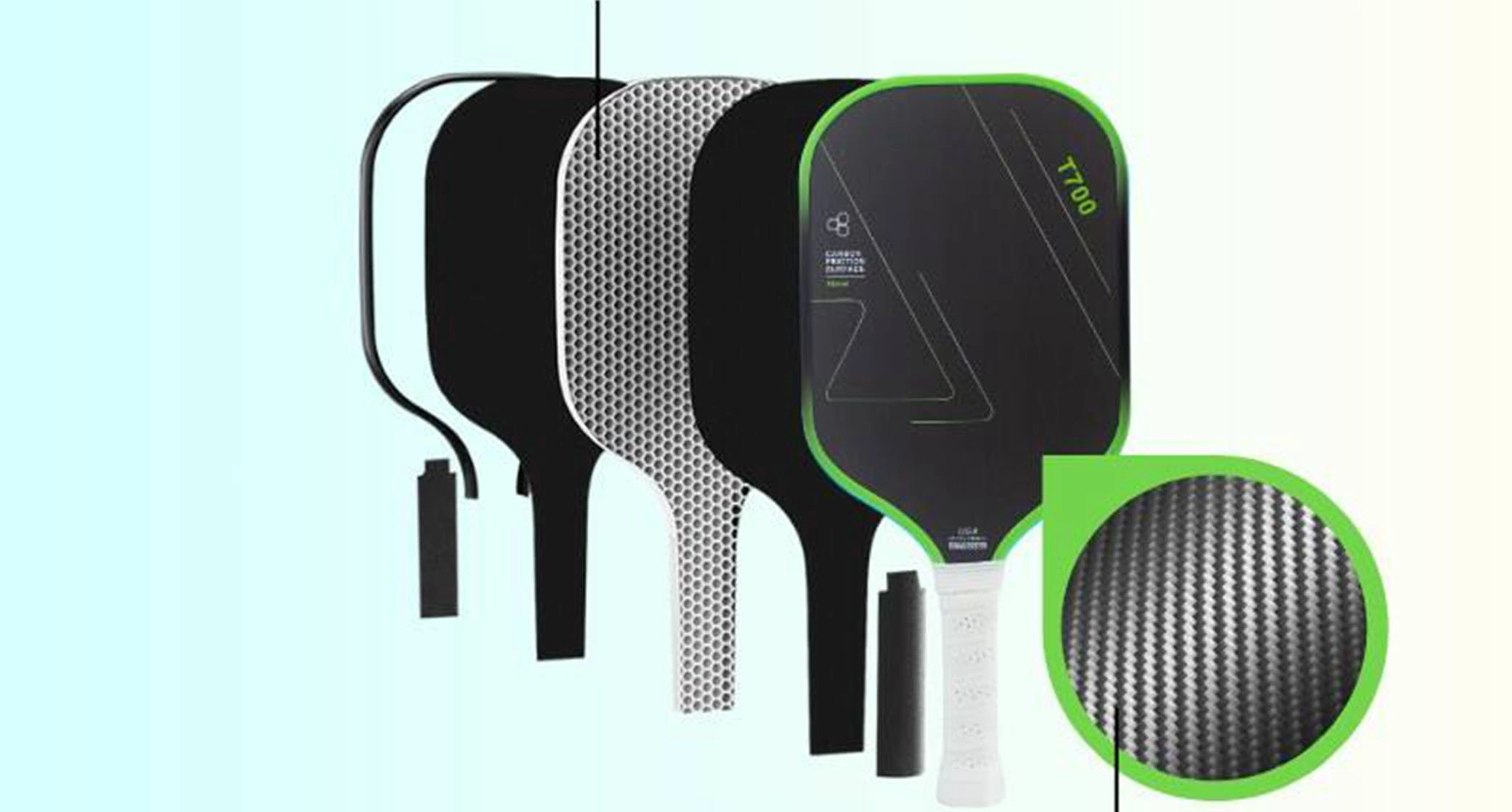
The most significant engineering advancement in arm-care paddle design is the replacement of PP honeycomb with Expanded Polypropylene (EPP) foam as the core material. The physics differ fundamentally.
PP honeycomb is a rigid cellular structure. When a ball strikes the face, impact energy travels through the face material and into the honeycomb walls as acoustic waves. Because the structure is rigid, those waves transmit efficiently — which is precisely what makes honeycomb good at returning energy to the ball. But what’s efficient for power transfer is also efficient for vibration transfer into the handle.
EPP foam operates differently. The foam matrix micro-compresses on impact through a viscoelastic mechanism: the cellular structure deforms elastically under load, but the energy dissipation curve is not instantaneous. A portion of the impact energy is converted to heat through internal molecular friction within the foam — this is the viscoelastic dampening effect. The result is a meaningful reduction in the high-frequency vibration components that cause soft tissue fatigue.
NexaPaddle’s Gen 4 lineup offers two EPP variants, each calibrated for different player profiles:
- Non-Filled EPP: Maximum comfort and control. The open foam structure prioritizes dampening over power return. Impact feels soft and controlled — often described as an “absorb-then-release” sensation rather than the sharp “pop” of honeycomb. Best suited for players actively managing joint sensitivity or recovering from lateral epicondylitis.
- Filled EPP: Power-oriented dampening. A denser foam matrix that delivers explosive energy return while still outperforming honeycomb on vibration attenuation. For players who want arm protection without sacrificing offensive capability.
Both variants use a 16mm core thickness — the maximum practical depth for singles-legal paddle dimensions — which directly maximizes the foam volume available for vibration absorption. USAPA PBCoR (Paddle Ball Coefficient of Restitution) compliance is maintained at ≤0.43 with meaningful headroom, meaning these paddles remain tournament-legal.
If you’re building a product line around the foam core pickleball paddles category, the Gen 4 EPP construction is the engineering foundation worth leading with.
Commercial Implication: EPP foam core paddles currently occupy the premium segment ($169–$249 retail), yet the arm-care pain point creates genuine willingness-to-pay in the 40+ demographic. A brand positioning around recovery and comfort can command these price points without competing directly against power-focused brands on performance metrics.
B. The Lightweight Paradox: Why Lighter Isn’t Always Better
Here is where conventional pickleball advice — and most arm-care marketing — gets it wrong: lighter is not automatically better for tennis elbow. Understanding this distinction is one of the clearest ways to differentiate an evidence-based arm-care paddle line from competitors making superficial claims.
The instinct makes surface sense. A lighter paddle exerts less inertial load on the arm, so the forearm extensors work less on every swing. That logic holds within a specific weight range. Outside that range, it inverts.
Ultra-lightweight paddles — those under 7.3 oz (207g) — can actually worsen tennis elbow through two compensatory mechanisms. First, players unconsciously swing harder with a lighter paddle to generate equivalent ball speed, increasing the rate of impact force at ball contact. Second, a very light paddle transmits ball-impact shock more directly to the handle because there is less mass to absorb and distribute kinetic energy at the moment of contact. The ECRB tendon receives a sharper, higher-amplitude stress load — not a lower one. Clinical biomechanics research published in the Orthopedic Journal of Sports Medicine (February 2025) supports this finding, identifying the mass-distribution characteristics of the paddle as a key variable in ECRB stress during racket sport play.
The biomechanical sweet spot is mid-weight: 7.5–8.3 oz (213–235g). At this range, the paddle carries enough mass to absorb and distribute kinetic energy at impact, reducing the peak stress spike transmitted to the ECRB tendon, while remaining light enough that inertial demand on the forearm extensors stays within tolerable limits during extended play.
Grip sizing compounds this dynamic in a way most buyers don’t consider. An improperly sized grip — typically too small — forces players into a “death grip”: excessive squeeze tension that elevates forearm muscle activation throughout the entire stroke, not just at impact. That sustained activation accelerates tendon fatigue independent of vibration load. The ideal grip circumference for minimizing forearm torque is 4.125″–4.25″ (standard L2 sizing in most paddle formats).
The weight and grip interaction means that a paddle spec sheet alone doesn’t tell the whole arm-care story. The correct positioning for an evidence-based product line is: mid-weight construction (7.5–8.3 oz) + EPP foam core + properly sized grip = the complete biomechanical package.
The carbon fiber pickleball paddles category — specifically those using T700 woven or unidirectional carbon — is where the weight-to-stiffness optimization lives. Brands entering this space should understand that the carbon face is not a luxury upgrade; for arm-care positioning, it’s the structural technology that makes the mid-weight sweet spot achievable without sacrificing face rigidity.
Commercial Implication: Most arm-care marketing in the pickleball category naively repeats “lighter is better.” An evidence-based brand that explicitly names and debunks the lightweight paradox — with peer-reviewed clinical support — owns a defensible, credible position that competitors cannot easily copy with a single marketing claim. This is the kind of content that earns physical therapist endorsements and physical therapy clinic partnerships.
C. Thermoformed Unibody Construction
Construction method is the third pillar, and it’s the one most brand owners underestimate.
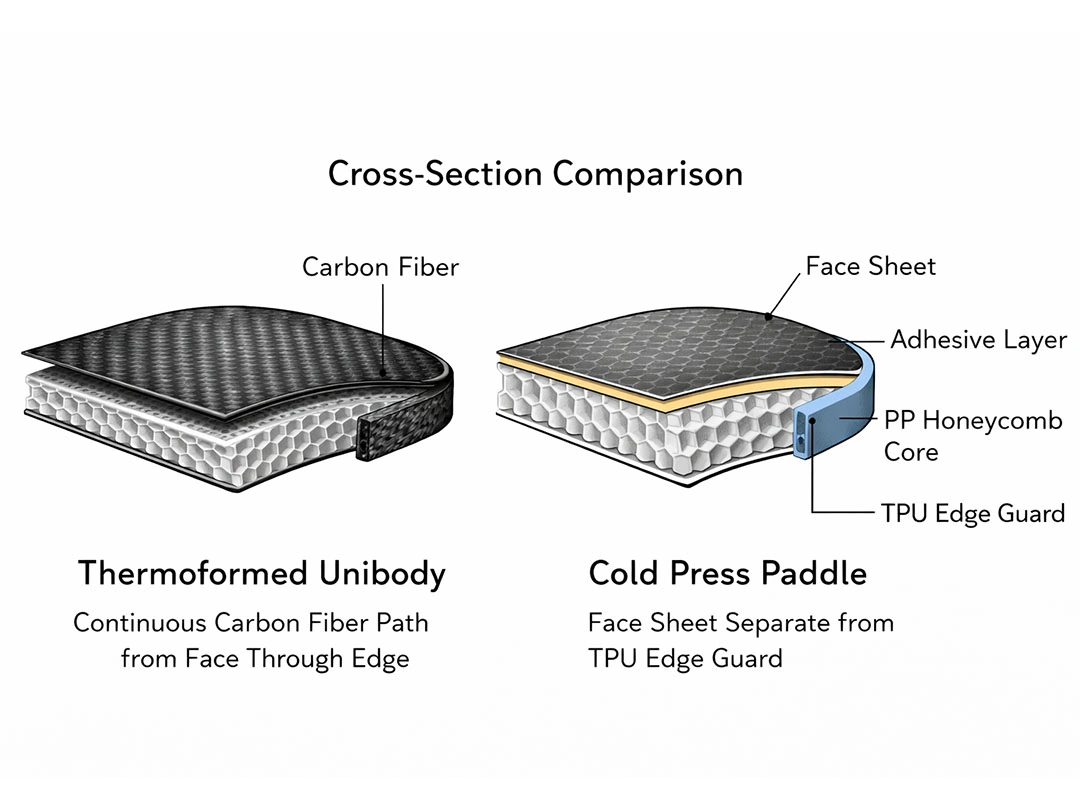
Traditional cold-press paddle manufacturing bonds face material to core using adhesive under pressure at room temperature. The result is a laminated structure with discrete material boundaries: face, adhesive layer, core, adhesive layer, face. Each of those boundaries is a potential vibration discontinuity — a point where acoustic energy can reflect, amplify, or scatter unpredictably. More practically, adhesive bonds are the weakest structural points in the paddle, and slight delamination (which begins microscopically before it’s visible) creates inconsistent vibration behavior across the hitting surface.
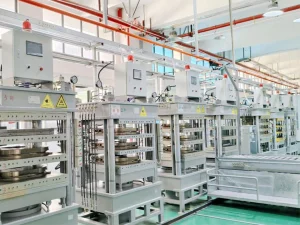
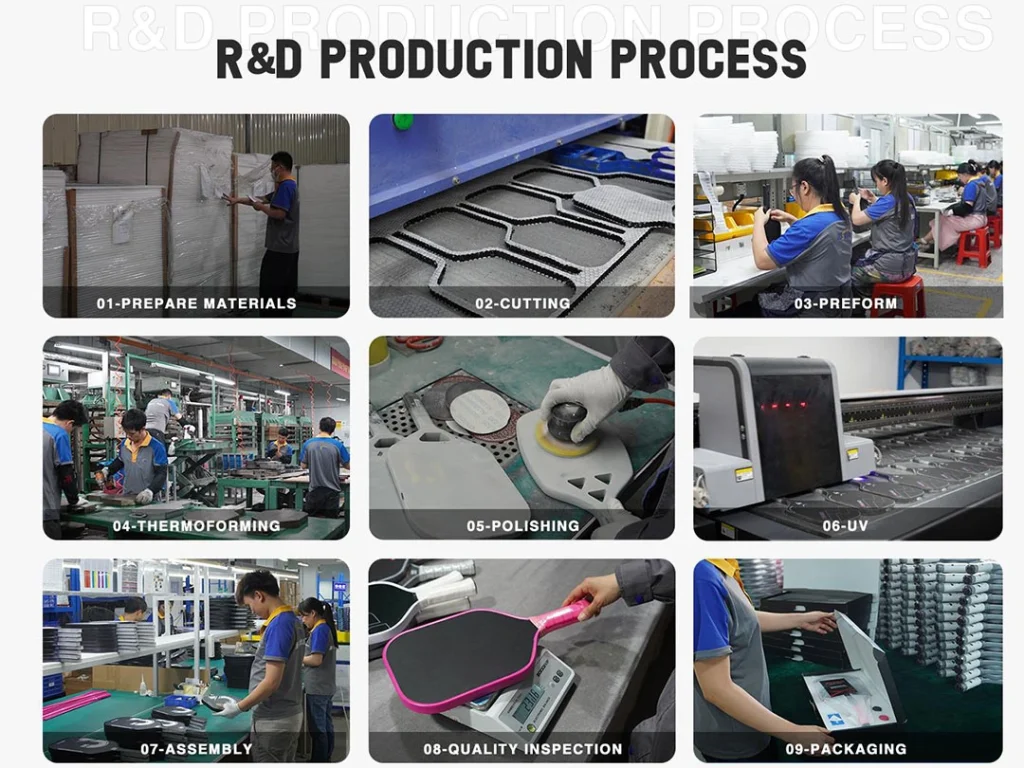
Thermoformed unibody construction eliminates these boundaries. Heat and controlled pressure are applied to the entire paddle assembly simultaneously, causing the face material, core, and edge to fuse into a single continuous structure. The chemical bond formed is stronger and more uniform than adhesive lamination. Critically, the energy transfer characteristics are consistent across the entire face.
The performance consequences for arm-care are measurable:
- Sweet spot expansion: Thermoformed paddles achieve a sweet spot 15–20% larger than equivalent cold-press designs. A larger sweet spot means fewer off-center hits, and off-center hits are disproportionately damaging because they require the wrist and forearm to correct rotational torque on impact.
- Vibration uniformity: Without adhesive layer discontinuities, the vibration profile is smooth and predictable across the face. There are no “hot spots” that transmit sharply localized vibration into the handle.
- Structural consistency over time: Thermoformed bonds don’t degrade the way adhesive bonds do with repeated impact. The dampening profile a player experiences in week one is the same in month twelve.
For sourcing reference, NexaPaddle’s thermoformed pickleball paddles factory line delivers all of these structural benefits at MOQ levels that make product testing commercially viable before committing to full-scale inventory.
Commercial Implication: Thermoformed construction is a verifiable manufacturing claim that supports premium retail pricing. Unlike vague marketing assertions (“ultra-comfortable,” “arm-friendly”), the unibody manufacturing process is a factual product attribute that can be specified in product descriptions, used in Amazon A+ content, and communicated in educational content marketing.
3. NexaPaddle’s Arm-Care Paddle Lineup: Specs for Brand Owners
The following four models represent the sourcing options most relevant to health/wellness brands building around arm-care positioning. Each is presented with the specification detail that OEM buyers need to make sourcing decisions, not the marketing copy that obscures them.
| Model | Core | Face | Dimensions | Handle | Best For |
|---|---|---|---|---|---|
| GEN4 Non-Filled EPP | EPP Foam (Non-Filled) | T700 Carbon | 417 × 188mm | 139mm | Control, joint-sensitive, recovery players |
| GEN4 Filled EPP | EPP Foam (Filled) | T700 Carbon | 417 × 188mm | 139mm | Power players wanting arm protection |
| Thermoformed Lightweight (Mold #2) | PP Honeycomb 14/16mm | Carbon UD/3K | 400 × 195mm | 130mm | Entry-price lightweight option |
| Mold #1 Edgeless Control (20mm) | PP Honeycomb 20mm | Carbon UD/3K + grit spray | 400 × 205mm | 130mm | Senior recreational, control specialists |
GEN4 Non-Filled EPP — Maximum Comfort
This is the primary arm-care SKU. The non-filled foam matrix delivers the highest vibration dampening of any model in the lineup, with an “absorb-then-release” impact character that feels fundamentally different from honeycomb paddles. Dwell time — the duration of ball-face contact — is extended, which both softens the impact sensation and gives players more control over shot placement.
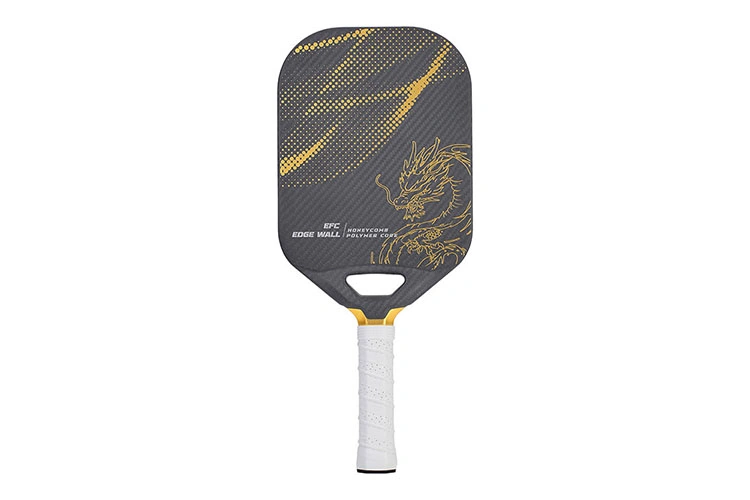
The 417 × 188mm face geometry and 139mm handle length are calibrated for the standard pickleball player grip, with enough handle room for two-handed backhand transitions. The T700 carbon face provides the stiffness required to maintain consistent response without adding unnecessary weight.
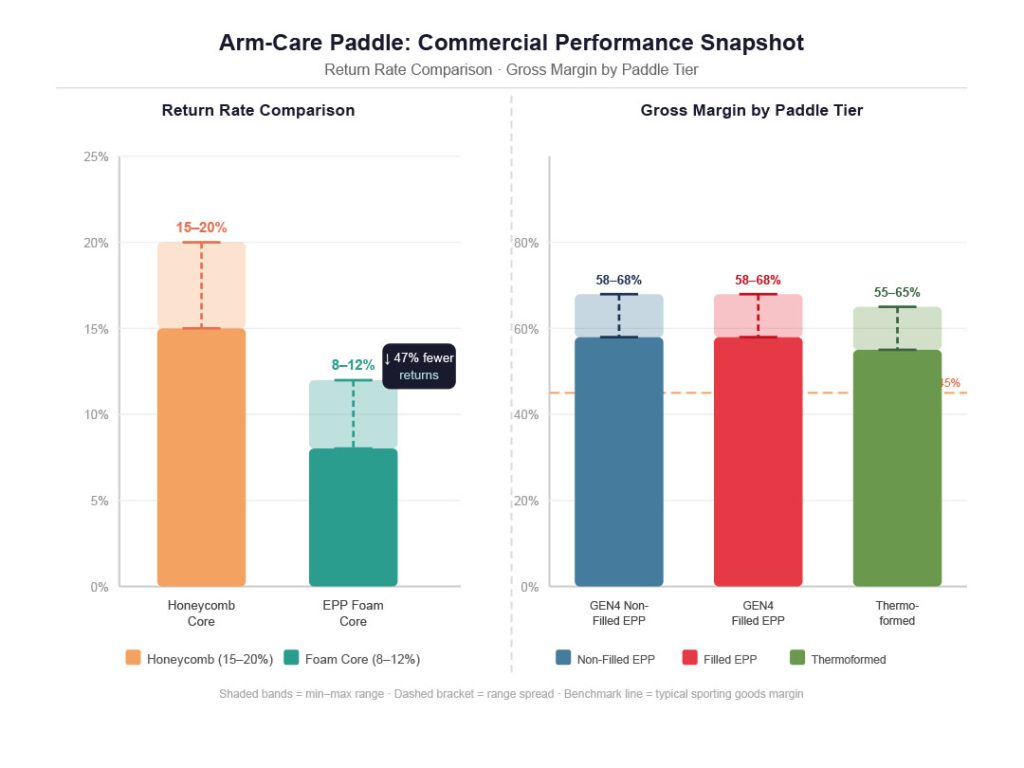
OEM cost: $42–52/unit | Retail target: $169–219 | Gross margin: 58–68%
GEN4 Filled EPP — Power + Protection
The filled EPP variant uses a denser foam matrix that increases energy return to the ball while retaining meaningful vibration dampening advantages over PP honeycomb. For players who prioritize offensive play but want arm protection as a secondary benefit, this is the sourcing option.
The same dimensional specifications as the Non-Filled variant make these two SKUs easy to carry as a paired line: one positioned for comfort-first players, one for performance-first players who are concerned about long-term arm health.
OEM cost: $45–55/unit | Retail target: $199–249 | Gross margin: 58–68%
Thermoformed Lightweight (Mold #2) — Entry Arm-Care
For brands that want a lightweight arm-care SKU at a more accessible retail price point, the Mold #2 thermoformed model uses a PP honeycomb core with a slightly wider face geometry (400 × 195mm) optimized for control-oriented play. The wider face increases the effective hitting zone without adding weight, which supports the same off-center-hit reduction benefit that arm-care positioning requires.
Available in 14mm or 16mm core thickness. The 16mm variant is recommended for maximum dampening. This is the right entry point for brands testing the arm-care category before committing to the higher OEM cost of Gen 4 EPP.
MOQ: 100 pieces | Lead time: 60–90 days
Mold #1 Edgeless Control (20mm) — Maximum Dampening
The 20mm core thickness makes this the highest-dwell, most-dampened model in the lineup. The edgeless construction eliminates the traditional edge guard, expanding the effective face area to 400 × 205mm — the widest sweet spot available in the standard paddle format. The grit spray on the T700/3K carbon face enhances spin generation without adding meaningful weight.
This model is purpose-built for senior recreational play and players actively recovering from arm injuries. The combination of maximum core thickness, edgeless face expansion, and thermoformed construction delivers the lowest vibration transmission profile of any model in the lineup.
Best for: Senior recreational, joint-sensitive players, control specialists
For a broader view of how control-optimized engineering translates across different paddle categories, the control pickleball paddles product range provides additional context on design tradeoffs.
4. Why Health & Wellness Brands Should Enter Pickleball Now
The business case for health and wellness brands entering pickleball is not about chasing a trend. It’s about recognizing a structural alignment between your existing brand equity and an underserved market need.
The positioning gap is real. The majority of pickleball paddle brands compete on power: faster swing speed, harder ball contact, more aggressive play. Marketing language across the category — “explosive power,” “maximum speed,” “dominate the court” — targets younger, competitive players. That segment exists and buys. But it also means the arm-care segment is almost entirely unaddressed by incumbent brands, despite representing the largest and most financially capable buyer demographic.
Your trust equity transfers directly. A health and wellness brand that customers already associate with joint recovery, sports rehabilitation, or active aging brings pre-built credibility to arm-care pickleball positioning. You are not asking customers to believe a new claim — you are extending a promise they already trust you to keep. That trust reduces customer acquisition cost and increases conversion rates in a category where most buyers are making their first purchase.
The clinical pain point drives immediate purchase intent. Tennis elbow is not a vague preference. It is a diagnosed medical condition with real functional impact — the inability to lift a coffee cup, open a door, or grip a racket without pain. Consumers experiencing lateral epicondylitis are actively searching for solutions. The keyword “best pickleball paddle for tennis elbow” reflects high-intent search behavior from buyers who have already decided to spend money; they are looking for a product to trust with that spend.
The market is already signaling demand for arm-care engineering — and incumbents are responding imperfectly. ProKennex, one of the longer-established racket brands in the space, markets its “Kinetic Technology” (micro-tungsten beads inside the handle) specifically to tennis elbow sufferers as a shock-absorption solution. Engage Pickleball’s Pursuit line, with 16mm+ thick cores, has been recommended by physical therapists in online communities. These efforts confirm that arm-care is a validated commercial positioning in pickleball. They also reveal its ceiling: bead-based handle inserts address handle vibration only, not face-level impact energy; and PP honeycomb cores, even at 16mm, remain stiffer and higher-frequency than EPP foam. NexaPaddle’s Gen 4 EPP construction addresses the problem at the source — core material and unibody structure — making it the more complete engineering solution for an OEM brand that wants clinical positioning to hold up under scrutiny.
The cross-sell architecture is natural. A brand that sells arm-care paddles can logically extend into compression sleeves, elbow braces, recovery foam rollers, and sports nutrition products — all categories where health/wellness brands already operate. The paddle becomes a customer acquisition vehicle for a larger recovery-focused product ecosystem.
The return rate data is operationally material. High-vibration PP honeycomb paddles see return rates of 15–20% from the 40+ demographic, largely driven by arm discomfort. Foam core paddles in the same demographic show return rates of 8–12%. On a 1,000-unit initial order, that difference — 70–120 fewer returns — translates directly to margin protection and review quality on platforms like Amazon where return rate and review score govern organic ranking.
5. The Commercial Case: Margins, MOQ, and Market Entry
The financial model for arm-care paddle sourcing compares favorably to general pickleball inventory, and the market entry barriers are lower than most brand owners expect.
| Parameter | GEN4 Non-Filled EPP | GEN4 Filled EPP | Thermoformed Lightweight |
|---|---|---|---|
| OEM Cost | $42–52/unit | $45–55/unit | $30–40/unit (est.) |
| Retail Target | $169–219 | $199–249 | $129–159 |
| Gross Margin | 58–68% | 58–68% | 55–65% |
| MOQ | 100 pieces/variant | 100 pieces/variant | 100 pieces |
| Lead Time | 60–90 days | 60–90 days | 60–90 days |
| USAPA Cert Support | Included | Included | Included |
The 100-piece MOQ per variant makes parallel testing commercially feasible. A brand entering the arm-care category can simultaneously test both the Non-Filled EPP (comfort-first messaging) and the Filled EPP (performance-plus-protection messaging) with a combined initial investment manageable enough for a brand-new product line.
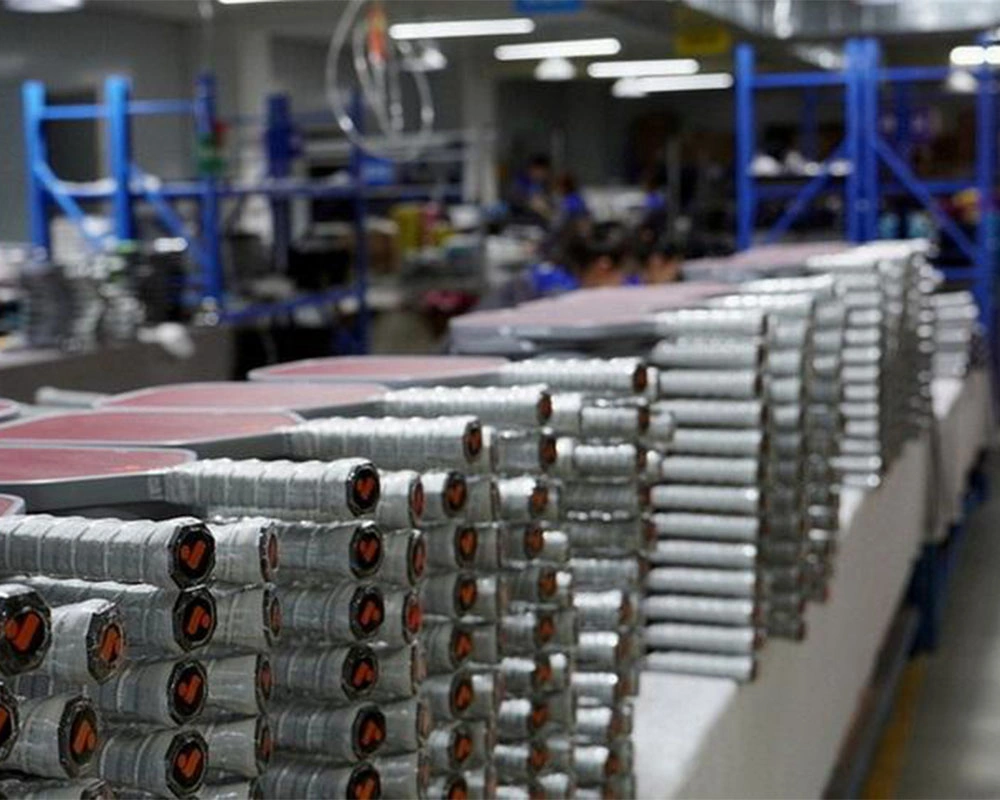
The 60–90 day concept-to-delivery timeline includes OEM customization — logo placement, colorway selection, packaging design, and custom branding elements. For brands that want full design control over the customer-facing product, NexaPaddle’s custom pickleball paddles program supports private label development from sketch to finished SKU within that window.
USAPA certification support is included in the sourcing package, which matters for brands targeting tournament-adjacent marketing. The certification is the credibility signal that separates a serious product from a novelty, and it’s a prerequisite for placement in pro shops, club partnerships, and pickleball-specific retail channels.
The margin profile — 58–68% gross at retail — is competitive with established sporting goods categories and significantly better than most health supplement or recovery device categories. The combination of premium price point, verifiable engineering differentiation, and underserved demographic creates a margin-protective market position that won’t immediately attract the price competition that commoditized pickleball SKUs face.
Commercial Implication: The risk-adjusted entry case is strong. At 100 pieces per variant, the test inventory investment is bounded. The margin profile is category-leading. The positioning is defensible because it’s based on engineering substance that can be explained, demonstrated, and verified — not a brand claim that competitors can simply copy in marketing copy.
6. FAQs
What paddle features most directly help with tennis elbow?
Three features matter most, in order of impact: core material, paddle weight, and construction method. EPP foam cores dampen the high-frequency vibrations (200–500 Hz) that accumulate as soft tissue stress during extended play. Mid-weight paddles in the 7.5–8.3 oz (213–235g) range reduce inertial load on the forearm extensors without crossing into the ultra-light range where impact shock paradoxically increases. Thermoformed unibody construction eliminates adhesive layer discontinuities that create vibration hot spots. A paddle that combines all three — like the Gen 4 EPP lineup — delivers measurably better arm protection than any single feature can.
What weight range is actually recommended for players with arm injuries — and why going too light is a mistake?
The evidence-based target is 7.5–8.3 oz (213–235g) — and the reasoning matters as much as the number.
The common advice to “go as light as possible” for arm comfort is biomechanically incomplete. Ultra-lightweight paddles (under 7.3 oz / 207g) can worsen tennis elbow through two mechanisms: players unconsciously swing harder to generate equivalent ball speed, and very light paddles transmit ball-impact shock more directly to the handle because there is insufficient mass to absorb and distribute kinetic energy at contact. The result is a sharper, higher-amplitude stress spike on the ECRB tendon — not a lower one. Clinical biomechanics research supports this, identifying paddle mass distribution as a key variable in ECRB loading during racket sport play.
At 7.5–8.3 oz, the paddle carries enough mass to absorb impact energy at the core level while staying light enough to avoid excessive inertial demand on the forearm during swing. This is the range the Gen 4 EPP lineup is engineered to hit.
Grip size compounds the equation. An undersized grip forces a sustained “death grip” — elevated forearm squeeze tension throughout the entire stroke — that accelerates tendon fatigue independent of vibration load. The recommended grip circumference for minimizing forearm torque is 4.125″–4.25″ (standard L2 sizing). If your current paddle falls outside either of these ranges, weight or grip alone may be perpetuating the problem even if the core material is otherwise appropriate.
How does EPP foam core technology reduce vibration compared to PP honeycomb?
PP honeycomb is a rigid cellular structure that transmits impact energy efficiently — which is good for ball speed but bad for arm protection, because the same efficiency applies to vibration transfer into the handle. EPP foam uses a viscoelastic mechanism: the foam micro-compresses on impact and converts a portion of the high-frequency vibration energy to heat through internal molecular friction. The result is a dampened, softer impact character that reduces the cumulative vibration load on the wrist and forearm during extended play.
Are Gen 4 foam core paddles USAPA approved for tournament play?
Yes. NexaPaddle’s Gen 4 EPP paddles are designed to comply with USAPA PBCoR ≤0.43 standards, with compliance headroom — meaning the foam core dampening does not push the ball coefficient of restitution into non-compliant territory. USAPA certification testing support is included as part of the OEM sourcing package, so brand owners can pursue tournament-legal status without navigating the certification process independently.
Can health and wellness brands fully customize arm-care paddles with their own branding?
Yes, full private label customization is supported. This includes logo placement, colorway selection, custom handle design, packaging, and marketing material support. The 60–90 day lead time covers the complete customization cycle, from design brief to finished inventory. MOQ is 100 pieces per variant, which is designed to make brand testing commercially viable before committing to large-scale inventory. For a detailed overview of the customization options available, NexaPaddle’s custom paddle development program covers the full scope.
Closing: The Window for Arm-Care Positioning Is Now
Pickleball’s explosive growth is entering a maturation phase where brand differentiation will determine winners. The power-focused brands established their position early. The arm-care segment — supported by genuine engineering, a clinically recognized pain point, and the most financially capable demographic in the sport — is the open lane.
Health and wellness brands have a rare advantage here: the engineering substance already exists, the manufacturing is proven and USAPA-compliant, and the target customer already trusts you with their physical wellbeing. The category alignment is not incidental. It’s the strongest product-market fit argument available in pickleball today.
The question is not whether arm-care paddles will find a market. They already have one — 36.5 million players, growing fastest in the 40–65 bracket, increasingly aware of the vibration problem and actively searching for solutions. The question is which brands will own that positioning.
If you’re a health, wellness, or sports recovery brand considering a pickleball paddle line, now is the time to request samples and review sourcing specs. The 100-piece MOQ and 60–90 day lead time mean you can have product in-market before the next competitive season without overextending your inventory commitment.
Contact NexaPaddle to request Gen 4 EPP samples, discuss custom branding options, or get a sourcing quote for your specific product line.
References
Coherent Market Insights. Pickleball Equipment Market Size, Share & Forecast 2025–2032. Published 2025. Market value: $702.9 million (2025).
Sports & Fitness Industry Association (SFIA). 2024 Pickleball Participation Report. Published 2024. 36.5 million US players; fastest-growing demographic: adults 40–65.
USA Pickleball Association (USAPA). Official Rulebook and Equipment Standards: PBCoR Compliance ≤0.43. Published 2025. Available at usapickleball.org.
iAcesport. Vibration Frequency Analysis in Pickleball Paddles: PP Honeycomb vs. Alternative Core Materials. Published 2024. Peak vibration transmission range identified at 200–500 Hz in PP honeycomb core paddles.
NexaPaddle Product Data. Gen 4 EPP Foam Core Paddle Specifications and Performance Data. Internal product data, 2025. Return rate comparison: 15–20% (high-vibration PP honeycomb, 40+ demographic) vs. 8–12% (foam core, same demographic).
Owoeye et al. (2025). “Pickleball Injury Epidemiology.” Sports Medicine – Open, August 2025.
Orthopedic Journal of Sports Medicine* (February 2025). Clinical biomechanics of racket sport elbow injuries.