The global pickleball equipment market is projected to reach $480.6 million by 2025, with paddles commanding nearly half of that revenue at roughly $239 million.[^2] For retailers, distributors, and brand owners, the most critical data point within those projections is this: the low-price, beginner tier constitutes a massive 43% of the total equipment market, representing an estimated $205.9 million segment.[^2]
As participation skyrockets—growing an astonishing 479% from 2020 to 2025 to reach 24.3 million players in the U.S. alone[^4]—the influx of new players is the primary engine driving industry volume. Understanding exactly what constitutes the best beginner pickleball paddles is no longer just about court performance; it is a foundational procurement strategy. This guide details the technical specifications, competitive landscape, and margin structures that buyers must understand when selecting beginner & starter pickleball paddles to anchor their product lines.
The Beginner Market Opportunity: Volume and Acquisition
The demographics of the sport have shifted dramatically. While often stereotyped as a retirement community pastime, over 70% of current players are between the ages of 18 and 44, bringing the average age down to approximately 35.[^4] More importantly for inventory planning, the player base is heavily skewed toward newcomers. Of the 24.3 million U.S. players, roughly 18 million are classified as recreational or beginner players, compared to just 6 million “core” players.[^4]
“The beginner segment is the gateway to customer lifetime value. Capturing a player at their initial $50–$100 purchase establishes brand loyalty for the inevitable upgrade cycle that follows 3 to 12 months later.”
This massive influx of recreational players dictates retail strategy. While high-end thermoformed carbon fiber models generate media buzz, the volume—and often the reliable, scalable profit—lies in stocking the right entry-level SKUs.
What Beginners Actually Need in a Paddle (Technical Specs)
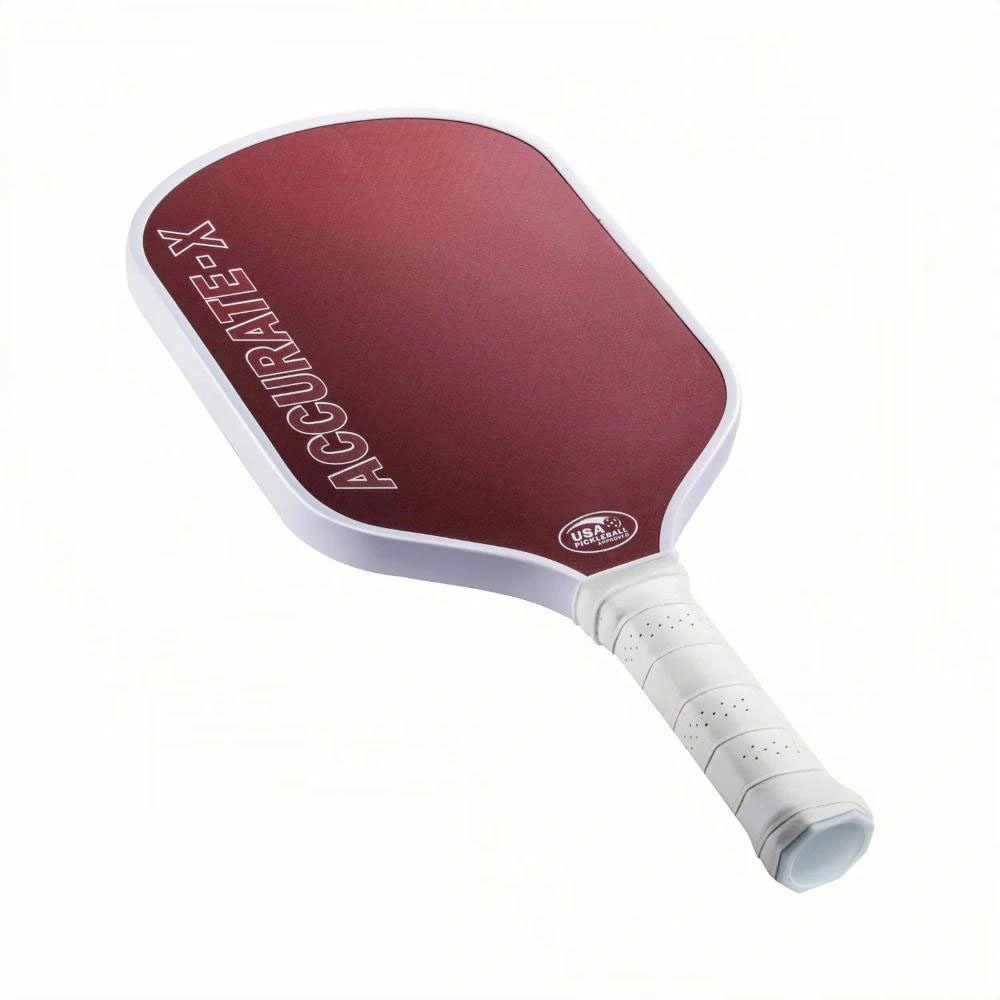
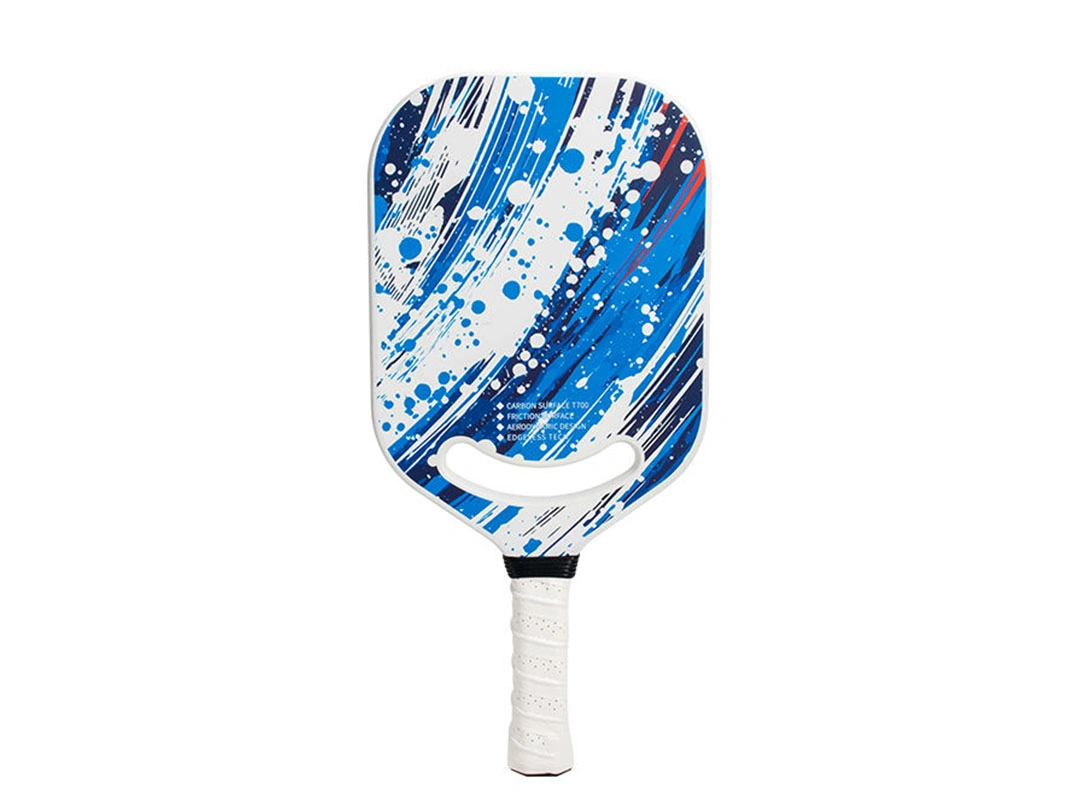
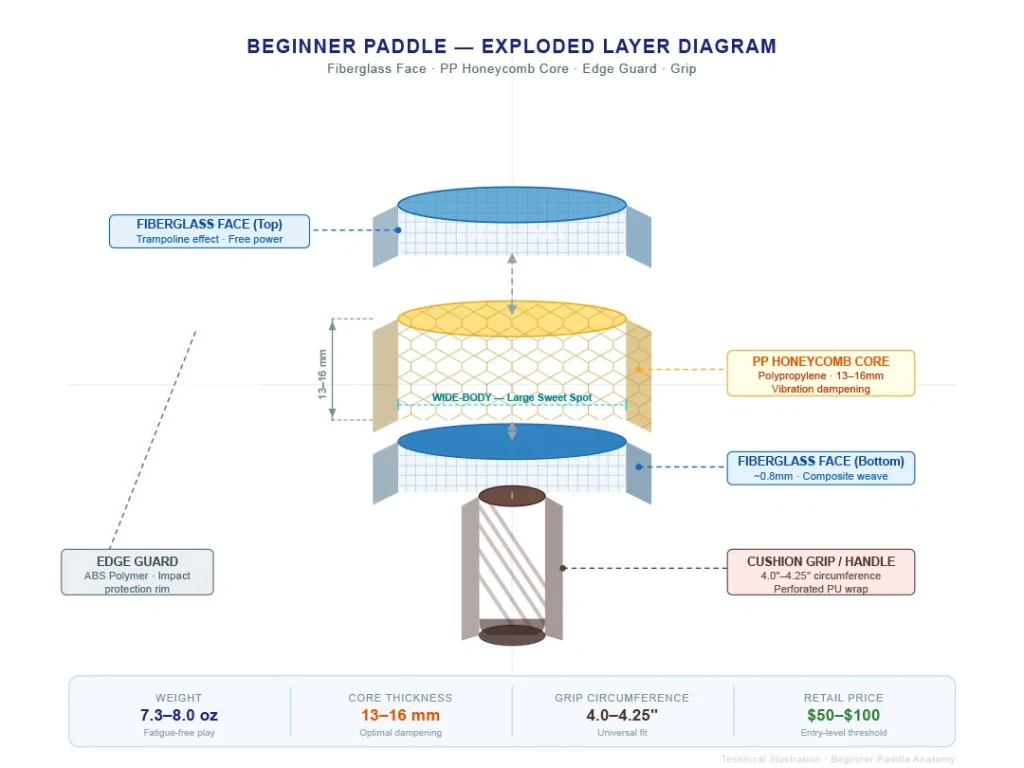
From a manufacturing perspective, designing a paddle for a novice requires specific material and structural choices to accelerate their learning curve while maintaining cost-efficiency for retail distribution. The ideal beginner paddle prioritizes a large sweet spot, forgiving materials, and manageable weight.
| Specification | Ideal Beginner Range | Manufacturing Rationale |
|---|---|---|
| Weight | 7.3 – 8.0 oz | Prevents arm fatigue; delivers faster reaction times at the kitchen line, reducing complaints and returns. |
| Face Material | Fiberglass / Composite | Produces a “trampoline effect” that delivers free power without demanding refined technique—maximizing satisfaction and reducing returns. |
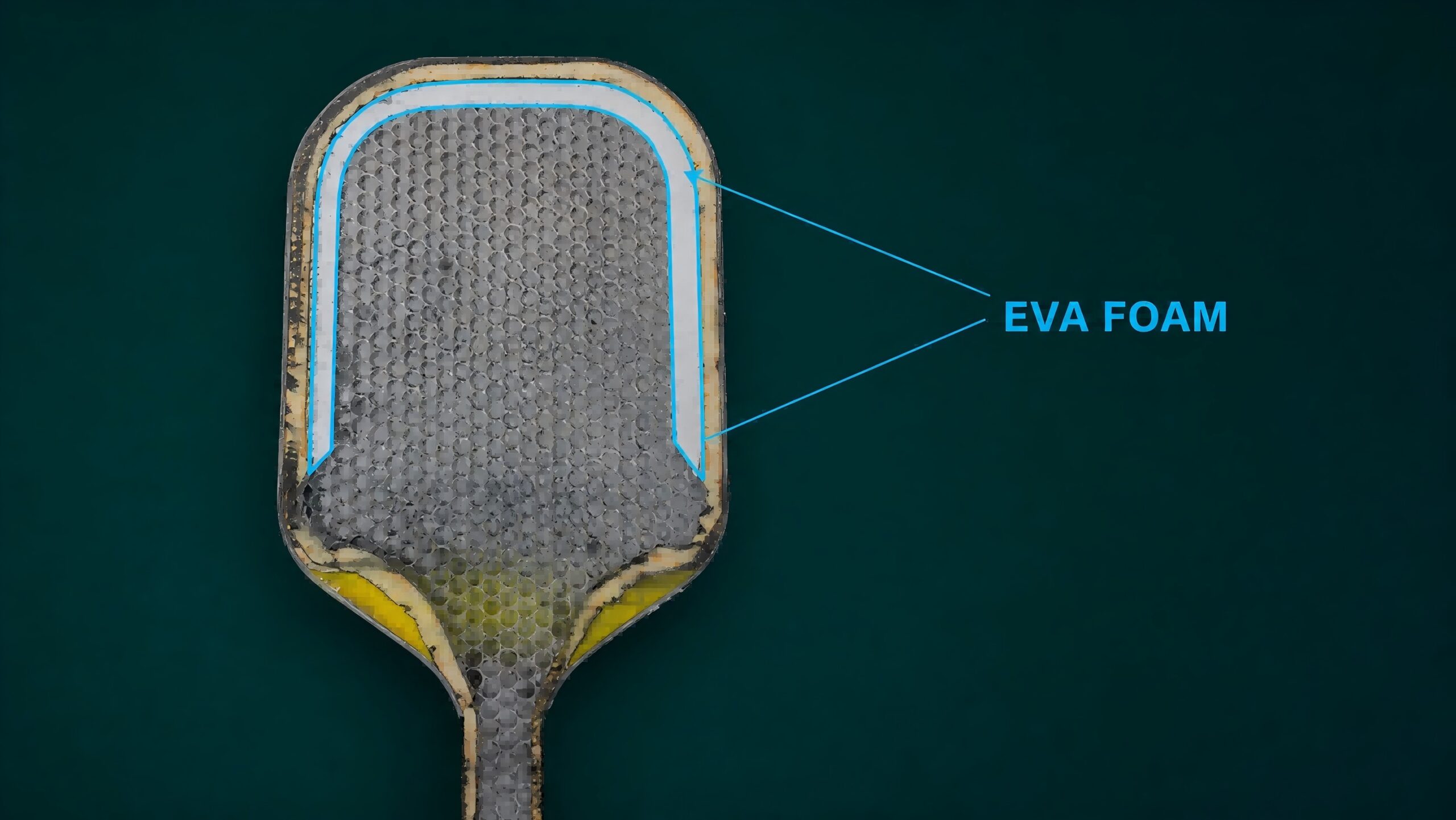
| Core Material | Polypropylene (PP) Honeycomb | Industry standard for durability and consistent response; 13mm to 16mm thickness offers optimal vibration dampening. |
| Shape | Wide-body / Traditional | Maximizes sweet spot width, reducing the penalty for off-center contact—a critical performance buffer for recreational players. |
| Grip Size | 4.0″ – 4.25″ | Accommodates the widest range of hand sizes; smaller grips are easier to build up with overgrip than large grips are to reduce. |
| Retail Price | $50 – $100 | The established psychological threshold for a first-time equipment purchase. |
When sourcing inventory, buyers should heavily favor fiberglass composite pickleball paddles. Fiberglass delivers significantly more “pop” than carbon fiber, delivering the free power new players require without demanding refined technique—maximizing satisfaction and reducing returns. It is also significantly more cost-effective to produce, allowing brands to hit crucial sub-$100 retail price points while maintaining healthy margins.
Competitive Landscape: What’s Already on Shelves
To position your SKUs effectively, you must understand the current retail environment. The beginner market is dominated by established brands relying on brand equity to command premium prices for standard materials.
Top Beginner Paddles (Current Market Data)
| Brand & Model | Face Material | Core | Retail Price Range | Target Channel |
|---|---|---|---|---|
| Franklin X-40 | Fiberglass | Polypropylene | $30 – $80 | Big Box / Sporting Goods |
| JOOLA Journey | Fiberglass | Polypropylene | $34.95 – $69.95 | Specialty / E-commerce |
| HEAD Radical Elite | Fiberglass | Polypropylene | $49 – $79 | Tennis Specialty / E-commerce |
| Onix Z5 | Graphite/Fiberglass | Nomex/Poly | $59 – $80 | Big Box / Specialty |
| Selkirk SLK EVO XL | Fiberglass | Polypropylene | $60 – $100 | Specialty / Pro Shops |
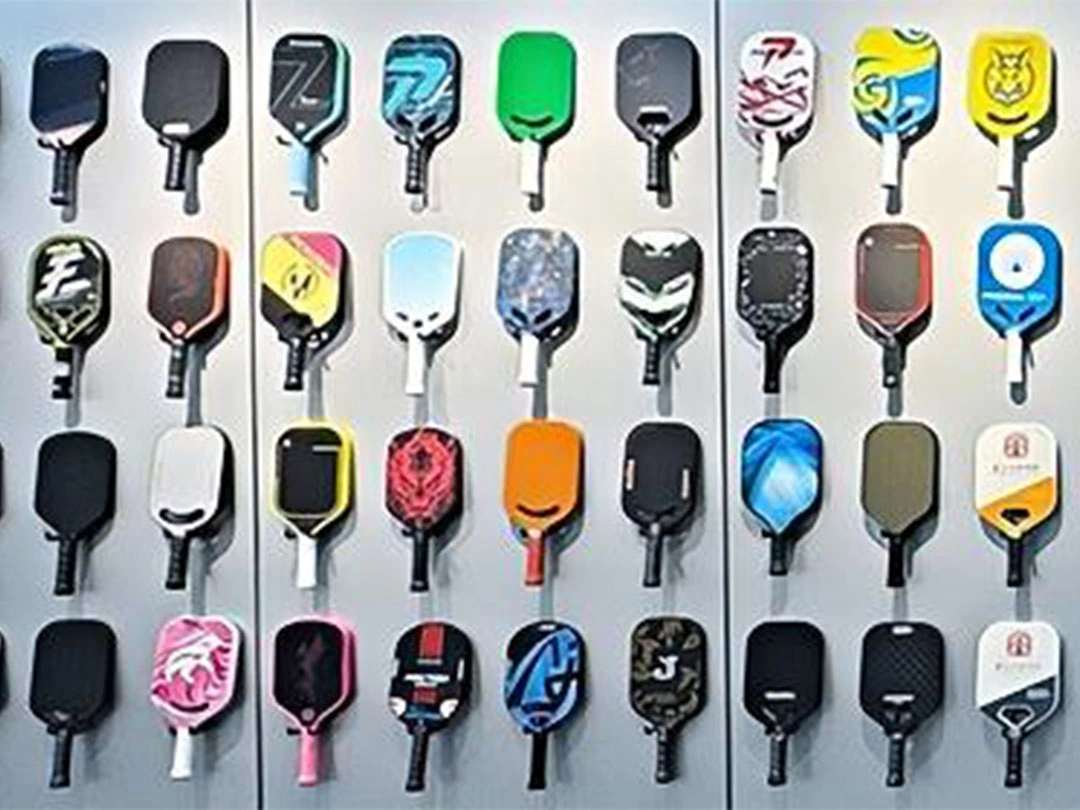
With over 300 brands currently competing in the space, retail shelves are crowded. Big-box retailers (e.g., Walmart, Dick’s Sporting Goods) focus heavily on the $20–$80 entry point, driven by price and packaging. Specialty pro shops curate tighter selections (typically 10–15 brands max) and rely on a strict “good-better-best” tiering strategy to guide the customer journey.
The Margin Advantage: Private Label vs. Branded Resale
For retailers and distributors, the decision between carrying established brands versus launching a private label line comes down to fundamental unit economics.
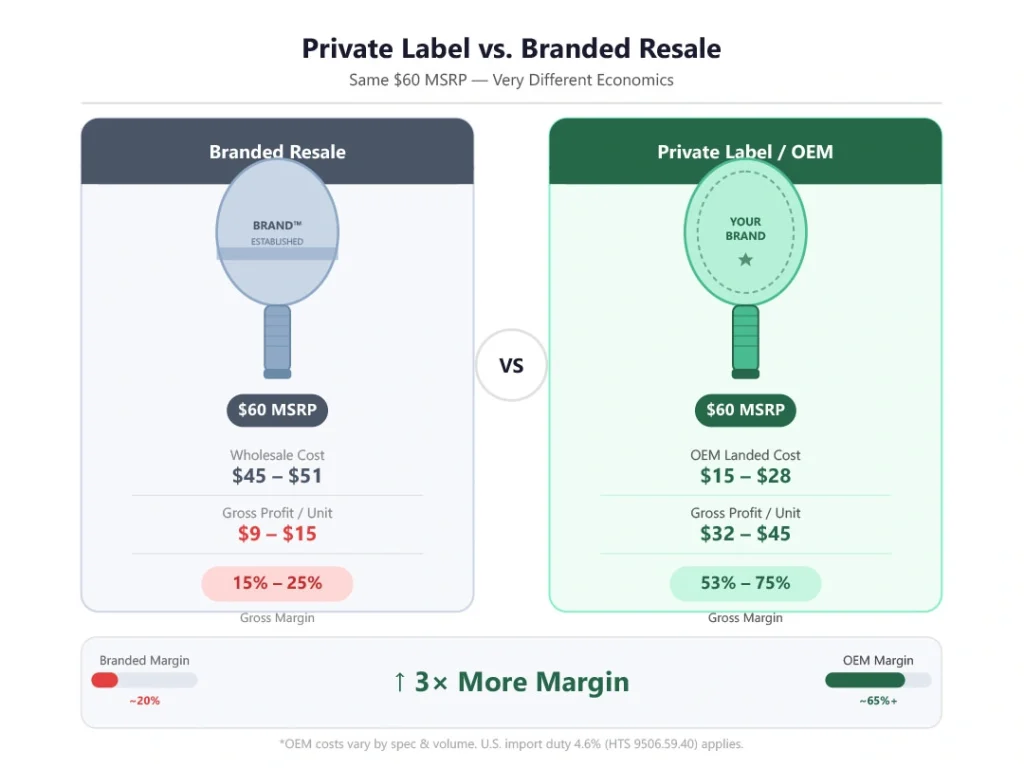
Reselling established brands like those listed above typically yields wholesale margins of 15% to 25%. In a high-volume, lower-price segment like beginner paddles, this leaves little room for promotional discounting or marketing spend.
Conversely, partnering with an OEM fiberglass pickleball paddle factory allows retailers to bypass the brand markup entirely.
Margin Comparison: Retailer Economics
| Metric | Branded Resale (Example: $60 MSRP) | Private Label / OEM (Example: $60 MSRP) |
|---|---|---|
| Wholesale / Landed Cost | $45.00 – $51.00 | $15.00 – $28.00* |
| Gross Profit per Unit | $9.00 – $15.00 | $32.00 – $45.00 |
| Gross Margin | 15% – 25% | 53% – 75% |
| Control over Pricing | Minimal (MAP Policies) | Complete Control |
| Brand Equity Built | The Manufacturer’s | Yours |
*OEM costs vary based on exact specifications, packaging, and volume. Customs duties of 4.6% (HTS 9506.59.40) apply to U.S. imports.
“Private labeling entry-level paddles transforms a low-margin necessity into a high-margin anchor product. It allows retailers to capture 40–65%+ margins while offering a product that is structurally identical—or superior—to the $80 branded alternatives.”
NexaPaddle’s Cold Press Fiberglass UV: Built for the Beginner Segment
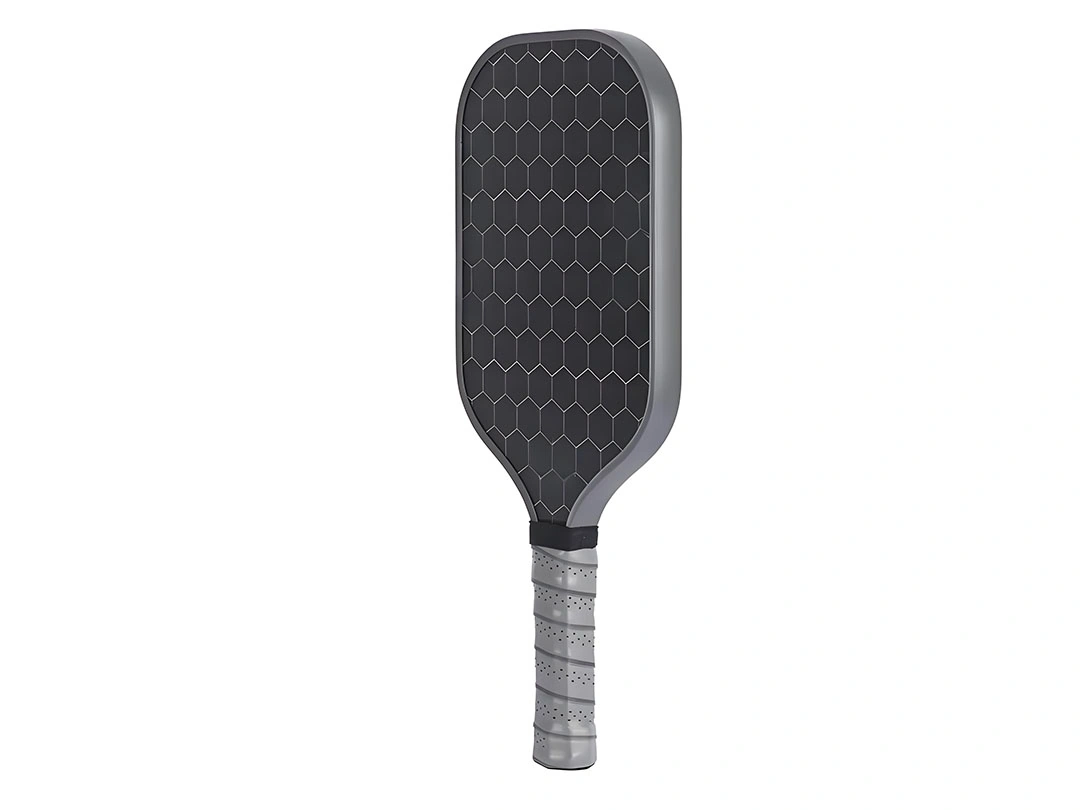
To capitalize on the $205.9 million beginner segment, NexaPaddle engineered the Cold Press Fiberglass UV (Tier 1, Product 1.1) specifically for B2B buyers seeking high-margin, high-performance entry-level SKUs.
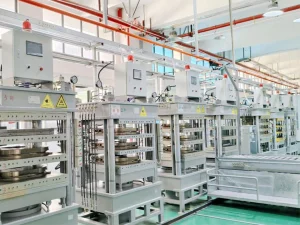
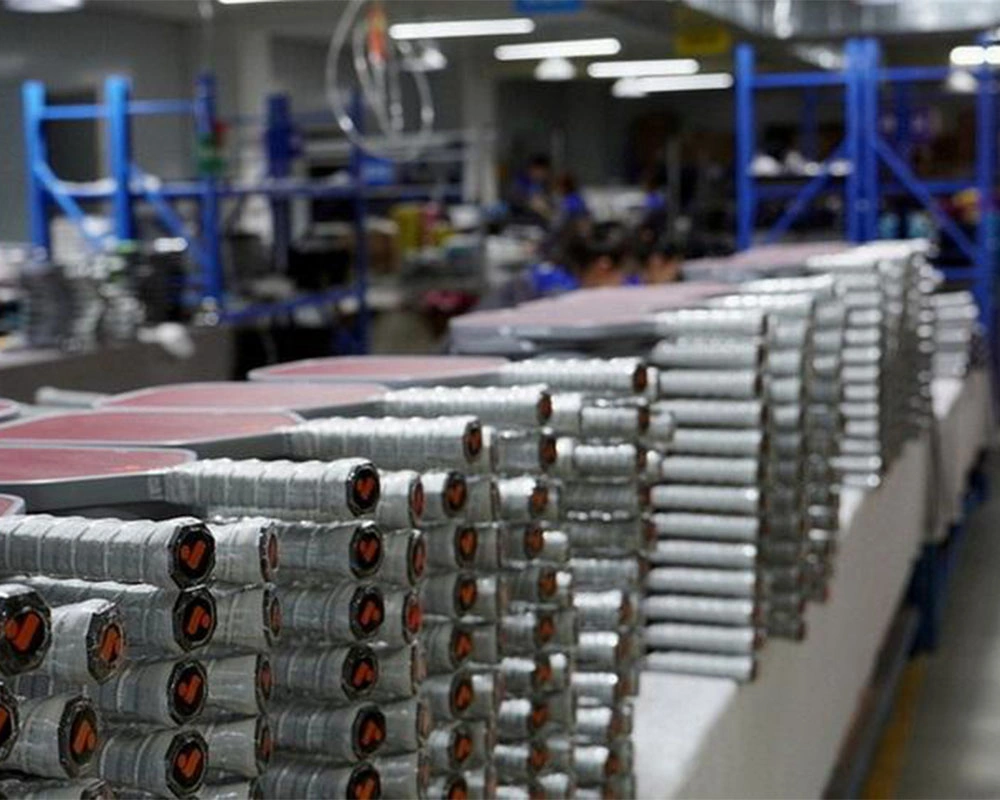
This paddle utilizes a cold press manufacturing technique. For buyers, this means the lowest possible tooling costs and no mold fees for standard shapes, significantly lowering the barrier to entry for custom designs.
Product 1.1 Full Specifications
| Attribute | Specification |
|---|---|
| Face Material | High-elasticity fiberglass |
| Core | Premium PP Honeycomb |
| Core Thickness | 10mm / 13mm / 16mm |
| Weight | 220–245g (7.8–8.6 oz) |
| Control Shape Dimensions | 400×195mm |
| Power Shape Dimensions | 417×188mm |
| Handle Length | 130mm or 139mm |
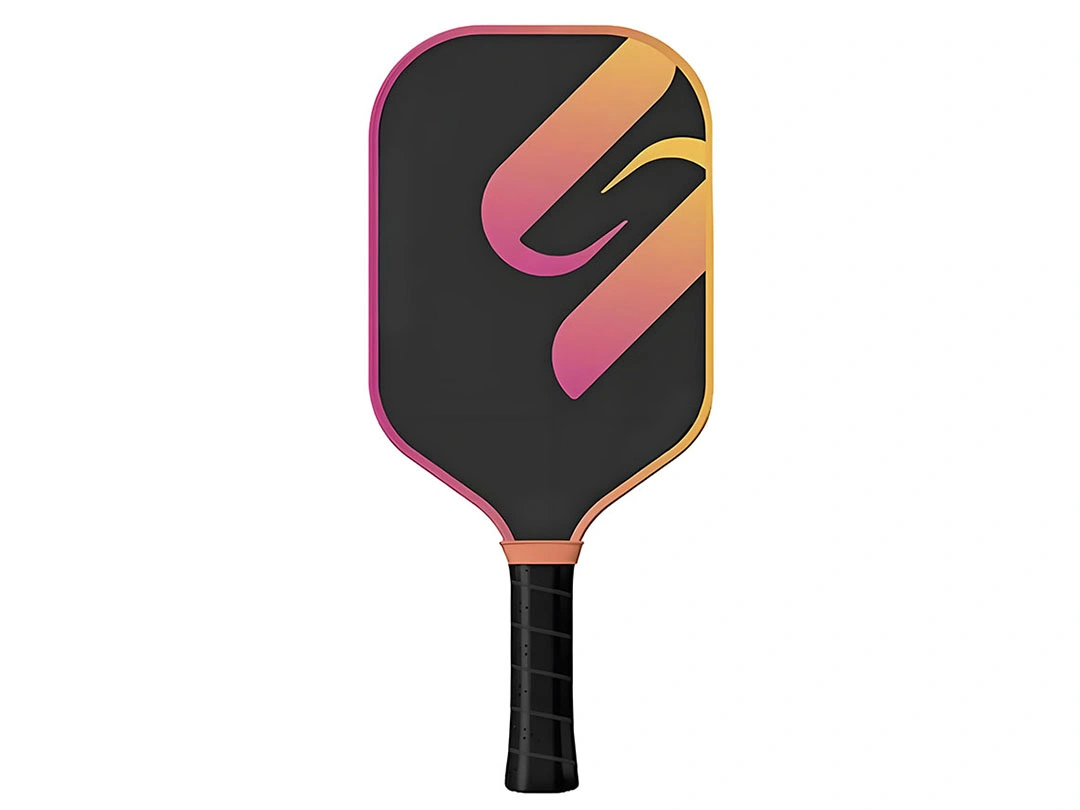
| Graphics | Full-color UV Printing on surface |
| Construction | Cold press (no mold fee for standard shapes) |
| MOQ | 300 pieces |
| USAPA Certification | Available (testing fee: $500–$1,200/design) |
The Cold Press Fiberglass UV is designed to be the foundational SKU in any custom OEM pickleball paddles program, offering exceptional performance at a landed cost that enables aggressive retail pricing strategies. Furthermore, NexaPaddle ensures that these designs can be fully certified as USAPA approved paddles (testing fees range from $500–$1,200 per design)—a critical point of differentiation even in the recreational segment, where buyers increasingly use certification status as a proxy for product quality.
Retail Channel Strategy: Stocking for Maximum Sell-Through
Procuring the right paddle is only half the equation; structuring the product offering for the retail environment dictates sell-through velocity.
The Bundle Strategy
For the beginner market, friction at the point of purchase decision can suppress conversion. Bundling is a proven strategy to increase Average Order Value (AOV) while simplifying the procurement logic for retail buyers and the purchase decision for end consumers.
“A two-paddle bundle SKU at $99–$119 drives higher conversion than two individual $60 paddles. Bundling reduces decision fatigue at the shelf and meaningfully increases basket size—a straightforward win for both the retailer and the brand.”
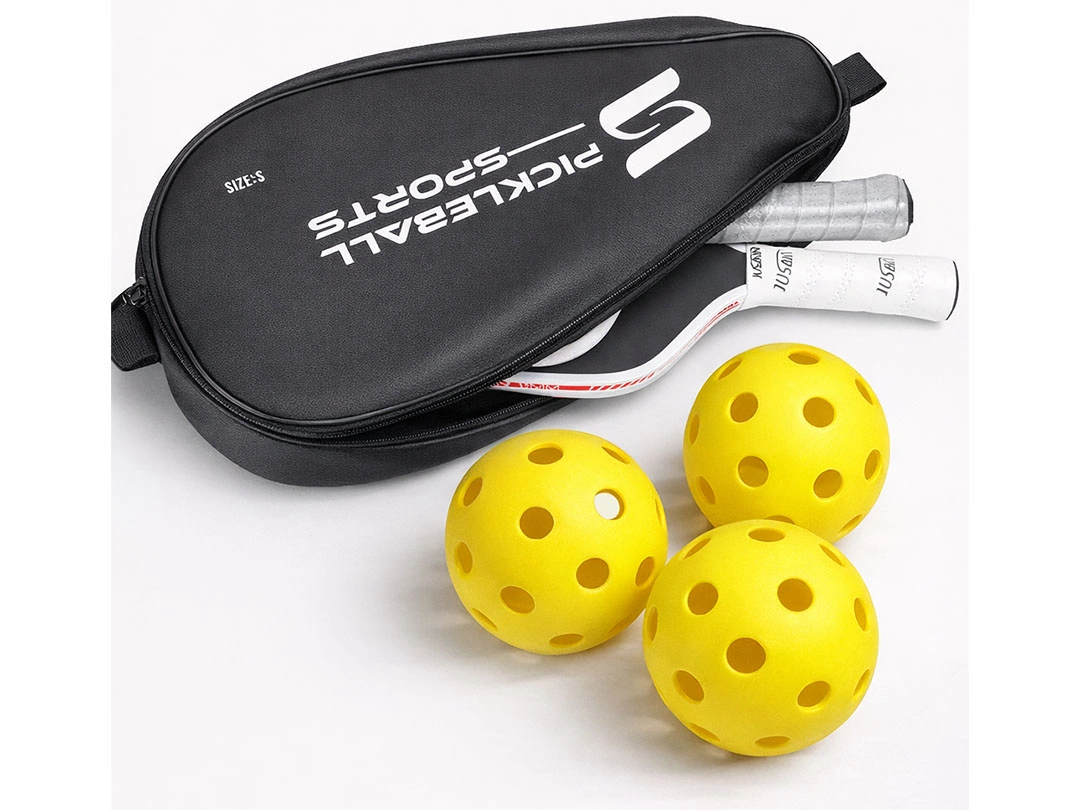
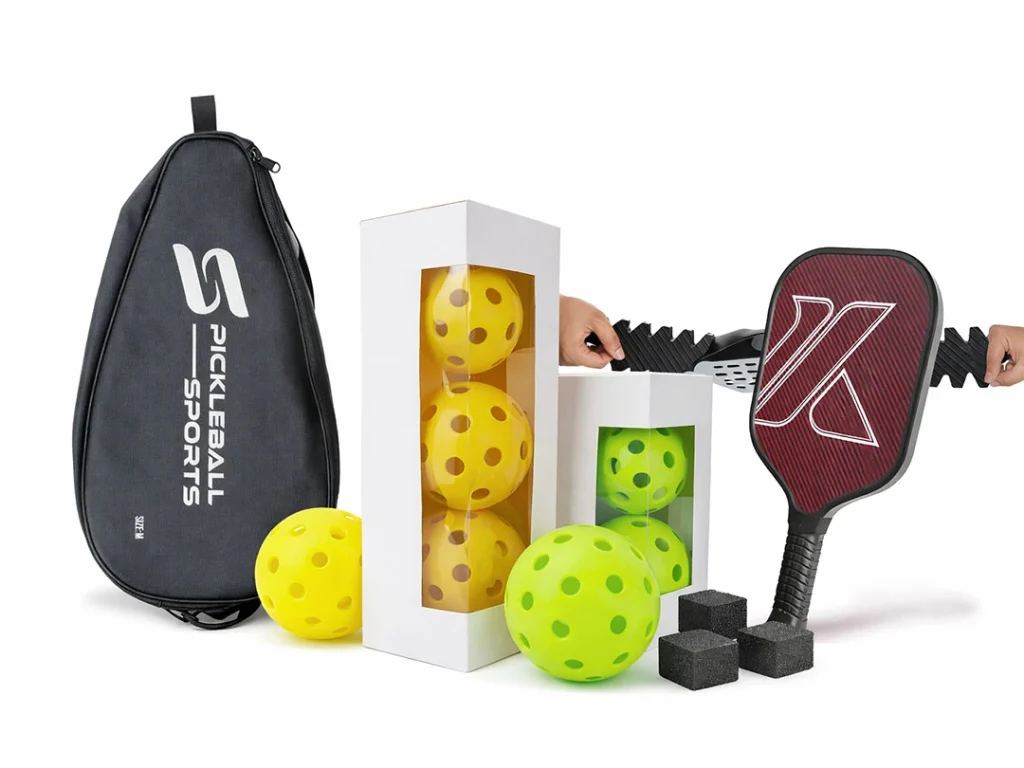
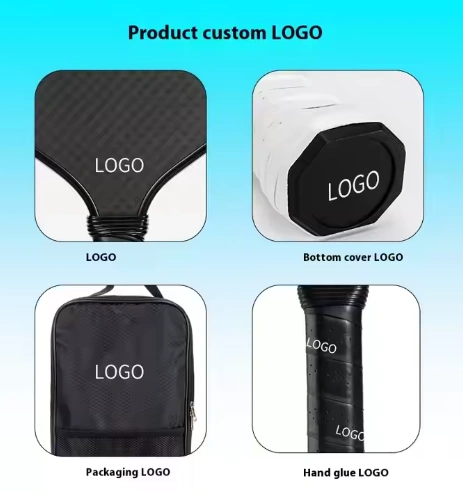
Offering pickleball sets & bundles—typically two paddles, four balls, and a carrying case—is essential for big-box retail, sporting goods stores, and e-commerce platforms. NexaPaddle supports comprehensive bundle manufacturing, offering custom pickleballs (MOQ 200), branded paddle bags, and accessories like edge tape and carbon erasers (MOQ 100), allowing buyers to source a complete retail-ready package from a single supplier.
The “Good-Better-Best” Merchandising Strategy
Pro shops and specialty retailers must curate their assortments to guide customers upward. Operators intentionally manage inventory cycles—often running lean quarterly to accommodate new technology—but the tiering remains consistent:
| Tier | Product | Retail Price | Margin Profile |
|---|---|---|---|
| Good | Cold Press Fiberglass UV (Product 1.1) | $55–$75 | 53%–65% OEM margin |
| Better | Cold Press Carbon Fiber UD/3K (Product 1.2) | $90–$130 | 50%–60% OEM margin |
| Best | Thermoformed Raw Carbon (Mold #2) | $150–$200+ | 45%–55% OEM margin |
The Upgrade Path: From Beginner to Intermediate
The B2B value of the beginner segment extends far beyond the initial transaction. Market data indicates that a new player typically upgrades their paddle within 3 to 12 months of starting the sport. The estimated 2-year customer Lifetime Value (LTV) ranges from $400 to over $700 in equipment and apparel spend.[^4]
If a retailer or brand only stocks wood / budget pickleball paddles or entry-level fiberglass, they forfeit the most lucrative part of the customer journey: the upgrade.
“Brands that own both the beginner SKU and the upgrade SKU retain the customer’s second (and third) purchase. Brands that only stock entry-level lose them to the competition the moment their game improves.”
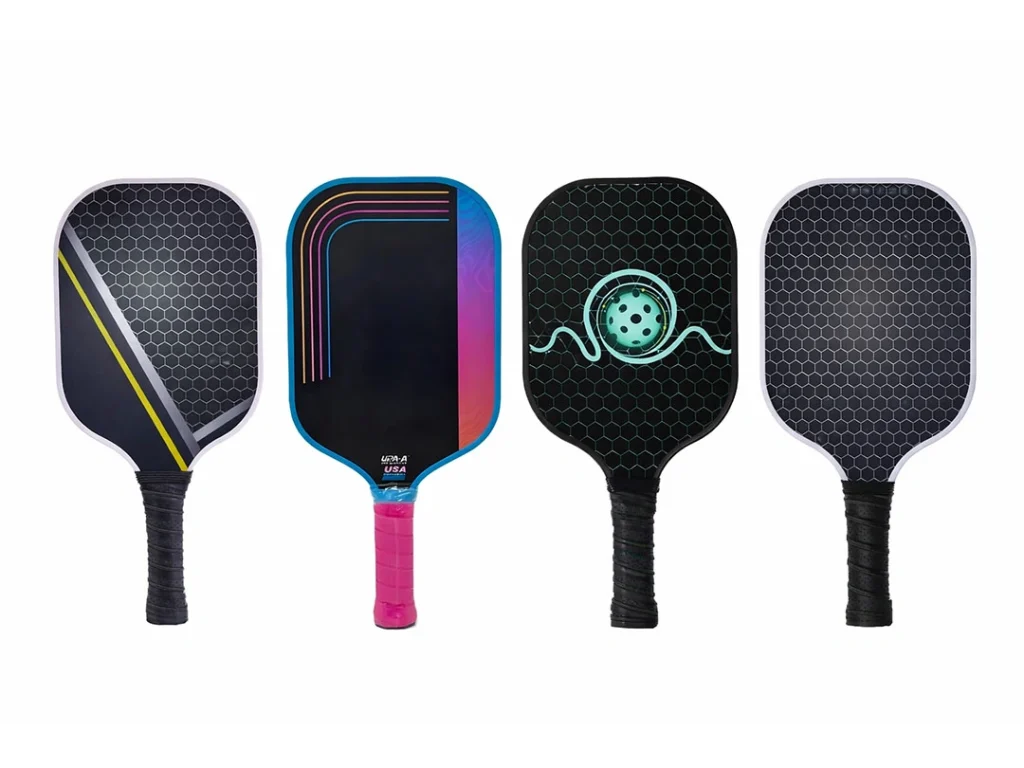
Once a player outgrows the “trampoline effect” of fiberglass and demands greater control and spin performance, they are ready for the Cold Press Carbon Fiber UD/3K (Product 1.2), NexaPaddle’s intermediate pickleball paddles tier. By sourcing both tiers through NexaPaddle, brands can ensure consistent handle sizing, weight distribution, and brand aesthetic—seamlessly transitioning the customer to a higher-ticket item and preserving 50%+ OEM margins rather than ceding the sale to a competitor.
Frequently Asked Questions
What is the minimum order quantity (MOQ) for custom beginner paddles?
For the Cold Press Fiberglass UV (Product 1.1) using standard shapes, the MOQ is 300 pieces. This threshold allows buyers to validate a new private label design, enter a new retail channel, or launch an Amazon FBA SKU with a manageable upfront capital commitment.
Do entry-level paddles need USAPA certification?
Recreational play does not require certified paddles, but USAPA approval functions as a critical trust signal at retail and is a prerequisite for any official tournament or facility that enforces equipment standards. For any serious retail SKU launch, buyers should budget $500–$1,200 for certification testing. NexaPaddle facilitates this process for all OEM buyers.
How does cold press construction compare to thermoformed for the beginner market?
Cold press is the correct technology for the $50–$100 price tier. It eliminates tooling mold fees for standard shapes, reduces per-unit cost, and produces the “trampoline effect” that maximizes satisfaction among recreational players. Thermoforming is reserved for advanced-tier SKUs seeking maximum power and raw carbon performance at the $150+ price point.
Can NexaPaddle supply complete bundle sets (paddles + balls + bag)?
Yes. NexaPaddle manufactures custom pickleballs (MOQ 200), branded carrying bags, and accessories including edge tape and carbon erasers (MOQ 100). Buyers can source a fully coordinated bundle SKU under their own brand, ready for retail shelving or FBA prep, from a single supplier.
How long does it take to go from approved design to landed inventory?
For cold press fiberglass paddles, bulk production typically runs 30–45 days post-sample approval. Sea freight to U.S. ports adds 18–25 days. Air freight is available for time-sensitive orders. First-time OEM buyers should plan a minimum 75–90 day lead time from order confirmation.
“First-time OEM buyers who plan for a 90-day lead time—sample approval through landed inventory—consistently avoid the stockout penalties that erode launch-window margins. Build the timeline into your purchase order, not your contingency plan.”
Conclusion
The $205.9 million beginner segment is not a niche—it is the largest single price tier in the pickleball equipment market, and it is growing. With the right OEM partner, the economics are straightforward: 300-piece MOQs, 53%–65%+ gross margins, USAPA certification support, and bundle manufacturing under one roof.
Evaluate NexaPaddle’s fiberglass series for your product line. Whether you’re launching a new brand, expanding an existing SKU library, or building out a complete good-better-best product ladder, our cold press manufacturing program is designed to get you to market efficiently.
Contact NexaPaddle to request a sample of the Cold Press Fiberglass UV or discuss a custom OEM program tailored to your channel requirements.
References
The Business Research Company. (Dec 2025). Global Pickleball Market Report 2025. Market valued at $1.45B (2024), projected to reach $3.07B by 2029 at 16.1% CAGR.
Global Market Insights. (April 2026). Pickleball Equipment Market Size & Share Analysis. Equipment market $480.6M (2025); paddles 49.7%; low-price tier 43% share ($205.9M).
NexaPaddle OEM Pricing & Market Reference Guide. (2026). Paddle market projected $327M by 2030.
Sports & Fitness Industry Association (SFIA). (March 2026). 2025 Pickleball Participation Report. 24.3M U.S. players; +479% growth 2020–2025.