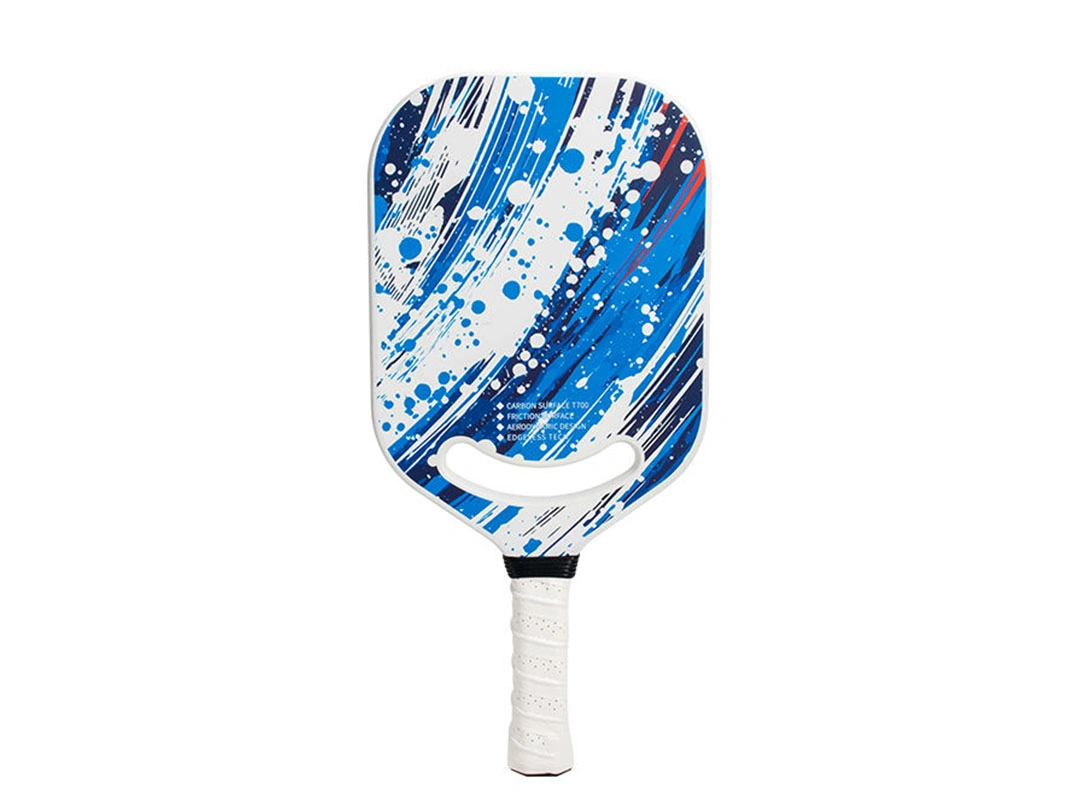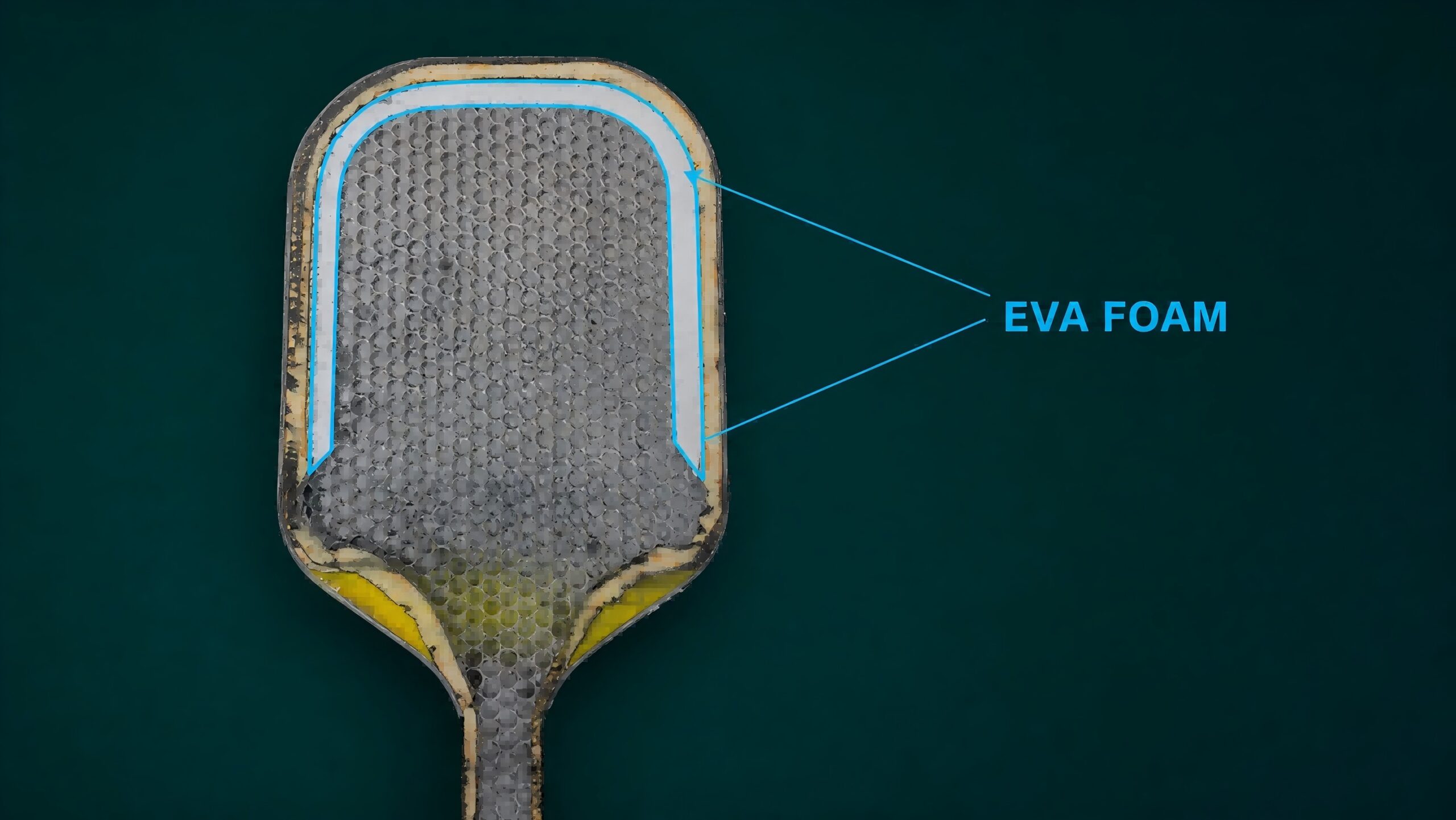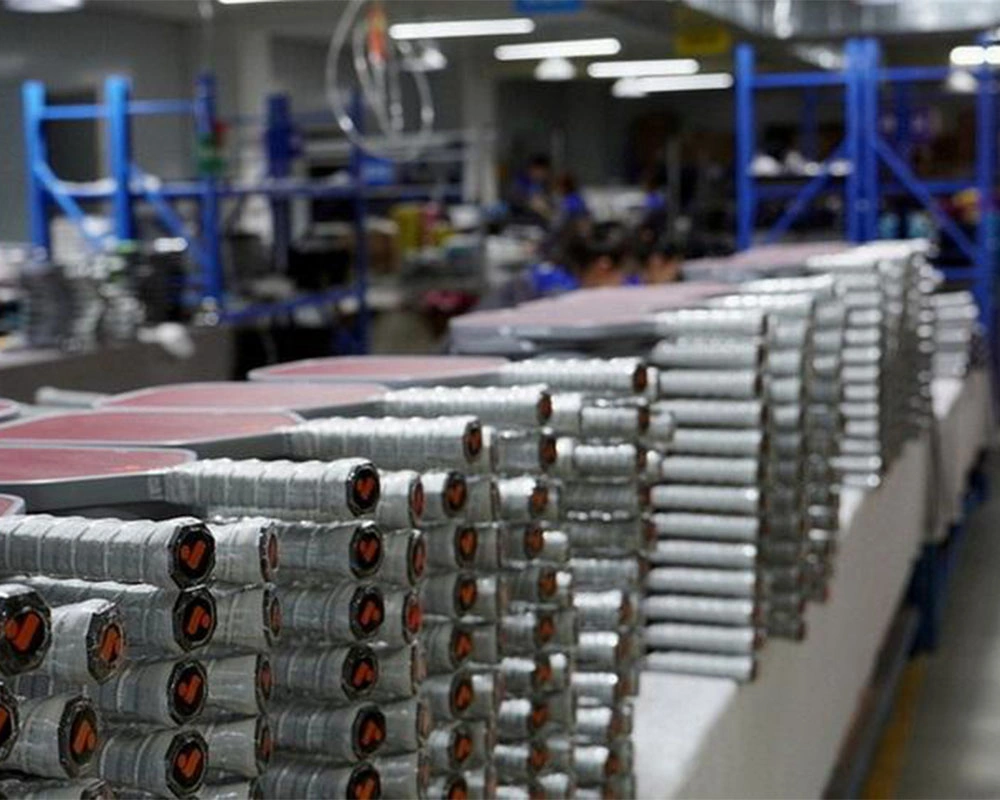
Search “graphite pickleball paddles” today and you’ll find a lot of content that hasn’t caught up with the market. The term still pulls significant search volume — but the buyers typing it are increasingly asking a different question than they were five years ago. They’re not just looking for a graphite paddle to buy. They want to know whether graphite still matters — as a product category, as a sourcing decision, as a business bet.
That’s the right question to ask in 2026. Graphite was the premium material of choice from roughly 2015 through 2020. Today, it occupies a different position in the product hierarchy — one that’s commercially viable but strategically distinct from where the growth is happening. If you’re building or scaling a pickleball paddle line, understanding exactly where graphite sits — and where carbon fiber has taken over — is the difference between a well-structured product ladder and a portfolio that’s chasing a market that moved on.
This article cuts through the terminology confusion, maps the material evolution with market data, and gives B2B buyers a clear framework for how to think about both graphite および composite pickleball paddles in the context of a 2026 product strategy.
What Are Graphite Pickleball Paddles, Really?
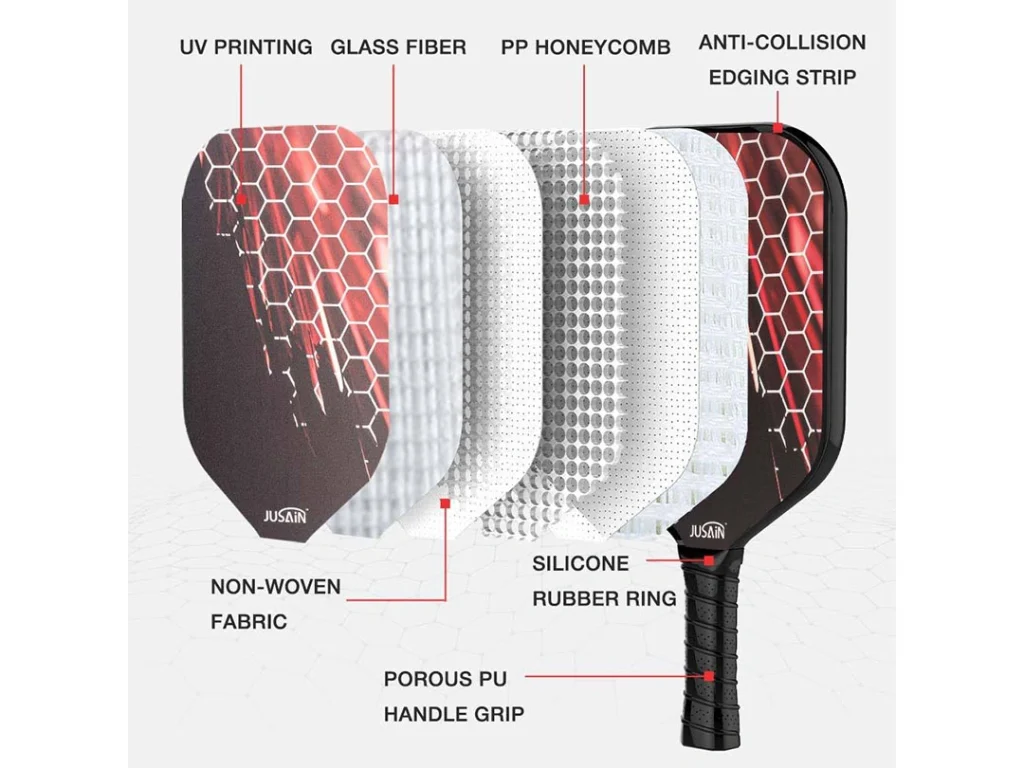
The word “graphite” gets applied loosely in the paddle industry, and that looseness has created genuine confusion for buyers at every level of the supply chain.
At the material science level, graphite in paddle construction refers to a thin crystalline carbon layer — typically a graphite coating or film — applied over a paddle face that is predominantly fiberglass. Graphite is a layered crystalline form of carbon with useful surface hardness and a naturally lubricous feel, but it lacks the tensile architecture of woven carbon fiber. In paddle applications, it primarily contributes surface stiffness to what is otherwise a fiberglass construction.
This is not the same as woven carbon fiber sheets, where continuous carbon filaments are bound with resin to form a structural face material. The distinction matters enormously for performance and for how you position a SKU.
A Brief History: Graphite’s Rise and Repositioning
From 2015 to roughly 2020, graphite-face paddles were the upgrade path. A recreational player starting with a basic aluminum or wood paddle would graduate to a “graphite paddle” as their first real investment in the sport — and that positioning was legitimate at the time. Carbon fiber paddles existed but were priced for professionals and serious amateurs, typically $180–$220+.
The retail channel reinforced this by marketing “graphite” as shorthand for premium, even when the construction was primarily fiberglass with a nominal graphite treatment. Some brands — particularly in the mass-market and entry-level segments — used the term broadly to cover anything that wasn’t straight fiberglass, a practice that persists today.
The result: if you search “graphite pickleball paddle” in 2026, you’ll find products ranging from $30 no-name paddles to mid-range paddles from established brands — but you won’t find elite-tier performance paddles. That tier has moved to carbon fiber.
Graphite vs. Composite vs. Carbon Fiber: Clearing the Terminology Confusion
These three terms appear constantly in product listings, buyer conversations, and sourcing briefs — and they’re not interchangeable. Here’s the hierarchy as it actually exists in 2026:
Material Terminology Table
| Term | フェイスの構造 | コア | 時代 / 市場ポジション | 価格帯(小売) |
|---|---|---|---|---|
| 複合素材 | 繊維強化プラスチックのフェイス + ポリマーコア | PPハニカム | レガシー中級の用語(2010年代) | $40–$100 |
| グラファイト | 繊維強化プラスチック基材に薄いカーボンコーティング | PPハニカムまたはノメックス | 入門から中級、レクリエーション用 | $50–$130 |
| カーボンファイバー(コールドプレス) | 編成UDまたは3Kカーボンファイバーシート、コールドプレスボンディング | PPハニカム | 現在の中級、強い価値 | $60–$150 |
| カーボンファイバー(サーモフォームT700) | T700グレードの編成カーボン、ホットプレス成形 | PPハニカムまたは高度なコア | 現在のプレミアムからパフォーマンス | $100–$180 |
| カーボンファイバー(T800 / フォージド) | T800カーボン + 特殊なテクスチャ / コア | ポリマーメッシュまたは高密度フォーム | フラッグシップのパフォーマンス | $160–$250+ |
この用語は 「複合素材のピックルボールパドル」 も進化しています。厳密に言えば、複合素材とはすべての多材料構造を指し、技術的には今日は市場に出回っているほとんどのパドルが含まれます。しかし、一般的な小売用語としては、通常、$50–$100の範囲でポリマーコアを持つ繊維強化プラスチックフェイスのパドルを指すために使用されます。複合素材のピックルボールパドルは、初心者の木製モデルから一歩上のアクセス可能なステップとして位置付けられています。
パフォーマンス比較表
| 属性 | グラファイト | 複合素材(繊維強化プラスチック) | カーボンファイバー T700 |
|---|---|---|---|
| 重量 | 220–250g | 225–255g | 210–240g |
| パワートランスファー | 中程度 | 中程度から高い | 高い |
| スピンポテンシャル | 低から中程度 | 中程度 | 高い(繊維強化プラスチックより約30%多い) |
| タッチ / フィール | しっかりとした、適度なフィードバック | 柔らかく、許容性がある | シャキッとした反応 |
| 耐久性 | 良好 | 良好 | 優れている |
| 価格帯 | 入門から中級 | 入門から中級 | 中級からプレミアム |
| 理想的なプレイヤープロフィール | 初心者、レクリエーション | 初心者、中級 | 中級から上級 |
市場が示した:カーボンファイバーの台頭
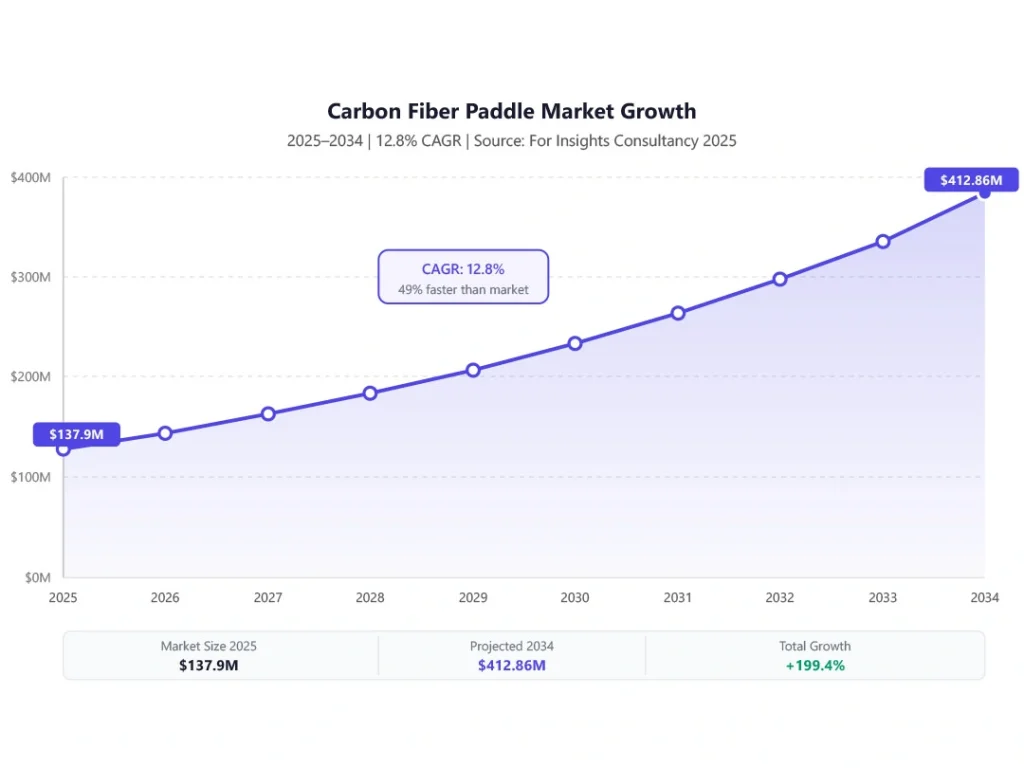
データはあいまいではありません。カーボンファイバーパドルセグメントは JOOLA Perseusの成長率は 12.8% CAGR と評価されており、2025年の市場報告書によると、プロジェクションの最終点は カーボンファイバーパドル市場はである。広範なピックルボールパドル市場は、2026年から2032年まで 8.6%のCAGRで成長しています。 (QY Research). カーボンファイバーは全体の市場よりも49%早く成長しています。
その差は縮まっていません — 拡大しています。
T700価格圧縮効果
カーボンファイバーが中堅市場の素材になった話は、技術が下に浸透する典型的なケースです。2021年から2022年にかけて、T700グレードのカーボンファイバーラケットは、$180〜$250のプレミアム提案でした。材料費は現実的で、製造の複雑さも現実的で、消費者の理解はまだそこにありませんでした。
2025年から2026年にかけて、その計算はすべての面で変わりました:
- 製造スケール: 中国のラケットメーカーからの高ボリュームは、T700の冷圧製造コストを大幅に引き下げました。
- 消費者のリテラシー: ピクルボールの3年間のバイラル成長は、T700が何を意味するか知っているバイヤーベースを生み出しました。
- ブランドレベルのコミットメント: 大手ブランドはカーボンに基づいてポジショニングを行い、カテゴリのノーマライゼーションを加速させました。
信号となるイベントは、2026年2月のSelkirkのSLK Geo発売であり — T700カーボンファイバーラケットが $100小売です。ピクルボール機器で最も信頼できる名前の一つであるSelkirkが、T700を3桁で提示すると、消費者の期待がこのカテゴリ全体でリセットされます。
新しい風景を定義するブランドの動き
ブランドの動きは微妙ではありません。戦略的なコミットメントです:
- Perseus Pro IV: パフォーマンスライン全体でCFS(カーボン摩擦表面)技術を導入 — スピンを最大化するために設計された粗いテクスチャのカーボン面はカテゴリの差別化要因となっています。
- TruFoam Genesis: 100% T700トーレイカーボンファイバーに基づいて全体のブランドアイデンティティを構築しています。他の素材は提供していません。
- Vanguardシリーズ: 新しいSLKラインナップ(Geo、Dauntless、Valkyrie)は、$200以下の価格帯で完全にカーボンファイバーに移行し、グラファイトは実質的にパフォーマンスオファリングからフェーズアウトされています。
- フランクリン: FSツアーは、パフォーマンスセグメントの顔素材としてカーボンファイバーを選択します。
これらのブランドの動きから欠けていることに注目してください:グラファイトです。これらのブランドはグラファイトの革新には投資しておらず、カーボングレード、表面テクスチャ、コア技術、熱成形プロセスに投資しています。
その結果、グラファイトは $50〜$120のエントリーおよびレクリエーションブランケットに収まりました。 — 正当な商業ボリュームを持つティアですが、パフォーマンスティアではありません。このセグメンテーションを理解することが重要です — なぜならそれは偶然ではありません。素材のパフォーマンスの上限がどこにあるかを反映しています。
2026年のB2Bバイヤーにとっての意味
ブランドオーナー、Amazon FBAセラー、ホールセール業者が2026年の商品ラインを構築または更新する際に重要なフレームワークは次のとおりです:
グラファイトは死んではいません。再配置されました。
それを正しく使用すれば戦略的な資産となります。まだプレミアムオファーとして扱っている場合は負債となります。
2026年におけるグラファイトの商業的メリット
グラファイトラケットは、実際に価値のある特定の商業機能を満たしています:
- ファネルの最上部の獲得SKU: $55〜$85のグラファイトまたは複合材ラケットは、まだ違いを知らない新規プレイヤーにとって適切なエントリーポイントです。低価格で顧客を獲得できます。
- レクリエーションおよび機関のボリューム: 公園およびレクリエーションプログラム、リゾートレンタル、初心者クリニック、企業チームビルディングイベント — これらのチャンネルはバルクで購入し、T700のパフォーマンスは必要ありません。複合ピクルボールラケットがこのセグメントを支配しています。
- アップグレードパス: あなたのブランドからグラファイトラケットを購入し、ポジティブな体験をしたプレイヤーは、12〜18か月以内にT700または熱成形SKUにアップグレードする可能性が高いです。このライフタイムバリュー計算はブランド構築者にとって重要です。
2026年のSKUアーキテクチャ推奨
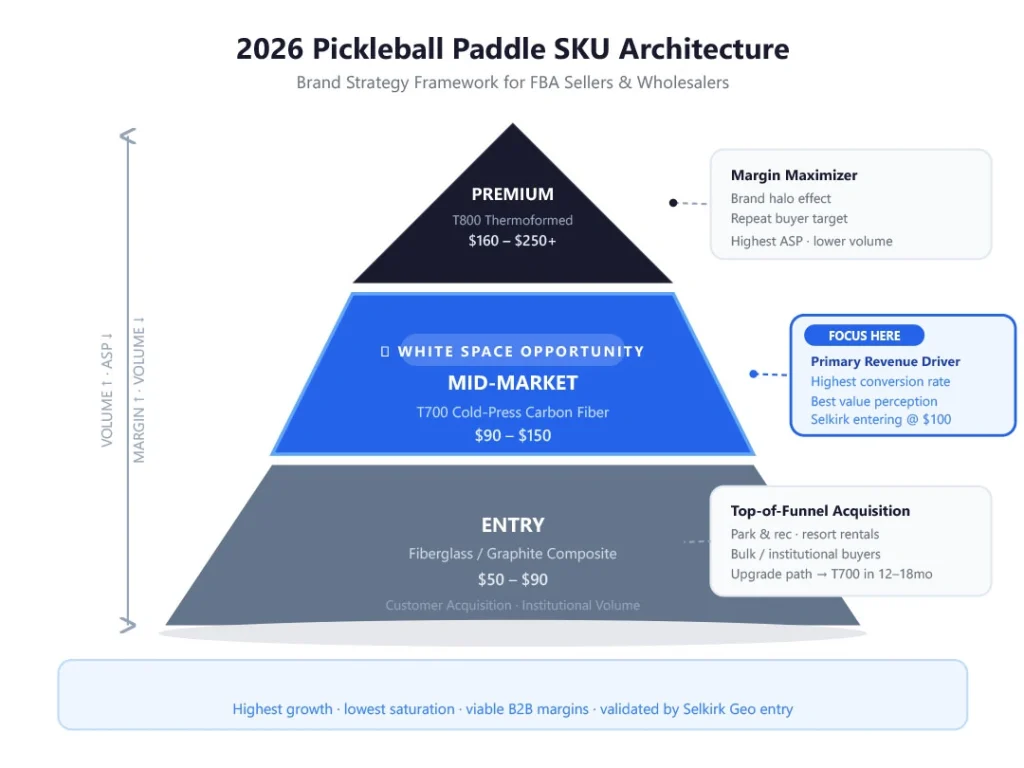
2026年に勝つブランドは、3層の製品階段で運営しています。フレームワークは以下の通りです:
| ティア | 材料 | 価格帯(小売) | 戦略的役割 |
|---|---|---|---|
| 入口 | 繊維強化プラスチックまたはグラファイト複合 | $50〜$90 | 顧客獲得、バルク/機関、ファネルの最上部 |
| 中 | T700冷圧カーボンファイバー | $90–$150で小売されています | 主な収益ドライバー、最高の転換率、最も良い価値認識 |
| プレミアム | T800熱成形カーボンファイバー | $160–$250+ | マージン最大化、ブランドのハロー、リピートバイヤーターゲット |
ホワイトスペース:中堅市場T700
特に明記する価値のあるセグメントがあるとすれば、それは $80–$130 T700カーボンファイバーブラケット現在、市場で最も成長が期待され、飽和状態にないゾーンです:
- Selkirkが参加しており ($100 Geo)、需要があることを裏付けています
- ほとんどの確立されたブランドはまだ$150以上に集中しています
- T700の$130以下の価格での消費者の支払意欲は高く、成長しています
- ボリュームにおけるマージンプロファイルはB2Bにとって依然として実行可能です
FBAセラーやブランドオーナーがT700コールドプレス製品をまだ調達していない場合、2026年にはここに注目すべきです。グラファイトではなく、サーモフォームされたフラッグシップでもなく、ミッドマーケットのT700です。
NexaPaddleのマテリアルラダー:複合素材からT700パフォーマンスへの移行
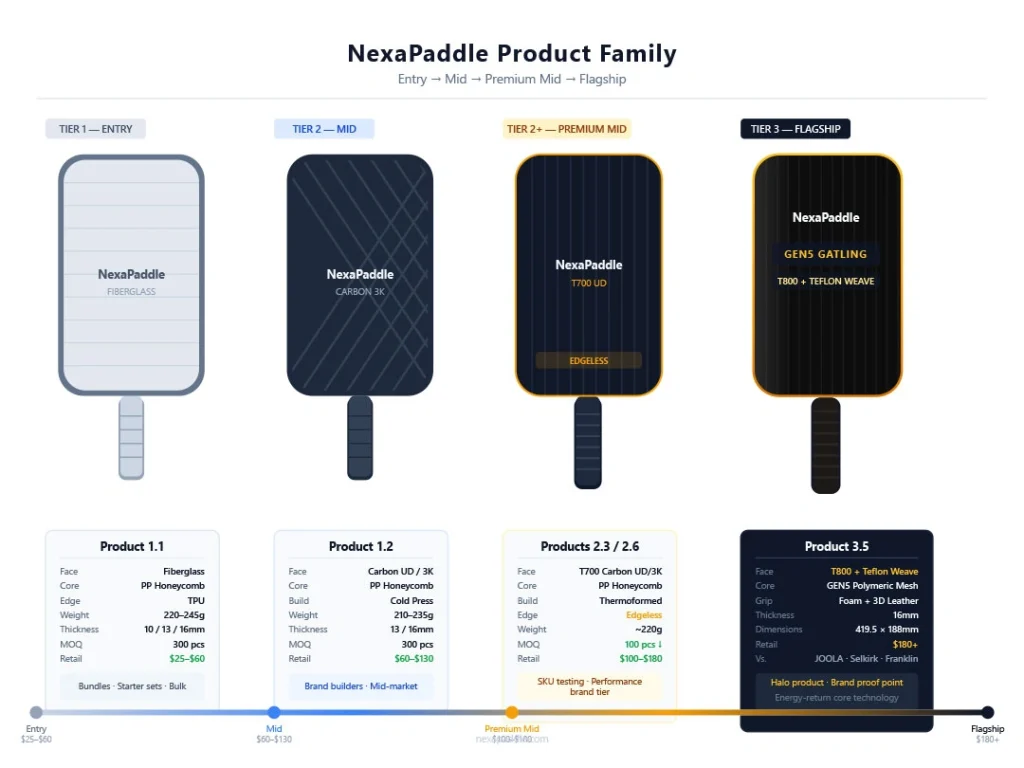
NexaPaddleの製品カタログは、上記のティア構造に直接対応しています。エントリーからフラッグシップまでのラインアップは次のようになります:
ティア 1 — エントリー:コールドプレスガラスファイバー (製品1.1)
ボリュームでの複合ピクルボールパドルの基礎SKU:
- フェイス: ガラスファイバー | コア: PPハニカム | エッジ: TPU
- 厚さ: 10mm / 13mm / 16mm | 重量: 220–245g
- 寸法: 400×195mm (コントロール) または 417×188mm (パワー)
- 小売レンジ: $25–$60 | MOQ: 300 pcs
これはブランドバンドル、スターターセット、エントリーレベルの小売リストに適した機関向けバルクSKUです。T700パドルとは競合しておらず、異なるバイヤーを捉えています。TPUエッジガードは、高頻度使用環境で重要な耐久性を追加します。
ティア 2 — ミッド:コールドプレスカーボンファイバー (製品1.2)
成長中のミッドマーケットをターゲットとするブランドビルダーのための商業的な甘美なスポット:
- フェイス: カーボンファイバー (UDまたは3K織) | コア: PPハニカム
- 厚さ: 13mm / 16mm | 重量: 210–235g
- 寸法: 400×195mm または 417×188mm (1.1と同じ工具)
- 小売レンジ: $60–$130 | MOQ: 300 pcs
これはフラッグシップ生産のミニマムなしでT700/カーボンファイバーカテゴリに入り込むブランド向けの製品です。UD(単方向)オプションはパワーとボールスピードを強調し、3K織は消費者に認識されるより伝統的なカーボン美学を提供します。$60–$130の小売価格でスタンダードなコールドプレス構造であり、ミッドマーケットのボリュームがここに存在します。
→ NexaPaddleの カーボンファイバーピクルボールパドル フルコールドプレス仕様とカスタマイズオプションについてはご覧ください。
ティア 2+ — プレミアムミッド:サーモフォーマードT700 (製品2.3 / 2.6)
サーモフォーマードティアは、構造メソッドが製品を意味深く区別する場所です:
サーモフォーマードT700パワー (製品2.3 / モールド#3)
- フェイス: カーボンファイバーUD/3KまたはT700 | コア: PPハニカム
- 構造: エッジレス、サーモフォーマード
- 寸法: 417×188mm | 厚さ: 13mm / 16mm | 重量: ~220g
- 小売レンジ: $100–$180 | MOQ: 100 pcs
ホットプレス鍛造T700 (製品2.6 / モールド#7)
- フェイス: T700カーボンファイバー (UD/3K) | ホットプレス鍛造プロセス
- 寸法: 420×185mm | ハンドル: 145mm延長
- 重量: 220–235g
- 小売レンジ: $120–$180 | MOQ: 100 pcs
サーモフォーミング(ホットプレス)への移行は、フェイスとコアの間により密で均一な結合を生み出します —これは、高性能テニスラケットをレクリエーション用のものから分ける同じ原則です。モールド#3のエッジレス構造は、調査を行った消費者には目に見える製品の差別化要因です。 MOQ(100 pcs vs. 300 pcs for cold press)の低さは、新しいSKUをテストするブランドビルダーにとって大きな利点です。
→ NexaPaddleの完全な仕様とカスタマイズオプション サーモフォームピクルボールパドル ページを訪れてください。
ティア3 - フラグシップ: GEN5 ガトリング T800 (製品 3.5)
NexaPaddle ラインナップのハロープロダクト - T800 カーボンおよび次世代コア技術を基盤に構築:
- フェイス: T800 カーボンファイバー + テフロン編み表面テクスチャ
- コア: GEN5 ポリマリーエネルギーリターンメッシュ (独自仕様)
- グリップ: フォームグリップ + 3D レザーオーバーラップ
- 寸法: 419.5×188mm | 厚さ: 16mm
T800 カーボンファイバーは T700 よりも高い引張弾性率を持ち、単位重さあたりの剛性が向上し、接触時のエネルギーリターンがより正確になります。テフロン編みの表面テクスチャは、トップスピンショットでボールのグリップを最大化するように設計されており、USAPA の表面粗さガイドラインに違反しないように粗い表面を作成しません。GEN5 ポリマリックメッシュコアは、従来のPPハニカムを超えた重要なステップです - エネルギー吸収ではなくエネルギーリターンです。
これは、JOOLA、Selkirk Prime、およびFranklinのフラグシップラインに対抗するSKUです。それはブランドハロープロダクトであり、製品開発能力の証明として機能し、ボリュームドライバーではありません。
よくある質問
Are graphite pickleball paddles good for beginners?
Yes — with the right expectations set. A graphite pickleball paddle in the $50–$90 range offers a firm face with reasonable control, which is appropriate for players learning court positioning and shot mechanics. They’re better than wood or aluminum, and the price point keeps initial investment low. What they don’t offer is the spin potential and power transfer of T700 carbon fiber — but most beginners aren’t ready to use that performance anyway. As a first paddle or an entry-level SKU for a brand, graphite serves a real purpose.
What is the difference between graphite and composite pickleball paddles?
The terms are related but distinct. Composite pickleball paddles typically refer to fiberglass-face paddles with a polymer honeycomb core — the construction is straightforward and optimized for affordability and durability. Graphite paddles add a thin crystalline carbon coating or layer to a largely fiberglass construction, contributing added stiffness and a harder surface feel. In practice, both fall in the entry-to-mid price tier ($40–$130), and both are a step down from true woven carbon fiber in terms of spin potential and performance ceiling. Retailers sometimes use these terms interchangeably, which adds to the confusion, but from a sourcing and specification standpoint they represent distinct constructions.
Is carbon fiber better than graphite for pickleball?
For performance play, yes — unambiguously. Woven carbon fiber (particularly T700-grade) delivers meaningfully higher spin generation (~30% more than fiberglass/graphite), better power transfer, and a more consistent face stiffness due to the structural integrity of the woven filament sheets. At competitive play levels from 3.5+ on up, the performance gap is real and measurable. The price gap has narrowed substantially in 2025–2026 — T700 paddles now start around $80–$100 at retail — which removes the historical justification for choosing graphite over carbon fiber for performance-oriented buyers. For recreational play and bulk institutional use, graphite and composite paddles still make economic sense.
What is T700 carbon fiber and why does it matter?
T700 is a specific grade designation from Toray Industries — the Japanese materials manufacturer that dominates the high-performance carbon fiber supply chain. The “T” series denotes tensile strength: T700 delivers approximately 4,900 MPa の引張強度, making it substantially stronger and stiffer than standard carbon fiber variants used in entry-level applications. In paddle terms, T700 means a face that can be thinner while maintaining stiffness, which allows manufacturers to optimize weight distribution and power transfer simultaneously. T700 became the de facto standard for performance pickleball paddles from 2022 onward. When a brand like CRBN says “100% Toray T700,” that’s a specific, verifiable material claim — not marketing language.
Can I still sell graphite paddles profitably in 2026?
Absolutely — if you position them correctly. The entry-level recreational segment is not small: beginner players, institutional buyers (gyms, parks, resorts), and bulk gifting channels all represent real volume for composite and graphite paddles. The key is not trying to compete on performance against T700 carbon fiber products, and not pricing graphite SKUs above ~$90 where consumer expectations shift. The most effective strategy is using a graphite or composite SKU as a customer acquisition vehicle — a $60–$75 branded paddle that performs appropriately for its price point and creates a buyer relationship you can upgrade. Where brands get into trouble is when graphite is their only SKU, or when it’s priced and marketed as a performance product. Within the right tier, graphite remains viable and commercially healthy.
結論: グラファイトはその時代に応えた - 今は戦略的に利用するべき
グラファイトはピクルボール市場に対して正確にその役割を果たしました: 爆発的な成長段階において、スポーツに"プレミアム"アクセス可能なエントリーポイントを提供しました。数百万のプレイヤーに、正当化できる価格でパフォーマンスパドルを紹介しました。それはスポーツの発展に対する正当な貢献です。
2026年には、グラファイトの商業的役割が明確になりました。もはやプレミアムTierではなく、カーボンファイバーがそれに取って代わります。2025年には1.379億ドルのカーボンファイバーパドルセグメントが、年率12.8%で成長し続けており、それは一時的なものではありません。それは、材料コストの圧縮、製造革新、業界の主要プレイヤーからのブランドレベルのコミットメントによって引き起こされた構造的な市場シフトです。
B2B バイヤーが製品ラインを構築するための戦略的な問いは、 グラファイトかカーボンファイバーか。 それは、 両者を一貫した製品アーキテクチャでどのように使用するかです。:
- グラファイトと複合素材をエントリーティアで顧客を獲得し、制度的ボリュームにサービス
- T700 コールドプレスをミッドティアで最高成長セグメントを取り込む
- T700/T800 熱成形をプレミアムティアでマージンとブランドポジショニングを最大化する
これが2026年のプレイブックです。この戦略を実行するブランドは、持続可能なポジションを構築しています。この素材の進化を無視するブランドは、出口がないまま平均販売価格が圧縮されるのを見ています。
2026年全素材スペクトラムで製品ラインを構築する準備はできていますか? NexaPaddleは、300ピースのMOQのコールドプレスガラスファイバーおよび複合ピクルボールパドルから、100ピースのMOQの熱成形T700/T800フラグシップパドルまで、すべてのティアで製造しています。完全なOEM/ODMカスタマイズが可能です。
NexaPaddleにお問い合わせ あなたの2026年の調達戦略についてお話ししましょう。
脚注
T700 カーボンファイバーのスピン性能比較は、標準的なガラスファイバー構造に対する表面テクスチャと剛性特性に基づいており、NexaPaddleの製品開発仕様に言及され、独立したパドルレビュー出版物全体で広く報告されています。
インサイトコンサルタンシー向け、 カーボンピクルボールパドル市場の規模、トレンド分析研究報告, 2025年10月。市場価値: USD $137.9M (2025)、予測 USD $412.86M (2034)、CAGR 12.8%。
QYリサーチ、 グローバルピクルボールパドル市場報告書, 2026年版。全体市場CAGR: 8.6% (2026–2032)。
Selkirk Sport プレスリリース, “Selkirk Releases All-New SLK Lineup,” 2026年2月17日; 確認された報道は The Dink Pickleball, 2026年2月24日。