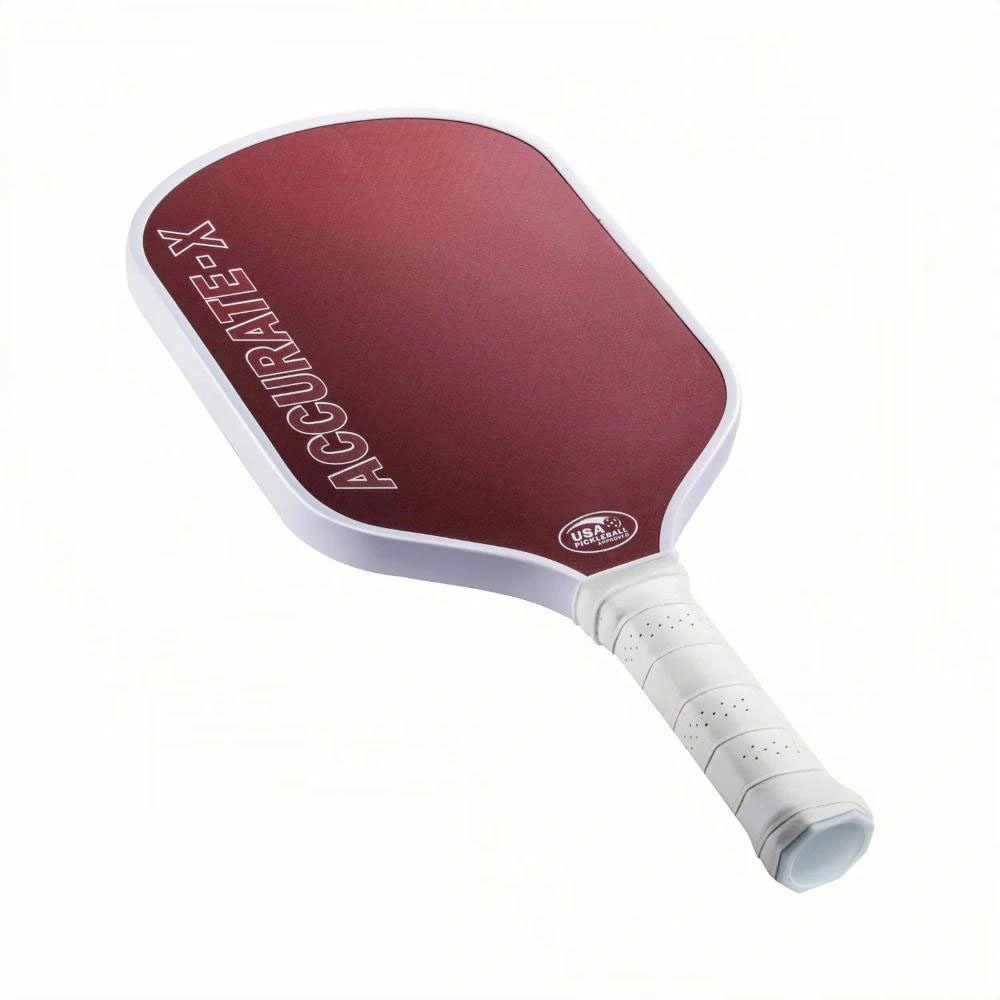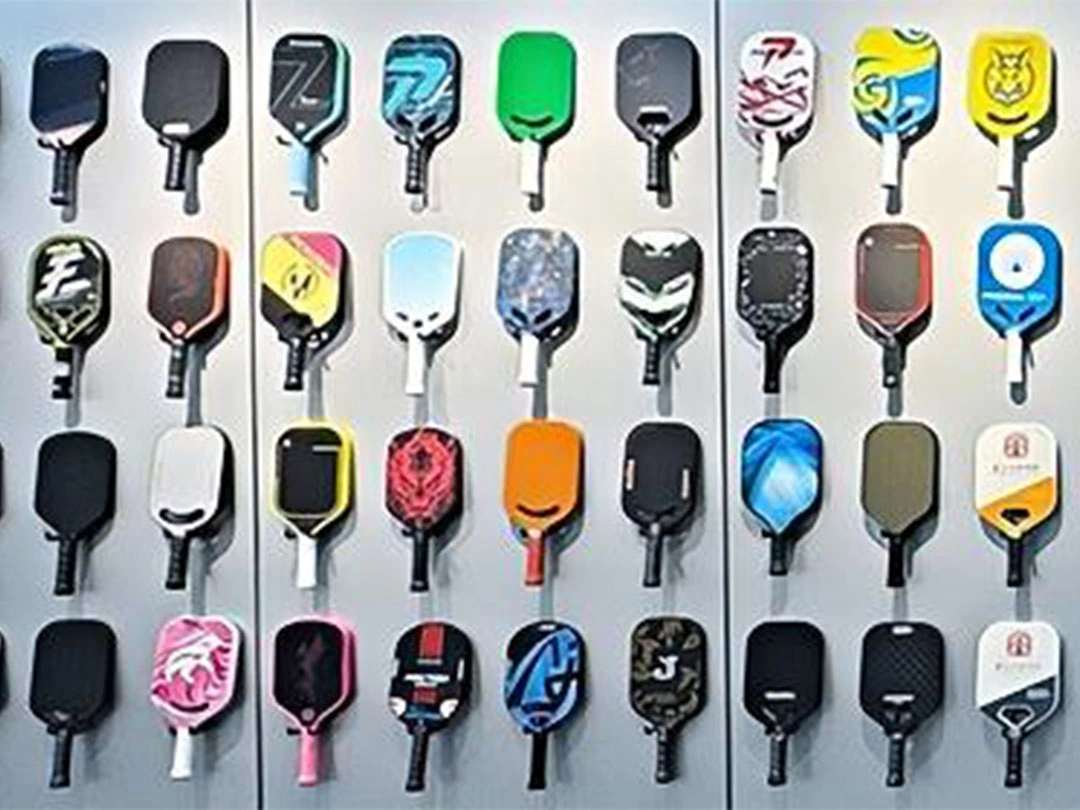
The Premium Paddle Market: Cracking the Code of Industry Giants
The premium pickleball market is experiencing explosive growth. Valued in the hundreds of millions, the industry is on track to reach a staggering $327 million by 2030, driven by an aggressive 8.6% compound annual growth rate (CAGR). As the sport transitions from casual backyard games to highly competitive, professional-tier tournaments, player expectations have shifted dramatically.
Today, the top pickleball paddle brands—household names like Selkirk, JOOLA, and CRBN—are routinely commanding prices between $200 and $280 per paddle. Consumers willingly pay these premium prices under the assumption that these industry titans possess exclusive, highly guarded technological secrets that justify the cost.
However, for B2B brand owners, Amazon FBA sellers, and ambitious entrepreneurs looking to enter this lucrative space, there is a hidden truth that disrupts this narrative: the technology behind these flagship paddles is not proprietary magic. The high-performance materials, the advanced core structures, and the aerospace-grade manufacturing techniques are entirely accessible through the right OEM partner.
Understanding exactly what makes the best pickleball paddles function at a premium level is the first step to manufacturing your own. You do not need to spend millions on R&D to launch a paddle that rivals a JOOLA Perseus or a Selkirk Vanguard. By deconstructing the materials, analyzing the core technologies, and partnering with a specialized manufacturer, you can deliver the exact same high-end specifications to your target audience at a fraction of the retail cost — all while maintaining incredibly healthy profit margins.
What Defines a “Top Brand” Paddle? (Deconstructing the Premium)
To successfully compete with legacy brands, you must first understand the structural anatomy of a premium paddle. The modern high-end paddle is a marvel of composite engineering, relying on five critical pillars of construction and compliance.
Face Materials: The Friction Frontier
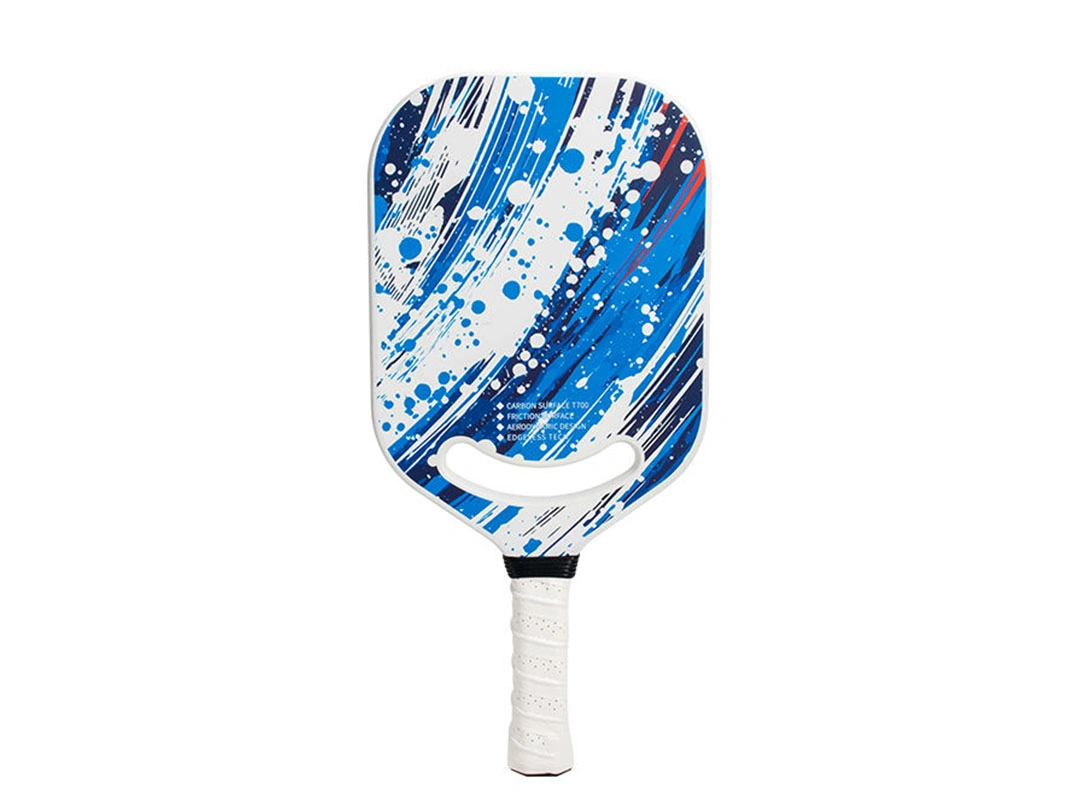
The surface of a paddle dictates spin generation, dwell time, and overall control. In the current market, トーレイ T700 カーボンファイバー has become the absolute baseline for competition-grade paddles. Seen on flagship models like the Selkirk Vanguard, the JOOLA Perseus, and the Vatic Pro V-SOL, T700 offers a perfect balance of stiffness and texture. For brands looking to source these materials, exploring specialized カーボンファイバーのピックルボールパドル is the ideal starting point.
But the industry is already moving beyond the baseline. The next frontier involves T800 carbon woven with Titanium thread — an aerospace-inspired composite that delivers maximum spin and power without sacrificing gritty surface texture for top-spin drives.
Furthermore, we are seeing the rise of Kevlar and Aramid hybrids. Paddles like the Six Zero Ruby utilize these fibers to create a distinctively “plush feel” that is physically impossible to achieve with raw carbon alone. Regardless of the material, authentic raw composite surfaces naturally generate upwards of 2,300 RPM以上のスピンを生成できます。 out of the box. In contrast, cheaper paddles rely on spray-on grit — a cost-cutting measure that degrades aggressively within months of standard play, ruining the paddle’s performance profile.

Core Technology: The Engine of the Paddle
If the face is the steering wheel, the core is the engine. The core structure determines energy return, sweet spot size, and acoustic profile. Gen 3熱成形ハニカム cores are still highly dominant in the premium segment, offering reliable consistency and excellent structural integrity.
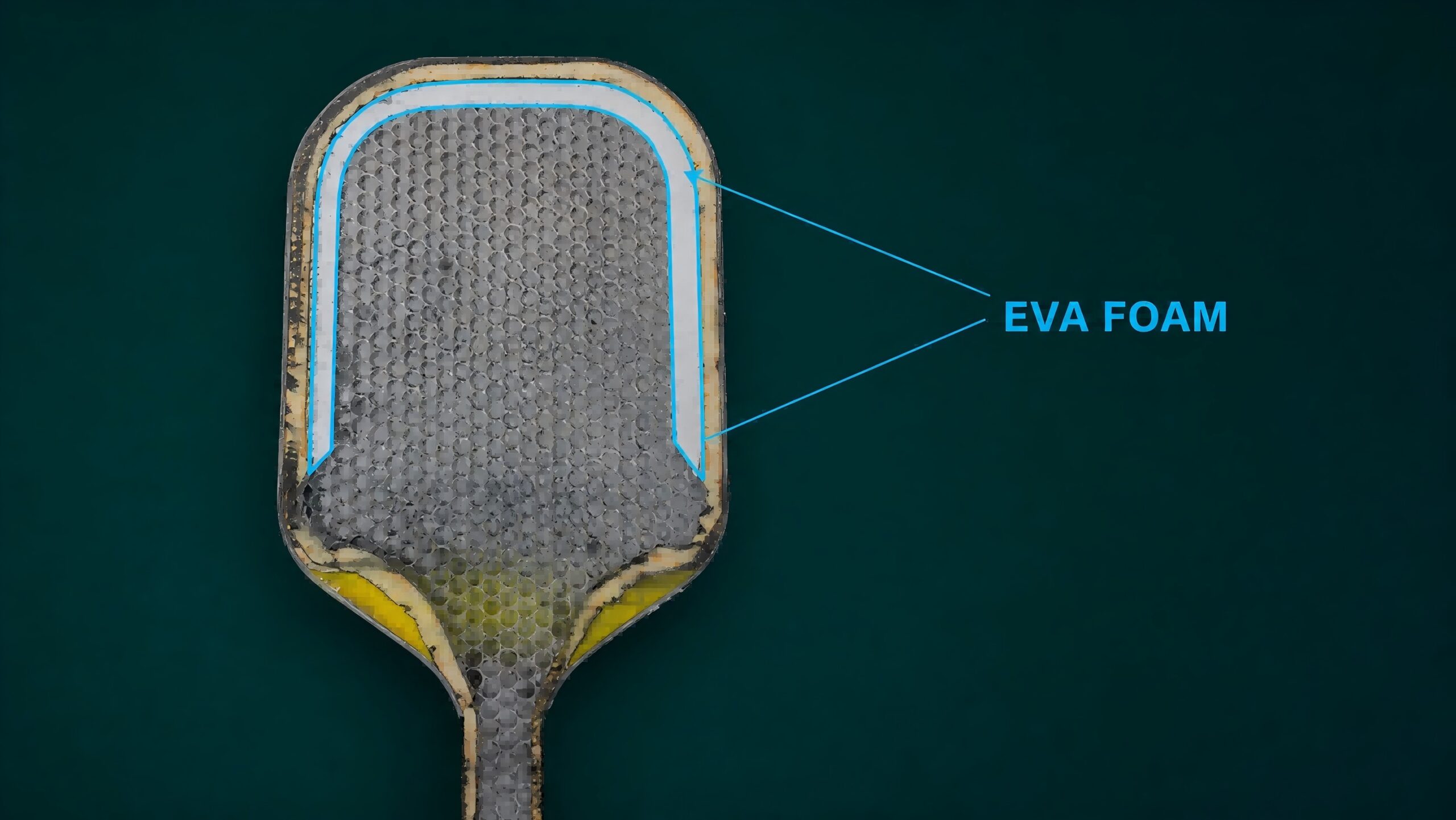
However, the vanguard of paddle engineering has introduced Gen 4 Foam Cores, utilizing Expanded Polypropylene (EPP) or Multi-Purpose Polypropylene (MPP). Seen in the Selkirk BoomCore and the CRBN TruFoam, solid foam is actively replacing traditional honeycomb in ultra-premium models. Foam completely eliminates the dreaded “core crush” issue that plagued early thermoformed models and significantly reduces tennis elbow. To build paddles with this architecture, partnering with a dedicated フォームコアピクルボールパドル 製造者は重要です。
フォームを超えて、業界は先駆的です GEN5 “ガトリング” ポリマーメッシュ コア — NexaPaddleのフラッグシップ技術 — 現在の規制ガイドラインの下で許可されている最大限のエネルギーリターンを提供するように設計されています。
製造プロセス:熱、圧力、ユニボディデザイン
コアとフェイスを結合する方法は、材料そのものと同じくらい重要です。 熱成形 2024年以降、プレミアム市場の43%を獲得しています。このプロセスは熱と圧力を適用して、パドルを単一のまとまりのあるユニットに成形します。
その結果は ユニボディ構造です。フェイスが単にコアに接着されている安価なコールドプレスパドルとは異なります。 熱成形ピクルボールパドル ハンドルを通る連続カーボンファイバーを特徴とします。この構造的連続性は、従来のホットプレスモデルと比較して、使用可能なスイートスポットを15-20%拡大します。
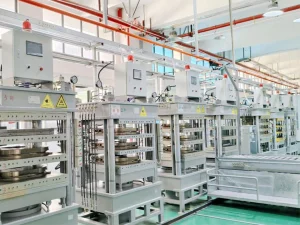
絶対的な耐久性を求めるために、 ホットプレス鍛造 はこれをさらに一歩進め、極端な大気圧と精密に機械加工された鋼の型を活用して、プロ仕様の耐久性でデラミネーションリスクゼロを実現します。
性能指標:マーケティングのバズワードを超えて
トップブランドは単に美的なものを販売するのではなく、測定可能な物理を販売します。ハイエンドパドルを設計する際、客観的なデータは、「究極のコントロール」や「大量のパワー」といった主観的な主張よりも重要です。
| 指標 | 定義 | プレミアムベンチマーク | その重要性 |
|---|---|---|---|
| ツイスト重量 | オフセンターヒットによるねじれへの抵抗 | 6.5+ | 高いツイストウェイトは、機能的スイートスポットを劇的に増加させ、手首トルクを減少させます。 |
| スイングウェイト | パドルが動いているときの重さの感覚 | 110–120 | キッチンラインでの手の速さを、ドライブでのプラウトスルーパワーとバランスさせます。 |
| 滞留時間 | フェイスにボールが留まっているミリ秒 | コアによって変動 | より長い滞留(ケブラー/フォームから)は、より多くのスピンの操作を可能にします。 |
| PBCoR | 復元係数(トランポリン効果) | < 0.44 (USAPAの制限) | トーナメントの出口速度テストに失敗せずに最大の力を確保します。 |
これらはエンジニアリング目標であり、マーケティングのバズワードではありません。プレミアムOEMパートナーは、これらの指標を正確に達成させるようにパドルを設計します。
USAPA認証:究極のゲートキーパー
トーナメントプレイで使用できないパドルには、上記の技術は重要ではありません。 USAPA認証 真剣なブランドの必須のパスポートです。2024年だけで、 1,713件の新規提出がありました。ただし、 1,225件が承認されました。 — これには、 476社が新たにこの分野に参入しました。 認証は、デザインごとに
$500から$1,200の間です。 標準的には 4〜6週間かかります。 さらに、2024-2025年のシーズンでは、新しいPBCoR基準 の厳格な施行による大規模な認証取り消しの波が見られました。ブランドは仕様について推測する余裕がなくなりました。コストのかかるリコールやブランドの損傷を避けるため、初日から根本的に準拠した設計が必要です。
これらのコンプライアンス基準を念頭に置いて、次のステップは、主要なブランドが実際にこれらの仕様にどのように対処しているか、そしてそれがあなた自身の製造の機会について何を示しているかを確認することです。
トップブランドはどのようにパドルを製造しているか:横並びの比較
プレミアム市場を真に解明するためには、トップブランドのフラッグシップモデルを世界クラスのOEMが生産できるものと横並びにしなければなりません。以下の表は、独占的なマーケティング用語を取り除き、基盤となる材料科学を明らかにします。
| 特長 | Selkirk Vanguard | JOOLA Perseus Pro IV | CRBN TruFoam Genesis | NexaPaddle OEM相当品 |
|---|---|---|---|---|
| フェイス | T700カーボン + AMPP | Carbon Friction Surface | Raw Carbon Fiber | T700/T800 Carbon Fiber (UD/3K) |
| コア | PureFoam BoomCore | Propulsion Honeycomb | TruFoam Solid | PP Honeycomb / GEN4 EPP Foam / GEN5 Gatling |
| プロセス | 熱成形 | Carbon-Forged | 熱成形 | Thermoformed / Hot Press Forged |
| エッジ | Foam-injected | Hyperfoam walls | エッジなし | Edgeless option available |
| 小売価格 | $200–$280 | $249–$280 | $238–$280 | You set the price |
| Available OEM? | ❌ No | ❌ No | ❌ No | ✅ Full OEM/ODM |

When you analyze this comparison, a striking reality emerges. Every brand utilizes bespoke naming conventions to make their technology sound exclusive. JOOLA calls their textured face a “Carbon Friction Surface.” CRBN calls it “Raw Carbon Fiber.” In the manufacturing world, both are using variations of high-quality T700 Toray carbon fiber to achieve their 2,000+ RPM spin rates.
The same principle applies to core structures. Selkirk’s heavily marketed “BoomCore” is, fundamentally, an advanced foam core. CRBN’s “TruFoam” is a solid foam core. NexaPaddle’s GEN4 EPP is an aerospace-grade foam core. The material science across these flagship models is functionally equivalent. The resins, polymers, and carbon weaves are sourced from the same advanced composite supply chains.
“Selkirk’s BoomCore is a foam core. NexaPaddle’s GEN4 EPP is a foam core. The material science is equivalent — the difference is the brand on the paddle.”
The primary difference between a $250 flagship paddle and a highly customized OEM paddle is not the physics of the product — it is the logo printed on the face and the millions of dollars spent on professional player sponsorships. As a brand owner, this table is your blueprint.
The OEM Advantage: Why You Don’t Need to Be Selkirk
The democratization of high-end paddle manufacturing has already proven itself in the consumer market. Look no further than V-SOLシリーズ, which successfully disrupted the space by offering genuine T700 thermoformed paddles at $80–$130, directly competing with Selkirk models priced at $250.
Vatic Pro proved that the technology is no longer hoarded by a select few. Because manufacturing processes have been democratized, the true differentiator for modern paddle companies is now brand story, targeted distribution, and a reliable factory partner.
This is where a custom OEM pickleball paddle manufacturing partnership becomes your most decisive competitive advantage. NexaPaddle’s manufacturing capabilities are designed specifically to bridge the gap between your brand vision and world-class product execution.
Our factory infrastructure includes 8+ proprietary molds, covering the full spectrum from standard cold press to advanced thermoformed and ultra-durable hot press forging. We maintain a full, unrestricted material range — fiberglass → T700 → T800+Titanium → Kevlar/Aramid — allowing your brand to scale across every price tier.
Core options evolve with your product line as well. You can launch standard PP Honeycomb models for recreational players and simultaneously develop GEN3 2.0, GEN4 EPP Foam, or GEN5 Gatling Mesh models for your “Pro” tier.
The most significant advantage for emerging brands is capital efficiency. The industry standard MOQ for high-end thermoformed paddles historically sat at 200–500 units per design. NexaPaddle has optimized production lines to offer an MOQ as low as 100 pieces for thermoformed models — allowing brand owners to test the market, iterate on designs, and manage cash flow without tying up massive capital in unproven inventory.
Pre-USAPA testing removes compliance anxiety entirely. Before you submit to USA Pickleball, we test in-house for deflection, total weight balance, surface roughness, and Coefficient of Friction (COF). Our pre-testing protocol dramatically reduces certification failure risk, so your launch timeline stays on schedule.
NexaPaddle’s Manufacturing Edge: The 5-Step Formula
Creating the best pickleball paddles requires more than raw materials — it requires a flawless, repeatable manufacturing protocol. NexaPaddle has refined production into a strict, quality-controlled 5-step process.
Step 1: Design and Engineering
Before a single sheet of carbon is cut, your paddle undergoes rigorous digital scrutiny. Our engineering team uses advanced simulation software to map weight distribution, predict sweet spot sizing, and analyze structural integrity. We then finalize the mold design and initiate pilot production — creating physical prototypes to ensure the digital theory translates perfectly into a high-performance product.
Step 2: Forming and Layup
This is where the paddle takes physical shape. Precise raw material processing cuts carbon fiber and core materials to exact tolerances. The materials are carefully layered (the layup process) before being subjected to either our thermoforming ovens or our extreme-pressure hot press machines. This bonding phase is critical for unibody strength and delamination prevention.
ステップ3:スプレーポリッシングとコーティング
ここで美的かつ機能的な仕上げが施されます。成形されたパドルは、表面を準備するために入念なサンドブラスト処理を受けます。続いて、接着プライマー、耐久性のある中間コート、超耐久のトップコートという精密な三段階コーティングを施し、グラフィックが鮮やかに保たれ、何千回のヒットの後も表面の質感が一貫していることを保証します。
ステップ4:組み立てと統合
生のパドルボードは仕上げられたスポーツ商品に変わります。この段階では、エッジガードの適用、重量バランスのための周囲フォーム注入、そしてプレミアムグリップの巻き付けを含むコンポーネントの統合が行われます。印刷、ラベリング、ブランディングは高解像度のUV硬化で施されます。プロセス中のQC検査官が各作業ステーションを監視します。
ステップ5:品質管理と検証
すべての生産ロットは厳格な統計サンプリングを受けます。正確なバランス点、総重量、表面硬度を確認するために包括的な寸法テストを実施します。その後、製品はパッケージング検証を受け、あなたのブランドが施された箱、挿入物、保護カバーが組み立てられ、小売の準備が整っていることを保証します。

あなたのブランドは次の恩恵を受けます 10年以上 専念した複合材料製造の経験、サービスを提供した実績 300以上のブランドに、世界中で、そして完全な USAPA認定製造業者の信頼性.
$150以上の価格帯でブランドを構築
高級ピクルボールパドル 市場に参入するには、ユニットエコノミクスとティアリング戦略を明確に理解する必要があります。$150以上でパドルを成功裏に販売するためには、製造コストが必要な技術と望ましい利益率と一致する必要があります。 market requires a clear understanding of unit economics and tiering strategy. To successfully sell a paddle for $150 or more, your manufacturing cost must align with both the required technology and your desired profit margins.
| ティア | フェイス材質 | コア | プロセス | 推定OEMコスト | ターゲット小売価格 |
|---|---|---|---|---|---|
| 入口 ($80〜$120) | ファイバーグラス / T700 | PPハニカム | コールドプレス | ~$18〜$25 | $79–$119 |
| 中 ($120〜$180) | 対グラファイト面 | GEN3 ハニカム | 熱成形 | ~$28〜$38 | 129ドル–169ドル |
| プレミアム ($180〜$250) | T700/T800 カーボン | GEN4 EPPフォーム | 熱成形 | ~$38〜$52 | $179〜$249 |
| プロ ($250+) | T800+チタン / ケブラー | GEN5 ガトリング | ホットプレス鍛造 | ~$55〜$75 | $249–$319 |
プレミアムティアエントリーの実際の財務内訳を見てみましょう。熱成形されたT800カーボンパドル、EPPフォームコアの製造コストは約$42です。カスタム小売パッケージおよび国際海上運送料を考慮すると、 100ユニット、合計費用はおおよそ $45〜$48 per paddle.
$130〜$140の小売価格で販売されており、$250のレガシーブランドを大幅に下回り、同等またはそれ以上のパフォーマンスを提供します。これにより、あなたは 60〜65%の粗利益を生み出しています。このマージンプロファイルは、攻撃的なデジタルマーケティング、インフルエンサーのスポンサーシップ、卸売ディスカウントのための十分な余裕を提供します。
タイムラインの観点から、立ち上げはほとんどの人が予想するよりも早く行われます。標準的なプロジェクトは 60〜90日かかります コンセプトから納品までの期間です。NexaPaddleの事前テスト能力はUSAPA認証の失敗リスクをほぼ排除するため、在庫が輸送中の間、安心して事前注文とマーケティングキャンペーンを実行できます。
よくある質問
Can an OEM paddle really match the quality of top brands like Selkirk or JOOLA?
Absolutely. The fundamental reality of the sporting goods industry is that the vast majority of “top brands” do not own their own factories — they partner with specialized OEM manufacturers. By working with a premium factory like NexaPaddle, you have access to the exact same Toray T700/T800 carbon fiber, the same EPP foam cores, and the same thermoforming processes used by the giants. Brands like Vatic Pro have already proven that OEM-sourced paddles can match and exceed the performance of $250 flagship models at half the retail price.
What is the minimum order quantity for high-end thermoformed paddles?
Just 100個. Historically, factories required 300–500 units to justify thermoforming mold setup costs. Understanding the needs of modern e-commerce and FBA sellers, NexaPaddle has optimized our production lines to offer this MOQ for fully custom, high-end thermoformed paddles — allowing you to launch leaner, test the market, and scale based on real consumer demand.
How do I ensure my OEM paddle passes USAPA certification?
Yes — NexaPaddle’s integrated pre-testing protocol handles the compliance work before your paddle ever reaches official submission. We test for Coefficient of Restitution (PBCoR), surface roughness with precision profilometers, and all dimensional limits. By the time your paddle goes to USA Pickleball, approval is as close to a formality as the industry allows.
What’s the difference between thermoformed and cold press paddles?
They are two fundamentally different bonding methods. Cold press paddles rely on adhesives to bond the face sheet to the core. They are cheaper to produce — ideal for the Entry tier ($80–$120) — but prone to dead spots and edge delamination over time. Thermoformed paddles are baked in high-pressure ovens, fusing the face, core, and carbon-wrapped edges into a single unibody structure. This dramatically increases durability, expands the sweet spot, and is the mandatory standard for Mid to Premium tier paddles at $130 and above.
How long does it take to go from concept to finished product?
The process takes 60〜90日かかります. The first 15–20 days cover engineering, 3D modeling, and physical prototype creation. Once you approve the prototype, bulk production takes roughly 30–40 days. The remainder is allocated for quality control, custom retail packaging assembly, and freight logistics to your final destination.
結論:コートは広くオープンしています
ピクルボール業界のパラダイムは永続的に変わりました。かつてレガシーのトップブランドと独立した挑戦者ブランドの間に存在した大きなギャップは、先進の複合材料製造の民主化により効果的に消失しました。ユニボディ熱成形、T800カーボンファイバー、振動吸収フォームコアを持つパドルを製造するのに何百万ドルものR&D予算はもはや必要ありません。
技術はアクセス可能です。マージンは魅力的です。市場は過剰に高価なフラッグシップモデルの高性能な代替品を積極的に探しています。唯一の欠けている変数はあなたのブランドビジョンです。
最高のレベルで競争するパドルブランドを構築する準備ができているなら、 NexaPaddleに今日連絡して 製造コンサルテーションを始めましょう。コートは広くオープンしています — あなたのブランドはただそれに立ち入るだけです。
参考文献
- USAピクルボール年次成長報告書(2025-2026): usapickleball.org
- QYリサーチピクルボール市場報告書(2026年2月)
- ピクルボールニュースアジアスカイプドル市場報告書(2025年7月)
- NEXピクルボールOEMバイヤーズガイド(2026年3月)
- ブランドウェブサイト: joola.com, selkirk.com, crbncreations.com