The Inventory Problem Nobody Talks About
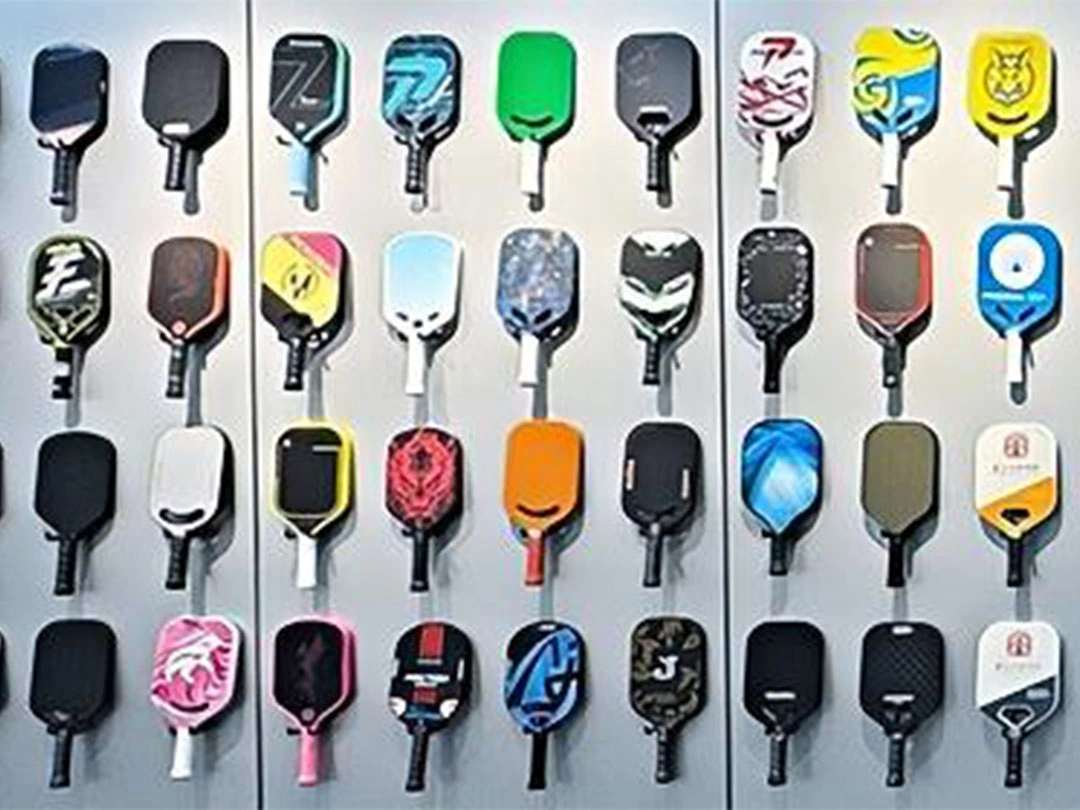
Walk into any sports retail buyer meeting, scroll through any Amazon FBA seller forum, or sit down with a brand owner building their first private-label pickleball line — and you’ll hear the same lament: “We either have too many power paddles sitting in a warehouse, or we keep running out of our best control seller.”
Over-indexing on one end of the power-control spectrum is the most common — and most costly — inventory mistake in the pickleball category. It’s not about picking the wrong brand. It’s about failing to understand the single specification that governs the most fundamental trade-off in paddle performance: core thickness.
The pickleball equipment market has expanded to an estimated $702.9 million globally in 2025 , fueled by a player base of 36.5 million Americans alone . Within that boom, buyers who understand how to build a thickness-balanced product line are the ones capturing margin across every customer segment — from competitive young athletes to older recreational players managing joint health.
This guide breaks down NexaPaddle’s 13mm, 16mm, and 20mm framework — three distinct thickness profiles that correspond to three distinct business opportunities — and shows you exactly how to use them to build a more profitable, more defensible inventory.
The Physics of Thickness — What Actually Changes
Before we talk business strategy, we need to talk physics. Thickness is not just a measurement. It is the single most direct lever you have on a paddle’s performance personality.
Dwell Time: The Core Mechanism
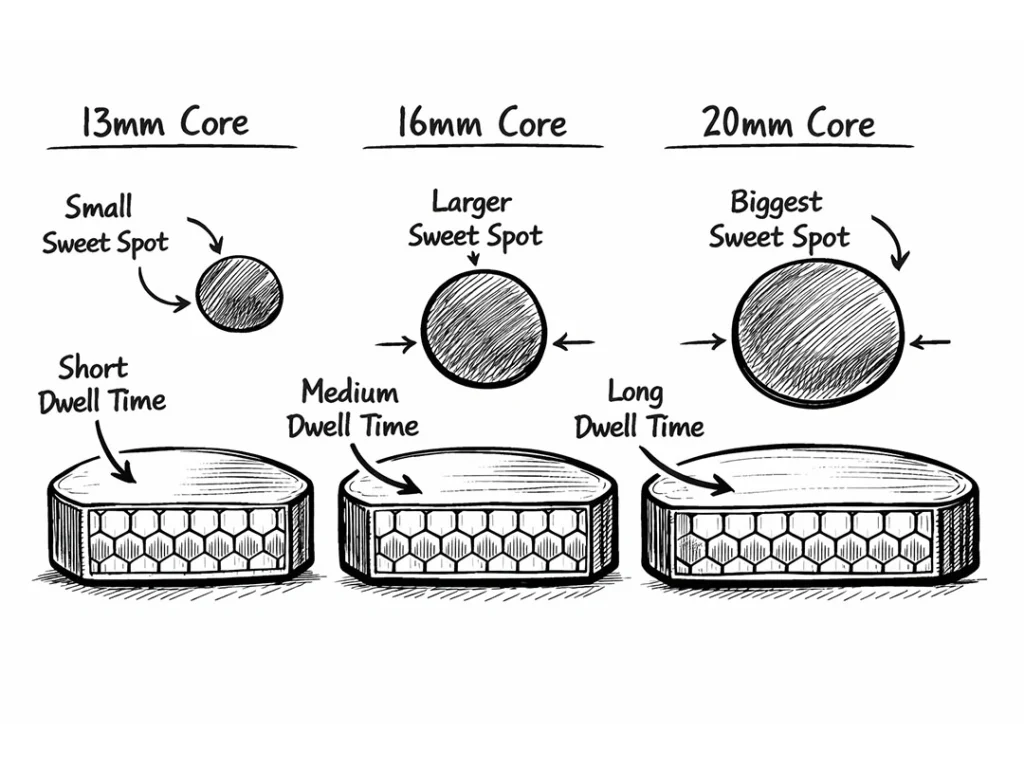
When a ball contacts a paddle face, it compresses against the core, transfers energy, and rebounds. The duration of that contact moment is called dwell time. A thicker core absorbs more energy during contact and releases it more gradually, extending dwell time. A thinner core is stiffer, rebounds faster, and shortens dwell time.
Why does dwell time matter? Longer dwell time gives the player more control over ball direction — the ball “sits” on the paddle face fractionally longer, allowing more intent to transfer. Shorter dwell time means faster, harder energy return — which players describe as “pop” or “explosiveness.”
The Four Performance Variables Thickness Controls
| Variable | 13mm (Thin) | 16mm (Mid) | 20mm (Thick) |
|---|---|---|---|
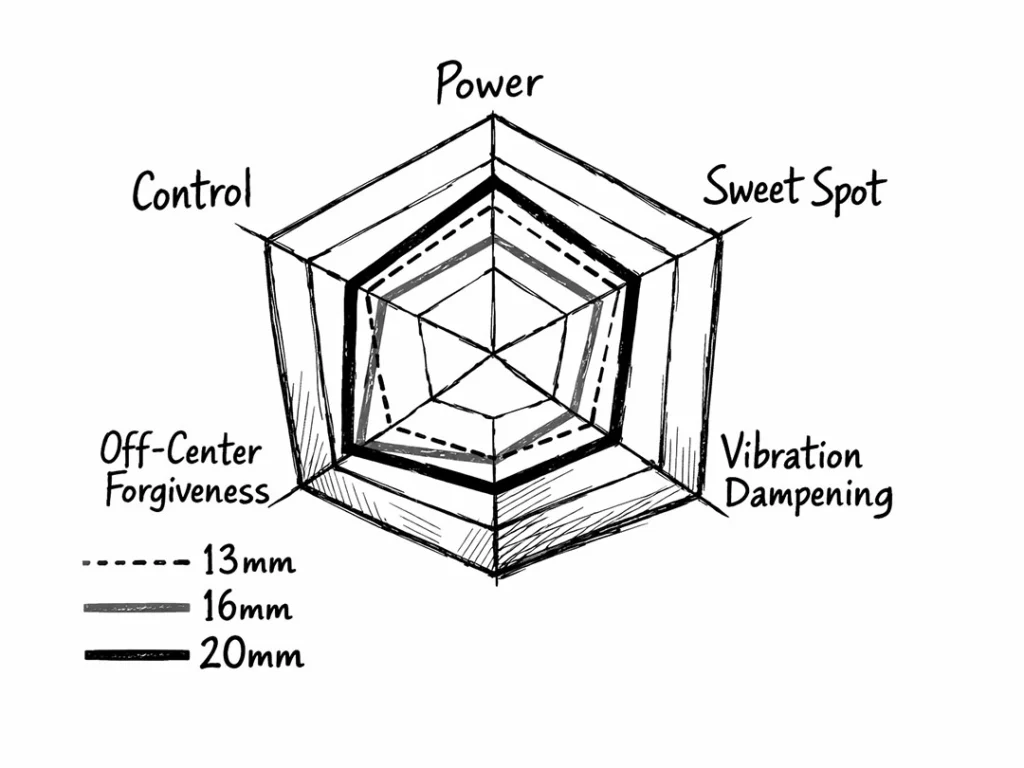
| Dwell Time | Short — fast energy return | Balanced | Long — maximum control |
| Sweet Spot Size | Smaller | Larger | Largest |
| Vibration Dampening | Minimal | Moderate | Maximum |
| Power Output | High — stiffer response | Balanced | Lower — more absorption |
| Off-Center Forgiveness | Less forgiving | Moderately forgiving | Most forgiving |
| Ideal Player | Aggressive/competitive | Most player types | Control-focused/joint-sensitive |
Sources: NexaPaddle B2B Product Catalog (March 2026) , NexaPaddle Product Specifications (March 2026)
13mm: The Power Profile
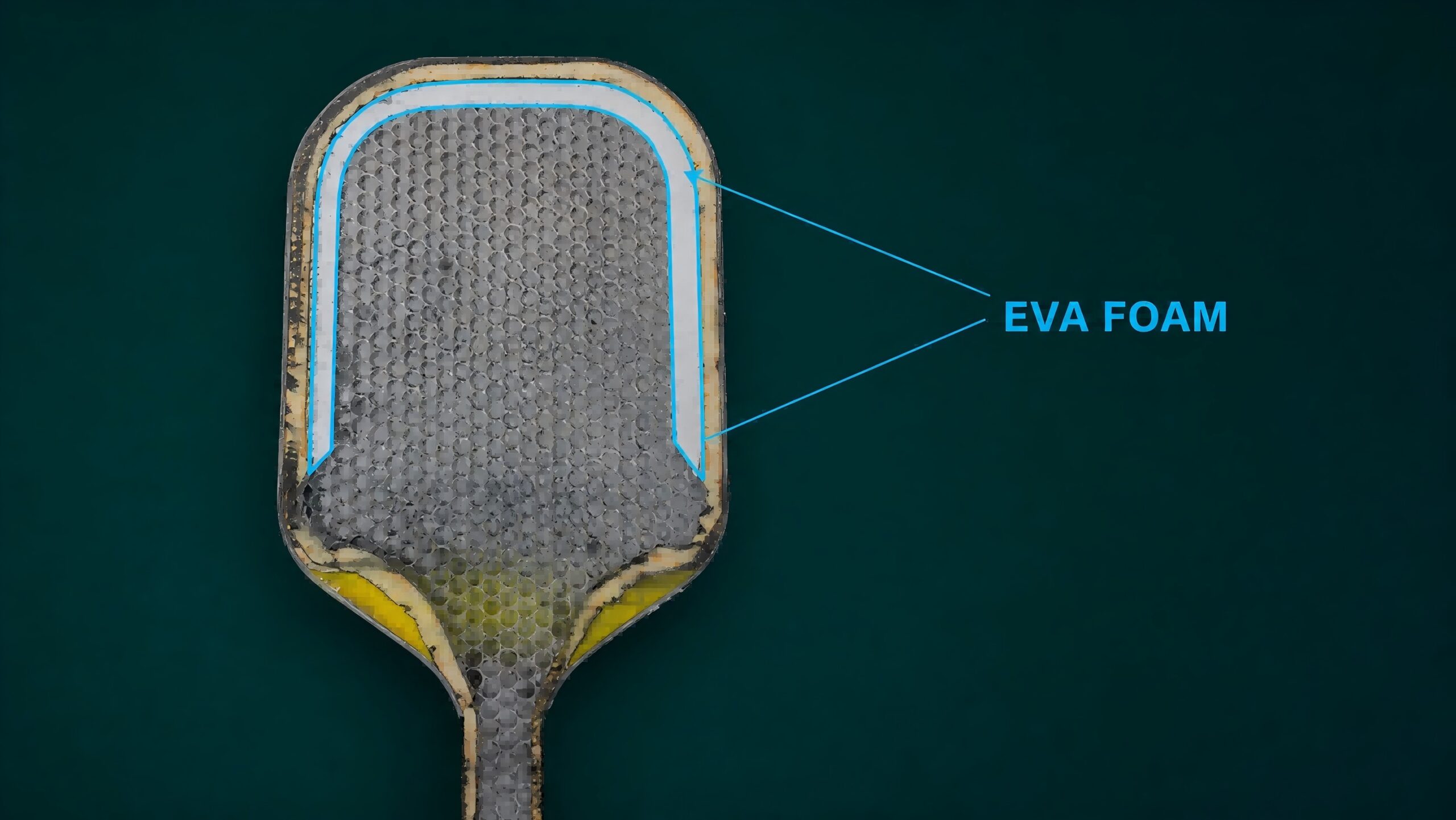
At 13mm, the PP honeycomb core is comparatively stiff. There is less material to compress, less energy gets absorbed, and more gets transferred back to the ball. The result is a crisper, faster response — what experienced players call “pop.” The trade-off is a smaller effective sweet spot and less vibration dampening. This rewards technical precision; off-center hits are more punishing. Players who have developed reliable mechanics love 13mm for its direct, immediate feedback .
16mm: The Universal Standard
At 16mm, you get a demonstrably larger sweet spot, meaningful improvements in vibration dampening, and a more forgiving response on off-center hits — without fully sacrificing power. Independent technical analysis shows that 16mm paddles have lower deflection and more efficient energy transfer than 13mm paddles, making them the professional player’s baseline preference . This is the thickness that fits the widest range of player profiles, which explains why it dominates retail shelf share globally.
20mm: The Control Specialist
At 20mm, the core creates the longest possible dwell time, the widest sweet spot, and the most substantial vibration dampening in standard production. Players feel as though the ball “sticks” to the face briefly before releasing. This translates to extraordinary touch, soft-game precision, and reduced shock transmission to the wrist and elbow — a critical feature for older demographics and injury-recovery players . The performance profile is described in player testing as “deliberate and precise” — every shot feels intentional rather than reactive.
The 13mm Power Profile — When Less Is More
Who Buys Power Paddles?
Understanding your downstream customer helps you understand where 13mm belongs in your line. The 13mm buyer is typically:
- Aggressive baseliners who hit through the court and want fast, hard ball exit speed
- Tennis converts — among the fastest-growing pickleball segments — who are accustomed to thin, responsive racket faces and translate that preference directly to paddle selection
- Younger competitive players (18–40 demographic) who play offensively, prioritize speed over dinking precision, and are often early technology adopters
- Players with strong mechanics who have the technical consistency to exploit a smaller sweet spot
This is a high-intent, high-engagement buyer. They research specifications. They compare products. And they are willing to pay a premium for what they perceive as performance.
NexaPaddle’s 13mm Product Range
NexaPaddle offers 13mm as a standard option across multiple product lines :
Cold Press Fiberglass (Product 1.1): Available in 13mm. Face: high-elasticity fiberglass. Core: PP honeycomb. Weight: 220–245g. Two shapes: 400×195mm (Control) or 417×188mm (Power). UV printing for graphics. MOQ: 300 pcs.
Cold Press Carbon Fiber (Product 1.2): Available in 13mm. Face: carbon fiber in UD or 3K weave. Core: PP honeycomb. Weight: 210–235g. Same dual-shape options. UV printing. MOQ: 300 pcs.
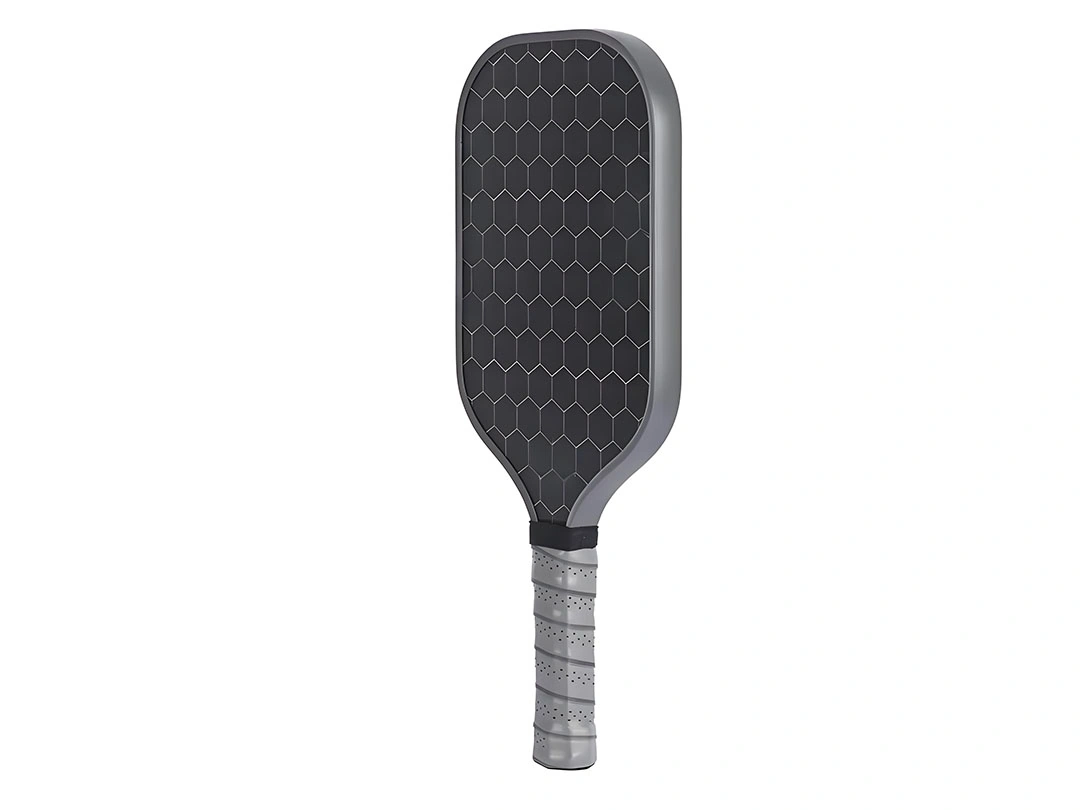
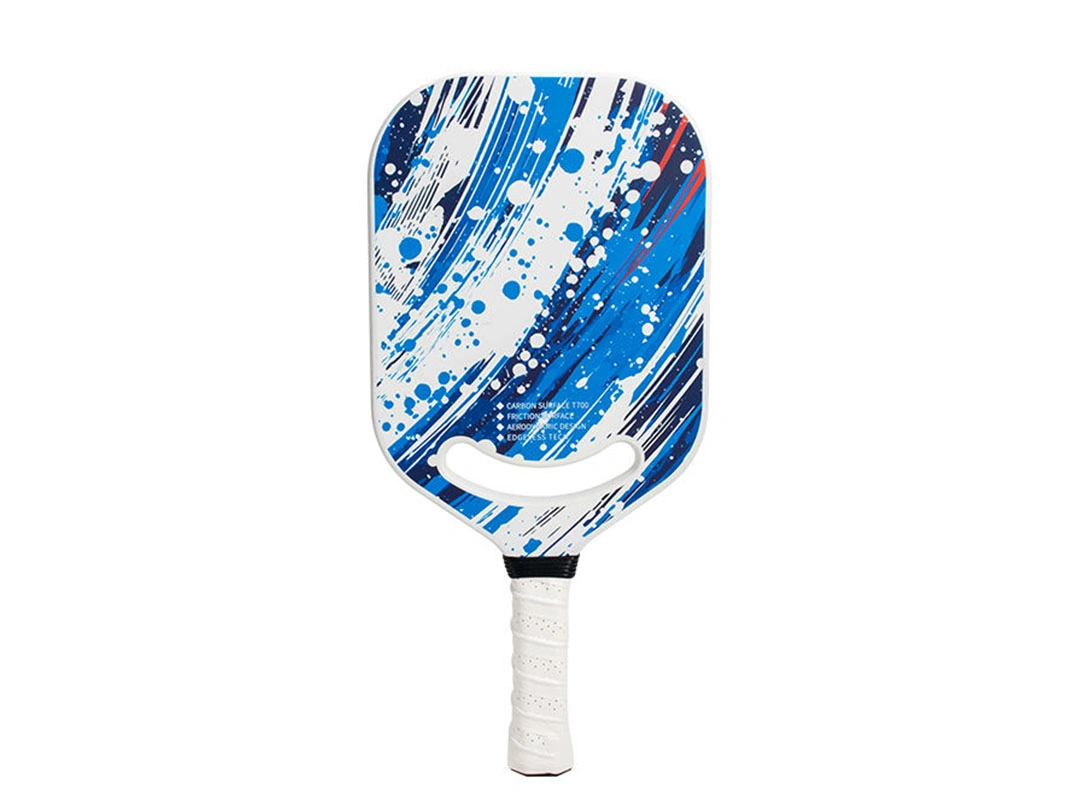
Thermoformed Mold #3 – Edgeless Power: Available in 13mm. Face: carbon fiber (UD/3K) or T700. Dimensions: 417×188mm elongated power shape. Weight: approximately 220g. Handle: 139mm. Edgeless construction. Water decal graphics. MOQ: 100 pcs.
Thermoformed Mold #7 – Hot Press Forged Power Series: Available in 13.5–14mm range. Face: T700 carbon fiber. Dimensions: 420×185mm or 425×186mm. Handle: 145mm. Weight: 220–235g. Hot press forging process — zero delamination construction. MOQ: 100 pcs.
The elongated 417×188mm shape is the natural pairing for 13mm — it maximizes reach for aggressive groundstrokes while the thin core delivers the fast response competitive players want.
The “Profit Hero” Positioning
Here’s the business logic that most new brands miss: 13mm paddles command premium pricing because of their perceived performance positioning, not despite their thinner cores.
Power pickleball paddles carry strong performance connotations — they look competitive, they feel fast, they signal expertise. Retail positioning around “tournament performance,” “aggressive play,” or “tennis player upgrade” creates strong willingness to pay. In B2B terms, a 13mm model sourced from a quality thermoformed line can be positioned at $20–40 higher retail than an equivalent 16mm model in your lineup, while your factory cost differential is minimal.
The margin mathematics favor the 13mm power paddle when it is positioned correctly.
Explore NexaPaddle’s complete power pickleball paddles category for full product options and OEM specifications.
The 16mm Sweet Spot — Your Volume Seller
The Safest Bet in the Category
If there is one thickness you should have in stock at all times, it is 16mm. This is the industry’s baseline — the option that fails the fewest customers, generates the fewest returns, and supports the broadest retail narrative.
Player recommendation data consistently validates this position. Analysis across multiple player surveys shows 16mm as the dominant recommendation for:
- Beginners building fundamental mechanics who need off-center forgiveness
- Developing players (skill ratings 3.0–4.0) seeking balanced performance
- Recreational players prioritizing enjoyment over performance optimization
- Anyone who has never played pickleball before and needs a reliable starting point
In practical inventory terms: a 16mm paddle is the version you send when you are not sure what the customer needs. It rarely disappoints. It rarely generates return requests based on performance. And it reliably generates reorders because customers who grew with it stay with it.
The Lowest Complaint Rate in the Lineup
Lower complaint rates translate directly into lower return processing costs, better Amazon review scores, fewer support tickets, and healthier long-term customer lifetime value. For any brand that sells at volume — whether through retail chains, Amazon FBA, or club wholesale — the 16mm is the operational safe choice.
NexaPaddle’s 16mm Product Range
NexaPaddle’s 16mm options span every manufacturing tier :
Cold Press Fiberglass (Product 1.1) – 16mm: The accessible entry point. Fiberglass face, PP honeycomb core. 220–245g. Control shape (400×195mm) or Power shape (417×188mm). MOQ: 300 pcs. Best for: school programs, club sets, starter retail, bundle SKUs.
Cold Press Carbon Fiber (Product 1.2) – 16mm: Step-up performance without thermoforming cost. Carbon fiber face, PP honeycomb core. 210–235g. Both shapes available. MOQ: 300 pcs. Best for: mid-tier retail, “best intermediate pickleball paddle” category targeting.
Thermoformed Mold #2 – All-Around Lightweight: Available in 14mm and 16mm. Carbon fiber face (UD or 3K), PP honeycomb core. 400×195mm balanced shape. 130mm handle. Water decal graphics. MOQ: 100 pcs. Best for: main hero product, balanced performance positioning.
Thermoformed Mold #3 – Edgeless Power: Available in 16mm option. 417×188mm power shape. ~220g. Edgeless construction. MOQ: 100 pcs.
Thermoformed Mold #5 – Extended Handle: 16mm, T700 carbon, 415×185mm, 145mm handle, 215–230g. MOQ: 100 pcs. Best for: tennis convert segment, two-handed backhand players.
Thermoformed Mold #7 – Hot Press Forged: Available in 16mm. T700 carbon, 220–235g, 145mm handle. Hot press forging construction.
GEN5 “Gatling” Flagship: 16mm (14mm customizable). T800 carbon face with Teflon-weave spin texture. GEN5 polymeric energy-return mesh core. 419.5×188mm. Foam-enhanced grip with 3D ventilated air-channel leather handle. The top-tier 16mm statement product in the lineup.
The control pickleball paddles category at NexaPaddle provides full specifications and configuration options for every 16mm build option.
The 20mm Control Specialist — Your Differentiation Play
The Underserved Premium Control Niche
Most brands do not stock a 20mm paddle. That is exactly why you should.
The pickleball market has standardized heavily around 14–16mm. Brands with only those thickness options are competing in an increasingly crowded middle. But the 20mm segment — maximum control, maximum sweet spot, maximum vibration dampening — is genuinely underserved by most private-label operations. This creates a real white space opportunity for brands willing to specialize.
NexaPaddle Mold #1: The 20mm Control Flagship
NexaPaddle’s Thermoformed Mold #1 is built specifically for this segment :
- Dimensions: 400×205mm — the widest face in the premium NexaPaddle lineup
- Thickness: 20mm
- Weight: approximately 245g
- Handle: 130mm
- Edge configuration: Edgeless construction
- Face material: Carbon fiber (UD or 3K) with adjustable grit spray
- Graphics: Premium fade-resistant water decal
- Manufacturing process: Thermoformed integrated (hot press)
- MOQ: 100 pcs
The 400×205mm wide-body silhouette deserves particular attention. The extra face width creates an enormous effective sweet spot — players consistently describe off-center hits on this paddle as feeling like center hits. For a 3.0 skill player working on their soft game, or a 4.5-rated player who wants surgical placement precision in dinking exchanges, this paddle delivers an experience nothing in the 16mm range can fully replicate. Positioned correctly, the Mold #1 becomes the best control pickleball paddle in your lineup — and one of the most distinctive offerings in your entire brand portfolio.
The edgeless construction amplifies this effect. Without the traditional edge guard narrowing the usable face perimeter, the full 205mm width contributes to shot-making. NexaPaddle’s full range of edgeless pickleball paddles showcases this design philosophy across multiple molds.
The Joint-Health Market Opportunity
Vibration dampening is not just a performance feature. For a growing segment of the pickleball population, it is a purchasing requirement.
The 36.5 million American pickleball players skew significantly older than the general sports population. Players managing tennis elbow, shoulder tendinitis, or recovering from arm injuries actively seek paddles that reduce shock transmission. Physician recommendations to seek “thicker-core” paddles for joint protection are common in the sport’s medical community .
A 20mm paddle positioned explicitly for joint health and senior recreational play captures a motivated, underserved buyer. Retail copy like “engineered for low-impact play” or “superior vibration protection for longer sessions” speaks directly to this demographic’s purchasing trigger.
This is not a small market. It is one of the fastest-growing segments in pickleball — and most competitors are ignoring it.
Building a Balanced Inventory — The Strategic Framework
The 3-SKU Starter Blueprint
For a brand launching its first pickleball line, the following thickness distribution minimizes risk while maximizing market coverage:
| SKU Role | Thickness | Primary Purpose | Target Customer | Retail Positioning |
|---|---|---|---|---|
| Volume Driver | 16mm | Broad appeal, reliable reorders | Beginners to intermediate, recreational players | “The Best Pickleball Paddle for Most Players” |
| Profit Hero | 13mm | Higher margin, performance positioning | Competitive players, tennis converts, young athletes | “Designed for Aggressive Play” |
| Differentiation Play | 20mm | Premium niche, low competition | Older players, joint-sensitive, control specialists | “Superior Control. Superior Comfort.” |
This 3-SKU structure is not arbitrary. It maps directly to the three distinct buying motivations in the pickleball market:
- “I want something reliable” → 16mm
- “I want something performance-forward” → 13mm
- “I want something that protects my arm and gives me perfect control” → 20mm
Each motivation is real, each is addressable, and each requires its own thickness to properly deliver on.
Marketing Copy by Thickness
How you communicate thickness to end consumers determines how well each SKU performs at retail. Here is a language framework:
13mm copy: Use language around speed, explosiveness, competitive edge. Words: fast, crisp, pop, responsive, tournament-ready, aggressive. Avoid: “forgiving,” “soft,” “easy.”
16mm copy: Use language around reliability, balance, confidence. Words: forgiving, versatile, all-around, balanced, dependable, most popular. You can be honest here — customers respond to “used by more players than any other thickness” messaging.
20mm copy: Use language around precision, protection, touch. Words: control, soft-game specialist, joint-friendly, massive sweet spot, deliberate, precise. Avoid aggressive/power language entirely — it conflicts with the product’s actual performance DNA.
Customer Segment Decision Guide
Who is the buyer?

├── Tennis convert / Young competitive player (25-40)
│   └── → 13mm Power paddle (elongated shape, 417×188mm)

├── New player / Recreational adult / Growing player (broad skill range)
│   └── → 16mm (either shape, depending on style preference)

├── Older player / Joint concerns / Soft game specialist / 50+
│   └── → 20mm Wide-body (400×205mm edgeless)

├── Club/school bulk purchase (training use)
│   └── → 16mm Fiberglass (cost-optimized Cold Press)

└── Brand flagship / Influencer product / Hero SKU
    └── → 16mm Thermoformed or GEN5 Gatling
Manufacturing Reality — MOQs, Shapes, and Customization
Two Manufacturing Tiers, Two Strategic Use Cases
Understanding NexaPaddle’s manufacturing tiers helps you plan your inventory investment and timeline correctly .
Cold Press Series — Entry to Mid-Level
- MOQ: 300 pcs
- Thicknesses available: 10mm, 13mm, 16mm
- Graphics: Full-color UV printing (fast turnaround, vibrant output)
- Standard shapes: 400×195mm (Control) or 417×188mm (Power)
- Best for: High-volume SKUs, starter market, school/club programs, bundle sets
- No mold fee for standard shapes
- Note: Custom shape modifications trigger MOQ threshold increase
Thermoformed Series — Advanced/Pro
- MOQ: 100 pcs (standard construction, standard shapes)
- Thicknesses available by mold: 13mm, 13.5–14mm, 16mm, 20mm (Mold #1)
- Graphics: Premium water decal (photo-quality, fade-resistant)
- Standard shapes: Multiple molds from 400×195mm to 417×188mm
- Best for: Hero products, premium positioning, differentiation SKUs
- Note: Custom shape modifications trigger one-time mold fee
The 100-piece MOQ on thermoformed products is particularly important for new brands. You can test a 20mm control paddle, a 13mm edgeless power paddle, and a 16mm balanced paddle with a combined entry investment of 300 units — one unit each of three completely distinct market propositions. That is a viable market validation strategy before committing to larger production runs.
Full OEM Customization Scope
NexaPaddle’s custom pickleball paddle OEM services cover the full spectrum of product specification:
- Thickness selection: 10mm, 13mm, 13.5–14mm, 16mm, 20mm depending on product line
- Face material: Fiberglass, carbon fiber (UD/3K), T700, T800, T800 + titanium thread, Kevlar/Aramid hybrid
- Core technology: PP honeycomb, EPP foam (filled/non-filled), GEN3, GEN4, GEN5 polymeric mesh
- Graphics: UV printing (cold press), water decal (thermoformed), laser engraving (specialty)
- Edge configuration: Standard edge guard or edgeless construction
- Handle length: 130mm (control shape), 139mm (power shape), 145mm (extended), 149mm (GEN3 extended)
- Packaging: Bubble bag (standard), custom box, FBA-prep compatible configurations
The full premium construction portfolio is documented in NexaPaddle’s thermoformed pickleball paddles catalog, which covers all thermoformed mold options and construction methods.
Volume Pricing Logic
Pricing steps meaningfully at 100 / 200 / 300 / 500 / 1,000 units. For first-time buyers:
- Cold press order: Start at 300 pcs. The sweet spot between unit cost and risk exposure.
- Thermoformed order: Start at 100 pcs per SKU to validate market fit before scaling.
- Multi-thickness test: 100 pcs × 3 thickness variants = 300 pcs thermoformed to test your full 3-SKU architecture at minimum commitment.
Frequently Asked Questions
Which thickness sells best for retail?
u003cstrongu003e16mm is the safest default.u003c/strongu003e It has the broadest appeal, the lowest complaint rate, and the most reliable reorder pattern. For most retail contexts — sporting goods stores, Amazon FBA, club pro shops — building your primary inventory around 16mm minimizes risk and maximizes sell-through velocity.u003cbru003eThat said, 13mm is your margin-maximizing companion.u003cbru003eu003cbru003eA well-positioned 13mm power paddle in the same line creates a natural upgrade story: “Our standard model” (16mm) and “Our competitive model” (13mm). Many buyers who came in for the 16mm convert to the 13mm after seeing the performance messaging, and the 13mm typically carries $15–30 higher retail with minimal factory cost difference.u003cbru003eu003cbru003eThink of them as a ladder, not competitors.
Can I mix 13mm and 16mm in one product line?
u003cstrongu003eYes — and you should.u003c/strongu003e A two-thickness lineup is the industry standard for a reason. The positioning is simple and intuitive for end consumers: one paddle for most players, one paddle for players who want more aggressive performance. This structure is easy to explain in marketing copy, easy for retailers to merchandise, and generates organic upsell opportunities.u003cbru003eu003cbru003eThe 13mm variant typically positions as the “Pro,” “Elite,” “Power,” or “Competition” edition. The 16mm positions as the “Standard,” “Classic,” “All-Court,” or “Balance” edition. Same brand identity, two distinct performance profiles, a natural progression path.u003cbru003eu003cbru003eFor Amazon FBA specifically, running both variants under the same parent listing with thickness as a variation attribute is a proven strategy for increasing conversion through perceived selection depth.
Is 20mm too niche for a starter brand?
u003cstrongu003eYes, as a launch SKU. No, as a second or third SKU.u003c/strongu003eu003cbru003eu003cbru003eIf you are building your first pickleball line from scratch, launch with 16mm. Establish distribution, prove sell-through, collect real market feedback. Then introduce 13mm as your performance tier. Once you have that foundation, 20mm becomes a powerful differentiation move — especially if your customer research shows meaningful senior or joint-sensitive buyer presence.u003cbru003eu003cbru003eThe risk with launching 20mm first is misaligned expectations. Most first-time buyers default to assumptions about “thicker = more powerful,” which is the inverse of reality. Until your customer has context from your 16mm baseline, the 20mm value proposition requires more education than most new brands can support at launch.u003cbru003eu003cbru003eThe exception: if your brand is explicitly targeting the 50+ wellness-oriented market, or if you are entering a distribution channel with established senior demographics (golf courses, wellness centers, physical therapy referral networks), 20mm can be a launch focus. Done well, it positions your brand as the go-to source for the best control pickleball paddle in the senior and soft-game segment — a category most competitors have left wide open.
How does thermoformed construction affect the thickness-performance relationship?
Thermoformed construction — which uses heat and pressure molds to create a stronger, more uniform bond between face and core — changes how thickness translates to performance.u003cbru003eu003cbru003eA 16mm thermoformed paddle can produce power levels approaching a 13mm cold press paddle. The construction method compresses and densifies the structure, increasing stiffness and energy return even at higher thickness values. This is why a brand cannot simply compare thickness numbers across construction types — they are not equivalent.u003cbru003eu003cbru003eThe practical implication for B2B buyers: when building your lineup, specify not just thickness but construction method. A 16mm thermoformed model and a 16mm cold press model will perform differently and should be marketed differently. NexaPaddle’s thermoformed series documents this clearly across its mold specifications .
What is the minimum order to test multiple thicknesses?
For thermoformed products, the base MOQ is u003cstrongu003e100 pcs per specificationu003c/strongu003e. This means you can test three thickness profiles (13mm, 16mm, 20mm) with 100 pcs each — a total of 300 units — before committing to larger production runs.u003cbru003eu003cbru003eConditions for 100-pc orders: standard construction, standard shape (no custom tooling), standard or minimal packaging customization. Custom color boxes, shape modifications, or specialty packaging increase the effective MOQ or add tooling fees.u003cbru003eu003cbru003eFor cold press, the base MOQ is u003cstrongu003e300 pcsu003c/strongu003e. If you want to test multiple cold press thickness variants, plan for 300 pcs per variant or discuss consolidation options with NexaPaddle at the quote stage.u003cbru003eu003cbru003eIn practice, many brands launch with a single 300-pc cold press order in 16mm to test the market, then follow up with 100-pc thermoformed trials across multiple thickness/mold combinations once they have validated basic demand.
Conclusion: Thickness is Your Strategic Variable
The pickleball paddle category is growing fast. Player counts are rising. Competition among brands and private-label sellers is intensifying. And increasingly, the brands that win are not the ones with the most options — they are the ones with the right options, positioned correctly.
Core thickness is the single most direct lever you have on performance personality. Get it right, and your lineup speaks to real buyer motivations across the market’s full range of players. Get it wrong, and you end up with shelves full of paddles that do not match what your customers actually came in looking for.
The framework is straightforward:
- 16mm first. Always. It is your volume driver, your reliable reorder, your market foundation.
- 13mm second. Your performance positioning, your margin builder, your tennis-convert capture.
- 20mm third. Your differentiation play, your premium niche, your joint-health specialists.
NexaPaddle’s manufacturing capabilities across Cold Press (MOQ 300 pcs) and Thermoformed (MOQ 100 pcs) series make it possible to build this three-tier architecture at accessible entry investment levels, with full OEM customization from face material to graphics to packaging.
Ready to build a thickness-balanced lineup? Contact NexaPaddle’s B2B team to discuss spec selection, request samples, and receive a factory-direct quote for your product line.
Citations
Coherent Market Insights — Global pickleball equipment market valued at approximately $702.9 million (2025).
Association of Pickleball Professionals — 36.5 million US pickleball players (2025).
NexaPaddle B2B Product Catalog (produces.md, March 2026). Includes full specifications for Cold Press Fiberglass (Product 1.1), Cold Press Carbon (Product 1.2), Thermoformed Mold #1 through #7, and GEN5 Gatling Flagship.
NexaPaddle Manufacturing Pricing Reference (April 2026). Includes MOQ data, volume pricing logic, construction tier descriptions, material matrix, and OEM cost structure.
“Do Thick Pickleball Paddles Offer More Control? 14mm vs 16mm vs 20mm Guide.” Player recommendation data and thickness-performance analysis. Referenced via NexaPaddle research archive (March 2026).
NexaPaddle Product Specifications — laji.md (March 2026). Includes construction quality differentiation, MOQ trigger conditions, and specification validation guidance.
NexaPaddle is a Chinese manufacturer supporting USA Pickleball pre-submission testing and production-consistency controls with established manufacturing experience serving B2B brands across multiple international markets. All specifications referenced in this article reflect the current product lineup as of April 2026. Contact the NexaPaddle B2B team for current pricing, lead times, and sample availability.