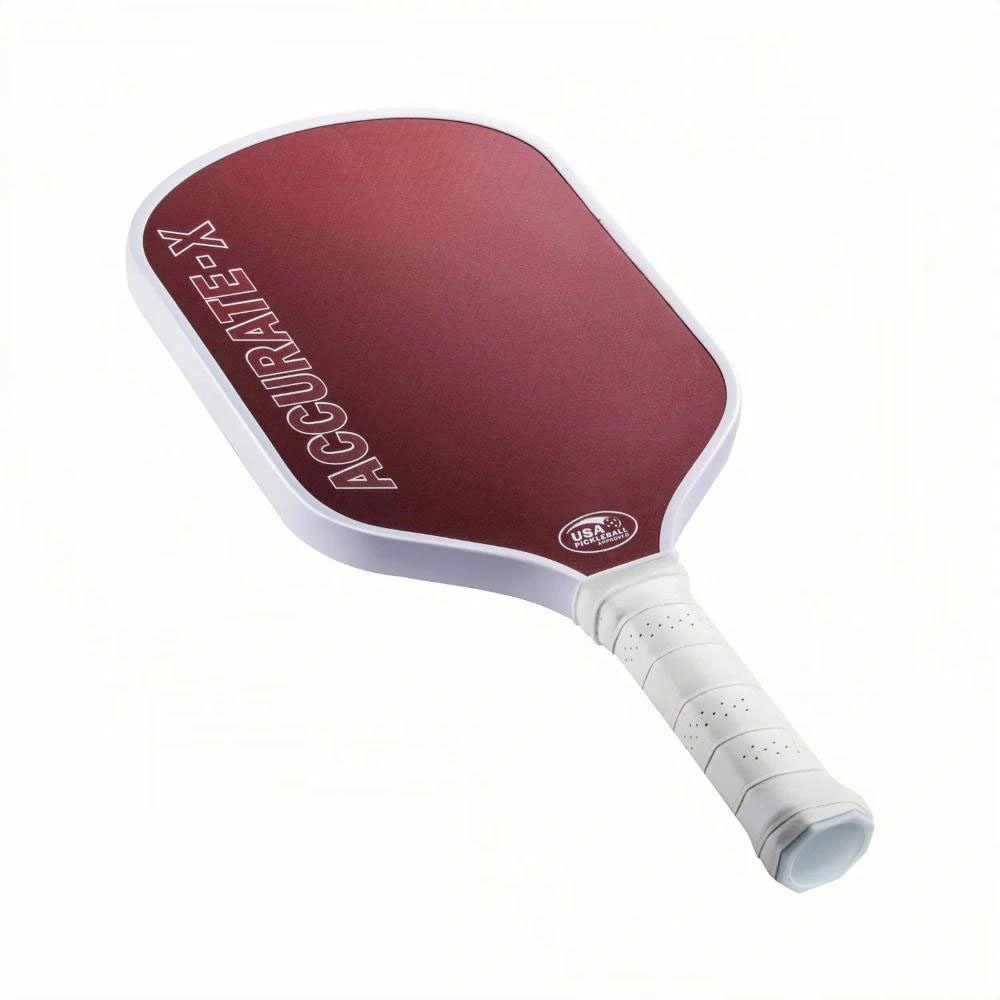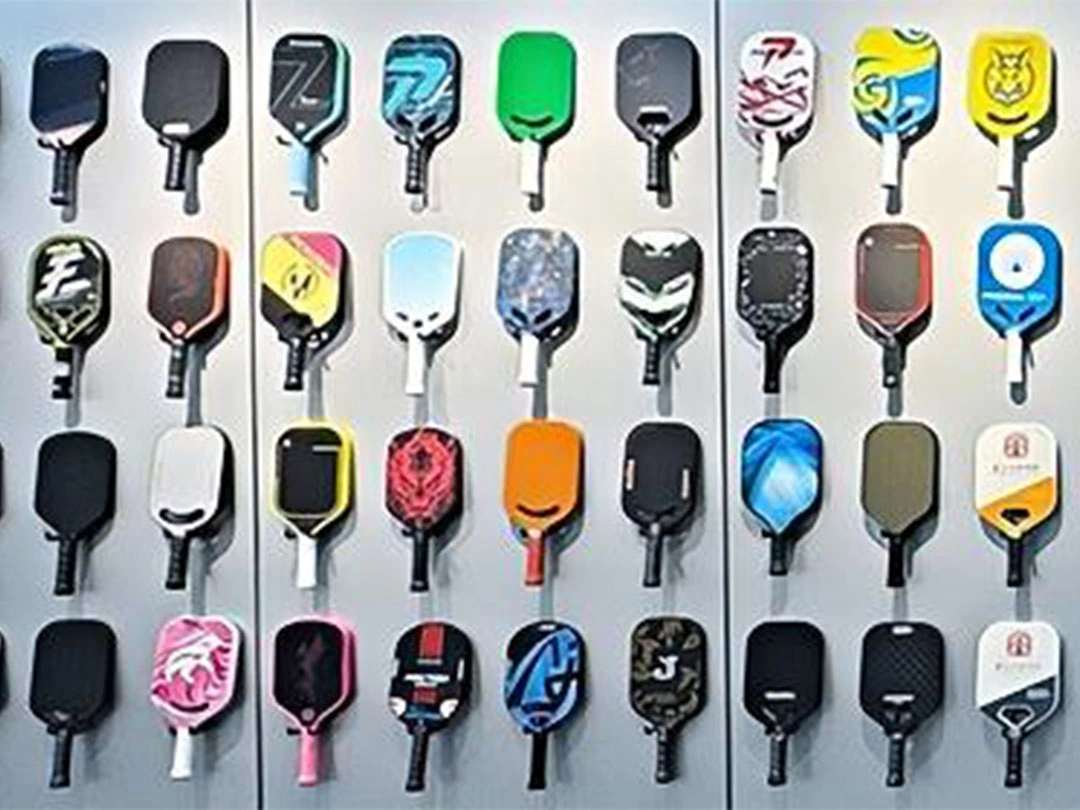
Pickleball is no longer a backyard curiosity. The sport now counts 36.5 million players in the United States alone — and that figure keeps climbing. The Sports & Fitness Industry Association (SFIA) tracks 24.3 million active players, a staggering 171.8% growth in just three years. Globally, the equipment market hit $702.9 million in 2025, according to Coherent Market Insights — with the U.S. paddle segment alone valued at $324–325 million and projected to reach $574 million by 2032 at an 8.6% CAGR.
With that kind of growth, schools, recreation centers, corporate event planners, and institutional program directors face an immediate procurement problem: they need paddles in volume, fast, and cheap. Not for competitive play. For gym classes, team-building days, loaner fleets, and camp programs where equipment gets dropped, kicked, rained on, and forgotten in storage rooms.
That’s the conversation wood enters.
Wooden pickleball paddles represent the sport’s origins — and, for a narrow but real set of buyers, they still represent the right answer. But “right for some buyers” is not the same as “right for wholesale in general.” This guide draws a clear line between the two, based on actual manufacturer economics, and shows you where the smarter money goes.
Section 1: What Are Wooden Pickleball Paddles?
The Original Material
Pickleball was invented in 1965 on Bainbridge Island, Washington, by Joel Pritchard, Bill Bell, and Barney McCallum. The first paddles were improvised from solid plywood — the closest material on hand. For more than a decade, wood was the only paddle material. The first commercial paddles were simply cut from plywood sheets, lightly finished, and sold at hardware store prices.
Today, the majority of the sport has moved on — to fiberglass, carbon fiber, and thermoformed composites. But classic wood paddles never disappeared. They occupy a specific price-and-purpose niche that no composite paddle can replicate at the same unit cost.
Construction and Materials
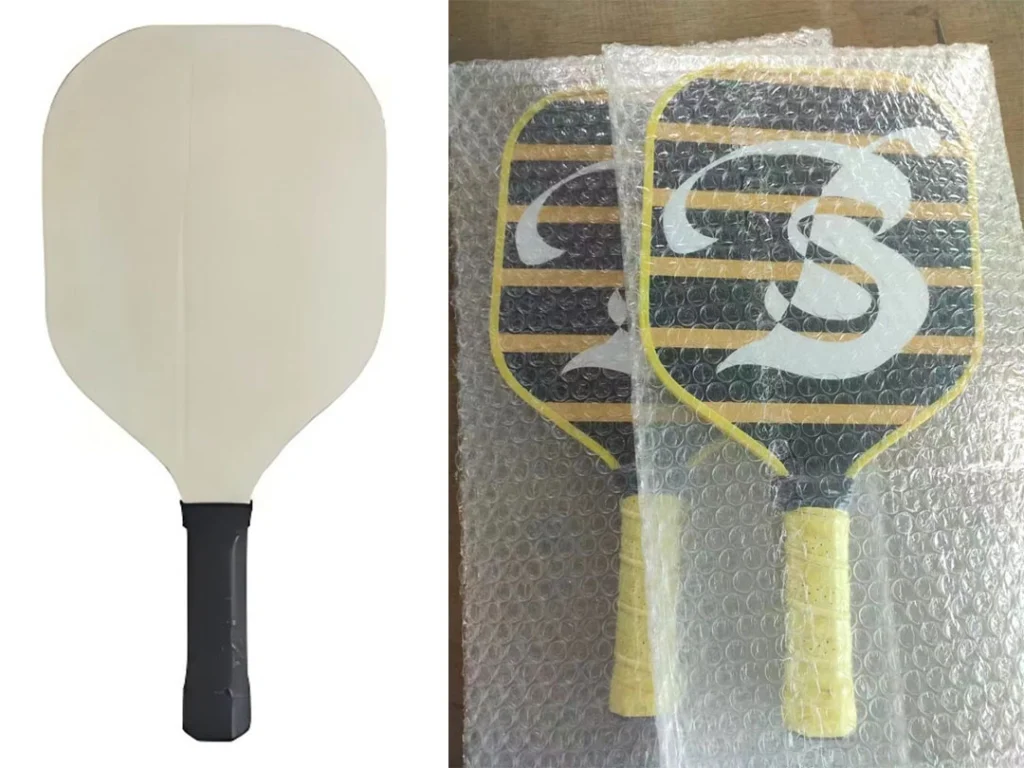
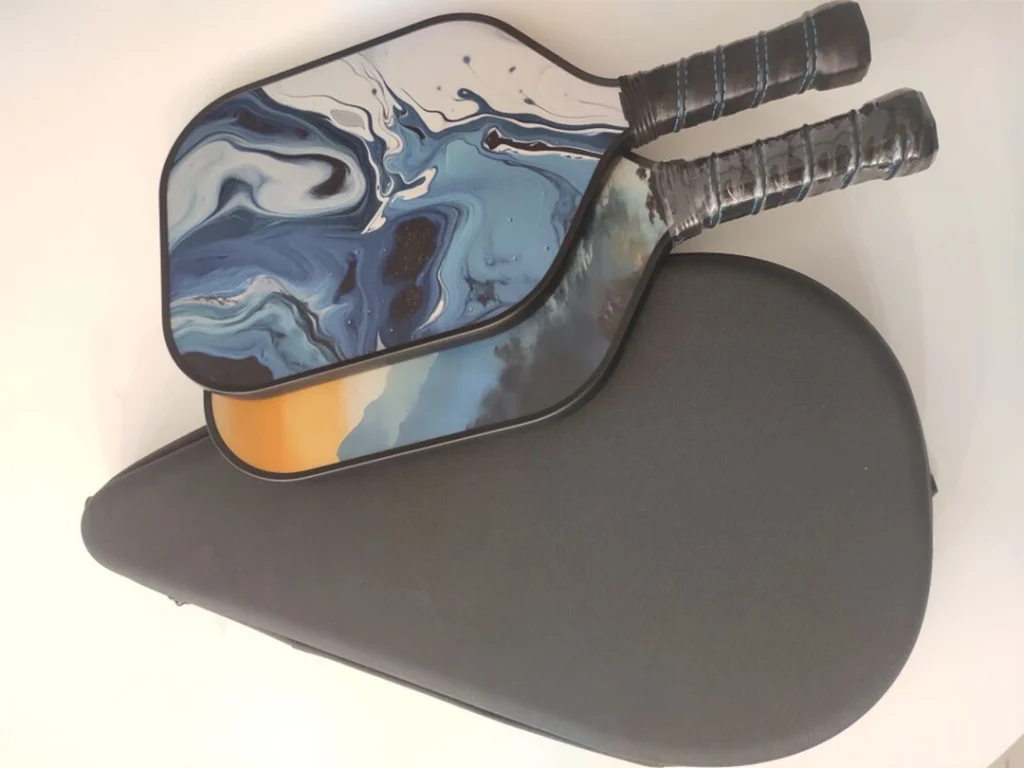
Classic wood pickleball paddles are built from solid layered plywood, typically 7-ply maple or basswood construction. There is no core separation — the face and the body are the same material. The surface is painted or lacquered rather than textured, and edge protection is minimal (a basic rubber bumper or simply painted edge).
Standard specifications for classic wood paddles:
| Specification | Classic Wood Paddle |
|---|---|
| Weight | 9.5 – 11.0 oz |
| Core | Solid plywood (no honeycomb) |
| Face Material | Painted wood surface |
| Retail Price Range | $10 – $25 |
| Typical FOB Price (500+ MOQ) | $3 – $7 / unit |
| Spin Potential | None (smooth painted surface) |
| Best Use Cases | Schools, rec centers, casual/backyard play, promotional events |
The weight of 9.5–11.0 oz is worth emphasizing. This is significantly heavier than the 7.3–8.4 oz range typical of composite paddles. For extended play sessions, that extra weight is fatiguing. For a 20-minute PE class or a one-time corporate tournament, it’s irrelevant.
Construction quality matters within the wood category. Not all plywood paddles are equivalent:
- 7-ply is the gold standard for institutional wood paddles. Alternating grain layers create cross-directional strength that resists splitting and warping under heavy use.
- 5-ply paddles are cheaper but prone to snapping at the neck under impact stress — avoid for institutional environments where paddles will be dropped, stacked, or used on hard floors.
- Basswood / poplar construction produces a slightly lighter paddle (~9–10 oz), better suited for youth programs or senior participants.
- Maple construction is harder, more durable, and offers higher impact resistance — the preferred spec for high-abuse PE settings.
- Moisture is the primary long-term failure mode. Prolonged outdoor storage or exposure to humidity causes warping and layer separation in wood paddles. Classic wooden paddles are not suited for permanent outdoor use or unconditioned storage environments.
A Note on “Engineered Wood” — Not the Same Category
There is a second, higher-end product sometimes marketed as an “engineered wood” or “hollow-core wood” paddle. These typically retail at $90–$150, weigh 8.0–8.5 oz, and use a hollow internal structure to reduce weight while maintaining a wood exterior. This is an entirely different product category — premium, performance-oriented, and not relevant to bulk institutional procurement. When this article refers to wooden pickleball paddles, it means the classic solid-plywood construction in the $3–$7 FOB range.
USAPA Legality
A common buyer question: are wooden paddles legal for organized play? The answer is yes, conditionally. USA Pickleball’s Equipment Standards Manual sets maximum paddle dimensions (total length ≤ 24 inches including handle, maximum width ≤ 17 inches), surface texture requirements, and deflection standards. A well-manufactured classic wood paddle can meet these specifications. However, most wood paddles are not submitted for official USAPA approval, and for institutional or promotional purposes, official certification is rarely required. If you’re procuring for formal league play, verify certification. For school PE programs and corporate events, this is a non-issue.
Weight limit note: USA Pickleball’s Equipment Standards Manual also sets a maximum paddle weight of 10.0 oz for sanctioned tournament play. Many classic wooden paddles fall in the 10–11.5 oz range, meaning heavier wood models may not qualify for official sanctioned competition. This is another reason USAPA certification is largely irrelevant for institutional buyers (schools and rec centers don’t run sanctioned tournaments), but it’s worth flagging if you’re sourcing for any program that might eventually include formal league play.
Section 2: Who Actually Buys Wooden Paddles in Bulk?
The buyers for classic wooden pickleball paddles are not performance-oriented. They are institutions and event planners solving a logistics problem: how do I equip a large number of people to play this sport for the lowest possible per-unit cost?
School Physical Education Programs
School districts are among the most consistent buyers of bulk wooden paddles. A typical PE department order runs 30–100+ paddles per school, sometimes more for larger districts making system-wide equipment purchases. The key requirements are:
- Budget under $15/paddle — and often under $10
- Extreme durability — paddles will be stored improperly, thrown into equipment bins, used on pavement, left in gyms with varying humidity
- No performance expectations — students learning the sport don’t require spin texture or precise weight distribution
Wood delivers on all three. A solid plywood paddle is, practically speaking, nearly indestructible under normal school conditions. The face may scuff, the paint may chip, but the paddle won’t crack or delaminate under casual misuse the way a composite might.
Institutional supply channels: Schools rarely source direct from manufacturers. The dominant procurement path runs through approved PE equipment catalogs — Gopher Sport, School Specialty, BSN Sports, and Flaghouse are the major distributors schools are already authorized to buy from. The most iconic product in this channel is the Diller paddle (Pickleball Inc.) — a green 7-ply hardwood paddle that has been the de facto “PE class paddle” for decades. Other common bulk wood brands in this channel include the Franklin Activator (7-ply, approximately $10–$12/paddle retail) and the Champion Sports Rhino series. Standard institutional format is “Class-Ready Sets” of 12, 24, or 36 paddles with balls included; a typical 24-paddle class set runs $150–$350 depending on brand and channel. One durability advantage worth noting: wood paddles in institutional use regularly last 5+ years with basic indoor storage, making the economics more favorable than unit cost alone suggests.
Recreation Centers and Community Programs
Municipal recreation centers and community programs running public court access or drop-in pickleball sessions need loaner fleets — paddles available for players who show up without their own equipment. These programs:
- Need cheap, replaceable inventory (not paddles they’re worried about protecting)
- Replace paddles on an ongoing basis as units are lost, damaged, or stolen
- Have no interest in brand differentiation — they’re equipping, not impressing
For a recreation center maintaining 20 loaner paddles at a time, the ability to replace a broken unit for $6–$8 instead of $20–$30 matters.
Corporate Promotional Events and Team-Building Days
Company pickleball tournaments have become a fixture of corporate culture programming. HR teams planning these events often want custom-branded paddles as either event souvenirs or takeaway gifts. The typical buyer profile:
- Ordering 50–500 units for a single event
- Wants the company logo prominently displayed
- Expects the paddles to function for one day of casual play — not for ongoing use
- Has a total per-paddle budget of $8–$15 including branding
For this use case, wood’s low unit cost enables logo customization (via screen printing or sticker overlay) while keeping total cost within event budget. The paddles are, functionally, branded promotional items — closer to branded tote bags than to sports equipment.
Promo industry context: Pickleball has become the hottest new category in the promotional products industry, tracked by ASI and PPAI networks, with paddle demand surpassing golf accessories in some distributor categories. The flat 7.5″ × 8″ paddle face is effectively the “new custom golf ball” — an ideal billboard for a corporate logo. Real-world promo pricing reflects this: the Corporate Movement catalog (item AP8752) lists a wooden paddle set at $10.92/unit at 100 units, dropping to $8.31/unit at 10,000 units, with a 15-day production time. For smaller minimums, platforms like 4imprint and AnyPromo accept orders as low as 25–50 units with 1–2 color imprint included — accessible for even modest event budgets.
Vacation Rentals and Resorts
Vacation rental properties and resort amenity programs need pickleball equipment on-site for guest use. The economics are similar to recreation centers: expect abuse, plan for replacement cycles, prioritize cost over performance. A beach house with four wood paddles in the gear closet is providing genuine guest value for a $25–$40 total investment.
Non-Profit and Youth Development Programs
YMCA branches, Boys & Girls Clubs, after-school programs, and community youth organizations often introduce pickleball to participants with minimal per-head budgets. For an organization running a six-week pickleball introduction for 40 students on a $300 equipment budget, wood paddles are not a compromise — they’re the only viable option.
Section 3: The Real Wholesale Economics — Wood vs. Composite
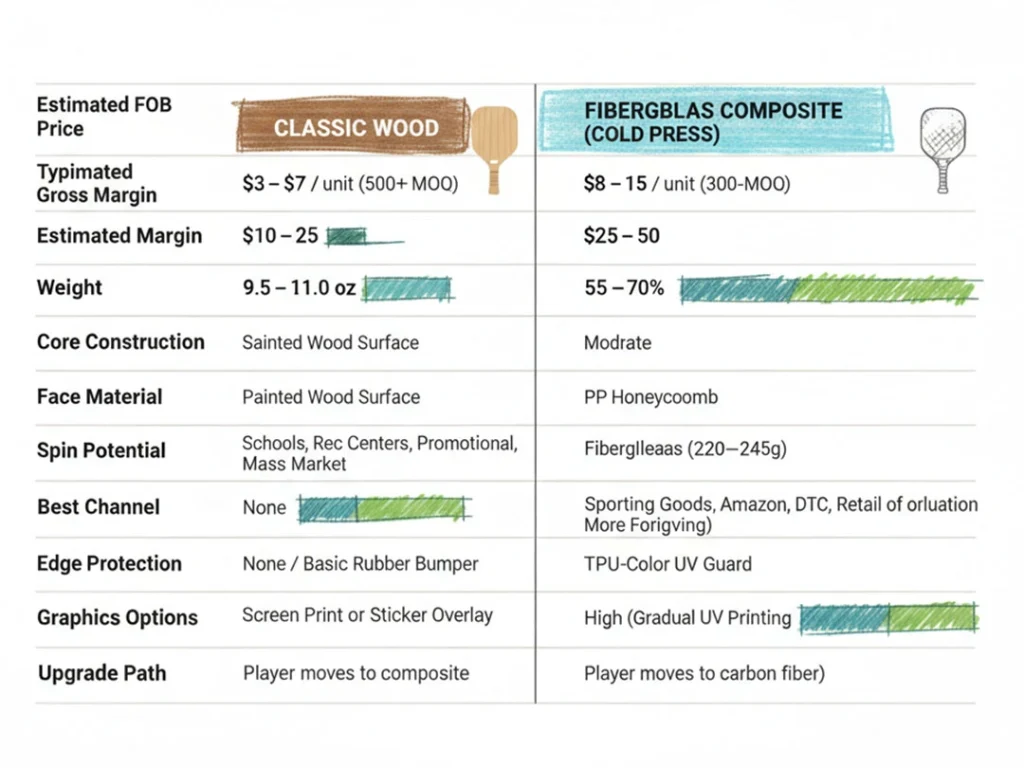
Let’s put the numbers on the table. Here is how classic wood paddles compare to cold press fiberglass composite — the most common entry-level composite paddle — across the metrics that matter for B2B buyers:
| Metric | Classic Wood | Fiberglass Composite (Cold Press) |
|---|---|---|
| Estimated FOB Price | $3 – $7 / unit (500+ MOQ) | $8 – $15 / unit (300 MOQ) |
| Typical Retail Price | $10 – $25 | $25 – $50 |
| Estimated Gross Margin | 50 – 65% | 55 – 70% |
| Weight | 9.5 – 11.0 oz | 7.7 – 8.6 oz (220–245g) |
| Core Construction | Solid plywood | PP Honeycomb |
| Face Material | Painted wood surface | Fiberglass (textured) |
| Spin Potential | None | Moderate |
| Sweet Spot | Small | Standard (larger, more forgiving) |
| Best Channel | Schools, rec centers, promotional, mass market | Sporting goods, Amazon, DTC, retail |
| Edge Protection | None / basic rubber bumper | TPU edge guard |
| Graphics Options | Screen print or sticker overlay | Full-color UV printing |
| Durability | Extremely high (nearly indestructible) | High (gradual elasticity loss) |
| Upgrade Path | Player moves to composite | Player moves to carbon fiber |
Source: NexaPaddle internal manufacturing data.
The Key Insight on Margins
At first glance, the margin percentages look similar. But margin percentage and margin dollars are different things. A $4 FOB wood paddle sold at $15 retail yields roughly $8–$9 gross profit per unit (after landed costs). A $12 FOB fiberglass paddle sold at $40 retail yields roughly $22–$24 gross profit per unit at comparable margins.
Wood wins on absolute unit cost. Fiberglass wins on dollar margin, perceived value, performance, and brand equity. For buyers optimizing purely on unit cost — schools, non-profits, ultra-budget promotionals — wood has a real argument. For anyone trying to build a brand, sell through retail, or capture repeat customers, wood is the wrong tool.
Section 4: When Wood Makes Strategic Sense
There are four specific scenarios where choosing classic wooden pickleball paddles is the correct wholesale decision:
1. Pure Unit Cost Optimization
When the procurement objective is unambiguously “lowest cost per functional unit,” wood wins. If you need 500 paddles that can survive basic use and cost under $7 each, nothing in the composite market competes. This is a real use case — just a narrow one.
2. Extreme Durability in Uncontrolled Environments
Schools and community programs where paddles are stored loosely, handled roughly, and used on outdoor concrete courts have legitimate reasons to prefer wood. Solid plywood does not delaminate. The face does not develop dead spots from honeycomb compression. A wood paddle that has been rained on, dried out, and stored in a gym bag for six months is still functional. For many composite paddles, that treatment results in a dead core.
3. Promotional Giveaway Items
For branded promotional paddles distributed at events, wood’s low base cost enables budget for branding while keeping total per-unit cost within typical promotional goods budgets. If recipients are not expected to use these paddles beyond a single event, performance is irrelevant — logo visibility is the only metric.
4. Ultra-Budget “Try the Sport” Programs
For introductory programs specifically designed to expose new participants to pickleball before investing in real equipment, wood paddles serve as disposable demonstration equipment. The implicit message — “try this before you invest” — actually benefits from low perceived value. If the program works and participants want to continue, they buy their own paddles. The program’s wood paddles served their purpose.
5. Bundle Filler at the $20–$30 Price Point
In complete game sets targeting the absolute bottom of the market (think discount retailers, party supply stores, value club sets), wood paddles enable a 2-paddle + 2-ball set for a total retail of $20–$29. This price point is structurally impossible with composite paddles. For buyers serving this market segment, wood is not a compromise — it’s an enabler. Explore the full range of wholesale wood and budget pickleball paddles to understand what’s available at scale.
Section 5: When Wood Does NOT Make Sense
The list of scenarios where wood is the wrong choice is substantially longer:
Retail Shelf Placement
Wood paddles read as cheap to the modern consumer — not “value,” not “durable,” not “classic.” In a sporting goods store or specialty retailer where wood sits next to fiberglass composite at twice the retail price, the conversion rate on wood will be poor. Customers associate wood with low quality in a category where they’ve been trained to expect composite materials.
Amazon and DTC Channels
Online sales channels are ruthless about negative reviews. A customer who buys a $15 wood paddle on Amazon and compares it to their friend’s $50 composite will write a one-star review referencing the weight, the lack of spin, and the dead feel. Wood paddles simply don’t meet the performance expectations of the modern recreational player — expectations set by the ubiquity of composite alternatives.
Brand Building
If you are building a pickleball brand — private label, OEM, or otherwise — launching with wood paddles sets a brand perception ceiling that is very hard to escape. The material signals “entry-level institutional” rather than “value-conscious performance.” For serious brand development, even the most affordable cold press fiberglass line positions you in a fundamentally different market tier.
Any Customer Who Plays Regularly
Players who engage with the sport more than a few times per month will feel the weight penalty and the absence of spin texture in wood paddles immediately. The fatigue from an 10+ oz paddle over a two-hour session is significant. For beginner and starter pickleball paddles aimed at players who intend to develop their game, even entry-level fiberglass composite serves them meaningfully better.
“Wood paddles visually and functionally signal ‘cheap’ to the modern consumer. In a retail environment where $35 fiberglass paddles exist, there is no perceived-value argument for wood — only a unit-cost argument.”
Section 6: The Smarter Play — Budget Fiberglass as a Wood Alternative
For the majority of buyers considering wood paddles, the correct answer is actually cold press fiberglass composite — and the price difference is smaller than most buyers expect.
NexaPaddle’s Cold Press Fiberglass line (Product 1.1) represents the minimum viable composite paddle for serious wholesale programs:
Cold Press Fiberglass Specifications:
| Specification | Cold Press Fiberglass |
|---|---|
| Face Material | Fiberglass |
| Core | PP Honeycomb |
| Available Thickness | 10mm / 13mm / 16mm |
| Weight | 220 – 245g (7.7 – 8.6 oz) |
| FOB Price | $8 – $15 / unit |
| MOQ | 300 units |
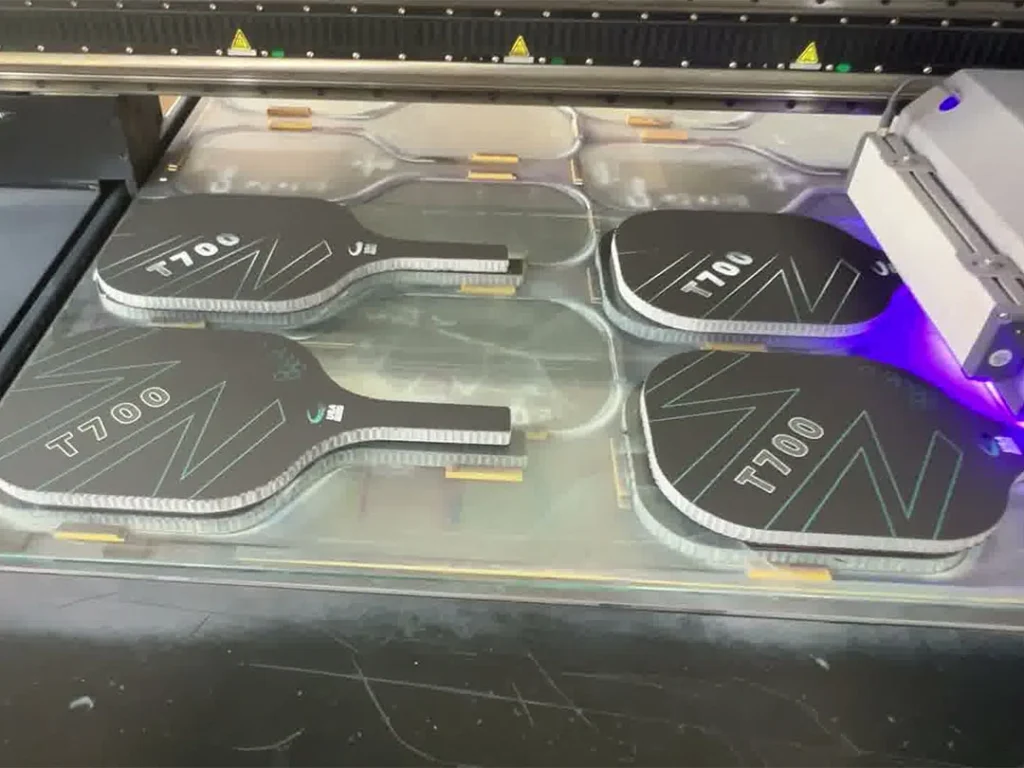
| Graphics | Full-color UV printing |
| Edge Protection | TPU edge guard |
At $8–$15 FOB, cold press fiberglass is 2–3x the unit cost of wood. But consider what that increment buys:
- Full-color UV printing instead of basic screen print — brand visuals that actually look professional
- 3–4 oz lighter — dramatically more comfortable for actual play
- Textured fiberglass surface — moderate spin potential that wood cannot provide
- PP Honeycomb core — larger sweet spot, better vibration dampening, more forgiving for beginners
- TPU edge guard — standard protection against edge-contact damage
- Retail-viable — can be merchandised at $25–$50 where wood tops out at $15–$20
The critical insight: for school PE programs and recreation center loaner fleets, the $5–$8 per-unit premium for fiberglass may be worth it. Schools that use paddles across multiple academic years, and rec centers with active programs, benefit from the better durability-to-performance ratio of composite. The wood case is strongest for one-time use scenarios (corporate events, promotional giveaways, trial programs) where the equipment is not expected to last.
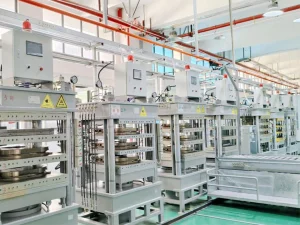
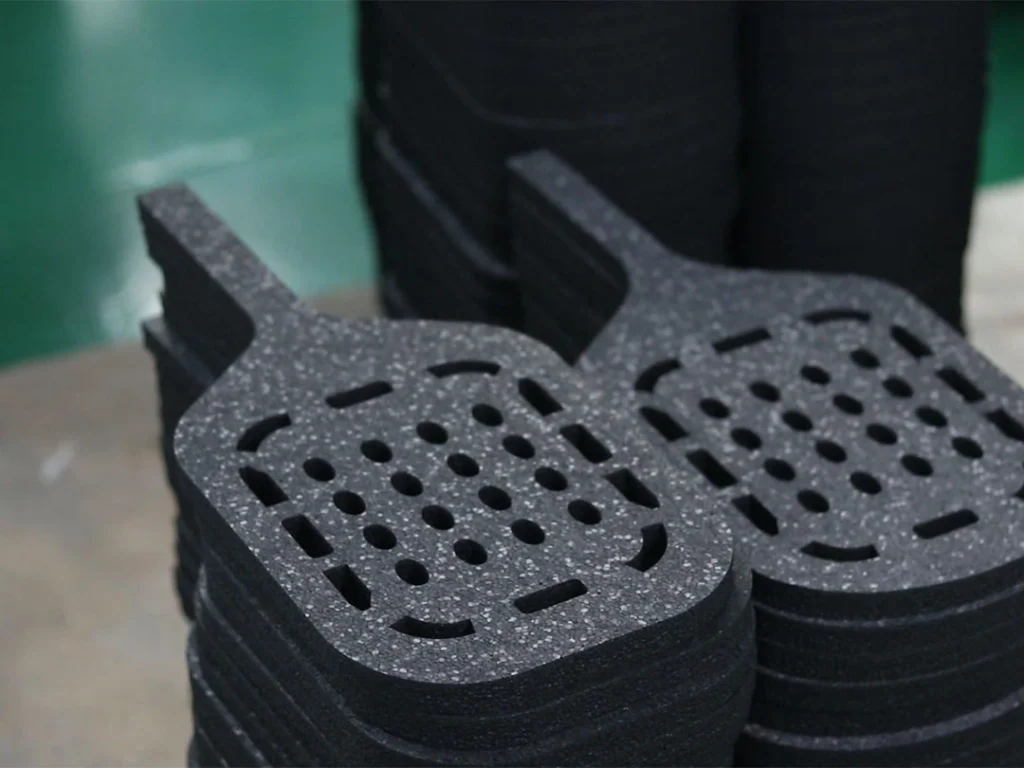
Cold press molding is the manufacturing approach that keeps fiberglass composite costs low — it’s a high-throughput, low-tooling process that scales efficiently at 300+ unit orders. This is why the MOQ for cold press is lower than thermoformed paddles (which start at 100 units) and why the price point is accessible for institutional buyers. Learn more about the OEM fiberglass pickleball paddle factory capabilities that make this possible.
The institutional shift underway: YMCAs, country clubs, and dedicated recreation centers are actively moving from wood to budget fiberglass — and the economics are increasingly supporting that shift. Players in recreational programs consistently complain about the weight and dead feel of wood paddles, and program operators are seeing measurably better player retention when equipment feels right. The gap between wood and composite pricing has narrowed enough that budget fiberglass at $10–$15/paddle bulk is now directly competitive with wood’s $8–$12 institutional tier. For rec centers running active adult programs or multi-week introduction courses, the argument for staying with wood is weakening. Wood retains its position in pure-budget, one-time, or extreme-abuse scenarios — but its dominance in institutional procurement is no longer guaranteed.
Section 7: Custom Branding Options — Wood vs. Fiberglass
For buyers where branding is a procurement criterion — corporate events, promotional programs, institutional programs with donor recognition — the branding options differ significantly between materials:
Branding on Wooden Paddles
| Method | Description | Limitations |
|---|---|---|
| Screen Printing | 1–3 color logo applied directly to painted wood surface | Color limitations; requires flat surface; edges difficult to print |
| Sticker Overlay | Pre-cut vinyl sticker with logo applied to paddle face | Low durability; peels with moisture and use |
| Basic Laser Engraving | Logo burned into wood surface | No color; low visibility; industrial appearance |
Screen printing on wood is functional and cost-effective for basic logo application — a single-color corporate logo or event name can be executed cleanly. But it cannot replicate the quality of modern UV printing.
Branding on Fiberglass Composite Paddles
| Method | Description | Capability |
|---|---|---|
| Full-Color UV Printing | Digital UV inkjet printing applied to fiberglass face | Edge-to-edge full color, photographic quality, Pantone matching |
| Custom Packaging | Branded retail box with product photography and brand copy | Full retail presentation capability |
| Branded Grip & Endcap | Custom grip tape color, endcap with logo or brand mark | Complete branding from face to handle |
For promotional buyers who need logo visibility, UV printing on fiberglass is in a different category. A corporate event paddle with a full-bleed branded graphic — company colors, logo, event date, tagline — generates meaningfully better brand recall than a screen-printed logo on a wood paddle. If the goal of the promotional paddle program is brand exposure, the $5–$8 per-unit premium for fiberglass pays for itself in brand equity.
For buyers developing a more comprehensive branded program, custom pickleball paddles with full UV printing, custom packaging, and branded accessories represent the next step beyond basic promotional items. And for event programs that include multiple items — paddles, balls, and carrying bags — exploring pickleball sets and bundles at the wholesale level typically yields better economics than sourcing paddles alone.
Frequently Asked Questions
Are wooden pickleball paddles legal for organized play?
Yes, conditionally. USA Pickleball’s Equipment Standards Manual specifies that all paddles must not exceed 24 inches total length (handle included), must meet surface texture and reflectance requirements, and must pass deflection testing. A well-manufactured classic wood paddle can satisfy these dimensional and surface requirements. However, most wood paddles are not submitted for formal USAPA approval — they are manufactured for recreational and institutional use, not competitive sanctioned play. For school PE programs, recreational leagues, and corporate events, legality is generally a non-issue. For formal tournament or league play, verify that any paddle you supply carries official USAPA listing.
What is the minimum order quantity for wooden pickleball paddles?
Minimum order quantities for classic wooden pickleball paddles typically start at u003cstrongu003e200–500 unitsu003c/strongu003e from Asian manufacturers. At 500+ units, FOB pricing in the $3–$7 range becomes achievable depending on specifications and branding requirements. Lower MOQs (50–200 units) are sometimes available at higher per-unit costs, typically through domestic distributors who purchase from manufacturers in bulk. For buyers who need fewer than 200 units, purchasing from domestic wholesale distributors is often more practical than direct factory sourcing.
Can you put custom logos on wooden pickleball paddles?
Yes. Screen printing is the standard customization method for wooden paddles — suitable for 1–3 color logo applications on the face and handle. Vinyl sticker overlays are also used for simple designs. Laser engraving is available but produces a low-visibility, monochrome result. For high-quality branded paddles where visual impact matters, u003cstrongu003eUV printing on fiberglass compositeu003c/strongu003e paddles produces dramatically superior results. If your primary goal is brand visibility, the incremental cost of fiberglass is worth considering before committing to wood.
Are wooden paddles good for beginners?
For casual beginners in a school or recreational setting, wooden paddles are u003cstrongu003efunctionally adequateu003c/strongu003e — they are playable, durable, and do what a beginner needs. However, they are not u003cemu003egoodu003c/emu003e for beginners in the sense of accelerating skill development. The heavy weight (9.5–11.0 oz vs. 7.3–8.4 oz for composite) causes faster fatigue. The smooth, untextured surface provides no spin potential. The smaller sweet spot penalizes off-center contact more harshly. For any player who intends to develop their game, even entry-level fiberglass composite paddles deliver a meaningfully better developmental experience. u003ca href=u0022https://nexapaddle.com/beginner-starter-pickleball-paddles/u0022 target=u0022_blanku0022 rel=u0022noreferrer noopeneru0022u003eBeginner and starter pickleball paddlesu003c/au003e in fiberglass composite provide the combination of forgiveness, appropriate weight, and surface texture that actually supports skill development.
What’s the cheapest pickleball paddle material for bulk orders?
Classic solid plywood (wood) is the cheapest paddle material available for bulk procurement, with FOB prices starting at u003cstrongu003e$3–$5 per unitu003c/strongu003e at 500+ MOQ for basic unbranded versions. No other paddle material approaches this unit cost at scale. The relevant question, however, is whether the cheapest material is the u003cemu003erightu003c/emu003e material for your use case. For buyers where absolute unit cost is the only criterion — and where recipients will use the paddles a handful of times at most — wood is the answer. For institutional programs expecting extended use, and for any program with retail or brand-building objectives, the modest premium for cold press fiberglass composite ($8–$15 FOB) delivers far better total value. Explore u003ca href=u0022https://nexapaddle.com/custom-oem-pickleball-paddles/u0022 target=u0022_blanku0022 rel=u0022noreferrer noopeneru0022u003ecustom and OEM pickleball paddlesu003c/au003e across both wood and composite categories to compare options side by side.
Conclusion: Wood Has a Place — It’s Just a Small One
The honest summary for B2B buyers: classic wooden pickleball paddles are the right answer for a narrow but legitimate set of use cases — ultra-budget school programs, one-time promotional giveaways, non-profit introductory equipment, and extreme-durability loaner fleets where paddles are expected to absorb significant abuse.
Outside those use cases, cold press fiberglass composite is the smarter wholesale choice — offering better margins in absolute dollar terms, retail viability, full-color custom branding, superior performance for actual players, and a natural upgrade path to higher-margin carbon fiber SKUs. At $8–$15 FOB with a 300-unit MOQ, it is accessible to the same institutional buyers who might otherwise default to wood.
The practical question to ask before your next bulk order: will these paddles be used once, or will they be used repeatedly? One-time use (corporate event, promotional giveaway, introductory trial) is where wood earns its place. Repeated use by real players — even casual ones — is where composite delivers the better investment.
If you’re sourcing for schools, recreation programs, corporate events, or institutional buyers at any scale, NexaPaddle works with bulk purchasers across both product categories. We can quote on wholesale wood and budget pickleball paddles and cold press fiberglass composite in the same order, with custom branding across both.
Contact NexaPaddle for wholesale pricing on budget-friendly custom paddles — whether that’s wood at $3–$7 FOB, cold press fiberglass at $8–$15 FOB, or a mix of both for different segments of your program.
nFor mixed retailer, club, school or institutional orders, use the wholesale pickleball paddles sourcing hub to compare ready-platform, private-label and custom routes before requesting a quote.
nnnReferences
APP (Association of Pickleball Players) estimates 36.5 million U.S. players including casual participants, as of 2024–2025 reporting.
Sports & Fitness Industry Association (SFIA), 2026 Topline Participation Report: 24.3 million active U.S. pickleball players; 171.8% growth over three years.
Coherent Market Insights, Pickleball Equipment Market Report (2025): Global market value of $702.9 million in 2025.
QY Research, U.S. Pickleball Paddle Market Report (February 2026): U.S. paddle market at $324–325 million; projected CAGR of 8.6% to reach $574 million by 2032.
USA Pickleball, Equipment Standards Manual: Sets maximum paddle dimensions (total length ≤ 24 inches, maximum width ≤ 17 inches), surface reflectance, and deflection standards for sanctioned play.
NexaPaddle internal product specifications and manufacturing cost data, 2025. FOB pricing reflects 300–500+ MOQ from NexaPaddle factory. Final pricing varies based on specifications, branding, and order volume.
Corporate Movement promotional products catalog, item AP8752: Wooden pickleball paddle set pricing at volume tiers. corporatemovement.com. Accessed April 2026.