USA Pickleball (USAP) is changing how it evaluates a paddle’s ability to create spin. Beginning October 1, 2026, paddles submitted for certification must achieve a measured spin rate of no more than 2,100 revolutions per minute (RPM). Surface Roughness and Coefficient of Friction (COF), previously used as indirect limits on spin potential, will become measurements of record.
For brands, buyers, and OEM/ODM project managers, the important change is not simply a new number. It is a shift from regulating surface characteristics to measuring an output: how fast the ball rotates after impact under the certification test setup.
That makes spin compliance a complete-paddle and production-consistency problem. A face material may look acceptable in isolation, yet the finished system can behave differently after curing, pressing, printing, finishing, and break-in. Brands planning high-spin architectures (see our engineering category for Spin Pickleball Paddles) need a target below the ceiling, representative sampling, and change control.
What Is the USAP Spin Rate Test?
The USAP Spin Rate Test measures ball rotation after impact under standardized certification conditions. USA Pickleball’s July 8, 2026 implementation announcement sets the maximum at 2,100 RPM for paddles submitted from October 1, 2026.
The supplied Element U.S. Space & Defense protocol describes controlled impact, dual-camera recording, automated video processing, and a reported average from valid impacts. Its initial-certification criterion is an average spin rate at or below 2,100 RPM. The document is marked as an uncontrolled reference copy, so manufacturers should confirm the latest applicable SOP before submission.
Two distinctions matter:
- The 2,100 RPM figure is a certification-test limit, not a player-performance ceiling. Technique, ball condition, environment, and measurement method can produce different real-world numbers.
- Do not invent a cross-angle average. The reviewed SOP defines its prescribed orientation and averaging procedure. If another applicable SOP requires multiple conditions, record each and follow its acceptance rule rather than creating an unofficial aggregate.
A brand should confirm the exact SOP revision with its laboratory and factory instead of relying on a marketing claim such as “tested below 2,100 RPM.”
Can a factory buy the official test platform?
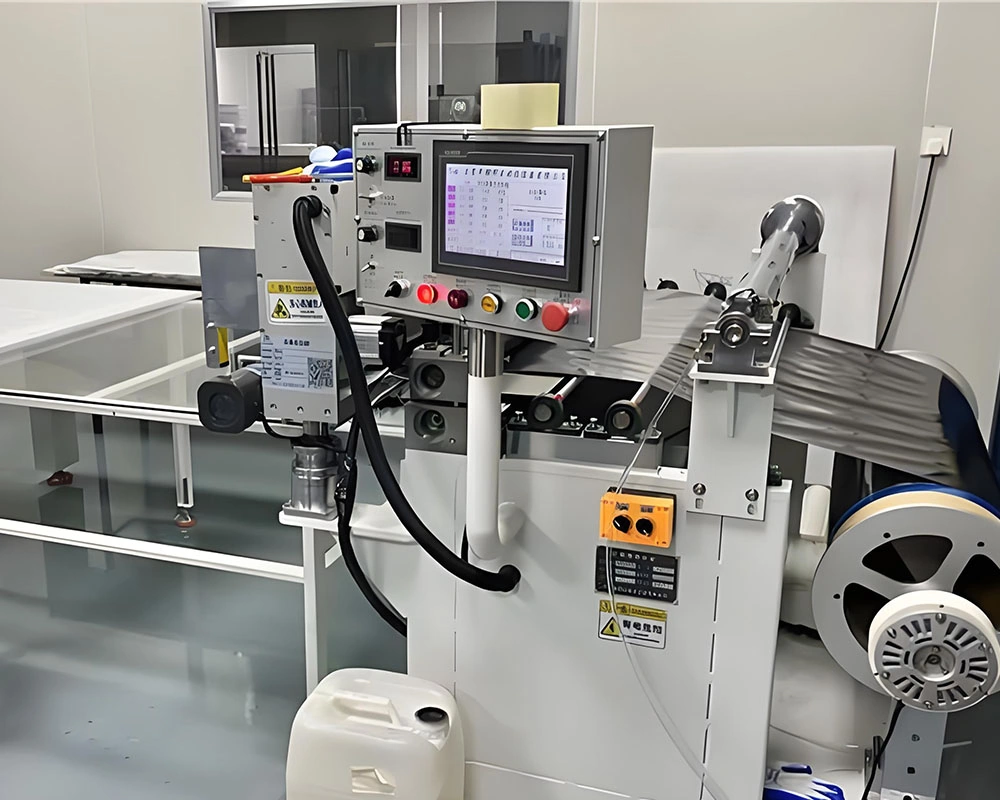
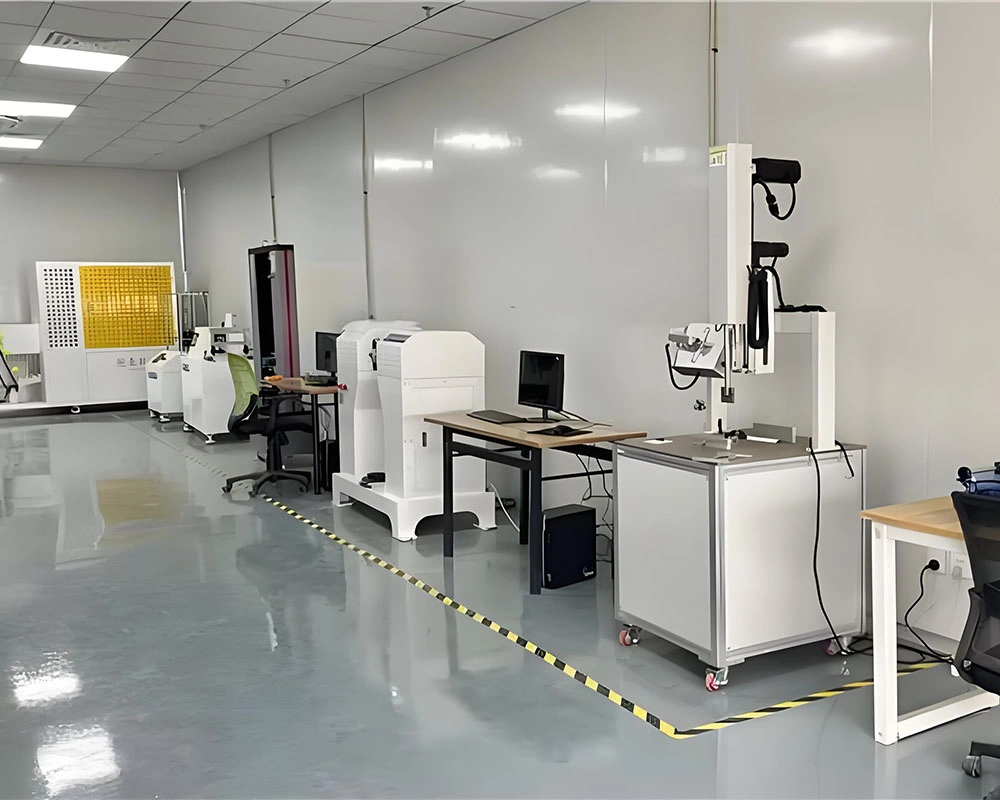
USA Pickleball says the Image Systems camera and software platform used for the test will be commercially available, as will the instrumented test ball developed with Franklin. The supplied protocol identifies the analysis software as PaddleVision. This gives qualified manufacturers a route to build more comparable pre-submission capability. Buying the equipment alone does not make an internal result official: calibration, ball control, conditioning, procedure revision, and operator controls must also match the applicable SOP. USAP directs equipment-availability questions to its Equipment Evaluation Committee.

Old and New Test Logic: Roughness, COF, Spin Rate, and PBCoR
Under the January 2025 USA Pickleball Equipment Standards Manual, Roughness and COF indirectly evaluate excessive-spin potential. The new test measures ball rotation itself. Roughness and COF remain useful diagnostics even after their upper thresholds become measurements of record.
| Test | What it measures | Role before October 1, 2026 | Role for new submissions from October 1, 2026 | OEM value |
|---|---|---|---|---|
| Spin Rate | Ball rotation after impact, in RPM | Optional early evaluation under the announced transition | Certification result must be 2,100 RPM or less under the applicable official procedure | Final-system compliance risk and output verification |
| Surface Roughness | Peak-to-valley texture of the paddle face | Upper-threshold certification requirement | Measurement of record | Diagnoses peel-ply, molding, sanding, resin, and surface-finish consistency |
| Coefficient of Friction (COF) | Friction behavior between the paddle surface and test interface | Upper-threshold certification requirement | Measurement of record | Diagnoses coating, spray, resin, cure, contamination, and wear variation |
| PBCoR | Paddle-ball rebound and energy-return behavior | Separate power-related requirement | Remains distinct from the spin framework | Controls core, face stiffness, break-in, and excessive rebound risk |
PBCoR is not another name for spin. A paddle may be inside one limit but present a separate rebound issue. For brands targeting USA Pickleball certification – historically searched as USAPA Approved Paddles – both workstreams belong in the validation plan.
Same 2,100 RPM number as UPA-A, but not the same certification
UPA-A’s 2026 Paddle Rules also set a maximum spin rate of 2,100 RPM. The shared numerical ceiling can reduce conflict when a brand develops one surface strategy for USA Pickleball-sanctioned and UPA-A professional markets. It does not make the programs interchangeable. The organizations use separate approval systems, protocols, lifecycle procedures, and power metrics: USAP uses PBCoR, while UPA-A uses Paddle Efficiency Factor (PEF). A brand may simplify its design target, but it must validate and submit against each market’s current requirements.
Implementation Timeline and Transition Rules
The transition depends on the standard in effect at certification and, for the new requirement, the submission date.
| Date or period | What applies | What brands should do |
|---|---|---|
| July 8, 2026 | USAP announces the 2,100 RPM maximum, October 1 implementation, and Roughness/COF records. | Confirm the submission path for active projects. |
| July 15, 2026 | The announced SOP distribution date and effective date shown on the supplied Element protocol. | Obtain the controlled SOP rather than relying on a circulated copy. |
| Before October 1, 2026 | Voluntary full certification with Spin Rate is available, but passing models will not be listed early. Models may still qualify under existing Roughness/COF requirements. | Choose the path deliberately. |
| From October 1, 2026 | Every paddle submitted for certification must measure 2,100 RPM or less to receive USA Pickleball approval. Roughness and COF upper limits are replaced by measurements of record. | Submit only after the BOM, face process, model identity, and production revision are locked. |
The announcement does not impose blanket retroactive Spin Rate testing on models certified under prior rules. It also does not create an unrestricted “grandfather clause.” Production units must remain consistent with certified samples and compliant throughout their useful life.
ECN changes that require compliance review
USA Pickleball does not publish a universal list saying each change below automatically forces retesting. Its submission FAQ does say a Similarity Submission must use identical materials, manufacturing, and surface-finishing processes. Treat these ECNs as high-risk and obtain a written determination on whether a new or Similarity Submission is required:
- New face-material, peel-ply, resin, coating, grit, or adhesive supplier/specification.
- Changed resin ratio, layup, spray weight, sanding, printing, clear coat, press, or cure cycle.
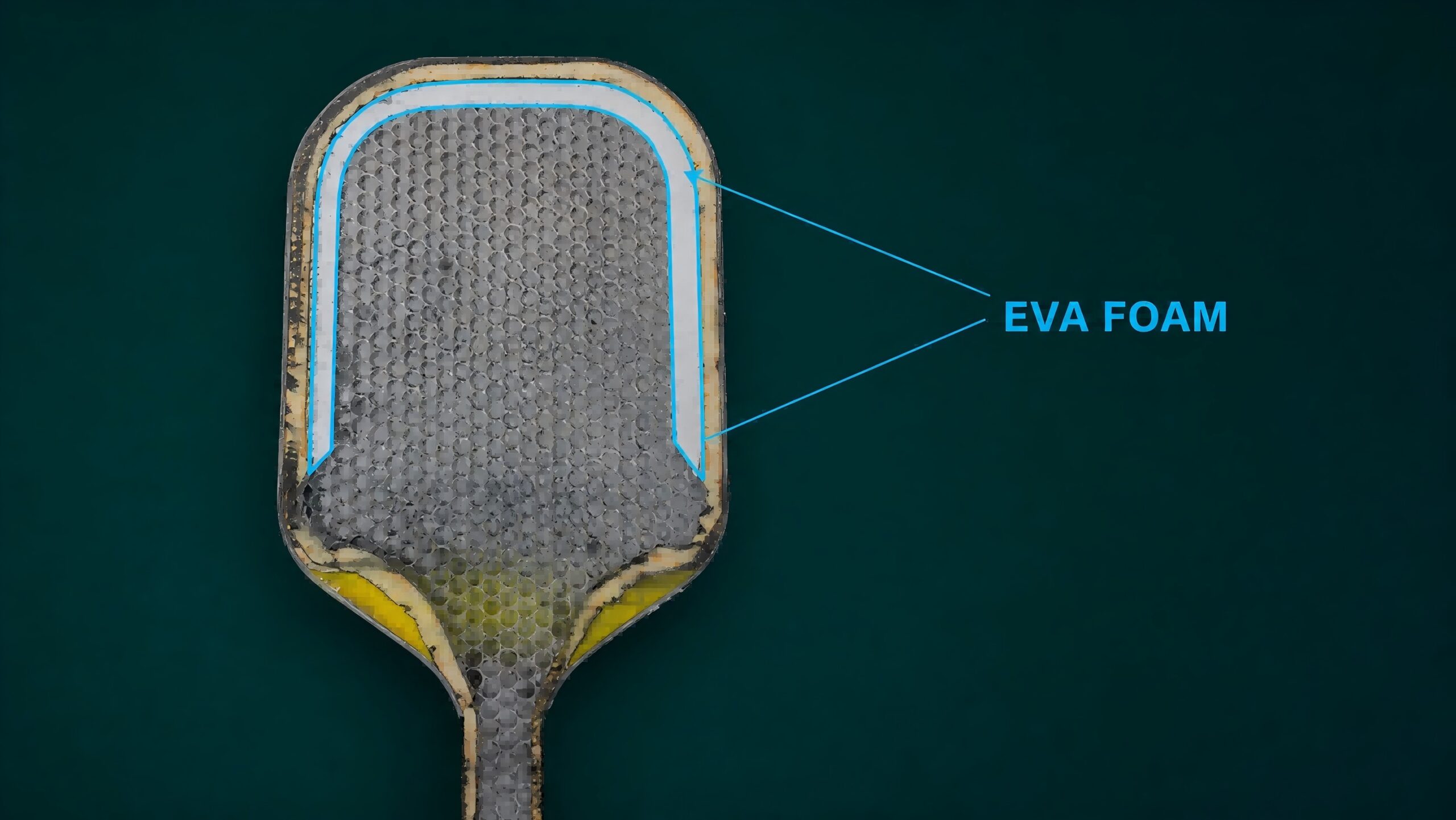
- Changed core material, density, thickness, construction, or foam treatment.
- Changed finished geometry or another feature that can alter face response.
- New model identity or production revision that no longer matches the certified record.
Do not let purchasing release a substitute before engineering, QA, the brand owner, and the relevant certification body review it.
What the 2,100 RPM Limit Changes for OEM Development
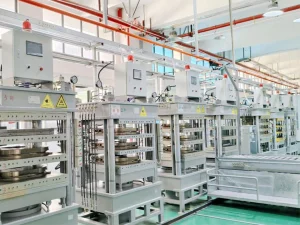
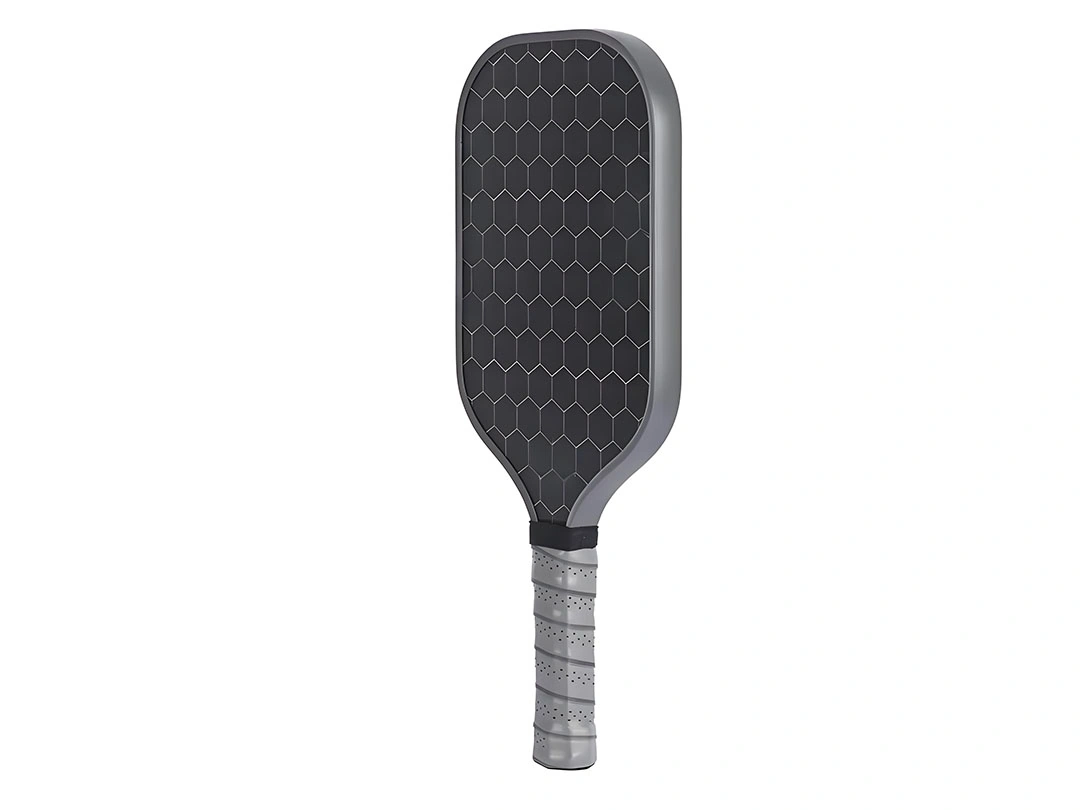
The correct test article is the complete paddle, not a laminate or coating coupon. For Raw Carbon Paddles, finished texture reflects fiber, resin, peel-ply, pressure, cure, printing, sanding, core response, and variation between faces and strike locations.
A target too close to 2,100 RPM is commercially fragile because normal material and process variation moves results. An internal limit should leave room for measured variation, but no single margin suits every construction. Set it from the design’s data distribution, measurement uncertainty, break-in behavior, and supplier capability.
A note on NexaPaddle’s internal data
NexaPaddle uses internal testing for development and risk management, not as a substitute for USA Pickleball laboratory results. Because the records reviewed for publication did not trace the proposed figures to identified samples and an applicable setup, no factory RPM range is published. Use internal data to create design space, never to predict approval.
A Factory-Side Spin Risk Control Workflow
1. Test the finished construction
Build samples with production-intent face material, resin, core, press cycle, peel-ply or coating, artwork, and finishing. A specially prepared laboratory face that cannot be repeated in production creates false confidence.
2. Map the face before submission
Measure both sides and multiple relevant impact areas during development. Follow every condition required by the applicable SOP and retain the individual results. This mapping is broader than the official result; its purpose is to find spatial or face-to-face variation before a laboratory does.
3. Compare fresh, conditioned, and production samples
A fresh prototype is only one state. Compare new, conditioned or broken-in, and random production-intent units. Abrasive surface wear often reduces texture and spin potential, but structural change is not always one-directional: resin softening, face/core damage, or altered deflection can change dwell, contact behavior, rebound, and measured RPM. Do not assume every paddle becomes less risky with use. Measure the trajectory, and investigate spin and power metrics separately under the applicable lifecycle procedures.
4. Link measurements to process records
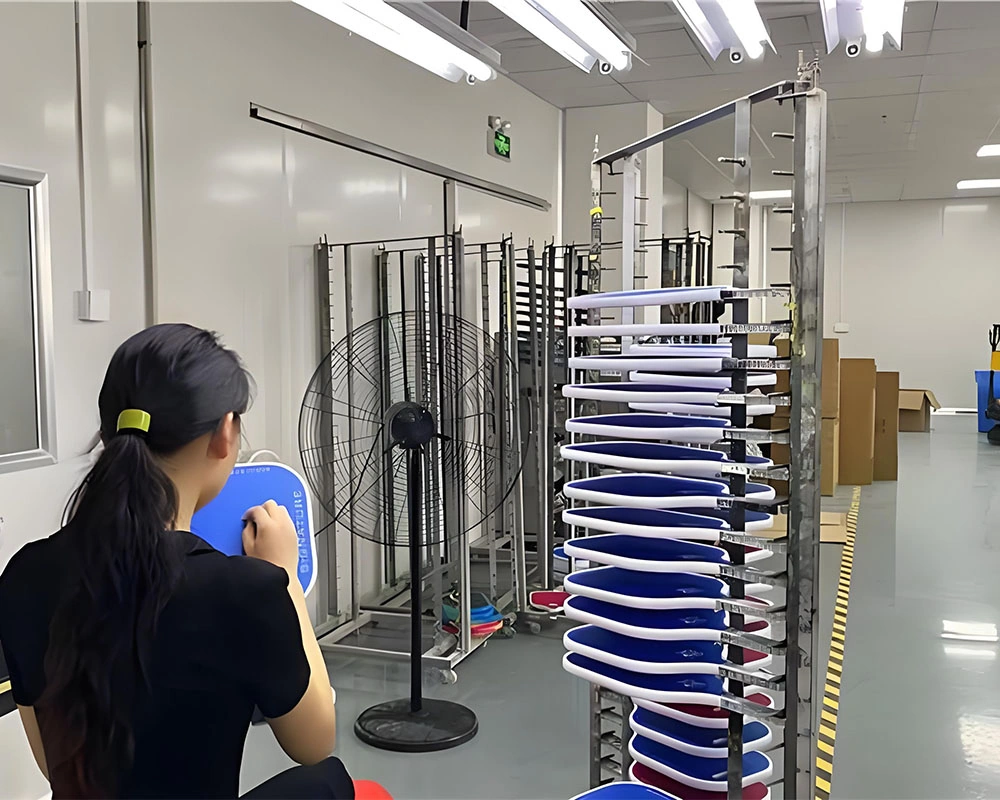
Connect every sample to its BOM revision and manufacturing record. Retain the material lots, peel-ply specification, application or layup details, press and cure record, finishing route, line, date, and sample ID. Without this linkage, readings cannot guide corrective action.
5. Set control limits from evidence
Do not use 2,100 RPM as the factory’s routine release target. Establish an internal action level based on observed sample and batch variation. If results trend upward, investigate before units approach the official limit. Roughness and COF remain useful diagnostic variables even when they are measurements of record.
OEM Action Checklist
- Confirm the official test version and the model’s transition status.
- Test a complete, production-representative paddle rather than a material coupon.
- Record each applicable test condition separately; do not create an unofficial average to hide a high result.
- Compare both faces and multiple relevant strike locations during development.
- Compare fresh, conditioned, pilot, and mass-production samples.
- Define an evidence-based internal action level below 2,100 RPM.
- Track face material, resin, peel-ply, spray, cure, and finishing lots.
- Freeze the BOM, surface process, model name, artwork, and production revision before submission.
- Sample production batches and retain traceable reference units.
- Review every material or process change for certification and consistency impact.
Frequently Asked Questions
Is 2,100 RPM the maximum spin a player can produce?
No. It is a certification result under a controlled procedure; player-test numbers are not automatically comparable.
Can lower results be averaged with a high result to claim compliance?
Only the applicable SOP determines the official averaging method. Do not combine privately selected conditions to dilute a high reading.
Are Surface Roughness and COF irrelevant after October 1, 2026?
No. As measurements of record, both remain useful R&D and QC diagnostics for texture, coating, resin, cure, and finishing changes.
Does a raw carbon face automatically pass the Spin Rate Test?
No. Fiber, resin, surface formation, cure, finish, core response, and production variation all matter. Test the complete paddle.
How is Spin Rate different from PBCoR?
Spin Rate measures ball rotation; PBCoR evaluates rebound and energy return. Neither substitutes for the other.
What happens to paddles certified before October 1, 2026?
Models follow the standards in effect at certification, while the new test applies to submissions from October 1, 2026. Existing status still requires conformity to the certified construction and lifecycle requirements.
Plan Compliance Before You Lock the Paddle
The 2,100 RPM rule makes spin engineering more measurable, but it does not make certification automatic. Brands need representative samples, controlled surface processes, traceable test data, and batch-level follow-through.
NexaPaddle supports compliance planning, prototype evaluation, specification lock, and production-consistency programs for Custom OEM Paddles. The goal is to identify and manage risk before submission and mass production – not to promise an approval outcome that only USA Pickleball can determine.
Sources
- USA Pickleball. Update Regarding the USA Pickleball Spin Rate Test and Implementation Timeline. Published July 8, 2026; page metadata updated July 14, 2026.
- USA Pickleball. Equipment Standards Manual. January 2025.
- USA Pickleball. Equipment Submission FAQ. Similarity Submission and pre-production testing guidance; checked August 20, 2026.
- UPA-A. Paddle Rules, Version 26.4. 2026.
- Element U.S. Space & Defense. USA Pickleball Spin Rate Test Protocol, Document No. USA Spin Rate – 2026, Revision 0, issue/effective date July 15, 2026. Supplied reference PDF; marked uncontrolled and for reference only.