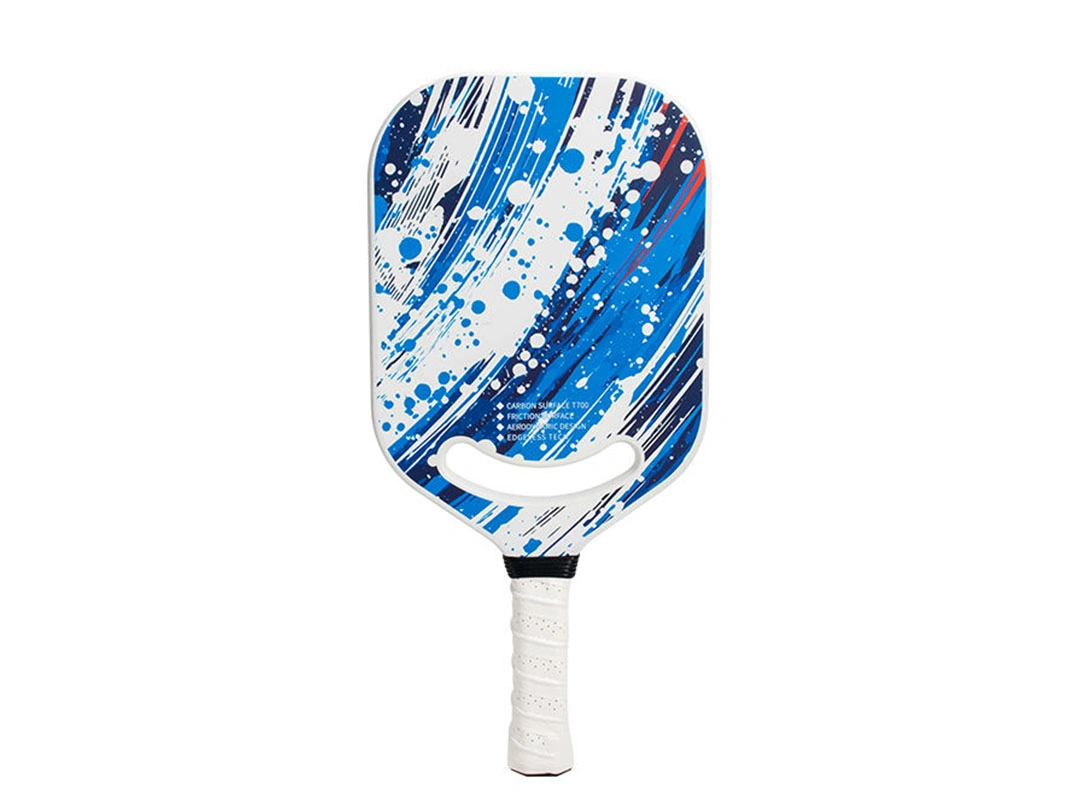
Every serious paddle on the market today — Selkirk, JOOLA, Vatic Pro, CRBN — converges on the same face material: T700 carbon fiber. That’s not a coincidence driven by marketing. It’s the result of material science playing out identically across every engineering team that has seriously examined the problem.
For a grade-to-grade and weave comparison, use our T700 vs T800 carbon fiber guide for pickleball paddle brands before you lock the face specification.
But “T700 carbon fiber” has become such a common label that most buyers have stopped asking why it works. They see the spec, trust the brand, and move on. That’s a mistake — because once you understand the actual mechanics behind T700’s performance, you make better decisions not just about which paddle to buy, but about which paddle to trust for the long haul.
This article is the deep dive. We’ll start with the raw material science from Toray Industries’ own published data, walk through friction mechanics and why fiber geometry determines spin capability, then explain what “durability” actually means at the molecular level. By the end, the phrase “T700 carbon fiber” will mean something specific and testable to you — not just a marketing checkbox.
The Material Itself: What Toray’s Data Actually Says
T700 carbon fiber is manufactured by Toray Industries — Japan’s largest chemical company and the world’s leading producer of structural carbon fiber. The T700 designation refers specifically to the T700SC and T700S product family, both of which appear in Toray’s certified technical data sheets.
Here are the baseline fiber properties — not marketing claims, but published test data:
| Property | T700 (Toray T700SC) |
|---|---|
| Tensile Strength | 4,900 MPa (711 ksi) |
| Tensile Modulus | 230 GPa (33.4 Msi) |
| Elongation at Break | 2.1% |
| Density | 1.80 g/cm³ |
| Filament Diameter | 7 μm |
To put 4,900 MPa in context: structural steel runs around 400–800 MPa. High-strength aluminum alloys top out around 500 MPa. T700 carbon fiber has roughly 6–10× the tensile strength of metals at a fraction of the weight.
Toray itself classifies T700 as an intermediate-modulus, high-strength fiber — the same grade used in primary load-bearing structures of the Boeing 787 Dreamliner. When aerospace engineers need a material that absorbs enormous cyclical stress loads without fatiguing, they reach for T700. That context matters, because every pickleball swing is a fatigue cycle too.
Why T700 Hits the Engineering Sweet Spot
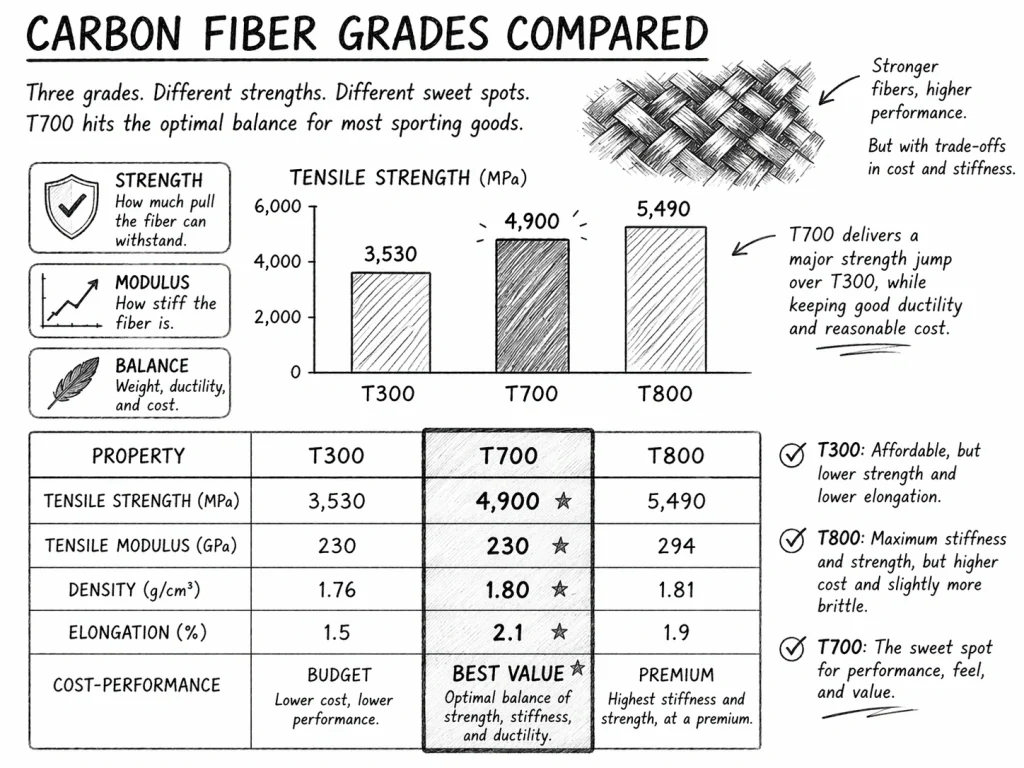
There are three carbon fiber grades commonly discussed in sporting goods: T300, T700, and T800. Understanding where T700 sits — and why it’s not T300 or T800 — requires looking at all three simultaneously.
| Property | T300 | T700 | T800 |
|---|---|---|---|
| Tensile Strength (MPa) | 3,530 | 4,900 | 5,490 |
| Tensile Modulus (GPa) | 230 | 230 | 294 |
| Density (g/cm³) | 1.76 | 1.80 | 1.81 |
| Elongation (%) | 1.5 | 2.1 | 1.9 |
| Cost-Performance | Budget | Best Value | Premium |
The critical column is tensile strength. T700 is 39% stronger than T300 — not marginally stronger, but structurally in a different category. That difference shows up in fatigue resistance (how many impact cycles a paddle survives before microfractures develop) and in the stiffness-to-mass ratio that determines how cleanly energy transfers from your swing to the ball.
Now look at T800. At 5,490 MPa, it’s only 12% stronger than T700, while its modulus jumps from 230 GPa to 294 GPa. That modulus increase makes the face stiffer — sometimes useful for raw power, but it also reduces the fiber’s elongation-at-break from 2.1% down to 1.9%. T700’s higher elongation is not a weakness; it means the fiber can absorb slightly more deformation before fracturing, which is exactly the behavior you want in a surface that takes thousands of ball impacts per session.
More practically: T800 costs significantly more for a marginal gain. For aerospace applications where every kilogram saved has a dollar value, T800 makes sense. For a paddle manufacturer trying to deliver genuine pro-grade performance at a price that doesn’t require a mortgage, T700 is the optimized answer.
This is precisely why the entire market converged on T700. It’s not that T800 paddles don’t exist — it’s that the engineering argument for T700 is genuinely stronger once you account for cost, durability, and the specific mechanical demands of pickleball.
Friction Science: How Fiber Geometry Creates Spin
This is where most T700 explanations stop too early. They say “T700 creates more spin” and leave it there. The actual mechanism is worth understanding.
The Micro-Texture Effect
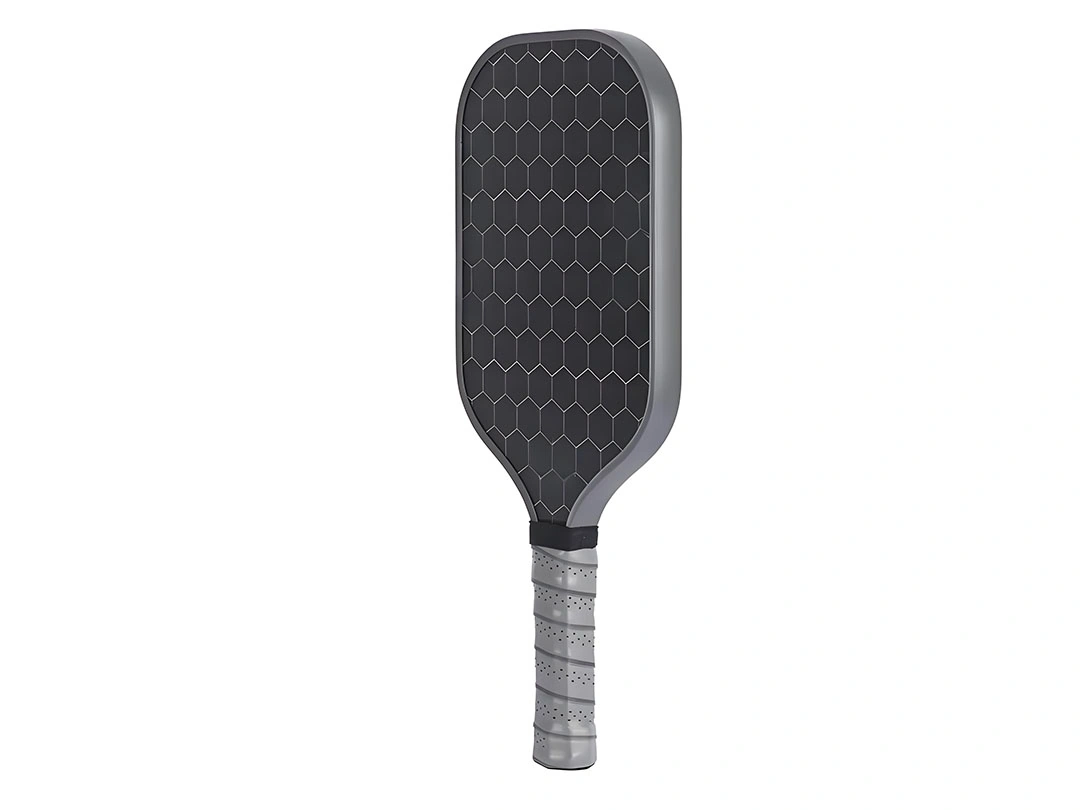
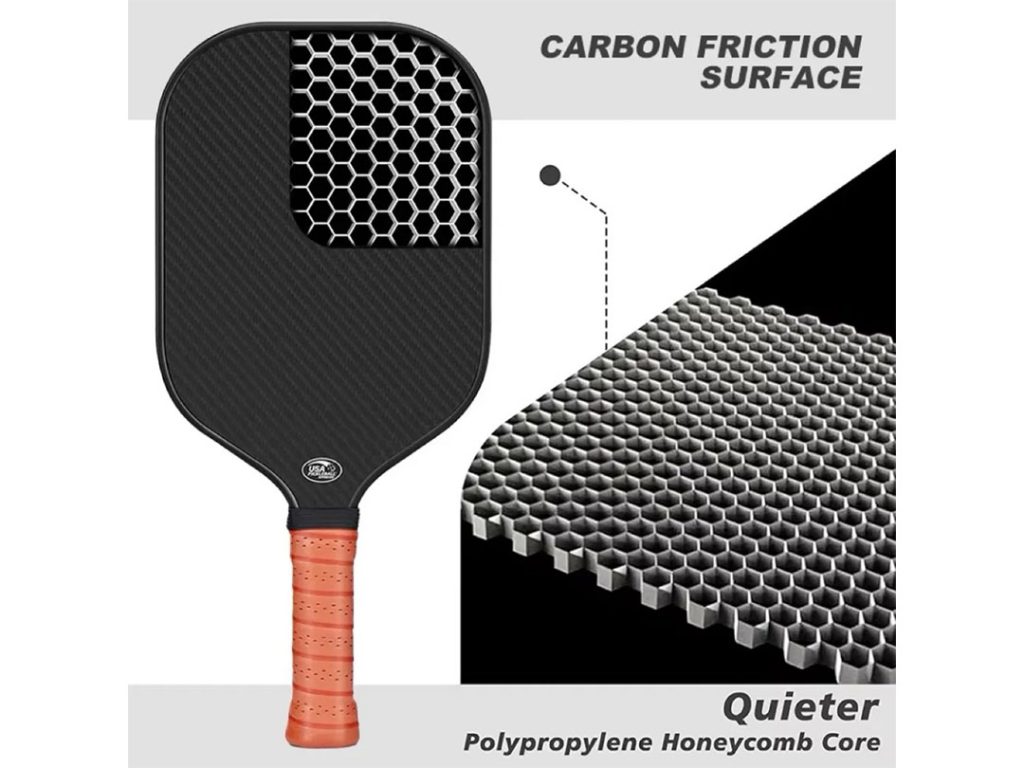
T700 carbon fiber filaments are 7 micrometers in diameter — roughly 1/10th the diameter of a human hair. When these filaments are laid up in either a unidirectional (UD) or 3K woven pattern and cured without surface coating, the resulting paddle face has a characteristic micro-texture at the scale of those filament bundles.
In UD construction, the fibers run parallel in a single direction. This creates what manufacturers call a “peel-ply texture” — a surface that feels like very fine sandpaper. In 3K woven construction, three-filament bundles are interlaced in a plain weave, creating a uniform crosshatch that increases surface contact area from multiple angles.
Both geometries do the same thing at the contact interface: they create microscopic ridges that engage the pickleball’s polymer surface, increasing the coefficient of friction between paddle and ball during the brief dwell time of impact (typically measured in milliseconds). Higher friction at the interface means more angular momentum is transferred to the ball relative to its center — which is the definition of imparted spin.
Raw T700 carbon surfaces are capable of generating 2,300+ RPM spin without any additional surface treatment. That number is measured by high-speed camera analysis of ball rotation immediately after impact.
Why Spray-On Grit Fails the Longevity Test
There’s a category of paddle that adds spin performance through applied grit — abrasive particles bonded to the face with adhesive. These paddles often test well out of the box. The problem is structural: those particles are bonded with adhesive to the face, not embedded in it.
Under repeated ball impacts, the bond between grit particles and paddle face degrades. The particles gradually break off or smooth down. Industry observation from paddle technicians puts spray-on grit performance life at 60–90 days of regular play before measurable spin performance decay. After that, you’re paying premium price for a paddle that’s performing like a mid-tier one.
Raw T700 carbon fiber doesn’t have this problem. The micro-texture is the fiber itself. There’s nothing to wear away except the fiber — and the fiber’s tensile strength of 4,900 MPa means it can withstand far more mechanical abuse than a surface adhesive can. The spin-generating geometry is intrinsic to the material structure, not a coating applied on top of it.
USA Pickleball Compliance
USA Pickleball’s Equipment Standards include specifications for maximum surface roughness on approved paddles. This is a compliance concern for brands using textured coatings — aggressive grit sprays can push paddles into non-approved territory.
The natural micro-texture of raw T700 carbon fiber — the same texture that generates 2,300+ RPM — operates within USA Pickleball’s approved roughness window without needing additional treatment. That means you can explore raw carbon pickleball paddles with confidence that the surface performance is both compliant and durable.
Durability: What 4,900 MPa Means Over a Season
Tensile strength is often treated as a marketing number. It’s not. It directly governs two durability mechanisms that determine how long a paddle performs at spec.
Fatigue Resistance and Impact Cycles
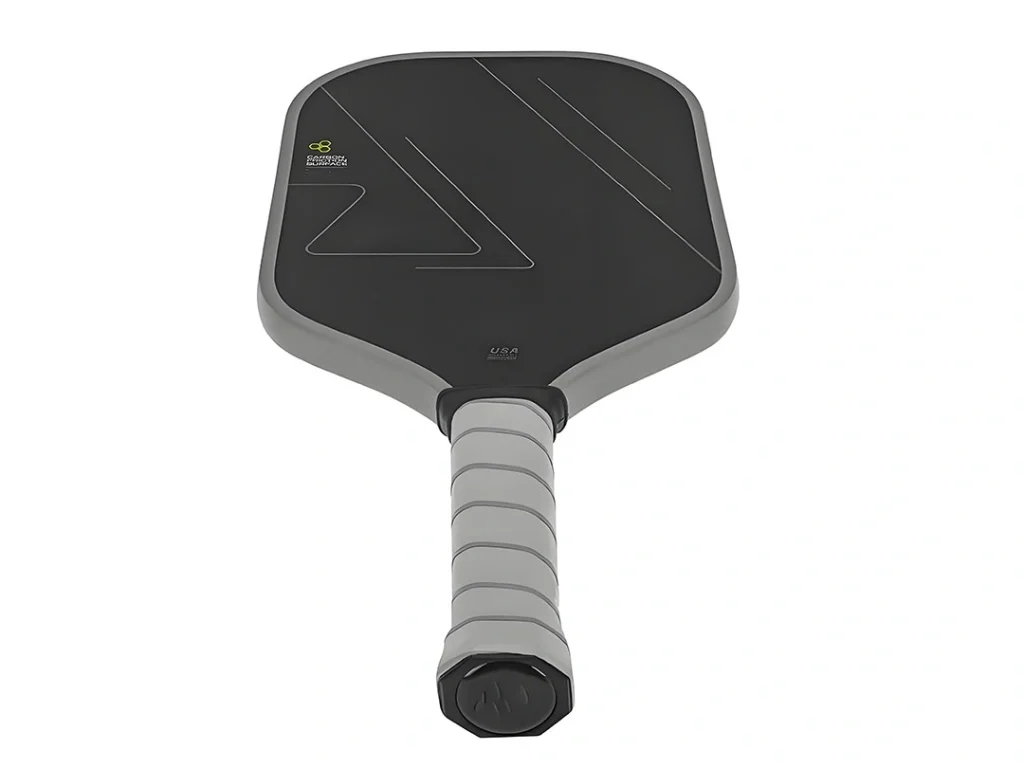
Every paddle hit is a fatigue cycle — the face flexes slightly under impact and springs back. Over thousands of cycles, materials with lower tensile strength develop microfractures along stress lines. This is the phenomenon that causes fiberglass paddles to “die” — they don’t fail catastrophically, they gradually lose structural stiffness, which players describe as “losing pop.” The paddle still hits balls, but it’s no longer performing as designed.
T700’s 4,900 MPa tensile strength means its threshold for microcrack initiation is dramatically higher than fiberglass (typically 400–700 MPa tensile strength for E-glass). Combined with a tensile modulus of 230 GPa — roughly 3–4× stiffer than fiberglass — the T700 face undergoes significantly less micro-deformation per impact. Less deformation per cycle means fewer fatigue cycles needed to accumulate damage. The paddle stays stiffer, longer.
This also means stiffer energy transfer per hit. A face that deforms less at impact returns more energy to the ball rather than absorbing it internally — which is the mechanism behind “pop” and “power” in paddle design language.
Delamination: The Silent Killer
The most common catastrophic failure mode in composite paddles is delamination — the face skin separating from the core material. In cold-press construction, the face and core are bonded with adhesive at the junction. Every impact subjects that adhesive bond to shear stress. Over time, the bond fatigues and the layers begin to separate.
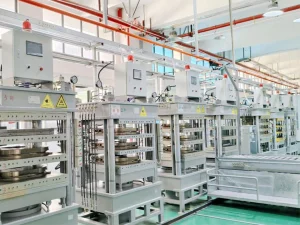
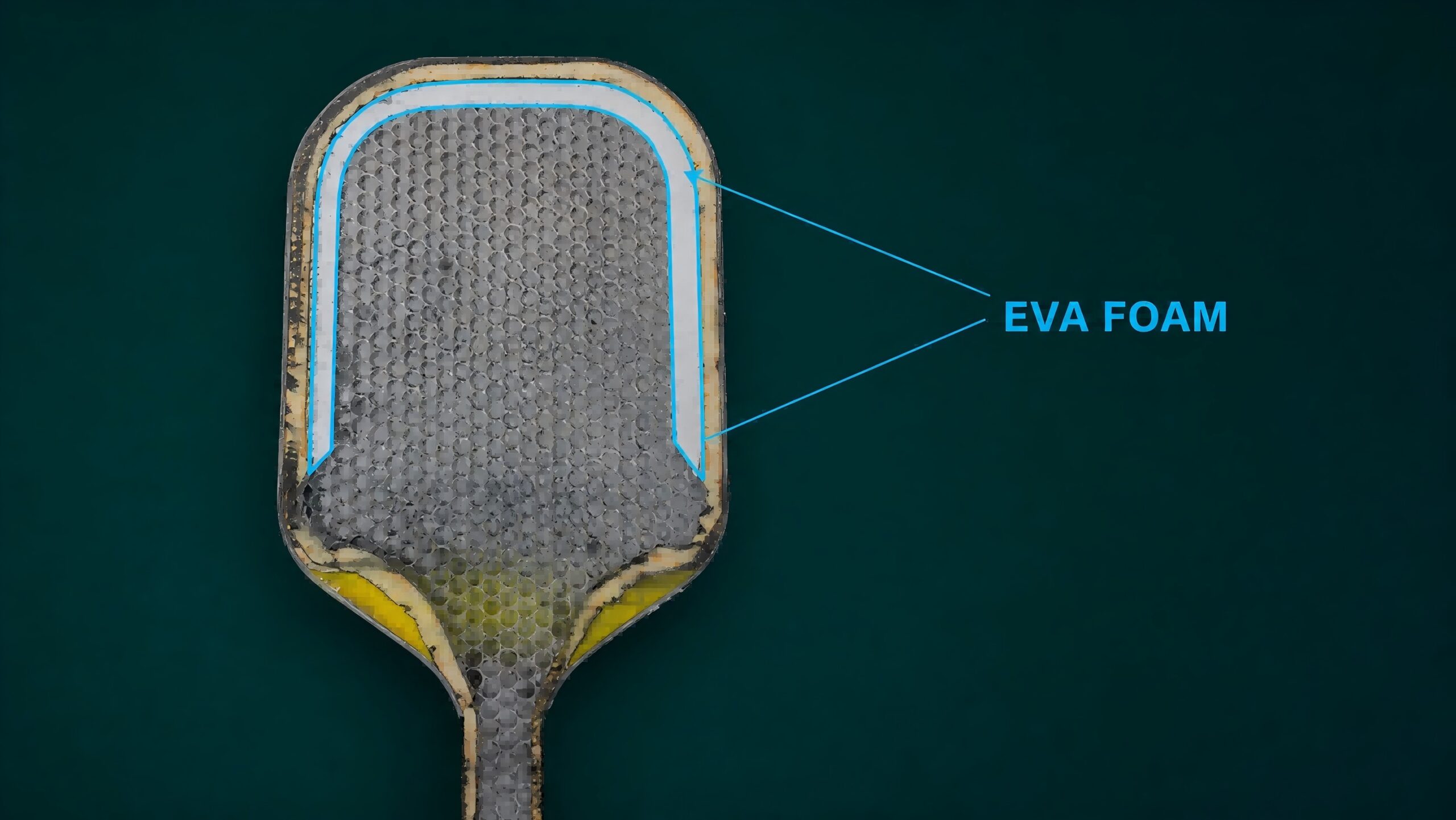
Thermoformed construction eliminates cold-press delamination risk by a different mechanism. In the thermoform process, the entire paddle — face carbon fiber, edge walls, and handle — is heated and pressed simultaneously so the carbon fiber flows and bonds at a molecular level with the core. There’s no discrete adhesive layer to fail. The continuous T700 carbon fiber runs from face through handle with zero separate bond points.
This is why leading thermoformed pickleball paddles are categorically more durable than cold-press equivalents regardless of face material: it’s a structural architecture difference, not just a materials difference.
You can explore the full range of T700 carbon fiber paddles that use this construction approach — the common thread is long-term structural integrity that cold-press designs can’t match.
Industry Validation: Why Every Pro Brand Chose T700
It’s worth briefly examining the market evidence, because it tells a consistent story.
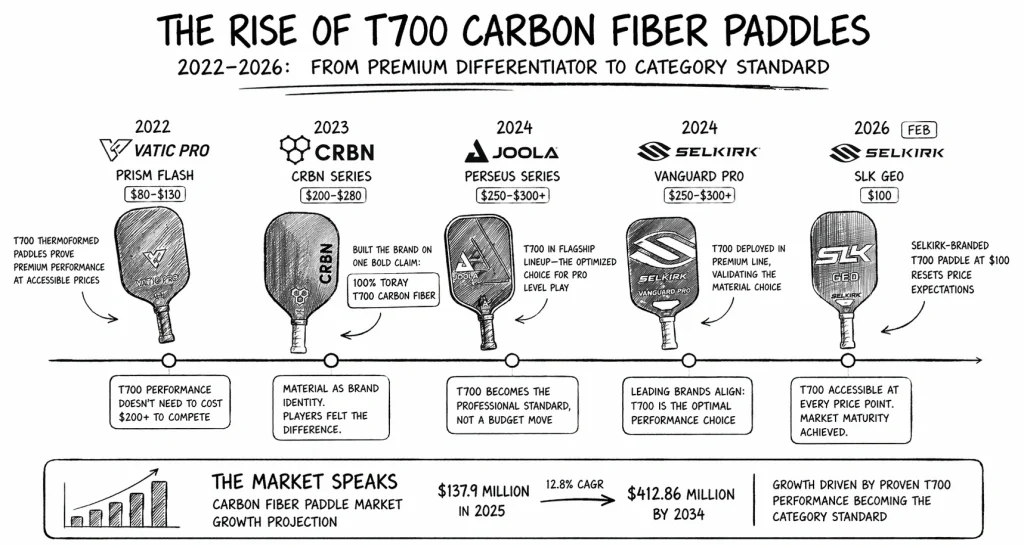
CRBN built its entire brand identity around the claim of “100% Toray T700 carbon fiber” — making the material specification itself the brand differentiator. That’s a bold move that worked because the performance difference is real and players can feel it.
Vatic Pro demonstrated that T700 thermoformed paddles could compete against legacy brands at $200–$280 retail — at price points of $80–$130. The winning argument wasn’t price alone; it was T700 performance at a price that made sense.
Selkirk’s SLK Geo, launched in February 2026 at $100 retail with T700 construction, effectively reset consumer price expectations. When a Selkirk-branded T700 thermoformed paddle hits $100, it signals that the manufacturing economics are mature enough to make T700 accessible at all market levels.
JOOLA Perseus and the Selkirk Vanguard Pro both use T700 in their flagship product lines — not as a budget measure, but as the optimized choice for professional-level play.
The carbon fiber paddle market is valued at $137.9 million in 2025, projected to grow at 12.8% CAGR to $412.86 million by 2034. That growth is driven largely by the proven performance of T700 carbon fiber construction becoming the category standard rather than the premium exception.
NexaPaddle’s Implementation: Engineering T700 for Two Specific Use Cases
Understanding T700 at the materials level makes it easier to evaluate how it’s implemented in specific paddle designs. Two NexaPaddle models — Mold #5 and Mold #7 — represent distinctly different engineering approaches to the same material, each optimized for a different player profile.
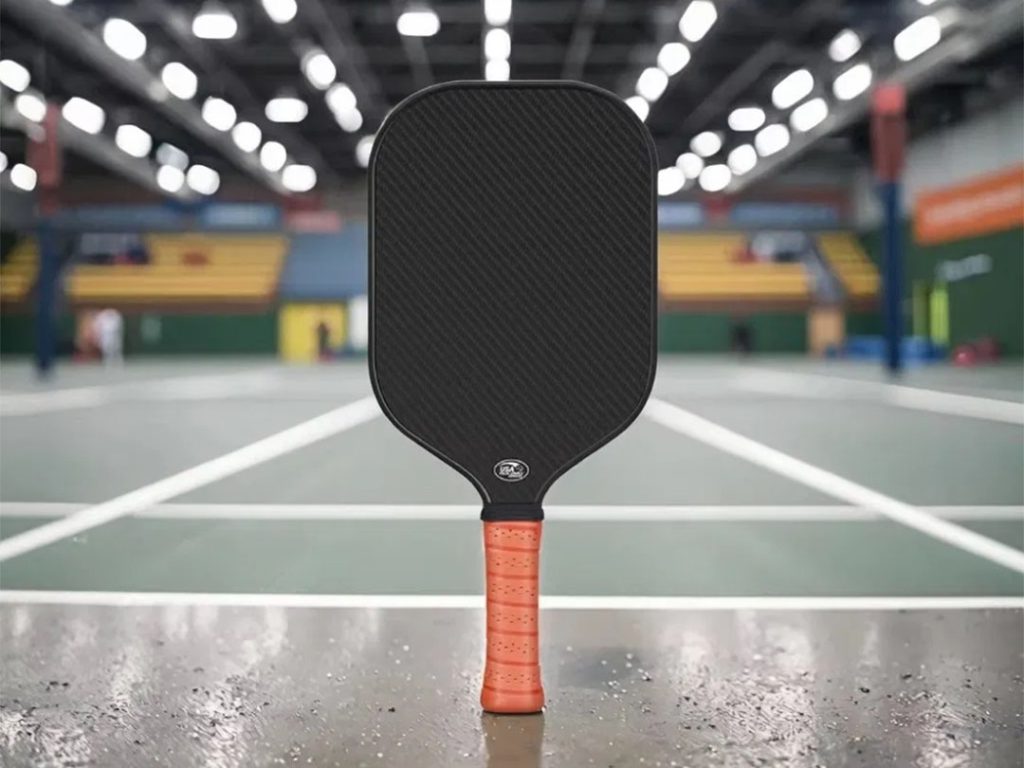
Mold #5: T700 Thermoformed for Two-Handed Backhand Players
The Mold #5 is designed around a player requirement that’s increasingly common as more tennis players transition to pickleball: the two-handed backhand. A standard 130mm pickleball handle is functionally too short to execute a comfortable two-handed backhand grip — the off-hand runs out of room.
Mold #5 Specifications:
- Face: T700 UD/3K carbon fiber
- Core: PP Honeycomb
- Dimensions: 415×185mm
- Thickness: 16mm
- Weight: 215–230g
- Handle: 145mm extended
- Construction: Thermoformed integrated
- MOQ: 100 pcs
The 145mm handle is the design center here. It provides 15mm of additional real estate compared to standard handles — enough for the off-hand to establish a secure grip without cramping. The thermoformed construction ensures that the T700 face and extended handle form a single continuous structure; there’s no adhesive joint at the handle-neck junction that would be the first failure point under two-handed backhand loads (which generate higher torque than single-handed strokes).
The 16mm core thickness strikes a balance between control (thicker cores soften power but improve feel) and the spin generation that T700’s surface texture enables. This is a paddle for carbon fiber pickleball paddles at the advanced level — players who need both spin capability and the structural integrity to handle rotational grip loading.
Mold #7: Hot Press Forged — The Highest-Integrity Construction Available
If thermoformed construction improves on cold-press by eliminating adhesive bond points, hot press forging takes that logic another step further.
Mold #7 Specifications:
- Face: T700 UD/3K carbon fiber
- Core: PP Honeycomb
- Dimensions: 420×185mm (BV71/BV73) or 425×186mm (BV75)
- Thickness: 13.5–14mm / 16mm
- Weight: 220–235g
- Handle: 145mm
- Construction: Hot Press Forging
- MOQ: 100 pcs
Hot press forging applies extreme temperature and precision-controlled pressure through steel molds rather than the flexible tooling used in standard thermoforming. Steel molds cannot flex — which means the dimensional tolerances on the finished paddle are tighter, the fiber compression is more uniform, and the resulting structure has fewer void spaces where delamination could initiate.
The engineering outcome is zero delamination risk in normal play conditions and structural integrity rated for pro-level use where paddles see frequent, high-velocity impacts in competitive settings. Tournament players who go through multiple paddles per season because standard thermoformed paddles eventually delaminate will find the Mold #7 forged structure addresses that specific failure mode.
This is the application that the forged T700 carbon pickleball paddle factory approach was built for — maximum structural integrity for players who demand the most from their equipment and can’t afford paddle failure mid-tournament.
The two thickness options (13.5–14mm and 16mm) allow players to tune the power-control balance: thinner core = stiffer face response and more power transmission, thicker core = softer feel and enhanced ball placement control.
The Honest Summary
T700 is the gold standard for a concrete reason: it’s the engineering optimum at the intersection of tensile strength, modulus, surface geometry, and manufacturing cost for pickleball paddles at this moment in the sport’s technical development.
- T300 is cheaper and weaker — 39% lower tensile strength means faster fatigue degradation and less micro-texture durability.
- T800 is stronger but only marginally — 12% more tensile strength at significantly higher cost and a higher modulus that doesn’t translate to proportional on-court gains for most players.
- Fiberglass fails on both fronts — lower strength, lower modulus, and no inherent micro-texture for spin generation.
T700 generates 2,300+ RPM spin through fiber geometry that cannot wear away. It resists fatigue through tensile strength rated for aerospace structural applications. It enables delamination-free construction through thermoforming and forging processes that turn the continuous carbon fiber into structural architecture, not just surface coating.
When you see “T700 carbon fiber” on a paddle spec sheet, you now know what that means — and what to look for in the construction that surrounds it.
Frequently Asked Questions
What’s the actual difference between T700 UD and T700 3K carbon fiber on a paddle face?
UD (unidirectional) carbon fiber aligns all fibers in a single direction, creating a smooth, directionally-consistent surface with a slight linear texture. 3K refers to bundles of 3,000 filaments woven in a plain-weave pattern, producing the classic crosshatch carbon fiber aesthetic. Both use T700-grade fiber, so tensile strength is identical. The 3K weave tends to create slightly more omnidirectional micro-texture (useful for players who generate spin from various swing angles), while UD provides marginally more uniform stiffness across the face. In practice, both outperform non-carbon alternatives by a substantial margin. Most pro paddles offer both options; choice often comes down to visual preference.
Does raw T700 carbon fiber degrade over time the way spray-on grit does?
No — this is one of T700’s key structural advantages. Spray-on grit is an adhesive-bonded coating; it can and does wear off within 60–90 days of regular play. Raw T700 carbon fiber’s micro-texture is intrinsic to the fiber structure itself. The only way to degrade it is to abrade the carbon fiber, which requires mechanical force far beyond normal ball impacts. Under normal play conditions, raw T700 surface performance is stable across the paddle’s functional lifespan. The paddle eraser accessory (used to remove polymer debris from the pickleball that gets embedded in surface texture) helps maintain consistent spin response without affecting the underlying fiber geometry.
Is T700 carbon fiber paddle face compliant with USA Pickleball rules?
Yes, when constructed without aggressive added coatings. USA Pickleball’s Equipment Standards specify maximum surface roughness thresholds for approved paddles. Raw T700 carbon fiber — both UD and 3K — naturally produces surface roughness within those approved limits. This is a compliance concern primarily for paddles with aggressive added grit treatments. Raw T700 paddles that have passed USAPA approval testing confirm that the natural fiber surface meets the roughness specification by design, not by luck.
Why does Mold #7’s hot press forging process matter for real-world durability?
Standard thermoforming uses flexible tooling — meaning slight dimensional variation is possible across different parts of the mold, and internal void spaces can form during the cure. Hot press forging uses rigid steel molds under extreme pressure, eliminating both issues. The result is tighter dimensional control, more uniform fiber compression, and fewer internal voids. Voids are where delamination initiates — water or air infiltration gradually expands them until the face separates from the core. By eliminating voids structurally, forged construction eliminates the primary delamination failure mechanism. For tournament players who need a paddle to perform consistently across multiple consecutive days of play, that structural difference is the delta between a paddle that survives a season and one that doesn’t.
Does T700 carbon fiber have an expiration date or “dead” condition like fiberglass?
Fiberglass paddles “die” because E-glass has lower fatigue resistance — microfractures accumulate faster, stiffness degrades, and the paddle gradually loses pop. T700’s 4,900 MPa tensile strength and 230 GPa modulus mean the threshold for fatigue damage initiation is far higher. Under normal play conditions, a properly constructed T700 paddle will not exhibit meaningful performance degradation within any reasonable play lifespan. The caveat is construction quality: a T700 face on a cold-press paddle with adhesive bonding can still delaminate even though the fiber itself is fine. The fiber and the construction method are separate variables — both matter. Thermoformed and forged T700 paddles address the construction variable directly, which is why the combination is what professionals reach for.
Sources & Citations
Toray Industries. Torayca T700S Technical Data Sheet. Toray CFE.
Toray Composite Materials America. Technical Data Sheets — Standard Modulus Carbon Fiber.
Helios Pickleball. Carbon Fiber Pickleball Paddle Guide: T700, Grades & Surface Tech. September 2025.
USA Pickleball. Equipment Standards & Approved Paddle List.
Industry Market Research. Carbon Fiber Pickleball Paddle Market Size, 2025–2034. Market forecast data, 2025.
Looking to source or customize T700 carbon fiber paddles for your brand? NexaPaddle manufactures thermoformed and forged T700 paddles with MOQ 100 pcs. Learn more about custom paddles and spin pickleball paddles built on the same T700 engineering principles covered in this article.