Introduction: A $700 Million Market With an Arm Problem
The pickleball industry crossed $702.9 million in 2025, powered by 36.5 million active players in the United States alone. If that number sounds impressive, the demographic breakdown behind it is more important to your business: the fastest-growing cohort is adults aged 40–65, many of them former tennis players who migrated to pickleball because it’s easier on the knees, the lungs, and — in theory — the arm.
In theory.
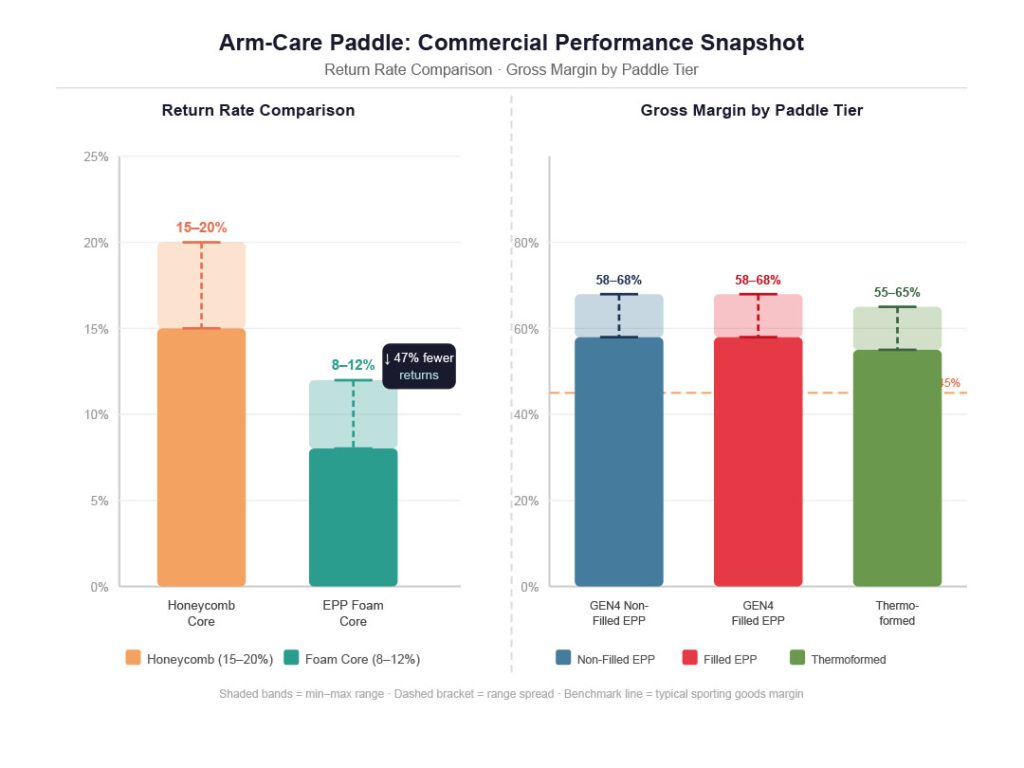
The reality is that lateral epicondylitis, commonly called tennis elbow, has become the number one repetitive stress injury in competitive pickleball. And unlike knee pain or general fatigue, tennis elbow doesn’t sideline players gradually — it arrives sharply, persists stubbornly, and drives frustrated players to return their gear at rates of 15–20% when a paddle is part of the problem.
For health and wellness brands, recovery-focused sports companies, and Amazon FBA sellers looking for a differentiated entry point into pickleball, this problem is your opportunity. The market is crowded at the power-first, aggressive-play end. The arm-care positioning is structurally underserved, medically credible, and aligns perfectly with the values of the 40+ consumer who already trusts your brand.
This article explains the engineering behind paddles that verifiably reduce injury risk, presents the sourcing options available through NexaPaddle’s Gen 4 lineup, and makes the commercial case for why your brand should be in this space before the window closes.
1. Why Tennis Elbow Is a Growing Problem in Pickleball
Tennis elbow is not a soft complaint. Lateral epicondylitis is a well-documented overuse pathology caused by repetitive micro-trauma to the extensor carpi radialis brevis (ECRB) tendon — the connective tissue that anchors forearm muscles to the lateral epicondyle of the humerus. In racket sports, the mechanism is straightforward: each impact transmits a vibration wave from the striking surface through the handle into the hand, wrist, and forearm. Enough repetitions, enough vibration amplitude, and tissue inflammation follows.
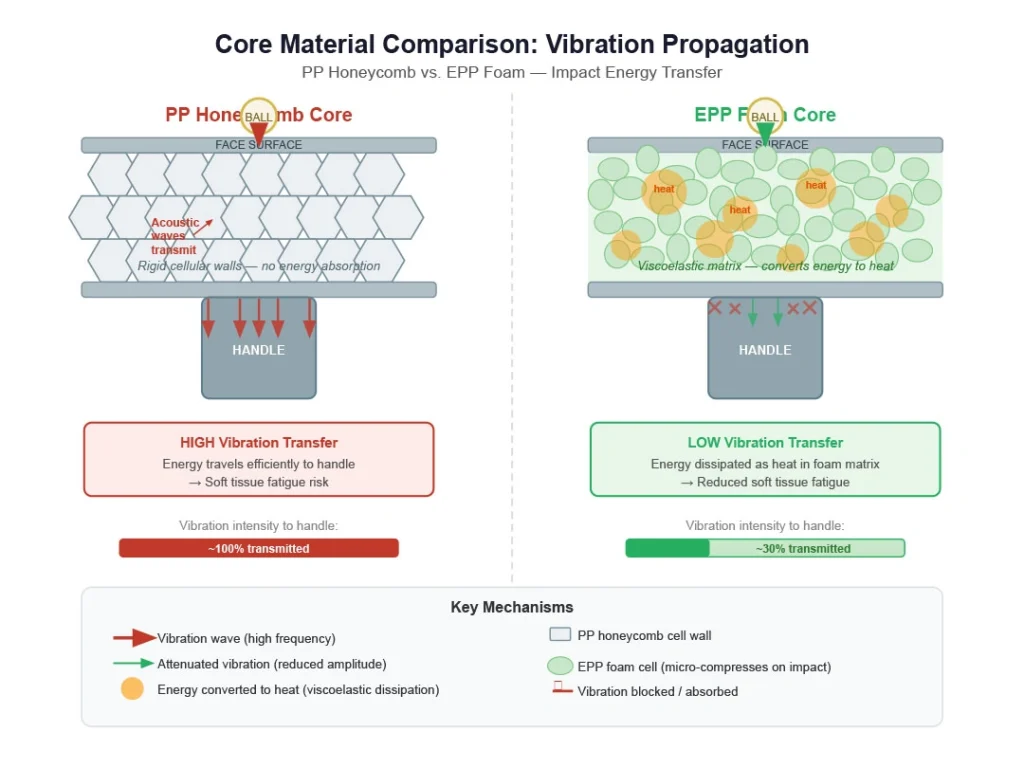
In pickleball, the vibration problem is specifically tied to the dominant paddle construction: carbon fiber faces over polypropylene (PP) honeycomb cores. PP honeycomb is stiff, light, and inexpensive to manufacture — qualities that drove its adoption across the industry. But stiffness is also the enemy of vibration dampening. Research from iAcesport’s vibration analysis work indicates that PP honeycomb core paddles transmit peak vibrations in the 200–500 Hz frequency band directly into the handle. This is precisely the range that excites the forearm muscle-tendon complex.
Now consider the playing context. A competitive rally in pickleball averages 8–10 shots. A 2–3 hour session might include 400–600 individual ball contacts. The cumulative micro-trauma load across that volume — particularly for players whose grip tension compensates for off-center hits — is substantial. A peer-reviewed nationwide study of 1,758 pickleball players published in Sports Medicine – Open (August 2025) quantifies the scale: 18.4% of all pickleball injuries involve the elbow, with an overall annual injury prevalence of 68.5% across the surveyed population. Overuse and chronic conditions accounted for 35.3% of the most serious injuries, and the average injured player was approximately 62.7 years old.
This is not a fringe demographic concern. The 40–65 age bracket represents the largest and most loyal buyer segment in the sport. These players spend more per session, buy premium gear, and return to purchase replacement equipment. They are also statistically more likely to have pre-existing joint sensitivity from decades of tennis, golf, or other racket sports. A paddle that aggravates that sensitivity doesn’t just generate a return — it generates a negative review, a social media post, and a lost customer for life.
The brands that recognize this are positioning arm care as their core value proposition rather than an afterthought buried in marketing copy. The engineering to support that positioning exists today.
2. The Engineering Solution: What Makes a Paddle Arm-Friendly
Three structural variables determine how much vibration a paddle transmits to the player’s arm: core material, frame weight, and construction method. Optimizing all three simultaneously is what separates a verifiably arm-friendly paddle from one that simply markets itself as such.
A. Foam Core Technology (Gen 4 EPP)
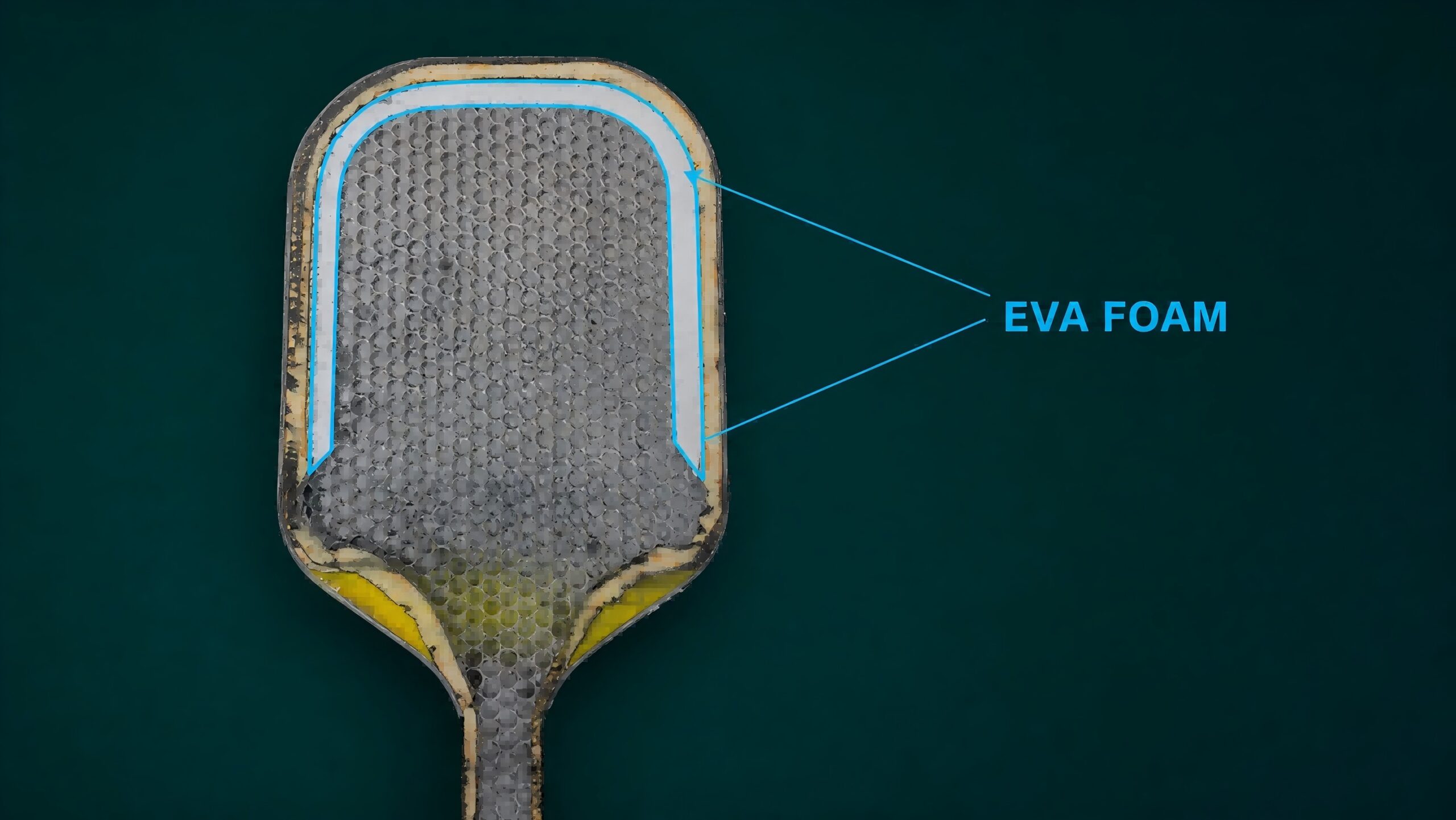
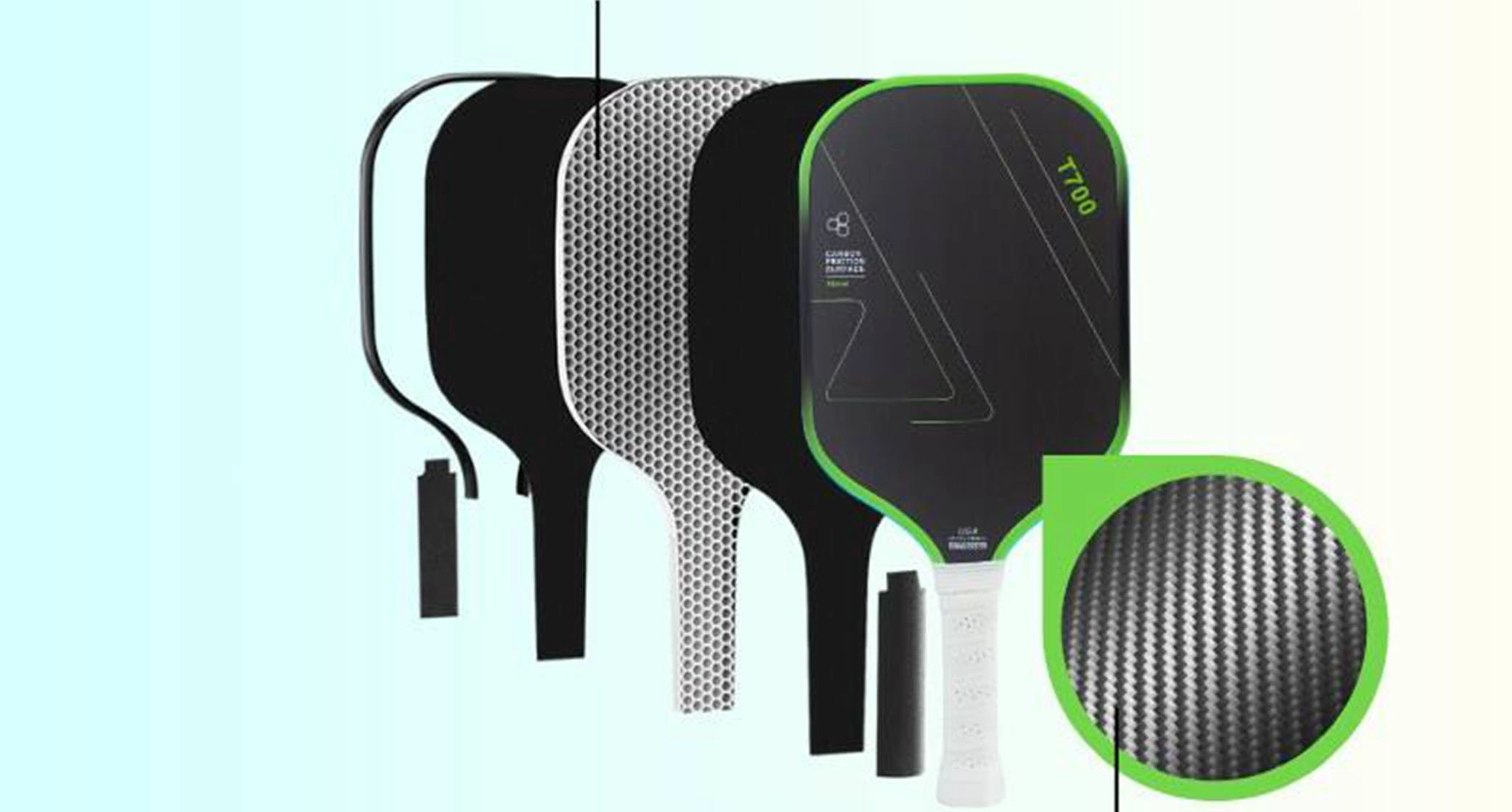
The most significant engineering advancement in arm-care paddle design is the replacement of PP honeycomb with Expanded Polypropylene (EPP) foam as the core material. The physics differ fundamentally.
PP honeycomb is a rigid cellular structure. When a ball strikes the face, impact energy travels through the face material and into the honeycomb walls as acoustic waves. Because the structure is rigid, those waves transmit efficiently — which is precisely what makes honeycomb good at returning energy to the ball. But what’s efficient for power transfer is also efficient for vibration transfer into the handle.
EPP foam operates differently. The foam matrix micro-compresses on impact through a viscoelastic mechanism: the cellular structure deforms elastically under load, but the energy dissipation curve is not instantaneous. A portion of the impact energy is converted to heat through internal molecular friction within the foam — this is the viscoelastic dampening effect. The result is a meaningful reduction in the high-frequency vibration components that cause soft tissue fatigue.
NexaPaddle’s Gen 4 lineup offers two EPP variants, each calibrated for different player profiles:
- Non-Filled EPP: Maximum comfort and control. The open foam structure prioritizes dampening over power return. Impact feels soft and controlled — often described as an “absorb-then-release” sensation rather than the sharp “pop” of honeycomb. Best suited for players actively managing joint sensitivity or recovering from lateral epicondylitis.
- Filled EPP: Power-oriented dampening. A denser foam matrix that delivers explosive energy return while still outperforming honeycomb on vibration attenuation. For players who want arm protection without sacrificing offensive capability.
Both variants use a 16mm core thickness — the maximum practical depth for singles-legal paddle dimensions — which directly maximizes the foam volume available for vibration absorption. USAPA PBCoR (Paddle Ball Coefficient of Restitution) compliance is maintained at ≤0.43 with meaningful headroom, meaning these paddles remain tournament-legal.
If you’re building a product line around the 폼 코어 피클볼 패들 category, the Gen 4 EPP construction is the engineering foundation worth leading with.
상업적 의미: EPP foam core paddles currently occupy the premium segment ($169–$249 retail), yet the arm-care pain point creates genuine willingness-to-pay in the 40+ demographic. A brand positioning around recovery and comfort can command these price points without competing directly against power-focused brands on performance metrics.
B. The Lightweight Paradox: Why Lighter Isn’t Always Better
Here is where conventional pickleball advice — and most arm-care marketing — gets it wrong: lighter is not automatically better for tennis elbow. Understanding this distinction is one of the clearest ways to differentiate an evidence-based arm-care paddle line from competitors making superficial claims.
The instinct makes surface sense. A lighter paddle exerts less inertial load on the arm, so the forearm extensors work less on every swing. That logic holds within a specific weight range. Outside that range, it inverts.
Ultra-lightweight paddles — those under 7.3 oz (207g) — can actually worsen tennis elbow through two compensatory mechanisms. First, players unconsciously swing harder with a lighter paddle to generate equivalent ball speed, increasing the rate of impact force at ball contact. Second, a very light paddle transmits ball-impact shock more directly to the handle because there is less mass to absorb and distribute kinetic energy at the moment of contact. The ECRB tendon receives a sharper, higher-amplitude stress load — not a lower one. Clinical biomechanics research published in the Orthopedic Journal of Sports Medicine (February 2025) supports this finding, identifying the mass-distribution characteristics of the paddle as a key variable in ECRB stress during racket sport play.
The biomechanical sweet spot is mid-weight: 7.5–8.3 oz (213–235g). At this range, the paddle carries enough mass to absorb and distribute kinetic energy at impact, reducing the peak stress spike transmitted to the ECRB tendon, while remaining light enough that inertial demand on the forearm extensors stays within tolerable limits during extended play.
Grip sizing compounds this dynamic in a way most buyers don’t consider. An improperly sized grip — typically too small — forces players into a “death grip”: excessive squeeze tension that elevates forearm muscle activation throughout the entire stroke, not just at impact. That sustained activation accelerates tendon fatigue independent of vibration load. The ideal grip circumference for minimizing forearm torque is 4.125″–4.25″ (standard L2 sizing in most paddle formats).
The weight and grip interaction means that a paddle spec sheet alone doesn’t tell the whole arm-care story. The correct positioning for an evidence-based product line is: mid-weight construction (7.5–8.3 oz) + EPP foam core + properly sized grip = the complete biomechanical package.
이 탄소 섬유 피클볼 패들 category — specifically those using T700 woven or unidirectional carbon — is where the weight-to-stiffness optimization lives. Brands entering this space should understand that the carbon face is not a luxury upgrade; for arm-care positioning, it’s the structural technology that makes the mid-weight sweet spot achievable without sacrificing face rigidity.
상업적 의미: Most arm-care marketing in the pickleball category naively repeats “lighter is better.” An evidence-based brand that explicitly names and debunks the lightweight paradox — with peer-reviewed clinical support — owns a defensible, credible position that competitors cannot easily copy with a single marketing claim. This is the kind of content that earns physical therapist endorsements and physical therapy clinic partnerships.
C. Thermoformed Unibody Construction
Construction method is the third pillar, and it’s the one most brand owners underestimate.
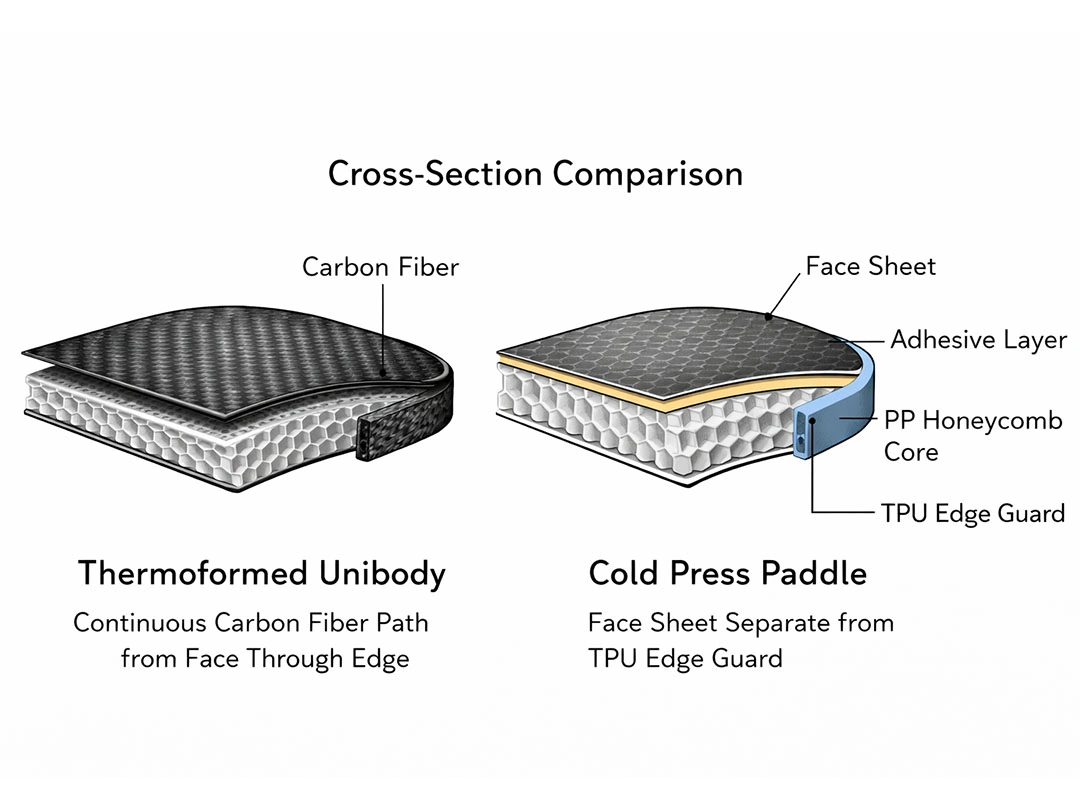
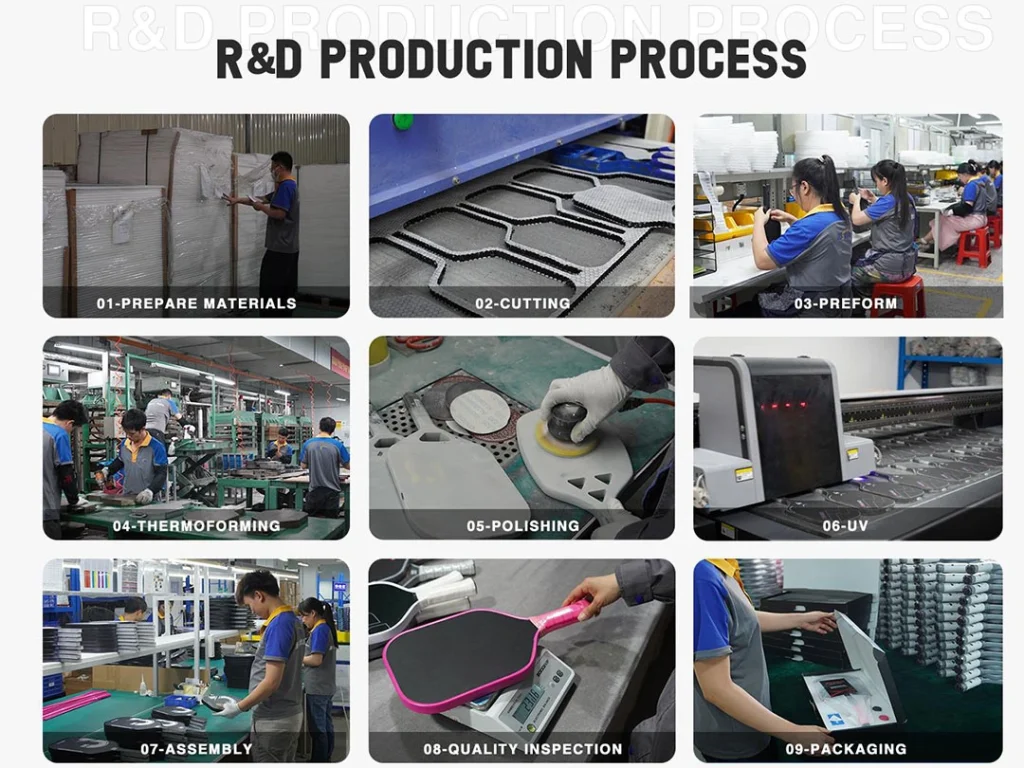
Traditional cold-press paddle manufacturing bonds face material to core using adhesive under pressure at room temperature. The result is a laminated structure with discrete material boundaries: face, adhesive layer, core, adhesive layer, face. Each of those boundaries is a potential vibration discontinuity — a point where acoustic energy can reflect, amplify, or scatter unpredictably. More practically, adhesive bonds are the weakest structural points in the paddle, and slight delamination (which begins microscopically before it’s visible) creates inconsistent vibration behavior across the hitting surface.
Thermoformed unibody construction eliminates these boundaries. Heat and controlled pressure are applied to the entire paddle assembly simultaneously, causing the face material, core, and edge to fuse into a single continuous structure. The chemical bond formed is stronger and more uniform than adhesive lamination. Critically, the energy transfer characteristics are consistent across the entire face.
The performance consequences for arm-care are measurable:
- 스위트 스팟 확장: Thermoformed paddles achieve a sweet spot 15–20% larger than equivalent cold-press designs. A larger sweet spot means fewer off-center hits, and off-center hits are disproportionately damaging because they require the wrist and forearm to correct rotational torque on impact.
- Vibration uniformity: Without adhesive layer discontinuities, the vibration profile is smooth and predictable across the face. There are no “hot spots” that transmit sharply localized vibration into the handle.
- Structural consistency over time: Thermoformed bonds don’t degrade the way adhesive bonds do with repeated impact. The dampening profile a player experiences in week one is the same in month twelve.
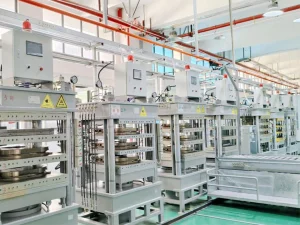
For sourcing reference, NexaPaddle’s 열형성 피클볼 패들 factory line delivers all of these structural benefits at MOQ levels that make product testing commercially viable before committing to full-scale inventory.
상업적 의미: Thermoformed construction is a verifiable manufacturing claim that supports premium retail pricing. Unlike vague marketing assertions (“ultra-comfortable,” “arm-friendly”), the unibody manufacturing process is a factual product attribute that can be specified in product descriptions, used in Amazon A+ content, and communicated in educational content marketing.
3. NexaPaddle’s Arm-Care Paddle Lineup: Specs for Brand Owners
The following four models represent the sourcing options most relevant to health/wellness brands building around arm-care positioning. Each is presented with the specification detail that OEM buyers need to make sourcing decisions, not the marketing copy that obscures them.
| 모델 | 코어 | 페이스 | 기능 | 핸들 | 최고의 용도 |
|---|---|---|---|---|---|
| GEN4 비충전 EPP | EPP 폼 (비충전) | T700 탄소 | 417 × 188mm | 139mm | Control, joint-sensitive, recovery players |
| GEN4 충전 EPP | EPP 폼 (충전) | T700 탄소 | 417 × 188mm | 139mm | Power players wanting arm protection |
| Thermoformed Lightweight (Mold #2) | PP Honeycomb 14/16mm | Carbon UD/3K | 400 × 195mm | 130mm | Entry-price lightweight option |
| Mold #1 Edgeless Control (20mm) | PP Honeycomb 20mm | Carbon UD/3K + grit spray | 400 × 205mm | 130mm | Senior recreational, control specialists |
GEN4 비어 있는 EPP — 최대의 편안함
이것은 주된 팔 관리 SKU입니다. 비어 있는 폼 매트릭스는 라인업의 어떤 모델보다도 높은 진동 감쇠를 제공하며, 벌집 패들에서는 근본적으로 다른 느낌의 “흡수 후 방출” 충격 특성을 지닙니다. 볼과의 접촉 시간(잔여 시간)은 연장되어 충격 느낌을 부드럽게 하고 선수들에게 샷 배치에 대한 더 많은 제어를 제공합니다.
417 × 188mm의 얼굴 지오메트리와 139mm의 핸들 길이는 표준 픽클볼 플레이어 그립에 맞춰 조정되었으며, 두 손으로 백핸드 전환을 위한 충분한 핸들 공간이 있습니다. T700 탄소 얼굴은 불필요한 무게를 추가하지 않고 일관된 반응을 유지하는 데 필요한 강성을 제공합니다.
OEM 비용: $42–52/단위 | 소매 목표: $169–219 | 총 마진: 58–68%
GEN4 채워진 EPP — 파워 + 보호
채워진 EPP 변형은 밀도가 높은 폼 매트릭스를 사용하여 볼에 대한 에너지 반환을 증가시키며, PP 벌집보다 의미 있는 진동 감쇠 장점을 유지합니다. 공격적인 플레이를 우선시하면서 팔 보호를 부가적인 이점으로 원하는 선수들에게 적합한 소싱 옵션입니다.
비어 있는 변형과 동일한 치수 사양으로 이 두 SKU는 편안함 우선 플레이어를 위한 하나, 성능 우선 플레이어를 위한 하나로 쉽게 나란히 이동할 수 있습니다.
OEM 비용: $45–55/단위 | 소매 목표: $199–249 | 총 마진: 58–68%
열 형성 경량 (몰드 #2) — 입문 팔 관리
접근 가능한 소매 가격대에서 경량 팔 관리 SKU를 원하는 브랜드를 위해, 몰드 #2 열 형성 모델은 조금 더 넓은 얼굴 지오메트리 (400 × 195mm)를 가진 PP 벌집 코어를 사용하여 제어 지향의 플레이에 최적화되어 있습니다. 더 넓은 얼굴은 무게를 추가하지 않고도 유효 타격 구역을 늘리며, 팔 관리 배치가 요구하는 비중심 타격 감소 이점을 지원합니다.
14mm 또는 16mm 코어 두께로 제공됩니다. 16mm 변형은 최대의 감쇠를 위한 추천입니다. 이것은 브랜드가 Gen 4 EPP의 높은 OEM 비용을 감당하기 전에 팔 관리 카테고리를 테스트하는 올바른 진입점입니다.
최소주문수량(MOQ): 100개 | 리드 타임: 60–90일
몰드 #1 엣지리스 컨트롤 (20mm) — 최대 감쇠
20mm 코어 두께는 이 모델이 라인업에서 가장 높은 잔여 시간을 갖고 가장 감쇠된 모델이 되게 합니다. 엣지리스 구조는 전통적인 엣지 가드를 제거하여 유효Face 면적을 400 × 205mm로 확장하며, 표준 패들 형식에서 가장 넓은 스위트 스팟을 제공합니다. T700/3K 탄소 얼굴의 그릿 스프레이는 불필요한 무게를 추가하지 않고 스핀 생성을 향상시킵니다.
이 모델은 시니어 레크리에이션 플레이 및 팔 부상에서 회복 중인 선수들을 위해 목적에 맞게 제작되었습니다. 최대 코어 두께, 엣지리스 얼굴 확장 및 열 형성 구조의 조합은 라인업의 어떤 모델보다도 낮은 진동 전송 프로파일을 제공합니다.
최고의 대상: 시니어 레크리에이션, 관절 민감한 플레이어, 제어 전문 선수
제어 최적화 엔지니어링이 다양한 패들 카테고리에서 어떻게 변환되는지에 대한 더 넓은 관점을 제공하기 위해, 컨트롤 픽클볼 패들 제품 라인은 설계 절충에 대한 추가 맥락을 제공합니다.
4. 건강 및 웰니스 브랜드가 지금 픽클볼에 진입해야 하는 이유
건강 및 웰니스 브랜드가 픽클볼에 진입하는 비즈니스 사례는 트렌드를 쫓는 것이 아닙니다. 이는 기존 브랜드 자산과 underserved 시장 수요 간의 구조적 정렬을 인식하는 것입니다.
포지셔닝 격차는 현실입니다. 대부분의 픽클볼 패들 브랜드는 파워, 더 빠른 스윙 속도, 더 강한 볼 접촉, 더 공격적인 플레이에서 경쟁합니다. 카테고리 전반의 마케팅 언어 — “폭발적인 파워”, “최대 속도”, “코트를 지배하다” — 는 젊은 경쟁 플레이어를 목표로 합니다. 그런 세그먼트는 존재하고 구매합니다. 그러나 이는 팔 관리 세그먼트가 기존 브랜드에 의해 거의 완전히 다루어지지 않음을 의미하며, 이는 가장 큰 구매 인구 통계이자 재정적으로 능력이 있는 그룹을 나타냅니다.
당신의 신뢰 자산은 직접적으로 전이됩니다. 고객이 이미 관절 회복, 스포츠 재활 또는 액티브 에이징과 연관짓는 건강 및 웰니스 브랜드는 팔 관리 픽클볼 포지셔닝에 미리 구축된 신뢰성을 제공합니다. 고객에게 새로운 주장에 대한 믿음을 요구하지 않고, 그들이 이미 당신에게 지키기를 신뢰하는 약속을 연장하는 것입니다. 이 신뢰는 고객 획득 비용을 줄이고 본 구매를 하는 많은 구매자들이 첫 구매를 할 때 더 높은 전환율을 제공합니다.
임상적인 통증 요소는 즉각적인 구매 의도를 유도합니다. 테니스 엘보는 모호한 선호가 아닙니다. 그것은 진단된 의학적 상태로 실제 기능적 피해가 있습니다. 커피 컵을 들어 올리거나 문을 열거나 아프지 않게 라켓을 쥐는 능력의 결여입니다. 외측 상과염을 경험하고 있는 소비자들은 솔루션을 적극적으로 찾고 있습니다. “테니스 엘보에 가장 좋은 픽클볼 패들”이라는 키워드는 돈을 쓸 준비가 이미 되어 있는 구매자의 높은 의도를 보여줍니다.
시장은 이미 팔 관리 엔지니어링에 대한 수요를 신호하고 있으며, 기존 브랜드들은 불완전하게 대응하고 있습니다. 이 분야에서 오래된 라켓 브랜드 중 하나인 ProKennex는 테니스 엘보 환자에게 충격 흡수 솔루션으로 'Kinetic Technology'(핸들 내부의 미세 텅스텐 비드)를 마케팅합니다. 16mm 이상의 두꺼운 코어를 가진 Engage Pickleball의 Pursuit 라인은 온라인 커뮤니티에서 물리 치료사에게 추천되었습니다. 이러한 노력은 팔 관리가 픽클볼에서 검증된 상업적 포지셔닝임을 확인합니다. 그들은 또한 이 한계도 드러냅니다: 비드 기반 핸들 삽입은 핸들 진동만 해결하고 얼굴 레벨 충격 에너지는 해결하지 않습니다. 그리고 16mm에서도 PP 벌집 코어는 여전히 더 단단하고 EPP 폼보다 높은 주파수를 유지합니다. NexaPaddle의 Gen 4 EPP 구조는 문제의 원인을 해결하며 — 코어 재료 및 유니바디 구조 — 이로 인해 임상 포지셔닝이 검토를 견디고 싶어하는 OEM 브랜드에게 더 완벽한 엔지니어링 솔루션이 됩니다.
교차 판매 구조는 자연스럽습니다. 팔 관리 패들을 판매하는 브랜드는 논리적으로 압축 슬리브, 팔꿈치 보호대, 회복 폼 롤러, 스포츠 영양 제품으로 확장할 수 있습니다 — 건강/웰니스 브랜드가 이미 운영하는 모든 카테고리입니다. 패들은 더 큰 회복 중심 제품 생태계의 고객 획득 수단이 됩니다.
반품율 데이터는 운영적으로 중요합니다. 높은 진동을 가진 PP 벌집 패들은 40대 이상의 인구 통계에서 15–20%의 반품률을 보이며, 이는 주로 팔의 불편함에 의해 발생합니다. 같은 인구 통계에서 폼 코어 패들은 8–12%의 반품률을 보입니다. 1,000개 최초 주문에서, 그 차이 — 70–120의 반품 감소 — 는 직접적으로 마진 보호 및 리뷰 품질로 이어지며, 아마존과 같은 플랫폼에서 반품률과 리뷰 점수가 자연 순위를 결정짓습니다.
5. 상업적 사례: 마진, MOQ, 시장 진입
팔 관리 패들 소싱을 위한 금융 모델은 일반 픽클볼 재고와 비교할 때 유리하며, 시장 진입 장벽이 대부분의 브랜드 소유자가 예상하는 것보다 낮습니다.
| 매개변수 | GEN4 비충전 EPP | GEN4 충전 EPP | 열 형성 경량 |
|---|---|---|---|
| OEM 비용 | $42–52/단위 | $45–55/단위 | $30–40/단위 (추정) |
| 소매 목표 | $169–219 | $199–249 | $129–159 |
| 총 마진 | 58–68% | 58–68% | 55–65% |
| 최소 주문 수량 | 100개/변형 | 100개/변형 | 100개 |
| 리드 타임 | 60–90일 | 60–90일 | 60–90일 |
| USAPA 인증 지원 | 포함됨 | 포함됨 | 포함됨 |
변형당 100개 MOQ는 병행 테스트를 상업적으로 가능하게 만듭니다. 팔 관리 카테고리에 진입하는 브랜드는 비어 있는 EPP(편안함 우선 메시지)와 채워진 EPP(성능 및 보호 메시지)를 동시에 테스트할 수 있으며, 신제품 라인을 위해 관리 가능한 초기 투자를 요구합니다.
60–90일 개념에서 배송까지의 타임라인은 OEM 맞춤화를 포함합니다 — 로고 배치, 색상 선택, 포장 디자인 및 사용자 정의 브랜딩 요소. 고객을 대상으로 하는 제품에 대해 전체 디자인 제어를 원하는 브랜드를 위해 NexaPaddle의 맞춤형 픽클볼 패들 프로그램은 그 시간 내에 스케치에서 완성 SKU까지 개인 라벨 개발을 지원합니다.
USAPA 인증 지원은 소싱 패키지에 포함되어 있어 토너먼트 인근 마케팅을 목표로 하는 브랜드에 중요합니다. 이 인증은 진지한 제품과 단순한 상품을 구별하는 신뢰성 신호이며, 프로 샵, 클럽 파트너십 및 피클볼 전문 소매 채널에서 배치되기 위한 전제 조건입니다.
마진 프로필 — 소매에서 58–68% 총 마진 — 은 확립된 스포츠 용품 카테고리와 경쟁력이 있으며, 대부분의 건강 보조 식품 또는 회복 장치 카테고리보다 상당히 우수합니다. 프리미엄 가격대, 검증 가능한 엔지니어링 차별화, 그리고 소외된 인구 통계의 조합은 가격의 경쟁이 치열한 피클볼 SKU가 겪는 시장에서 마진 보호를 만들어내는 포지션을 형성합니다.
상업적 의미: 위험 조정된 진입 케이스가 강력합니다. 변형별 100개 피스에서 테스트 재고 투자는 한정적입니다. 마진 프로필은 카테고리에서 앞서 있습니다. 포지셔닝은 설명, 시연 및 검증할 수 있는 엔지니어링 본질에 기반하므로 방어 가능하며, 경쟁자가 마케팅 카피에 단순히 복사할 수 있는 브랜드 주장에 기반하지 않습니다.
6. 자주 묻는 질문
What paddle features most directly help with tennis elbow?
Three features matter most, in order of impact: core material, paddle weight, and construction method. EPP foam cores dampen the high-frequency vibrations (200–500 Hz) that accumulate as soft tissue stress during extended play. Mid-weight paddles in the 7.5–8.3 oz (213–235g) range reduce inertial load on the forearm extensors without crossing into the ultra-light range where impact shock paradoxically increases. Thermoformed unibody construction eliminates adhesive layer discontinuities that create vibration hot spots. A paddle that combines all three — like the Gen 4 EPP lineup — delivers measurably better arm protection than any single feature can.
What weight range is actually recommended for players with arm injuries — and why going too light is a mistake?
The evidence-based target is 7.5–8.3 oz (213–235g) — and the reasoning matters as much as the number.
The common advice to “go as light as possible” for arm comfort is biomechanically incomplete. Ultra-lightweight paddles (under 7.3 oz / 207g) can worsen tennis elbow through two mechanisms: players unconsciously swing harder to generate equivalent ball speed, and very light paddles transmit ball-impact shock more directly to the handle because there is insufficient mass to absorb and distribute kinetic energy at contact. The result is a sharper, higher-amplitude stress spike on the ECRB tendon — not a lower one. Clinical biomechanics research supports this, identifying paddle mass distribution as a key variable in ECRB loading during racket sport play.
At 7.5–8.3 oz, the paddle carries enough mass to absorb impact energy at the core level while staying light enough to avoid excessive inertial demand on the forearm during swing. This is the range the Gen 4 EPP lineup is engineered to hit.
Grip size compounds the equation. An undersized grip forces a sustained “death grip” — elevated forearm squeeze tension throughout the entire stroke — that accelerates tendon fatigue independent of vibration load. The recommended grip circumference for minimizing forearm torque is 4.125″–4.25″ (standard L2 sizing). If your current paddle falls outside either of these ranges, weight or grip alone may be perpetuating the problem even if the core material is otherwise appropriate.
How does EPP foam core technology reduce vibration compared to PP honeycomb?
PP honeycomb is a rigid cellular structure that transmits impact energy efficiently — which is good for ball speed but bad for arm protection, because the same efficiency applies to vibration transfer into the handle. EPP foam uses a viscoelastic mechanism: the foam micro-compresses on impact and converts a portion of the high-frequency vibration energy to heat through internal molecular friction. The result is a dampened, softer impact character that reduces the cumulative vibration load on the wrist and forearm during extended play.
Are Gen 4 foam core paddles USAPA approved for tournament play?
Yes. NexaPaddle’s Gen 4 EPP paddles are designed to comply with USAPA PBCoR ≤0.43 standards, with compliance headroom — meaning the foam core dampening does not push the ball coefficient of restitution into non-compliant territory. USAPA certification testing support is included as part of the OEM sourcing package, so brand owners can pursue tournament-legal status without navigating the certification process independently.
Can health and wellness brands fully customize arm-care paddles with their own branding?
Yes, full private label customization is supported. This includes logo placement, colorway selection, custom handle design, packaging, and marketing material support. The 60–90 day lead time covers the complete customization cycle, from design brief to finished inventory. MOQ is 100 pieces per variant, which is designed to make brand testing commercially viable before committing to large-scale inventory. For a detailed overview of the customization options available, NexaPaddle’s custom paddle development program covers the full scope.
Closing: The Window for Arm-Care Positioning Is Now
Pickleball’s explosive growth is entering a maturation phase where brand differentiation will determine winners. The power-focused brands established their position early. The arm-care segment — supported by genuine engineering, a clinically recognized pain point, and the most financially capable demographic in the sport — is the open lane.
Health and wellness brands have a rare advantage here: the engineering substance already exists, the manufacturing is proven and USAPA-compliant, and the target customer already trusts you with their physical wellbeing. The category alignment is not incidental. It’s the strongest product-market fit argument available in pickleball today.
The question is not whether arm-care paddles will find a market. They already have one — 36.5 million players, growing fastest in the 40–65 bracket, increasingly aware of the vibration problem and actively searching for solutions. The question is which brands will own that positioning.
피클볼 패들 라인을 고려하는 건강, 웰빙 또는 스포츠 회복 브랜드라면 이제 샘플을 요청하고 소싱 사양을 검토할 시기입니다. 100개 MOQ와 60–90일 리드 타임 덕분에 다음 경쟁 시즌 전에 시장에서 제품을 사용할 수 있으며 재고 약속을 초과하여 부담을 주지 않습니다.
NexaPaddle에 연락하여 Gen 4 EPP 샘플을 요청하거나, 맞춤 브랜딩 옵션에 대해 논의하거나, 특정 제품 라인에 대한 소싱 견적을 받으세요.
참고자료
Coherent Market Insights. 피클볼 장비 시장 크기, 점유율 및 예측 2025–2032. 2025년 발행. 시장 가치: 7억 290만 달러 (2025년).
스포츠 & 피트니스 산업 협회(SFIA). 2024 피클볼 참여 보고서. 2024년 발행. 미국의 플레이어: 3,650만 명; 가장 빠르게 성장하는 인구 통계: 40–65세 성인.
미국 피클볼 협회 (USAPA). 공식 규칙집 및 장비 기준: PBCoR 규정 ≤0.43. 2025년 발행. 다음에서 이용 가능: usapickleball.org.
iAcesport. 피클볼 패들의 진동 주파수 분석: PP 허니콤 대 대체 코어 재료. 2024년에 발행. PP 허니콤 코어 패들에서 200–500 Hz의 피크 진동 전송 범위가 확인됨.
NexaPaddle 제품 데이터. Gen 4 EPP 폼 코어 패들 사양 및 성능 데이터. 내부 제품 데이터, 2025년. 반품율 비교: 15–20% (고진동 PP 허니콤, 40세 이상 인구) 대 8–12% (폼 코어, 동일 인구).
Owoeye et al. (2025). “피클볼 부상 역학.” Sports Medicine – Open, 2025년 8월.
Orthopedic Journal of Sports Medicine* (2025년 2월). 라켓 스포츠 엘보 부상의 임상 생체역학.