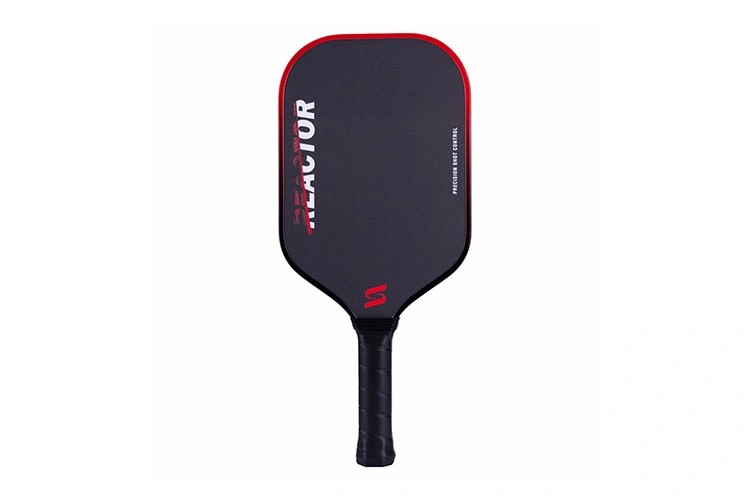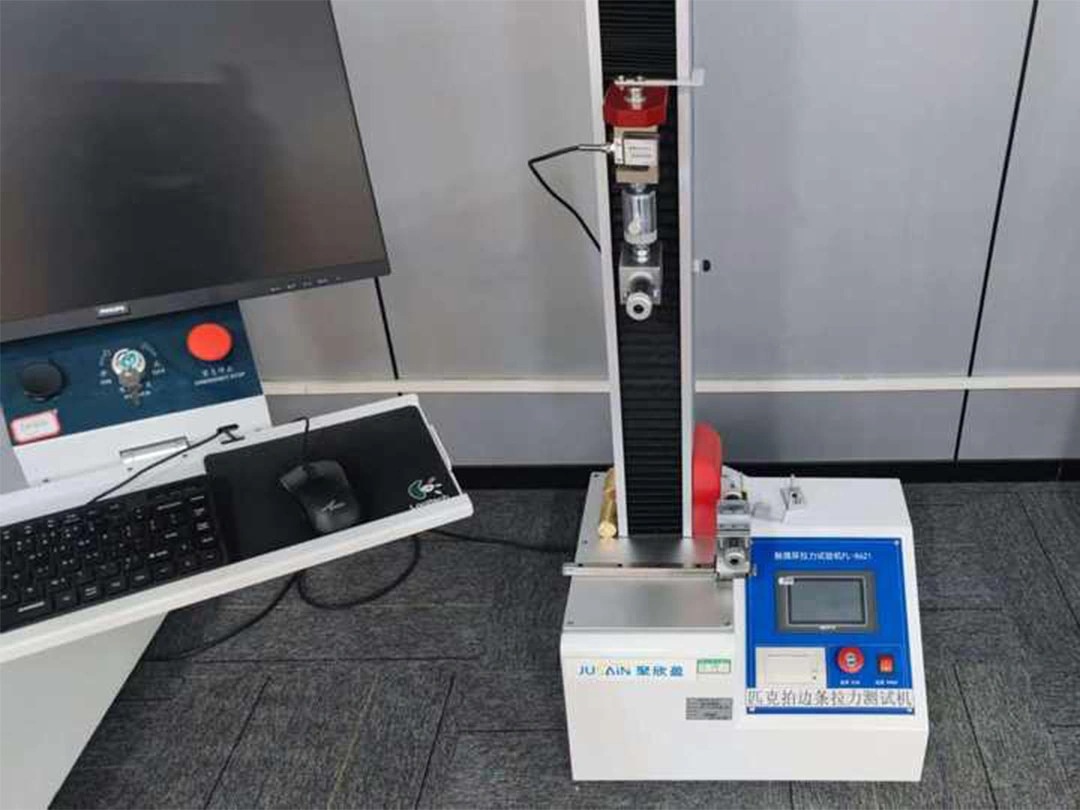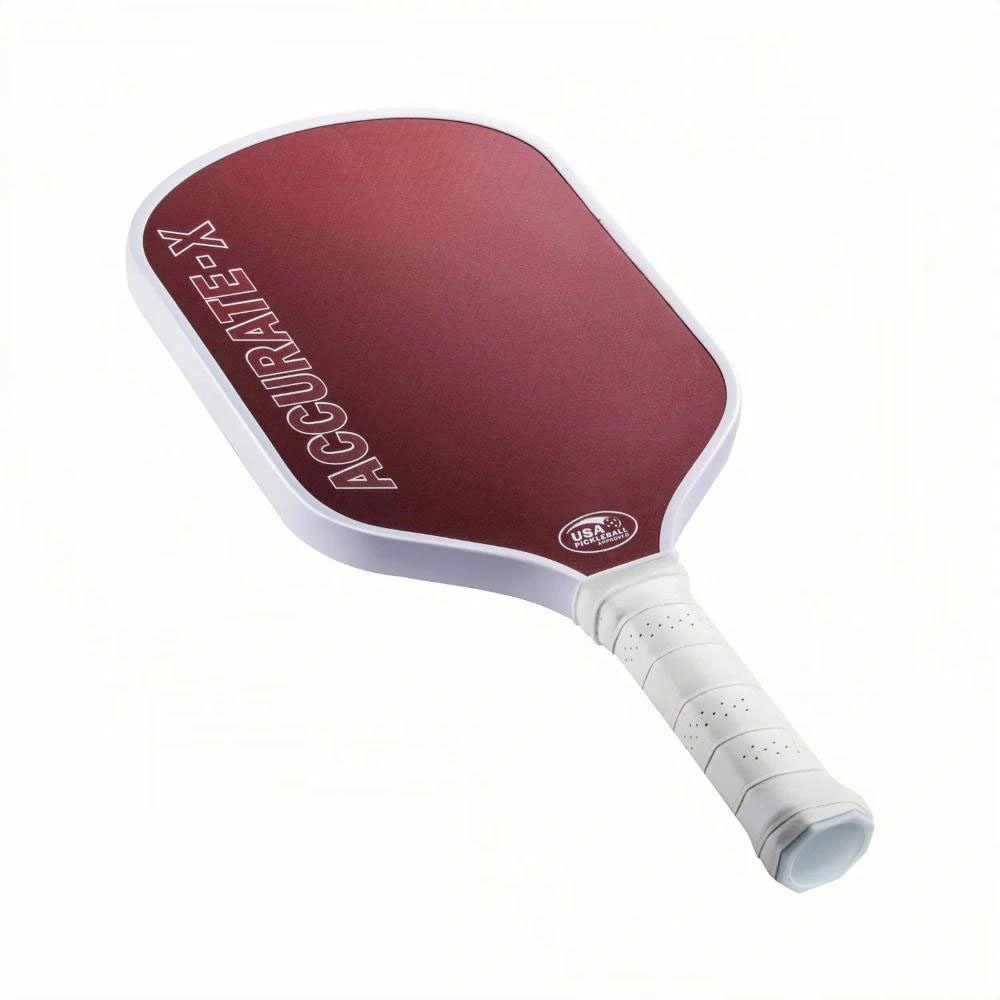
Introduction: A $700 Million Market With an Arm Problem
The pickleball industry crossed $702.9 million in 2025, powered by 36.5 million active players in the United States alone. If that number sounds impressive, the demographic breakdown behind it is more important to your business: the fastest-growing cohort is adults aged 40–65, many of them former tennis players who migrated to pickleball because it’s easier on the knees, the lungs, and — in theory — the arm.
In theory.
The reality is that lateral epicondylitis, commonly called tennis elbow, has become the number one repetitive stress injury in competitive pickleball. And unlike knee pain or general fatigue, tennis elbow doesn’t sideline players gradually — it arrives sharply, persists stubbornly, and drives frustrated players to return their gear at rates of 15–20% when a paddle is part of the problem.
For health and wellness brands, recovery-focused sports companies, and Amazon FBA sellers looking for a differentiated entry point into pickleball, this problem is your opportunity. The market is crowded at the power-first, aggressive-play end. The arm-care positioning is structurally underserved, medically credible, and aligns perfectly with the values of the 40+ consumer who already trusts your brand.
This article explains the engineering behind paddles that verifiably reduce injury risk, presents the sourcing options available through NexaPaddle’s Gen 4 lineup, and makes the commercial case for why your brand should be in this space before the window closes.
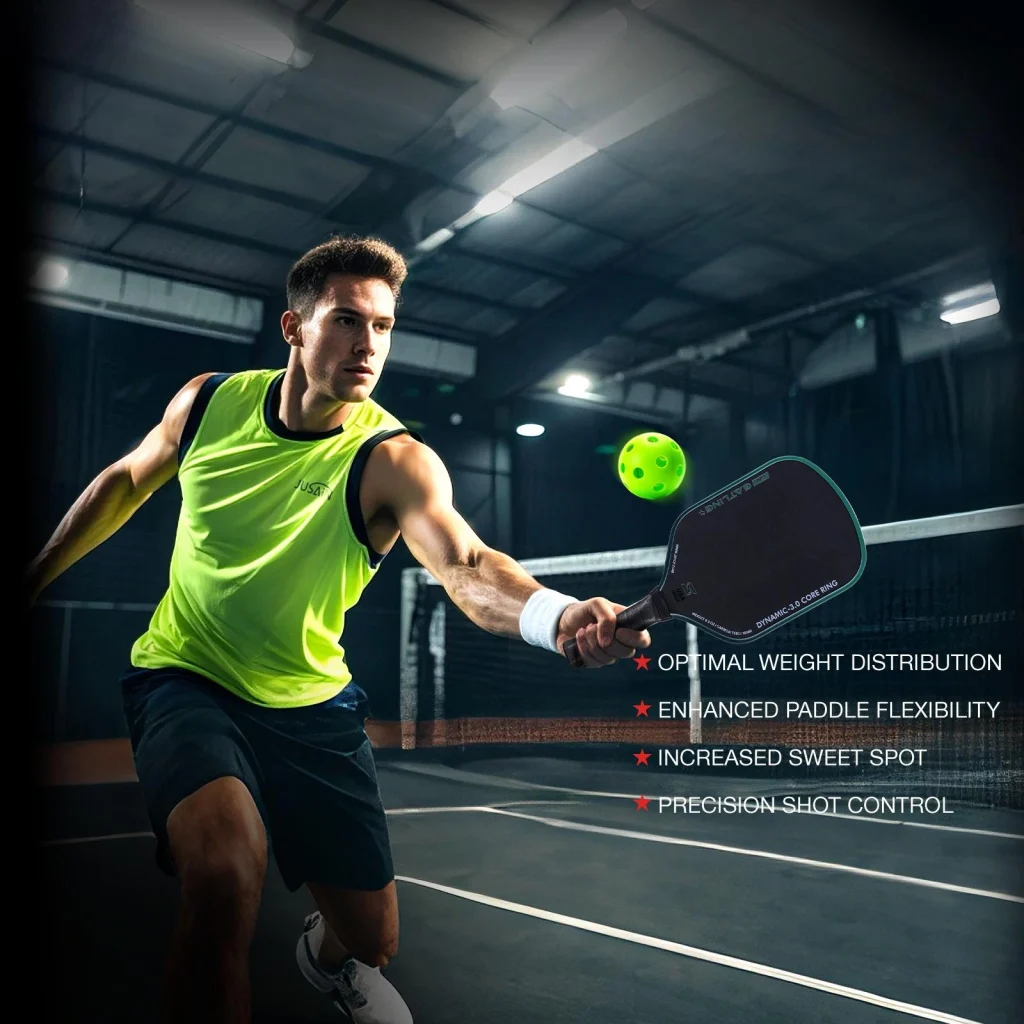
1. Why Tennis Elbow Is a Growing Problem in Pickleball
Tennis elbow is not a soft complaint. Lateral epicondylitis is a well-documented overuse pathology caused by repetitive micro-trauma to the extensor carpi radialis brevis (ECRB) tendon — the connective tissue that anchors forearm muscles to the lateral epicondyle of the humerus. In racket sports, the mechanism is straightforward: each impact transmits a vibration wave from the striking surface through the handle into the hand, wrist, and forearm. Enough repetitions, enough vibration amplitude, and tissue inflammation follows.
In pickleball, the vibration problem is specifically tied to the dominant paddle construction: carbon fiber faces over polypropylene (PP) honeycomb cores. PP honeycomb is stiff, light, and inexpensive to manufacture — qualities that drove its adoption across the industry. But stiffness is also the enemy of vibration dampening. Research from iAcesport’s vibration analysis work indicates that PP honeycomb core paddles transmit peak vibrations in the 200–500 Hz frequency band directly into the handle. This is precisely the range that excites the forearm muscle-tendon complex.
Now consider the playing context. A competitive rally in pickleball averages 8–10 shots. A 2–3 hour session might include 400–600 individual ball contacts. The cumulative micro-trauma load across that volume — particularly for players whose grip tension compensates for off-center hits — is substantial. A peer-reviewed nationwide study of 1,758 pickleball players published in Sports Medicine – Open (August 2025) quantifies the scale: 18.4% of all pickleball injuries involve the elbow, with an overall annual injury prevalence of 68.5% across the surveyed population. Overuse and chronic conditions accounted for 35.3% of the most serious injuries, and the average injured player was approximately 62.7 years old.
This is not a fringe demographic concern. The 40–65 age bracket represents the largest and most loyal buyer segment in the sport. These players spend more per session, buy premium gear, and return to purchase replacement equipment. They are also statistically more likely to have pre-existing joint sensitivity from decades of tennis, golf, or other racket sports. A paddle that aggravates that sensitivity doesn’t just generate a return — it generates a negative review, a social media post, and a lost customer for life.
The brands that recognize this are positioning arm care as their core value proposition rather than an afterthought buried in marketing copy. The engineering to support that positioning exists today.
2. The Engineering Solution: What Makes a Paddle Arm-Friendly
Three structural variables determine how much vibration a paddle transmits to the player’s arm: core material, frame weight, and construction method. Optimizing all three simultaneously is what separates a verifiably arm-friendly paddle from one that simply markets itself as such.
A. Foam Core Technology (Gen 4 EPP)
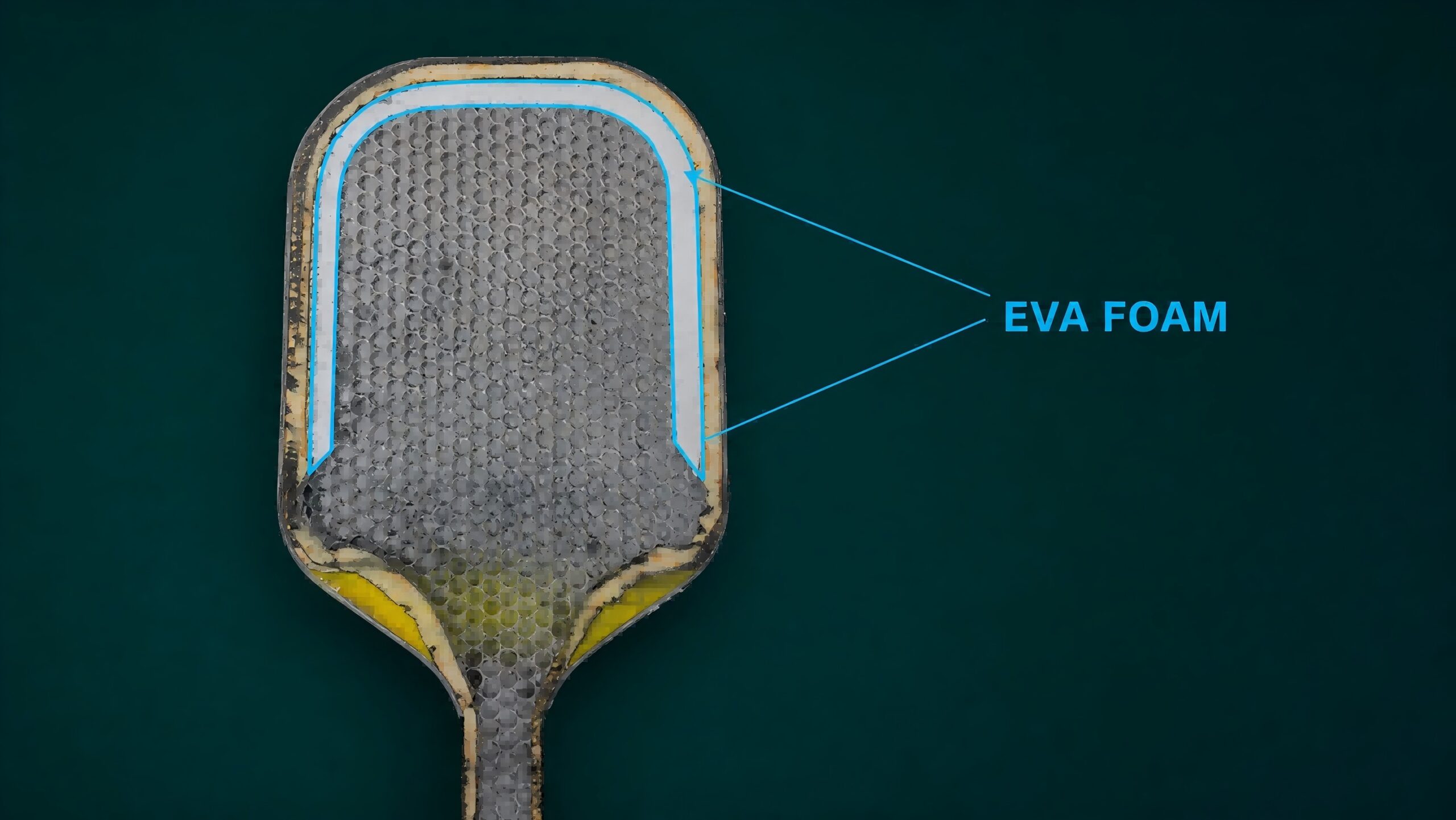
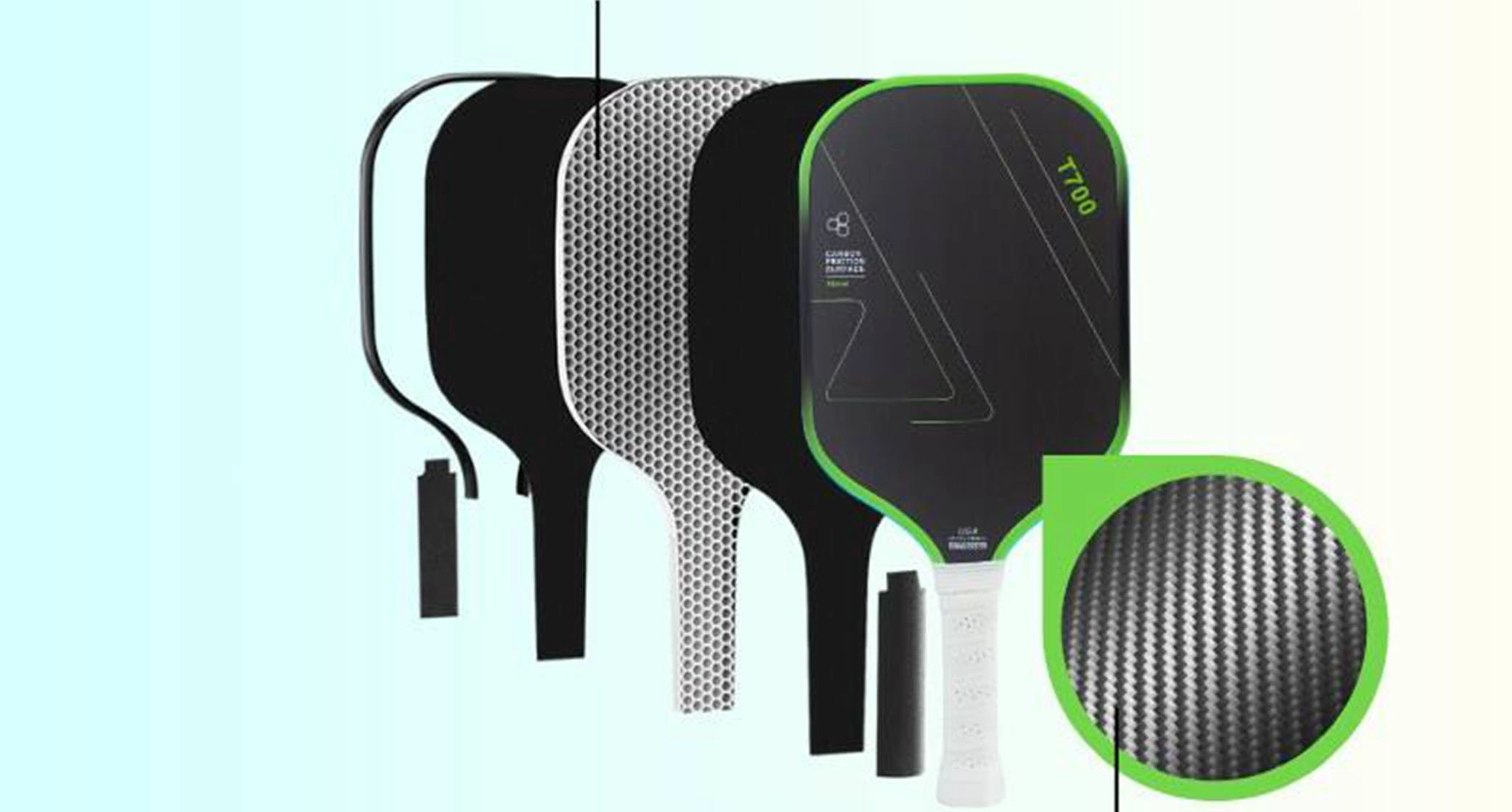
The most significant engineering advancement in arm-care paddle design is the replacement of PP honeycomb with Expanded Polypropylene (EPP) foam as the core material. The physics differ fundamentally.
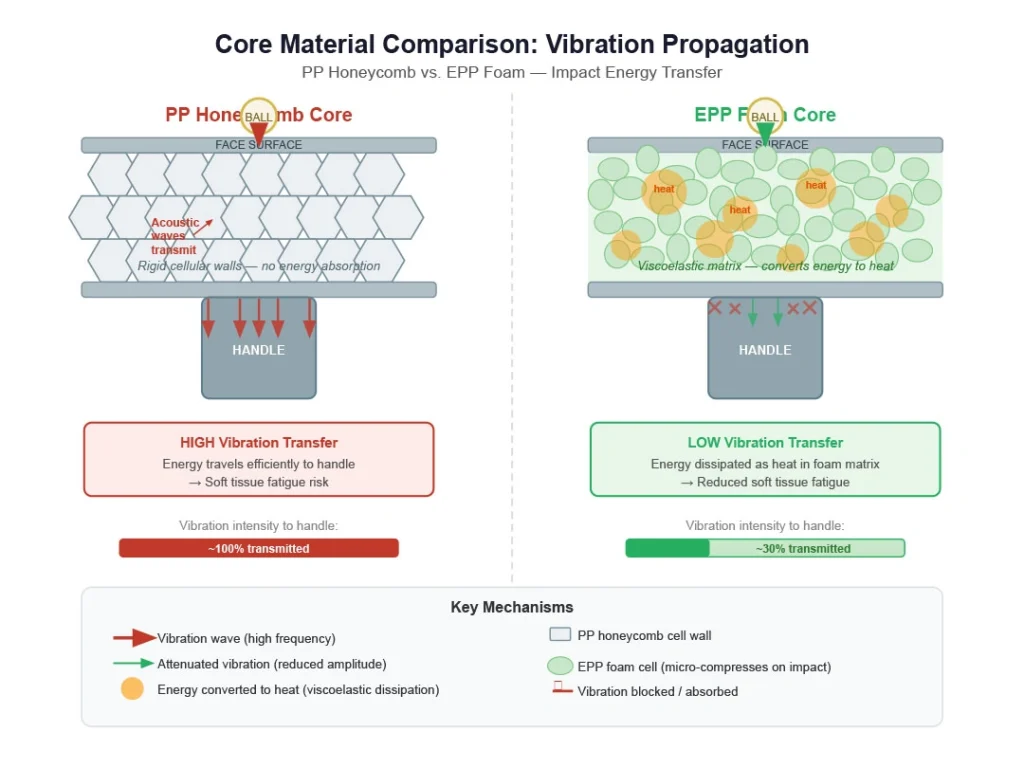
PP honeycomb is a rigid cellular structure. When a ball strikes the face, impact energy travels through the face material and into the honeycomb walls as acoustic waves. Because the structure is rigid, those waves transmit efficiently — which is precisely what makes honeycomb good at returning energy to the ball. But what’s efficient for power transfer is also efficient for vibration transfer into the handle.
EPP foam operates differently. The foam matrix micro-compresses on impact through a viscoelastic mechanism: the cellular structure deforms elastically under load, but the energy dissipation curve is not instantaneous. A portion of the impact energy is converted to heat through internal molecular friction within the foam — this is the viscoelastic dampening effect. The result is a meaningful reduction in the high-frequency vibration components that cause soft tissue fatigue.
NexaPaddle’s Gen 4 lineup offers two EPP variants, each calibrated for different player profiles:
- Non-Filled EPP: Maximum comfort and control. The open foam structure prioritizes dampening over power return. Impact feels soft and controlled — often described as an “absorb-then-release” sensation rather than the sharp “pop” of honeycomb. Best suited for players actively managing joint sensitivity or recovering from lateral epicondylitis.
- Vul de EPP: Krachtgerichte demping. Een dichtere schuimmatrix die explosieve energie teruglevert terwijl het nog steeds beter presteert dan honingraat op trillingsdemping. Voor spelers die bescherming van de arm willen zonder de aanvallende capaciteit op te offeren.
Beide varianten gebruiken een kern van 16 mm dikte — de maximale praktische diepte voor singles-legale paddle-dimensions — wat direct het schuimvolume maximaliseert dat beschikbaar is voor trillingsabsorptie. USAPA PBCoR (Paddle Ball Coefficient of Restitution) naleving blijft behouden bij ≤0.43 met betekenisvolle speling, wat betekent dat deze paddles toernooi-legal blijven.
Als je een productlijn bouwt rond de foam core pickleball peddels categorie, is de Gen 4 EPP-constructie de technische basis die het waard is om mee te beginnen.
Commerciële Gevolgen: EPP-schuimkernpaddles bezetten momenteel het premium segment ($169–$249 detailhandel), maar de pijnpunten van armzorg creëren echte betalingsbereidheid in de 40+ demografie. Een merkpositionering rond herstel en comfort kan deze prijsniveaus eisen zonder direct te concurreren met krachtgerichte merken op prestatiemaatstaven.
B. Het Lichte Paradox: Waarom Lichter Niet Altijd Beter Is
Hier is waar conventioneel pickleball-advies — en de meeste marketing voor armzorg — het mis heeft: lichter is niet automatisch beter voor tenniselleboog. Dit onderscheid begrijpen is een van de duidelijkste manieren om een op bewijs gebaseerde armzorgpaddle-lijn te onderscheiden van concurrenten die oppervlakkige claims maken.
De instinct maakt oppervlakkig zin. Een lichtere paddle oefent minder traagheidsbelasting uit op de arm, zodat de extensors van de onderarm minder werken bij elke slag. Die logica houdt stand binnen een specifiek gewichtbereik. Buiten dat bereik draait het om.
Ultra-lichte paddles — die onder de 7.3 oz (207g) wegen — kunnen eigenlijk verslechteren tenniselleboog door twee compenserende mechanismen. Ten eerste swingt men onbewust harder met een lichtere paddle om equivalente balsnelheid te genereren, waardoor de impactkracht bij de balcontact toeneemt. Ten tweede, een zeer lichte paddle draagt de schok van de bal-impact directer over naar het handvat omdat er minder massa is om kinetische energie op het moment van contact te absorberen en te verspreiden. De ECRB-pees ontvangt een scherpere, hogere belasting — geen lagere. Klinisch biomechanisch onderzoek gepubliceerd in het Orthopedic Journal of Sports Medicine (februari 2025) ondersteunt deze bevinding, waarbij de massadistributie-eigenschappen van de paddle worden geïdentificeerd als een belangrijke variabele in ECRB-stress tijdens het racket sportspel.
De biomechanische zoetheid ligt in het middengewicht: 7.5–8.3 oz (213–235g). In dit bereik draagt de paddle voldoende massa om kinetische energie bij impact te absorberen en te verspreiden, waardoor de piekstresspieken die naar de ECRB-pees worden overgebracht, worden verminderd, terwijl het nog licht genoeg is dat de traagheidsvraag naar de extensors van de onderarm binnen aanvaardbare grenzen blijft tijdens langdurig spelen.
Gripmaatverhoudingen compliceren deze dynamiek op een manier die de meeste kopers niet overwegen. Een onjuist afgestemde grip — meestal te klein — dwingt spelers in een "doodsgreep": overmatige knijpt spanning die de activatie van de spieren in de onderarm verhoogt tijdens de hele slag, niet alleen bij impact. Die aanhoudende activatie versnelt de peesvermoeidheid onafhankelijk van de trillingsbelasting. De ideale gripomtrek om de torsie van de onderarm te minimaliseren is 4.125”–4.25” (standaard L2 maatvoering in de meeste paddleformaten).
De interactie tussen gewicht en grip betekent dat een paddle specificatieblad alleen niet het volledige verhaal van armzorg vertelt. De juiste positionering voor een op bewijs gebaseerde productlijn is: middengewicht constructie (7.5–8.3 oz) + EPP-schuimkern + goed afgestemde grip = het complete biomechanische pakket.
De carbon fiber pickleball paddles categorie — specifiek die met T700 geweven of unidirectionele koolstof — is waar de optimalisatie van gewicht-ten-dikte zich bevindt. Merken die de ruimte binnenkomen moeten begrijpen dat de koolstofgezicht geen luxe-upgrade is; voor armzorg positionering is het de structurele technologie die de mid-weight zoetheid haalbaar maakt zonder concessies te doen aan de stijfheid van het gezicht.
Commerciële Gevolgen: De meeste marketing voor armzorg in de pickleball-categorie herhaalt naïef "lichter is beter." Een op bewijs gebaseerd merk dat expliciet de lichte paradox benoemt en ontkracht — met peer-reviewed klinische steun — bezit een verdedigbare, geloofwaardige positie die concurrenten niet gemakkelijk kunnen kopiëren met een enkele marketingclaim. Dit is het soort inhoud dat goedkeuringen van fysiotherapeuten en partnerschappen met fysiotherapie-clinieken verdient.
C. Thermovormde Unibody Constructie
Constructiemethode is de derde pijler, en het is degene die de meeste merkbezitters onderschatten.
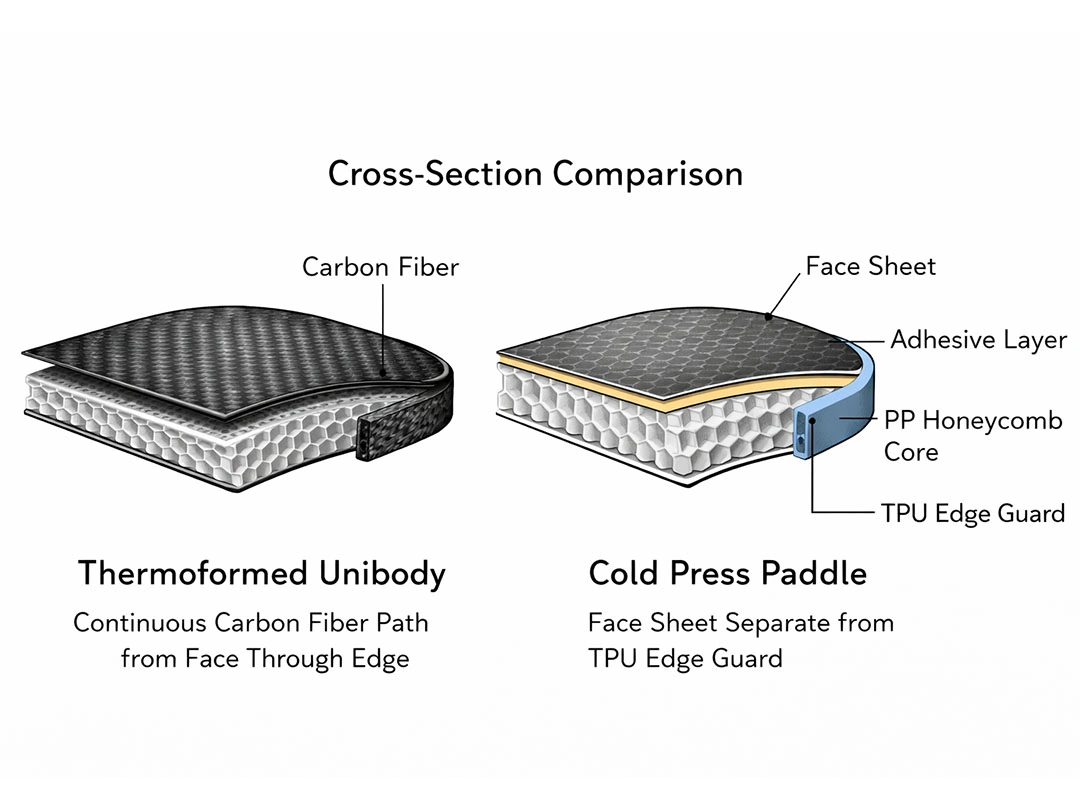
Traditionele koude pers paddlefabricage bindt het gezichtsmateriaal aan de kern met behulp van lijm onder druk bij kamertemperatuur. Het resultaat is een gelamineerde structuur met discrete materiaallagen: gezicht, lijmlaag, kern, lijmlaag, gezicht. Elk van die grenzen is een potentieel trillingsdiscontinuïteit — een punt waar akoestische energie op onvoorspelbare wijze kan reflecteren, versterken of verstrooien. Praktisch gezien zijn lijmverbindingen de zwakste structurele punten in de paddle, en lichte delaminatie (die microscopisch begint voordat deze zichtbaar is) creëert inconsistente trillingsgedragingen over het slagvlak.
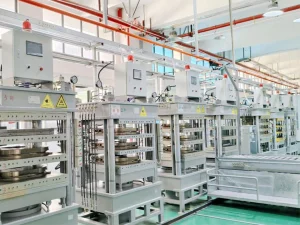
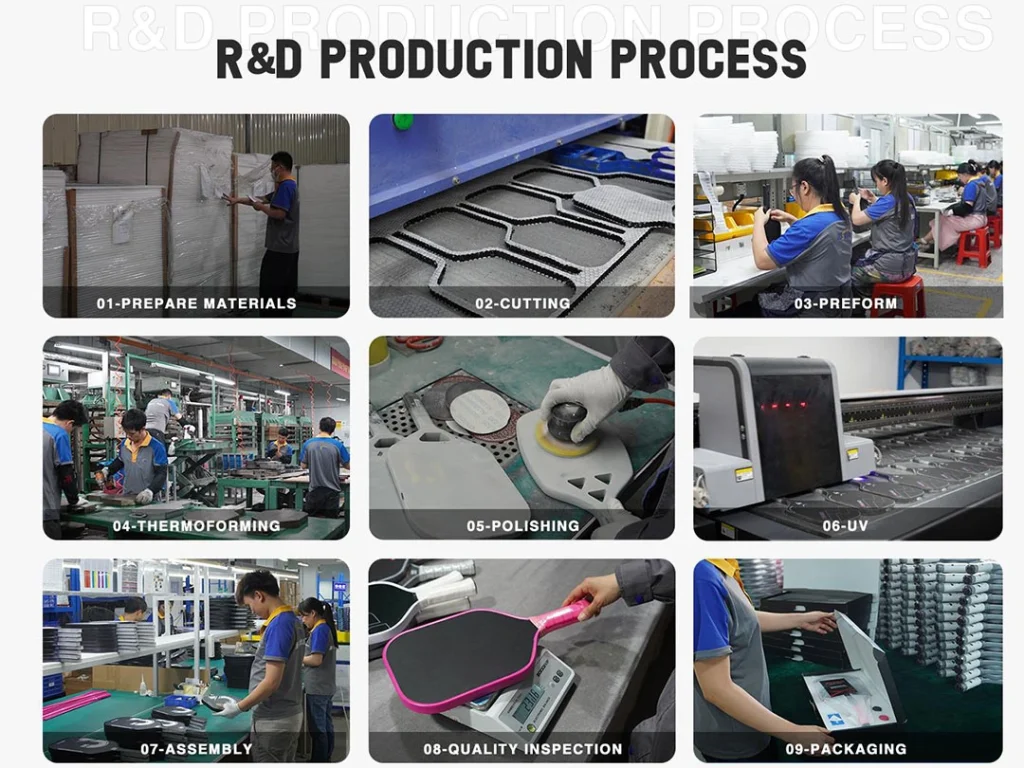
Thermovormde unibodyconstructie elimineert deze grenzen. Warmte en gecontroleerde druk worden simultaan op de hele paddle-assemblage aangebracht, waardoor het gezichtsmateriaal, de kern en de rand versmelten tot een enkele continue structuur. De chemische band die wordt gevormd, is sterker en uniformer dan lijmplaminering. Kritisch is dat de energieoverdrachteigenschappen consistent zijn over het hele gezicht.
De prestatiegevolgen voor armzorg zijn meetbaar:
- Zoete plek uitbreiding: Thermovormde paddles bereiken een zoetheid van 15–20% groter dan equivalente ontwerpen met koude pers. Een grotere zoetheid betekent minder off-center hits, en off-center hits zijn onevenredig schadelijk omdat ze pols en onderarm dwingen om de rotatietorsie bij impact te corrigeren.
- Trillingsuniformiteit: Zonder discontinuïteiten in de lijmlaag is het trillingsprofiel soepel en voorspelbaar over het gezicht. Er zijn geen "hot spots" die scherp gelokaliseerde trillingen in het handvat overbrengen.
- Structurele consistentie in de tijd: Thermovormde verbindingen degraderen niet zoals lijmverbindingen dat doen bij herhaalde impact. Het dempingsprofiel dat een speler ervaart in week één is hetzelfde in maand twaalf.
Voor inkoopreferentie, NexaPaddle’s thermovormde pickleball paddles fabriekslijn levert al deze structurele voordelen tegen MOQ-niveaus die producttesten commercieel haalbaar maken voordat je je aan een volledige voorraad verbindt.
Commerciële Gevolgen: Thermovormde constructie is een verifieerbare fabricageclaim die premium detailhandelsprijzen ondersteunt. In tegenstelling tot vage marketingclaims (“ultra-comfortabel,” “armvriendelijk”), is het unibodyfabricageproces een feitelijke productattribuut dat kan worden gespecificeerd in productbeschrijvingen, gebruikt in Amazon A+ inhoud en gecommuniceerd in educatieve content marketing.
3. NexaPaddle’s Arm-Care Paddle Lijn: Specificaties voor Merkeigenaren
De volgende vier modellen vertegenwoordigen de inkoopopties die het meest relevant zijn voor gezondheids-/welzijnsmerken die rond armzorg positioneren. Elk wordt gepresenteerd met de specificatiedetails die OEM-kopers nodig hebben om inkoopbeslissingen te nemen, niet de marketingtekst die deze verduistert.
| Model | Kern | Face | 5 × 5 × 2,5 cm | Handvat | Beste Voor |
|---|---|---|---|---|---|
| GEN4 Niet-Vulde EPP | EPP-schuim (Niet-Vuld) | T700 Carbon | 417 × 188mm | 139mm | Controle, gewrichtsgevoelige, herstelspelers |
| GEN4 Vulde EPP | EPP-schuim (Vuld) | T700 Carbon | 417 × 188mm | 139mm | Krachtspelers die arm bescherming willen |
| Thermovormde Lichte (Mold #2) | PP honingraat 14/16mm | Koolstof UD/3K | 400 × 195mm | 130mm | Instaprijs lichtgewicht optie |
| Mold #1 Randloze Controle (20mm) | PP Honingraat 20mm | Carbon UD/3K + grit spray | 400 × 205mm | 130mm | Senior recreanten, controlespecialisten |
GEN4 Niet-Gevulde EPP — Maximale Comfort
Dit is de primaire SKU voor armzorg. De niet-gevulde schuimmatrix levert de hoogste trillingsdemping van elk model in de serie, met een 'absorberend-dan-vrijgeven' impactkarakter dat fundamenteel anders aanvoelt dan honingraat paddles. De verblijftijd — de duur van de bal-gezicht contact — is verlengd, wat zowel de impactsensatie verzacht als spelers meer controle geeft over de plaatsing van hun schoten.
De 417 × 188mm gezichtsgeometrie en 139mm handgreeplengte zijn afgesteld voor de standaard pickleball speler grip, met voldoende ruimte voor tweehandige backhandovergangen. De T700 carbon gezicht levert de stijfheid die nodig is om een consistente respons te behouden zonder onnodig gewicht toe te voegen.
OEM kosten: $42–52/unit | Verkoopdoel: $169–219 | Brutomarge: 58–68%
GEN4 Gevulde EPP — Kracht + Bescherming
De gevulde EPP-variant gebruikt een dichtere schuimmatrix die de energie terug naar de bal verhoogt terwijl het significante trillingsdemping voordelen ten opzichte van PP honingraat behoudt. Voor spelers die de nadruk leggen op aanvallend spel maar arm bescherming willen als een secundair voordeel, is dit de inkoopoptie.
Dezelfde dimensionale specificaties als de Niet-Gevulde variant maken deze twee SKUs gemakkelijk te combineren als een gekoppelde lijn: één gericht op comfort-eerste spelers, één voor prestatie-eerste spelers die zich zorgen maken over de langetermijngezondheid van de arm.
OEM kosten: $45–55/unit | Verkoopdoel: $199–249 | Brutomarge: 58–68%
Thermogevormd Lichtgewicht (Mold #2) — Instap Arm-Zorg
Voor merken die een lichtgewicht arm-zorg SKU willen tegen een toegankelijker verkoopprijs, gebruikt het Mold #2 thermogevormde model een PP honingraat kern met een iets bredere gezichtsgeometrie (400 × 195mm) geoptimaliseerd voor controlegerichte spellen. Het bredere gezicht vergroot de effectieve slagszone zonder gewicht toe te voegen, wat dezelfde reductie van off-center-hits ondersteunt die arm-zorg positionering vereist.
Beschikbaar in 14mm of 16mm kern dikte. De 16mm variant wordt aanbevolen voor maximale demping. Dit is het juiste instapniveau voor merken die de arm-zorgcategorie testen vóór ze zich verbinden aan de hogere OEM kosten van Gen 4 EPP.
MOQ: 100 stuks | Levertijd: 60–90 dagen
Mold #1 Randloze Controle (20mm) — Maximale Demping
De 20mm kern dikte maakt dit het model met de hoogste verblijftijd, de meeste gedempte in de reeks. De randloze constructie elimineert de traditionele randbeschermer, waardoor het effectieve gezicht gebied wordt uitgebreid naar 400 × 205mm — de breedste sweet spot die beschikbaar is in het standaard paddle formaat. De grit spray op het T700/3K carbon gezicht verbetert de spin generatie zonder betekenisvol gewicht toe te voegen.
Dit model is ontworpen voor senior recreatieve spelers en spelers die actief herstellen van armblessures. De combinatie van maximale kern dikte, randloze gezichtsuitbreiding, en thermogevormde constructie levert het laagste trillingsoverdrachtsprofiel van elk model in de reeks.
Beste voor: Senior recreanten, gewrichtsgevoelige spelers, controlespecialisten
Voor een breder zicht op hoe controle-geoptimaliseerde engineering zich vertaalt over verschillende paddle categorieën, biedt de controle pickleball paddles productlijn extra context over ontwerptraden.
4. Waarom Gezondheid & Welzijn Merken Nu Moeten Instappen in Pickleball
De zakelijke reden voor gezondheids- en welzijnsmerken om in pickleball te stappen gaat niet over het volgen van een trend. Het gaat om het herkennen van een structurele afstemming tussen uw bestaande merkkapitaal en een onderbediende marktvraag.
De positioneringskloof is echt. De meeste pickleball paddle merken concurreren op kracht: snellere swingsnelheid, harder balcontact, agressiever spel. Marketingtaal in de categorie — "explosieve kracht," "maximale snelheid," "domineer het veld" — richt zich op jongere, competitieve spelers. Dat segment bestaat en koopt. Maar het betekent ook dat het arm-zorgsegment bijna volledig onbenut blijft door gevestigde merken, ondanks dat het het grootste en financieel meest capabele kopersegment vertegenwoordigt.
Uw vertrouwenswaarde wordt direct overgedragen. Een gezondheids- en welzijnsmerk waarmee klanten al geassocieerd zijn met gewrichtsherstel, sportrehabilitatie of actief ouder worden, brengt ingebouwde geloofwaardigheid naar de arm-zorg pickleball positionering. U vraagt klanten niet om een nieuwe claim te geloven — u breidt een belofte uit die ze al vertrouwen. Dat vertrouwen verlaagt de kosten voor klantacquisitie en verhoogt de conversieratio's in een categorie waarin de meeste kopers hun eerste aankoop doen.
Het klinische pijnpunt drijft de onmiddellijke koopintentie. Tenniselleboog is geen vage voorkeur. Het is een gediagnosticeerde medische aandoening met echte functionele impact — het onvermogen om een kopje koffie op te tillen, een deur te openen of een racket vast te houden zonder pijn. Consumenten die last hebben van laterale epicondylitis zijn actief op zoek naar oplossingen. Het trefwoord "beste pickleball paddle voor tenniselleboog" weerspiegelt gedrag van kopers die al besloten hebben geld uit te geven; ze zijn op zoek naar een product om dat geld aan te vertrouwen.
De markt signaleert al vraag naar arm-zorg engineering — en gevestigden reageren imperfect. ProKennex, een van de langer gevestigde racketmerken in het veld, promoot zijn “Kinetic Technology” (micro-tungsten balletjes in de handgreep) specifiek voor lijders aan tenniselleboog als een schokabsorptieoplossing. Engage Pickleball’s Pursuit lijn, met diktes van 16mm+, is aanbevolen door fysiotherapeuten in online gemeenschappen. Deze inspanningen bevestigen dat arm-zorg een gevalideerde commerciële positionering in pickleball is. Ze onthullen ook de plafonds: bead-gebaseerde handgreep inserts adresseren handgreeptrillingen alleen, niet de energie van impact op gezichtsniveau; en PP honingraat kernen, zelfs bij 16mm, blijven stijver en hoger in frequentie dan EPP schuim. De Gen 4 EPP constructie van NexaPaddle adresseert het probleem bij de bron — het kernmateriaal en de unibody-structuur — waardoor het de completere engineeringoplossing is voor een OEM-merk dat wil dat klinische positionering standhoudt onder toezicht.
De cross-sell architectuur is natuurlijk. Een merk dat arm-zorg paddles verkoopt kan logisch uitbreiden naar compressiekousen, elleboogsteunen, herstel schuimrollers, en sportvoeding — alle categorieën waar gezondheids-/welzijnsmerken al opereren. De paddle wordt een voertuig voor klantacquisitie voor een groter, herstelgericht productecosysteem.
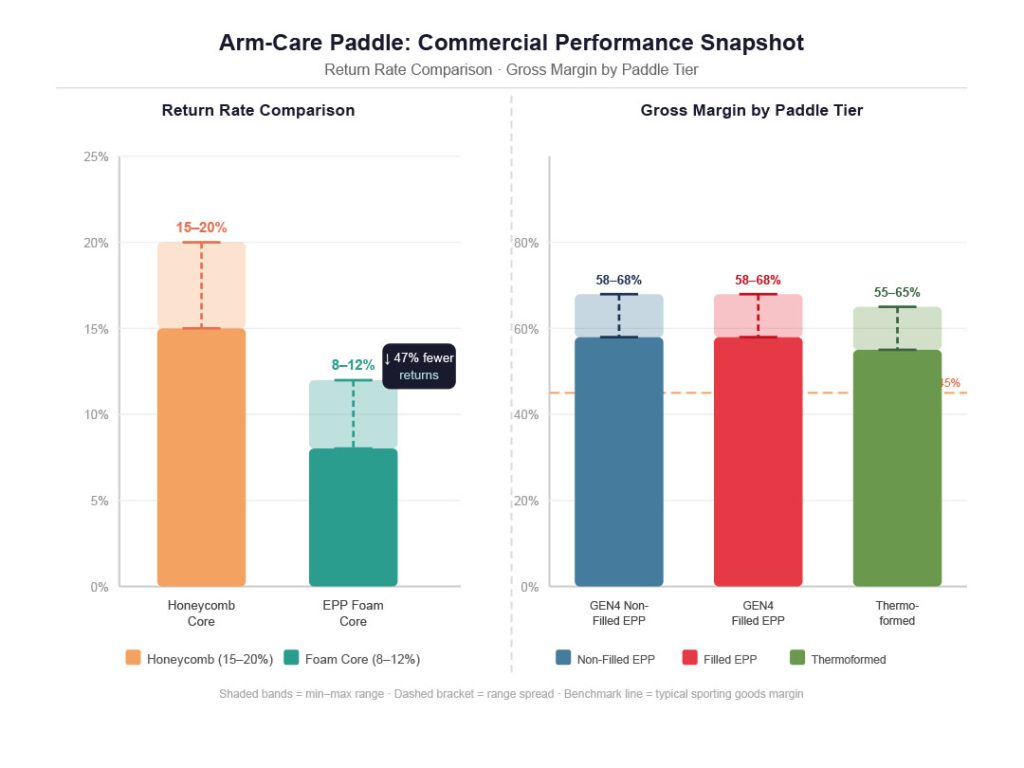
De retourpercentagegegevens zijn operationeel van belang. Hoge trillings PP honingraat paddles zien retourpercentages van 15–20% vanuit de 40+ demografische groep, grotendeels aangedreven door armongemakken. Schuimkern paddles in dezelfde demografische groep tonen retourpercentages van 8–12%. Op een initiële bestelling van 1.000 stuks, vertaalt dat verschil — 70–120 minder retouren — zich direct naar margebescherming en reviewkwaliteit op platforms zoals Amazon waar retourpercentage en beoordelingsscore de organische ranking bepalen.
5. De Commerciële Casus: Marges, MOQ, en Marktentree
Het financiële model voor arm-zorg paddle inkoop vergelijkt gunstig met algemene pickleball voorraad, en de marktentreebarrières zijn lager dan de meeste merEigenaren verwachten.
| Parameter | GEN4 Niet-Vulde EPP | GEN4 Vulde EPP | Thermogevormd Lichtgewicht |
|---|---|---|---|
| OEM Kosten | $42–52/unit | $45–55/unit | $30–40/unit (geschat) |
| Retaildoel | $169–219 | $199–249 | $129–159 |
| Bruto Marge | 58–68% | 58–68% | 55–65% |
| MOQ | 100 stukken/variant | 100 stukken/variant | 100 stuks |
| Levertijd | 60–90 dagen | 60–90 dagen | 60–90 dagen |
| USAPA Cert Ondersteuning | Inbegrepen | Inbegrepen | Inbegrepen |
De MOQ van 100 stukken per variant maakt parallel testen commercieel haalbaar. Een merk dat de armpje zorgcategorie betreedt, kan gelijktijdig zowel de Non-Filled EPP (comfort-eerst boodschap) als de Filled EPP (prestatie-plus-bescherming boodschap) testen met een gezamenlijke initiële investering die beheersbaar genoeg is voor een gloednieuwe productlijn.
De 60–90 dagen concept-tot-levering tijdlijn omvat OEM-aanpassing — logo plaatsing, kleurkeuze, verpakking ontwerp en aangepaste branding elementen. Voor merken die volledige ontwerpcapaciteit willen over het klantgerichte product, biedt NexaPaddle’s aangepaste pickleball paddles programma ondersteuning voor private label ontwikkeling van schets tot afgewerkt SKU binnen dat tijdsvenster.
USAPA-certificering ondersteuning is inbegrepen in het inkooppakket, wat belangrijk is voor merken die gericht zijn op toernooigerelateerde marketing. De certificering is het geloofwaardigheidssignaal dat een serieus product scheidt van een noviteit en is een vereiste voor plaatsing in pro shops, clubpartnerschappen en pickleball-specifieke detailhandelskanalen.
Het margeprofiel — 58–68% brutowinst bij detailhandel — is concurrerend met gevestigde sportgoederen categorieën en significant beter dan de meeste gezondheid supplementen of herstel apparaten categorieën. De combinatie van premium prijsstelling, verifieerbare technische differentiatie, en onderbediende demografie creëert een marge-beschermende marktpositie die niet onmiddellijk de prijsconcurrentie zal aantrekken waarmee vercommoditized pickleball SKU's worden geconfronteerd.
Commerciële Gevolgen: Het risicogecorrigeerde instapmodel is sterk. Bij 100 stukken per variant is de testvoorraadinvestering begrensd. Het margeprofiel is categorie-leading. De positionering is verdedigbaar omdat het is gebaseerd op technische substantie die kan worden uitgelegd, gedemonstreerd en geverifieerd — niet een merkclaim die concurrenten simpelweg in marketing teksten kunnen kopiëren.
6. Veelgestelde Vragen
What paddle features most directly help with tennis elbow?
Three features matter most, in order of impact: core material, paddle weight, and construction method. EPP foam cores dampen the high-frequency vibrations (200–500 Hz) that accumulate as soft tissue stress during extended play. Mid-weight paddles in the 7.5–8.3 oz (213–235g) range reduce inertial load on the forearm extensors without crossing into the ultra-light range where impact shock paradoxically increases. Thermoformed unibody construction eliminates adhesive layer discontinuities that create vibration hot spots. A paddle that combines all three — like the Gen 4 EPP lineup — delivers measurably better arm protection than any single feature can.
What weight range is actually recommended for players with arm injuries — and why going too light is a mistake?
The evidence-based target is 7.5–8.3 oz (213–235g) — and the reasoning matters as much as the number.
The common advice to “go as light as possible” for arm comfort is biomechanically incomplete. Ultra-lightweight paddles (under 7.3 oz / 207g) can worsen tennis elbow through two mechanisms: players unconsciously swing harder to generate equivalent ball speed, and very light paddles transmit ball-impact shock more directly to the handle because there is insufficient mass to absorb and distribute kinetic energy at contact. The result is a sharper, higher-amplitude stress spike on the ECRB tendon — not a lower one. Clinical biomechanics research supports this, identifying paddle mass distribution as a key variable in ECRB loading during racket sport play.
At 7.5–8.3 oz, the paddle carries enough mass to absorb impact energy at the core level while staying light enough to avoid excessive inertial demand on the forearm during swing. This is the range the Gen 4 EPP lineup is engineered to hit.
Grip size compounds the equation. An undersized grip forces a sustained “death grip” — elevated forearm squeeze tension throughout the entire stroke — that accelerates tendon fatigue independent of vibration load. The recommended grip circumference for minimizing forearm torque is 4.125”–4.25” (standard L2 sizing). If your current paddle falls outside either of these ranges, weight or grip alone may be perpetuating the problem even if the core material is otherwise appropriate.
How does EPP foam core technology reduce vibration compared to PP honeycomb?
PP honeycomb is a rigid cellular structure that transmits impact energy efficiently — which is good for ball speed but bad for arm protection, because the same efficiency applies to vibration transfer into the handle. EPP foam uses a viscoelastic mechanism: the foam micro-compresses on impact and converts a portion of the high-frequency vibration energy to heat through internal molecular friction. The result is a dampened, softer impact character that reduces the cumulative vibration load on the wrist and forearm during extended play.
Are Gen 4 foam core paddles USAPA approved for tournament play?
Yes. NexaPaddle’s Gen 4 EPP paddles are designed to comply with USAPA PBCoR ≤0.43 standards, with compliance headroom — meaning the foam core dampening does not push the ball coefficient of restitution into non-compliant territory. USAPA certification testing support is included as part of the OEM sourcing package, so brand owners can pursue tournament-legal status without navigating the certification process independently.
Can health and wellness brands fully customize arm-care paddles with their own branding?
Yes, full private label customization is supported. This includes logo placement, colorway selection, custom handle design, packaging, and marketing material support. The 60–90 day lead time covers the complete customization cycle, from design brief to finished inventory. MOQ is 100 pieces per variant, which is designed to make brand testing commercially viable before committing to large-scale inventory. For a detailed overview of the customization options available, NexaPaddle’s custom paddle development program covers the full scope.
Closing: The Window for Arm-Care Positioning Is Now
Pickleball’s explosive growth is entering a maturation phase where brand differentiation will determine winners. The power-focused brands established their position early. The arm-care segment — supported by genuine engineering, a clinically recognized pain point, and the most financially capable demographic in the sport — is the open lane.
Health and wellness brands have a rare advantage here: the engineering substance already exists, the manufacturing is proven and USAPA-compliant, and the target customer already trusts you with their physical wellbeing. The category alignment is not incidental. It’s the strongest product-market fit argument available in pickleball today.
The question is not whether arm-care paddles will find a market. They already have one — 36.5 million players, growing fastest in the 40–65 bracket, increasingly aware of the vibration problem and actively searching for solutions. The question is which brands will own that positioning.
Als je een gezondheid, welzijn of sportherstel merk bent dat een pickleball paddle lijn overweegt, is nu de tijd om monsters aan te vragen en inkoop specificaties te bekijken. De MOQ van 100 stukken en de 60–90 dagen levertijd betekenen dat je product op de markt kunt hebben voordat het volgende competitieve seizoen begint zonder je voorraadverplichting te overextenderen.
Neem contact op met NexaPaddle om Gen 4 EPP monsters aan te vragen, aangepaste branding opties te bespreken, of een inkoopofferte voor jouw specifieke productlijn te krijgen.
Referenties
Coherente Marktinzichten. Pickleball Apparatuur Marktgrootte, Aandeel & Forecast 2025–2032. Gepubliceerd 2025. Marktwaarde: $702.9 miljoen (2025).
Sports & Fitness Industry Association (SFIA). 2024 Pickleball Deelname Rapport. Gepubliceerd 2024. 36.5 miljoen spelers in de VS; snelstgroeiende demografie: volwassenen 40–65.
USA Pickleball Association (USAPA). Officiële Regels en Apparatuur Normen: PBCoR Naleving ≤0.43. Gepubliceerd 2025. Beschikbaar op usapickleball.org.
iAcesport. Trillingsfrequentieanalyse in Pickleball Peddels: PP Honingraat vs. Alternatieve Kernmaterialen. Gepubliceerd 2024. Piek trillingsoverdrachtsbereik geïdentificeerd bij 200–500 Hz in peddels met PP honingraatkern.
NexaPaddle Product Gegevens. Gen 4 EPP Schuim Kern Peddel Specificaties en Prestaties Gegevens. Interne productgegevens, 2025. Retourpercentage vergelijking: 15–20% (hoog-trillings PP honingraat, 40+ demografie) vs. 8–12% (schuimkern, dezelfde demografie).
Owoeye et al. (2025). “Epidemiologie van Pickleball Letsels.” Sports Medicine – Open, Augustus 2025.
Orthopedic Journal of Sports Medicine* (Februari 2025). Klinische biomechanica van racket sport elleboogletsels.