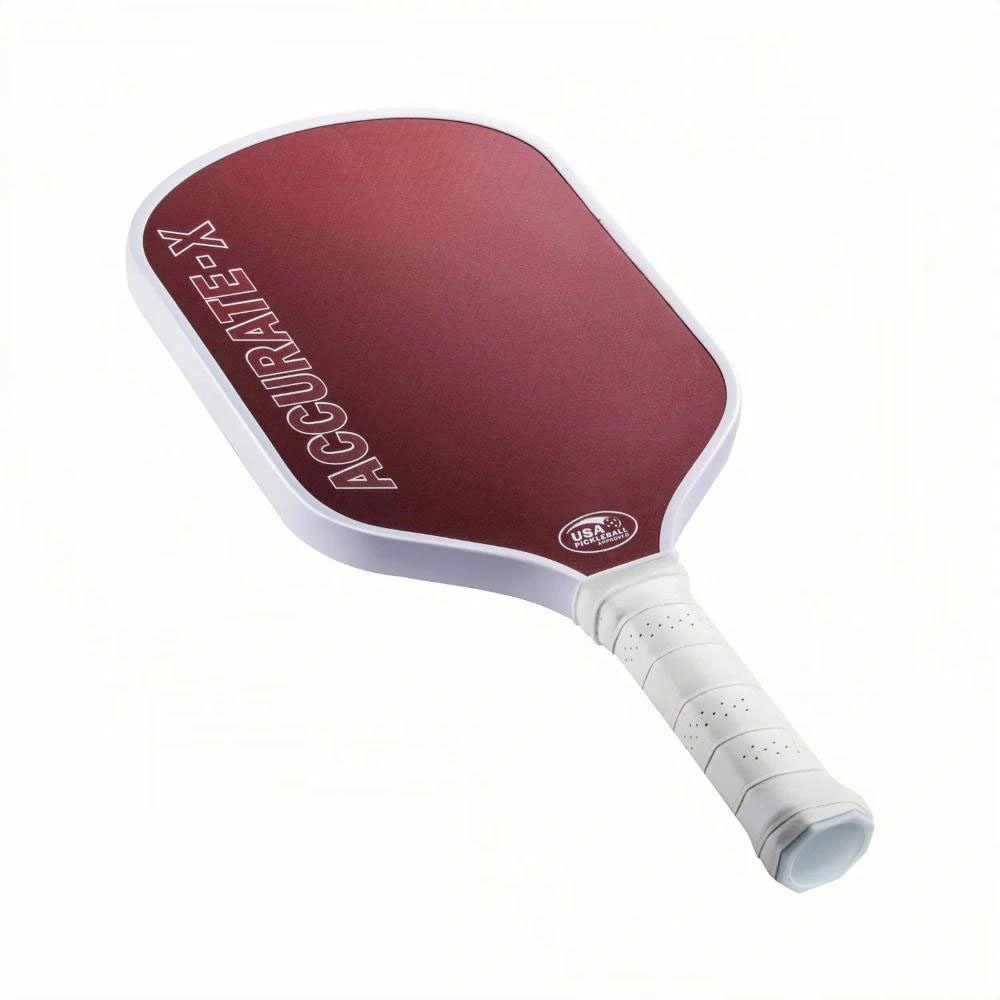
For brand owners, Amazon FBA sellers, and wholesalers building a business around pickleball, three words carry more financial risk than any other: delisted by USA Pickleball. They mean unsellable inventory, mandatory consumer refunds, and brand equity that took years to build — erased before the next trade show. In January 2026 alone, on-site testing at Golden Ticket tournaments revealed that 6% of all paddles tested — roughly 1 in 17 — were non-compliant.
This is not a theoretical risk. The $200 million countersuit that followed one major brand’s 2024 delisting is proof that manufacturing compliance has graduated from technical footnote to the foundation of your entire business model. One failed test, one non-compliant production batch, one sampling inconsistency: any of these can trigger the cascade.
In this guide, we break down the timeline of major paddle bans, the exact technical parameters your products must meet, the true costs of certification failures, and how choosing the right manufacturing partner for your カスタムOEMピクルボールパドル is your most effective defense against catastrophic losses.
A Timeline of Major Delistings (2022–2026)
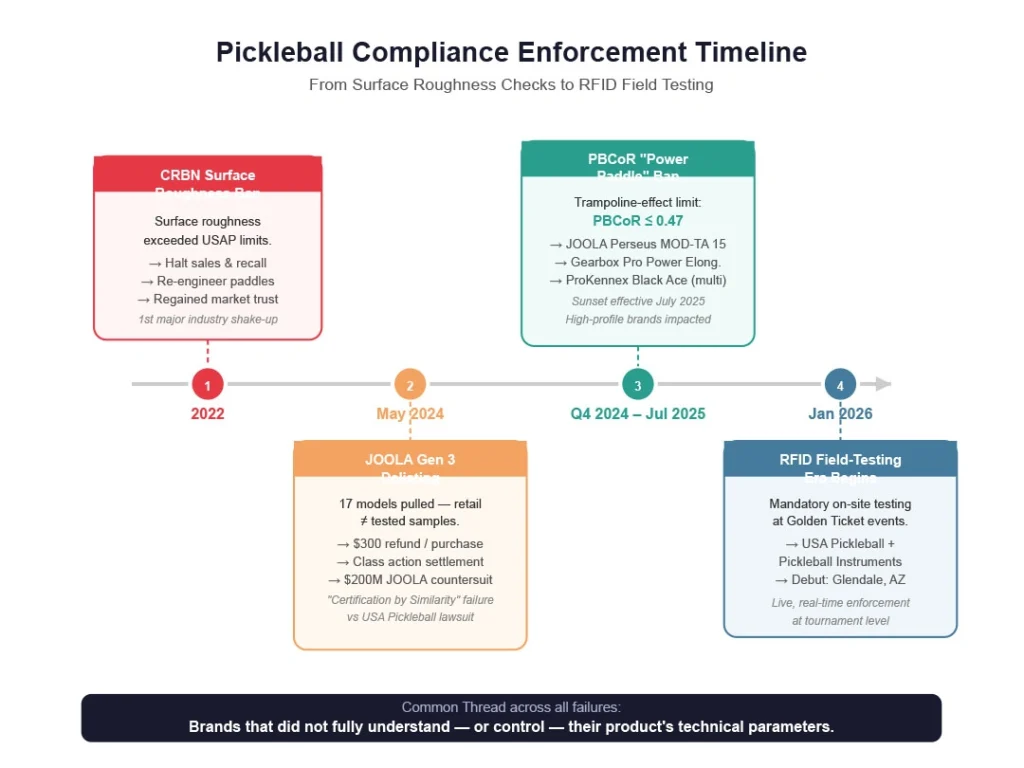
Understanding today’s compliance landscape starts with its history. Enforcement mechanisms have evolved rapidly — from basic surface roughness checks to complex energy-return metrics and live, on-site tournament testing. Each enforcement action has raised the stakes for every brand in the market.
- 2022: The CRBN Surface Roughness Ban
One of the first major industry shake-ups occurred when CRBN models were temporarily delisted. The governing body found that their surface roughness exceeded USAP limits. CRBN was forced to halt sales, recall inventory, and rapidly re-engineer their paddles before eventually regaining market trust. - May 2024: The JOOLA Gen 3 Delisting
USA Pickleball abruptly pulled 17 JOOLA Gen 3 models from its approved list. The core issue was a “Certification by Similarity” failure — the retail paddles sold to consumers did not match the physical samples originally submitted for testing. The result: a massive class action settlement providing $300 refunds per purchase, a lawsuit between JOOLA and USA Pickleball, and a staggering $200M countersuit filed by JOOLA. - Q4 2024 – July 2025: The PBCoR “Power Paddle Ban”
The introduction of the Paddle Ball Coefficient of Restitution (PBCoR) targeted the dangerous “trampoline effect” in modern paddles. With a threshold set at ≤0.47 in Q4 2024, high-profile paddles including the JOOLA Perseus MOD-TA 15, Gearbox Pro Power Elongated, and multiple ProKennex Black Ace models were slated for sunset effective July 2025. - January 2026: The RFID Field-Testing Era
USA Pickleball, alongside Pickleball Instruments, launched mandatory paddle field-testing at Golden Ticket tournaments, beginning in Glendale, Arizona.
Each of these failures shares a common thread: brands that did not fully understand — or fully control — the technical parameters governing their products. The five compliance parameters below define the current testing battlefield.
Why Paddles Get Banned: The 5 Compliance Parameters Explained
For B2B buyers, understanding exactly why paddles fail is the first step to preventing it. USA Pickleball enforces five primary tests for USAPA承認パドル.
1. Surface Roughness
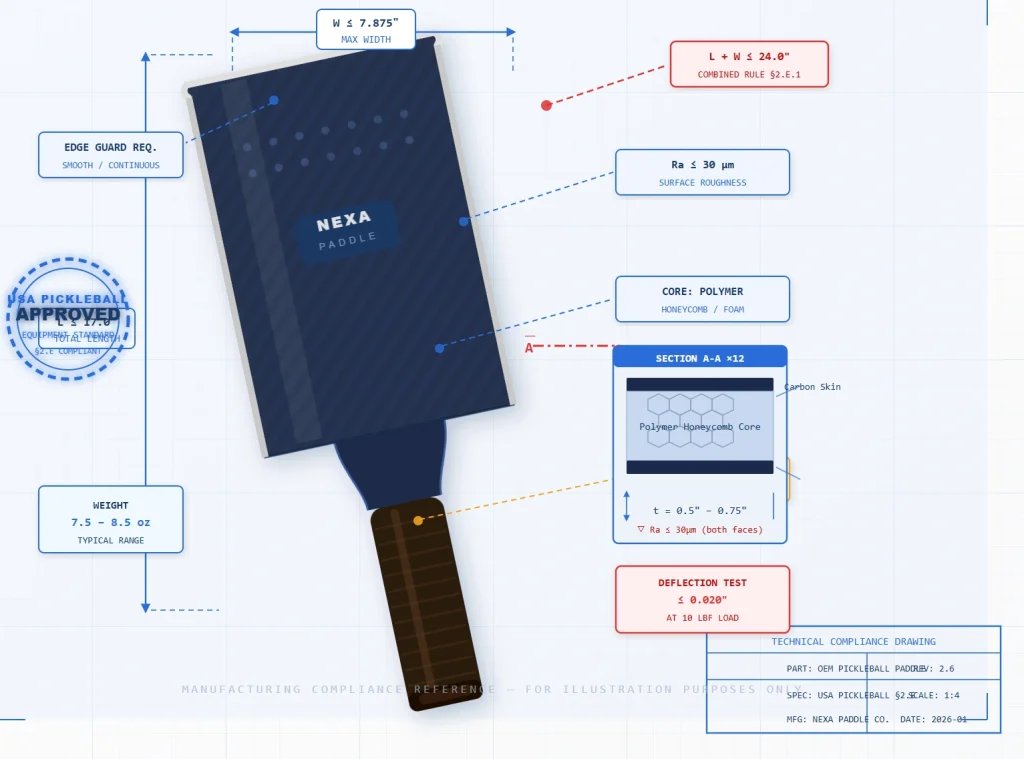
USA Pickleball controls surface roughness through Rt and Rz limits. Its current Equipment Standards Manual specifies Starrett SR160 or SR300, or equivalent, for official roughness measurement. Factory-side checks can support process control, but they should not be presented as official certification testing.
2. PBCoR (Paddle Ball Coefficient of Restitution)
This metric measures energy return. USA Pickleball’s published PBCoR not-to-exceed limit is 0.43 effective November 1, 2025. Buyers should verify the current Equipment Standards Manual and the exact certification status of the brand/model rather than relying on an older 0.47 threshold.
3. Dimensions
The combined length and width of a paddle cannot exceed 24 inches (609.6 mm), and maximum length is strictly capped at 17 inches (431.8 mm).
4. コアのたわみ
Core deflection measures the stiffness of the paddle face. The paddle face must not depress beyond specific USAPA ranges when a standardized weight is applied. Excessive deflection results in illegal power generation.
5. COF (Coefficient of Friction)
Closely related to surface roughness, the Coefficient of Friction must remain within USAPA limits to ensure the paddle does not grip the ball excessively during slicing or topspin shots.
Of these five parameters, PBCoR has proven the most technically treacherous — and the hardest to control across a product’s full lifespan.
The PBCoR Power Problem: Why Thermoformed Paddles Fail Over Time
The PBCoR problem is particularly acute for 熱成形ピクルボールパドル, and it is more insidious than a simple manufacturing defect.
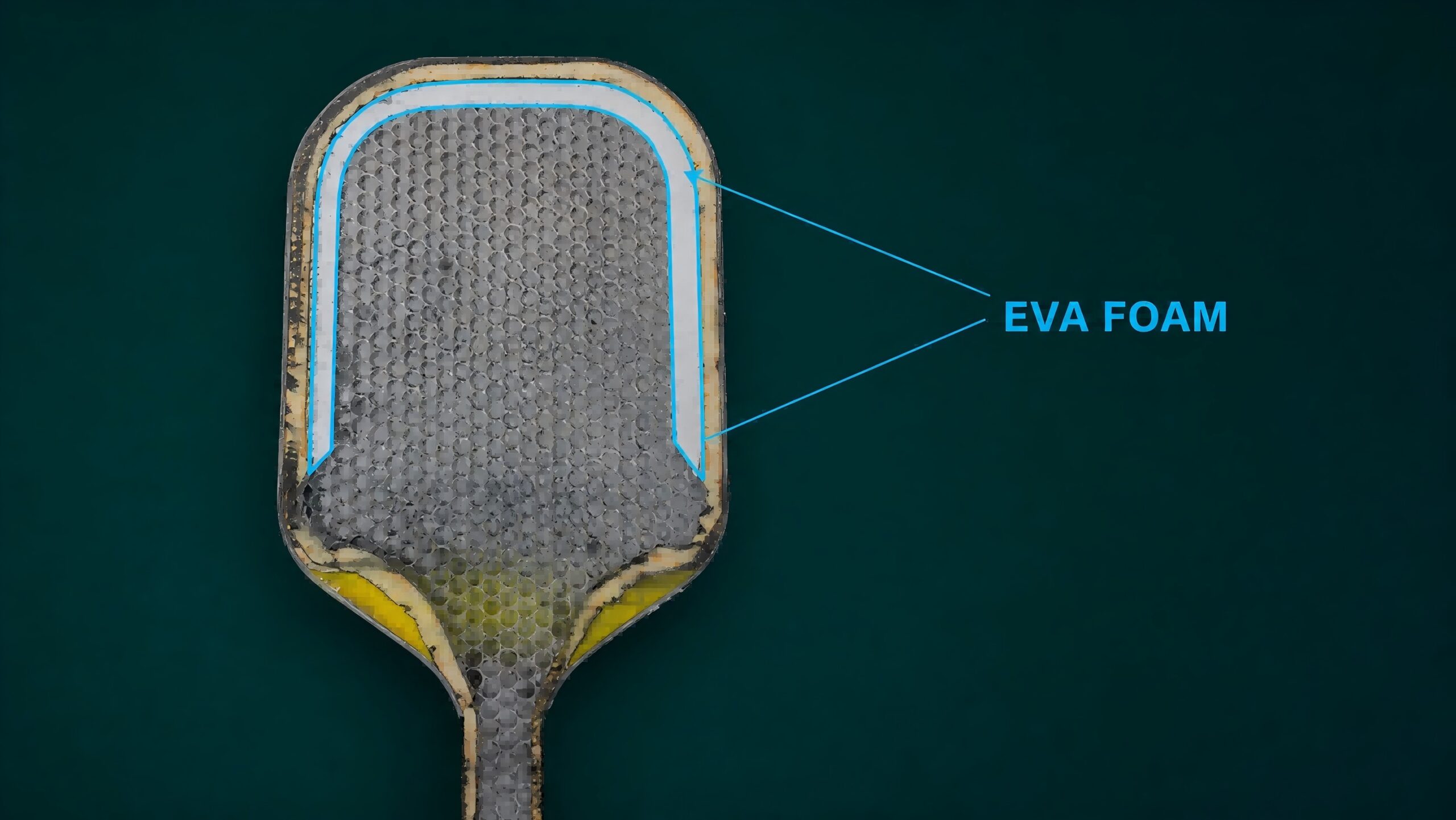
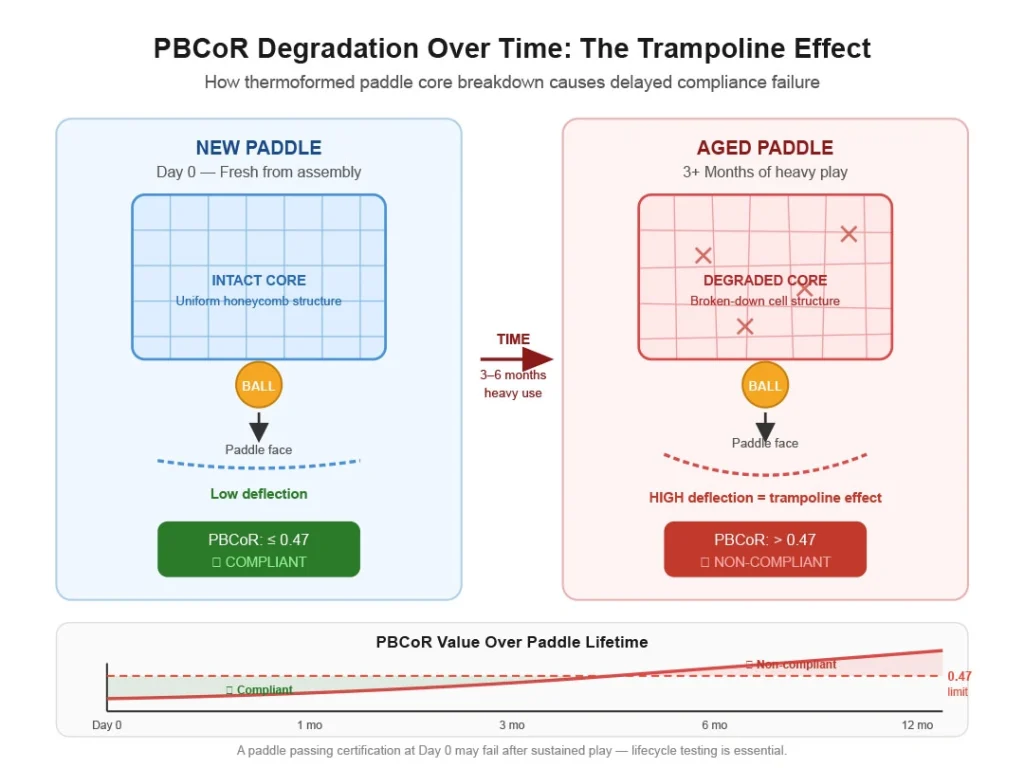
Thermoforming seals the paddle edges with carbon fiber under high heat and pressure, creating a unibody construction that is durable and powerful. But it introduces a dangerous variable: aging. Over time, the internal core of a thermoformed paddle can break down slightly, increasing the trampoline effect.
A paddle that passes the ≤0.47 PBCoR threshold fresh off the assembly line may exceed that threshold after three months of heavy play. This delayed failure mode is exactly what trapped brands in the Q4 2024 power paddle ban. Buyers must ensure their manufacturers are accounting for the full lifecycle degradation of 進んだ技術による熱成形パドル — 単なる初日のパフォーマンスではありません。
これらのパラメータのいずれかを大規模に誤ることによる財政的影響は、ブランドを終わらせるほど深刻です。
間違いを犯すコスト
最も危険なコンプライアンスの失敗は、$4,500のラボ拒否ではなく、コンプライアントなテスト結果が得られた後の非コンプライアント生産です。 JOOLA Gen 3のシナリオを考えてみてください:承認されたサンプルと一致しない小売パドル、数千ユニットあたり$300の強制返金、そして$200百万の反訴。それが大量生産のコンプライアンス失敗の姿です。もしパドルを10,000ユニット生産し、その後除外されると、後退を見ているのではありません。ビジネスを終わらせるイベントを見ているのです。
テスト段階での問題の発見は、比較的安価です。基本的な認証料金はモデルごとに$4,500で、8つのパドルサンプルを提出する必要があります。単純な拒否でも、合計は約$9,400になります — 高額ですが、乗り越えられます。また、各提出には4〜6週間かかるため、拒否は市場投入を1四半期も遅らせる可能性があります。
テスト料金を超えて、規制の風景は二重認証システムに分裂しています。USAPAが一般プレイの基本基準であり続ける一方で、UPA-A認証は2025年9月以降、PPAおよびMLPプロイベントに必要とされています。ブランドは現在、完全な二重承認パスを通過するためにモデルごとに約$6,000を予算に入れる必要があります。
RFIDフィールドテスト:新しい執行の現実
完全に調整された「ゴールデンサンプル」をラボに提出し、わずかに非コンプライアントなパドルを大量生産する時代は終わりました。2026年1月より、USA PickleballおよびPickleball Instrumentsは、攻撃的な現地執行を導入しました。
グレンデールとラスベガスでのゴールデンチケットトーナメントでは、競技者が持参した2,000以上のパドルがフィールドテストされました。その結果は業界への警鐘となりました:機器コンプライアンス担当副社長のライリー・バーガスは、競技に持ち込まれたパドルの6%が非コンプライアントであったと報告しました。
このフィールドテストは2つのフェーズで展開されます:
- フェーズ1: 摩擦係数、変形、剥離検出、および重量/バランスのテスト。
- フェーズ2(今後): 現地PBCoRおよびスピン測定。
合格したパドルには、恒久的なコンプライアンス記録にリンクするデジタルRFIDステッカーが付与されます。USA PickleballのCTOであるカール・シュミッツは次のように述べています: 「機器の整合性は公正な競争の基盤です。この実地テストプラットフォームは、パフォーマンス基準を検証し、透明性を高め、偽造機器の特定の基盤を築く能力を私たちに与えます。」
B2Bバイヤーにとって、その意味は直接的です:製造バッチが許容範囲を外れると、トーナメントの担当者が顧客の手中でそれをキャッチします — あなたのQCラボでではありません。問題は、あなたのパドルがテストされるかどうかではなく、あなたの製造プロセスが一貫して合格できるかどうかです。
ブランドを保護する方法:コンプライアントな製造業者を選ぶ
手を抜く工場に依存することは、必然的にフィールドテストに失敗します。ブランドを守るためには、最も一般的な製造失敗モード5つから積極的に守る必要があります:
- 限度を超えたスプレー式グリット: 不適切なキャリブレーションにより、コーティングが乾燥した後にRtが40µmを超えることが簡単にあります。
- 熱成形PBCoRの経年劣化: パドルコアが6か月の使用にわたってどのように劣化するかをシミュレートしないこと。
- 寸法公差のずれ: 大量生産中のカッティングや成形が不規則で、寸法が24インチの合計限度を超えること。
- 表面処理の一貫性の欠如: 異なる生産バッチ間での標準化されたQCの欠如。
- 検証されていないコーティング化学: 摩擦係数に期待外れの変化を与える実験的な塗料や樹脂を使用すること。
大量生産を承認する前に、文書化されたバッチレベルの品質管理データを要求し、提供できない製造業者からは離れるべきです。
次のケーススタディは、その基準が実際にどのように見えるかを示しています。
NexaPaddleのコンプライアンス優先アプローチ
After a decade and B2B brands across multiple markets served, one pattern holds across every brand that has never faced a compliance crisis: they treat certification limits as a floor, not a ceiling. That principle drives NexaPaddle’s 5-stage manufacturing protocol — not to meet USAPA standards, but to build a measurable safety buffer into every カーボンファイバーピクルボールパドル を生産する際に測定可能な安全余裕を構築するためです。
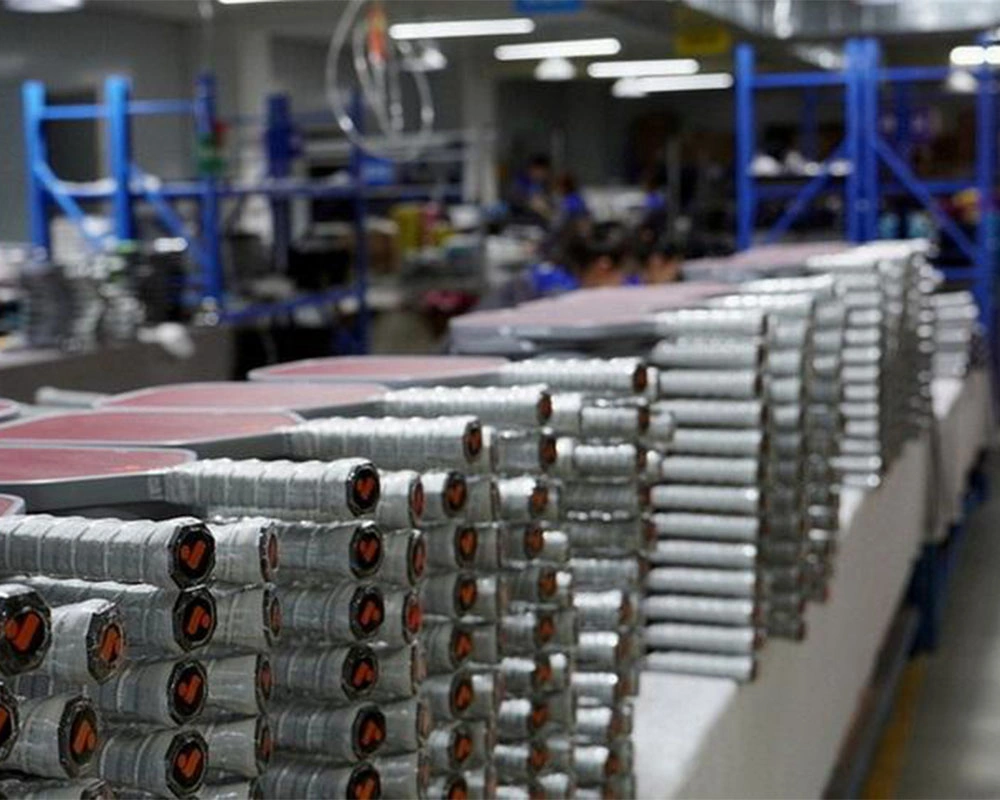
NexaPaddle publishes first-party QA imagery and describes a factory-side inspection workflow. That public evidence does not currently verify a company-wide Rt/Rz or PBCoR guard band, a specific calibrated profilometer, testing after every coating stage, accelerated-aging predictions, or guaranteed field compliance months after shipment.
For a compliance-sensitive OEM project, define the approved specification, sampling plan, measurement method, change-control rules and any required third-party or governing-body testing before production. Treat internal factory checks as process controls, not certification.
よくある質問
u003cstrongu003eHow much does it cost to get a pickleball paddle USAPA certified?u003c/strongu003e
Certification fees, sample quantities and re-submission charges change by program and year. Verify the current fee and submission schedules directly with USA Pickleball and UPA-A before budgeting; do not use an older fixed per-model figure as a current quote.
u003cstrongu003eWhat is PBCoR and why are paddles being banned for it?u003c/strongu003e
PBCoR stands for Paddle Ball Coefficient of Restitution. It measures the energy return or “trampoline effect” of a paddle. The current threshold is ≤0.47, with expectations it will tighten to ≤0.43. Paddles that exceed this limit generate dangerous ball speeds, leading to bans affecting models from JOOLA and ProKennex scheduled for July 2025.
u003cstrongu003eCan a paddle pass certification but fail later?u003c/strongu003e
Yes. This is a common issue with thermoformed paddles, where internal core breakdown over time increases PBCoR beyond the legal threshold. Additionally, USA Pickleball’s RFID field-testing program at tournaments is specifically designed to catch mass-production paddles that deviate from the original approved prototypes — whether due to aging or manufacturing inconsistency.
u003cstrongu003eHow does the new tournament field testing work?u003c/strongu003e
Starting in January 2026, USA Pickleball began using on-site field testing at tournaments. Phase 1 tests for friction, deflection, delamination, and weight. Passing paddles receive a digital RFID sticker. In early testing of over 2,000 paddles, officials found a 6% non-compliance rate among players’ equipment.
u003cstrongu003eWhat should I require from my OEM manufacturer before committing to a mass production run?u003c/strongu003e
Before authorizing production, demand documented evidence of the following: batch-level surface roughness measurements (Rt and Rz) showing results below — not merely at — the official USAPA limits; internal PBCoR targets with a compliance buffer below ≤0.47; and, for thermoformed models, project-specific validation data for any durability or break-in claim that matters to the buyer. You should also clarify the contractual liability if a finished batch fails USAPA certification or RFID field testing — specifically who absorbs the cost of the $4,500 resubmission fee, retooling, and any launch delay. NexaPaddle’s u003ca href=u0022https://nexapaddle.com/custom-paddles/u0022 target=u0022_blanku0022 rel=u0022noreferrer noopeneru0022u003ecustom paddle programu003c/au003e can scope the documentation required for the specific project; availability should be confirmed before production.
参考文献
- USA Pickleballの機器基準と認証の更新 — usapickleball.org/equipment/paddle-certification-updates/
- USA Pickleballの非認証JOOLAパドルに関する声明 (2024年5月) — usapickleball.org
- JOOLA Gen 3 クラスアクション和解 — 購入ごとに$300の返金を提供するクラスアクション;JOOLAはUSA Pickleballに対して$200百万の反訴を提出しました
- USAP NPRM 24-002: PBCoRテスト要件文書 — equipment.usapickleball.org/docs/pbcor-testing.pdf
- Pickleheads: USA Pickleballが承認リストから7つのパドルを削除 (2025年1月9日) — pickleheads.com
- USA Pickleballおよびピクルボール器具フィールドテストプログラムのお知らせ (2026年1月16日) — usapickleball.org
- USA Pickleballパドルのフィールドテスト結果 — ライリー・バーゲス, 設備コンプライアンスVP: 2,000以上のパドルがテストされ、6%の不遵守率(2026年)
- カール・シュミッツ, USA PickleballのCTO — RFIDフィールドテストインフラを通じた機器の整合性と偽造検出に関する声明
- 米国ピックルボール機器規格マニュアル — current official paddle testing requirements and surface-roughness procedure
- NexaPaddle Supplier Proof & Factory Evidence — first-party factory, QA-process and evidence-boundary record