The advanced player segment is the fastest-growing tier in pickleball. As more competitive tennis players cross over and recreational players level up their game, the demand for equipment that actually performs at a high level — not just markets itself as high-performance — has reached a point where generic paddles are no longer acceptable. Advanced players notice the difference. They talk about it, test equipment, and make purchasing decisions based on specs, not slogans.
The pickleball equipment market is valued at $702.9百万, with 3650万人のプレイヤー in the United States alone. Within that market, the carbon fiber paddle segment stands at JOOLA Perseus and is projected to grow at a 12.8% CAGR to $412.86 million by 2034. That growth is concentrated in the upper tiers — players who have been through a few entry-level paddles and are now specifically looking for professional-grade construction.
For brand owners and retailers serving this segment: the players you’re selling to know what T700 carbon fiber is. They know what thermoforming does. They can feel the difference between a 13.5mm and 16mm core. If your product line doesn’t reflect that technical reality, you’re not competing in this market — you’re being passed over for a brand that does.
This article covers what defines a professional pickleball paddle from a manufacturing standpoint: face materials, core technology, construction processes, handle geometry, and the performance metrics that matter for advanced play. It’s written for paddle brands and manufacturers sourcing pro pickleball paddles at scale, but advanced players evaluating their next paddle will find it equally useful.
What Defines a Professional Pickleball Paddle
The word “professional” gets applied liberally in paddle marketing. From a manufacturing standpoint, four pillars separate a genuine pro paddle from a mid-tier one that’s been photographed well.
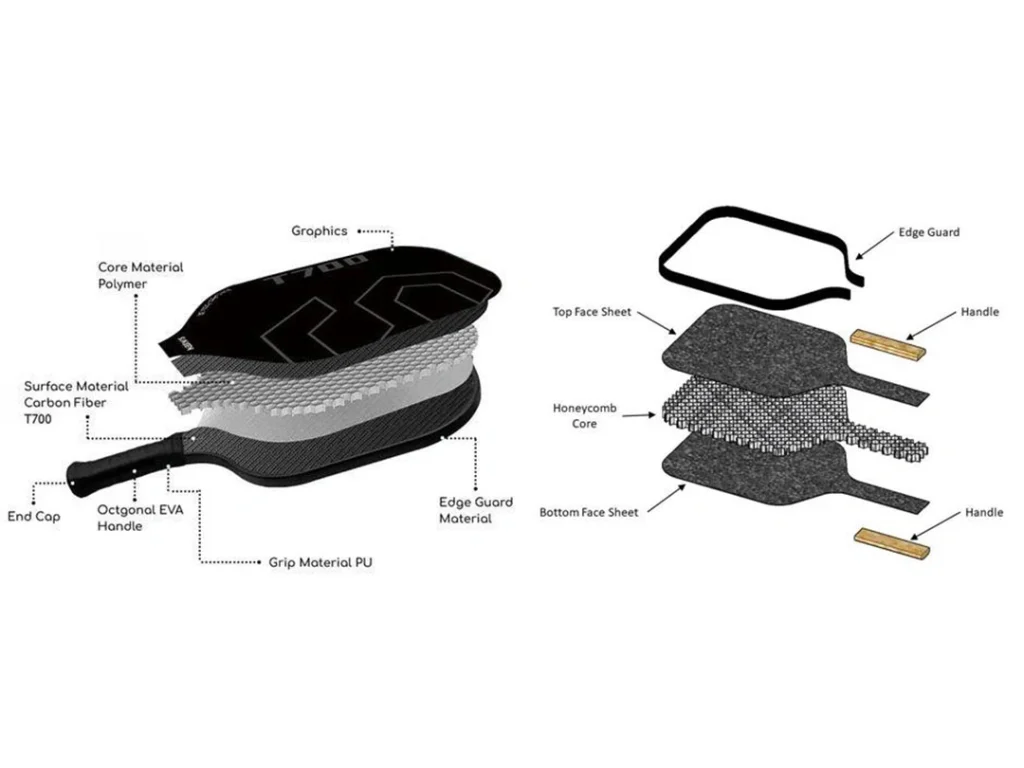
Pillar 1: Face Material — T700 Carbon Fiber
Every serious paddle on the market today converges on トーレイ T700 カーボンファイバー as the baseline face material. This isn’t a branding convergence — it’s a materials science outcome. Toray’s T700SC technical data shows the following fiber properties:
| プロパティ | T700SC (Toray) |
|---|---|
| 引張強度 | 4,900 MPa |
| 引張弾性率 | 230 GPa |
| 破断伸び | 2.1% |
| フィラメント直径 | 7 μm |
| 密度 | 1.80 g/cm³ |
For context: structural steel runs 400–800 MPa. T700 is the same grade used in load-bearing structures of the Boeing 787 Dreamliner. Applied to a paddle face, those properties translate to a surface that resists micro-fracture under thousands of impact cycles, maintains structural stiffness over a full season, and generates spin through fiber geometry rather than applied coatings.
The 7-micron filament diameter is critical for spin generation. When T700 fibers are laid up in either UD (unidirectional) or 3K woven patterns and cured without surface coating, the resulting face has a micro-texture at the scale of those filament bundles. That texture creates the friction at the ball-paddle interface that generates angular momentum — measured at 2,300+ RPM spin output from raw T700 surfaces. And unlike spray-on grit coatings, which are adhesive-bonded particles that degrade in 60〜90日 of regular play, the T700 micro-texture is intrinsic to the fiber. There is nothing to wear away.
Pillar 2: Core Technology
The core determines energy return, dwell time, and the paddle’s vibration profile. In professional paddles, the core options break down as follows:
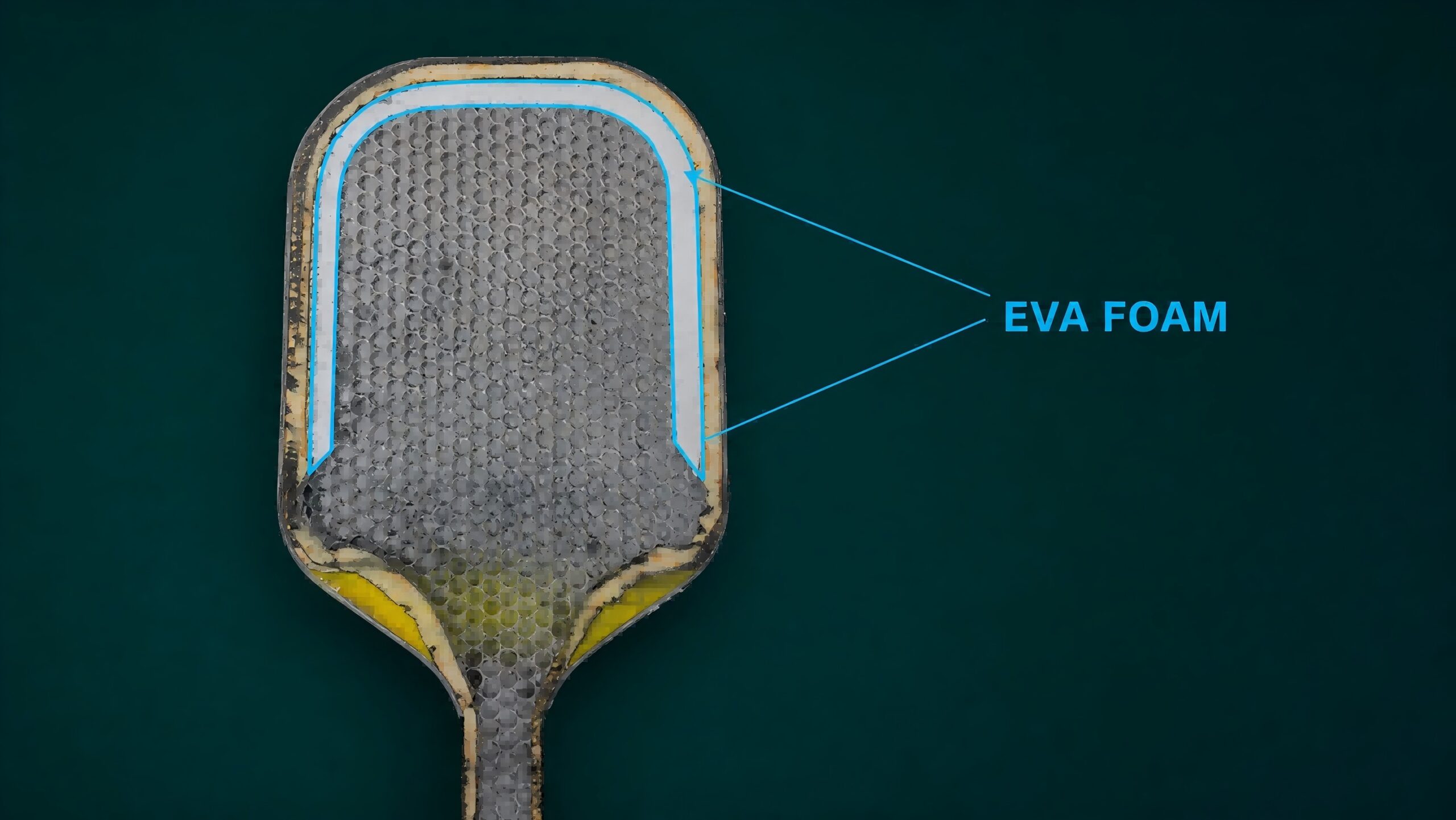
PPハニカム remains the workhorse of professional construction — reliable, predictable, compatible with both thermoforming and hot press forging, and available in varying cell geometries to tune stiffness. Most competition paddles at the $130–$200 retail tier use optimized PP Honeycomb.
GEN3コア2.0 represents the next level — thermoformed honeycomb with tighter cell geometry engineered specifically for high-velocity impact cycles. NexaPaddle’s GEN3 Core 2.0 Series uses this architecture in combination with T700 faces for players who need consistent power delivery across extended rallies.
GEN4 EPPフォーム (Expanded Polypropylene) eliminates core crush failure entirely and dampens vibration significantly — useful for players managing arm fatigue or operating in noise-sensitive environments. This is the architecture behind Selkirk’s BoomCore and CRBN’s TruFoam.
GEN5 Gatling Polymeric Mesh represents the current engineering frontier: a structured polymeric mesh geometry designed to maximize energy return at the outer edge of USAPA’s PBCoR envelope.
Pillar 3: Construction Process
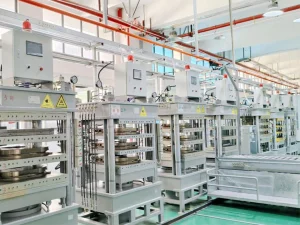
How the face and core are bonded determines structural longevity and performance consistency. Cold press uses adhesives — reliable and cost-effective for entry to mid tier, but the adhesive bond is a finite-life structural joint. Thermoforming and hot press forging eliminate adhesive bond points entirely by fusing the paddle under heat and pressure into a single unibody structure. The difference in delamination resistance between a cold press and a thermoformed paddle is not marginal — it is categorical.
Pillar 4: Performance Metrics
A professional paddle needs to hit specific engineering targets. Advanced players and competitive brands evaluate against these benchmarks:
| 指標 | プロフェッショナルベンチマーク | その重要性 |
|---|---|---|
| ツイスト重量 | 6.5+ | 機能のスイートスポットを広げ、ミスヒット時のトルクを軽減 |
| スイングウェイト | 110–120 | キッチンでのハンドスピードとドライブのプラウスルーをバランス |
| 滞留時間 | コア依存 | スピン操作とタッチショットの精度に影響 |
| PBCoR | ≤ 0.43 (USAPA, 2025年11月) | 認証をクリアしている最大合法出力 |
これらは目標ではありません。これは、高品質の製造業者が計算によって達成する設計仕様です。
上級プレイヤー向けのエクステンデッドハンドルの利点
標準的なピックルボールハンドルは 130mmエクステンデッドハンドルへの移行は — 145mm以上 — プロパドルデザインにおける最も重要な人間工学的発展の1つであり、具体的な市場のトレンドによって推進されています: テニスからピックルボールへ移行するプレイヤー.
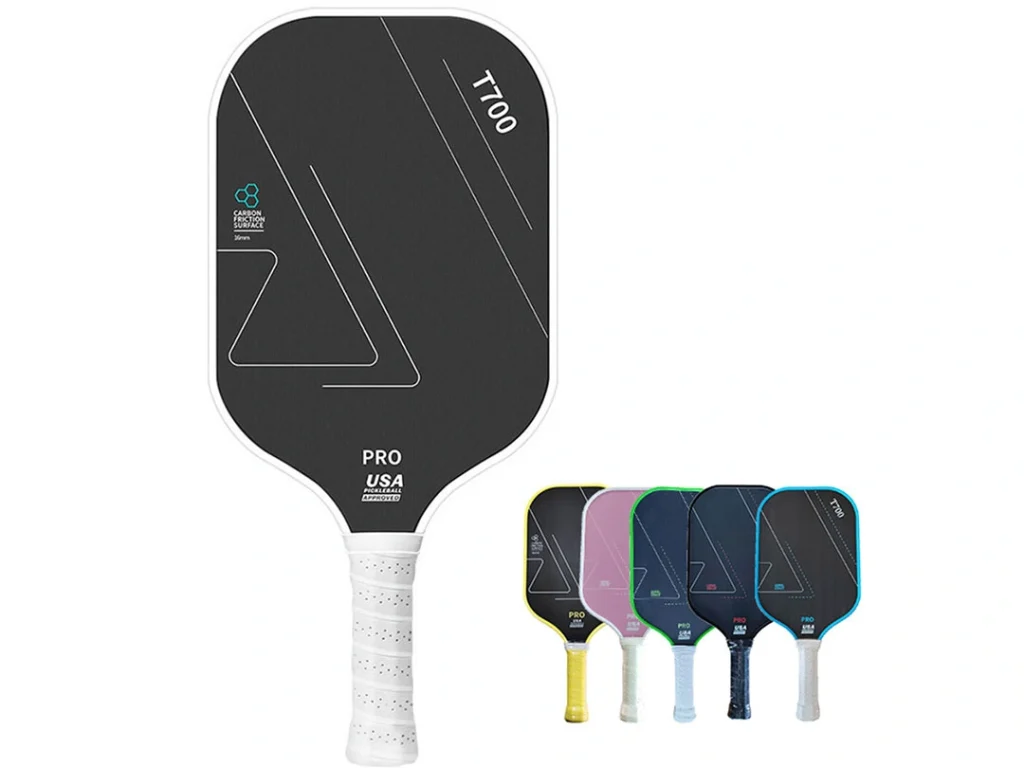
テニスはピックルボールの最大の供給スポーツです。数年間二本手バックハンドを使ったプレイヤーは、深く習得したストロークを持ってピックルボールに入り、130mmのハンドルではそれに合わないことをすぐに理解します。オフハンドはグリップスペースが不足します。その結果、ストロークを妨げる awkward な修正されたグリップになるか、二本手バックハンドプレイ用に設計されたパドルを探し求めるプレイヤーになります。
二本手バックハンドの議論以上に、エクステンデッドハンドルはすべてのストロークのレバレッジメカニクスに影響します。よりハンドルが長くなるほど、レバレッジがヘッドからさらにシフトし、ドライブやサーブにより多くのひねりが得られます。ベースラインからペースを生み出すプレイヤー—キッチンゲームの専門家ではなく攻撃的なベースライナー—は、単一のハンドストロークでも追加のレバレッジの恩恵を受けます。
NexaPaddle モールド #5:エクステンデッドハンドル熱成形製品
NexaPaddleのモールド #5は、エクステンデッドハンドルの使用ケースに特化して設計されています。フル仕様:
| 仕様 | 型#5 |
|---|---|
| フェイス | T700 UD/3K カーボンファイバー |
| コア | PPハニカム |
| 寸法 | 415×185mm |
| 厚さ | 16mm |
| 重量 | 215–230g |
| ハンドルの長さ | 145mm |
| 構造 | 熱成形 |
| MOQ | 100個 |
145mmハンドルは 標準ハンドルよりも15mmの追加グリップスペースを提供します。 熱成形構造では、そのエクステンデッドハンドルはフェイスと同じ連続したカーボンファイバーストラクチャの一部であり、二本手バックハンドの回転負荷の下で最初の構造的失敗点となる接着剤の接合部は存在しません。
この構成の16mmコアの厚さは意図的なものです。厚いコアは、より柔らかく、より制御しやすいボール反応を生み出します。これは、スピンと同様に精度が必要なプレイヤーにとって重要です。これは純粋なパワー構成ではなく、二本手バックハンドを制御武器およびドライブストロークとして使用する完全なプレイヤー向けに設計されています。
プロおよび高度なピクルボールパドル 攻撃的なベースライナーやオールコートプレイヤーを対象としたNexaPaddleは、 テニスのクロスオーバー層を対象としたこの仕様は、これらのプレイヤーが求めているものに直接一致します。
NexaPaddle GEN3 コア 2.0 シリーズ:攻撃的なベースライナー向けエクステンデッドハンドル
GEN3 コア 2.0 シリーズは、攻撃的なベースラインプレイを好むプレイヤーのために次元をさらに押し広げます:
- フェイス:T700 カーボンファイバー
- 寸法: 417×188mm
- ハンドル: 149mm
- コア:GEN3 2.0 熱成形ハニカム
149mmハンドルは、エクステンデッドハンドルの構成が一般的に提供する外側の範囲にあります。417×188mmのフェイス — 競争市場での大きなフェイスプロファイルの1つ — と組み合わされて、この構成は最大限のリーチ、ドライブでの最大限のレバレッジ、ややオフセンターの接触を許容するフェイスプロファイルを求めるプレイヤー向けに調整されています。GEN3 2.0 コアは、エクステンデッドラリーシーケンス全体で一貫したエネルギーリターンを提供します。
全ラインアップを探究 T700カーボンファイバーパドル これらのエクステンデッドハンドル構成の周りに構築された範囲。
ホットプレス鍛造 — プロピックルボールパドルの究極の構造
熱成形は、接着剤接合点なしの一体成形構造を作成することによって、コールドプレス構造の剥離リスクを排除しました。ホットプレス鍛造は、その構造論理をさらに一歩進めます。
ホットプレス鍛造は熱成形とどのように異なるのか
標準的な熱成形は柔軟なツーリングと圧力制御されたオーブンを使用します。このプロセスは制御されていますが、金型内の異なるパドル位置間でわずかな寸法変動が許可され、硬化循環中に小さな内部空洞が形成されることがあります。
ホットプレス鍛造 精密に機械加工された 鋼の金型に適用されます。 極度の圧力下で使用されています。鋼製の金型は柔軟性がないため、
- より厳密な寸法公差 — 生産ランのすべてのパドルが狭い仕様のウィンドウ内にあります
- より均一なファイバー圧縮 — 圧力が全体のフェイスに均等に分散され、適用ポイントだけではありません
- 空洞スペースの削減 — 剥離の主な発生場所は、湿気や空気が侵入して膨張できる内部空洞です;鍛造構造はそれらを構造的に排除します。
- ゼロ剥離リスク — リスクが低くなるのではなく、通常の競技プレイ条件下でのリスクが排除されます。
標準の熱成形モデルが高頻度の競技使用によって最終的に剥離するため、シーズンごとに複数のパドルを循環させるトーナメントプレイヤーにとって、鍛造構造はその失敗モードに直接対応しています。鍛造パドルは、初日と同じ構造的完全性で競技シーズン全体を持続するように設計されています。
NexaPaddle モールド #7:ホットプレス鍛造仕様
| 仕様 | モールド #7 |
|---|---|
| フェイス | T700 UD/3K カーボンファイバー |
| コア | PPハニカム |
| 寸法 | 420×185mm (BV71/BV73) / 425×186mm (BV75) |
| 厚さオプション | 13.5–14mm (パワー) / 16mm (コントロール) |
| 重量 | 220–235g |
| ハンドルの長さ | 145mm |
| 構造 | ホットプレス鍛造 |
| MOQ | 100個 |
The dual thickness option in this mold is the key customization lever for advanced players:
- 13.5–14mm: Stiffer face response, more direct energy transfer from swing to ball, higher power output. Preferred by players who generate pace through technique and want maximum ball speed on drives.
- 16mm: Softer feel, longer dwell time, more control on touch shots and resets. Preferred by all-court players who need the kitchen game to perform as well as baseline exchanges.
The BV71/BV73/BV75 shape variants refer to slightly different face profiles within the same mold family — allowing brands to differentiate their SKU lineup with subtle geometry adjustments rather than entirely new tooling investments.
For brands that need tournament-grade durability and are working with players who compete at the highest levels, the 鍛造T700カーボンピクルボールパドル工場の capability is the relevant manufacturing reference.
全ラインアップを探究 熱成形ピクルボールパドル range to understand how thermoformed and forged construction compare across different performance tiers.
Custom Specifications for the Advanced Player
Generic paddles exist because they hit acceptable performance across a broad player range. Advanced players are not a broad range — they are a specific player profile with specific requirements. That requires customization.
Why Advanced Players Need Customization
Three areas drive customization demand at the advanced level:
Weight tuning: Competitive players often have a target swing weight range they’ve dialed in over years of play. A paddle that’s 5g heavier than preferred disrupts hand speed; 5g lighter than preferred reduces drive power. Factory-standard weight ranges (e.g., 215–230g) span 15g — which for an advanced player is too wide. Custom weight tuning through strategic use of edge tape, perimeter foam, or adjusted core density narrows that range to 3–5g of variance.
Core thickness selection: The 13.5mm vs. 16mm decision affects every aspect of how the paddle plays — power output, dwell time, vibration damping, and arm fatigue profile. Advanced players who have played both configurations at a high level know which one fits their game. They are not guessing.
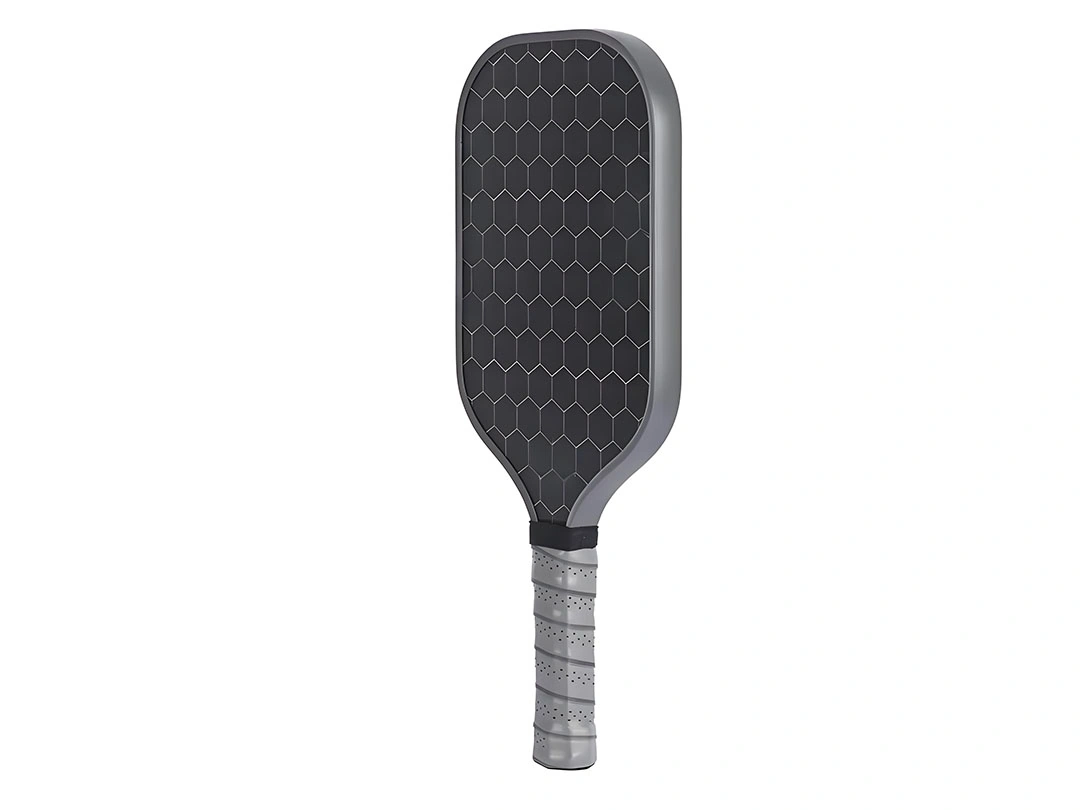
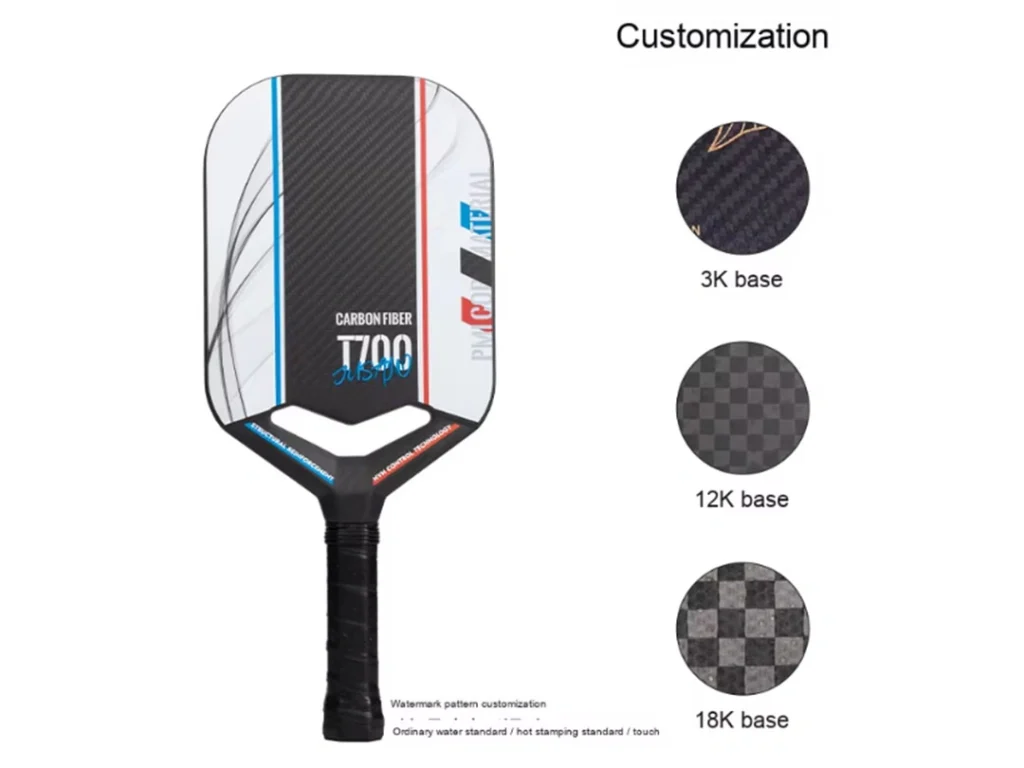
Face texture preference (UD vs. 3K): UD carbon fiber creates a smoother, directionally consistent surface texture that generates spin most efficiently in strokes where the face contacts the ball at consistent angles (typically forehand drives and serves). 3K woven carbon creates an omnidirectional crosshatch texture that performs more uniformly across varied swing angles — useful for players with diverse shot profiles. Both are T700; the difference is surface geometry, not material grade.
NexaPaddle’s Customization Capabilities
NexaPaddle’s manufacturing infrastructure supports full custom specification across every performance variable:
型: 8+ proprietary molds covering face dimensions from 415×185mm to 425×186mm, handle lengths from 130mm to 149mm, and multiple thickness options within each mold family.
Face material range: Fiberglass → T700 carbon (UD/3K) → T800+Titanium thread → Kevlar/Aramid hybrid. Each tier represents a genuine performance increment, not just a price increment.
Core options: PP Honeycomb (standard and GEN3 2.0 thermoformed) → GEN4 EPP Foam → GEN5 Gatling Polymeric Mesh. Core selection determines the paddle’s dwell time, vibration profile, and compliance headroom.
Pre-USAPA testing: NexaPaddle tests for PBCoR (≤0.43 since November 2025 enforcement), surface roughness via profilometer, and dimensional compliance before submission. The 2024 USAPA certification cycle processed 1,713 submissions with only 1,225 approved. Pre-testing eliminates the guesswork and protects your 60–90 day launch timeline from a rejection.
MOQ and timeline: 100 pcs minimum for thermoformed and hot press forged constructions; 300 pcs for cold press. Concept to delivery: 60–90 days.
その カスタムOEMピクルボールパドル process covers all of these variables through a structured consultation — material selection, mold configuration, compliance testing, and production scheduling.
For brands exploring the upper end of the material range, ピックルボールは硬いポリマーのプラスチックでできています。激しいラリー中、永久的なカーボンファイバーの織り方とプラスチックボールの間の摩擦は、ボールにマイクロ傷を生じさせます。これにより、カーボンファイバーの表面幾何学に深く物理的に埋め込まれるポリマーの塵やデブリの微細な層が残ります。数週間のプレイの後、このプラスチックの蓄積はパドル面に白い筋や曇った斑点として現れます。 represent the spin-performance baseline that advanced players have come to expect at the pro tier.
Performance Metrics That Matter for Professional Play
Advanced players evaluate paddles against objective performance data. Brands that serve this segment need to understand those metrics at the engineering level to specify and source correctly.
Twist Weight (Target: 6.5+)
Twist weight is the paddle’s resistance to rotation around its long axis when contact occurs off-center. Higher twist weight means the paddle doesn’t rotate in the hand on mishits — which effectively expands the usable sweet spot. This is why advanced players prefer paddles that test at 6.5+ on standard twist weight measurement: off-center contact at the kitchen line, where placement precision matters more than power, produces a predictable rather than erratic result.
Thermoformed and forged construction naturally produces higher twist weight than cold press for a given paddle geometry, because continuous carbon fiber distributes torsional stress more evenly across the entire face.
Swing Weight (Target: 110–120)
Swing weight measures the rotational inertia of the paddle as it moves through a swing arc. It is not the same as static weight. A paddle with more weight concentrated toward the face has higher swing weight than one with the same total mass concentrated at the handle.
The 110–120 range for pro paddles represents a deliberate tradeoff: high enough for plow-through power on baseline drives, low enough for quick hand exchanges at the non-volley zone. Paddles below 110 are hand-speed weapons but sacrifice drive power. Paddles above 120 are power tools but slow down at the kitchen. The professional sweet spot is the overlap.
滞留時間
Dwell time is the duration of ball-face contact during impact. Longer dwell time allows the player to influence ball trajectory and spin during that contact window — essential for advanced shot-making like sharp cross-court angles, roll volleys, and deceptive drops. Core architecture is the primary dwell time variable: foam cores produce longer dwell than honeycomb; thicker cores produce longer dwell than thinner ones.
The tradeoff is that longer dwell time typically means reduced power output (more energy is absorbed rather than returned). Advanced players choose based on their play style: foam core for touch-game specialists, honeycomb for power-baseline players.
PBCoR (≤0.43 USAPA Limit Since November 2025)
PBCoR (Pickleball Coefficient of Restitution) governs the paddle’s “trampoline effect” — how much energy it returns to the ball relative to the impact energy. USAPA tightened the maximum from 0.44 to 0.43 in November 2025. Paddles previously approved at 0.44 may no longer qualify under the updated standard.
For professional play, PBCoR is a compliance floor and ceiling simultaneously: brands want their paddles as close to 0.43 as possible (maximum legal power output) without exceeding it (certification failure). This requires factory-level testing with calibrated equipment, not post-submission guesswork.
The technical relationship between PBCoR and construction is important: thermoformed and forged paddles, because of their structural efficiency, naturally approach the 0.43 limit more closely than cold press designs. This is simultaneously a performance advantage (maximum legal power) and a compliance management responsibility. The two things are not in conflict — they require the same solution: precise factory testing before submission.
Why T700 Is the Engineering Sweet Spot for Pro Paddles
カーボンファイバー製のラダーはT300 → T700 → T800とつながっています。T700がどの位置にあるのか、そしてなぜT300やT800ではないのかを理解することは、プロフェッショナルなパドルに関する全体像を完成させます。
| プロパティ | T300 | T700 | T800 |
|---|---|---|---|
| 引張強度 | 3,530 MPa | 4,900 MPa | 5,490 MPa |
| 引張弾性率 | 230 GPa | 230 GPa | 294 GPa |
| 伸び率 | 1.5% | 2.1% | 1.9% |
| コストパフォーマンス | 予算 | 最適化された | プレミアム |
T700は T300より39%強い — これは疲労抵抗の明確な違いで、パドルの耐久性やシーズン中の表面剛性の一貫性に表れます。T800は唯一、 12%強力ですであり、その显著に高い弾性率(294 GPa対230 GPa)は、ほとんどのプレイヤーにとってコート上の成果に比例的に変換される硬さを生み出しますが、調達コストははるかに高くつきます。
T700の破断時の伸び率は2.1%(T800の1.9%と比較)であり、これは破断する前にわずかに多くの変形を吸収することを意味します — これは、シーズン中に何千回もの衝撃サイクルを受けるフェイス材料に求められる特性そのものです。7μmのフィラメント直径により、内因的なファイバー形状からスピンが生成されるため、T700はこのスポーツの技術的発展の段階においてプロフェッショナルなパドル製作のエンジニアリング最適解です。
なぜ カーボンファイバーのピックルボールパドル T700を基にした製品が現在のプロフェッショナル基準を代表しているのかについては、材料科学の文書で詳しく説明されています。
よくある質問
What makes a pickleball paddle “professional grade”?
Four engineering characteristics define professional grade: a T700 or higher carbon fiber face (generating 2,300+ RPM spin through intrinsic fiber geometry), a performance-optimized core (PP Honeycomb, GEN3 2.0, or foam), thermoformed or hot press forged construction (eliminating adhesive bond points and delamination risk), and compliance-tested performance metrics (Twist Weight 6.5+, Swing Weight 110–120, PBCoR ≤0.43). Generic paddles lack one or more of these; professional-grade paddles deliver all four.
Why is T700 carbon fiber preferred over T800 for pro paddles?
T700 delivers 4,900 MPa tensile strength — 39% stronger than T300 and sufficient for professional-level fatigue resistance. T800’s 5,490 MPa is only 12% stronger than T700, while its significantly higher modulus (294 GPa vs. 230 GPa) adds stiffness that doesn’t translate to proportional performance gains for most players, at meaningfully higher cost. T700’s 2.1% elongation-at-break also provides better impact absorption characteristics. The entire market — Selkirk, JOOLA, CRBN, Vatic Pro — converged on T700 because the engineering case is definitive, not because of cost-cutting.
What handle length do advanced players prefer?
The trend is clearly toward 145mm+ extended handles. Standard handles (130mm) are functional for single-handed play but limit two-handed backhand players — a growing segment driven by tennis crossover. NexaPaddle’s Mold #5 offers a 145mm extended handle in thermoformed T700 construction; the GEN3 Core 2.0 Series extends to 149mm for players who want maximum leverage on drives.
Are custom pro pickleball paddles USAPA approved?
Custom paddles are USAPA-certifiable, not pre-approved. Certification applies to specific designs, not manufacturers. NexaPaddle conducts pre-USAPA testing in-house for PBCoR (≤0.43), surface roughness, and dimensional compliance before submission. The 2024 certification cycle rejected 488 of 1,713 submissions — primarily on PBCoR grounds. Pre-testing eliminates that failure risk before it costs you submission fees and timeline.
What is the minimum order for custom professional paddles?
100個 for thermoformed and hot press forged constructions; 300 pieces for cold press. The historical industry standard was 300–500 units; NexaPaddle’s optimized production lines accommodate the lower MOQ specifically to allow brand owners to test the advanced player market with limited inventory commitment before scaling.
結論
上級者は特定の要求が高く、よく情報を得たセグメントです。彼らはT700が何であるかを知っています。彼らはサーマフォーミングが何をするのかを知っています。彼らはすでに多数のパドルを使った経験があり、製造品質が欠如していることを認識しています。この市場向けのプロフェッショナルなピクルボールパドルを製造するには、デザインの各決定で特異性が必要です:フェイス素材のグレード、コアの構造、製造方法、ハンドルの形状、性能指標の目標など。最高のプロピクルボールパドルを製造するブランドは、1つの共通点があります:それらの決定は、近似ではなく精度を持って行われました。
その基準を満たすための製造インフラは存在しています。T700カーボンファイバーのフェイスで2,300 RPM以上のスピン生成。二手バックハンドプレイヤー向けの145–149mmの長いハンドル。ゼロデラミネーションリスクでのホットプレス鍛造構造。PPハニカム、GEN3 2.0、GEN4 EPPフォーム、GEN5ガトリングメッシュのコアオプション。事前のUSAPA準拠テスト。MOQは100個で、コンセプトから納品までのタイムラインは60–90日。
もし上級者向けのパドルラインを構築しているのであれば、またはそのブランドにサービスを提供しているのであれば、技術的な会話は美観ではなく仕様から始まります。NexaPaddleの製造チームは、ブランドオーナー、小売業者、トーナメントレベルのプレイヤーと直接連携し、材料選定、型配置、準拠テスト、製造計画を網羅する構造化されたコンサルテーションプロセスを通じて取り組みます。
NexaPaddleに連絡して、プロフェッショナルなパドル製造要件について話し合いましょう。
情報源と引用
Coherent Market Insights。 (2025)。 ピクルボール機器市場は、2025年に約7億290万ドルの価値があるとされています。 ピクルボール機器市場は、2025年には約7億290万ドルの規模と評価されています。米国におけるプレイヤー数は、ピクルボールプロフェッショナル協会(APP)のデータに基づく36.5百万です。
業界市場調査。 (2025)。 カーボンファイバー製ピクルボールパドル市場の規模、2025–2034。 カーボンファイバー製パドルセグメントは、2025年に1億3,790万ドルと評価され、2034年までに412.86百万ドルに達する見込みで、年平均成長率(CAGR)は12.8%です。
東レ株式会社。 東レカ T700S技術データシート。 公表されたファイバー特性には、4,900 MPaの引張強度、230 GPaの弾性率、7μmのフィラメント直径、2.1%の伸びが含まれます。ボーイング787の構造用途。 参考.
ヘリオスピクルボール. カーボンファイバー製ピクルボールパドルガイド:T700、グレード & 表面技術。 2025年9月。未加工のT700カーボンファイバー表面からのスピン生成は2,300 RPM以上で測定され;スプレーオングリットの劣化時間は60–90日。
USAピクルボール. 機器基準と承認されたパドルリスト;2024年度年次認証サイクル報告。 PBCoR基準は2025年11月に0.44から0.43に引き締められました;2024年には1,713件の認証提出が処理され、1,225件が承認されました。
NexaPaddle製造仕様。 (2026)。 型番号#5、型番号#7、GEN3コア2.0シリーズの技術データ。 熱成形およびホットプレス鍛造パドル構造の内部製造文書。