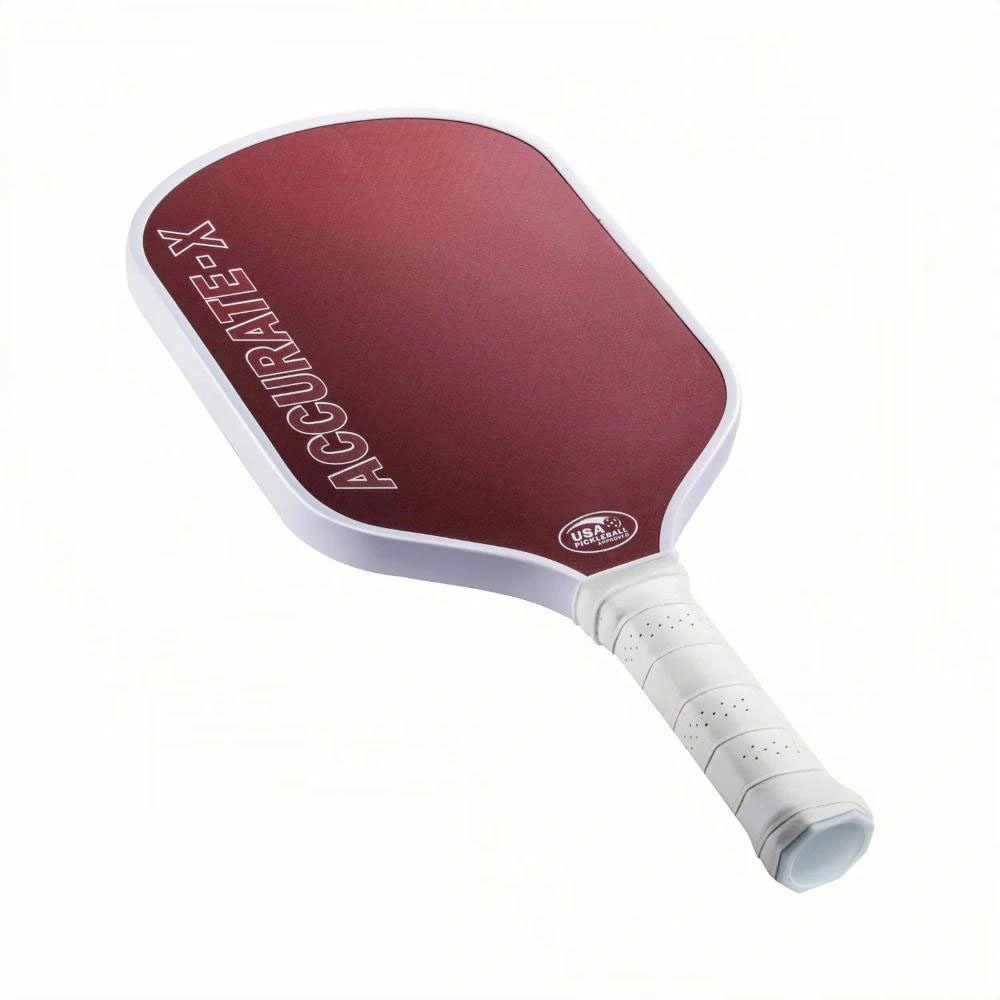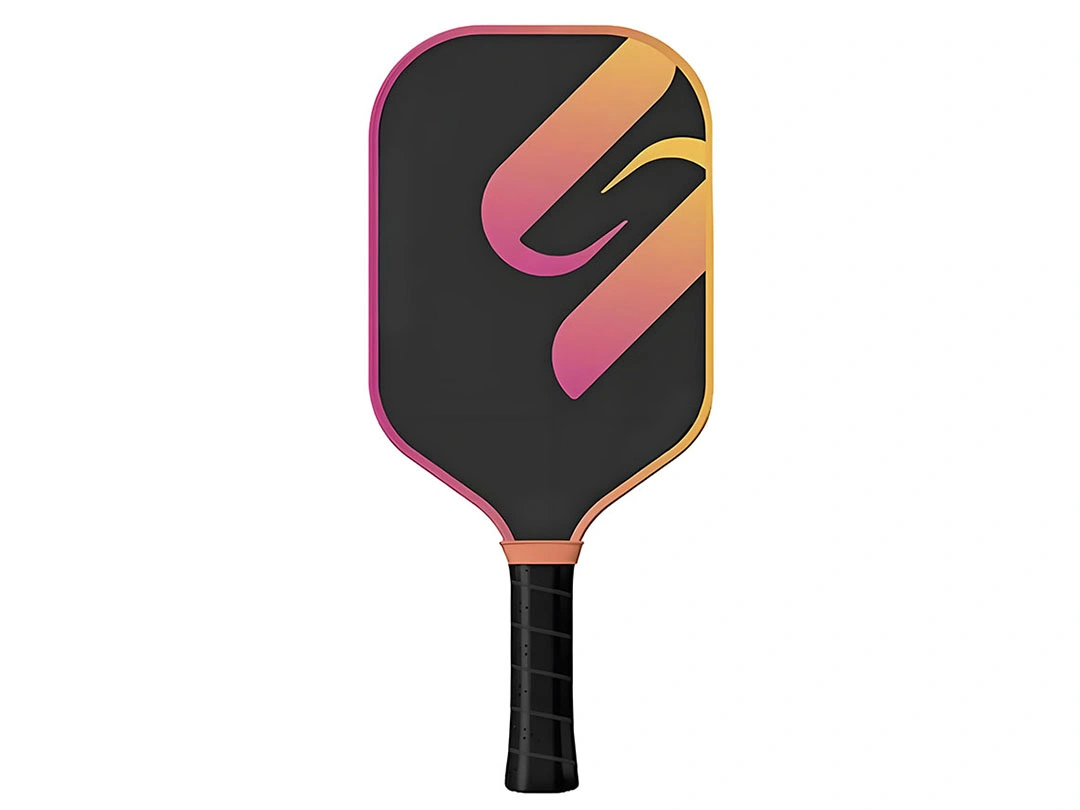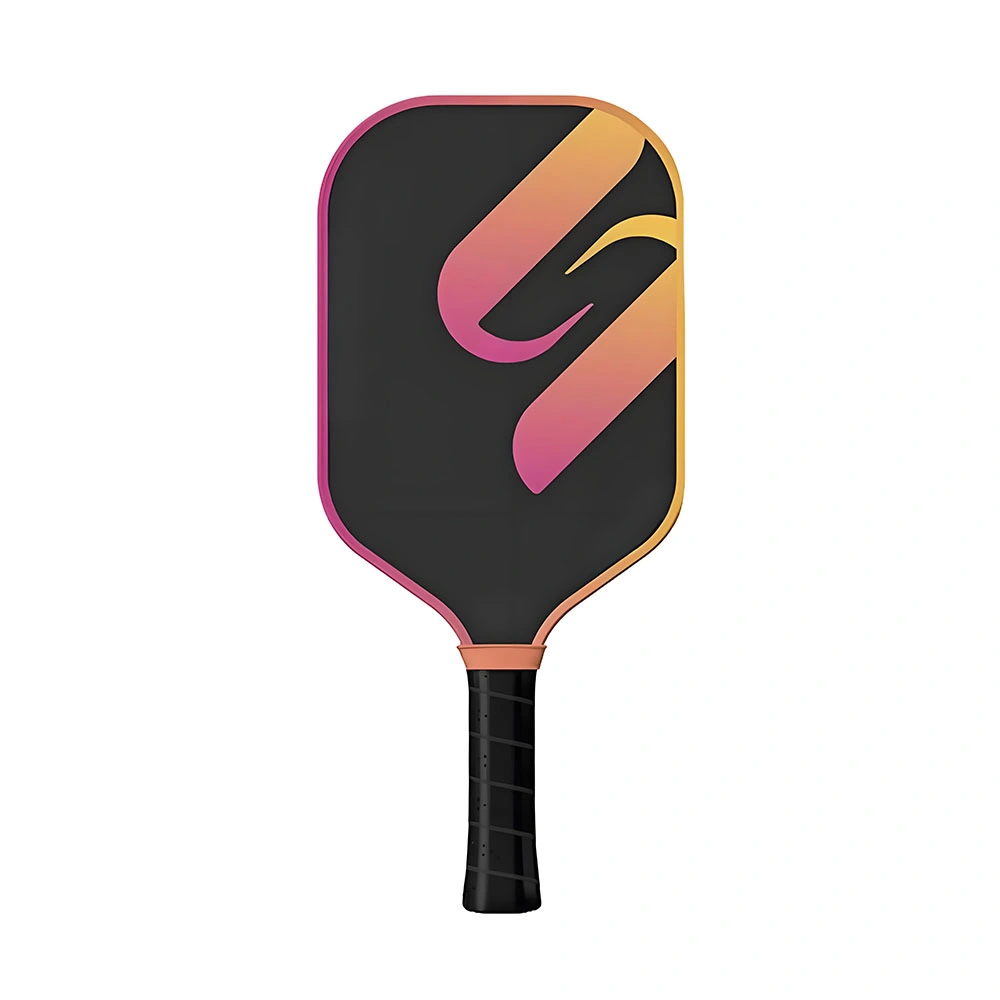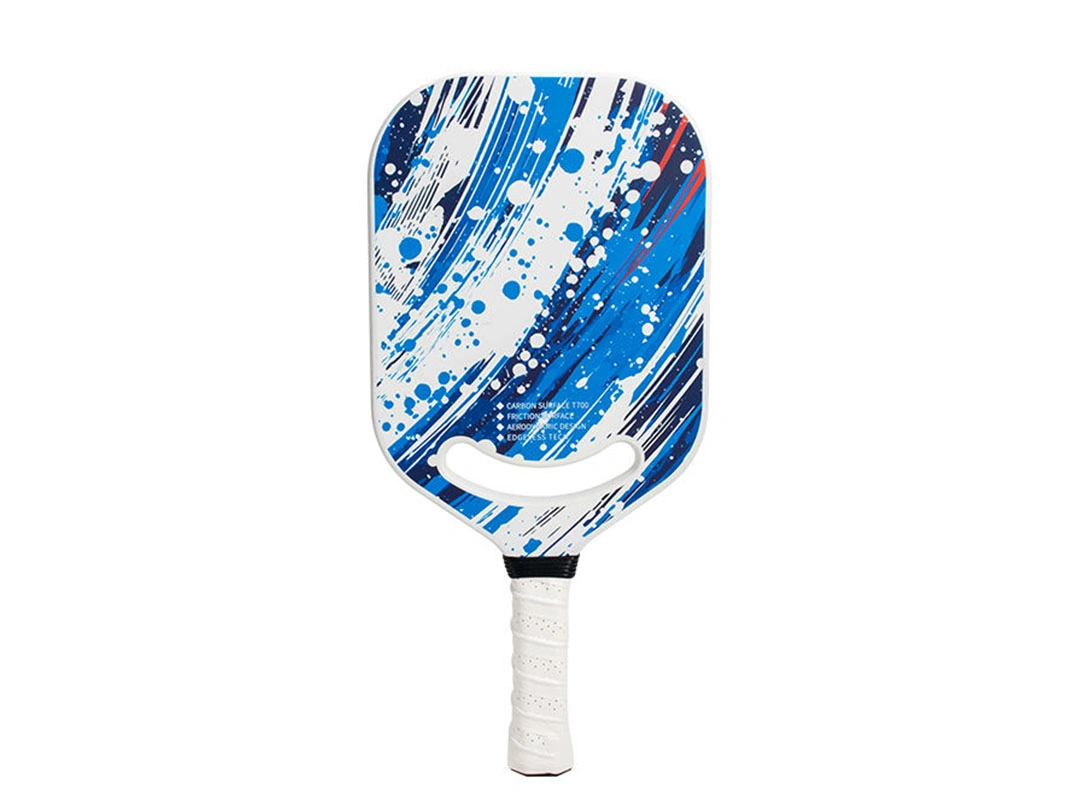
For the last three years, Toray T700 carbon fiber has been the undisputed gold standard in premium pickleball. It democratized high-level spin, pushed the boundaries of durability, and became the baseline expectation for any paddle priced over $150. But in the arms race of paddle manufacturing, baselines are meant to be surpassed.
Before selecting a flagship face, compare T300, T700, T800, 3K, 12K and 18K in our carbon fiber grade guide for pickleball paddle brands.
For the current commercial T800 paddle line, see T800 Carbon Pickleball Paddles Wholesale.
Enter the flagship tier: T800 Carbon Fiber interwoven with Titanium Thread.
If T700 is the high-performance sports car of the pickleball world, T800+Ti is the track-only hypercar. It is not designed for the casual player. It is over-engineered, significantly more expensive to manufacture, and introduces material properties that only high-level players can fully extract.
This is not marketing fluff. You cannot spray “titanium” onto a paddle and call it a day, nor can you vaguely reference “upgraded carbon” without backing it up with modulus ratings. In this breakdown, we dissect the exact material science behind Toray T800, explain the friction physics of woven titanium thread, and explore why this specific combination is driving the new $249–$319 ultra-premium market segment.
The Material Itself: T800 Intermediate Modulus Carbon
To understand why T800 matters, you have to understand how carbon fiber is graded. The industry-standard T700 is classified as a Standard Modulus (SM) fiber. It is excellent at absorbing impact and providing a predictable flex.
Toray T800S, however, steps into the Intermediate Modulus (IM) classification. In material science, “modulus” refers to a material’s resistance to elastic deformation under stress. The higher the modulus, the stiffer the fiber.
The published Toray T800S specifications:
| Property | T800S (Toray) |
|---|---|
| Tensile Strength | 5,490–5,900 MPa |
| Tensile Modulus | 294 GPa |
| Elongation at Break | 1.9% |
| Density | 1.81 g/cm³ |
| Classification | Intermediate Modulus (IM) |
What does this mean on the court? Because T800 has a tensile modulus of 294 GPa, it is approximately 28% stiffer than T700 (230 GPa). When a plastic pickleball strikes a T800 paddle face, the carbon fibers deform less. This lower deformation rate translates to a more precise, immediate energy return. The ball leaves the face faster, with a crisper, more definitive feedback loop to the player’s hand.
This is the same fiber classification used in aerospace primary structures — including aircraft wing spars and F1 chassis components — designed to handle immense kinetic loads without losing structural integrity. The trade-off is a lower elongation at break (1.9% vs T700’s 2.1%), meaning T800 is technically more brittle under extreme catastrophic loads. In practice, those loads are far beyond anything generated on a pickleball court. For a paddle face absorbing thousands of ball strikes per session, T800’s stiffness is a feature, not a liability.
Why T800 + Titanium Goes Beyond T700
If T800 provides the stiffness and structural responsiveness, why add titanium?
The answer lies in surface friction degradation. While carbon fiber pickleball paddles are exceptional at generating spin when new, raw carbon filaments eventually smooth down under repeated impact. The high-velocity friction of a hard plastic ball grinding against the carbon weave gradually flattens the microscopic peaks and valleys that make spin possible.
This is where titanium thread changes the equation. By weaving fine-gauge titanium filaments directly into the T800 carbon matrix, manufacturers create a composite surface where the hardest points of contact are metallic, not carbon.
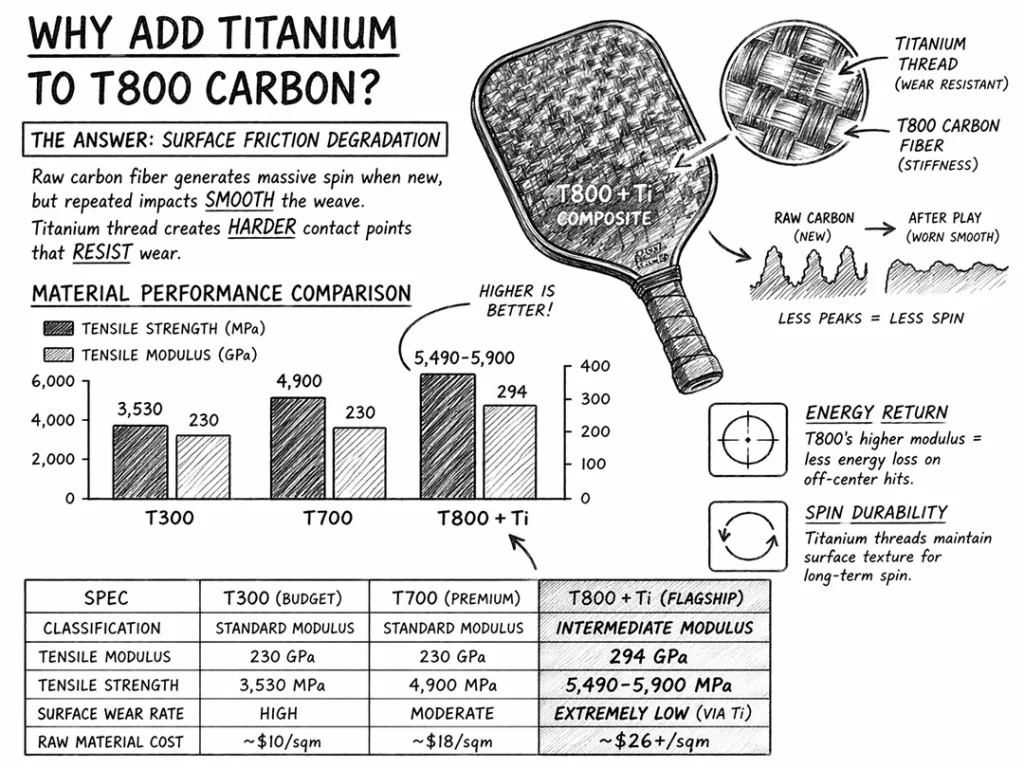
| Spec | T300 (Budget) | T700 (Premium) | T800 + Ti (Flagship) |
|---|---|---|---|
| Classification | Standard Modulus | Standard Modulus | Intermediate Modulus |
| Tensile Modulus | 230 GPa | 230 GPa | 294 GPa |
| Tensile Strength | 3,530 MPa | 4,900 MPa | 5,490–5,900 MPa |
| Surface Wear Rate | High | Moderate | Extremely Low (via Ti) |
| Raw Material Cost | ~$10/sqm | ~$18/sqm | ~$26+/sqm |
T700 is a fantastic material. T800+Ti solves two remaining complaints from professional players: energy loss on off-center hits (addressed by T800’s higher modulus) and spin degradation over time (addressed by titanium’s surface hardness). That dual improvement is the engineering argument for the flagship tier.
The Titanium Weave: Mechanism, Not Marketing
It is critical to clarify what “titanium” means in this context to maintain technical credibility.
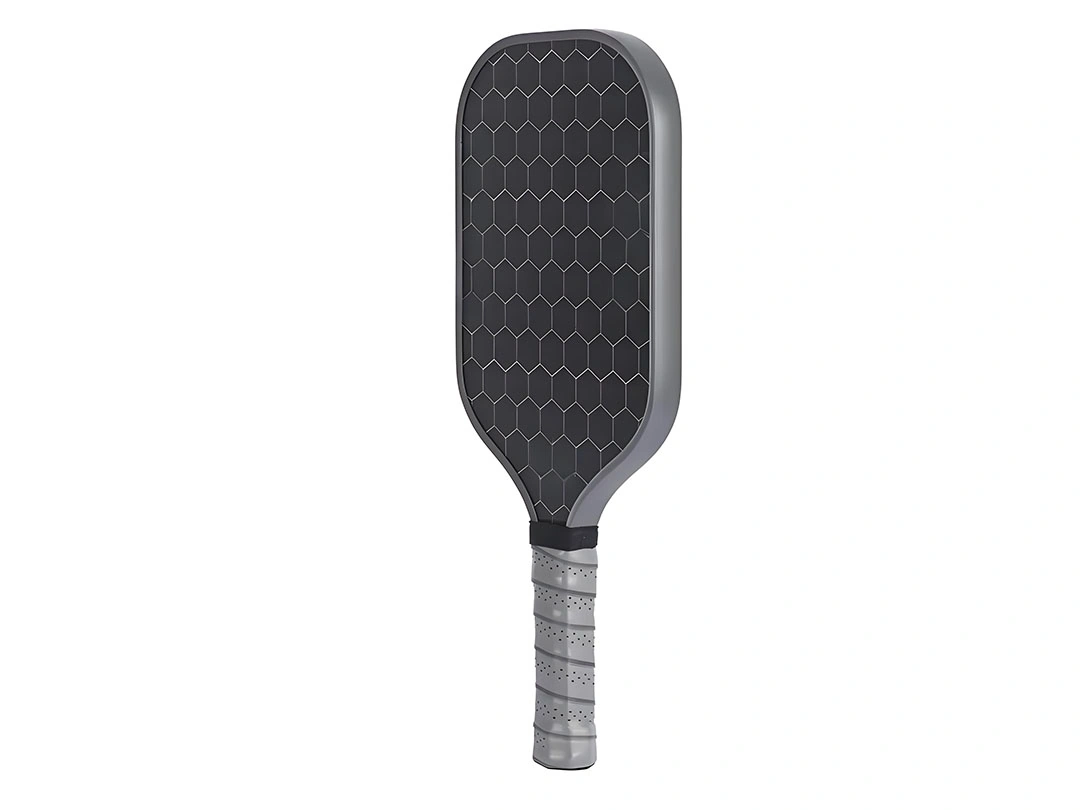
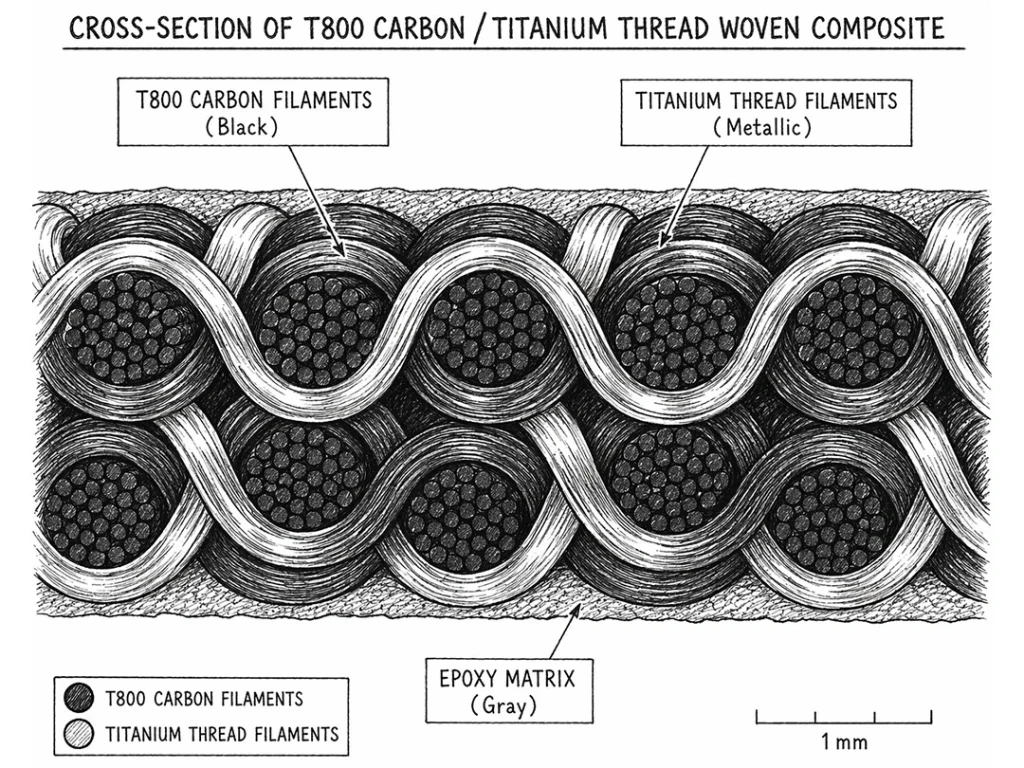
We are not talking about a solid sheet of aerospace titanium alloy acting as a structural core. The titanium used in these paddles consists of fine-gauge wire or thread woven into the carbon fiber matrix during the composite fabric production phase. It is not a spray. It is not a coating. It is an integral structural component of the face itself.
The Durability Mechanism
Titanium is significantly harder than carbon fiber. When the paddle face contacts the ball, the titanium threads act as microscopic armor protecting the carbon weave. Independent reviews of titanium-woven paddles confirm this effect quantitatively. Pickleheads’ review of the Neonic Flare Titanium (January 2026) reported that the “face looks absolutely amazing after eight hours, without any wear on it. The grit feels good as new” — awarding it 9/10 for durability. This contrasts starkly with standard carbon fiber faces, which testers typically rate 7/10 for durability due to visible grit wear over the same timeframe.
The Friction Mechanism
Beyond durability, the titanium-carbon interface creates complex surface micro-geometry. Two materials with different densities and hardness intersecting in a weave means the contact surface has non-uniform texture at the nanoscale. When brushing up on a ball for topspin, the ball’s polymer shell catches on both the sharp carbon fiber edges and the unyielding titanium ridges simultaneously — creating additional friction vectors beyond what a uniform raw carbon pickleball paddle face delivers.
The result is not just a small spin improvement. The Neonic Flare Titanium earned a 9.5/10 spin rating and the reviewer’s direct assessment: “one of the spinniest paddles I’ve ever played with.” Professor Titanium Pro reviewers consistently described it as providing “unmatched grit and friction” — again, not applied, but intrinsic to the weave construction.
Spin Performance: The Long Game
In standardized machine testing, independent labs like JustPaddles Paddle Lab measured top-tier T700 paddles generating between 1,591 and 1,607 RPM. Player-generated RPM in real conditions can exceed 2,300 RPM on the best raw carbon surfaces, depending on technique and methodology.
T800+Ti paddles do not double those numbers — physics and USAPA regulations set real ceilings. What the titanium weave delivers is two distinct improvements:
- A marginally higher ceiling. The dual-texture surface of carbon + titanium generates slightly more friction at the contact interface than carbon alone.
- Dramatically longer performance retention. A standard carbon paddle might generate peak spin for 60–90 days of regular play before measurable texture wear. A titanium-woven face retains its grit architecture for the full functional life of the paddle.
For tournament players who drill daily and compete weekly, this is not theoretical. It means the spin pickleball paddles they depend on perform at specification through an entire season without degradation — a meaningful competitive advantage that compounds across hundreds of practice hours.
USAPA Compliance: Intrinsic Texture vs. Applied Coating
Any new texture technology immediately raises the question of legality. USA Pickleball’s Equipment Standards govern two metrics directly relevant to T800+Ti faces:
- Surface Roughness Maximum: 40 micrometers
- PBCoR Maximum: 0.43 (the paddle can return at most 43% of incoming ball speed)
T800+Titanium paddles are USAPA compliant when engineered within spec. Several titanium-woven paddles have already passed certification — the Professor Titanium Pro and Neonic Flare Titanium are both actively USAPA approved.
The key distinction is woven vs. applied. USA Pickleball’s surface rules target applied treatments — spray-on grit, adhesive-bonded abrasives, post-production coatings — that alter the surface independently of the paddle’s structural composition. A woven titanium thread is a structural component of the composite skin produced in the original manufacturing process. As long as the calibrated weave keeps surface roughness under 40 micrometers, the face is legal by definition.
This matters for brands. A spray-on grit treatment may deliver similar out-of-the-box friction but carries real compliance risk (and violates USAPA rules). A titanium-woven face delivers the same or greater friction as a structural property, with no compliance exposure and full certification eligibility.
NexaPaddle Implementation: GEN3 + T800+Ti
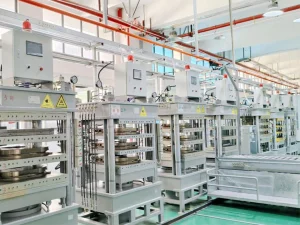
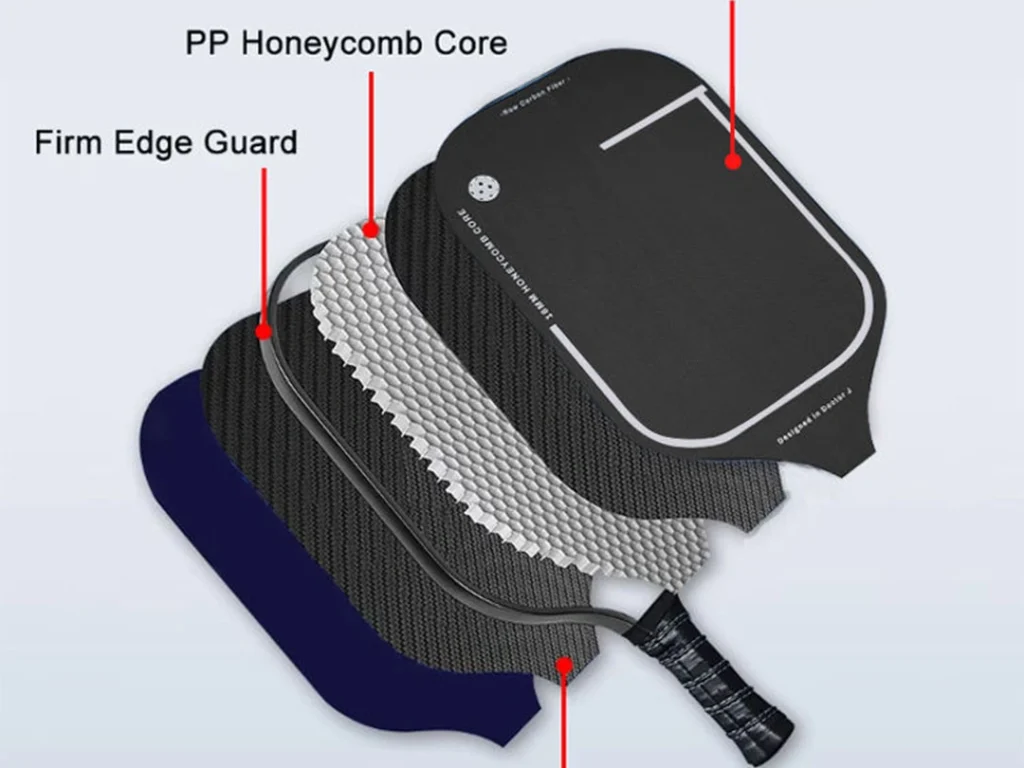
For brands entering the flagship market, NexaPaddle’s T800+Titanium mold combines the stiff, high-modulus T800 face with thermoformed GEN3 and GEN5 core structures to produce a paddle that delivers maximum spin without sacrificing the vibration-dampened feel of a modern foam-injected build.
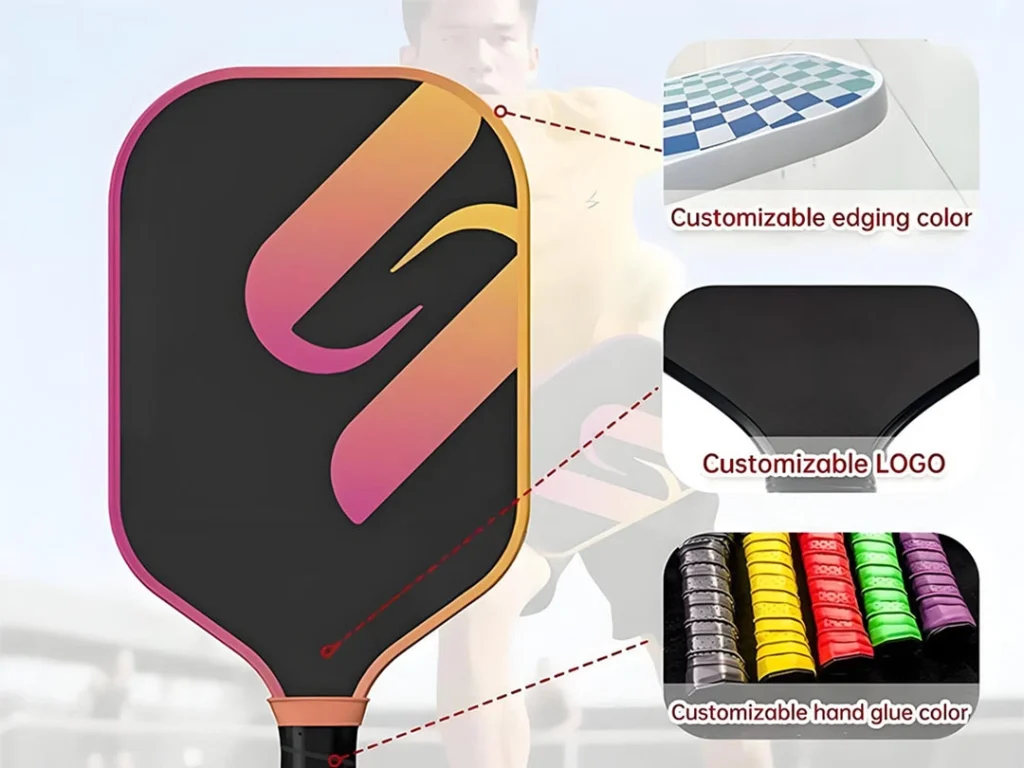
NexaPaddle T800+Ti Mold Specifications:
| Specification | Value |
|---|---|
| Face Material | Toray T800 Carbon Fiber + Titanium Thread |
| Surface Finish | Gritty matte (intrinsic weave, no spray treatments) |
| Core | GEN3 / GEN5 Polypropylene Honeycomb |
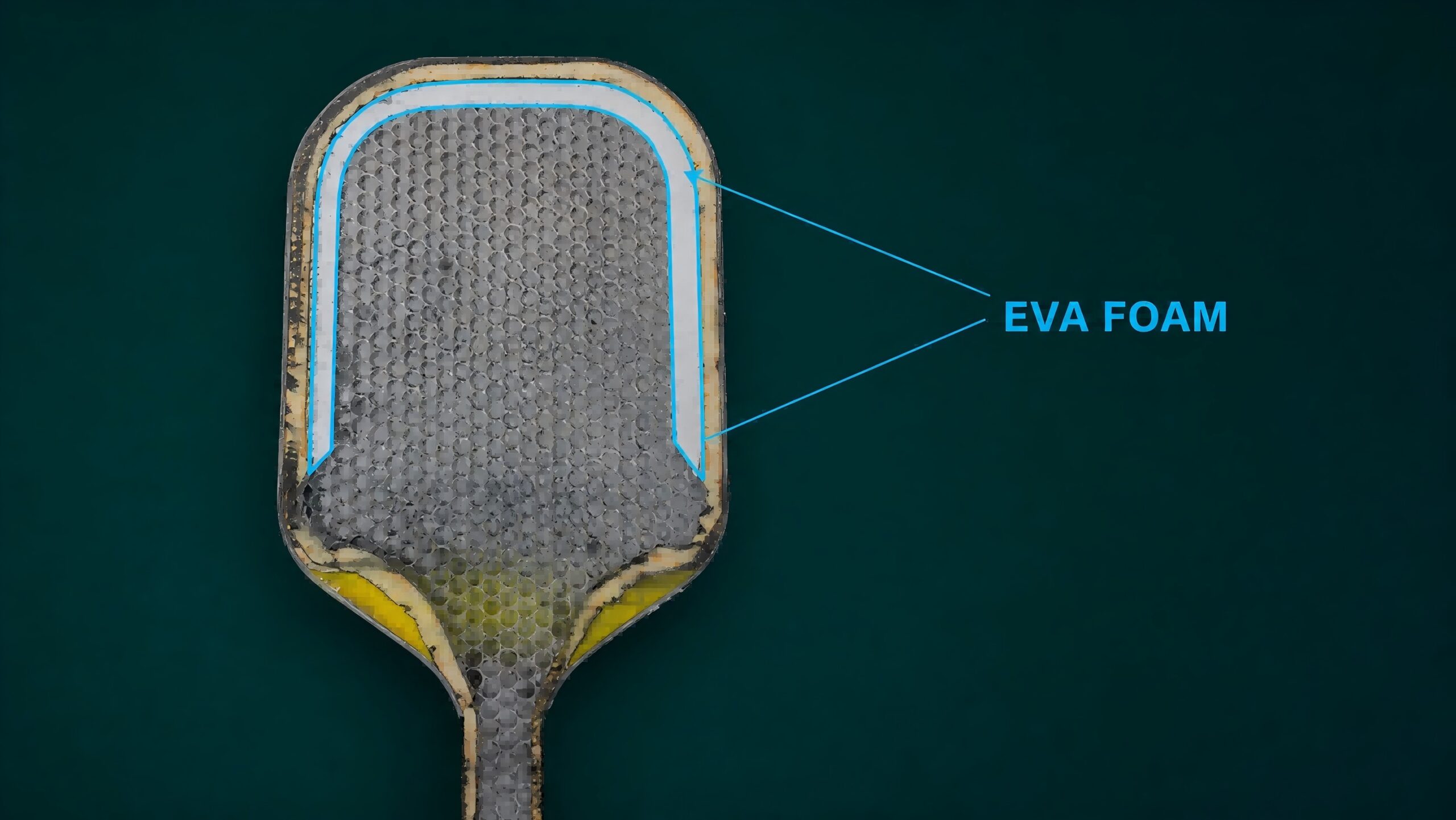
| Edge Wall | Foam-injected perimeter |
| Dimensions | 413 × 195mm |
| Handle Length | 145mm |
| Construction | Thermoformed integrated |
| MOQ | 100 pcs |
The 145mm handle allows thermoformed pickleball paddles to accommodate two-handed backhand grips without cramping — the same design logic applied in the T700 Mold #5. The thermoformed construction ensures the T800+Ti face and handle form a single continuous structure with no adhesive joint at the handle-neck junction.
From a B2B economics perspective, T800+Ti manufacturing costs run $55–$75 per unit depending on core tier and volume. At a target retail of $249–$319, the margin profile compares favorably to mid-tier T700 paddles while positioning the brand at the undeniable top of any product line.
The Honest Summary
T800+Titanium thread is the current peak of paddle face engineering. But it requires an honest assessment of trade-offs.
Because titanium is denser than carbon fiber, weaving it into the face adds marginal weight. The 28% stiffness increase from T800’s higher modulus means the paddle feels inherently “crisper” and slightly less forgiving than a T700 paddle on soft reset dinks — a transition some players need adjustment time for.
Who this is for:
- Pro-level players and heavy spin practitioners who burn through standard carbon surface texture within a season
- Tournament competitors for whom consistent peak spin performance across the entire season has measurable competitive value
- Brands building a halo product above their $150–$180 T700 offerings
Who this is NOT for:
- Casual players hitting two or three times per week
- Flat hitters who don’t actively brush the ball — the titanium surface advantage is irrelevant if spin mechanics aren’t being used
- Price-sensitive brands where the T700 margin structure is already the goal
The argument for T700 remains strong for most of the market. T800+Ti exists for the segment where “most of the market” isn’t the right reference point.
Frequently Asked Questions
u003cstrongu003eDoes a T800 paddle feel significantly different from a T700 paddle on the court?u003c/strongu003e
Yes, noticeably. Because T800 has a higher tensile modulus (294 GPa vs. 230 GPa), the face is stiffer. This results in less dwell time, a crisper sound upon impact, and faster energy return. Players transitioning from T700 typically describe it as more precise but slightly less forgiving on soft touch shots. Power hitters and spin-heavy players adapt within a few sessions; control-first players occasionally prefer to stay with T700.
u003cstrongu003eWill the titanium threads corrode, rust, or break over time?u003c/strongu003e
No. Titanium’s corrosion resistance is exceptional — it does not rust even under prolonged moisture exposure. As for fracturing under impact, the threads are woven within the carbon and resin matrix and dimensioned to handle localized forces far exceeding what a 40g plastic pickleball can generate. Independent reviewers playing 8+ hours on titanium-woven faces reported no observable degradation in thread integrity.
u003cstrongu003eDoes the titanium weave add meaningful weight to the paddle?u003c/strongu003e
Marginally. Titanium has a higher density than carbon fiber, but because it is used as fine-gauge thread in the top surface layer rather than a structural sheet, the actual mass added is minimal. Manufacturers typically offset this by calibrating core density. Finished paddle weights are comparable to T700 equivalents within the standard 215–235g range.
u003cstrongu003eAre titanium-woven paddles USAPA legal?u003c/strongu003e
Yes, when manufactured within specification. Because titanium thread is woven into the fabric during production — not applied post-manufacture — it is classified as an intrinsic structural characteristic rather than a banned surface coating. Multiple titanium-woven paddles hold active USAPA certification, confirming compliance under the Equipment Standards surface roughness rules.
u003cstrongu003eWhat specifically justifies the $70–$100 retail premium over a T700 paddle?u003c/strongu003e
Three compounding factors: (1) raw material cost — T800 carbon is approximately $26/sqm vs. T700’s $18/sqm, before titanium thread costs; (2) manufacturing complexity — weaving two distinct materials (carbon and metal) together without structural compromise requires tighter process controls and higher tooling quality; and (3) performance lifespan — the titanium face retains peak spin performance for the full paddle lifespan rather than degrading within the first season. For players who compete regularly, that sustained performance offsets the price premium within a single season of use.
Sources & Citations
Toray Composite Materials America. T800S Technical Data Sheet.
Pickleheads. Neonic Flare Titanium Review. January 2026.
JustPaddles Paddle Lab. Best Pickleball Paddles for Spin — Lab-Measured RPM Rankings. January 2026.
USA Pickleball. Equipment Standards & Approved Paddle List — Surface Roughness Specifications.
Coherent Market Insights / GlobeNewswire. Pickleball Equipment Market to Hit $1,848.1 Million by 2032 at 14.8% CAGR. June 2025.
Building a flagship paddle product for your brand? NexaPaddle manufactures T800+Titanium thermoformed paddles at MOQ 100 pcs with full custom graphics, OEM and ODM options. Explore our custom paddles program to request a sample and review bulk pricing tiers.