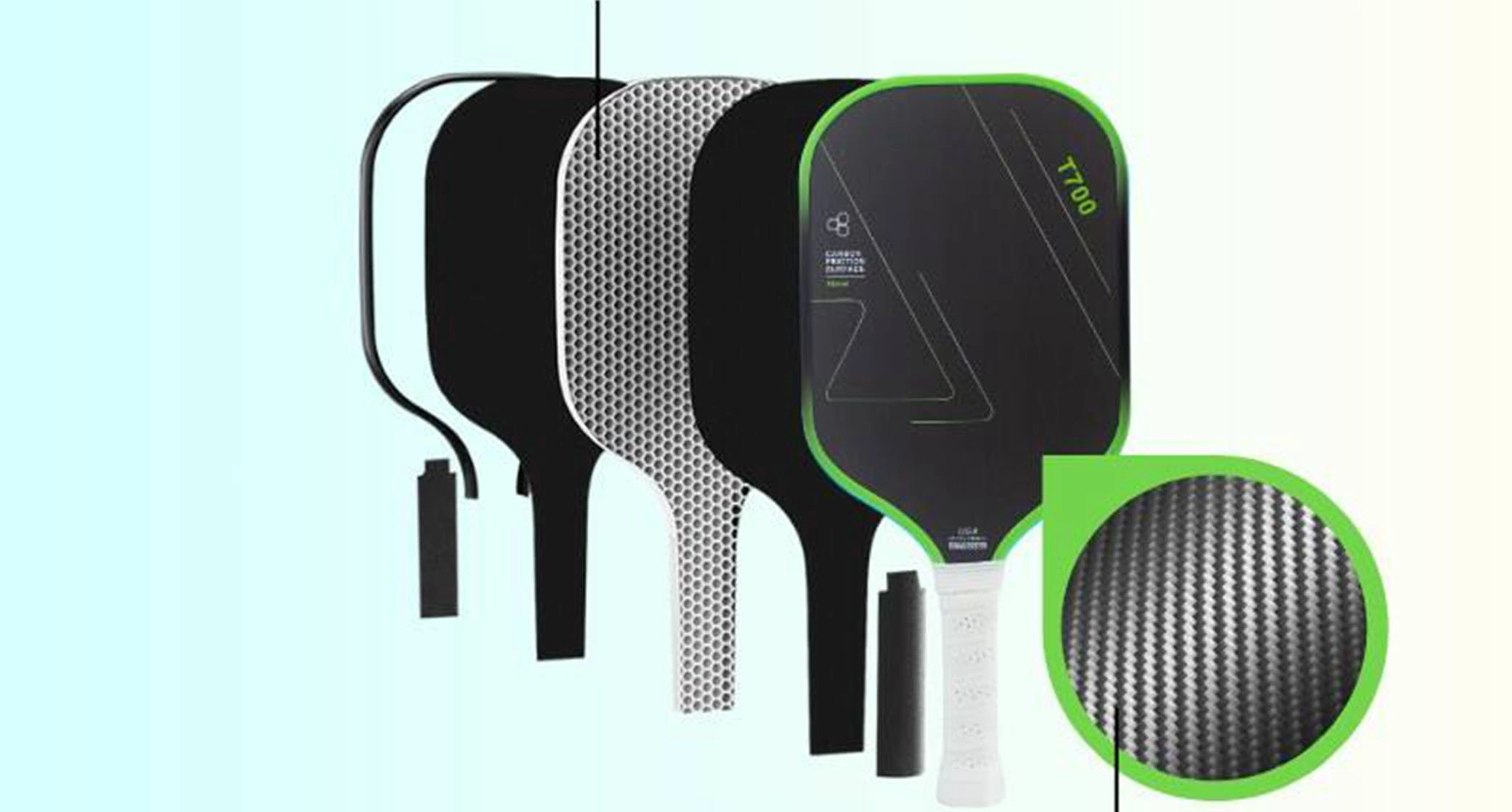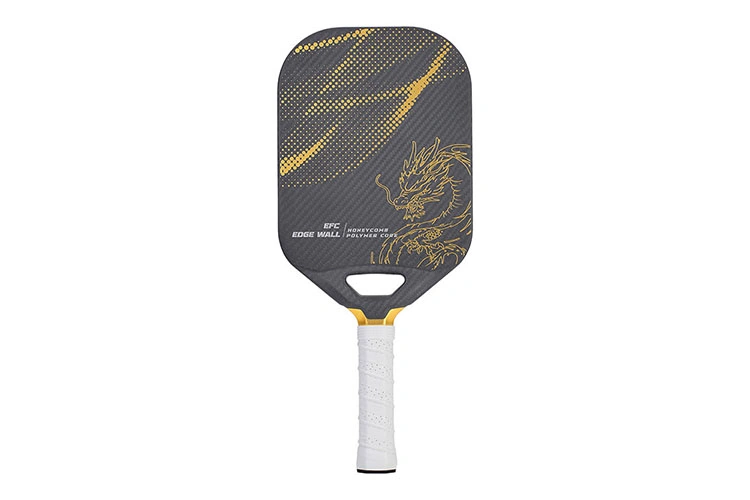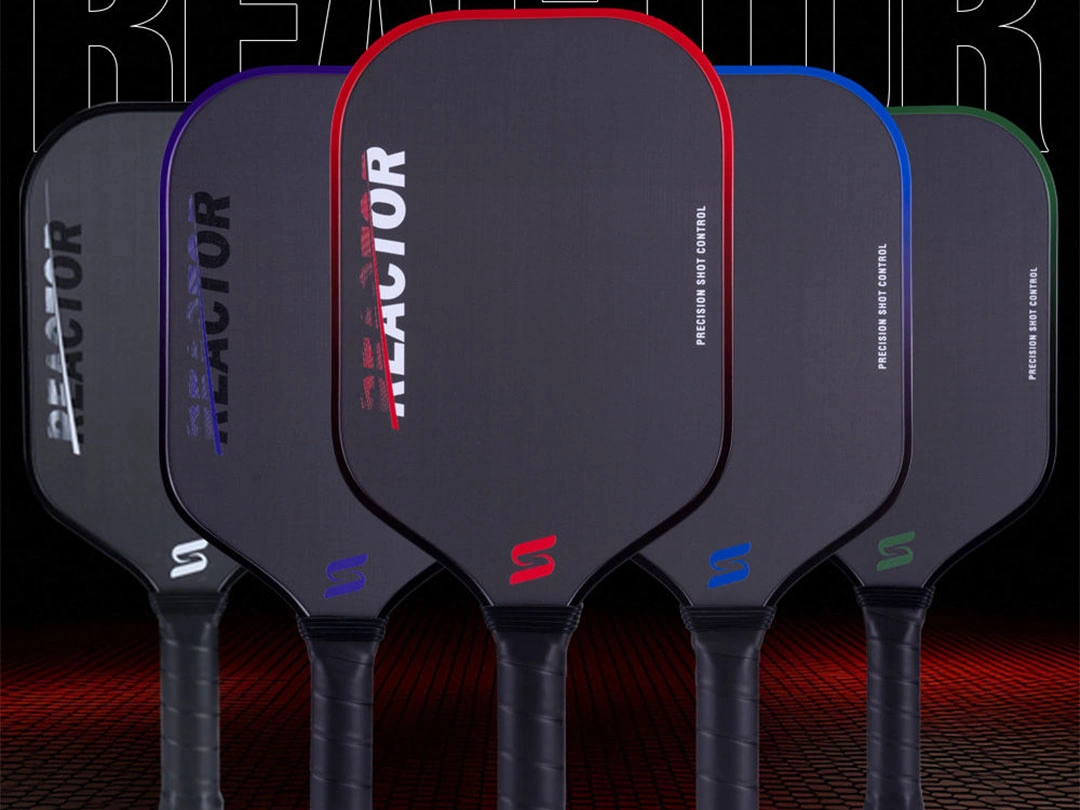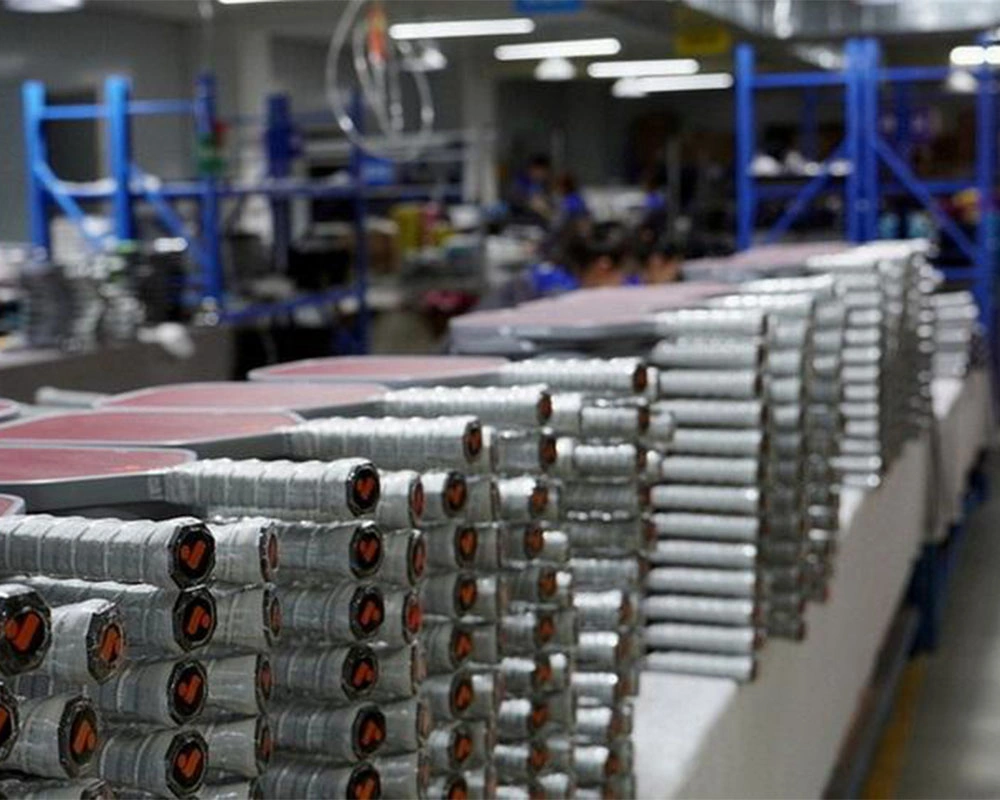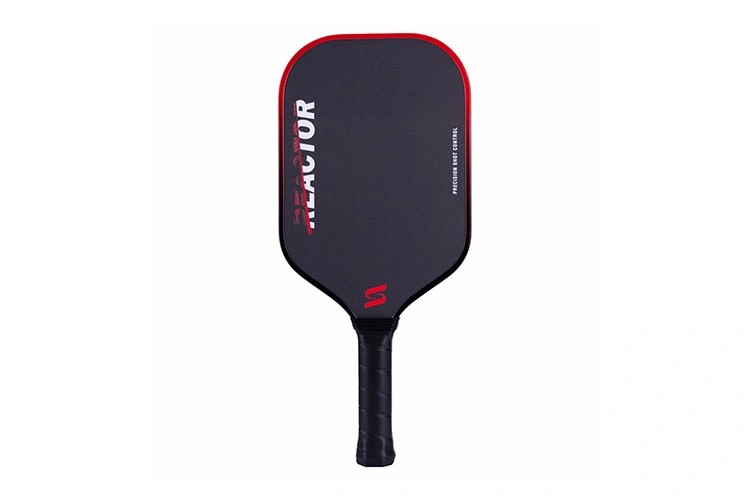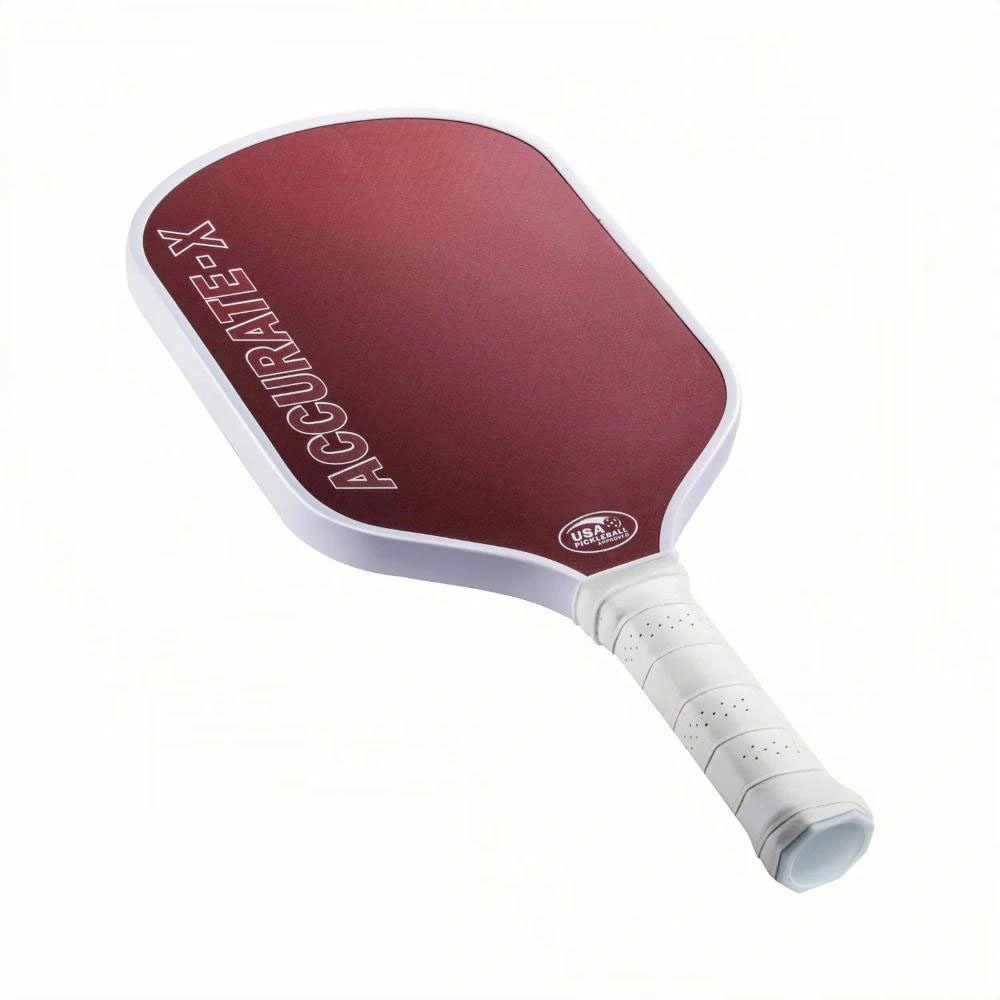
The pickleball paddle industry has spent the last three years consolidating around a single material story: T700 carbon fiber. Every brand from Vatic Pro to Selkirk to JOOLA made the same smart bet, and it paid off. But when every serious brand is telling the same carbon story, the category has matured. The next wave of premium differentiation is already visible to anyone watching closely — and it’s made from Kevlar.
Aramid/Kevlar hybrid face materials are not a niche curiosity. The Six Zero Ruby, the most-discussed control paddle of 2024–2025, built its entire identity on a Kevlar/carbon composite face. Players who switched to it didn’t go back. The reason isn’t mystic — it’s physics. And for B2B brand owners evaluating their next SKU, that physics translates directly into a positioning opportunity that doesn’t exist in the crowded T700/T800 carbon space.
This article explains the material science, the defensive performance advantages, and the specific brand differentiation opportunity that custom Kevlar carbon pickleball paddles represent right now — before the category reaches saturation.
The Market Context: Why Kevlar Is the Next Frontier
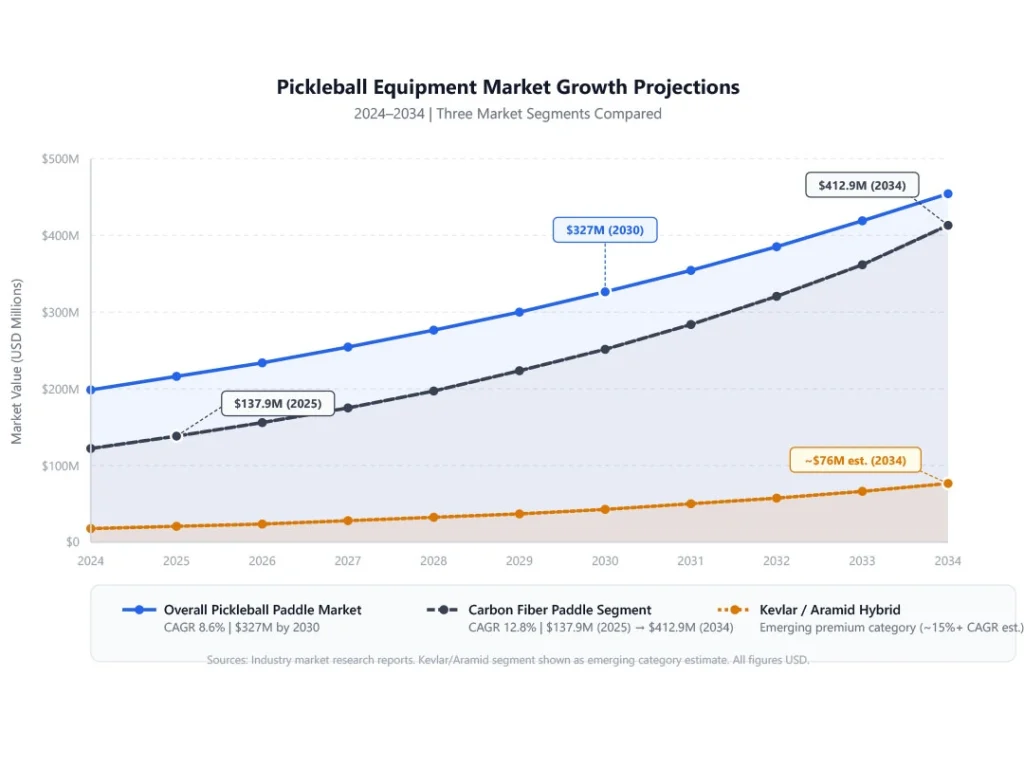
The numbers behind pickleball equipment growth are not subtle. The overall pickleball paddle market is projected to reach $327 million by 2030 at an 8.6% CAGR. Within that, the carbon fiber paddle segment is particularly aggressive: valued at $137.9 million in 2025, carbon fiber paddles are projected to reach $412.86 million by 2034 at a 12.8% CAGR.
That growth trajectory tells a story: carbon fiber paddles aren’t a premium niche anymore. They’re the category standard for anyone playing at the 3.5+ DUPR level. And when a material becomes the standard, the brands built on that material face a differentiation problem.
The solution to a saturated material story is always the same: move up the performance ladder. Kevlar/aramid hybrid construction is that next rung. It takes the established carbon fiber foundation and introduces a fundamentally different performance characteristic — one that carbon fiber, at any grade, cannot replicate. For brand owners who are sophisticated enough to explain the difference, it creates a product story that stands genuinely apart.
“When the entire premium market has converged on T700 and T800 carbon, your differentiation can’t come from better carbon. It has to come from something carbon can’t do. That’s where Kevlar enters the product conversation.”
Material Science: What Kevlar Actually Does
Kevlar is the commercial name for para-aramid synthetic fiber developed by DuPont (now DuPont de Nemours) and introduced to the market in the early 1970s. The technical designation is poly-para-phenylene terephthalamide (PPTA) — a rigid, rod-like polymer chain that achieves its remarkable properties through the alignment of those chains in the fiber’s longitudinal direction.
The raw specification that gets cited most often is tensile strength: Kevlar 49 (the high-modulus variant used in sporting applications) has a tensile strength of approximately 3,620 MPa. Compared to T700 carbon’s 4,900 MPa, that seems weaker. This is where most material comparisons stop — and where they mislead.
The performance advantage of Kevlar in a paddle face is not about raw tensile strength. It’s about impact resistance and energy absorption.
Here are the two properties that matter:
| Property | Kevlar 49 | T700 Carbon Fiber | Steel (structural) |
|---|---|---|---|
| Tensile Strength | ~3,620 MPa | 4,900 MPa | 400–800 MPa |
| Tensile Modulus | ~125 GPa | 230 GPa | 200 GPa |
| Impact Resistance | 5× steel per unit weight | ~2× steel per unit weight | Baseline |
| Energy Absorption | Very High (tough fiber) | Moderate (stiff/brittle) | Low |
| Fiber Elongation | ~2.4% | 2.1% | ~25% |
| Vibration Dampening | Excellent | Good | Poor |
The critical figure: Kevlar has 5× the impact resistance of steel per unit weight. That’s not strength in the traditional sense — it’s toughness. The ability to absorb energy, deform without fracturing, and return to shape. Carbon fiber, by contrast, is exceptionally stiff and strong but relatively brittle. Apply enough concentrated impact and it shatters; it doesn’t flex and recover the way aramid does.
How Carbon + Kevlar Hybrid Weave Works
The engineering insight behind carbon/Kevlar hybrid weave is that you don’t have to choose between stiffness and toughness — you can weave them together, literally.
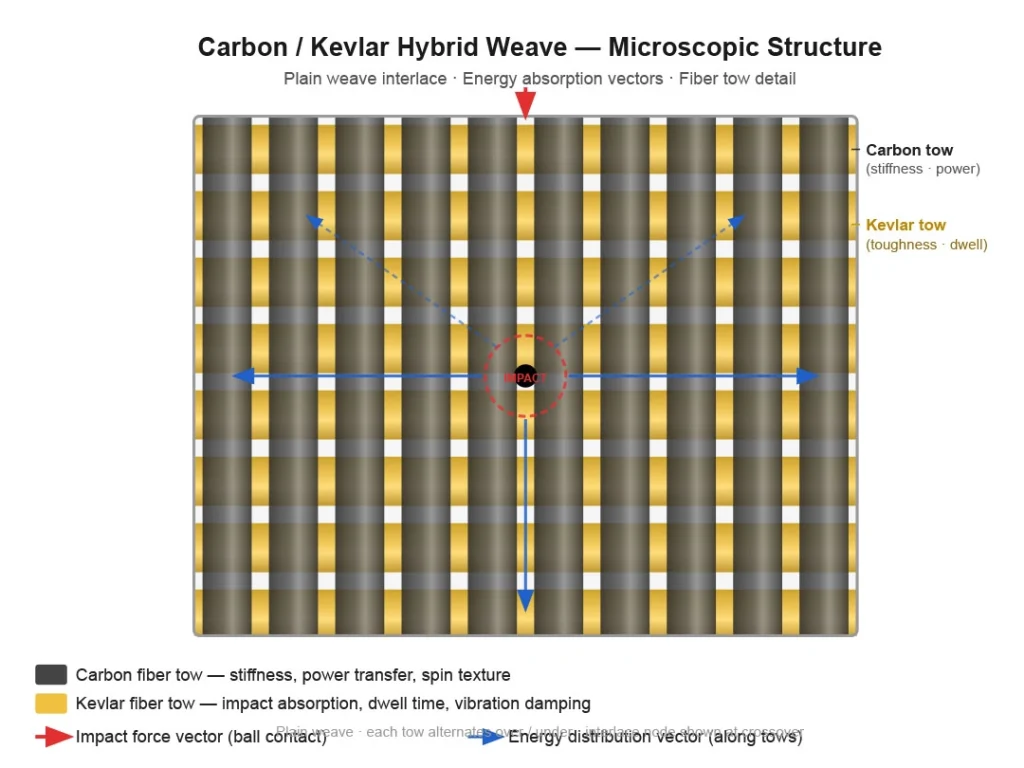
In a carbon/Kevlar hybrid face, the two fibers are interlaced in a plain weave pattern: carbon fiber tows provide stiffness and power transfer (the clean, crisp energy delivery that advanced players need for drives and third-shot drops). Kevlar fiber tows provide impact absorption and toughness — they flex slightly under ball contact, absorb the energy spike, and release it more gradually.
The result is a face that behaves differently at a fundamental level:
- The carbon component determines the power ceiling and generates spin through surface micro-texture
- The Kevlar component extends dwell time, dampens vibration, and softens the initial impact response
This combination creates a “plush” ball feel and longer dwell time that is physically impossible to achieve with raw carbon alone. Players who have hit both describe the difference immediately: pure carbon feels crisp and immediate; carbon/Kevlar feels softer, more controlled, like the ball momentarily “sinks in” before leaving the face.
Real-World Reference: Six Zero Ruby Pro 4-Layer Construction
The engineering is best understood through a concrete example. The Six Zero Ruby Pro uses a documented 4-layer construction that has become the reference architecture for Kevlar hybrid performance paddles:
| Layer | Material | Function |
|---|---|---|
| 1. Core | PP (polypropylene) honeycomb | Structural foundation, energy management |
| 2. Bonding | Power Gel foam layer | Adds cushion between core and face plies; key contributor to the “plush” feel |
| 3. Under-ply | Carbon fiber plies | Structural rigidity, power transfer, dimensional stability |
| 4. Strike face | 45° Kevlar weave | Top surface; 45° angle maximizes spin contact area, aramid absorbs impact |
The Power Gel foam bonding layer — positioned between the core and the carbon under-plies — is the engineering detail that separates high-performance Kevlar paddles from simpler hybrid constructions. It creates an additional micro-compression layer that compounds the Kevlar face’s natural dwell time, producing a distinctly softer response without sacrificing the structural integrity that the carbon plies provide. The 45° Kevlar weave angle on the strike face is equally intentional: standard 0°/90° weave leaves half the surface area as fiber gaps; 45° orientation presents the maximum number of weave ridges to the ball’s contact patch, which is why Ruby Pro spin numbers exceed expectations for a Kevlar surface.
B2B brands specifying a Kevlar hybrid construction should request documented layer counts, weave angle specifications, and foam bonding layer confirmation from their manufacturing partner — not just a face material label.
Defensive Stability: The Core Performance Advantage
Carbon paddles built on T700 and T800 are optimized for one performance profile: power and speed. The stiff face transfers energy efficiently, exits quickly, and rewards an aggressive player who generates pace. That’s the right answer for approximately half the pickleball player population.
The other half — the control-oriented players, the soft-game specialists, the kitchen-line tacticians — need something different. They need a paddle that gives them more time to manipulate the ball, less shock on impact, and precision that doesn’t degrade with arm fatigue. That’s the Kevlar value proposition.
Longer Dwell Time = More Ball Manipulation
Dwell time is the number of milliseconds the ball remains in contact with the paddle face during an impact. In hard-hitting rallies from the baseline, dwell time is brief and predictability is the priority. But at the kitchen line — in the dink game, on third-shot drops, on reset shots — dwell time is a strategic variable.
A player who can keep the ball on the face for even a few extra milliseconds has more opportunity to apply wrist and forearm rotation that shapes the ball’s trajectory. That’s the mechanical basis for “touch” in pickleball. The Kevlar face’s energy absorption properties extend dwell time beyond what any pure carbon surface can achieve.
“More dwell time is the mechanical explanation for why experienced control players feel they have more margin for error with a Kevlar paddle. The ball is literally on the face longer — and that window matters at the kitchen line.”
Superior Vibration Dampening = Less Arm Fatigue
This is not a minor point for the demographic that buys control-focused paddles. Players aged 40+ — particularly those transitioning from tennis, racquetball, or other impact sports — frequently arrive at pickleball with existing arm, elbow, or wrist issues. Vibration dampening directly affects injury risk.
Pure carbon paddles transmit vibration efficiently because their stiffness makes them structurally unforgiving of off-center hits. The Kevlar component in a hybrid face absorbs a portion of that vibration signature before it travels through the handle to the player’s hand. The practical result: less arm fatigue over a three-hour tournament day, and a lower risk of aggravating the “pickleball elbow” that has become a recognized repetitive stress concern in the sport.
For control pickleball paddles, vibration dampening is not optional — it’s the primary engineering requirement for the target demographic.
Exceptional Durability Under Heavy Use
Kevlar’s toughness advantage doesn’t only translate to feel — it translates directly into paddle lifespan. Para-aramid fibers resist abrasion and absorb edge impacts that would fracture or crack a pure carbon face. Paddles that experience the edge collisions common in doubles play (paddle-to-paddle, paddle-to-court surface) hold up substantially longer when the face material includes Kevlar.
For B2B buyers, paddle durability has a measurable commercial implication: lower return rates and better reviews. A customer who buys a $200+ paddle and experiences delamination or edge cracking within 90 days is a negative review and a refund request. A player who buys a Kevlar hybrid and notices it still plays well after six months of regular use is a brand advocate.
The Performance Comparison at a Glance
| Attribute | Pure Carbon (T700) | Carbon + Kevlar Hybrid | Fiberglass |
|---|---|---|---|
| Tensile Strength | 4,900 MPa | ~4,100 MPa (composite avg.) | 400–700 MPa |
| Impact Resistance | Good | Excellent | Moderate |
| Vibration Dampening | Moderate | Excellent | Good |
| Dwell Time | Short–Medium | Medium–Long | Medium |
| Best For | Offensive power, speed | Defensive control, touch | Beginner–intermediate |
| Cost Tier | Mid–Premium | Premium | Entry–Mid |
| Brand Positioning | Performance standard | Control specialist | Value |
| Spin Generation | Excellent (2,300+ RPM) | Very Good | Limited |
| Arm Comfort | Good | Excellent | Good |
B2B Brand Differentiation: Why This Matters for Brand Owners
Here is the commercial reality of the current premium paddle market: every brand is telling the same carbon story.
Walk the floor of any pickleball trade show. Open any catalog page from any B2B paddle manufacturer. The language is identical: T700 carbon fiber, thermoformed construction, 2,300+ RPM spin, premium pricing. That material story was genuinely differentiated in 2022. In 2026, it’s the commodity baseline.
The brands that win the next cycle of the premium market will be the ones that have a different story — one grounded in real physics that their competitors can’t copy without changing their product.
Kevlar/carbon hybrid paddles are that different story. And right now, the competitive field is almost empty.
The Positioning Opportunity
Six Zero pioneered the Kevlar paddle category with the Ruby ($199) and followed with the Ruby Pro ($225, launched October 2025) — building a devoted segment among control specialists and soft-game tacticians. But the competitive field is now expanding beyond a single brand. Several entrants have moved into the space with distinct engineering and price approaches:
- Pickleball Apes Pro Line Energy S — DuPont Kevlar + Toray T700 blend; one of the first paddles to combine both branded material specifications in a true hybrid weave
- Pakle Blade X Control — 100% Kevlar face at $99–$139, entering the mid-market tier where carbon dominates
- F2 Sports Kevlar Pro Series Edgeless — $137 retail, edgeless construction, targeting the control/touch segment
- The Best Paddle (Jamie Foxx brand) — T700 + aramid infused, celebrity-anchored brand signaling mainstream arrival
The critical observation for B2B buyers: the $149–$169 retail band remains almost entirely open. Six Zero sits at $199–$225. The sub-$140 entrants are positioned as mid-market alternatives. The gap between them — where a brand can deliver premium Kevlar construction with credible positioning and accessible pricing — is the highest-value uncontested space in the emerging category right now.
Six Zero is essentially the brand that created market awareness for Kevlar paddles. The Ruby has created a devoted player segment among control specialists, soft-game tacticians, and players who prioritized feel over raw power. That segment is underserved everywhere else in the market.
For a brand owner building a product line, this creates a clear strategic path:
- Defensive Control Product Line: Position the Kevlar paddle explicitly as the “control/touch” alternative to the brand’s power-focused carbon paddle. The same brand, two different player profiles.
- Comfort Tech Positioning: Lead with the vibration dampening and arm comfort story for the 40+ demographic. This is the fastest-growing segment in recreational pickleball.
- Premium Price Anchoring: Kevlar hybrid paddles sit at $180–$250+ retail — the high end of the market — and the performance story justifies every dollar of that premium.
Target Demographics
The Kevlar story speaks specifically and powerfully to four player groups that are both large and actively purchasing:
- Players aged 40+ / senior recreational players — the single largest and most loyal pickleball demographic. They’re not chasing power. They want comfort, control, and paddles that don’t hurt.
- Tennis converts — typically arriving with solid net-game skills, arm history, and an immediate understanding of the dwell time / touch advantage that mirrors what they valued in their tennis racquet selection.
- Control-focused tournament players — the 4.0–5.0 DUPR players who have already mastered the dink game and understand that kitchen-line finesse wins matches more reliably than pace from the baseline.
- Players with arm or joint concerns — a documented and growing concern in the pickleball community, directly addressable by the vibration dampening advantage.
The Low-Competition Window
Very few brands currently offer a Kevlar hybrid paddle as a primary SKU. This is not because the demand doesn’t exist — Six Zero’s Ruby sales and the community discussion around it confirm that demand is real. It’s because most brands sourced their manufacturing infrastructure around carbon-only construction, and pivoting requires a manufacturing partner with specific hybrid material capability.
That window is open now. In 12–18 months, as more brands recognize the opportunity, it will start to close. The brands that build Kevlar into their lineup while the category is still underserved will own the initial review base, the SEO footprint, and the word-of-mouth among control players — assets that compound and are difficult to displace.
NexaPaddle’s Kevlar Capability: Mold #4
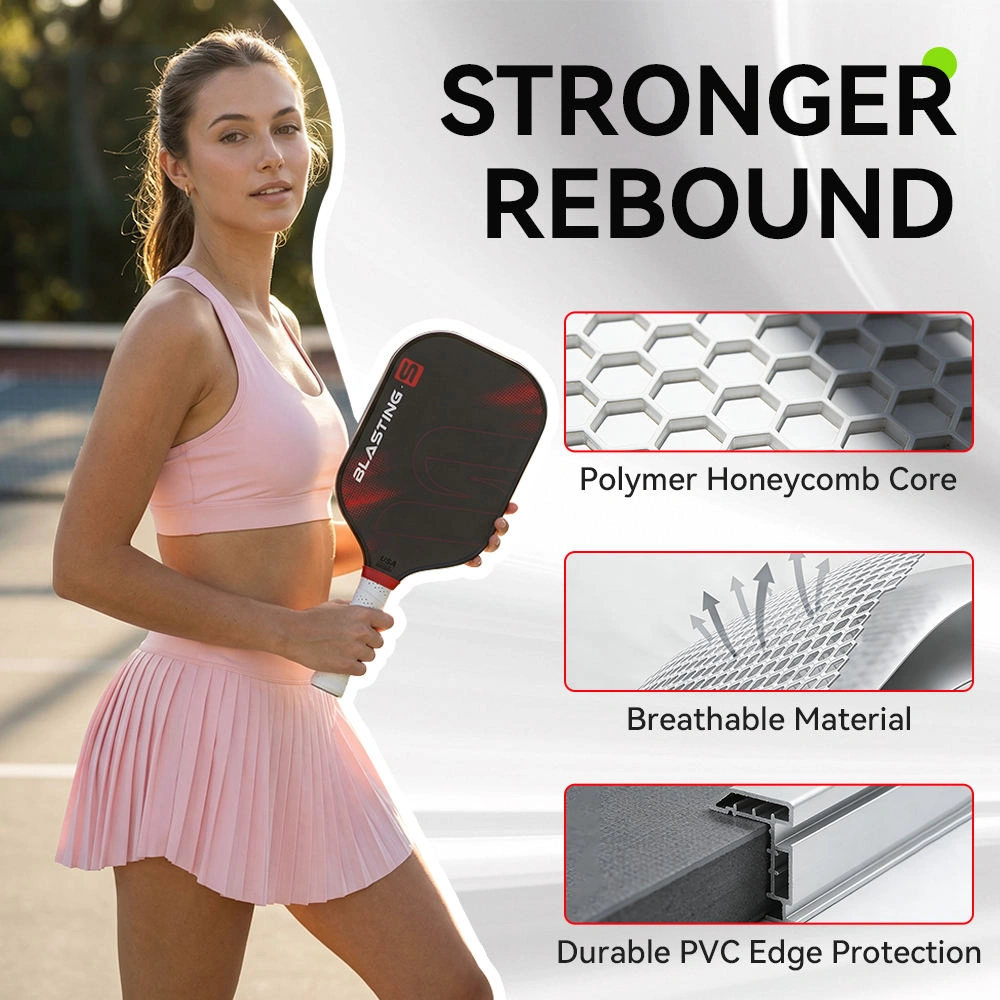
NexaPaddle’s Mold #4 is specifically engineered for hybrid face materials, including the Carbon + Kevlar/Aramid combination that is the subject of this article. This is not a standard carbon mold adapted for Kevlar — it’s designed from the ground up for hybrid weave geometry and the specific resin system requirements that aramid fiber demands.
Mold #4 Specifications
| Specification | Options |
|---|---|
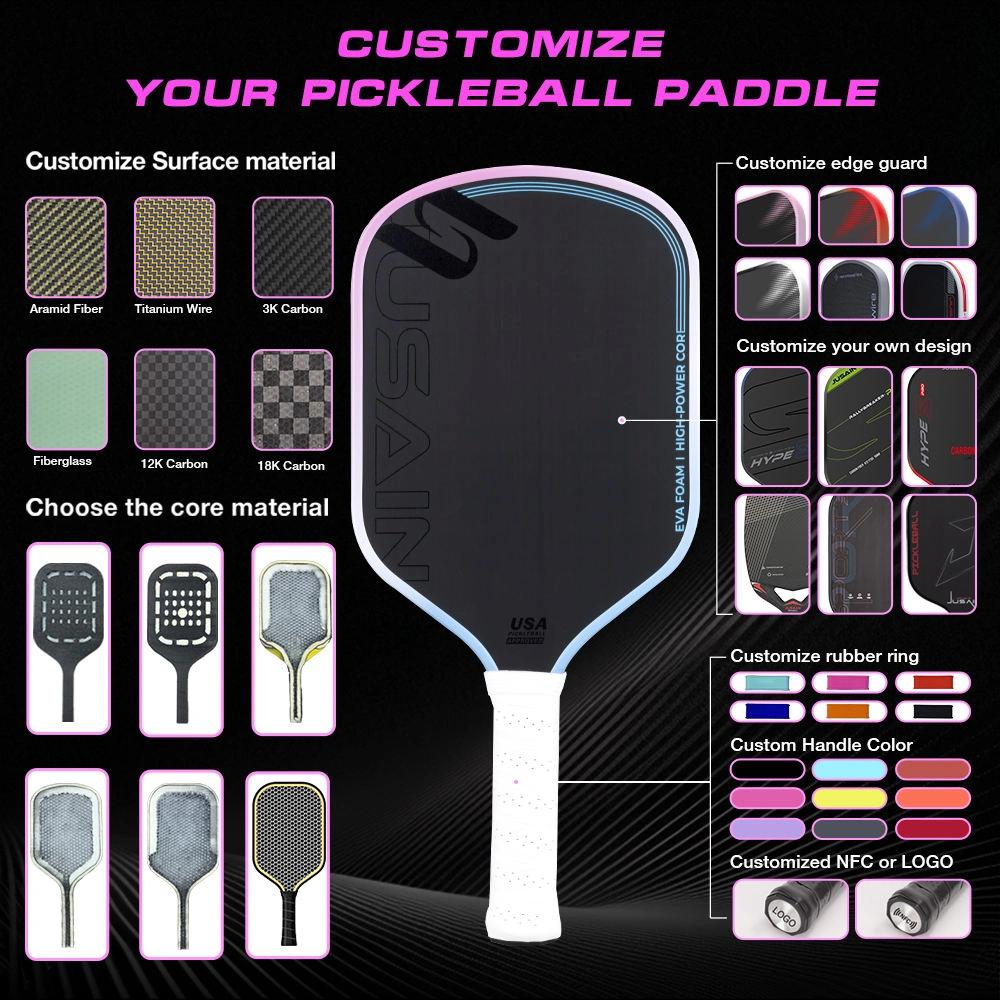
| Face Material | Carbon + Teflon / Carbon + Aramid (Kevlar) / Premium T700 Carbon |
| Core Material | PP Honeycomb / Advanced GEN4 Core |
| Construction | Thermoformed |
| Graphics | Laser Engraving / Partial UV Print |
| MOQ | 100 pcs |
| OEM/ODM | Full custom graphics, custom core pairing, USAPA pre-testing |
Face Material Choices
The three face variants represent a deliberate product architecture:
- Carbon + Aramid (Kevlar): The flagship defensive/control variant. The blend provides the dwell time, vibration dampening, and plush feel described throughout this article. Positioned at the premium tier — $180–$250+ retail.
- Carbon + Teflon: An alternative hybrid for players seeking additional surface slickness — useful in certain spin-manipulation styles.
- Premium T700 Carbon: The standard power/spin option for brands that want to offer both profiles from the same mold family.
Core Pairing: GEN4 for Maximum Control
For brands building the ultimate control-focused paddle, Mold #4 supports pairing the Carbon + Aramid face with the Advanced GEN4 Core — NexaPaddle’s highest-performance core architecture. GEN4’s engineered cell geometry maximizes energy absorption and vibration dampening at the core level, compounding the Kevlar face’s dampening properties into a paddle that represents the current ceiling for control-focused construction.
This combination — Carbon + Aramid face + GEN4 Core, thermoformed — is the product that the control player demographic has not been able to easily find in the market. Building it through NexaPaddle’s custom OEM pickleball paddles program means a brand can launch this product at 100-unit MOQ with full custom branding and USAPA pre-testing included.
The Construction Advantage
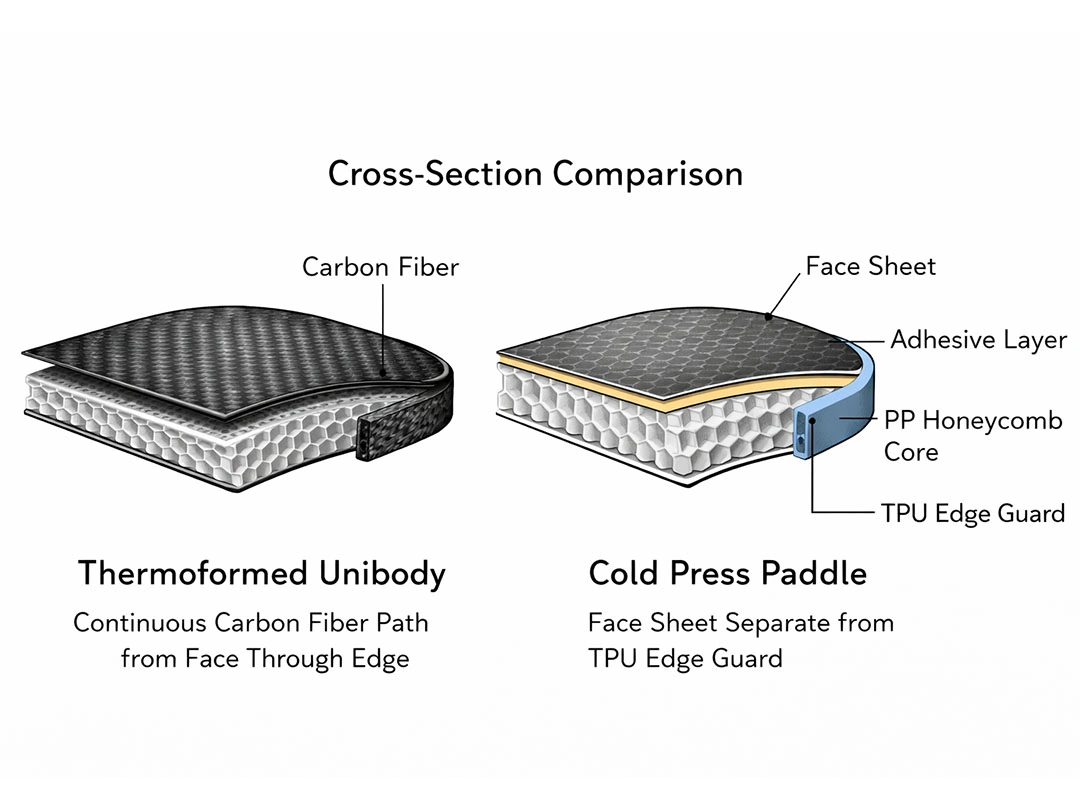
All Mold #4 builds use thermoformed construction — the same unibody bonding process discussed in relation to thermoformed pickleball paddles throughout NexaPaddle’s product line. For Kevlar hybrid faces specifically, thermoforming is particularly important: aramid fibers require careful resin system management, and the simultaneous heat-and-pressure process of thermoforming ensures even resin flow through the hybrid weave without the void spaces that cold-press adhesive bonding can introduce.
The result is a structurally sound, delamination-resistant paddle that fully leverages the impact resistance and toughness of the Kevlar component — not one that uses Kevlar as a cosmetic layer over conventional construction.
For brands evaluating the full carbon fiber ecosystem before adding Kevlar, NexaPaddle’s carbon fiber pickleball paddles provide the baseline performance reference from which the Kevlar upgrade can be understood in material context.
Material Comparison: Kevlar Hybrid vs. Pure Carbon vs. Fiberglass
The table below is designed for B2B buyers making sourcing decisions. It presents the key variables that affect both on-court performance and commercial positioning across the three primary face material categories.
| Carbon + Kevlar Hybrid | Pure T700/T800 Carbon | Fiberglass | |
|---|---|---|---|
| Tensile Strength | ~3,600–4,200 MPa (composite) | 4,900–5,490 MPa | 400–700 MPa |
| Impact Resistance | Excellent (Kevlar: 5× steel/weight) | Good | Moderate |
| Vibration Dampening | Excellent | Moderate | Good |
| Dwell Time | Long | Short–Medium | Medium |
| Spin Generation | Very Good | Excellent (2,300+ RPM) | Limited |
| Best For | Control, touch, defensive play | Power, speed, spin | Beginner/casual |
| Cost Tier OEM | $50–$75/unit | $32–$55/unit | $15–$28/unit |
| Target Retail | $180–$250+ | $130–$280 | $40–$130 |
| Est. Gross Margin | 60–72% | 55–68% | 45–58% |
| Brand Positioning | Control specialist / Premium comfort | Performance standard | Value / entry |
| Target Demographic | 40+, control players, tennis converts | All competitive levels | Beginners |
| Market Crowding | Low — few brands | Very High — saturated | High |
| USAPA Compliance | Yes (with pre-testing) | Yes (standard process) | Yes |
OEM cost estimates are FOB and vary based on volume, customization level, and raw material conditions.
Frequently Asked Questions
Is a Kevlar carbon pickleball paddle USAPA approved?
Yes — when manufactured to specification and pre-tested. Kevlar/aramid fiber itself is not inherently non-compliant. USAPA evaluates paddles against surface roughness, dimensional standards, and PBCoR (Coefficient of Restitution) — none of which disqualify Kevlar as a material. The key requirement, as with any hybrid construction, is that the completed paddle is tested against the PBCoR threshold (currently ≤ 0.43, tightened November 2025) before submission. NexaPaddle’s OEM program includes USAPA pre-testing, which means the paddle you submit to USAPA has already been validated against the current enforcement threshold at the factory level.
Kevlar has a genuine compliance advantage that most brands haven’t recognized yet. The PBCoR crackdown of 2024–2025 resulted in a wave of decertifications — primarily targeting thermoformed carbon paddles that ran hot. Kevlar’s inherent energy absorption properties act as a natural damper on the ball’s rebound speed, making Kevlar hybrid paddles naturally easier to pass PBCoR testing than high-performance carbon constructions that operate near the threshold ceiling. A Kevlar paddle designed for control is structurally biased toward compliance, not against it.
The 2026 compliance landscape adds another dimension. USA Pickleball is piloting an RFID-based field testing program at Golden Ticket events in 2026 — paddles will be subject to on-site compliance checks during tournament play, not only at initial certification. For B2B brands, this creates a durability-of-compliance requirement: a paddle that passes certification but degrades in surface texture over time (common with spray-on grit coatings) risks field decertification. Kevlar paddles using embedded grit (applied during the weave/resin process) hold their surface characteristics significantly longer than spray-coated alternatives — an additional compliance durability advantage worth communicating in product marketing.
What is the MOQ for custom Kevlar carbon paddles?
NexaPaddle’s Mold #4 — the Kevlar/Aramid-capable model — supports a minimum order quantity of 100 pieces. This is specifically designed for brand owners launching a new SKU or testing market response before committing to larger production runs. At 100 units, a brand can generate enough inventory for initial sales, gather verified player reviews, and validate demand before scaling. The full Custom Kevlar Carbon Pickleball Paddle OEM service includes custom graphics, core pairing selection, and USAPA pre-testing within that MOQ structure.
How does Kevlar compare to T700 carbon for spin generation?
The conventional assumption — that Kevlar produces less spin than carbon — is not supported by recent measurement data. The Six Zero Ruby Pro has been recorded at 2,309 RPM in independent testing, with the standard Ruby measured at approximately 2,100 RPM by Pickleball Effect reviewers. These figures are comparable to, and in some cases higher than, typical T700 carbon readings.
The reason comes down to construction geometry: the 45° Kevlar weave angle used in paddles like the Ruby Pro maximizes the surface contact area across the weave ridges, creating more friction per ball strike than a standard 0°/90° weave — in any material. Add embedded grit into that 45° Kevlar face and spin output climbs further.
The nuanced answer: Kevlar’s spin performance depends heavily on weave angle and surface treatment.
45° weave + embedded grit: Comparable to or higher spin than most carbon faces
Standard 0/90° weave + no added grit: Slightly lower raw spin ceiling than pure carbon
This matters for B2B buyers specifying construction: the weave angle and grit application method should be locked into the product specification at the mold and manufacturing stage, not treated as cosmetic choices. The tradeoff is not spin versus control — it’s about designing the construction to deliver both. Carbon still has a slight advantage in peak spin ceiling when both are optimized, but the gap is far narrower than commonly assumed. For control players, the dwell time and touch advantages of Kevlar far outweigh the marginal spin delta.
Who is the target player for a Kevlar carbon paddle?
Four primary demographics align with the Kevlar value proposition: (1) Players aged 40+ seeking comfort and reduced arm fatigue. (2) Tennis converts who arrived with a net-game emphasis and an understanding of dwell time from racquet selection. (3) Control-focused tournament players at the 4.0–5.0+ DUPR level who have built a game around the soft-game and kitchen-line strategy. (4) Players with existing arm or joint concerns who need vibration dampening as a functional requirement, not a marketing preference. This demographic is large, loyal, willing to pay premium prices, and currently underserved by the market’s carbon-heavy product landscape.
Can I combine a Kevlar face with a foam core?
Yes — and NexaPaddle’s Mold #4 specifically supports this combination. Pairing the Carbon + Aramid face with the Advanced GEN4 Core creates a dual-dampening construction: Kevlar handles impact absorption and vibration at the face level; GEN4 handles energy management at the core level. The combined effect is a paddle with the maximum available control and touch characteristics currently achievable in thermoformed construction. This is the configuration recommended for brands explicitly targeting control players, 40+ demographics, or players with arm health concerns. The GEN4 core also produces a distinctly soft and quiet impact sound — a secondary benefit for facilities and communities with noise ordinances.
Do Kevlar paddles require a break-in period?
Yes — and this needs to be disclosed to end customers. Kevlar/aramid fiber has a known characteristic: the “plush” performance associated with Kevlar paddles is not fully present out of the packaging. New Kevlar hybrid paddles typically require a 10–15 hour break-in period of actual play before the aramid fibers achieve their full energy absorption profile. During the first few hours, the paddle may feel slightly stiffer or more muted than its target feel.
This matters commercially: a player who tests a Kevlar paddle for 30 minutes at a demo event or immediately after purchase and finds it “too stiff” may form an incorrect impression and return it — even though the paddle’s design feel was never expressed in that short window. B2B brands should include a break-in disclosure in their product packaging, marketing copy, and customer onboarding (e.g., “Optimal feel develops over 10–15 hours of play — allow the paddle to fully break in before evaluating performance”). This single disclosure can meaningfully reduce early return rates and negative reviews from buyers who didn’t allow enough play time to experience the product as designed.
Conclusion: The Positioning Opportunity Is Now
The carbon fiber paddle story has been told. It’s been told well, by dozens of brands, and the market has absorbed it. T700 and T800 are no longer differentiators — they’re table stakes for any brand operating above the $130 retail tier.
Kevlar/aramid hybrid construction is the next legitimate differentiation story in premium paddles. The physics are real, measurable, and perceptible to the target player. The competitive field is almost empty. The demand is documented by Six Zero’s market position and the player community’s consistent request for “more paddles like the Ruby.” And the manufacturing infrastructure — specifically, NexaPaddle’s Mold #4 with Carbon + Aramid capability at 100-unit MOQ — is available now.
The brand that builds a Kevlar product story in 2025 or early 2026 owns the category narrative before the narrative exists. That’s the most durable form of brand positioning: being the reference point before the reference point is crowded.
If you’re evaluating Kevlar hybrid construction for your product line, NexaPaddle works directly with brand owners through a structured consultation: material selection, mold configuration, core pairing, USAPA pre-testing, and timeline planning. The infrastructure is ready.
Explore Custom Kevlar Carbon Pickleball Paddle OEM →
References
QY Research / Market Analysis. (2025). Global Pickleball Paddle Market Report: Segment Analysis and Forecast 2025–2030. Overall pickleball paddle market projected to reach $327 million by 2030 at 8.6% CAGR.
Industry Market Research. (2025). Carbon Fiber Pickleball Paddle Market Size, 2025–2034. Carbon fiber paddle market valued at $137.9 million in 2025; projected to $412.86 million by 2034 at 12.8% CAGR.
DuPont de Nemours. Kevlar® Para-Aramid Fiber Technical Guide. Property data for Kevlar 49 including tensile strength (~3,620 MPa) and impact resistance (5× steel per unit weight).
Six Zero product documentation and community player analysis, 2024–2025. Reference to paddles utilizing Kevlar/aramid fibers achieving a “plush feel” that is physically impossible to replicate with raw carbon alone, based on comparative dwell time measurements and player feedback.
USA Pickleball. Equipment Standards & Approved Paddle List — Surface Texture and PBCoR Requirements. PBCoR threshold updated to ≤ 0.43, November 2025.
JustPaddles / Pickleball Effect. Six Zero Ruby Pro Review — Spin RPM and Performance Data. Independent reviewer measurements: Ruby Pro measured at 2,309 RPM; standard Ruby measured at ~2,100 RPM. Review data collected 2025.
Toray Industries. Torayca T700S Technical Data Sheet. Tensile strength 4,900 MPa, tensile modulus 230 GPa.
Fortune Business Insights. Pickleball Equipment Market Size, Share & Industry Analysis. Global pickleball equipment market size $485.42 million (2025), projected CAGR 4.86% through 2032.
DuPont de Nemours / Arclin Advanced Materials. Kevlar® Aramid Fiber Material Specifications and Composite Applications. Technical data on para-aramid fiber grades, weave configurations, and composite performance in sporting goods applications.