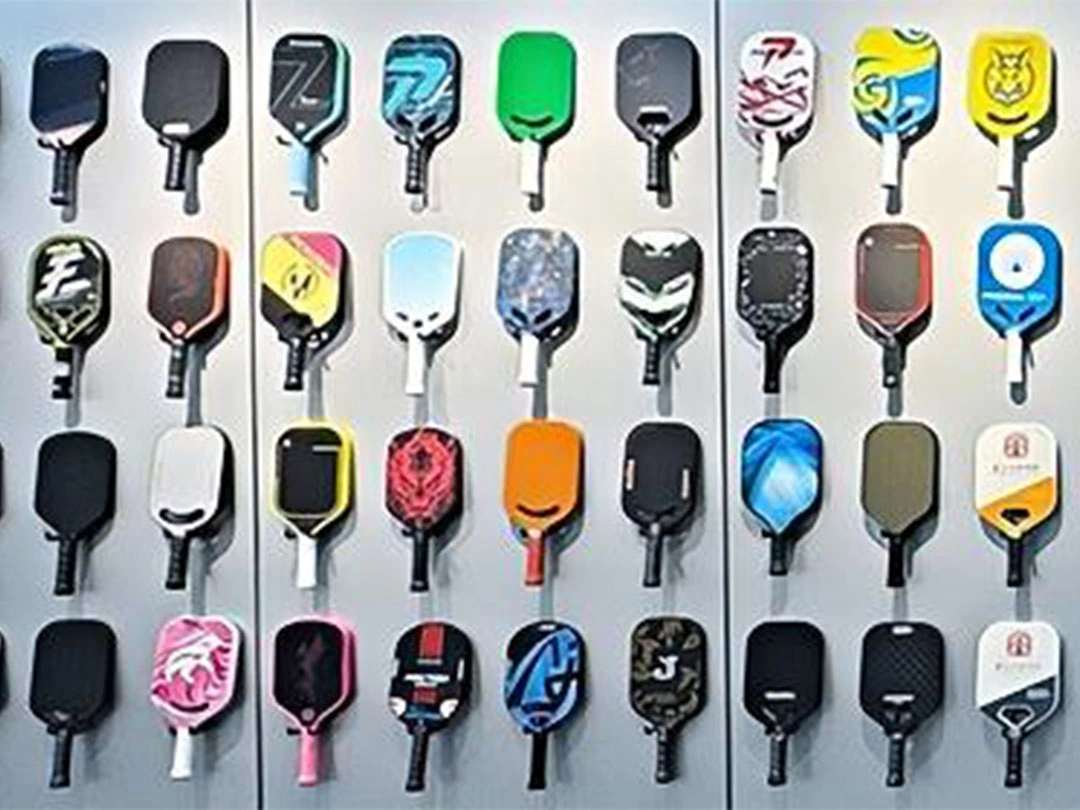
For brand owners, Amazon FBA sellers, and wholesalers building a business around pickleball, three words carry more financial risk than any other: delisted by USA Pickleball. They mean unsellable inventory, mandatory consumer refunds, and brand equity that took years to build — erased before the next trade show. In January 2026 alone, on-site testing at Golden Ticket tournaments revealed that 6% of all paddles tested — roughly 1 in 17 — were non-compliant.
This is not a theoretical risk. The $200 million countersuit that followed one major brand’s 2024 delisting is proof that manufacturing compliance has graduated from technical footnote to the foundation of your entire business model. One failed test, one non-compliant production batch, one sampling inconsistency: any of these can trigger the cascade.
In this guide, we break down the timeline of major paddle bans, the exact technical parameters your products must meet, the true costs of certification failures, and how choosing the right manufacturing partner for your capacidade de paddles de pickleball OEM personalizados. is your most effective defense against catastrophic losses.
A Timeline of Major Delistings (2022–2026)
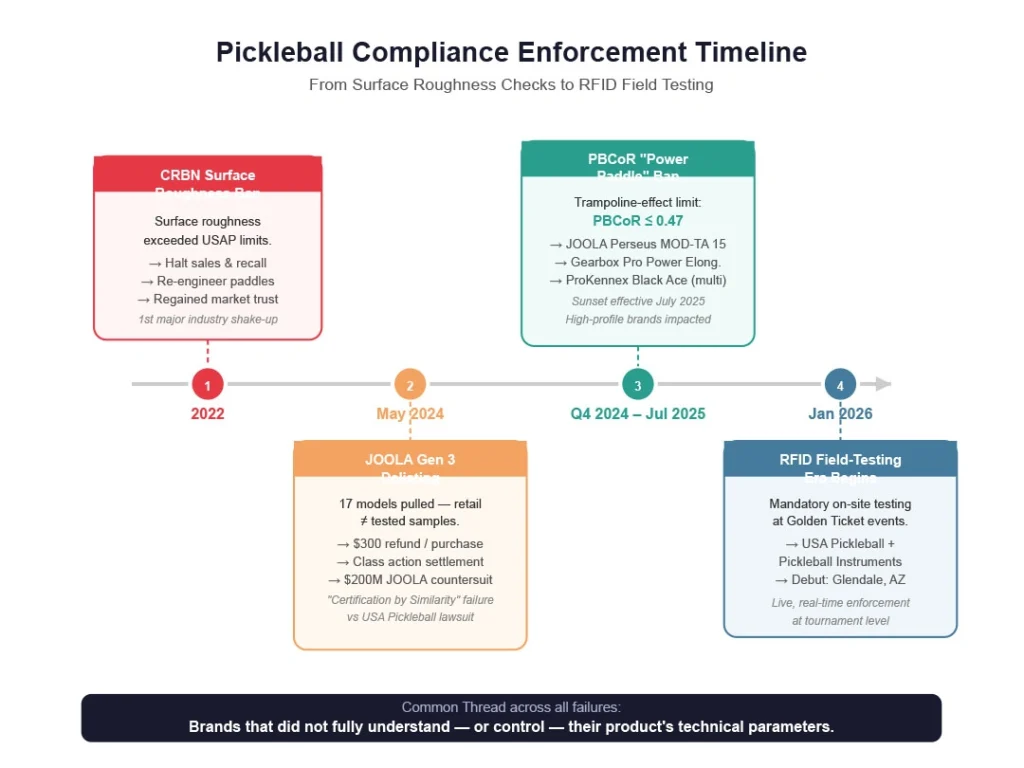
Understanding today’s compliance landscape starts with its history. Enforcement mechanisms have evolved rapidly — from basic surface roughness checks to complex energy-return metrics and live, on-site tournament testing. Each enforcement action has raised the stakes for every brand in the market.
- 2022: The CRBN Surface Roughness Ban
One of the first major industry shake-ups occurred when CRBN models were temporarily delisted. The governing body found that their surface roughness exceeded USAP limits. CRBN was forced to halt sales, recall inventory, and rapidly re-engineer their paddles before eventually regaining market trust. - May 2024: The JOOLA Gen 3 Delisting
USA Pickleball abruptly pulled 17 JOOLA Gen 3 models from its approved list. The core issue was a “Certification by Similarity” failure — the retail paddles sold to consumers did not match the physical samples originally submitted for testing. The result: a massive class action settlement providing $300 refunds per purchase, a lawsuit between JOOLA and USA Pickleball, and a staggering $200M countersuit filed by JOOLA. - Q4 2024 – July 2025: The PBCoR “Power Paddle Ban”
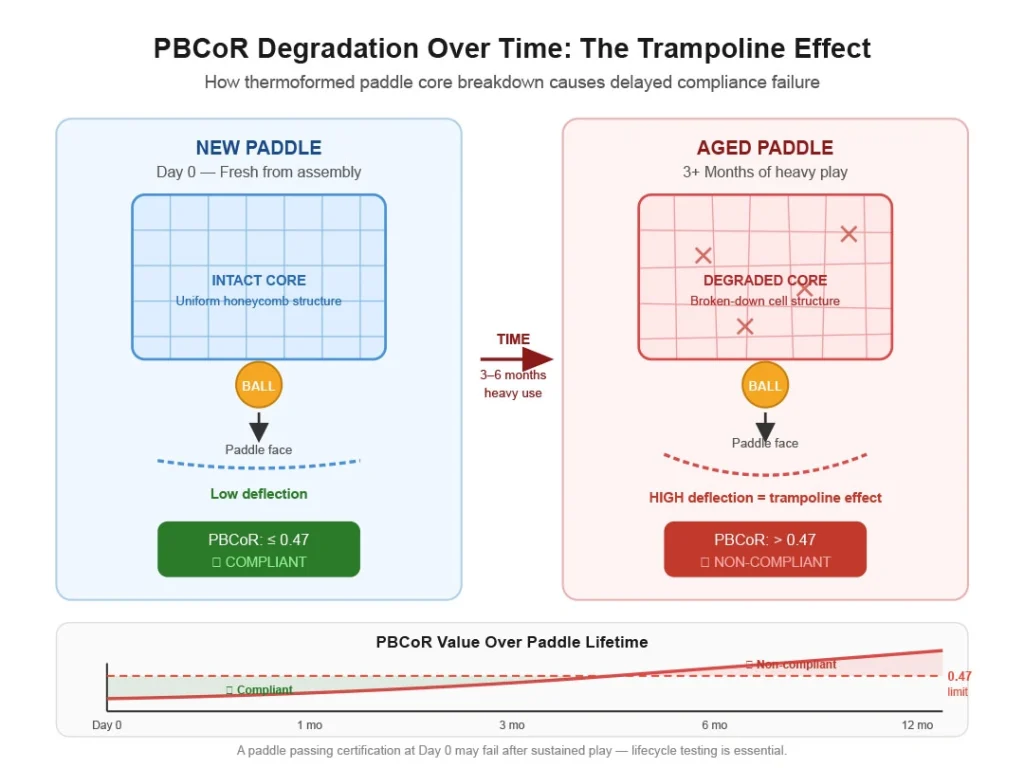
The introduction of the Paddle Ball Coefficient of Restitution (PBCoR) targeted the dangerous “trampoline effect” in modern paddles. With a threshold set at ≤0.47 in Q4 2024, high-profile paddles including the JOOLA Perseus MOD-TA 15, Gearbox Pro Power Elongated, and multiple ProKennex Black Ace models were slated for sunset effective July 2025. - January 2026: The RFID Field-Testing Era
USA Pickleball, alongside Pickleball Instruments, launched mandatory paddle field-testing at Golden Ticket tournaments, beginning in Glendale, Arizona.
Each of these failures shares a common thread: brands that did not fully understand — or fully control — the technical parameters governing their products. The five compliance parameters below define the current testing battlefield.
Why Paddles Get Banned: The 5 Compliance Parameters Explained
For B2B buyers, understanding exactly why paddles fail is the first step to preventing it. USA Pickleball enforces five primary tests for pás aprovadas pela USAPA.
1. Surface Roughness
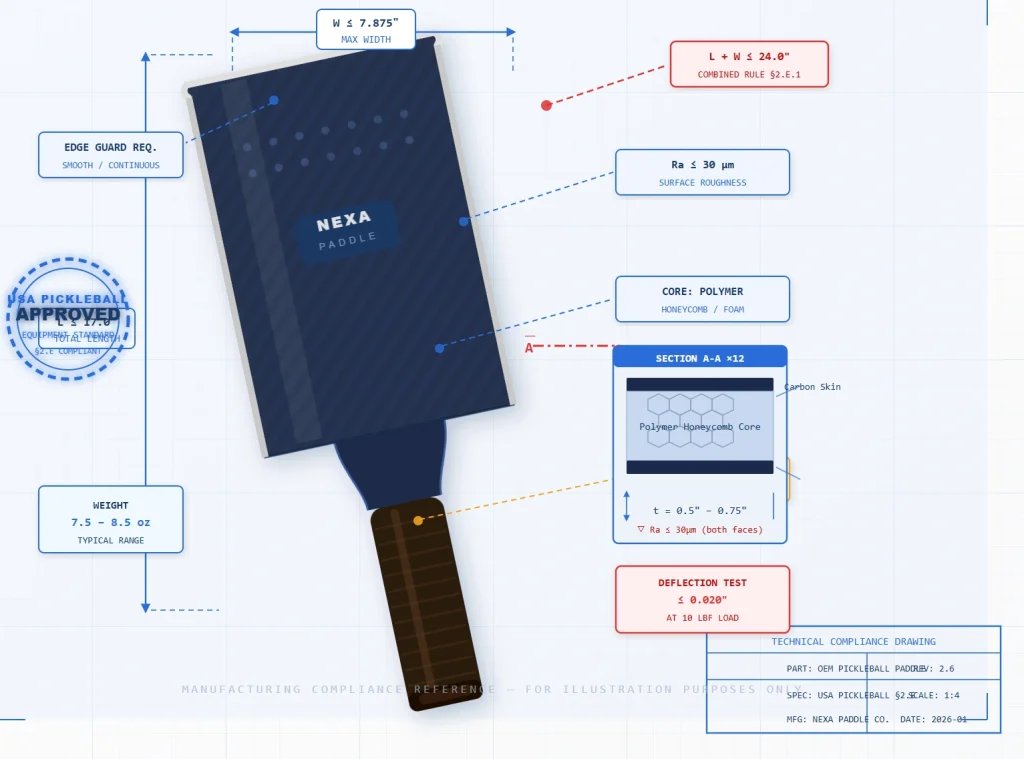
USA Pickleball controls surface roughness through Rt and Rz limits. Its current Equipment Standards Manual specifies Starrett SR160 or SR300, or equivalent, for official roughness measurement. Factory-side checks can support process control, but they should not be presented as official certification testing.
2. PBCoR (Paddle Ball Coefficient of Restitution)
This metric measures energy return. USA Pickleball’s published PBCoR not-to-exceed limit is 0,43 a partir de 1 de novembro de 2025. Buyers should verify the current Equipment Standards Manual and the exact certification status of the brand/model rather than relying on an older 0.47 threshold.
3. Dimensions
The combined length and width of a paddle cannot exceed 24 inches (609.6 mm), and maximum length is strictly capped at 17 inches (431.8 mm).
4. Deflexão do Núcleo
Core deflection measures the stiffness of the paddle face. The paddle face must not depress beyond specific USAPA ranges when a standardized weight is applied. Excessive deflection results in illegal power generation.
5. COF (Coefficient of Friction)
Closely related to surface roughness, the Coefficient of Friction must remain within USAPA limits to ensure the paddle does not grip the ball excessively during slicing or topspin shots.
Of these five parameters, PBCoR has proven the most technically treacherous — and the hardest to control across a product’s full lifespan.
The PBCoR Power Problem: Why Thermoformed Paddles Fail Over Time
The PBCoR problem is particularly acute for paddles de pickleball termoformados, and it is more insidious than a simple manufacturing defect.
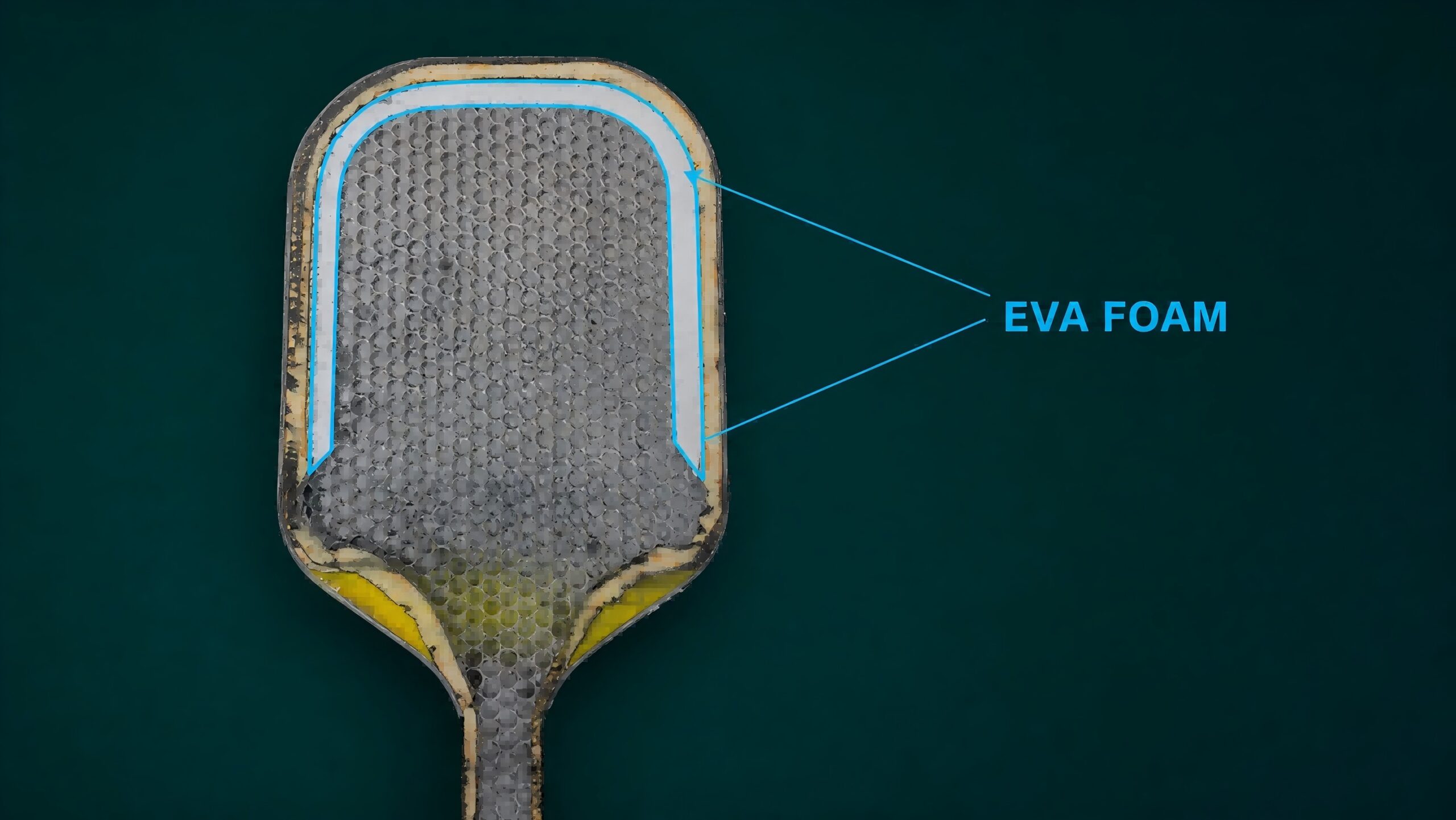
Thermoforming seals the paddle edges with carbon fiber under high heat and pressure, creating a unibody construction that is durable and powerful. But it introduces a dangerous variable: aging. Over time, the internal core of a thermoformed paddle can break down slightly, increasing the trampoline effect.
A paddle that passes the ≤0.47 PBCoR threshold fresh off the assembly line may exceed that threshold after three months of heavy play. This delayed failure mode is exactly what trapped brands in the Q4 2024 power paddle ban. Buyers must ensure their manufacturers are accounting for the full lifecycle degradation of advanced tech thermoformed paddles — not just day-one performance.
As consequências financeiras de errar qualquer um desses parâmetros — em grande escala — são severas o suficiente para encerrar uma marca.
O Custo de Errar
O fracasso de conformidade mais perigoso não é uma rejeição de laboratório de $4.500 — é um resultado de teste conforme seguido por uma produção não conforme. Considere o cenário do JOOLA Gen 3: raquetes de varejo que não correspondiam às amostras aprovadas, um reembolso obrigatório de $300 por compra em milhares de unidades, e um processo judicial de $200 milhões. É assim que parece um fracasso de conformidade na produção em massa. Se você produzir 10.000 unidades de uma raquete que posteriormente for desqualificada, você não está lidando com um retrocesso — você está lidando com um evento que pode encerrar o negócio.
Identificar problemas na fase de teste é comparativamente barato. A taxa básica de certificação é de $4.500 por modelo, exigindo 8 amostras de raquete submetidas. Uma única rejeição eleva seu total para aproximadamente $9.400 — caro, mas sobrevivível. Cada submissão também leva de 4 a 6 semanas, o que significa que uma rejeição pode atrasar seu tempo de lançamento em um trimestre financeiro completo.
Além das taxas de teste, a paisagem regulatória está se fragmentando em um sistema de dupla certificação. Embora a USAPA continue a ser a base para o jogo geral, a certificação UPA-A tem sido exigida para eventos profissionais da PPA e MLP desde setembro de 2025. As marcas devem atualmente orçar aproximadamente $6.000 por modelo para navegar pelo caminho completo de dupla aprovação.
Testes de Campo RFID: A Nova Realidade de Aplicação da Lei
A era de submeter uma “amostra dourada” perfeitamente ajustada a um laboratório e produzir em massa raquetes ligeiramente não conformes acabou. A partir de janeiro de 2026, a USA Pickleball e a Pickleball Instruments implementaram uma aplicação agressiva da lei no local.
Nos torneios Golden Ticket em Glendale e Las Vegas, mais de 2.000 raquetes trazidas por competidores foram testadas em campo. Os resultados foram um alerta para a indústria: Riley Burgess, VP de Conformidade de Equipamentos, relatou uma taxa de não conformidade de 6% entre as raquetes trazidas para a competição.
Esse teste de campo será lançado em duas fases:
- Fase 1: Teste do coeficiente de atrito, deflexão, detecção de delaminação e peso/balanceamento.
- Fase 2 (Em breve): Medições de PBCoR e giro no local.
As raquetes que passam recebem um adesivo digital RFID vinculando a um registro permanente de conformidade. Como Carl Schmits, CTO da USA Pickleball, declarou: “A integridade do equipamento é fundamental para a competição justa. Esta plataforma de teste de campo nos dá a capacidade de verificar os padrões de desempenho, aumentar a transparência e estabelecer as bases para identificar equipamentos falsificados.”
Para compradores B2B, a implicação é direta: se seu lote de fabricação sair da tolerância, os oficiais de torneio irão detectá-lo nas mãos de seus clientes — e não no seu laboratório de QC. A questão não é se suas raquetes serão testadas. É se seu processo de fabricação pode passar consistentemente.
Como Proteger Sua Marca: Escolhendo um Fabricante Conforme
Confiar em uma fábrica que corta custos inevitavelmente resultará em um teste de campo fracassado. Para defender sua marca, você deve ativamente se proteger contra os cinco modos de falha de fabricação mais comuns:
- Grit de Spray Excedendo Limites: Uma aplicação mal calibrada pode facilmente elevar o Rt acima de 40 µm uma vez que o revestimento seca.
- Envelhecimento do PBCoR Termoformado: Falhar em simular como o núcleo da raquete se degradará ao longo de 6 meses de uso.
- Desvio de Tolerância Dimensional: Corte e moldagem inconsistentes durante a produção em massa empurrando dimensões além do limite combinado de 24 polegadas.
- Inconsistência no Tratamento de Superfície: Falta de QC padronizado entre diferentes lotes de produção.
- Química de Revestimento Não Validada: Uso de tintas ou resinas experimentais que alteram inesperadamente o Coeficiente de Atrito.
Antes de autorizar a produção em massa, exija dados documentados de controle de qualidade em nível de lote — e afaste-se de qualquer fabricante que não puder fornecê-los.
O seguinte estudo de caso ilustra como esse padrão se parece na prática.
A Abordagem de Conformidade em Primeiro Lugar da NexaPaddle
After a decade and B2B brands across multiple markets served, one pattern holds across every brand that has never faced a compliance crisis: they treat certification limits as a floor, not a ceiling. That principle drives NexaPaddle’s 5-stage manufacturing protocol — not to meet USAPA standards, but to build a measurable safety buffer into every raquete de pickleball de fibra de carbono que produzimos.
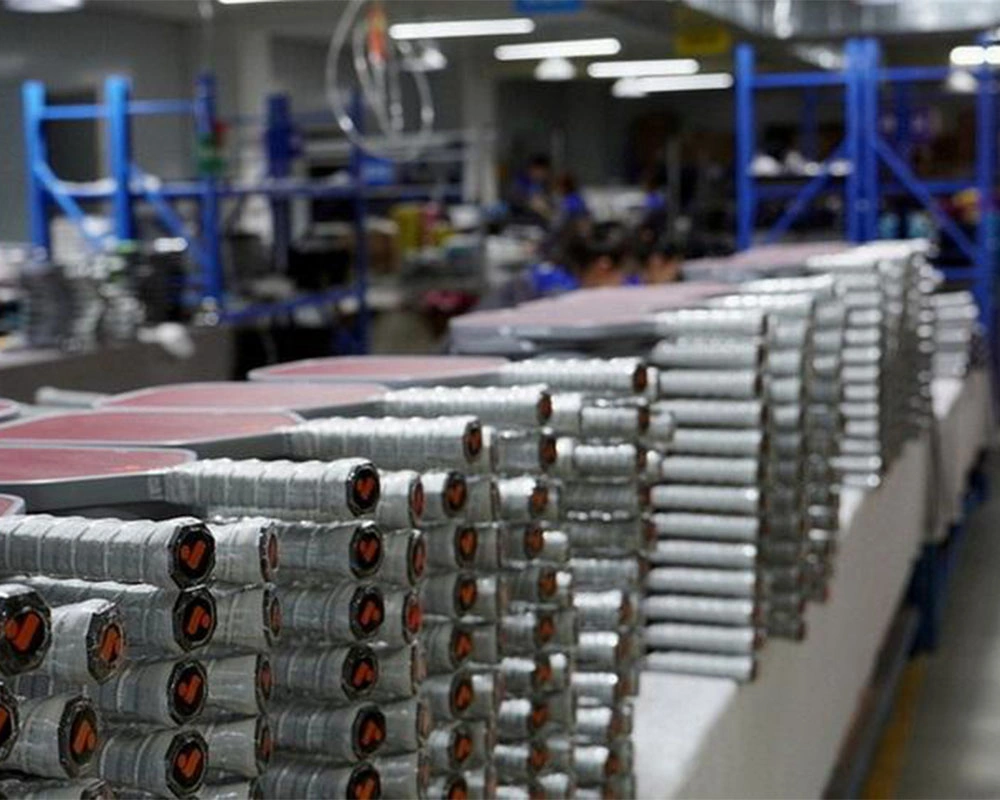
NexaPaddle publishes first-party QA imagery and describes a factory-side inspection workflow. That public evidence does not currently verify a company-wide Rt/Rz or PBCoR guard band, a specific calibrated profilometer, testing after every coating stage, accelerated-aging predictions, or guaranteed field compliance months after shipment.
For a compliance-sensitive OEM project, define the approved specification, sampling plan, measurement method, change-control rules and any required third-party or governing-body testing before production. Treat internal factory checks as process controls, not certification.
Perguntas frequentes
u003cstrongu003eHow much does it cost to get a pickleball paddle USAPA certified?u003c/strongu003e
Certification fees, sample quantities and re-submission charges change by program and year. Verify the current fee and submission schedules directly with USA Pickleball and UPA-A before budgeting; do not use an older fixed per-model figure as a current quote.
u003cstrongu003eWhat is PBCoR and why are paddles being banned for it?u003c/strongu003e
PBCoR stands for Paddle Ball Coefficient of Restitution. It measures the energy return or “trampoline effect” of a paddle. The current threshold is ≤0.47, with expectations it will tighten to ≤0.43. Paddles that exceed this limit generate dangerous ball speeds, leading to bans affecting models from JOOLA and ProKennex scheduled for July 2025.
u003cstrongu003eCan a paddle pass certification but fail later?u003c/strongu003e
Yes. This is a common issue with thermoformed paddles, where internal core breakdown over time increases PBCoR beyond the legal threshold. Additionally, USA Pickleball’s RFID field-testing program at tournaments is specifically designed to catch mass-production paddles that deviate from the original approved prototypes — whether due to aging or manufacturing inconsistency.
u003cstrongu003eHow does the new tournament field testing work?u003c/strongu003e
Starting in January 2026, USA Pickleball began using on-site field testing at tournaments. Phase 1 tests for friction, deflection, delamination, and weight. Passing paddles receive a digital RFID sticker. In early testing of over 2,000 paddles, officials found a 6% non-compliance rate among players’ equipment.
u003cstrongu003eWhat should I require from my OEM manufacturer before committing to a mass production run?u003c/strongu003e
Before authorizing production, demand documented evidence of the following: batch-level surface roughness measurements (Rt and Rz) showing results below — not merely at — the official USAPA limits; internal PBCoR targets with a compliance buffer below ≤0.47; and, for thermoformed models, project-specific validation data for any durability or break-in claim that matters to the buyer. You should also clarify the contractual liability if a finished batch fails USAPA certification or RFID field testing — specifically who absorbs the cost of the $4,500 resubmission fee, retooling, and any launch delay. NexaPaddle’s u003ca href=u0022https://nexapaddle.com/custom-paddles/u0022 target=u0022_blanku0022 rel=u0022noreferrer noopeneru0022u003ecustom paddle programu003c/au003e can scope the documentation required for the specific project; availability should be confirmed before production.
Referências
- Padrões de Equipamento da USA Pickleball & Atualizações de Certificação — usapickleball.org/equipment/paddle-certification-updates/
- Declaração da USA Pickleball sobre Paletas JOOLA De-Certificadas (maio de 2024) — usapickleball.org
- Ação Coletiva do JOOLA Gen 3 — Ação coletiva providenciando reembolsos de $300 por compra; JOOLA entrou com um contra-processo de $200M contra a USA Pickleball
- USAP NPRM 24-002: Documento de Requisitos de Teste do PBCoR — equipment.usapickleball.org/docs/pbcor-testing.pdf
- Pickleheads: USA Pickleball Remove 7 Paletas da Lista Aprovada (9 de janeiro de 2025) — pickleheads.com
- Anúncio do Programa de Testes de Campo da USA Pickleball e Instrumentos de Pickleball (16 de janeiro de 2026) — usapickleball.org
- Resultados dos Testes de Campo da Paleta da USA Pickleball — Riley Burgess, VP de Conformidade de Equipamentos: 2.000+ paletas testadas, 6% de taxa de não conformidade (2026)
- Carl Schmits, CTO da USA Pickleball — Declaração sobre a integridade do equipamento e detecção de falsificações via infraestrutura de testes de campo com RFID
- Manual de padrões de equipamentos de pickleball dos EUA — current official paddle testing requirements and surface-roughness procedure
- NexaPaddle Supplier Proof & Factory Evidence — first-party factory, QA-process and evidence-boundary record