Quick answer: A technically advanced pickleball paddle specification is not automatically a strong SKU. A sellable, repeatable SKU also needs a clear player, channel, price position, product-line role, quality-control plan and reorder logic. This video explains how to define that job before adding features.
Watch: Better Specs Don’t Always Make a Better Pickleball Paddle SKU
This NexaPaddle video is for paddle brand owners, ecommerce sellers, retailers, distributors, product managers and sourcing teams working on custom or private-label product development.
Key takeaways
- Define the SKU’s job first. Entry, main-seller and flagship products can require different trade-offs even within the same brand.
- A headline material is not a complete specification. Terms such as T700 carbon, thermoformed or 16 mm describe only part of the product definition.
- Compare supplier assumptions, not only prices. Construction, materials, artwork, packaging and QC scope need to be aligned before quotations are meaningfully comparable.
- Turn the approved sample into a written spec lock. The sample should support the production specification rather than replace it.
- Review the sample as a production reference. See the pickleball paddle sample approval checklist for construction, artwork, packaging, change-control and exact-model verification steps.
- Treat competition approval as model-specific. For sanctioned competition, verify the exact brand and model against current official records rather than relying on a factory-level approval statement.
n
When this framework is useful
Use this framework before requesting samples, comparing quotations or approving a product for production. It is especially useful when a product brief contains several premium features but the commercial role of the SKU is still unclear.
If you are moving from concept into sampling, see Custom Pickleball Paddle Design & Sampling. For company, factory and verification boundaries, use the Supplier Proof & Factory Evidence Hub.
Full video transcript
A carbon face. Thermoforming. Foam. Premium packaging. More features can make a paddle sound better.
But here is the problem: the best specification is not always the best SKU.
A specification tells you what a paddle is made from.
A SKU has a bigger job.
It has to make sense for a specific player, a specific sales channel, a price position, a product line, a quality standard, and a reorder plan.
So before you ask a factory for the most advanced paddle it can build, ask a different question: What job does this SKU need to do?
For one brand, the first SKU may need to be an accessible entry model.
For another, it may be the main seller—the paddle most customers should understand and choose.
A third product may be the flagship, where differentiation in construction, finish, presentation, or feel is commercially useful.
A club or institutional program can have a completely different priority: consistency, durability, replacement simplicity, and easy replenishment.
These are different jobs.
If every SKU is designed as the “best possible paddle,” a catalog can become expensive, repetitive, and difficult to explain.
A useful product ladder is simple: entry, main seller, flagship.
Not because every brand needs exactly three products, but because every product should have a reason to exist.
The next mistake is choosing one headline specification in isolation.
“Sixteen millimeter.”
“T700 carbon.”
“Thermoformed.”
“Foam core.”
Those phrases are useful shorthand, but none of them is a complete production specification.
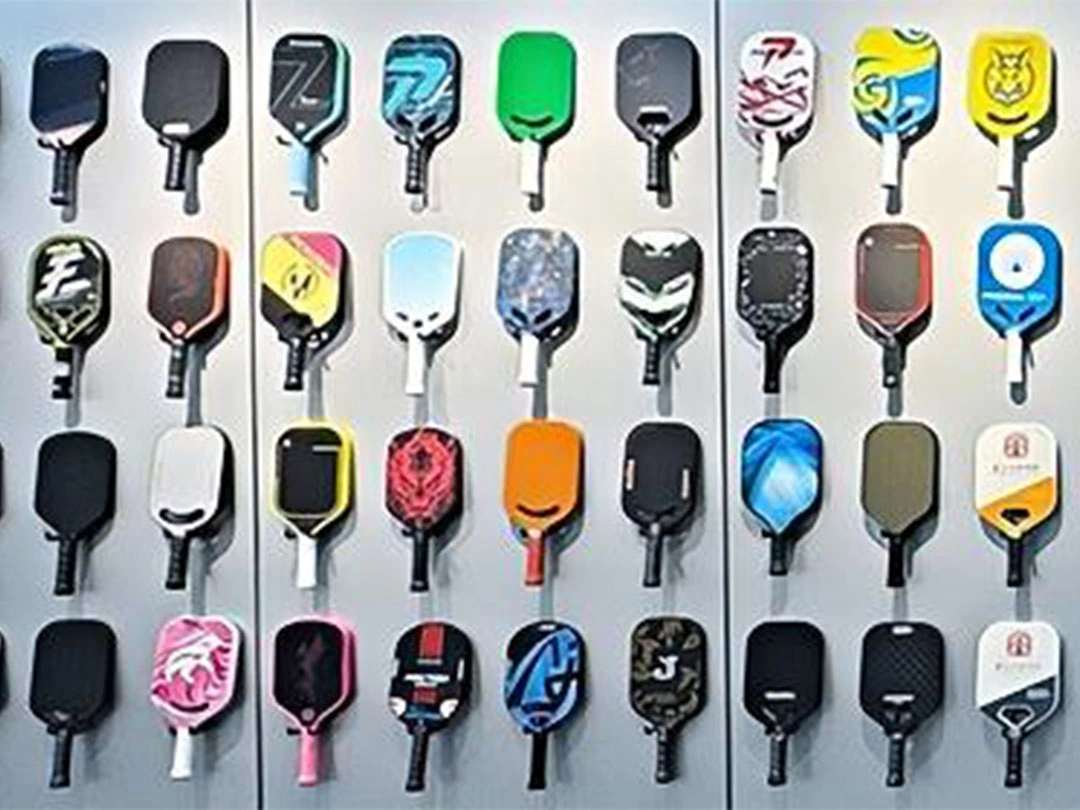
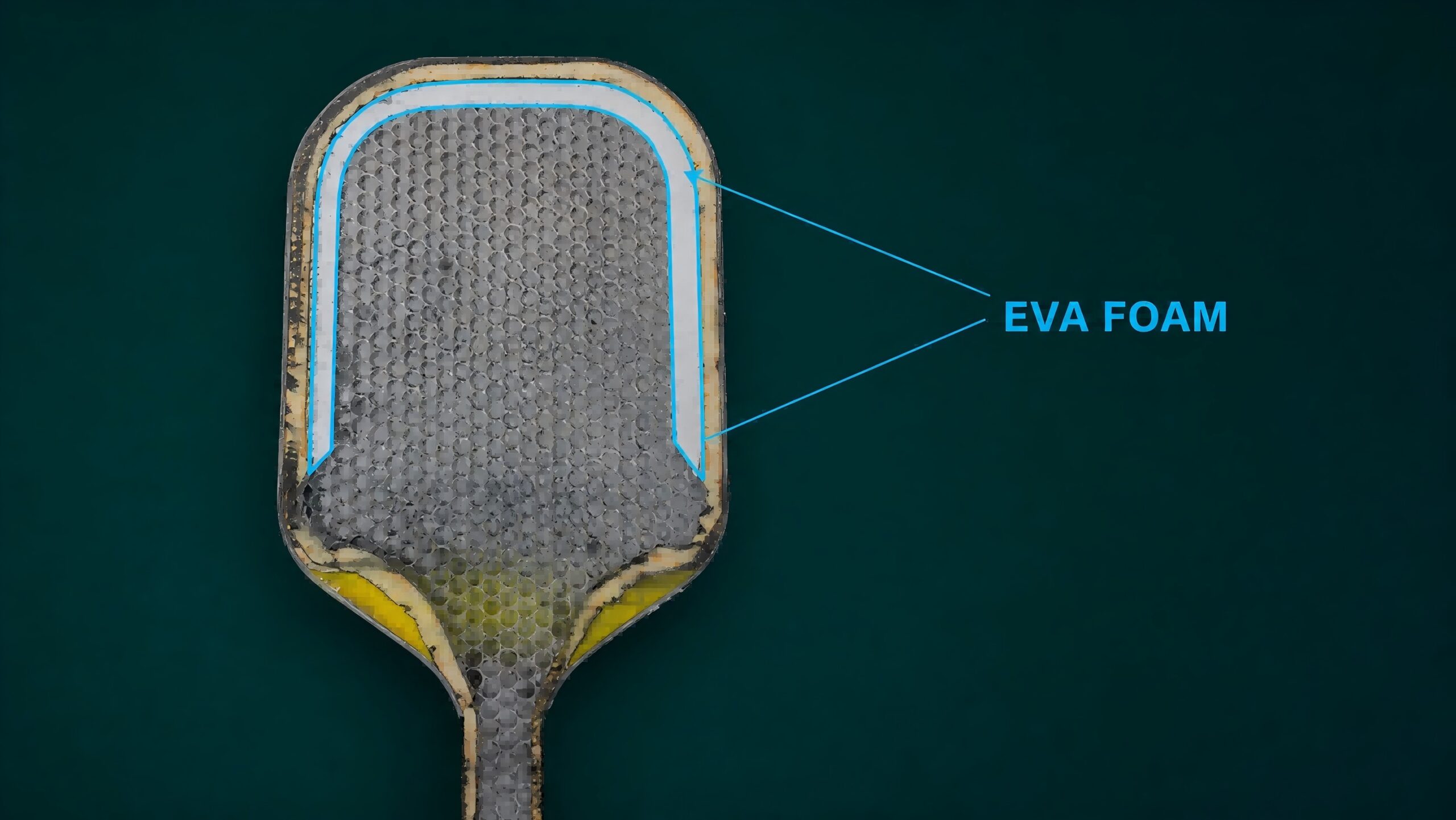
Two paddles with the same headline material can still differ in core structure, molding or bonding process, shape, handle dimensions, finished weight, edge treatment, surface finish, artwork, packaging, and inspection requirements.
That is why material names should be treated as part of the specification, not as the specification itself.
A paddle is a system.
Over-specifying does not mean “too much quality.”
It means adding features that do not strengthen the job of the SKU.
Every extra decision can add cost or complexity to materials, tooling, sampling, artwork control, packaging, inspection, version control, and reorders.
A premium face material may be useful.
Custom packaging may be useful.
A special construction may be useful.
But each feature should earn its place.
A simple way to review a product brief is to divide features into three groups: must-have, valuable but optional, and delay until the product proves itself.
That keeps the product focused without confusing simplicity with low quality.
The opposite mistake is sending a vague brief and assuming every supplier will interpret it the same way.
“Carbon paddle” is not enough.
“Premium packaging” is not enough.
“Same as sample” is definitely not enough.
A quote is only comparable when the assumptions behind it are comparable.
Before comparing suppliers, define the construction route, core family, face material, thickness, shape, target weight range, handle direction, surface and artwork process, packaging scope, quantity range, and quality requirements.
Otherwise, one quotation may include work that another quotation does not.
The cheaper number may not represent the same product.
A physical sample is important, but it should not become the entire production instruction.
After approval, convert the accepted version into a written spec lock.
That file can record the SKU name, sample version, construction, core and face materials, dimensions, thickness, target weight range, handle and grip configuration, edge treatment, artwork version, packaging contents, inspection points, tolerances, and any approved production changes.
The goal is not paperwork for its own sake.
The goal is that the quote, sample, production batch, inspection, reorder, and buyer promise all refer to the same defined product.
Compliance belongs inside product development too.
If a paddle is intended for sanctioned competition, the approval path should be considered during development and checked against the exact product.
USA Pickleball’s public Approved Paddle List identifies products by brand and model and shows status for individual paddles.
So an OEM buyer should verify the exact submitted model before making an approval claim.
A supplier can support product development and pre-submission preparation.
That is not the same as saying every paddle from a factory is approved.
Before you move a paddle from development into production, ask five questions.
One: can the intended customer understand why this SKU exists?
Two: does the specification fit the channel and price position?
Three: can the approved product be reproduced from a clear written specification?
Four: is the difference from adjacent SKUs meaningful?
And five: can the product be reordered without reopening the basic decisions?
If those answers are clear, your specification is probably doing useful work.
If they are not clear, adding another premium feature is unlikely to solve the problem.
This changes the way you talk to a manufacturer.
Instead of asking: “What is your best paddle?”
Try this:
“We are developing a main-seller SKU for this target buyer and channel. Here is the product role and required specification. Which choices are essential, which are optional, and which would add complexity without strengthening the product?”
Now the factory has a defined problem to solve.
That makes sampling, quotation comparison, change control, and production discussions more useful.
The best paddle specification is not the longest feature list.
It is the specification that helps a clearly defined SKU do its job.
Think in this order: player need, channel, price position, manufacturability, quality control, compliance planning, and reorder logic.
If you are developing a custom or private-label paddle, define the SKU before asking factories to compete on price.
For more OEM product-development and supplier-verification resources, visit NexaPaddle.com.
Related NexaPaddle resources
- How to Build Your Own Pickleball Paddle: OEM Development Guide
- How to Start a Pickleball Paddle Brand in 2026: OEM Guide
- Custom Pickleball Paddle Design & Sampling
- Supplier Proof & Factory Evidence
Verification note: Competition approval and status should be checked against the exact brand and model in the current official records.