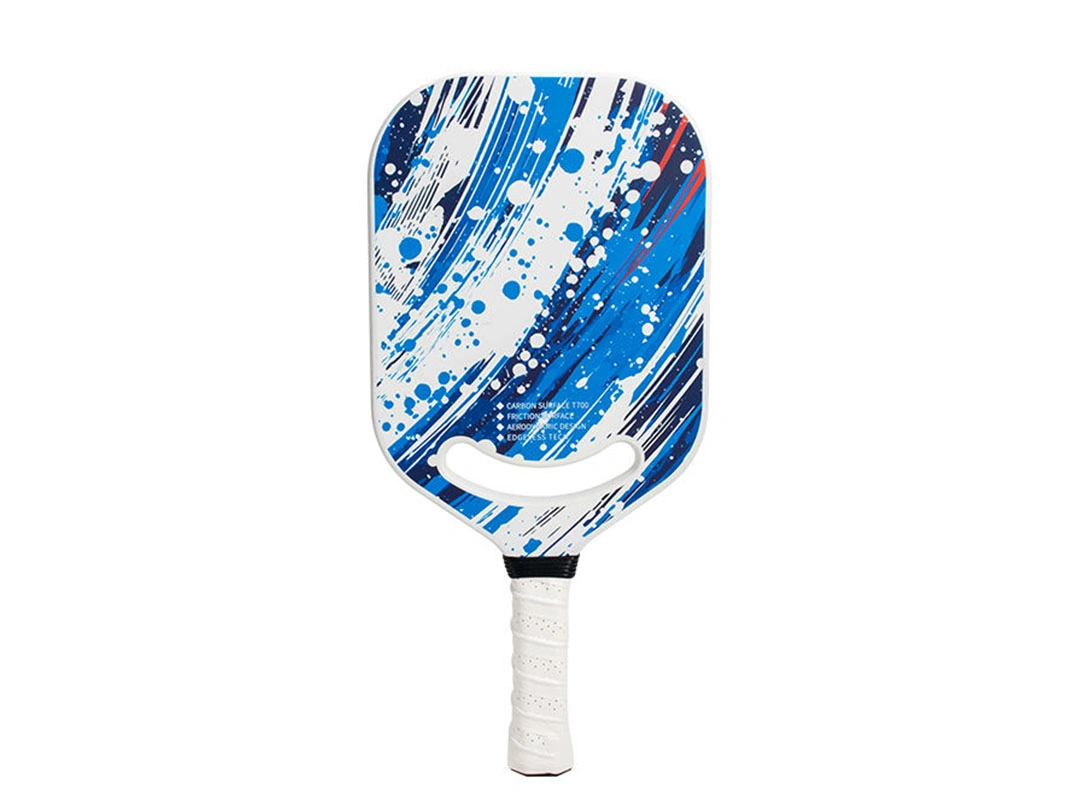
Spin is the single most consequential performance variable in modern competitive pickleball.
Not power. Not control. Spin.
Topspin drives that dip sharply at the kitchen line. Sidespin returns that angle away from an opponent’s reach. Kick serves that bounce unpredictably off the court surface. These are the mechanics that separate a 4.5 player from a 3.5 player, and they all originate at one place: the friction interface between the paddle face and the ball during the milliseconds of dwell time at impact.
For brand owners, retailers, and distributors evaluating paddle specifications for their product lines, this creates a very specific engineering question: how do you design spin performance into a paddle at the manufacturing level, and which technology approach delivers the best long-term result?
The answer comes down to two primary technologies that dominate the current market: raw carbon fiber friction faces (T700 and T800 grade) and 테프론 코팅. They operate through different mechanisms, serve different positioning strategies, and have different compliance profiles under USA Pickleball’s Equipment Standards. Getting the comparison right is the difference between sourcing a paddle that holds its spin performance for a year and one that degrades within three months.
This article is the technical foundation for making that call. We’ll cover the physics, the materials, the manufacturing implications, and the USAPA regulatory environment — with specific product specifications for each technology tier so you can match the right approach to your brand’s positioning.
Section 1: The Science of Spin Generation in Pickleball
Before evaluating specific technologies, it’s worth establishing exactly what “spin” means at the physics level — because the engineering decisions follow directly from the mechanism.
The Friction-Dwell Equation
Spin generation at the paddle-ball interface is governed by a straightforward relationship:
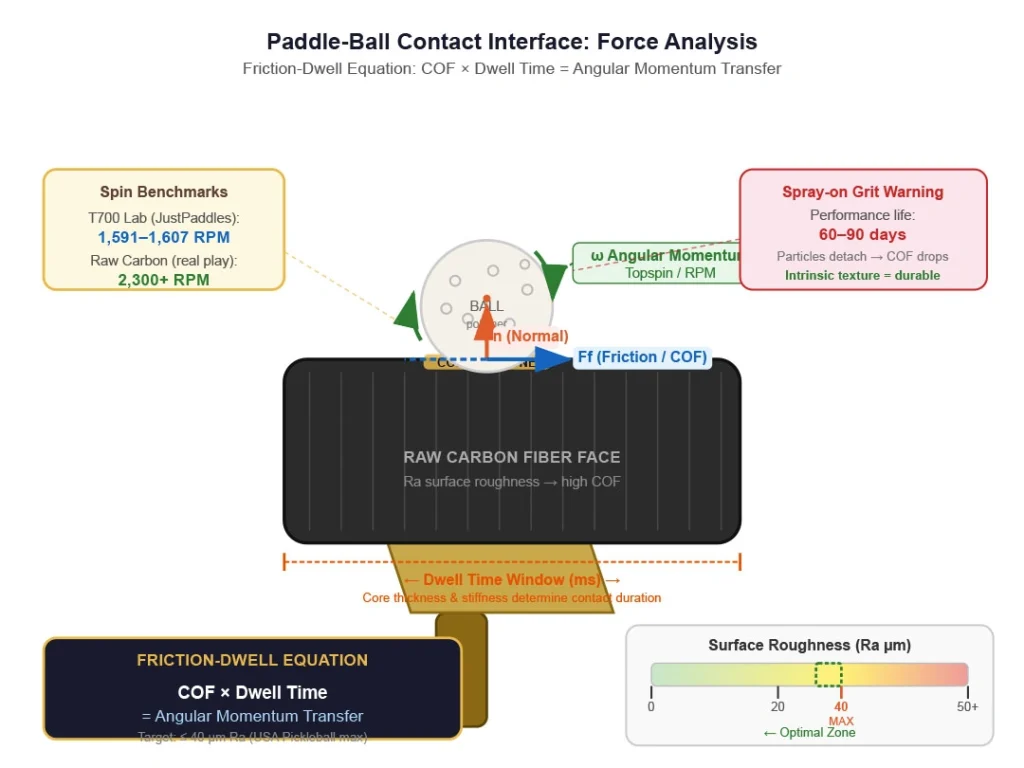
Coefficient of Friction × Dwell Time = Angular Momentum Transfer
The coefficient of friction (COF) is a material property of the paddle face surface — specifically, how much resistance it creates against the ball’s polymer surface during contact. Higher COF means more tangential force is applied to the ball’s surface relative to its center, which is the definition of imparted angular velocity.
Dwell time is the duration of paddle-ball contact, typically measured in milliseconds. Core thickness and material stiffness both influence dwell time — a thicker or slightly softer core keeps the ball in contact with the face slightly longer, allowing more friction force to act on it. This is why the core architecture matters alongside the face material; they are interdependent variables in the spin equation.
The practical upshot: if you want to maximize spin, you need both a high-COF face surface and sufficient dwell time to let that friction do its work.
표면 거칠기: 측정 가능한 변수
Surface friction at the paddle-ball interface is directly correlated with surface roughness — specifically the Ra value (arithmetic mean roughness) measured in micrometers. A surface with higher Ra creates more physical engagement with the ball’s polymer skin during dwell time, translating to more angular momentum transfer.
The engineering goal for the best pickleball paddles for spin is therefore clear: maximize surface roughness (and therefore COF) within the limits set by USA Pickleball’s Equipment Standards.
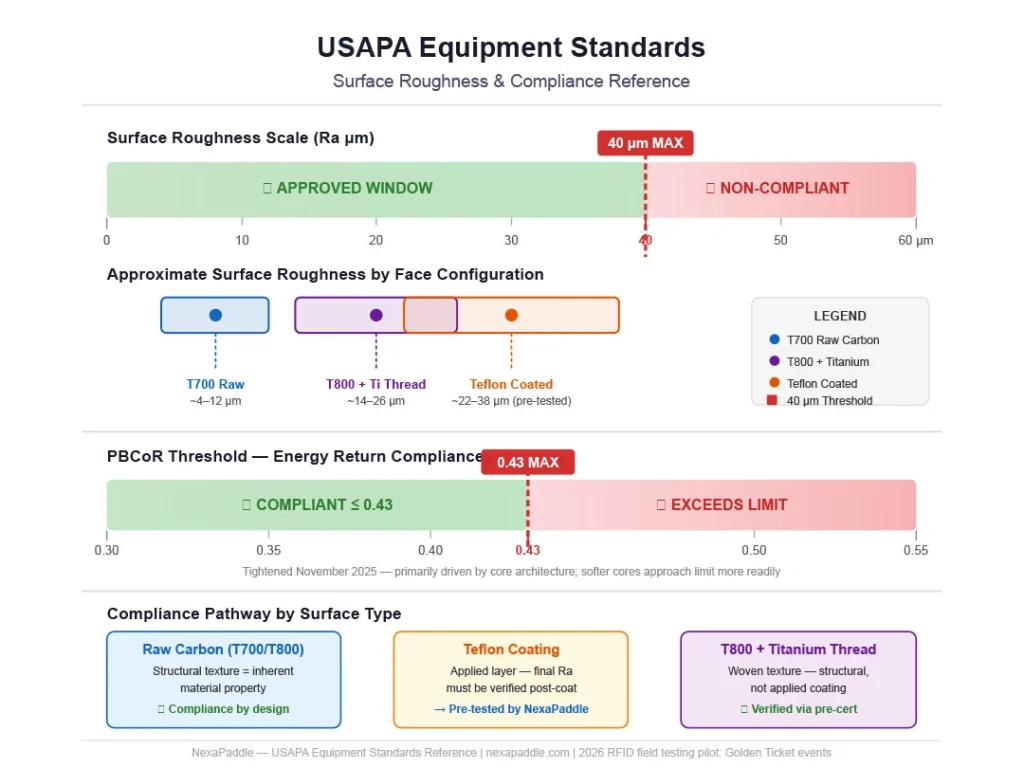
USA Pickleball’s current standards specify a maximum surface roughness of 40 micrometers Ra. That upper limit exists precisely because spin capability was creating competitive imbalances — paddles with aggressive grit sprays were effectively functioning as ball-modification tools. Any compliant paddle must operate below that ceiling, and manufacturers seeking maximum spin performance engineer their surfaces as close to that ceiling as possible without exceeding it.
Intrinsic vs. Applied Surface Texture: Why the Distinction Matters
Here is the most important design principle for spin-optimized paddle engineering, and the one most often glossed over in marketing copy:
Surface texture must be intrinsic to the material structure, not applied on top of it.
Spray-on grit treatments — abrasive particles bonded to a paddle face with adhesive — can generate excellent spin performance out of the box. The problem is structural: adhesive-bonded particles are not part of the face material. They are attached to it. Under repeated ball impacts, the bond between grit particles and paddle surface degrades. The particles break off or smooth down. Industry testing and player reports consistently place 60–90일 동안의 스프레이 온 그릿 성능 수명 of regular play before measurable spin performance decay begins.
After that window, the player is using a paddle that was priced for premium spin performance and is delivering mid-tier spin performance. For brands selling at $150+ retail, that degradation timeline creates returns, negative reviews, and customer lifetime value problems.
The two technologies examined in this article — raw carbon fiber surfaces and Teflon coating — solve the durability problem through different mechanisms. Understanding how each one works determines which is right for your product specification.
Benchmarking Spin Performance
JustPaddles Paddle Lab measured top-tier T700 paddles generating 1,591–1,607 RPM in controlled laboratory conditions. Those are strong numbers for paddles tested under standardized, moderate swing conditions.
Raw carbon fiber surfaces achieve 2,300+ RPM in real play conditions, where swing mechanics, topspin technique, and surface engagement under full stroke velocity create a different performance ceiling than the lab environment captures. The gap between lab conditions and real play is a known variable — but the directional conclusion is consistent: raw carbon fiber surfaces perform at the higher end of the spin spectrum.
Section 2: Raw Carbon Fiber Friction Face Technology
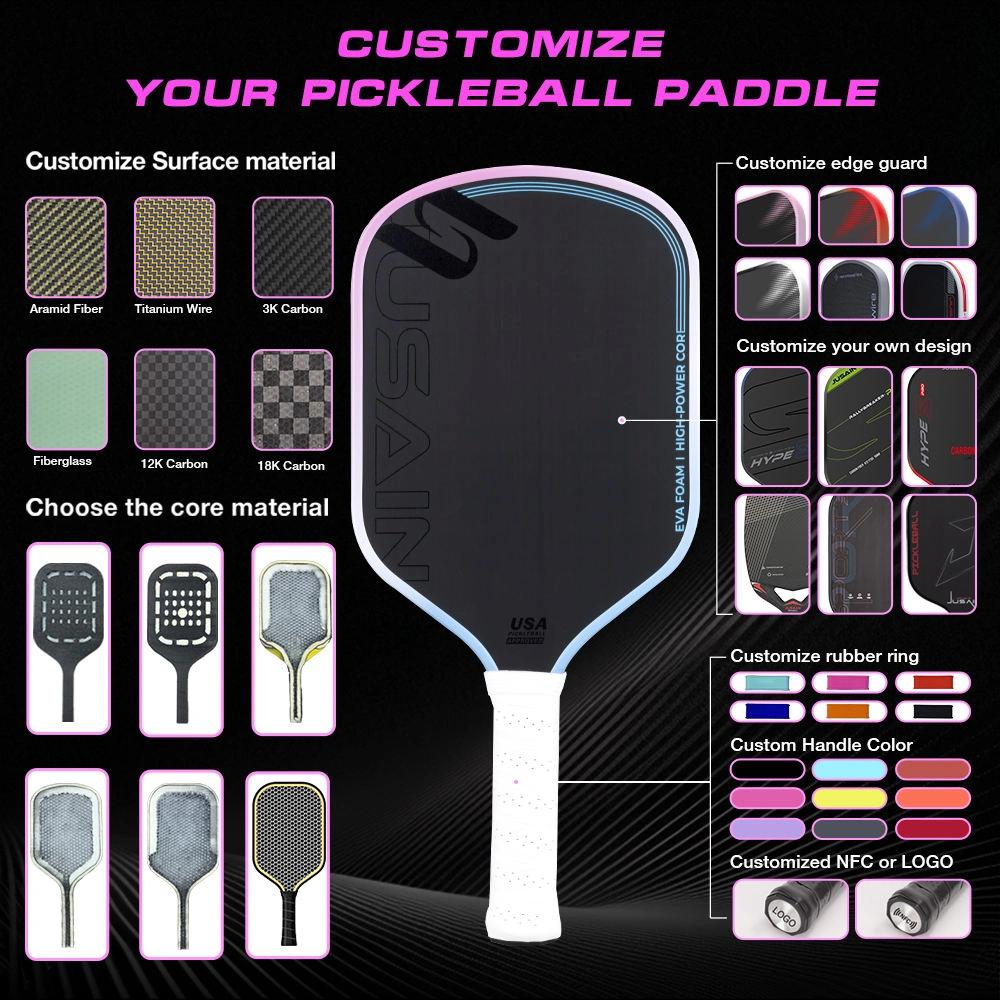
Raw carbon fiber friction faces are the dominant spin-generation technology in the current premium paddle market. Every major brand — Selkirk, JOOLA, CRBN, Vatic Pro — has converged on carbon fiber faces, and the reason is not aesthetic. It is material science.
How T700 Carbon Fiber Creates Spin
Toray’s T700SC carbon fiber — the industry-standard specification — is built from filaments with a 7-micrometer diameter. To visualize that: approximately 1/10th the width of a human hair. When these filaments are laid up in either a unidirectional (UD) or 3K woven pattern and cured without a smooth surface coating, the resulting face has a characteristic micro-texture at the scale of those filament bundles.
That micro-texture is not a coating applied after manufacture. It is the fiber itself, exposed at the surface. When the ball contacts this surface, those microscopic fiber ridges engage the ball’s polymer skin during dwell time, generating the friction that produces angular momentum.
The T700 carbon fiber paddle for spin is the material science embodiment of intrinsic surface texture.
UD vs. 3K Weave: Engineering for Spin Direction
The geometry of how T700 fibers are arranged at the face level creates meaningful differences in spin characteristics:
Unidirectional (UD):
Fibers run parallel in a single direction. This produces a surface with directionally consistent texture — the micro-ridges are aligned, creating stronger engagement in one axis. UD surfaces are optimized for consistent-angle strokes: forehand drives, topspin serves, and shots where the swing path is predictable. Players who rely on a technically precise topspin forehand often prefer UD faces because the directional texture reinforces their natural stroke mechanics.
3K 직조:
Three-filament bundles are interlaced in a plain weave, creating the classic crosshatch carbon fiber pattern. The omnidirectional crosshatch creates more uniform texture engagement across varied swing angles. 3K is better suited for players who use a wider range of spin techniques — slice, sidespin, and low-dwell punch shots — because the friction profile doesn’t have a preferred direction.
For product specification purposes: UD is the choice for a spin-forward positioning story built around topspin drives and serves. 3K is the choice for versatility — a paddle that performs well across the full range of spin techniques a competitive player deploys.
Why Raw Carbon Spin Performance Is Permanent
This is the core durability argument for 은 Toray T700 또는 T800 항공 우주 등급 탄소 섬유를 사용합니다. 이 재료는 본질적이고 영구적인 미세 질감을 가지고 있으며, 이는 공을 잡아 많은 RPM을 생성합니다.: the micro-texture is the fiber.
T700 carbon fiber has a tensile strength of 4,900 MPa. To degrade the surface texture of a raw carbon face through normal ball impacts, you would need to mechanically abrade the carbon filaments themselves — which requires forces far beyond what a pickleball generates. The spray-on grit degradation problem is entirely absent because there is no adhesive bond to fail. There is no surface treatment to wear away. The spin-generating geometry is a structural property of the material.
Industry observation places raw T700 carbon fiber surface performance as stable across the functional lifespan of the paddle, with maintenance limited to periodically erasing polymer debris from the ball that embeds in the surface texture — a process that takes seconds and restores full spin capability.
T800: Higher Modulus, Higher Spin Ceiling
T800 carbon fiber takes the T700 formula a step further in two relevant dimensions:
Higher tensile modulus (294 GPa vs. 230 GPa — a 28% increase): A stiffer face deforms less at ball contact, which means less energy is absorbed into face deflection and more is returned to the ball as exit velocity. For power-forward positioning, T800 is the specification.
Finer filament diameter (~5 μm vs. 7 μm): Tighter filament packing allows for denser weave architectures and creates a more uniform face surface at the micro level.
T800 + Titanium Thread: The Highest Spin Ceiling Available
NexaPaddle’s most advanced face construction takes T800 further still by weaving fine-gauge metallic titanium threads directly into the T800 carbon matrix during the composite fabric production stage. This is not a coating. The titanium threads are structural — integral to the weave.
The result: micro-ridges woven into the composite matrix that exceed the friction profile achievable with carbon fiber alone. Titanium is significantly harder than carbon fiber, meaning the surface contact points maintain their geometry under repeated ball impacts. The structural texture never degrades because it is architecturally the same as the paddle face itself.
The T800+Titanium Thread construction represents the maximum spin ceiling currently available from any NexaPaddle production face — and it achieves that ceiling through structural texture that is permanent by design.
전체 범위를 탐색할 수 있습니다 T700 탄소 섬유 패들 and the T800+Ti specialty tier within NexaPaddle’s catalog to understand how these material grades translate into specific product SKUs.
Section 3: Teflon Coating Technology
Teflon coating operates through a different mechanism than raw carbon fiber, and it is a legitimate spin-performance technology — not a marketing workaround.
How Teflon Coating Works
패들 면에 적용된 테프론(폴리테트라플루오로에틸렌, PTFE)은 일관된 코팅 층으로 작용합니다. 이 코팅은 기본 면 재료의 표면 마찰 특성을 수정합니다. 이는 스프레이 방식의 거친 표면과는 분명히 다릅니다.
- 스프레이 그릿 접착제로 얼굴 표면에 결합된 개별 연마 입자로 구성됩니다. 입자는 얼굴과 지속적으로 연결되어 있지 않고, 부착되어 있습니다.
- 테프론 코팅 이는 얼굴 표면과 물질 수준에서 결합되고 수정하는 연속적인 폴리머 코팅 층입니다. 수정된 얼굴 표면으로 작용하며, 입자가 부착된 것이 아닙니다.
이 구분의 실질적인 결과는 내구성입니다. 표면을 수정하는 일관된 코팅 층은 코팅이 손상되지 않는 한 그 마찰 특성을 유지합니다. 이는 공에 의한 충격에서 비틀림 하중을 받는 접착제로 결합된 입자보다 현저히 긴 성능 지속 기간을 의미합니다.
테프론 코팅은 또한 2차 구조적 이점을 제공합니다.: 이 코팅은 기본 탄소 섬유의 표면 강도를 강화하여 미세 마모에 대한 저항성을 추가하고 집중 사용 주기 동안 얼굴 기하학을 유지합니다. 집중적인 플레이 환경을 위해 설계된 제품을 만드는 브랜드에 대해 — 훈련 아카데미, 클럽 프로그램, 경쟁 임대 플리트 — 이 강화 효과는 실제 제품 수명 가치가 있습니다.
NexaPaddle 제품 라인업의 테프론 코팅
NexaPaddle은 두 가지 주요 구성에서 테프론 코팅을 사용합니다:
몰드 #8 조용한 시리즈 (T700 + 테프론): NCT-BV 코어를 기반으로 한 14mm 열성형 패들입니다. 테프론 코팅은 기본 T700 면의 스핀 특성을 향상시키며, 조용한 디자인은 NCT-BV 코어의 소음 감소 특성을 나타냅니다. 이는 소음에 민감한 환경에서 플레이어와 클럽을 위한 NexaPaddle의 주요 제품입니다 — 레크리에이션 피클볼 시장에서 점점 커지는 세그먼트를 나타냅니다.
몰드 #4 하이브리드: 탄소+테프론 또는 T700 면과 PP 벌집 또는 GEN4 코어 옵션으로 제공됩니다. 몰드 #4의 이중 면 재료는 브랜드 소유자가 제품 계층을 구축할 수 있는 가장 유연한 구성 중 하나로 만듭니다 — 동일한 몰드 기하학과 다양한 성능 계층.
GEN5 “개틀링” 플래그십: T800 + 테프론 편직
GEN5 “개틀링”은 네사패들이 테프론 기술을 T800 탄소 섬유와 완전히 통합한 플래그십 수준을 나타냅니다. 얼굴 사양 - T800+테프론 편직 -은 완성된 얼굴 위에 단순히 적용된 테프론 코팅과 다릅니다. 테프론은 복합 재료 생산 단계에서 T800 원단 자체에 편직되어 하이브리드 표면을 만들어 T800의 구조적 강성과 에너지 반환과 함께 테프론 편직의 향상된 표면 마찰을 제공합니다.
개틀링의 성능 프로필은 T800+티타늄 스레드 면과는 다르게 최적화되어 있습니다. 강력함과 속도에 대한 훌륭한 제어를 제공합니다 티타늄 구조의 최대 마찰 스핀 프로필과는 반대로. NexaPaddle의 GEN5 폴리머 메쉬 코어 — 표준 벌집의 육각형 셀 구조를 에너지 반환 메쉬 구조로 대체하여 충격력을 보다 균일하게 분산시키는 데 — 개틀링은 NexaPaddle 라인업에서 가장 큰 기능적 스위트 스팟을 제공하며 USAPA 준수 제한 내에서 최대 에너지 반환을 제공합니다.
테프론 + 레이저 각인: 성능 및 시각적 차별화
B2B 구매자를 위한 테프론 코팅의 저평가된 장점 중 하나는 레이저 각인과 결합된 맞춤화 전략과의 호환성입니다. 테프론 코팅된 면에서 레이저 각인은 정확하게 정의된 표면 텍스처 패턴을 생성합니다 — 로고, 브랜드 그래픽, 기하학적 디자인 — 이들은 동시에 시각적 차별화 요소와 추가 스핀 생성 표면 기능을 제공합니다.
이 조합은 두 가지 이유로 브랜드 소유자에게 매력적입니다:
- 성능 이야기: 표면 처리는 시각적으로 검증 가능하고 성능 기능적입니다.
- 브랜드 정체성: 테프론 면의 레이저 각인 그래픽은 표준 탄소 편직보다 훨씬 더 독특하다 — 이는 DTC 브랜드, 앰배서더 프로그램, 한정판 출시에서 시각적 차별성이 SKU의 가치 제안의 일부인 경우와 관련이 있습니다.
테프론 코팅으로 인해 최종 표면 거칠기가 40 μm Ra 최대치를 초과하지 않는 한 USAPA 준수에는 방해가 없습니다. NexaPaddle은 생산 전에 모든 테프론 코팅 디자인을 표면 거칠기 사양에 대해 사전 테스트하여 준수를 확인합니다.
섹션 4: 테프론 코팅 대 원재 탄소 섬유 — 정면 비교
아래 표는 스핀 기술 접근 방식을 선택하는 브랜드 소유자를 위한 주요 결정 변수를 통합합니다:
| 치수 | 원재 탄소 섬유 (T700) | 테프론 코팅 (T700/T800) | T800 + 티타늄 스레드 |
|---|---|---|---|
| 스핀 한계 (RPM) | 2,300+ RPM | 높음 (기본 탄소에 대한 향상된 COF) | 가장 높음 (구조적 Ti 미세 리지) |
| 표면 텍스처 유형 | 내재적 (섬유 기하학) | 적용된 일관된 코팅 층 | 내재적 (편직 복합 행렬) |
| 텍스처 내구성 | 영구적 (텍스처가 섬유) | 우수 (일관된 코팅; 입자 손실 없음) | 영구적 (구조적 Ti는 결코 저하되지 않음) |
| 열화 위험 | 정상적인 플레이 하에서는 없음 | 최소 (코팅은 결국 심한 사용으로 얇아질 수 있음) | 없음 (구조적 텍스처) |
| 피드 백 프로필 | 선명하고 직접적인 고반응 | 약간 수정된 표면 느낌; 공을 잘 제어합니다. | 가장 정밀한 에너지 반환; 플래그십 느낌 |
| USAPA 준수 | 승인된 거칠기 범위 내(검증됨) | 사전 테스트 시 승인된 범위 내 | 승인된 범위 내(NexaPaddle 사전 테스트) |
| 시각적 차별화 요소 | 탄소 직조 패턴 | 무광 코팅; 레이저 각인 호환 | 독특한 금속 Ti 실 텍스처 |
| 비용 계층 | 중간(T700)에서 높은(T800) | 중간(Teflon on T700)에서 높은(Teflon-weave on T800) | 프리미엄(T800+Ti 특수 등급) |
| 최고의 용도 | 스핀 전문가, 경쟁 선수, 가치-프리미엄 브랜드 | 제어 + 스핀 균형, 브랜드 맞춤화, 소음 민감 시장 | 플래그십 SKU, 앰배서더 프로그램, $249 이상 소매 |
| 최소 주문 수량 | 100개(열성형), 300개(냉압) | 100개(열성형), 300개(냉압) | 100개(열성형) |
이 비교에서의 핵심 포지셔닝 통찰력: 원료 탄소 섬유와 Teflon 코팅은 서로 경쟁하는 기술이라기보다 다른 시장 세segment를 위한 보완 도구입니다.. 원료 탄소는 스핀 성능이 주요 기준일 때 그리고 구매자가 가장 간단하고 직접적인 성능 스토리를 원하는 경우 최적의 선택입니다. Teflon 코팅은 스핀 성능을 시각적 차별화, 브랜드 맞춤화 또는 소음 감소 요구 사항과 결합해야 할 때 최적의 선택입니다. T800+티타늄 스레드는 최대 성능 한계와 프리미엄 포지셔닝이 비용을 정당화할 때 플래그십 등급으로 reserved됩니다.
섹션 5: 귀하의 브랜드에 적합한 스핀 최적화 패들 지정 방법
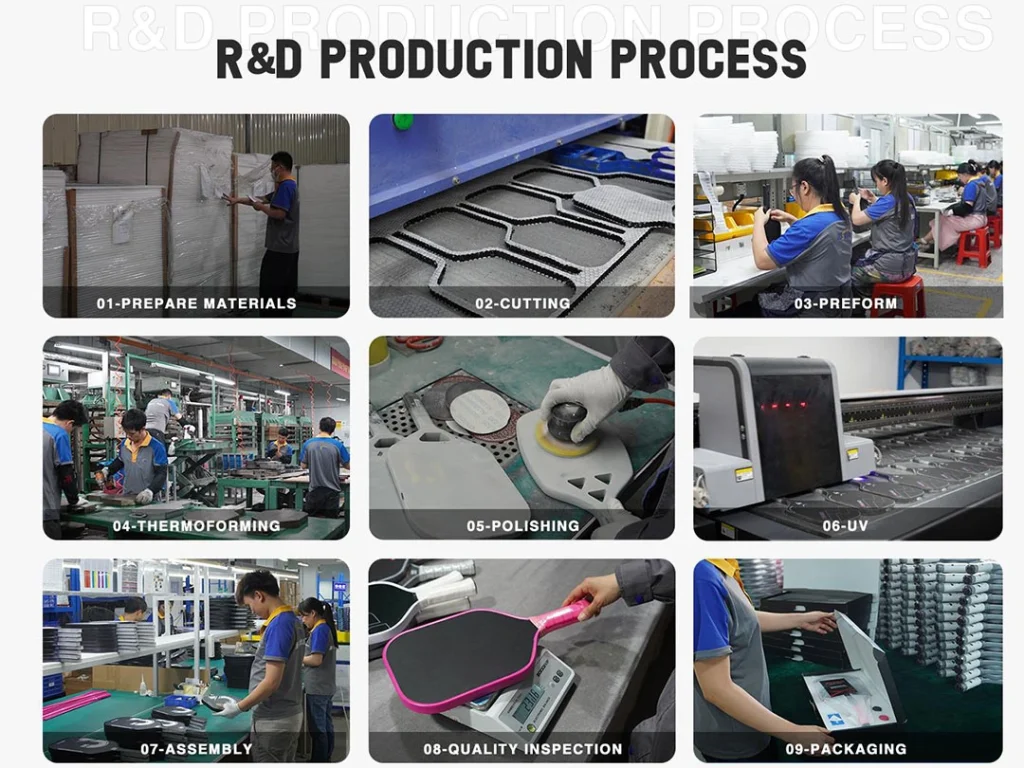
제품 라인을 구축하는 B2B 구매자의 경우 스핀 기술 선택은 SKU의 전체 성능 및 포지셔닝 아키텍처를 결정하는 상류 사양 결정입니다. 다음은 NexaPaddle 카탈로그가 특정 브랜드 전략에 어떻게 매핑되는지입니다:
1등급: 스핀 중심 라인의 진입점
냉압 탄소 + Teflon 스핀 (제품 1.3)
낮은 MOQ 기준과 경쟁적인 단가로 스핀 중심 시장에 진입하는 브랜드를 위한 냉압 탄소 + Teflon 스핀 구성은 접근 가능한 시작점입니다.
- 면: 탄소 + Teflon 코팅
- 코어: 16mm PP 허니콤
- 치수: 417×188mm
- 구성: 콜드 프레스
- 최소주문수량(MOQ): 300개
- 포지셔닝: Teflon 내구성을 갖춘 입문 레벨 스핀 성능; 소매 $50–$90 등급
이 등급의 냉압 구조는 접근 가능한 가격대에서 브랜드가 볼륨을 구축하는 데 적합합니다. Teflon 코팅은 제품의 전체 소매 생애 주기 동안 스핀 성능이 유지되도록 보장합니다 — 스프레이로 처리된 그릿을 가진 냉압 패들보다 의미 있는 장점입니다.
2등급: 열성형 중간 프리미엄
열성형 금형 #4 하이브리드
금형 #4는 NexaPaddle의 가장 구성 가능한 스핀 최적화 플랫폼으로, 브랜드 소유자가 같은 금형 기하학 내에서 차별화된 SKU를 구축할 수 있도록 얼굴 및 코어 유연성을 제공합니다.
- 얼굴 옵션: 탄소+Teflon 또는 T700 원료 탄소
- 코어 옵션: PP 허니콤 또는 GEN4 코어
- 구성: 열 성형
- 최소주문수량(MOQ): 100개
- 포지셔닝: 중간 프리미엄 ($120–$180 소매); 하나의 금형이 여러 가격대를 지원하는 제품 사다리 구축에 이상적입니다.
열성형 금형 #8 조용한 시리즈
- 면: T700 + Teflon 코팅
- 코어: NCT-BV 코어(소음 감소 최적화)
- 두께: 14mm
- 구성: 열 성형
- 최소주문수량(MOQ): 100개
- 포지셔닝: 프리미엄 소음 민감 시장; 실내 시설, 주거 커뮤니티, 소음 조례가 있는 클럽 프로그램; 소매 $150–$200
전체 탐색하기 스핀 피클볼 패들 구성을 현재 생산 SKU에 어떻게 매핑할지 확인하세요.
특수 등급: 최대 스핀 성능
T800 + 티타늄 실(thread) (제품 C2)
- 면: T800 탄소 + 티타늄 스레드 직조
- 코어: GEN3 코어
- 치수: 413×195mm
- 핸들: 145mm
- 구성: 열 성형
- 최소주문수량(MOQ): 100개
- 포지셔닝: 플래그십 스핀 최대화 SKU; 토너먼트 플레이어; $200–$249 소매
이 사양은 최고 성능 등급에 자리 잡은 브랜드가 가장 차별화된 기술 내러티브를 원할 때의 사양입니다. T800+Ti 표면 텍스처는 구조적으로 영구적이며, 시각적으로 독특하고, NexaPaddle의 라인업에서 가장 높은 표면 COF를 생성합니다.
플래그십 등급: 파워 + 스핀 + 스위트 스팟
GEN5 “갯링”(T800 + Teflon 직물 얼굴 + GEN5 코어)
- 면: T800 + Teflon 직물
- 코어: GEN5 폴리머 메쉬 코어
- 치수: 419.5×188mm
- 두께: 16mm 표준 (14mm 가능)
- 구성: 열 성형
- 최소주문수량(MOQ): 100개
- 포지셔닝: $249–$319 소매; Selkirk Vanguard 2.0 및 JOOLA Perseus Pro IV와 직접 경쟁; OEM 비용에서 60–72% 총 마진
브랜드가 USAPA 준수 한도 안에서 가장 큰 스위트 스팟과 높은 에너지 반환을 추구하는 경우, Gatling은 최적화된 해답입니다. T800+Teflon-직조 표면은 뛰어난 스핀 성능, 파워, 제어를 동시에 제공합니다 — 균형 잡힌 주력 구성과 T800+Ti 표면의 최대 마찰 전문화 대조.
아마존 비즈니스 또는 기타 B2B 전자상거래 플랫폼의 탄소 섬유 피클볼 패들 모든 계층을 통틀어 공통된 요소는 USAPA 검증 표면 준수와 제품의 의도된 수명 동안 유지되는 구조적 스핀 성능입니다.
섹션 6: USAPA 준수 및 표면 거칠기 규정
준수는 체크박스가 아닙니다. B2B 구매자에게는 제품 책임 및 시장 접근 문제입니다. USAPA 승인을 실패한 패들은 공인된 토너먼트 플레이에서 사용할 수 없으며, 점점 더 많은 경쟁 레크리에이셔널 선수들이 구매 전 승인된 패들을 평가하고 있습니다.
표면 거칠기 최대: 40 마이크로미터
미국 피클볼의 장비 기준은 다음을 명시합니다. maximum surface roughness of 40 micrometers Ra 승인된 패들을 위한. 이 기준을 초과하는 패들은 다른 사양과 관계없이 승인되지 않습니다.
이 표준은 가장 공격적인 스프레이 그릿 처리로 인해 경쟁 균형을 왜곡하는 스핀 기능을 생성하지 못하도록 설계되었습니다. 특히, 규제가 목표로 하는 것은 과도한 거칠기 — 거칠기 자체가 아닙니다. 승인된 창에는 상당한 표면 질감 가능성이 포함되며, 제약은 바닥이 아니라 천장입니다.
PBCoR: ≤ 0.43 (2025년 11월 강화)
피클볼 복원 계수(PBCoR) 기준은 2025년 11월에 강화되었습니다. (이전 기준에서 하향 조정됨) 이 매개변수는 에너지 반환을 측정합니다 — 패들이 공에 반환하는 에너지 대 흡수하는 에너지입니다. 강화는 패들 파워 인플레이션에 대한 USA Pickleball의 반영으로, 준수 경계선에서 열형성된 패들은 경쟁 수준에서 방어적 플레이 능력을 초과하는 샷을 생성했습니다.
브랜드 소유자에게 PBCoR 제약은 주로 핵심 아키텍처 설계 고려사항입니다 — 공에 더 많은 에너지를 반환하는 부드러운 코어가 한계를 더 근접하게 할 가능성이 높습니다. 표면 재료 선택도 PBCoR에 영향을 미치지만 코어 구조보다는 덜합니다.
직조(구조적) 대 적용(코팅): 규제 구분
현재 미국 피클볼 기준은 구체적으로 적용된 표면 처리에 맞춰져 있습니다. — 복합재 제조 후 표면에 추가된 코팅 및 입자. 직조된 탄소 섬유 및 티타늄 실 실을 사용해 생성된 구조적 표면 질감은 이러한 물질의 속성이기 때문에 다른 규제 범주에 속합니다.
이 구분은 준수 위험에 대한 물질적 함의가 있습니다:
- 원주율 탄소 섬유 표면 (T700, T800): 이러한 재료의 자연적인 표면 거칠기는 승인된 창 안에 있습니다. 준수는 설계 속성으로서, 이후 최적화를 요구하는 것이 아닙니다.
- 테프론 코팅: 최종 표면 거칠기가 40 μm Ra 최대 이내임을 검증하기 위해 사전 테스트를 거쳐야 하는 응집 코팅층. NexaPaddle는 모든 Teflon 코팅 디자인에 대해 생산 전에 이 테스트를 실시합니다.
- T800+티타늄 실: 티타늄 직조의 구조적 질감이 승인된 거칠기 범위 내에서 작동합니다 — NexaPaddle의 사전 인증 과정을 통해 검증된.
2026년 현장 테스트: 골든 티켓 이벤트에서 RFID 파일럿
미국 피클볼은 2026년 골든 티켓 이벤트에서 RFID 기반 현장 테스트를 파일럿합니다. — 중요한 규제 발전. RFID 칩이 내장된 패들은 현장에서 준수 데이터를 검증할 수 있어, 토너먼트 집행이 시각적 검사에서 데이터 검증 준수로 전환됩니다.
브랜드 소유자에게 이 개발은 명확한 함의를 가집니다: 제품 출시에 앞서 준수 문서가 완벽해야 합니다. 초기 실험실 테스트를 통과했지만 표면 거칠기나 PBCoR 경계선에 있는 패들은 실시간 테스트가 공인된 플레이에서 더 흔해짐에 따라 더 많은 scrutiny의 대상이 될 가능성이 높습니다.
NexaPaddle의 사전 테스트 프로토콜
NexaPaddle는 공식 USAPA 제출 전에 미국 피클볼의 장비 기준에 따라 모든 패들 디자인을 사전 테스트합니다.
- 표면 거칠기 (Ra μm) — 모든 표면 구성이 40 μm 최대 이내인지를 확인합니다.
- PBCoR — ≤ 0.43 기준 준수 여부를 검증합니다.
- 치수 준수 — 표면 치수, 두께, 손잡이 길이
공식 USAPA 인증 비용은 디자인당 $500–$1,200이며, 제출로부터 4–6주가 소요됩니다. 브랜드 소유자에게 출시 일정에 맞추어 인증 프로세스를 생산 계획과 병행하여 시작하는 것이 표준 관행입니다. NexaPaddle의 사전 테스트 프로토콜은 최초 제출 실패 위험을 최소화하고 일정 불확실성을 줄입니다.
참고로, 탐색해보세요 USAPA 승인 패들 생산 중 준수 검증 디자인의 모습이 어떤지 확인할 수 있습니다.
자주 묻는 질문
What makes a pickleball paddle spin-friendly?
Spin performance originates at the friction interface between paddle face and ball. The key variables are: surface coefficient of friction (higher = more spin), surface micro-texture (intrinsic texture engages the ball’s polymer surface during dwell time), and dwell time (core thickness and stiffness influence how long the ball stays in contact with the face). The best spin-optimized paddles combine a high-COF face material — raw carbon fiber or Teflon-coated carbon — with an appropriate core architecture that allows sufficient dwell time for maximum angular momentum transfer.
How long does spin performance last on raw carbon vs. spray-on grit vs. Teflon coating?
The performance windows are meaningfully different:
Raw carbon fiber (T700/T800): Permanent intrinsic texture. The micro-texture IS the carbon fiber filaments — tensile strength 4,900 MPa (T700) or 5,490 MPa (T800). Nothing to degrade under normal play conditions. Performance is stable for the paddle’s full functional lifespan.
Spray-on grit: 60–90 days of regular play before measurable spin decay. Adhesive-bonded particles shear off under repeated ball impact. The most common cause of premium paddle disappointment.
Teflon coating: Excellent durability. A coherent coating layer rather than discrete bonded particles — no shear failure mechanism. Performance maintenance significantly exceeds spray-on grit. Light use of an eraser tool periodically maintains performance.
Is Teflon coating USAPA approved?
Yes, when the final surface roughness remains within USA Pickleball’s 40 μm Ra maximum. Teflon coating itself is not a banned treatment — the regulation governs surface roughness outcomes, not specific coating materials. NexaPaddle pre-tests all Teflon-coated designs against surface roughness specifications before production, and all designs targeting USAPA-approved status go through formal certification testing before launch.
What’s the difference between T700 and T800 carbon fiber for spin performance?
T700 (Toray T700SC): 4,900 MPa tensile strength, 230 GPa modulus, 7 μm filament diameter. Excellent intrinsic surface texture, permanent spin performance, industry-standard specification for pro-tier paddles.
T800 (Toray T800S): 5,490 MPa tensile strength, 294 GPa modulus (~5 μm filament diameter). The 28% higher modulus makes the face stiffer at contact — less energy absorbed by face deflection, more energy returned to ball. This translates to faster exit velocity on drives and more precise energy return on all strokes. T800+Titanium Thread further extends the spin ceiling by adding structural Ti micro-ridges to the composite weave.
For spin-forward positioning: T700 is excellent and cost-optimized. T800 adds a power and precision dimension. T800+Ti is the maximum-performance specification.
Can I combine Teflon coating with other customizations for my brand?
Yes — and the Teflon + laser engraving combination is NexaPaddle’s recommended premium customization stack for brand owners seeking both performance and visual differentiation. Laser engraving on a Teflon-coated face creates custom surface texture patterns that function as both brand graphics and additional spin-generating surface features. The custom paddle specifications process at NexaPaddle supports this combination across all Teflon-coated SKUs in the catalog, with full USAPA pre-testing to confirm the combined surface treatment remains within approved roughness parameters.
NexaPaddle로 스핀 최적화된 패들 라인 구축
이 기사에서 다룬 공학 원리는 B2B 구매자가 오늘날 바로 실행할 수 있는 구체적인 제조 결정으로 이어집니다.
주요 사양 요약:
- 냉간 프레스 탄소+테플론 스핀: MOQ 300개, 입문 수준의 스핀 성능과 테플론 내구성
- 열형성 몰드 #4 하이브리드: MOQ 100개, 제품 사다리를 위한 구성 가능한 표면과 코어
- 열형성 몰드 #8 침묵(T700+테플론): MOQ 100개, 소음에 민감한 프리미엄 시장
- T800+타이타늄 실: MOQ 100 pcs, 최대 스핀 천장, 플래그십 포지셔닝
- GEN5 “가틀링” (T800+테프론 직조): MOQ 100 pcs, 최대 스윗 스팟, 파워+스핀+컨트롤
NexaPaddle은 열형성 구성에서 MOQ 100 pcs, 냉간 프레스에서 300 pcs의 스핀 최적화 패들을 제조합니다. 모든 디자인은 표면 거칠기, PBCoR, 치수 준수를 위한 USAPA 장비 표준에 대한 사전 테스트를 포함합니다.
시작하기 맞춤형 패들 어떤 스핀 기술 접근 방식이 귀사의 브랜드 포지셔닝에 적합한지 탐색하십시오. 사전 구성된 스핀 최적화 카탈로그 옵션을 보려면 탐색하십시오. 스핀 피클볼 패들 모든 성능 계층에서 생산 준비가 완료된 SKU를 확인하십시오.
귀사의 브랜드가 원자재 카본 스핀 스토리의 깔끔한 단순성을 필요로 하든, 테프론과 레이저 인그레이빙의 시각적 차별화가 필요하든, T800+타이타늄 실 플래그십의 기술적 내러티브가 필요하든, 제조 기반은 준비되어 있습니다. 질문은 그것 위에 어떻게 쌓을 것인가입니다.
출처 및 인용
도레이 산업. T700S / T700SC 기술 데이터 시트. 인장 강도: 4,900 MPa; 인장 탄성계수: 230 GPa; 필라멘트 직경: 7 μm.
JustPaddles 패들 연구소. 스핀을 위한 최고의 피클볼 패들 — 실험실 측정 RPM 순위. 2026년 1월.
USA Pickleball. 장비 표준 및 승인된 패들 목록 — 표면 거칠기 사양.
헬리오스 픽클볼. 탄소 섬유 피클볼 패들 가이드: T700, 등급 및 표면 기술. 2025년 9월.
NexaPaddle. 내부 제품 테스트 데이터: 표면 마찰 및 스핀 RPM에 대한 면 재질 (2025).
귀사의 브랜드를 위해 스핀 최적화 피클볼 패들을 소싱하거나 맞춤 제작하려고 하십니까? NexaPaddle은 구조 등급에 따라 MOQ 100-300 pcs의 열형성 및 냉간 프레스 스핀 패들을 제조합니다. 전체 범위를 탐색해 보십시오. 탄소 섬유 피클볼 패들 그리고 맞춤형 스핀 피클볼 패들 이 기사에서 다루어진 T700, T800 및 T800+타이타늄 실 공학 원칙에 기반합니다.