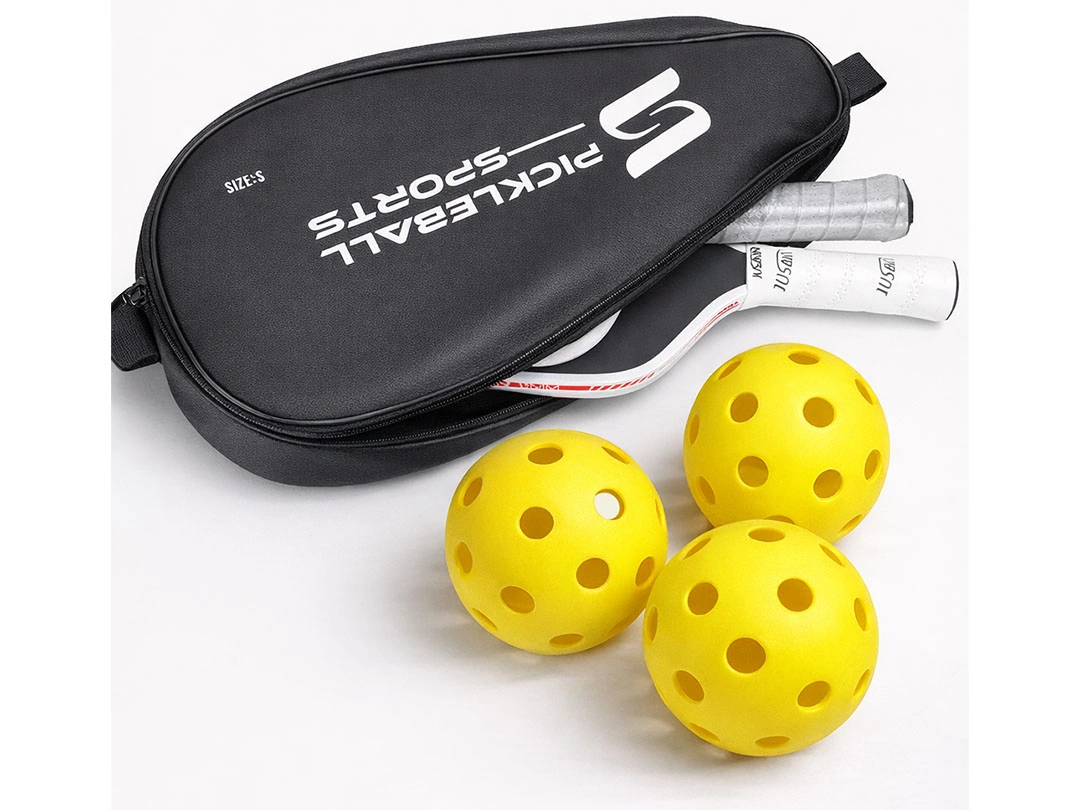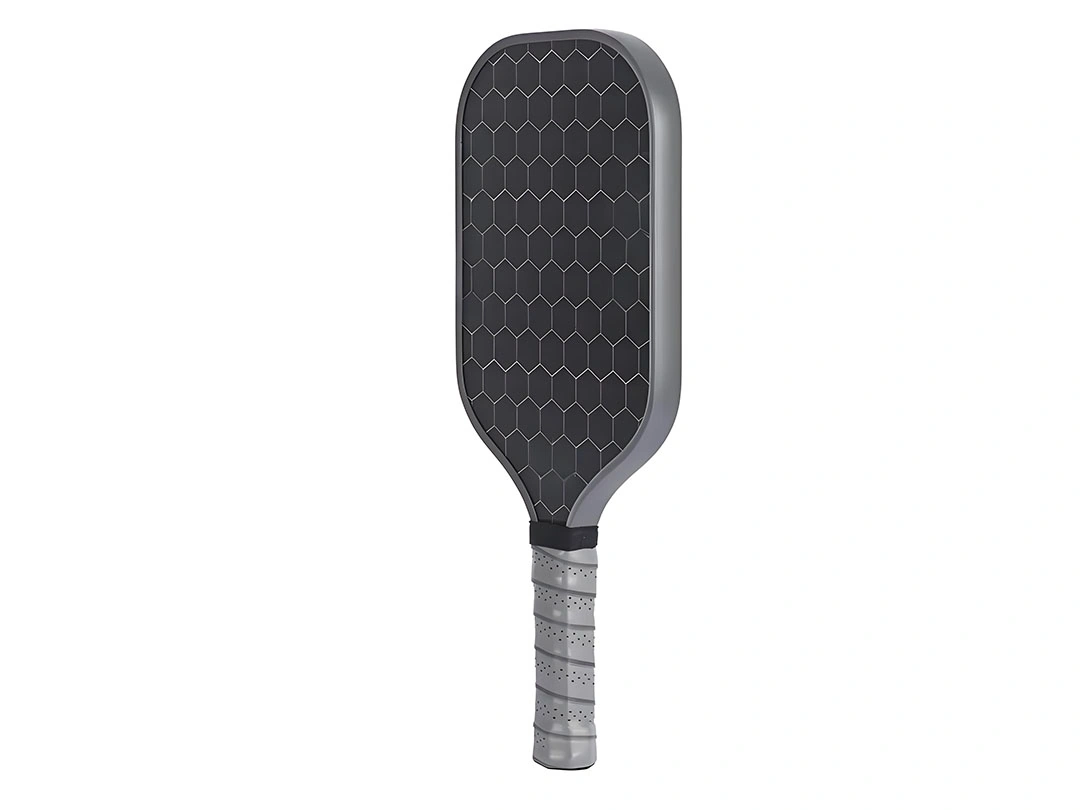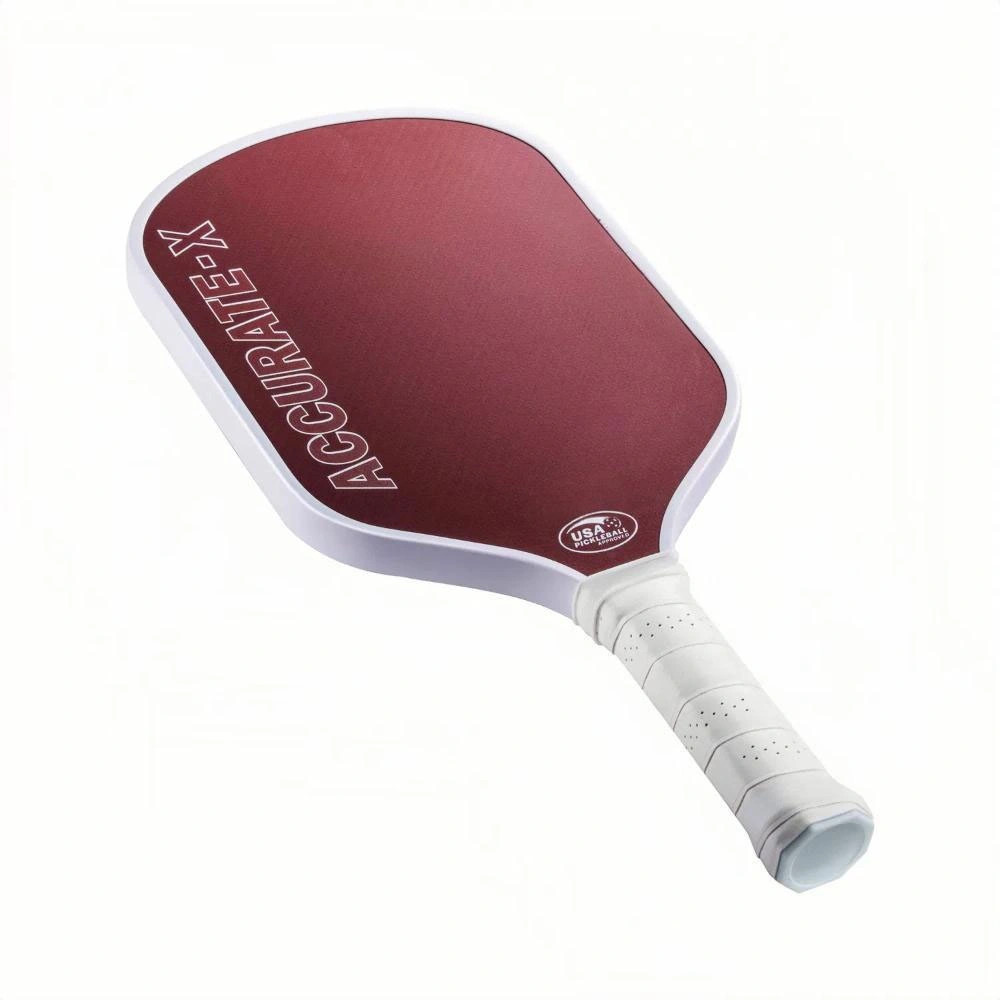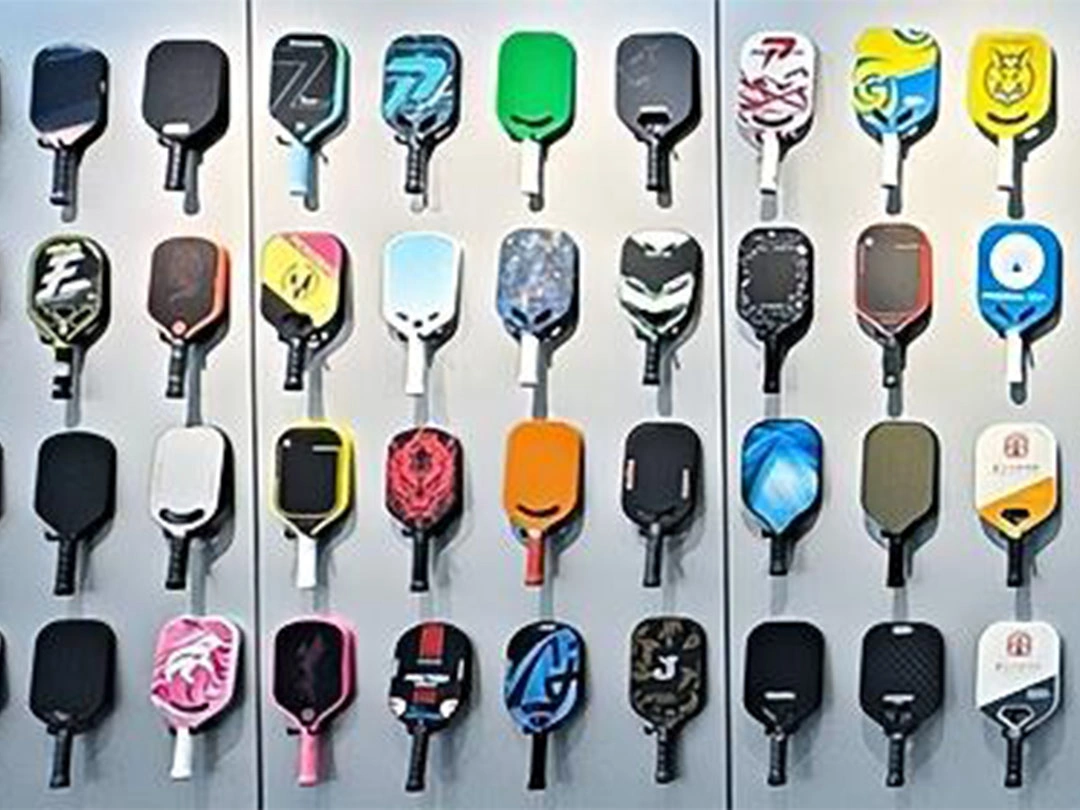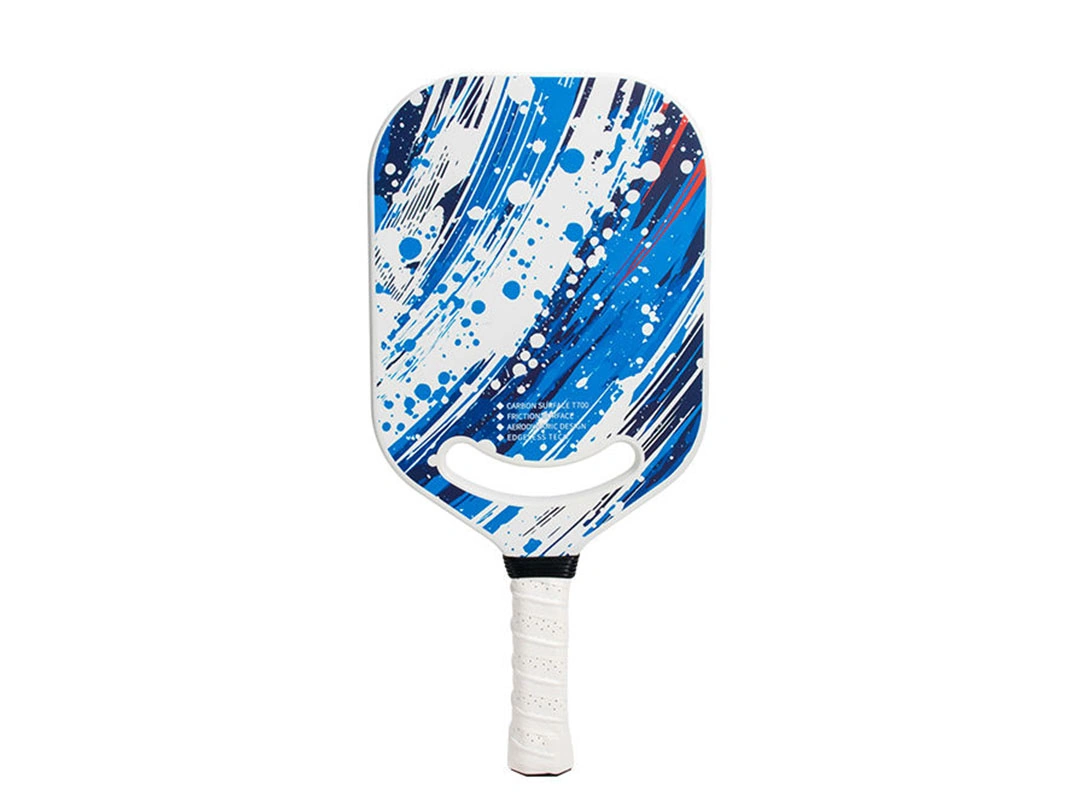
A powerful pickleball paddle is not defined by one carbon-fiber grade or a single core thickness. Ball response depends on the complete paddle system: its face and core, effective mass at impact, balance, construction, and the player’s swing. Power is best compared with repeatable tests on finished paddles rather than marketing labels.
What Actually Makes a Pickleball Paddle Powerful?
In practical terms, players often use power to describe ball speed on full swings and pop to describe how lively a paddle feels on shorter contacts. These are related but not identical. Paddle response also depends on where the ball hits, swing speed, impact angle, and the ball itself.
1. Face Material, Stiffness, and the Complete Layup
Carbon fiber, fiberglass, resin, and layer orientation each influence how a paddle bends and feels. A fiber-grade label such as T300, T700, or T800 describes only part of the material system. It does não establish a universal power ranking for finished paddles. Laminate thickness, resin content, core design, and manufacturing consistency must be considered together.
A useful comparison keeps paddle geometry and test conditions consistent, then measures the finished models. Avoid assuming a higher-modulus face automatically produces faster ball exit speed.
2. Core Thickness and Core Construction
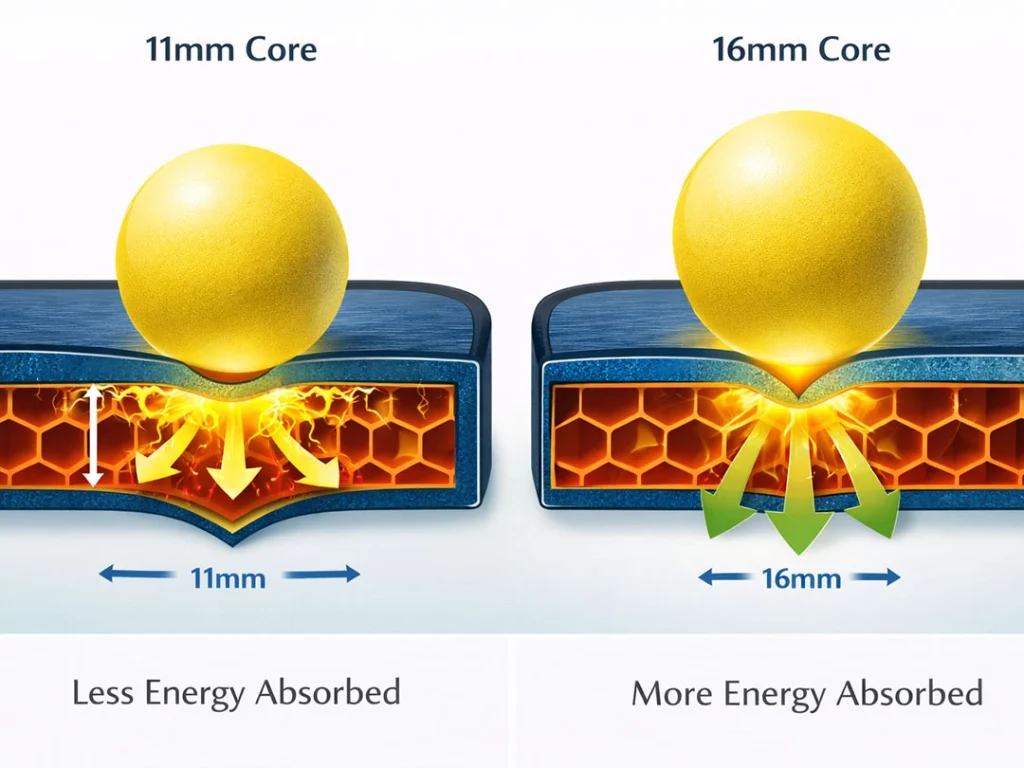
Core thickness can change feel, deflection, mass, and stability, but thinner does not always mean more powerful. A 13–14 mm design may feel firmer than an otherwise similar 16 mm design, yet real performance also depends on core cell geometry, face layup, bonding, and total paddle mass.
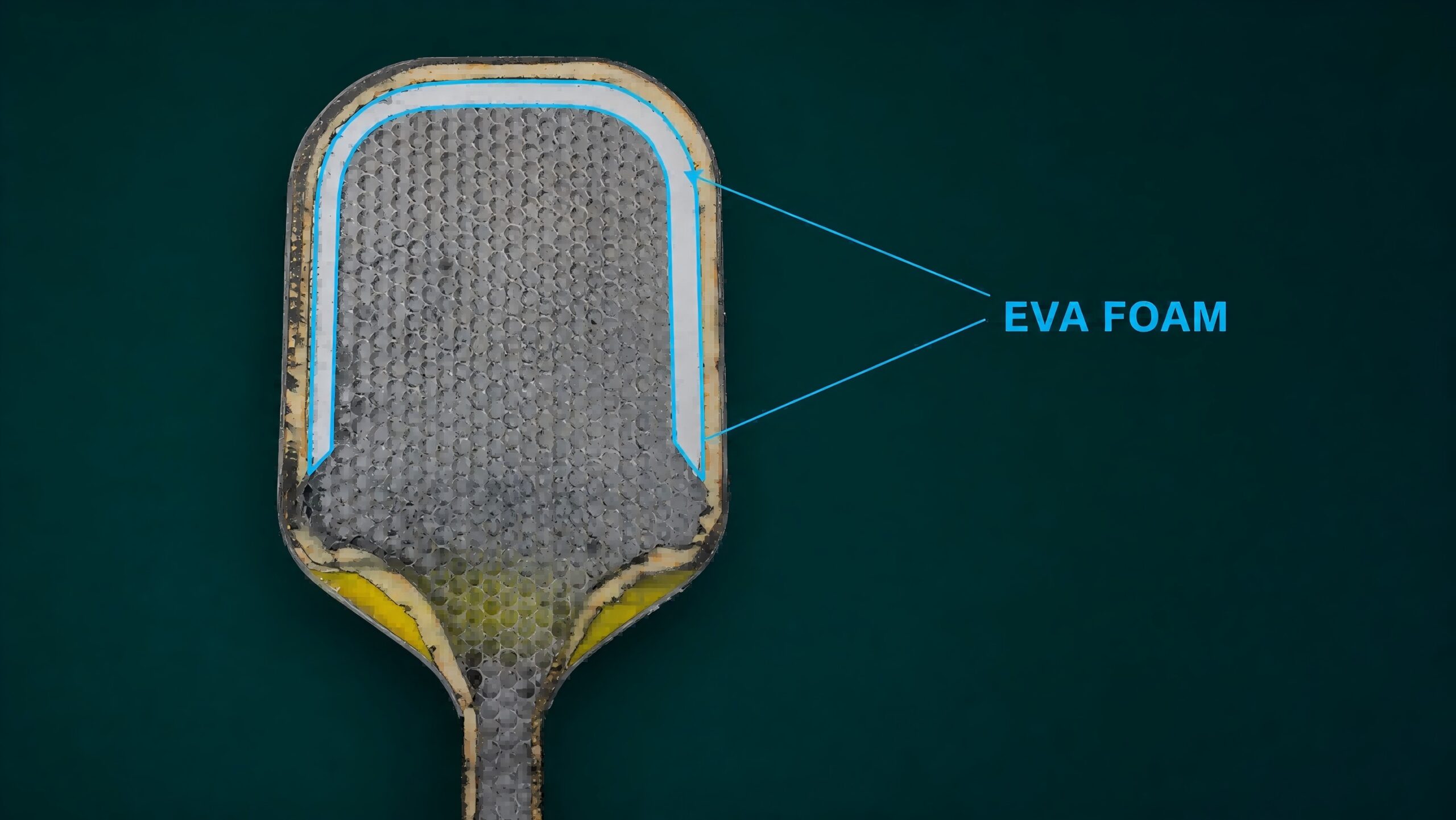
Polypropylene honeycomb and foam-containing designs should be assessed as complete constructions. Test both centered and off-center impacts, and assess durability before making claims about a larger sweet spot or lower vibration.
3. Swing Weight, Balance, and Effective Mass
Swing weight describes resistance to rotation around a specified measurement axis. Mass placed farther from that axis generally raises the measured swing weight, but a higher number does not guarantee faster shots for every player: it can also reduce achievable swing speed or maneuverability.
Handle length, overall dimensions, grip weight, perimeter construction, and added weighting all influence balance. Compare swing-weight figures only when the measurement method and axis are the same; do not rely on a universal ball-speed increase per added gram.
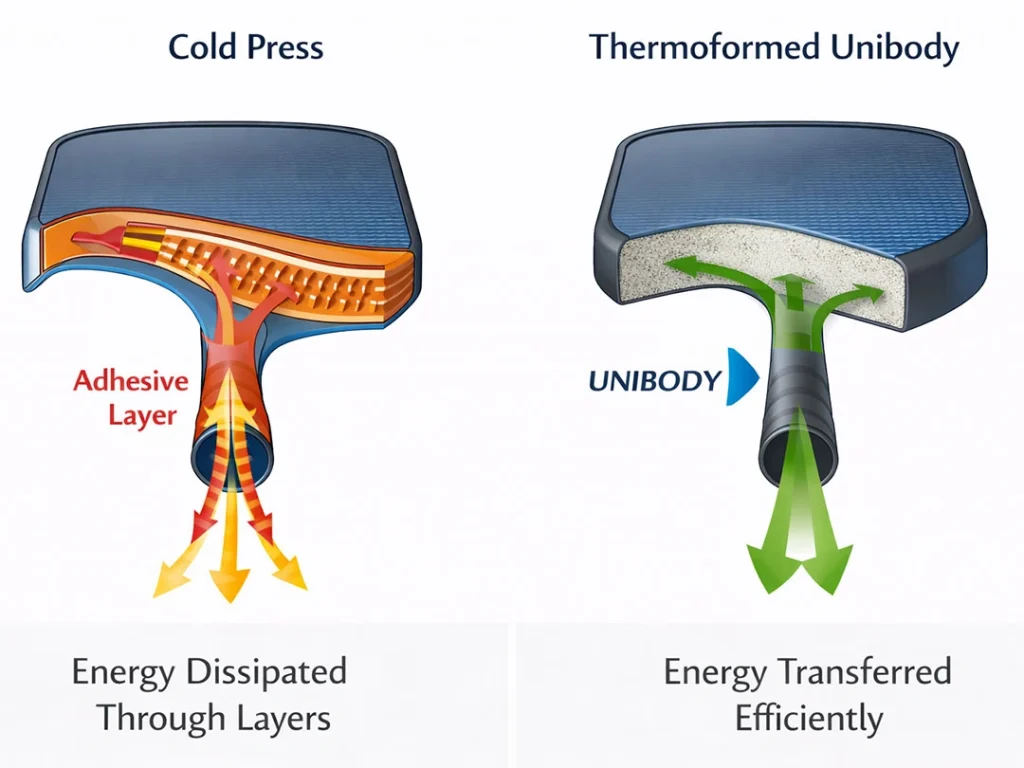
4. Thermoforming, Cold Pressing, and Bonding
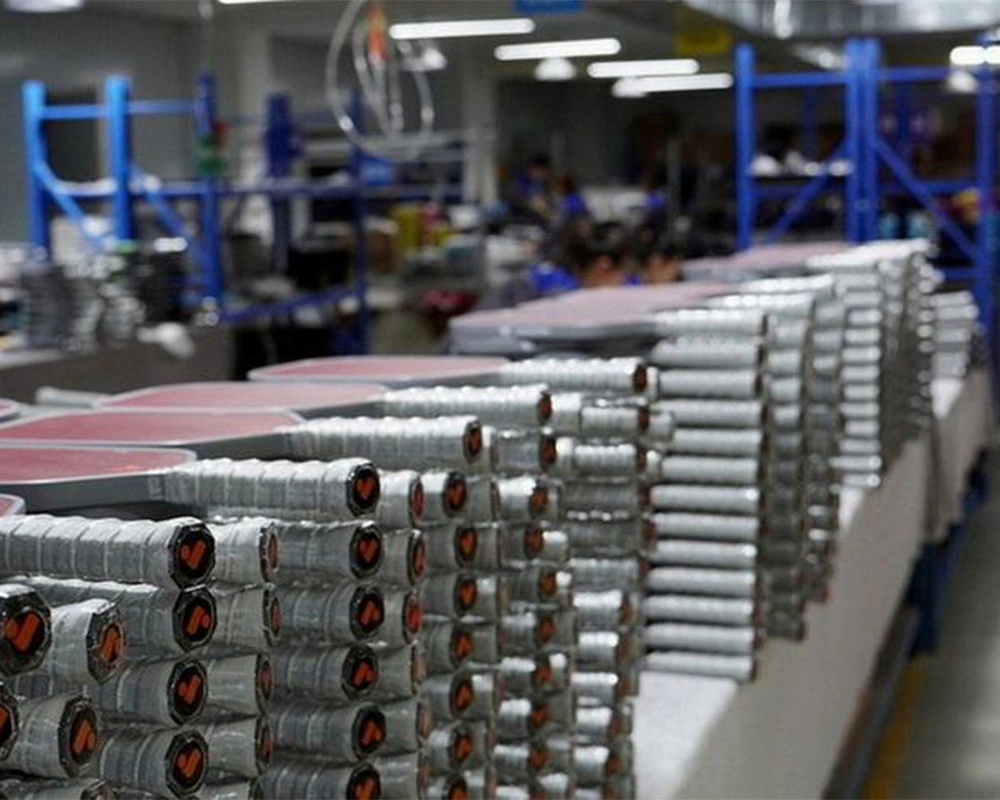
Cold-pressed and thermoformed paddles can differ in edge construction, lamination, stiffness distribution, and durability. Neither manufacturing label alone establishes a fixed power advantage. Thermoformed paddles can still use adhesive and resin systems; claims of adhesive-free molecular bonding are misleading.
The relevant questions are whether the process consistently produces the intended geometry and mechanical response, and whether testing confirms the desired performance.
5. Surface Texture, Spin, and Power
Surface texture and friction can affect spin, which in turn changes the trajectory of an aggressive shot. Spin and power should be measured separately. Higher roughness values do not automatically produce more spin, and claims that a particular weave or coating never wears out require model-specific durability evidence.
Applicable competition requirements should be checked against current governing-body rules and official model records. Internal development checks are not the same as official approval.
How to Compare Two Power-Oriented Paddles
For a meaningful comparison, use the same ball type and controlled conditions where possible. Record finished-paddle mass and balance, swing weight with its measurement axis, dimensions, core and layup, impact location, ball response under the chosen test method, and repeatability across samples. Keep raw results and the test setup together.
If a manufacturer quotes ball speed, PBCoR, deflection, or spin numbers, request the exact tested model, sample count, date, and laboratory method. Without that context, treat figures as illustrative rather than directly comparable.
Power vs. Control: The Trade-off Is Design-Specific
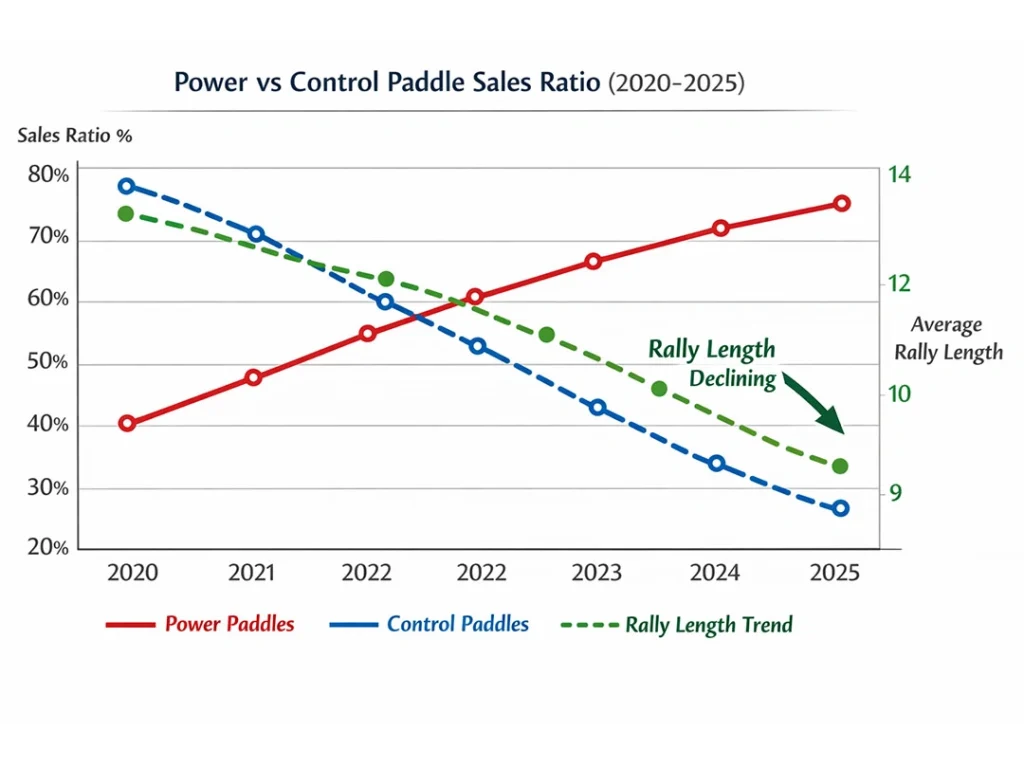
Power and control are not binary categories. A paddle that feels lively in short exchanges may differ from one that helps a player generate pace on a full swing. Stability, forgiveness, and maneuverability matter alongside ball response. The appropriate balance depends on the player’s technique and intended use.
Perguntas frequentes
Does T800 carbon always make a paddle more powerful than T700?
No. Fiber grade alone cannot predict the response of a finished paddle. Compare complete constructions and controlled test results.
Does a thinner core always add power?
No. Thickness influences the design, but face layup, mass, core structure, and testing conditions can change the outcome.
Will added perimeter weight improve ball speed?
It changes mass distribution and swing characteristics. The impact on an individual player’s shot speed depends on placement, measurement axis, and whether they can maintain swing speed.
Is thermoforming automatically more powerful than cold pressing?
No universal performance percentage can be inferred from the process label. Finished-paddle tests are needed.
Where Can Buyers Compare Power-Oriented Paddle Options?
This article explains the engineering factors rather than ranking or selling individual models. If you are comparing supply options for a brand, view NexaPaddle’s Raquetes de Pickleball de Potência range for available starting platforms and then request the current project-specific specifications and testing scope.