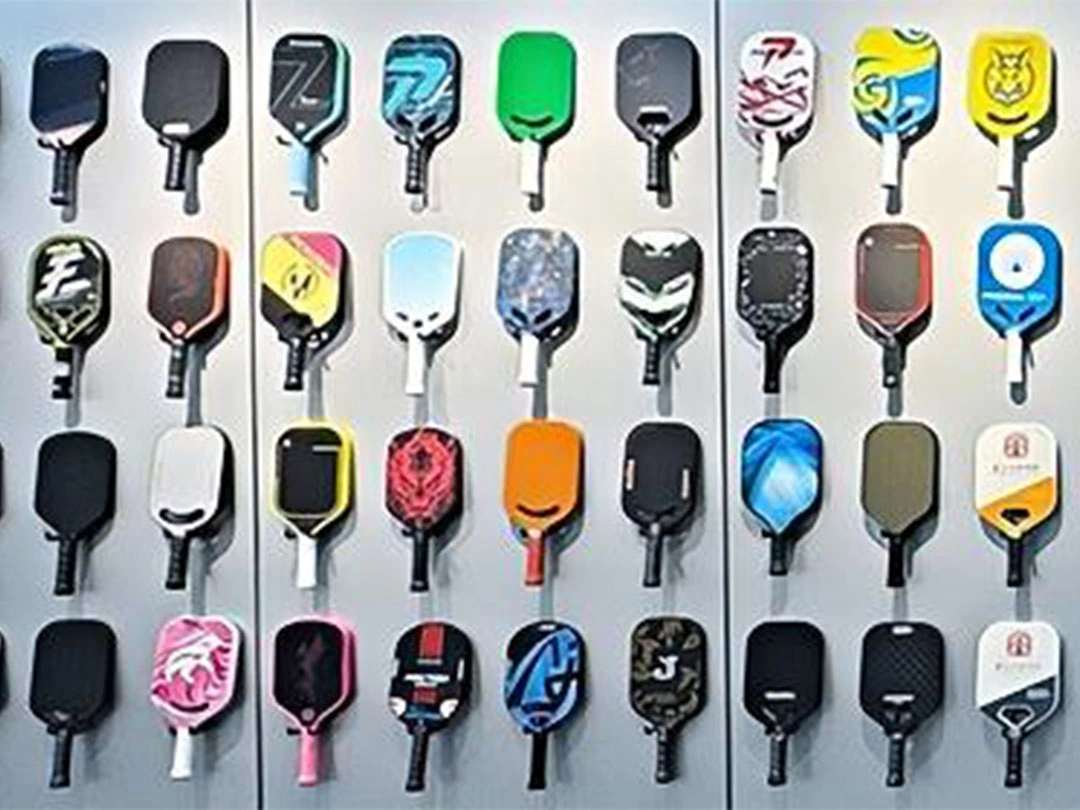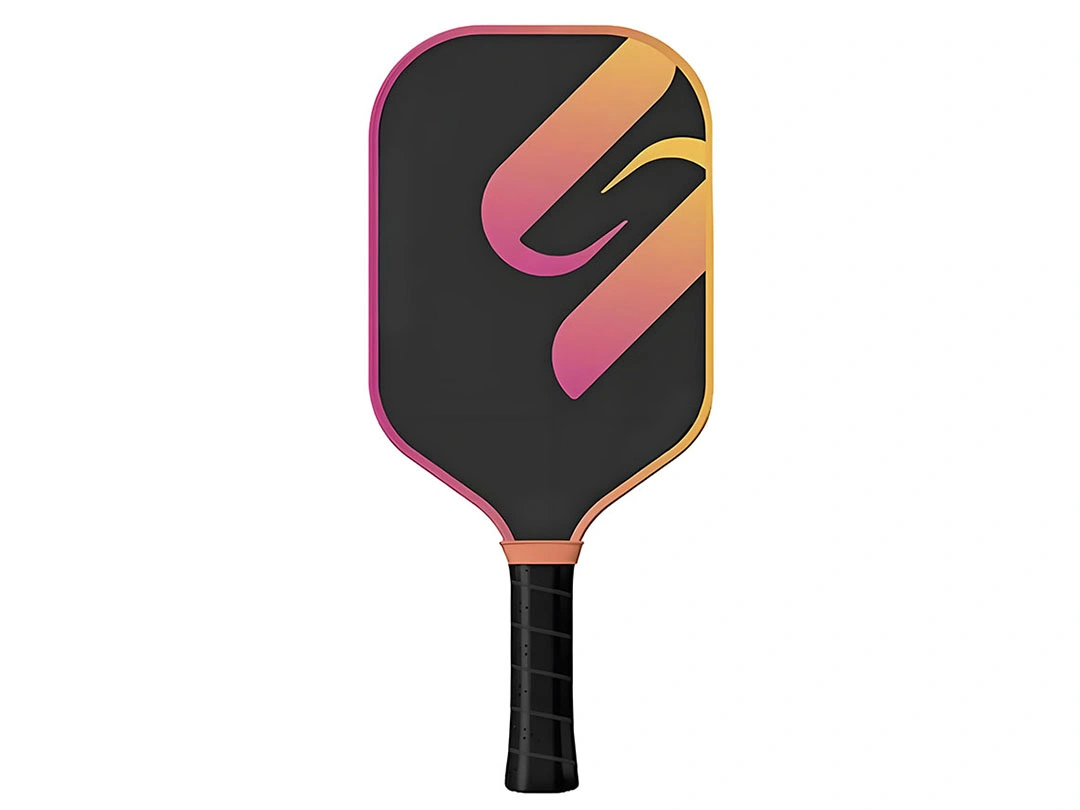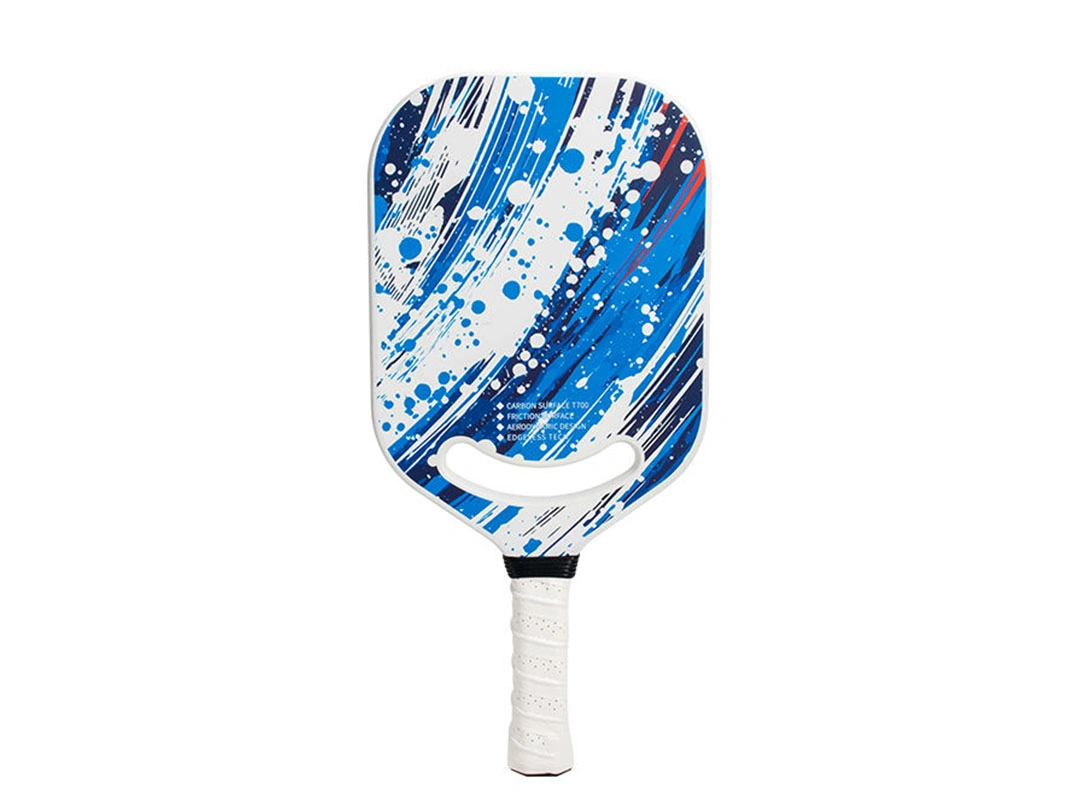
The pickleball equipment market is undergoing a structural shift. The US paddle market was valued at $324–325 million in 2025 (QY Research, February 2026), growing at an 8.6% CAGR toward $574 million by 2032. The broader global pickleball equipment market — paddles, balls, nets, and accessories — reaches $702.9 million in 2025, projected to hit $1.85 billion by 2032 at a 14.8% CAGR (Coherent Market Insights). Behind these figures: 24.3 million active US players as of the SFIA 2026 Topline Report, with the APP’s broader estimate at 36.5 million participants. Major retailers responded immediately — expanding pickleball floor space 40–60% in the past year (FORWRD HQ, February 2026). Offline retail still accounts for 65%+ of all paddle sales (QY Research).
Dick’s Sporting Goods — a $12+ billion annual revenue chain with 800+ locations across the United States — sits at the center of that offline retail dominance. They carry every major brand: Selkirk, JOOLA, Franklin, HEAD, Paddletek, Onix. They have the floor space, the foot traffic, the marketing budget, and the buying leverage to negotiate favorable MAP (Minimum Advertised Price) agreements with established paddle brands. For small and mid-sized sporting goods retailers, specialty pickleball shops, and regional distributors trying to stock their shelves with competitive paddle inventory, competing on the same SKUs as Dick’s is not just difficult — it’s a structural trap.
But Dick’s Sporting Goods has real blind spots. And those blind spots are exactly where local and specialty retailers can build a durable, profitable position — not by trying to out-Dick’s Dick’s, but by doing something Dick’s structurally cannot do: offering custom, branded, locally relevant products with better margins and genuine community connection.
This guide explains the competitive landscape clearly, shows the margin math honestly, and lays out an actionable strategy for sourcing aangepaste pickleball paddles that let smaller retailers compete on differentiation rather than scale.
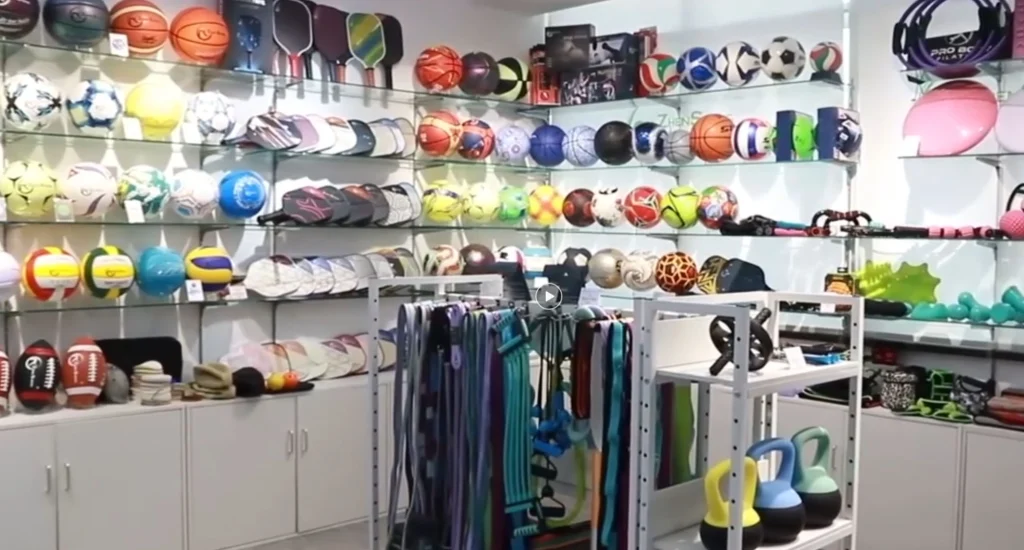
What Dick’s Sporting Goods Gets Right — and Where They Fall Short
Their Strengths Are Real
Dick’s Sporting Goods has built a formidable pickleball retail position. Their strengths are worth acknowledging honestly before identifying the strategic opening.
Brand breadth and consumer familiarity. Dick’s carries the paddles that new players are searching for by name: Selkirk, JOOLA, Franklin, Paddletek. A consumer who has watched a YouTube tutorial recommending a specific paddle model knows Dick’s will stock it. That brand-awareness traffic is a genuine advantage.
Scale-driven buying power. Dick’s purchases volume that triggers favorable wholesale pricing, dedicated sales support from major brands, and in some cases co-marketing arrangements. Their purchasing leverage with Selkirk or JOOLA is simply not replicable by a 3-store regional chain.
Foot traffic from non-pickleball business. Dick’s doesn’t depend on pickleball customers. The parent shopper buying cleats for a child’s soccer team walks past the pickleball section and, with the right endcap merchandising, converts to an impulse purchase. This cross-category traffic amplification is structural.
Dedicated in-store experience investment. Dick’s has been building dedicated pickleball sections and in-store experience areas — not just shelf space, but demo setups and educational signage. In many markets, they are actively owning the new-player conversion moment.
Their Structural Weaknesses Are Equally Real
Dick’s scale is also the source of their limitations — and those limitations are permanent by nature of their business model.
Generic, brand-constrained selection. Dick’s sells the same Selkirk, JOOLA, and Franklin SKUs in every one of their 800+ stores nationwide. A player who visited the Dick’s in Phoenix gets the exact same selection as a player in Portland. There is no local differentiation, no regional product curation, no community-specific identity embedded in the assortment.
MAP pricing eliminates price flexibility. Every authorized dealer of Selkirk, JOOLA, or Franklin operates under MAP agreements that prevent competitive price differentiation. Dick’s and the local specialty shop down the street sell the same JOOLA Ben Johns Hyperion at the same MAP price. On branded products, the local retailer cannot compete on price — and neither can Dick’s.
Zero customization capability. Dick’s will never offer a paddle with a local club’s logo. They will never offer a paddle branded to a specific regional tournament. They will never give a rec center director the ability to order 50 paddles with the facility name printed on the grip end cap. They are a distribution channel, not a manufacturing partner. That customization gap is a permanent structural opening.
No community ownership. Dick’s is a national brand. Local retailers who are also the pickleball club sponsor, the league supplier, the clinic host, and the community venue partner have a relationship advantage Dick’s simply cannot replicate at scale. That relationship advantage is worth more than it appears on a spreadsheet — it’s a referral engine, a repeat purchase driver, and a price-insensitive customer base.
Lower brand loyalty to the retailer. A customer who buys a Selkirk paddle at Dick’s is a Selkirk customer, not a Dick’s customer. A customer who buys a retailer’s own private-label paddle is building loyalty to that brand — and to the store that carries it.
The Real Margin Problem: Why Reselling the Same Brands Doesn’t Work
The fundamental economics of branded paddle resale are unfavorable for smaller retailers. The numbers are not ambiguous.
How Branded Resale Margins Actually Work
When a smaller retailer becomes an authorized dealer for Selkirk, JOOLA, or Franklin, the economics work like this:
- Merk aankopen bij OEM-fabrikant tegen fabricagekosten (typisch €25–€50 voor prestatiepaddles)
- Merk voegt zijn marge toe — merkinvesteringen, sponsoring, marketing, distributie-infrastructuur
- Detailhandelaar koopt tegen groothandelsprijs tegen een prijs die alle upstream merk kosten weerspiegelt
- MAP-beleid stelt winkelvloer in — de detailhandelaar kan niet boven of onder de MAP prijzen zonder het risico op dealer-autorisatie
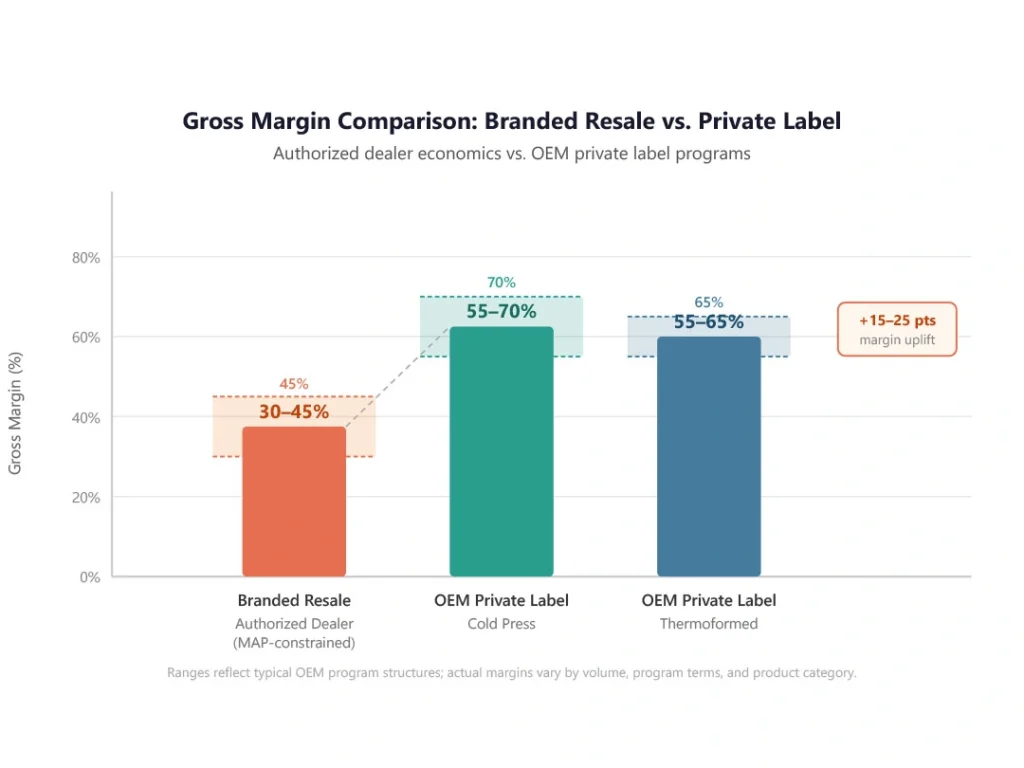
Het typische resultaat: een detailhandelsmarge van 30–45% voor geautoriseerde dealers op merkpaddle SKU's. Een paddle die voor €129,99 bij MAP wordt verkocht, werd voor ongeveer €71–€91 in de groothandel gekocht. Die €38–€59 brutomarge per eenheid klinkt redelijk — totdat je rekening houdt met overhead, diefstal/verlies, opleidingstijd van personeel, en het feit dat elke andere geautoriseerde dealer op de markt (inclusief Dick’s) de identieke prijs hanteert.
Het Volumeprobleem
Dick’s Sporting Goods draait op volumeneconomieën die kleinere detailhandelaars niet kunnen evenaren. Wanneer Dick’s 10.000 eenheden van een Franklin paddle bestelt voor landelijke distributie, weerspiegelt hun groothandelsprijs dat volume. Wanneer een regionale keten van 5 winkels 50 eenheden van dezelfde paddle bestelt, betalen ze een hogere groothandelsprijs per eenheid terwijl ze beperkt zijn tot dezelfde MAP-retailprijs. Hun effectieve marge is op percentagebasis lager dan die van Dick’s, op dezelfde SKU, verkocht aan dezelfde consument, tegen dezelfde prijs.
Dit is geen tijdelijk nadeel. Het is een permanent structureel kenmerk van het doorverkopen van merkproducten in een markt die gedomineerd wordt door een keten met meer dan 800 locaties. Je kunt Dick's niet overtreffen qua schaal met de merken die Dick's al bezit.
De Differentiatie Doodlopendeweg
Concurreren op merkproductcuratie — proberen een meer gecureerde of diepere selectie van Selkirk-modellen dan Dick’s op te nemen — loopt snel tegen een plafond aan. Dick’s zal uiteindelijk elke SKU dragen die volume genereert. Voor een gespecialiseerde detailhandelaar die er op hoopt de enige lokale bron voor een specifiek Paddletek-model te zijn, verdwijnt het voordeel op het moment dat Dick’s beslist dat dat model het waard is om op voorraad te nemen.
De enige duurzame concurrentiepositie voor kleinere detailhandelaren is productdifferentiatie die Dick’s structureel niet kan repliceren: huismerk, aangepaste branding en gemeenschapsgestuurde productprogramma's.
Het Huismerkvoordeel: Hoe Lokale Detailhandelaren Kunnen Winnen
De marge- en differentiatieberekening verandert volledig wanneer een detailhandelaar inkoopt private label paddles via OEM-fabricage in plaats van merkproduct door te verkopen.
De Kernthesis
Een privé label paddle, rechtstreeks van een OEM-fabrikant ingekocht voor €10–€45 per eenheid — afhankelijk van het constructieniveau — en verkocht onder de merknaam van de detailhandelaar voor €35–€169 genereert 40–65% brutomarge zonder MAP-beperkingen, geen merktrouw verwatering en volledige flexibiliteit op prijsstelling, verpakking en positionering. Diezelfde paddle bouwt ook merkwaarde op voor de detailhandelaar in plaats van voor Selkirk of Franklin.
Dit is geen theoretisch voordeel. Het is het model dat zich al heeft bewezen in de e-commerce (Amazon FBA-merken die paddle-labels bouwen bij sub-100 eenheid MOQ's) en is rechtstreeks toegankelijk voor fysieke gespecialiseerde detailhandelaren die bereid zijn de overstap te maken van wederverkoper naar merk eigenaar.
De Prijs- en Margevergelijking
| Producttype | OEM Fabriekskosten | Verkoopprijs | Bruto Marge | MAP Beperking? |
|---|---|---|---|---|
| Gekend (geautoriseerde dealer) | €71–€91 (groothandel) | €129,99 (MAP) | 30–45% | Ja |
| Huismerk koudgeperste glasvezel | €8–€16 (direct van de fabriek) | €35–€79 | 55–70% | Nee — jij stelt de prijs vast |
| Huismerk koudgeperste carbonfiber | €14–€22 (direct van de fabriek) | €79–€129 | 55–65% | Nee |
| Huismerk thermogevormde carbonfiber | €32–€45 (direct van de fabriek) | €129–€199 | 55–65% | Nee |
De margeverbetering is aanzienlijk op elk niveau. Maar het belangrijkste voordeel is controle. Huismerken verwijderen het MAP-plafond, verwijderen de MAP-vloer, en stellen de detailhandelaar in staat om te korten, bundelen, promoten of het product op elk moment opnieuw te positioneren zonder dealerovereenkomsten te schenden of het risico op merkautorisatie te lopen.
Merkwaarde die opbouwt
Een klant die “jouw merk” paddle koopt en wil houden, is jouw klant. Ze zullen bij de volgende upgrade naar jouw merk zoeken. Ze zullen het bij naam aanbevelen aan de vriend die ze naar het veld meenemen. In de loop van de tijd accumuleert die merkwaarde — elke tevreden klant is bewijs van een merk dat het waard is om op te bouwen.
Een klant die een Selkirk in jouw winkel koopt, is de klant van Selkirk. Als ze upgraden, gaan ze terug naar de website van Selkirk, Dick’s, of Amazon. Geen van die herhaalaankopen was ooit van jou om te behouden.
5 Concurrentiestrategieën voor Lokale Detailhandelaren
Het kennen van de structurele voordelen van huismerken is noodzakelijk maar niet voldoende. Hier zijn vijf concrete strategieën die dat voordeel vertalen naar een werkend retailprogramma.
Strategie 1: Lanceer een Huismerk Paddle-lijn
De fundamentele zet. Schaf 1–3 paddle SKU's aan van een OEM-fabrikant onder de naam van jouw winkel. Begin met een koudgeperste glasvezel instap paddle (MOQ 300, €8–€16/unit, detailhandel €35–€59) als je volumekatalysator, en voeg optioneel een thermogevormde carbonfiber prestatie paddle toe (MOQ 100, €32–€45/unit, detailhandel €129–€169) als je marge-maximalisator.
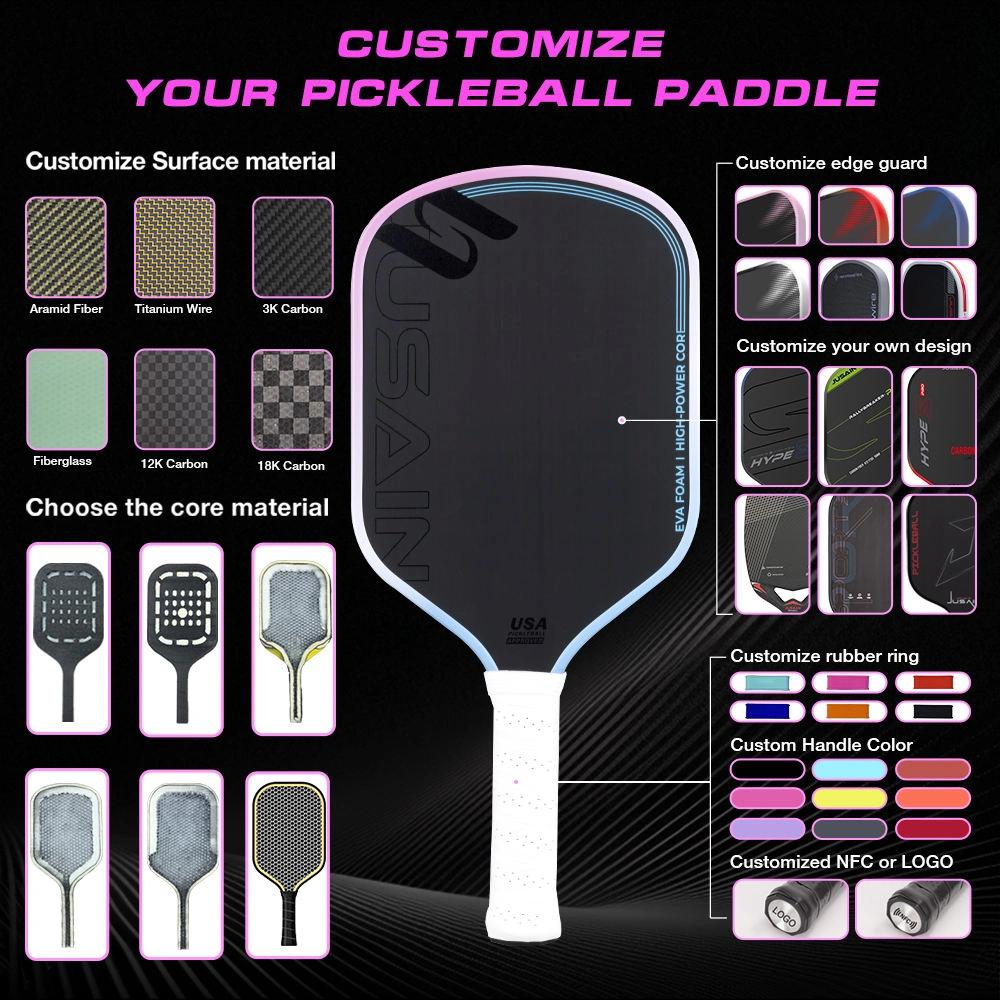
Jouw merknaam komt op de paddle te staan via volledige UV-printen (UV-printen biedt fotorealistische full-color graphics op koudgeperste paddles en is inbegrepen in de standaard OEM-productie). De paddle is van jou: jouw naam, jouw kleurenschema, jouw verhaal, jouw klantrelatie. Dick’s kan het niet opnemen.
An OEM fiberglass paddle at NexaPaddle’s OEM fiberglass factory gives you an entry-level product with the margin structure to support staff incentive programs, event pricing, and bundle deals without touching break-even.
Strategy 2: Build a Demo Program Around Your Private Label Paddles
70%+ of first-time players start with a sub-$50 paddle (industry survey data). That entry price point is a moment of high influence — the player is forming preferences, habits, and brand associations while they are still undecided. Dick’s sells a paddle and ends the interaction. A specialty retailer with a demo program extends the interaction into a conversion cycle.
Structure it simply: customers can borrow a demo paddle for a local court session at no charge (or a nominal fee refunded against purchase). The demo paddles are your private label product. The conversion rate from demo to purchase is meaningfully higher than cold shelf browsing, and the converted customer is buying your brand, not a brand they could buy at Dick’s.
Strategy 3: Create Community-Branded Products
Identify the 2–5 strongest pickleball community relationships in your market: the dominant local club, the most popular indoor facility, the largest recreational league, the top teaching pro with a student base. Offer each of them a co-branded paddle program.
The mechanics: you order 100–300 paddles from your OEM manufacturer with a customized graphic package incorporating the club or facility name and logo alongside your store brand. The paddles are sold exclusively through the club or facility as “official equipment,” with revenue split or wholesale pricing to the partner. The exclusivity is real — nobody else can offer those paddles, because only you have the manufacturing relationship.
Aangepaste & OEM Pickleball Paddles programs allow this level of design flexibility at MOQs that make a 100-paddle club partnership financially viable.
Strategy 4: Build Tiered Product Bundles
Bundling a paddle with balls, a carry bag, and accessories into a set package increases average transaction value while making price comparison with Dick’s single-paddle pricing irrelevant. A $99 bundle (private label paddle + 4 balls + branded carry bag) cannot be compared to a $79.99 Selkirk paddle at Dick’s because they are not the same product.
Pickleball sets and bundles also address a significant purchase segment: beginners who want a complete package, gift buyers who need a ready-to-play kit, and leagues or clinics purchasing in quantities for new member onboarding. Dick’s sells bundles too — but generic, branded bundles. Your custom-branded bundle with your club partner’s logo cannot be replicated at Dick’s.
Strategy 5: Target the Upgrade Cycle with a Performance Tier
Intermediate players — those who have been playing 6–12 months and are ready to move beyond their first sub-$50 paddle — are an underserved segment in the local retail market. Dick’s carries premium branded options (Selkirk Vanguard at $200+, JOOLA Ben Johns at $250+), but the price jump from entry to premium is steep and the selection is generic.
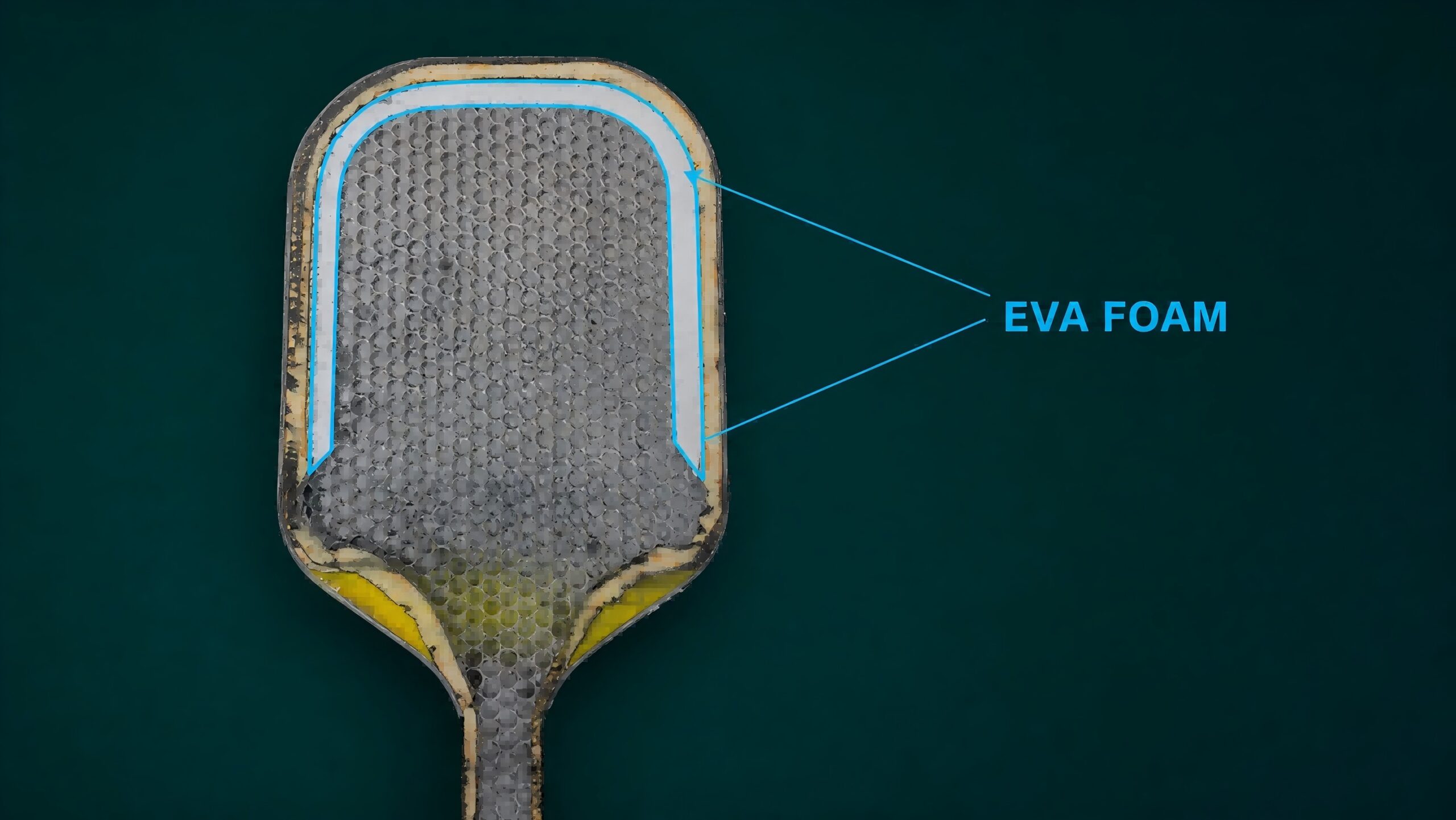
A thermoformed private label paddle at $129–$149 — positioned as the local shop’s “recommended upgrade” with USAPA certification for tournament play — fills the gap between entry-level and $200+ brand names. The player who upgraded through you, at a price that delivered real performance improvement, will be back for the next upgrade cycle. The thermovormde pickleball paddles available at factory-direct OEM pricing deliver genuine performance specs (T700 carbon, foam-injected edge walls, sweet spot expansion vs. cold press) at a cost structure that supports profitable mid-market pricing.
Building Your Product Line: From Budget to Premium
A well-structured private label product line for a specialty retailer typically spans 3–6 SKUs across three price tiers. Here is a practical model built from OEM manufacturing realities.
Tier 1: Entry — Cold Press Fiberglass
OEM Spec: Fiberglass face, PP Honeycomb core, TPU edge guard, UV full-face printing, 220–245g, available in 10/13/16mm thickness
Factory cost: $8–$16 per unit (300-unit MOQ)
Suggested retail: $35–$59
Target buyer: First-time players, gift buyers, juniors, budget-conscious recreational players
Marges: 55–70% gross margin
This is your volume driver and brand introduction. Keep the margin structure lean enough to support demo programs and bundle inclusion. UV printing delivers full-color brand graphics at no additional tooling cost — seasonal colorways, limited editions, and local club customization are all viable at this tier.
Tier 2: Mid-Range — Cold Press Carbon Fiber
OEM Spec: Carbon Fiber UD or 3K face, PP Honeycomb core, 210–235g, 13/16mm thickness
Factory cost: $14–$22 per unit (300-unit MOQ)
Suggested retail: €79–€119
Target buyer: Recreational players who have upgraded from entry-level, club players who prioritize feel and spin without paying $150+
Marges: 55–65% gross margin
The carbon fiber face delivers measurably better spin performance and a stiffer, more responsive feel than fiberglass at a retail price point well below the premium brands at Dick’s. This is your primary revenue SKU — the paddle most customers end up buying after demo.
Tier 3: Performance — Thermoformed Carbon Fiber
OEM Spec: T700 carbon fiber, edgeless thermoformed unibody construction, foam-injected edge walls, water decal graphics, from 100-unit MOQ
Factory cost: $32–$45 per unit (100-unit MOQ)
Suggested retail: €129–€169
Target buyer: Dedicated recreational players, club competitors, players upgrading from branded entry-level paddles, tournament participants
Marges: 55–65% gross margin
Thermoforming bonds face and core into a structural unit, expanding the sweet spot by 15–20% compared to cold press construction and eliminating delamination risk over time. The water decal graphics option provides premium, seamlessly wrapped finish quality across the paddle’s curved geometry — the kind of finish consumers associate with $200+ branded paddles, available at an OEM cost structure that still supports 55%+ margin at $149 retail.
USAPA certification at this tier converts the paddle from a local-only product to one that can be sold as “tournament-approved” — addressing the performance player segment head-on. Explore the full specification range for USAPA goedgekeurde paddles to understand compliance parameters before finalizing specification.
Full Tier Comparison
| Niveau | Constructie | OEM Kosten | Detailhandel | Marge | MOQ |
|---|---|---|---|---|---|
| Invoer | Cold press fiberglass | $8–$16 | $35–$59 | 55–70% | 300 |
| Midden | Cold press carbon fiber | $14–$22 | €79–€119 | 55–65% | 300 |
| Performance | Thermogevormde koolstofvezel | $32–$45 | €129–€169 | 55–65% | 100 |
| Premium (optioneel) | T800+Titanium of Kevlar/Aramide hybride | $45–$65 | $169–$229 | 55–60% | 100 |
Voor de meeste speciaalzaken die een privélabelprogramma lanceren, is een lijn van 3 SKU's (één per niveau) het juiste uitgangspunt. Het dekt de volledige levenscyclus van de klant — instap, midden en upgrade — zonder zich te veel in te dekken met voorraad voordat de verkoop is gevalideerd.
USAPA-certificering: uw geloofwaardigheidsequalizer
Een van de impliciete voordelen die Dick’s Sporting Goods heeft in de pickleball retail, is het voorraden van merken waarmee spelers al verbonden zijn aan toernooi-niveau spel. Selkirk, JOOLA en Franklin dragen USAPA goedkeuringstekeningen die belangrijk zijn voor de prestatiesegment van spelers.
Privélabelpeddels beginnen zonder merkherkenning. USAPA certificering is het mechanisme dat deze kloof overbrugt — het biedt validatie van derden dat uw aangepaste peddel voldoet aan dezelfde nalevingsnormen als de merkenpeddels bij Dick’s, ongeacht wie het heeft geproduceerd.
Wat certificering valideert
USAPA goedkeurings testen dekken drie primaire nalevingsparameters:
- Peddelafmetingen: Maximaal 24 inch gecombineerde lengte en breedte; maximaal 17 inch in lengte
- Oppervlakte ruwheid (Coëfficiënt van Wrijving): Beperkingen op het oppervlakte-textuur die oneerlijke spin genereren beperkt
- Kernbuiging: Peddelstijfheid binnen gespecificeerde bereiken om het trampoline-effect te beperken
Een peddel die deze tests doorstaat, verdient een vermelding op het USAPA goedgekeurde peddelregister — publiekelijk doorzoekbaar door elke speler, competitie directeur of toernooi-organisator die apparatuur voor goedgekeurde spellen evalueert.
Wat certificering mogelijk maakt
- Toegang tot toernooikanalen: Liga's en clubdirecteuren die USAPA goedkeuring vereisen voor georganiseerde wedstrijden zullen alleen gecertificeerde peddels aanschaffen. Voor een speciaalzaak die een competitieve spelersbasis bedient, is dit ononderhandelbaar.
- Toegang tot grote retailkanalen: Grote retailers — waaronder Dick’s — vereisen USAPA certificering voor overweging voor schapplaatsing. Een gecertificeerde privélabelpeddel wordt niet uitgesloten van uitgebreide distributie.
- Amazon conversiesignaal: “USAPA Goedgekeurd” is een van de hoogste conversie vertrouwenssignalen in de pickleball categorie op Amazon. Gecertificeerde peddels als filteroptie opnemen, trekt kopers met hoge intentie aan.
NexaPaddle’s Pre-Test Proces
Het USAPA certificeringsproces kost $500–$1,200 per peddelontwerp en duurt meestal 4–6 weken. Het risico voor kleine retailers is het indienen van een niet-conform ontwerp, het betalen van de indieningsvergoeding, en het ontvangen van een afwijzing — en vervolgens 4–6 weken aan runway verliezen terwijl het ontwerp wordt gecorrigeerd en opnieuw ingediend.
Voor-testen tegen USAPA parameters in de productie fase — die dimensionale naleving, oppervlakte ruwheid en kernafbuiging dekt — vermindert het risico op mislukking bij de eerste indiening aanzienlijk. Voor retailers die een lanceringskalender opbouwen rond een specifieke productintroductiedatum, is het elimineren van certificeringsonzekerheid meer waard dan de kosten van de pre-test.
Veelgestelde vragen
u003cstrongu003eCan a small specialty retailer really compete with Dick’s Sporting Goods on pickleball?u003c/strongu003e
Yes — but not by trying to replicate Dick’s model. Dick’s competes on brand breadth, scale, and foot traffic. Local and specialty retailers compete on customization, community connection, and margin structure. Private label paddles, community-branded programs, demo-driven conversion, and bundling strategies are all tools that Dick’s structurally cannot deploy with the same flexibility. The strategic goal isn’t to out-Dick’s Dick’s — it’s to serve the customers who Dick’s can’t serve well: the dedicated club player who wants performance gear with local relevance, the league director who needs bulk supply with custom branding, and the intermediate player who needs expert guidance beyond a shelf label.
u003cstrongu003eWhat’s the minimum investment to launch a private label paddle program?u003c/strongu003e
A cold press fiberglass entry paddle at 300-unit MOQ and $10–$16/unit factory cost requires a procurement investment of $3,000–$4,800 before freight and import costs. A thermoformed performance paddle at 100-unit MOQ and $32–$45/unit runs $3,200–$4,500 for the minimum order. For a retailer starting with a single entry SKU, total first-order investment — including freight and basic custom packaging — typically lands in the $5,000–$8,000 range. At $45–$59 retail, a 300-unit sell-through on an entry paddle generates $13,500–$17,700 in revenue, producing $8,500–$12,700 in gross margin. That’s a 2–3x return on procurement investment before operating costs.
u003cstrongu003eHow long does it take to receive a first private label order?u003c/strongu003e
First orders — including design finalization, sample approval, production, and quality control — typically require 30–60 days at the factory level. Sea freight from China to US West Coast ports adds approximately 3–4 weeks. First-time importers should plan for 60–80 days from confirmed order to received inventory, then add 1–2 weeks for inbound processing and shelf preparation. Retailers with a known launch date (a tournament, a club season start, a promotional event) should place orders 10–12 weeks in advance to allow adequate buffer.
u003cstrongu003eDoes the paddle need USAPA certification, and how do I get it?u003c/strongu003e
USAPA certification is required if you intend to market the paddle as approved for tournament and sanctioned play, or if you are targeting major retail distribution channels. It costs $500–$1,200 per design and takes 4–6 weeks through the official submission process. OEM manufacturers who support USAPA certification (including pre-testing at the factory level) significantly reduce the risk and timeline by engineering compliance into the first production run rather than submitting and revising. For specialty retailers targeting competitive player segments, certification is worth the investment. For retailers targeting primarily beginners and recreational players, it’s optional at launch and can be pursued on a second order once the product is validated in market.
u003cstrongu003eCan I order different paddle designs for different local clubs or community partners?u003c/strongu003e
Yes — and this is one of the most powerful differentiation strategies available to local retailers. With thermoformed paddles at 100-unit MOQ, a retailer can order separate graphic packages for 3–4 community partners on a single production run by specifying unique UV print or water decal artwork per SKU. The club-branded paddle creates exclusive distribution and community loyalty that no national chain can replicate. Each partner community functions as a dedicated distribution channel — without competing with the retailer’s core assortment at MAP prices.
Referenties
QY Research Inc. — Rapport over de pickleball paddles markt, februari 2026
Coherent Market Insights — Wereldwijde Pickleball Apparatuur Markt Rapport 2025–2032
Sport & Fitness Industrie Vereniging (SFIA) — 2026 Topline Deelname Rapport, maart 2026
Vereniging van Pickleball Professionals (APP) — Speler Statistieken en Deelnamestatistieken
FORWRD HQ — “Grote Retailers Breiden Hun Pickleball Uitrusting Footprint Uit,” februari 2026
The Dink — Rapport over de bouw van pickleball faciliteiten, maart 2026
USA Pickleball — Apparatuur Certificeringsnormen en Goedgekeurd Peddel Register — usapickleball.org
NexaPaddle — OEM/ODM Productcatalogus en Prijsreferentie — nexapaddle.com
Klaar om uw Privélabel Peddelprogramma op te bouwen?
De pickleball retailmarkt zal niet gemakkelijker worden om te betreden naarmate deze volwassen wordt. Grote ketens breiden agressief uit. MAP-prijzen worden strakker voor merk SKU's. Het venster om een privélabel peddelmerk te vestigen — met productie-economieën die gezonde marges, volledige aanpassing en gemeenschaps-geïntegreerde distributie ondersteunen — is nu open.
Lokale en speciaalzaken die de overstap maken van wederverkoper naar merkeigenaar in de komende 12–18 maanden, zullen beter gepositioneerd zijn in elke dimensie die er toe doet: marge structuur, klantloyaliteit, competitieve differentiatie en langetermijn merkequity. De retailers die wachten, zullen concurreren op steeds dunnere marges voor merk SKU's die Dick’s altijd beter gepositioneerd zal zijn om te verkopen.
Verken NexaPaddle’s aangepaste en OEM peddelopties → | Bekijk het privélabelprogramma →
NexaPaddle is a OEM paddle manufacturer supporting USA Pickleball pre-submission testing and production-consistency controls with established production experience, B2B brands served across multiple international markets, and full private label capability from cold press fiberglass to thermoformed carbon fiber performance paddles. Direct factory. No middlemen.