The Tennis Migration Sourcing Opportunity
Thirty-six and a half million Americans now play pickleball — and a disproportionate share of them arrived directly from the tennis court. This demographic shift is not a trend. It is a structural market transition, and it represents a highly lucrative sourcing opportunity for retail brands, wholesalers, and equipment distributors. These crossover athletes bring advanced biomechanical habits, high performance expectations, and established purchasing power onto the court.
Understanding the financial scale of this market is essential for strategic inventory planning. The overall US pickleball market is projected to reach $702.9M in 2025. The premium carbon fiber segment — which directly serves advanced transitioning athletes — is valued at $137.9M in 2025 and is expanding at 12,8% CAGR, tracking toward an estimated $412.86M by 2034. Brands that fail to stock equipment engineered for this demographic are leaving measurable revenue on the table.
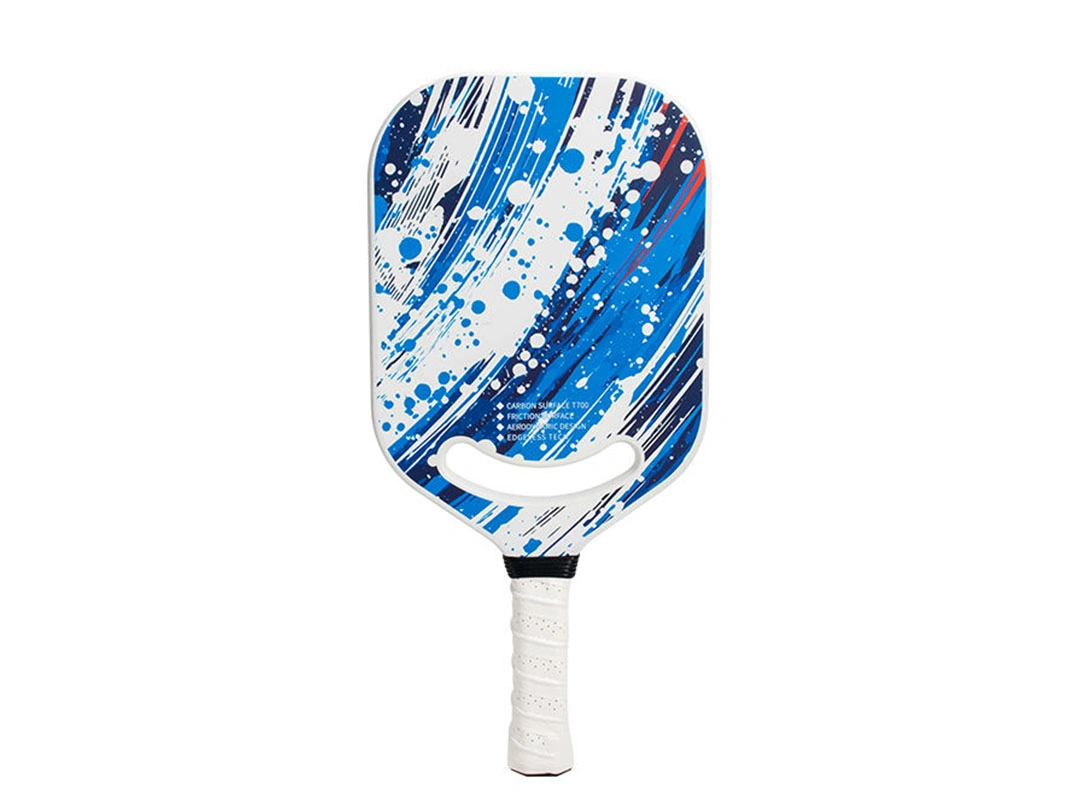
Racket sport converts do not want entry-level fiberglass equipment. They require advanced composite materials, specific dimensional geometries, and handle configurations that accommodate ingrained swing mechanics. For B2B buyers, understanding these technical requirements is the foundation of a profitable premium product assortment. Sourcing the right elongated models positions your brand to capture this high-intent, premium-spending customer base.
The Two-Handed Backhand Problem
Standard paddle designs fundamentally fail to accommodate the biomechanical realities of a tennis player’s swing. The industry’s default 130mm handle was originally engineered for single-handed table tennis or badminton-style grips. When a tennis player attempts a two-handed backhand on a standard grip, the non-dominant hand inevitably slides off the handle’s base or overlaps awkwardly onto the paddle throat.
This lack of physical real estate forces a critical mechanical compromise. Players must choke up on the grip, collapsing the lever system that generates power and rotational torque. The result is a predictable loss of control, velocity, and topspin — precisely the strokes that define advanced racket sport play.
A proper two-handed backhand depends on distinct hand spacing to create a functional push-pull lever. The bottom hand stabilizes the paddle angle; the top hand drives the paddle head through the contact zone. Without adequate handle length, this system breaks down entirely. The player cannot fully engage hip and shoulder rotation, and kinetic energy fails to transfer efficiently into the ball.
This biomechanical gap represents a clear commercial opportunity. Crossover athletes are actively sourcing paddles that do not require them to abandon decades of muscle memory. Brands that recognize this specific physical requirement — and stock accordingly — are best positioned to capture and retain this high-value segment.
Mold #5 Deep-Dive: Engineered for the Crossover Athlete
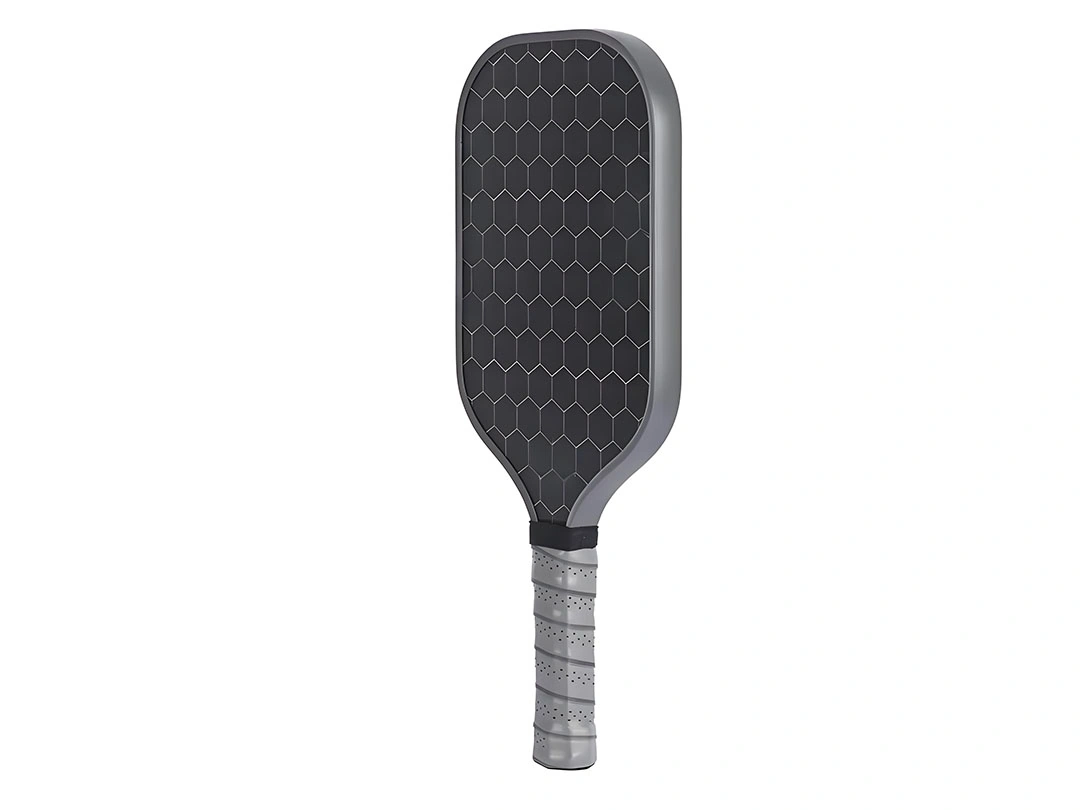
Advanced manufacturing facilities have developed specialized paddle geometries specifically to address these biomechanical requirements. The Mold #5 specification is the gold standard for this demographic, combining extended reach with premium composite construction. Below is the full technical breakdown.
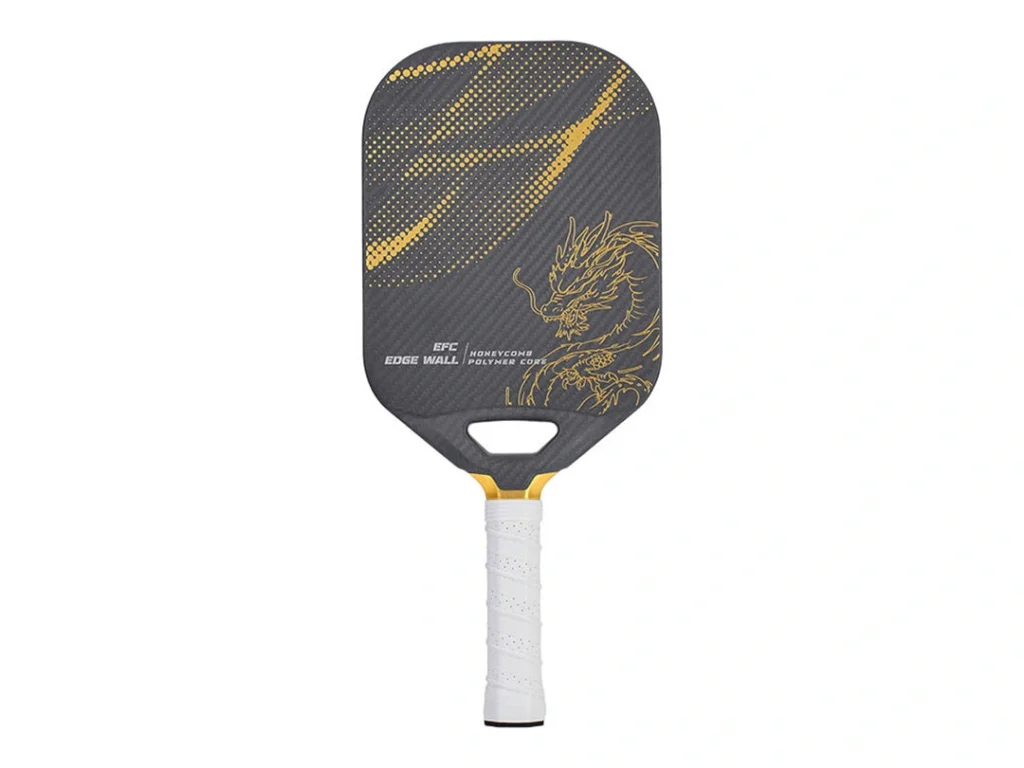
| Specifica | Valore |
|---|---|
| 5 × 5 × 2,5 cm | 415 × 185 mm |
| Lunghezza del Manico | 145 mm (extended — +15mm over standard) |
| Materiale della Faccia | Fibra di Carbonio T700 (UD + 3K weave options) |
| Compensato solido (senza nido d'ape) | Nido d'ape in PP |
| Spessore del nucleo | 16 mm |
| Peso | 215–230 g |
| Costruzione | Thermoformed unibody (integrated face-to-handle) |
| MOQ | 100 pcs |
Il 415 × 185 mm overall dimension approaches the governing body’s maximum allowable size while maximizing aerodynamic profile. Shifting surface area vertically raises the sweet spot to align precisely with a tennis player’s natural strike point — further from the hand than a traditional pickleball stroke. The narrower 185mm width reduces drag, enabling faster swing speeds during baseline exchanges.
Il 145 mm handle is the mold’s defining engineering feature. It provides sufficient surface area for two adult hands without overlap onto the paddle throat, directly eliminating the mechanical constraint that plagues crossover athletes on standard equipment. With both hands properly positioned, the player can fully engage core and shoulder rotation, transferring maximum force through the Fibra di Carbonio T700 face.
The internal architecture uses a Polypropylene (PP) Honeycomb core at 16 mm thickness. This calibration absorbs high-frequency vibrations from heavy baseline drives, reducing impact stress on the arm while providing essential energy return. At 215–230 g, the paddle carries enough mass to plow through incoming shots without sacrificing maneuverability at the kitchen line. Thermoformed unibody construction ensures the paddle acts as a single structural unit, eliminating the fragile bond points inherent in cold-pressed alternatives.
Extended Handle Leverage Mechanics
The physics of an elongated handle are directly relevant to your product positioning. A 145mm handle fundamentally alters the paddle’s moment of inertia and the resulting whip effect through the swing arc. In mechanical terms, a longer handle increases the distance between the pivot point (the wrist) and the center of mass (the paddle head). This extended moment arm allows a player to generate substantially more angular momentum from the same physical effort.
During a topspin drive or power groundstroke, a tennis player’s kinetic chain finishes with a sharp wrist snap. The extended handle amplifies this snap, driving paddle head speed in the critical milliseconds before contact. This is the same lever principle that gives a tennis racket its baseline power. By replicating that geometry in a pickleball paddle, manufacturers allow crossover athletes to apply their existing physical mechanics without adjustment.
The extended handle also shifts the balance point slightly toward the head. This head-heavy characteristic increases resistance to torsional twisting at the contact zone. When a player faces a heavy, spin-loaded incoming shot, a neutrally balanced paddle can rotate in the hand; the additional swing weight generated by the elongated geometry stabilizes the response. The mechanical result is measurably improved shot velocity and baseline control — quantifiable performance data that resonates with technically sophisticated buyers.
Strategic Handle Length Sourcing
That physics advantage, however, only captures one segment of the crossover market. A complete product matrix must address the full handle-length continuum to serve distinct player demographics across your catalog. The following comparison illustrates how different handle lengths map to specific buyer profiles.
| Model Series | Lunghezza del Manico | Migliore per |
|---|---|---|
| Standard (Mold #1/#2) | 130 mm | Control-focused players, dinking specialists |
| Power Series (Mold #3) | 139 mm | Transition players, mixed game styles |
| Mold #5 Extended | 145 mm | Tennis converts, two-handed backhand players |
| GEN3 Core 2.0 | 149 mm | Power baseline players, maximum leverage |
A brand stocking only the 130mm standard is actively excluding the most commercially valuable segment in the sport. Adding the 145mm Mold #5 to your catalog immediately signals technical authority to high-level athletes who research specifications before purchasing. This targeted SKU expansion increases addressable market without cannibalizing existing standard-shape sales — the two geometries serve entirely different biomechanical needs. The result is higher average order values, improved category conversion rates, and stronger retention among advanced players.
16mm Core Thickness: The Spin and Control Balance
Handle geometry determines biomechanical fit. Core thickness determines what the paddle does at the point of contact. For racket sport converts, a 16mm core represents the optimal balance between power transmission and spin generation. Thinner cores — 13mm or 14mm — produce a trampoline effect with immediate pop, but they severely limit ball dwell time. Players accustomed to the deep pocketing of a tennis stringbed find thin-core paddles to feel erratic and uncontrollable.
The 16mm polymer honeycomb core extends what physicists call “dwell time”: the fraction of a second in which the ball compresses against the paddle face before rebounding. A thicker core absorbs more initial impact energy, allowing the ball to sink deeper into the surface. This extended contact window is critical for spin generation, giving the textured carbon fiber face more time to grip and impart rotational friction.
Tennis players naturally swing with steep, low-to-high attack angles designed for topspin. The 16mm core rewards that aggressive swing path with heavy, diving topspin that keeps shots within the baseline. Beyond power, the thicker geometry delivers exceptional perimeter stability and vibration dampening — essential qualities for resetting fast volleys at the kitchen line. It bridges the gap between the offensive capability of an elongated shape and the precision required for high-level tactical play.
T700 Carbon Fiber: Intrinsic Spin Generation
Surface material is both the most critical performance variable and the most marketable specification in the premium paddle segment. For high-end elongated models, T700 Carbon Fiber is the non-negotiable standard. This aerospace-grade composite delivers a tensile strength of 4.900 MPa and an elongation at break of 2.1%, ensuring the face remains dimensionally stable under impact and prevents energy loss caused by surface deformation.
What differentiates T700 at a structural level is the filament architecture. Each carbon filament measures exactly 7μm in diameter. Woven together, these microscopic filaments create an inherently abrasive texture across the paddle face. This is a fundamental distinction from fiberglass alternatives: cheaper paddles rely on temporary grit sprays or applied chemical coatings to generate friction. T700’s surface texture is a permanent structural property — advanced players using these paddles consistently generate heavy topspin that competitive tennis converts describe as comparable to their racket sport experience.
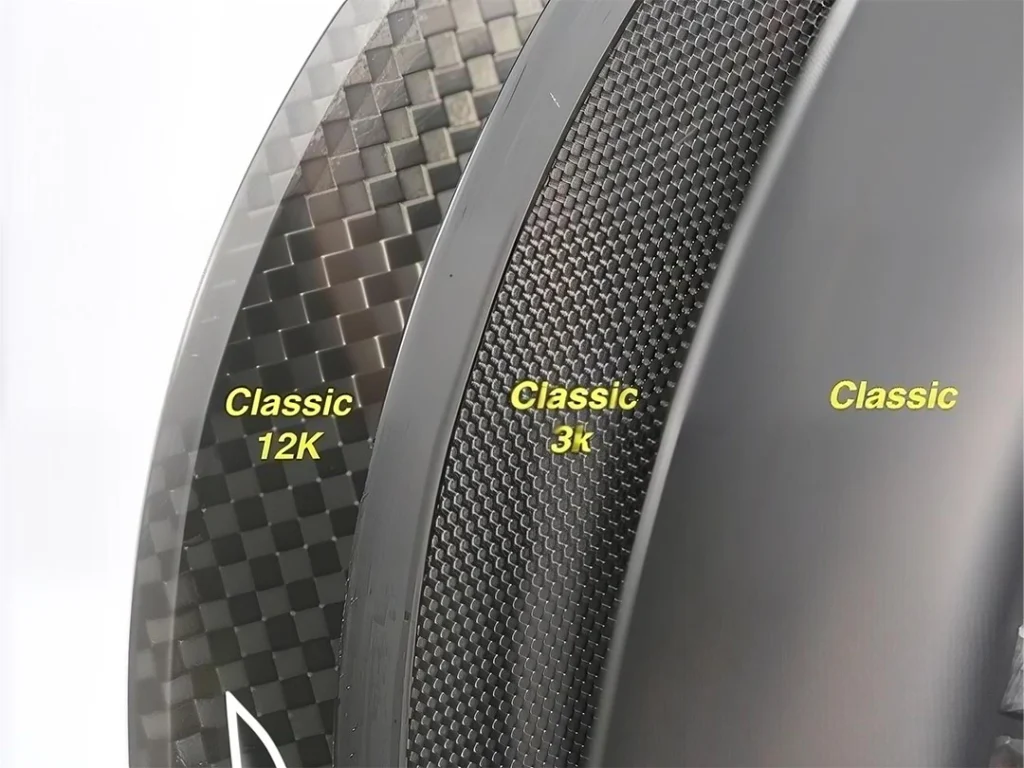
Buyers sourcing paddles da pickleball in fibra di carbonio must specify Unidirectional (UD) or 3K weave application. UD carbon aligns all fibers in a single direction, optimizing vertical stiffness and maximizing energy return for raw power. A 3K weave uses an interlocking cross-pattern that expands the horizontal sweet spot and delivers a slightly softer, more communicative feel. Both formats leverage the permanent friction of the 7μm filament structure, ensuring spin performance does not degrade with extended competitive use — a key quality differentiator for brands competing in the premium tier.
Costruzione Unibody Termoformata
Manufacturing process is as commercially significant as material grade. Traditional cold-pressed construction bonds the face material, core, and handle as separate components using adhesive. For the swing speeds generated by crossover athletes using a 145mm handle, this approach creates a structural liability. The torque generated by a loaded two-handed backhand places extreme stress on secondary bond points, leading to delamination or joint failure under sustained competitive use.
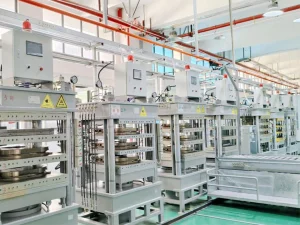
Premium paddle di pickleball pro e avanzati solve this through thermoformed unibody construction. In this process, the paddle is formed under extreme heat and pressure inside a precision mold. The carbon fiber face wraps continuously around the edges and down through the throat, integrating the face and handle into a single structural element with no secondary joints.
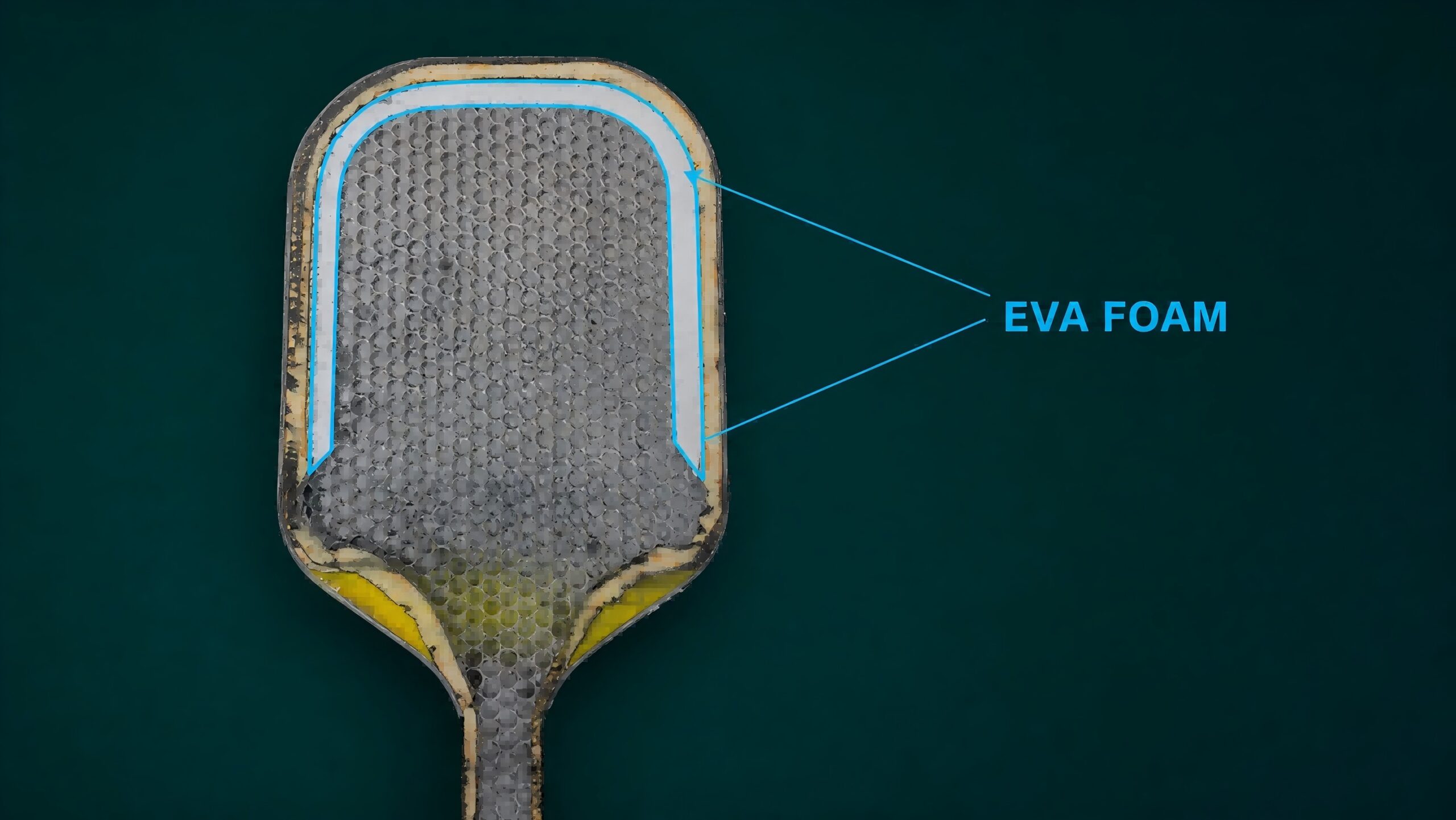
This architecture delivers three concrete performance advantages. First, it eliminates the fragile neck joint entirely, allowing the paddle to withstand maximum-effort swings without structural compromise. Second, it enables injection of high-density perimeter foam around the core edges prior to sealing — foam that expands during thermoforming to increase perimeter density, expand the sweet spot, and create a solid, predictable feel on off-center contact. Third, the continuous carbon wrap from face through handle means energy transfer is uninterrupted and consistent across every hit. Brands building a high-performance product line must prioritize termofusi per pickleball to meet the durability and performance standards this buyer segment demands. For brands evaluating the full range of construction options, racchette in fibra di carbonio T700 built on this thermoformed architecture represent the current performance benchmark.
The B2B Business Case: Capturing the Crossover Market
The tennis crossover demographic is the highest-margin consumer segment in pickleball today. These are athletes already conditioned to paying premium prices for technical gear — a buyer who spends $250 on a tennis racket will not hesitate to invest $200 in a structurally superior paddle. They are also technically sophisticated: they research core thickness, fiber grade, and handle specs before committing to a purchase. Entry-level product assortments do not capture this revenue. They actively repel it.
Adding an elongated SKU engineered for this segment is a low-risk, high-return portfolio expansion. It extends your addressable market without cannibalizing standard-shape sales, since the two geometries serve distinct biomechanical use cases. Positioning a 145mm handle model as your premium “Pro” or “Tour” tier elevates the perceived technical authority of your entire brand portfolio — a halo effect that builds credibility across your full customer base.
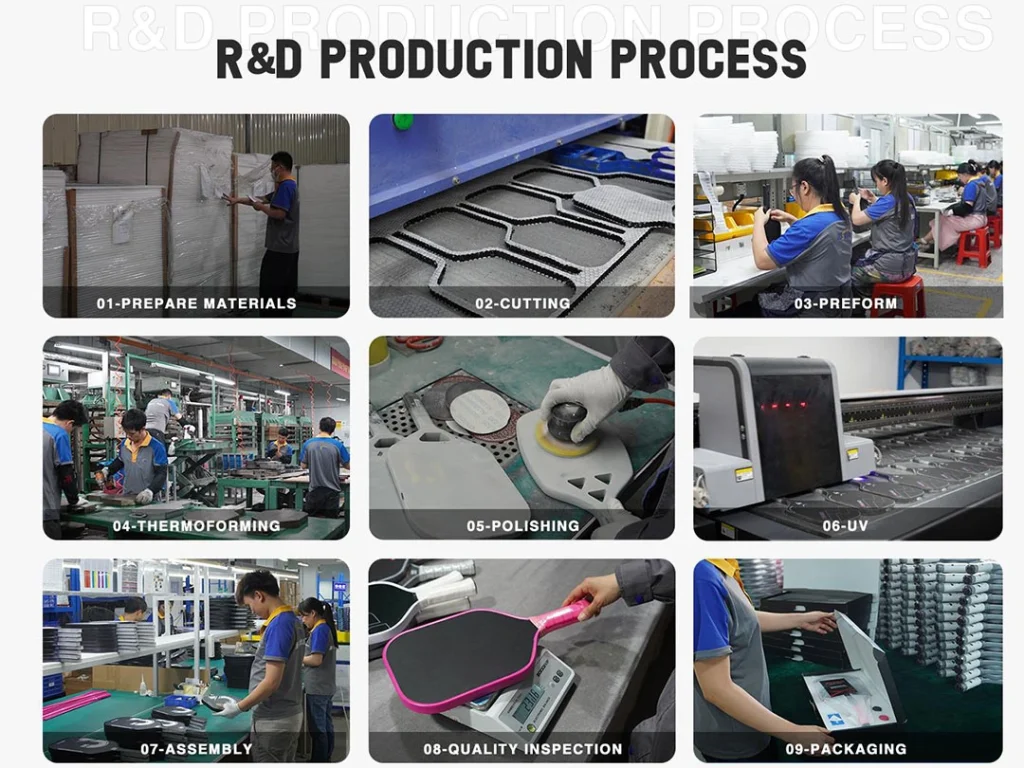
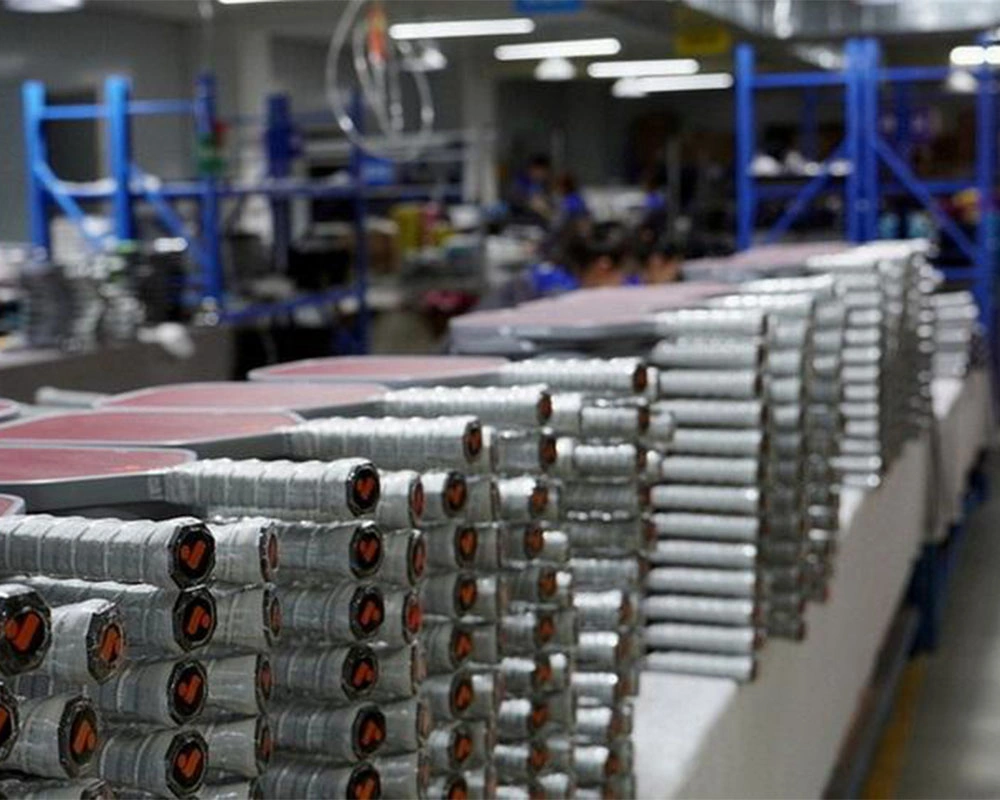
For brands seeking the fastest path to market, partnering with an established elongated pickleball paddles B2B supplier eliminates the costly R&D phase entirely. Proven mold geometries like Mold #5 are ready to deploy. Brands can source capacità di paddle da pickleball OEM personalizzati with proprietary branding, custom graphics, and specified edge guard colors — launched on an architecture with documented performance credentials. Whether you need a test batch of e programmi di accessori OEM oggi. for regional retail validation or a container-scale wholesale order, leveraging existing premium molds delivers tour-level performance to market immediately, without engineering risk.
Domande frequenti
What handle length is best for a two-handed backhand in pickleball?
A 145mm (5.7 inch) handle is the optimal length for adult players executing a true two-handed backhand. This dimension provides sufficient surface area for both hands to rest independently on the grip without overlapping, enabling proper biomechanical leverage and paddle stabilization through the full swing arc. Players who prefer maximum leverage for aggressive baseline drives may consider the 149mm handle available in the GEN3 Core 2.0 Series.
Are elongated pickleball paddles USAPA approved?
Yes. Elongated paddles are fully compliant provided they meet governing body size restrictions. The USAPA limits combined paddle length and width to 24 inches / 609.6mm. Standard elongated dimensions of 415mm length and 185mm width total 600mm, well within tournament-legal parameters.
Does a heavier paddle generate more power?
Power is a function of both static weight and leverage geometry — not weight alone. A paddle in the 215–230 g range provides sufficient mass to drive through the ball, but the elongated shape is the primary power multiplier. The longer handle and elevated sweet spot increase swing weight and rotational momentum, generating greater shot velocity than a standard-shaped paddle of identical static weight.
What is the MOQ for custom branded elongated paddles?
NexaPaddle’s thermoformed Mold #5 starts at 100 pezzi per variant. This MOQ is designed to make brand testing commercially viable — allowing emerging brands, specialty retailers, and pro shops to launch a fully custom elongated paddle (proprietary graphics, edge guard colors, handle wraps) without committing to mass-production volumes. Production lead time runs 60–90 giorni from confirmed design brief to finished inventory.
How does T700 carbon fiber surface differ from coated paddles?
Coated paddles rely on applied grit sprays or friction paints that wear away rapidly under competitive use — typically degrading within 60–90 giorni of regular play. T700 carbon fiber generates friction through its raw 7μm filament structure — an intrinsic, permanent property of the woven material itself. This surface does not degrade or peel, delivering consistent spin performance across the full service life of the paddle.
Sports & Fitness Industry Association (SFIA) / USA Pickleball. Foglio informativo sul pickleball 2024. 36.5 milioni di giocatori negli Stati Uniti.
Grand View Research / Cognitive Market Research. Pickleball Equipment Market Report 2025. Market size $702.9M; carbon fiber segment $137.9M at 12.8% CAGR through 2034.
Toray Industries. Torayca Scheda tecnica in fibra di carbonio T700S. Resistenza alla trazione 4.900 MPa; modulo di trazione 230 GPa; diametro del filamento 7 μm; allungamento alla rottura 2,1%.
Dati di test delle prestazioni interne del paddle NexaPaddle. Superfici in fibra di carbonio T700 misurate a oltre 2.300 RPM in condizioni di test standardizzate.